
By Ethan Sun, Founder & CEO, SunAura Thermal | Published October 18, 2026
Why Temperature Control Is the Bottleneck in Protected Horticulture
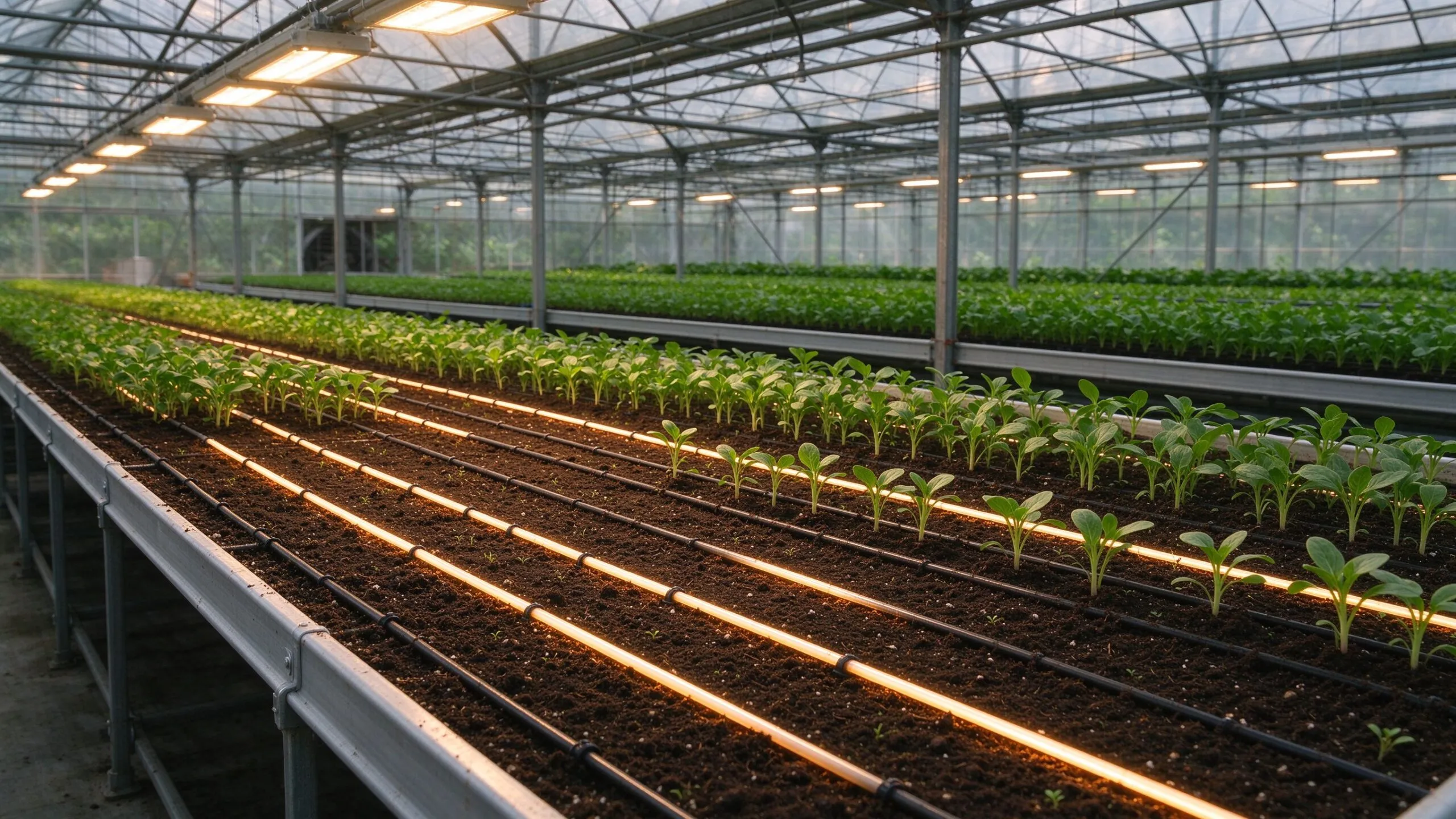
Ask any nursery owner what limits early-season production and the answer is rarely light — it is root-zone temperature. Seedlings germinate fast and roots develop reliably only when the propagation medium sits in a narrow warm band, and a cold snap at the wrong week can wipe out an entire batch of young plants. The reliable, low-energy answer in commercial and hobby greenhouses alike is an electric heating cable run under the benches or in the soil, regulated by a thermostat that holds the medium at the target temperature.
SunAura has supplied heating cables for greenhouse soil and propagation systems since 2008, alongside our floor-heating lines. The same manufacturing discipline that produces CE-compliant floor heating elements — controlled resistance, sealed insulation, tested cold leads — applies to the horticultural range, which is why greenhouse operators in 50+ countries use our cables for propagation benches, seedling germination and frost protection (per SunAura factory records).
How the Project Was Set Up: Cable, Controller and Layout
The reference project we describe here follows the standard configuration we ship for cold-season greenhouses. The system has three parts:
- Heating cable — a fixed-resistance cable sized to the propagation area. For soil warming we typically specify 10–15 W per square metre of bench area for gentle bottom heat, with higher loads where germination speed matters.
- Thermostat — a soil/air controller with a probe placed at root depth. Set-point control keeps the medium at the germination target (commonly 21–25 °C for warm-season crops) rather than cycling the air temperature.
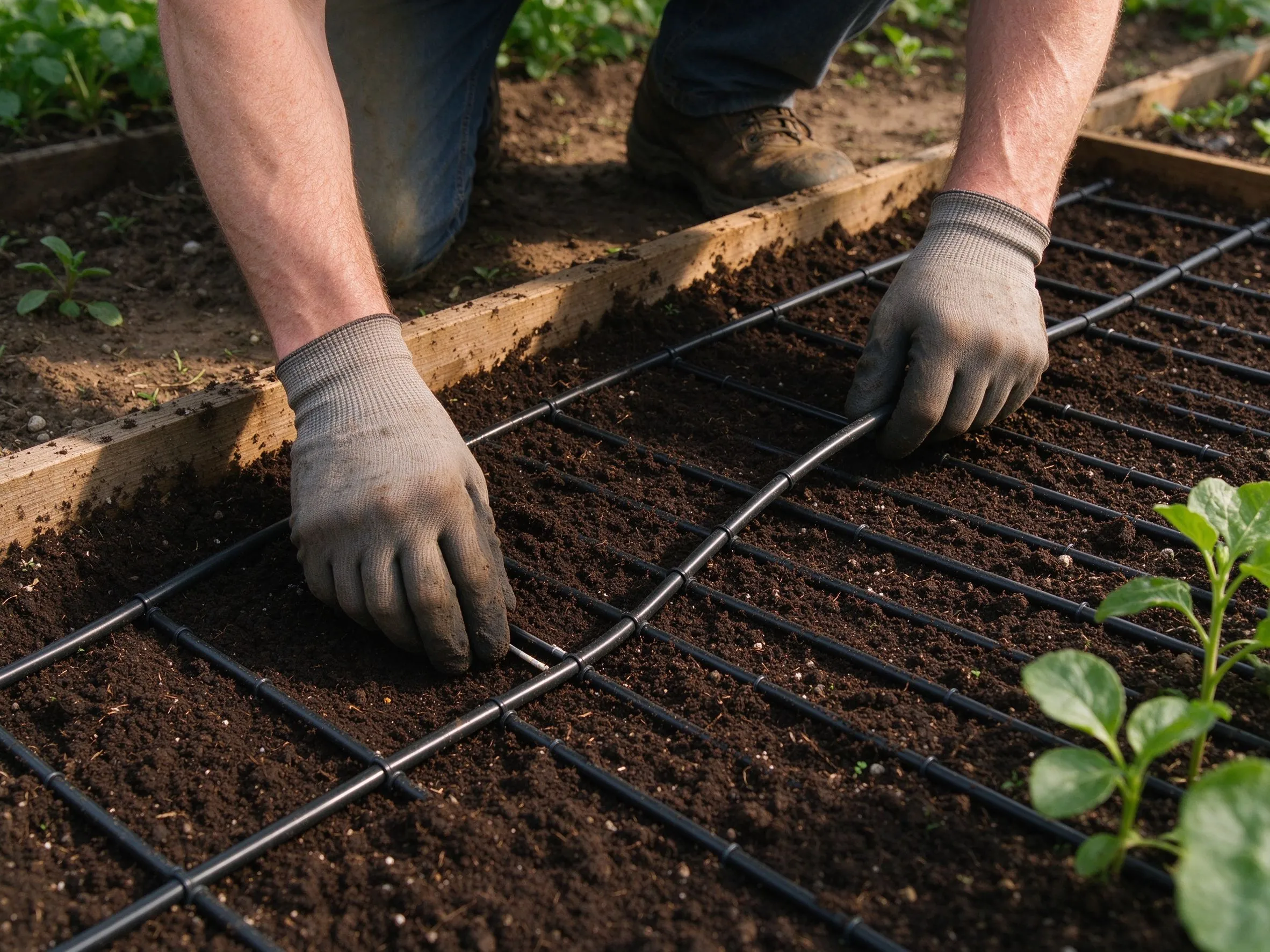
- Layout — cable spaced evenly across the bench or bed, held at consistent depth so the heat field is uniform; cold leads routed to a dry junction box outside the wet zone.
This configuration mirrors the engineering in our graphene heating film and electric heating mat lines: fixed wattage, tight resistance tolerance, and a control element that switches the load cleanly. The difference is packaging — a flexible, soil-tolerant cable instead of a floor sheet.
Step-by-Step Installation for a Propagation Bench
Installation follows a sequence our engineers document for every horticultural order:
- Calculate the load. Measure the bench area and confirm the cable length/wattage per metre, so the total load matches the thermostat rating and the supply circuit.
- Prepare the bed. Lay a drainage/insulation layer, then a 2–3 cm base of growing medium.
- Run the cable. Lay the heating cable in even loops across the bench, spacing as specified in the layout drawing; avoid crossing and keep a minimum bend radius.
- Mount the probe. Place the soil sensor at root depth in the middle of the heated area, away from the bench edge.
- Cover and connect. Add the remaining medium, connect cold leads in a dry junction box, and protect the cable entry with a gland.
- Commission. Power up, confirm the thermostat cycles at the set point, and log temperatures for 24 hours before planting.
For larger greenhouses, the same cable range works with multi-zone controllers so different crop areas hold different temperatures on one installation — a common request for mixed nurseries.
What the Field Resultados Show
Measured outcomes from horticultural installations in our project records (per SunAura factory records):
- Germination timing. Nurseries running soil-warming cable report more consistent germination across the bench compared with air-heating the whole house — the energy goes to the roots, not the roof.
- Energy use. Root-zone heating draws a fraction of the power of full air heating: a 10 m² propagation bench at 15 W/m² loads around 150 W, versus several kilowatts for whole-house air heating to achieve the same root temperature.
- Frost protection. In unheated structures, the same cable run at low load keeps a bench above freezing during cold nights, protecting young plants until the main heating season starts.
- Reliability. Fixed-resistance construction with sealed insulation gives the long service life we also build into our floor-heating products; service calls on horticultural cable are rare in our records.
Because the same factory, testing regime and ISO 9001 quality system cover both the floor-heating and horticultural ranges, a distributor can consolidate supply — one manufacturer, one documentation set, one warranty channel.
Choosing Between Soil Cable, Air Heating and Heat Mats for Greenhouses
Not every greenhouse needs the same heating approach, and the choice changes the running cost and the installation effort. The three common options in protected horticulture:
- Soil-warming cable — the right tool when the goal is root-zone temperature: germination benches, seedling propagation and frost protection at low load. Energy goes directly to the medium, so running cost per m² is low, and installation is a one-day job on a bench or bed.
- Air heating — needed when the whole house must be held above freezing or at a minimum air temperature for crop growth. Air heating draws far more power than root-zone heating, and its efficiency depends heavily on the structure’s insulation and sealing. Most nurseries use it as the background system and add root-zone heat where it counts.
- Heat mats / heating film — a practical middle ground for bench-scale work: our electric heating mat range covers propagation mats and pet/plant warming, while graphene heating film is increasingly used for bench heating where even surface heat distribution matters.
The sizing logic we use for greenhouse orders is simple: identify the crop’s root-zone target, choose the cable load per m², then decide whether a background air heater is needed for structure protection. Sending both numbers — bench area and house volume — lets our engineers quote the complete system instead of a single cable, which is what most new greenhouse projects actually need.
Project Economics: What Root-Zone Heating Returns to the Nursery
The business case for soil-warming cable is usually decided by three numbers (per SunAura factory records and common horticultural practice):
- Earlier sales window. A nursery that germinates warm-season crops on heated benches can bring the first saleable batch forward by several weeks in a cold spring — a revenue gain that typically dwarfs the heating cost of the same period.
- Consistency and yield. Even root-zone temperature means even germination and uniform seedling size, which simplifies grading and reduces waste. Nurseries report fewer uneven batches after switching to controlled bench heat.
- Low capital and running cost. A 10 m² bench at ~150 W load costs little to run and a modest amount to install; the cable, thermostat and probe for a bench-scale system are a small fraction of the cost of an air-heating unit for the same building.
The payback story is strongest for seasonal producers: the heated bench extends the effective season at the margin where the product price is highest. For a reseller or agricultural distributor, that economics message is also the sales story — which is why our wholesale documentation includes a simple load-and-cost sheet that nurseries can use to size their own systems.

Multi-Zone Control for Mixed Crop Greenhouses
A nursery that grows different crops side by side rarely wants one temperature for the whole house. Warm-season seedlings, hardy bedding plants and a propagation bench all have different root-zone targets, and running the entire structure at the warmest crop’s set point wastes energy on the rest. Multi-zone control solves this with one controller family:
- Zone definition. Each bench or bed area becomes a zone with its own thermostat and soil probe. The controller holds each zone at its own root temperature — typically 21–25 °C for warm-season germination, lower for hardy crops, and a frost-protection floor for overwintering plants.
- Load grouping. Zones share the supply circuit but switch independently; a contactor or relay per zone keeps the wiring clean and lets the nursery switch a zone off when the crop moves out.
- Daily schedules. A programmable controller can drop each zone’s set point overnight, cutting the energy bill while protecting the crop — the same scheduling logic our smart thermostat for underfloor heating range brings to floor heating applies directly to soil-warming control.
For a reseller, multi-zone capability is also the upsell path: the same cable range and controller family serve the hobby bench, the commercial propagation house and the overwintering tunnel. One product range, one spare-parts list and one support channel across the whole horticultural line makes the wholesale relationship simpler — and it is the configuration we document in the layout drawings that accompany every multi-zone greenhouse order.
Frequently Asked Questions
What is the difference between soil cable and air-heating cable?
The heating section construction is similar, but soil-rated cable uses a jacket and cold-joint sealing designed for moisture and abrasion. Air-heating applications can often use the same cable where it is protected from direct contact with water; check the product rating for the intended duty. Our engineering team confirms the correct variant at quotation so the delivered product matches the installation.
Can I use regular floor-heating cable in soil?
Use the horticultural variant. The construction is similar, but soil-rated cable has a jacket and cold-lead arrangement suited to wet, abrasive conditions. Using the wrong variant voids the warranty — check the product label for soil rating.
What temperature should the soil thermostat be set to?
It depends on the crop. Warm-season crops commonly germinate at 21–25 °C root temperature; cold-tolerant crops lower. Start from the crop guide, then adjust using the probe reading — the thermostat holds the medium temperature, not the air temperature.
Can the same cable be buried directly in soil?
Only if the product is explicitly rated for soil burial. Our horticultural cables are constructed for direct burial with a robust jacket and sealed cold-joint; floor-heating variants are not intended for that duty. Always match the cable to the application stated on the label — using a non-rated cable in soil voids the warranty and shortens service life.
What voltage options are available for greenhouse orders?
The horticultural range is produced for the main supply voltages of the destination market — 220–240 V for Europe and most of Asia, 110–120 V for North America and Japan. The wattage-per-metre figure is set at the factory for the stated voltage, so a wholesale order must specify the market voltage at quotation stage; retrofitting a different voltage in the field is not recommended and voids the warranty.
How do I protect the cable where it exits the soil?
Every soil-rated cable ends in cold leads that must terminate in a dry, IP-rated junction box outside the wet zone. The cold joint itself is sealed at the factory; the installer’s job is to protect the entry with a gland and keep the junction box elevated and dry. Our layout drawings show the recommended junction-box position for benches and beds.
What length can I order for a custom bench?
Custom lengths are available on wholesale orders, cut and terminated to the project dimensions. Provide the bench area and target wattage per square metre, and the factory supplies the exact length with the matching thermostat and probe — no on-site cutting of the heating section is required.
Source Greenhouse Heating Cables Directly from the Factory
For nurseries, resellers and agricultural supply distributors, the efficient route is a greenhouse heating wholesale order with factory engineering support. SunAura supplies soil heating cable bulk order quantities with custom lengths per project, matching thermostats and probes, and market-specific documentation. Volume orders ship with factory-direct pricing and confirmed lead times; OEM branding is available for agricultural brands that want a private-label range. Start with the bench dimensions and target voltage through the contact form, and you will receive a load calculation and quotation the same working day.