Remote Floor Heating Control for Rental and Vacation Properties
The Problem With a Property You Cannot Visit Every Day
Local floor limits still operate even if the network drops.
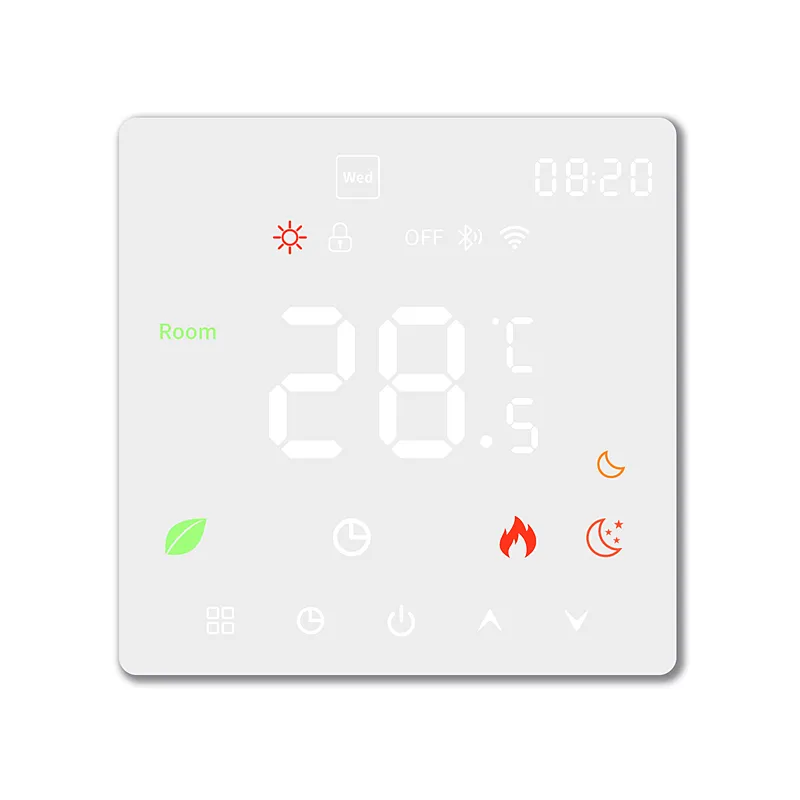
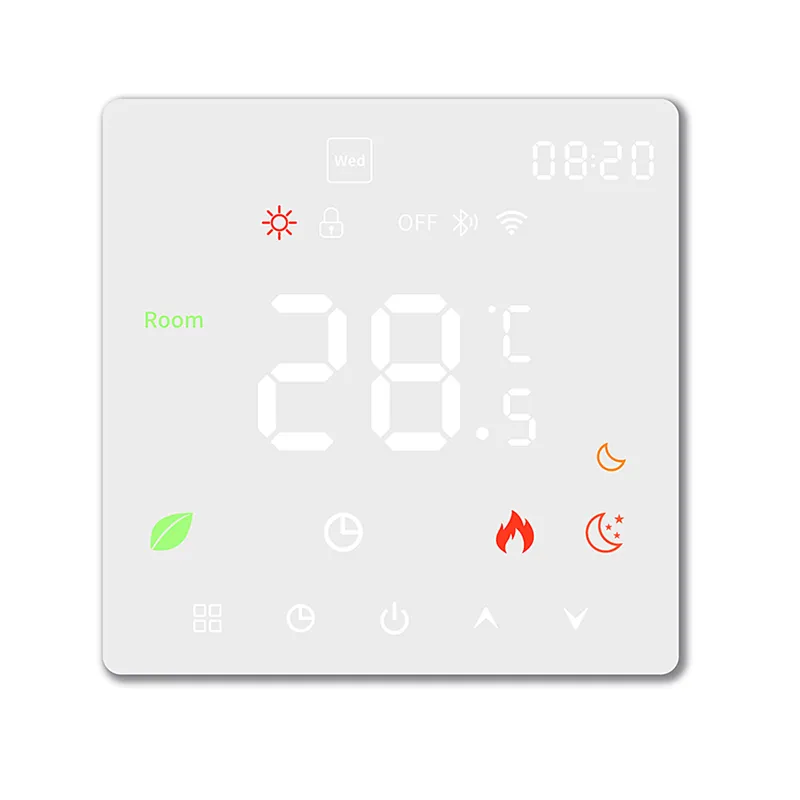
A landlord with a scattered portfolio, a holiday-let host and a facilities manager for remote apartments all share one problem: the floor heating thermostat is behind a locked door they cannot reach on a cold day. A tenant away on business leaves the system running at comfort temperature. A guest checks out and nobody remembers to set back the heating. A frozen week arrives and there is no way to confirm the property is even being heated. A WiFi-connected floor heating thermostat with genuine remote monitoring turns each of these situations from a site visit into a screen check.
SunAura Thermal produces networked thermostats for electric floor and wall heating that allow authorised remote control and monitoring without anyone entering the unit, while keeping the safety functions that an unattended heating system requires.
What Remote Monitoring Actually Adds
Remote control is not just a mobile interface for the same up-and-down buttons. For a rental or vacation property, the useful functions are the ones that protect the asset and the running cost between occupancies.
Current temperature and setpoint visibility. The manager can see both the measured room or floor temperature and the active setpoint, which makes it obvious whether the heating is running, idle, or set incorrectly.
Remote setback and frost protection. Between lets, the system can be pulled down to an energy-saving setpoint that still holds the building above freezing and protects pipes and finishes.
Schedules aligned to bookings. A comfort schedule can be enabled before arrival and switched to an away mode after checkout, rather than heating an empty apartment for the whole gap.
Alerts and status. Networked controls can flag loss of connection, sensor faults or an open window situation depending on the model and platform.
Why the Local Safety Layer Still Matters
Loads above the relay rating are switched through a contactor.
A remote command is only as reliable as the device that executes it, and a rental property cannot depend on a cloud service being reachable at the exact moment it is needed. SunAura networked thermostats retain local safety logic at the unit. The relay or switching device still enforces the floor temperature limit read by the NTC floor sensor, so a remote app cannot drive a wood or laminate floor beyond its finish limit. A high-limit cut-off and the local schedule continue to operate even if the network drops.
Load handling is equally important in a property that will not be supervised. Thermostats with an integrated relay are rated for a defined current, commonly up to 16 A in the SunAura range; larger loads are switched through a contactor so the thermostat carries only the control signal. Specifying this correctly at installation prevents the one failure mode that an absent manager cannot catch early.
The Rental Use Case: Controlling Cost Across Tenancies
For long-term rentals, the main benefit is protection against waste and misuse rather than day-to-day interference. A manager can set a reasonable comfort band, apply a setback during known absences, and verify after a maintenance visit that the thermostat was returned to its correct setting. The tenant keeps local control within the agreed range, and the landlord avoids both energy waste and the risk of a freeze claim.
The Vacation-Let Use Case: Comfort on Arrival, Savings After Departure
Holiday lets are more demanding because the heating must perform on a tight turnover cycle. A guest arriving to a cold floor is a poor first impression, while heating the property at full comfort through every empty night quietly erodes margin. Networked control lets the host pre-warm the floor ahead of check-in, run a normal comfort schedule during the stay, and revert to a setback once the booking ends. Across a season of short stays, the saving comes from the empty nights rather than from compromising guest comfort.
Connectivity and Platform Considerations
Most networked SunAura thermostats connect over the property’s WiFi and are managed through a platform such as the Tuya ecosystem, with local scheduling held on the device. Specifiers should confirm the WiFi signal at the thermostat location, the availability of a neutral and the account structure used for multiple properties. A portfolio manager benefits from a single account that groups units by building, rather than a separate login for every apartment.
Evidence and Data
Per SunAura factory records, the company has built electric heating controls since 2008 under ISO 9001:2015 quality management, with CE, RoHS, LVD and EMC compliance. The thermostat range uses NTC temperature sensors, integrated relays up to 16 A and contactor options for higher loads, with weekly scheduling and networked control. Electrical and switching ratings are recorded per production batch.
When Remote Control Is Worth the Investment
The case is strongest where the cost of a site visit is high, where properties sit empty between occupancies, or where a single manager covers many units. In those situations, a networked thermostat is not a luxury interface; it is the only practical way to hold frost protection, limit waste and deliver a warm floor on arrival without sending someone to the door. The local safety layer stays in charge of the hardware, and the remote layer takes care of everything that used to require a journey.
Source: SunAura Thermal (www.sunaura.ltd), manufacturer of WiFi and RF floor heating thermostats, sensors and switching controls from Qingdao, China.
We use cookies to improve your browsing experience, analyse site traffic and personalise content. By accepting, you consent to our use of cookies. You can choose "Essential only" to continue without non-essential cookies. Read our privacy policy