
Self-Regulating Heating Cables
PTC self-regulating heating cables for pipe freeze protection, fire lines and roof de-icing — cut-to-length, factory-direct, OEM/ODM welcome.
Self-Regulating Heating Cables — The Full Range
Every option below is manufactured in our Qingdao factory, batch-tested and ready for wholesale, retail or OEM orders.
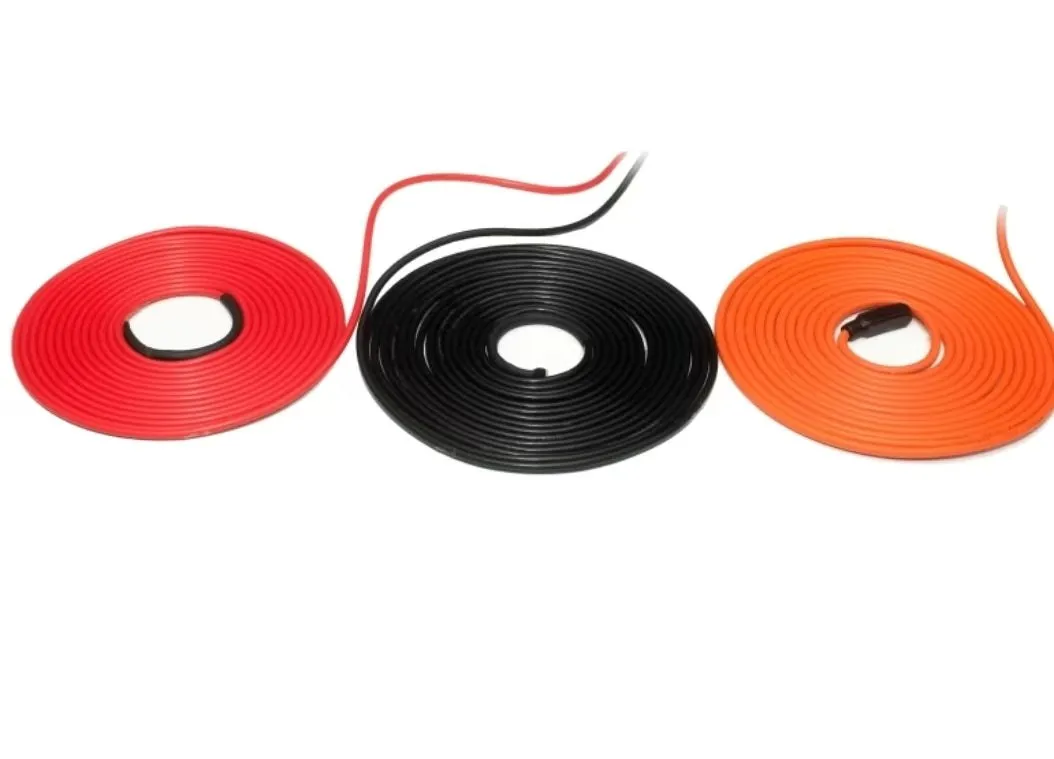
Self-Regulating Fire Pipe Heating Cable
Pre-assembled PTC heat trace cable for fire sprinkler lines and standpipes — 120 V or 240 V industrial plug, safe on copper, steel, PVC and PEX pipe, and self-limiting so it never overheats when overlapped.
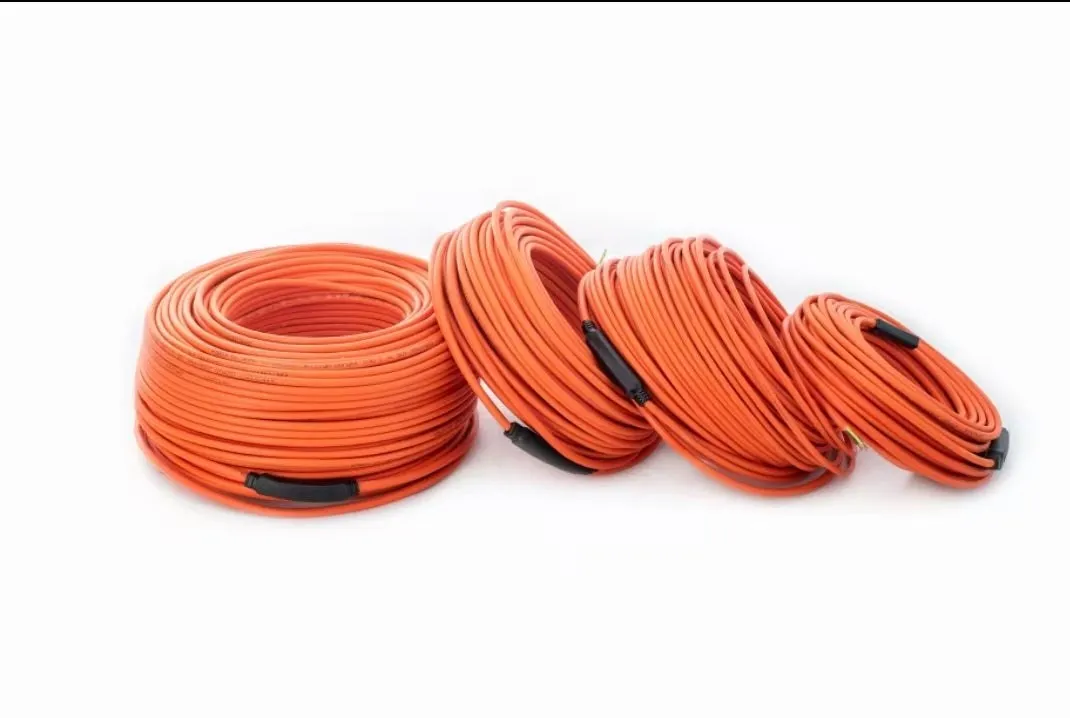
Self-Regulating Sewage Pipe Heating Cable
Self-regulating trace cable for outdoor and unheated sewage and drainage lines — keeps drains flowing through winter with a heavy-duty plug and point-by-point thermal response.
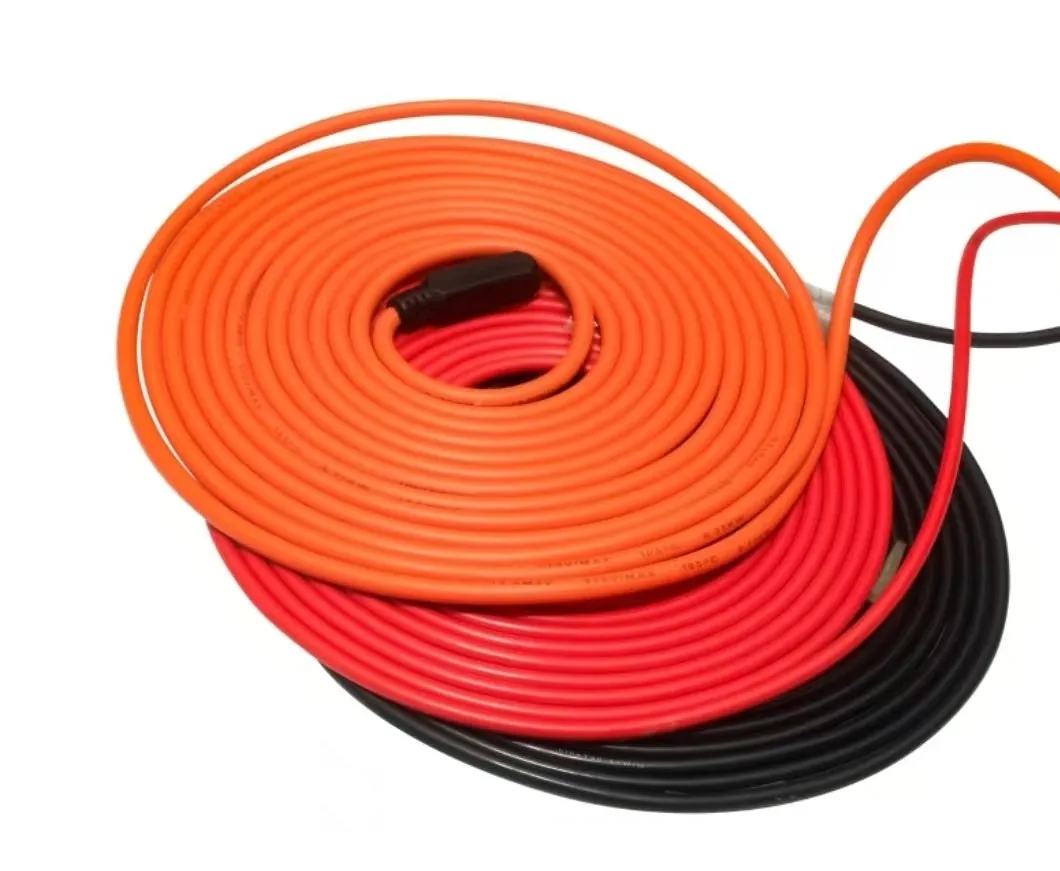
Self-Regulating Water Pipe Heating Cable
Plug-and-play PTC heating cable for potable water pipes — raises output only where the pipe gets colder, preventing burst pipes in cold climates without wasting energy.
Which Self-Regulating Heating Cables Should You Choose?
A quick decision guide by installation scenario — tap through to the full product page for specifications.
Self-Regulating Fire Pipe Heating Cable
Pre-assembled PTC heat trace cable for fire sprinkler lines and standpipes — 120 V or 240 V industrial plug, safe on copper, steel, PVC and PEX pipe, and self-limiting so it never overheats when overlapped.
View specs & price →Self-Regulating Sewage Pipe Heating Cable
Self-regulating trace cable for outdoor and unheated sewage and drainage lines — keeps drains flowing through winter with a heavy-duty plug and point-by-point thermal response.
View specs & price →Self-Regulating Water Pipe Heating Cable
Plug-and-play PTC heating cable for potable water pipes — raises output only where the pipe gets colder, preventing burst pipes in cold climates without wasting energy.
View specs & price →Why Buy Self-Regulating Heating Cables Direct from the SunAura Factory
No middleman, no import layers — you negotiate directly with the manufacturer of the product you are buying.
Factory-Direct Wholesale Price
Export pricing with volume discounts for distributors, contractors and e-commerce sellers.
Low MOQ & Fast Lead Time
Flexible minimum order quantities and 7–25 day production lead times for stock lines.
OEM / ODM & Private Label
Your logo, your packaging, custom parameters — we build your brand on proven hardware.
Quality & Warranty
CE & RoHS compliant, batch-tested, with factory after-sales and warranty support.
What Is a Self-Regulating Heating Cable?
A self-regulating heating cable is a parallel heat trace wire whose conductive polymer core changes resistance with temperature: it draws more power when the pipe is cold and backs off when it warms up. The result is self regulating pipe heating cable that protects water, sewage and fire-protection lines from freezing without a separate thermostat on every run, and without overheating when the cable touches itself at overlaps.
SunAura is a factory-direct heat trace cable manufacturer based in Qingdao. This category covers our complete range of self regulating trace heating cable for pipe freeze protection, roof de-icing and industrial tracing — every model below is batch-tested on our own line and ready for wholesale and OEM orders.
How PTC Self-Regulating Heat Trace Works
The heart of every PTC heating cable is a positive-temperature-coefficient (PTC) polymer matrix between two parallel bus wires. When the local temperature drops, the matrix becomes more conductive and the cable heats up; as it approaches the set band, it naturally reduces output. This self regulating heat trace behaviour means one continuous run can give different power at every point along the pipe — more heat where the windchill hits, less where the building is warm.
Because output is governed by the core itself, a cut-to-length heat cable can be trimmed on site to the exact pipe length, and sections of PTC heating tape can overlap safely without hot spots. That is the key practical difference from fixed-resistance wire, which must be ordered to a precise length.
Applications: Water Lines, Sewage Drains & Fire Protection
We engineer three pre-assembled lines in this category, each with an industrial plug in 120 V or 240 V so installers can hang them straight on the pipe:
- Self-Regulating Water Pipe Heating Cable — plug-and-play freeze protection heat cable for potable water mains, garden hoses, pump houses and condensate lines. Safe on copper, steel, PVC and PEX pipe.
- Self-Regulating Sewage Pipe Heating Cable — keeps outdoor and unheated drainage lines flowing in winter, preventing ice blockages that take whole facilities offline.
- Self-Regulating Fire Pipe Heating Cable — engineered for fire sprinkler lines and standpipes, where an ice blockage is a life-safety issue, not just an inconvenience.
For larger roof-edge runs, the same PTC technology is also supplied as roof deicing heat cable — and if you prefer a pre-made mat for gutters and valleys, see our snow melting mats instead.
Technical Specifications
| Parameter | Specification |
|---|---|
| Voltage | 120 V / 240 V pre-assembled; custom voltage 110–230 V on ODM orders |
| Output | Standard 16W / 30W / 45W self regulating cable classes available by project selection |
| Construction | Parallel bus wires + PTC core, tinned copper braid, outer FEP/PE jacket |
| Cutting | Cut-to-length on site; safe overlap, no overheat |
| Applications | Water pipe freeze protection, sewage drainage, fire sprinkler lines, roof de-icing, industrial tracing |
| Certification | CE & RoHS; tested per batch in our Qingdao laboratory |
Choosing the Right Self-Regulating Pipe Heating Cable
When to choose PTC over fixed wattage. Pick a self regulating heating cable whenever runs are hard to size, traverse changing environments, or may be overlapped on site. Choose a fixed-resistance cable instead when the circuit is long, uniform and fully specified — that is the role of our double-conductor heating cable (SA-CABLE), and of our high-temperature silicone heating cable for 200 °C environments.
Output class. 16 W/m covers mildly exposed indoor pipes; 30 W/m suits typical outdoor water and sewage lines; 45 W/m is the industrial self-regulating cable class for steel risers, warehouse piping and cold-climate roof edges. Tell us your pipe material, insulation depth and minimum ambient temperature and our engineers will size the class free of charge.
Controls. Plug-in kits run directly from a standard outlet, but for energy efficiency we recommend pairing the circuit with a smart thermostat or snow/ice sensor so power is drawn only when freezing conditions are real.
Factory Price, Wholesale & OEM Service
SunAura has manufactured electric heating products in Qingdao since 2008. Every reel of pipe trace heating cable leaves our floor after DC-resistance, insulation-resistance and high-voltage batch tests, and CE/RoHS documentation travels with every shipment. We sell factory-direct: factory price export rates for distributors and contractors, low MOQ on stock lengths, and a same-day quotation when you send pipe drawings or a product list.
Our OEM / ODM and private-label programme covers custom voltage (110/230 V), custom wattage classes, custom cold-tail length, plug types for your market and your own retail packaging. Trade customers can request a free sample reel (freight collect) to verify flexibility and heating feel before a bulk order. Whether you need 20 plugs for a housing project or a 40 ft container of branded trace cable, the same engineering contact supports your project from layout to delivery.
Pipe Freeze Protection & Heat Trace Applications
Self-regulating heating cable is first and foremost a pipe freeze protection and heat trace product. The same PTC polymer core that lets a cable self-regulate also makes it the safest possible choice for protecting water supply pipes, sewage drains, fire sprinkler lines and condensate lines from freezing in winter. Below we summarise the application logic, the sizing starting points, and the installation rules our engineering team uses on real export orders. For the full end-to-end design guide, read our dedicated article Pipe Freeze Protection: Heat Trace Cable Sizing & Installation.
Why Self-Regulating PTC Is the Default for Heat Trace
On a freeze-protection circuit the pipe temperature changes along its length: the section inside a heated basement stays warm, the section through an unheated crawl space is moderate, and the last metre before an outdoor faucet is the coldest point on the run. A constant-wattage cable puts out the same watts per metre everywhere, which means the warm sections are over-heated (wasting energy) and the cold section is under-sized. A PTC self-regulating cable puts out more watts where the pipe is cold and fewer watts where it is warm, automatically — one continuous cable, different output at every point. It also tolerates overlap at elbows and tees without creating hot spots, which constant-wattage cable cannot do. That is why every SunAura pipe heat trace kit is built on the PTC core.
The other practical advantage on a jobsite is cut-to-length flexibility. Because the heating element is a parallel circuit across two bus wires, the installer can trim the reel to the exact pipe length with a knife and terminate the cut end with the supplied end-seal kit, instead of waiting weeks for a factory-built fixed-length assembly. That flexibility is what lets us ship stock reels and short-lead kits to distributors, while still offering factory-pre-terminated plug-in assemblies for contractors who want zero field termination.
It is also worth being honest about where self-regulating PTC does not win. On very long, straight, fully-insulated industrial runs with a single central thermostat, a constant-wattage double-conductor cable can be cheaper per metre and easier to engineer. That is the role of our SA-CABLE double-conductor heating cable. And on process lines that need to hold a pipe at 150 °C or higher, the PTC polymer itself is not rated, so the design moves to mineral-insulated or silicone constructions. For the freeze-protection job — holding a pipe just above freezing — PTC is the right tool, and we say so rather than trying to sell every application a self-regulating reel. If your design falls somewhere between these bands, send us the duty point and we will tell you honestly which architecture fits; we would rather ship the right product once than rework a wrong installation.
Typical Pipe Diameter to Cable Output Guidance
The table below gives typical starting points for insulated water pipe at a design ambient of roughly −10 °C, holding the pipe at +5 °C. These are rule-of-thumb guidance values, not a substitute for a formal heat-loss calculation. SunAura stocks the 16 W/m, 30 W/m and 45 W/m output classes to cover these rows.
| Nominal pipe OD | Typical insulation | Typical cable output | Typical application |
|---|---|---|---|
| 15–20 mm (½–¾ in) | 13–19 mm closed-cell foam | 10–16 W/m | Indoor exposed runs, hose bibs, condensate lines |
| 25–32 mm (1–1¼ in) | 19–25 mm closed-cell foam | 16–25 W/m | Outdoor residential mains, pump-house pipework |
| 40–50 mm (1½–2 in) | 25 mm closed-cell foam | 25–30 W/m | Commercial service lines, sprinkler risers |
| 65–100 mm (2½–4 in) | 25–32 mm closed-cell foam | 30–45 W/m | Warehouse mains, unheated steel pipe |
| >100 mm (4 in+) | 32 mm+ mineral wool | 45 W/m+ / dual circuit | Industrial lines — formal heat-loss calc required |
If your design minimum ambient is colder than −10 °C (northern North America, northern Europe, high-altitude sites), move up one wattage class. If the pipe is uninsulated or exposed to wind, treat it as two classes up — the cheapest fix is almost always better insulation, not a hotter cable. As a sanity check, a well-insulated 25 mm copper pipe at −10 °C loses roughly 10–15 W per metre; the same pipe bare loses 80 W per metre or more. The 16 W/m class is matched to the insulated case, which is why we always specify insulation as part of the system rather than as an afterthought.
Where SunAura Self-Regulating Cable Is Used as Heat Trace
- Potable water supply pipes — copper, steel, PVC and PEX mains in unheated garages, crawl spaces, pump houses and exterior wall penetrations. Our water-pipe heat trace kits ship pre-terminated with a 120 V or 240 V plug for direct connection.
- Fire sprinkler and standpipe lines — where an ice blockage is a life-safety issue. PTC self-limiting output cannot overheat the pipe even when overlapped, which is critical inside sprinkler riser closets. See the fire-line heat trace range.
- Sewage and drainage lines — outdoor gravity drains, septic tank outflow pipes and roof storm-water lines that freeze in winter. The sewage heat trace cable is jacketed for wet, buried or exposed service.
- Condensate and AC drain lines — small-bore tubes that drip condensate into a drain pan; a short 10–16 W/m run prevents winter blockages at the exterior wall exit.
- Tank and instrument tracing — for higher-temperature process duty above the PTC polymer limit, engineers move to our silicone heating cable (up to 200 °C) rather than pushing self-regulating cable beyond its rated band.
Installation & Control Best Practice
Field failures almost always come down to five errors: untested cable buried in insulation, a crushed cable under a support hanger, a constant-wattage cable overlapped on itself, a missing end seal, or a thermostat sensor strapped to the wrong surface. Follow the installation sequence in our heat trace sizing & installation guide: measure including valves and fittings, affix the cable at the 4–5 o’clock position with aluminium tape, branch at tees rather than splitting the cable, terminate with the manufacturer’s end-seal kit, then insulate immediately after a Megger test. For energy savings, pair the circuit with a pipe-sensing thermostat from our thermostats & controls range — pipe-mounted NTC probes turn the circuit on below +5 °C and off above +10 °C, cutting annual energy use by roughly half compared with an always-on plug.
Every outdoor heat trace circuit must be on a 30 mA residual-current (GFCI/RCD) device, and the breaker should be sized at 1.25× the nameplate circuit load to allow for the cold-start inrush characteristic of PTC cores. Weather-exposed junction boxes are rated IP65 or higher. These are not SunAura-specific rules — they are the baseline electrical-code expectations that any inspector will check on a commercial handover.
Commissioning and Winter Inspection
A heat trace system that was commissioned in October is not the same system that protects the pipe in January if insulation has been split by a frost-heaved hanger or a sensor has slipped off the pipe. Before the first hard freeze every winter, walk the circuit: check that insulation sleeves are closed and sealed at every valve and tee, confirm the pipe-sensor still reads the pipe (not the air next to it), and verify the breaker has not tripped. On unmanned sites — remote pump houses, weekend cabins, refrigerated loading docks — we recommend a smart Wi-Fi thermostat with an alarm output, so a fault notifies the service technician before a burst occurs. This commissioning-and-inspection habit is the difference between a heat trace system that runs for ten winters and one that fails in its first.
SunAura ships every reel of self-regulating cable from our Qingdao factory with batch DC-resistance, insulation-resistance and high-voltage test reports, and CE/RoHS documentation that travels with the shipment. Distributors and contractors can request a free sample reel (freight collect) to verify flexibility, jacket finish and the PTC heating feel before committing to a container order. Trade terms are EXW or FOB Qingdao, with full export documentation and private-label packaging available on OEM programmes.
Send us your pipe schedule — diameter, material, insulation thickness, design minimum ambient and circuit length — and our engineers will confirm the wattage class, circuit count and controller free of charge. Custom voltage, wattage class, cold-tail length and plug type are all available under our OEM / ODM programme. Trade customers can also request a free sample reel to test the cable on a live section of pipe before bulk commitment; we will size the sample to your most common pipe size so the trial is representative of the real installation.
FAQ
Can I cut self regulating heating cable to length on site?
Yes. Because it is a parallel-circuit PTC core, a self regulating heating cable can be trimmed to any length on site and its output per metre stays the same. Always use a certified end-seal kit on the cut end.
How do I size heat trace cable for a water pipe?
Rule of thumb: 16 W/m for insulated indoor pipe, 25–30 W/m for outdoor pipe with insulation, 40–45 W/m for uninsulated steel risers or extreme climates. Send us pipe diameter, insulation thickness and design ambient temperature and we will size it for free.
Is PTC heating cable safe on fire sprinkler lines?
Yes — that is a core application. PTC self-limiting output cannot overheat even when overlapped, and our fire-line kits ship pre-terminated in 120 V or 240 V for fast compliance-minded installation.
Do you offer wholesale and free samples?
Yes. We supply distributors, contractors and installers at factory-direct wholesale rates, with flexible MOQ and free sample reels for qualified trade customers on a freight-collect basis.
What controller do you recommend?
A simple plug-in kit runs direct from the mains, but for energy savings we recommend pairing the circuit with one of our smart thermostats or a snow/ice sensor so power flows only when freezing moisture is detected.
Related Products & Categories
Browse the full products hub, or compare the neighbouring ranges in our factory catalog:
- Silicone heating cable — flexible 200 °C trace wire for tanks, instruments and drain lines.
- Double-conductor heating cable (SA-CABLE) — fixed-wattage IPX8 cable for screed, pipe and snow applications.
- Snow melting mats — pre-made mat alternative for roofs, driveways and gutters.
- Step snow melting mats — heated stair treads for entrances and walkways.
- Thermostats & Controls — WiFi and wired controllers to complete the circuit.
Ready for a factory price quote? Contact our export team with your pipe schedule, target voltage and delivery country — we reply within 24 hours.
Explore More SunAura Categories
Most projects combine an element with a thermostat and installation accessories — browse the whole range.