Industrial Heating Blanket Procurement Guide for Drums and IBC Totes
Introduction: Buying the Heating Jacket, Not Just the Wattage
Coverage and element layout decide how evenly the product warms.
Industrial heating blankets look simple from the outside: a jacket that wraps around a drum, IBC tote or tank and warms the contents. The apparent simplicity makes them easy to buy on a single number, usually the wattage or the price. Yet a heating blanket is a process component that sits between a valuable material and a production schedule. Specified well, it holds a viscous product at a pumpable temperature, protects heat-sensitive goods and runs safely for years. Specified poorly, it produces hot spots, fails to reach the centre of the container, trips in a damp environment or cannot be validated for a hazardous material. This procurement guide sets out the decisions a buyer should make when specifying drum, IBC and tank heating blankets, from understanding the material and container through to controls, certification, supplier evaluation and total cost.
SunAura Thermal manufactures a range of drum, IBC and equipment heating blankets with adjustable temperature control and high-limit protection, and the framework here reflects the engineering questions that apply across that range.
1. Start With the Material, Not the Heater
The correct starting point is the product being heated, because its properties define every later choice. Four characteristics matter most.
1.1 Viscosity and Temperature Behaviour
Many materials are heated because viscosity falls sharply with temperature: oils, resins, waxes, fats, syrups and certain chemicals. The buyer should identify the temperature at which the material becomes pumpable or processable, and the temperature range over which it remains workable. A material that changes gradually can tolerate a broad control band; one that thins only near a specific temperature needs tighter control. Because the blanket heats through the wall, the relationship between the wall temperature and the cooler centre of the container also matters, especially in a full drum.
1.2 Temperature Sensitivity and Upper Limit
Some products are damaged, degraded or altered by excessive heat, even if they need warmth to flow. The buyer must know the maximum safe temperature and whether localised wall heat can exceed it. This sets the requirement for accurate control and high-limit protection. A blanket that can reach a high wall temperature without a cut-out is a genuine risk for a heat-sensitive material, regardless of its average setpoint.
1.3 Hazardous and Flammable Characteristics
Where a material is flammable, gives off vapour or is classified as hazardous, the electrical specification and the working environment take on additional weight. The buyer should identify the relevant classification and any requirements that apply to electrical equipment in the area. Not every blanket is suitable for every environment, and a general-purpose jacket should not be assumed to meet a hazardous-area requirement it was never designed for.
1.4 Corrosion and Compatibility
The jacket’s inner and outer materials may be exposed to spills, splashes and aggressive atmospheres. Compatibility with the specific product, plus resistance to moisture, oils and wash-down, influences both safety and service life.
2. Match the Blanket to the Container
Compliance is verified against actual certificates, not assurances.
Heating blankets are container-specific, and a jacket sized for one geometry will not perform correctly on another.
2.1 Drums
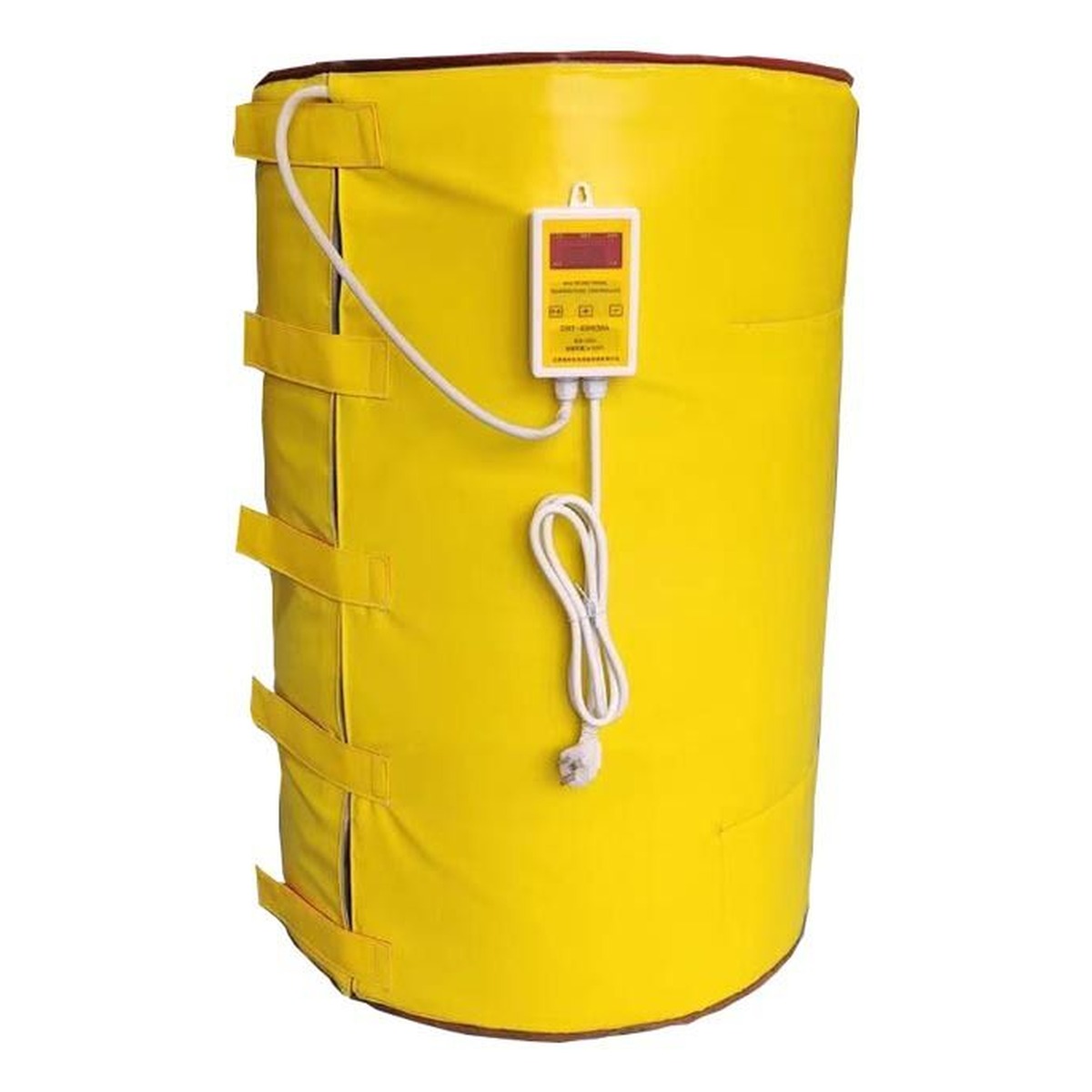
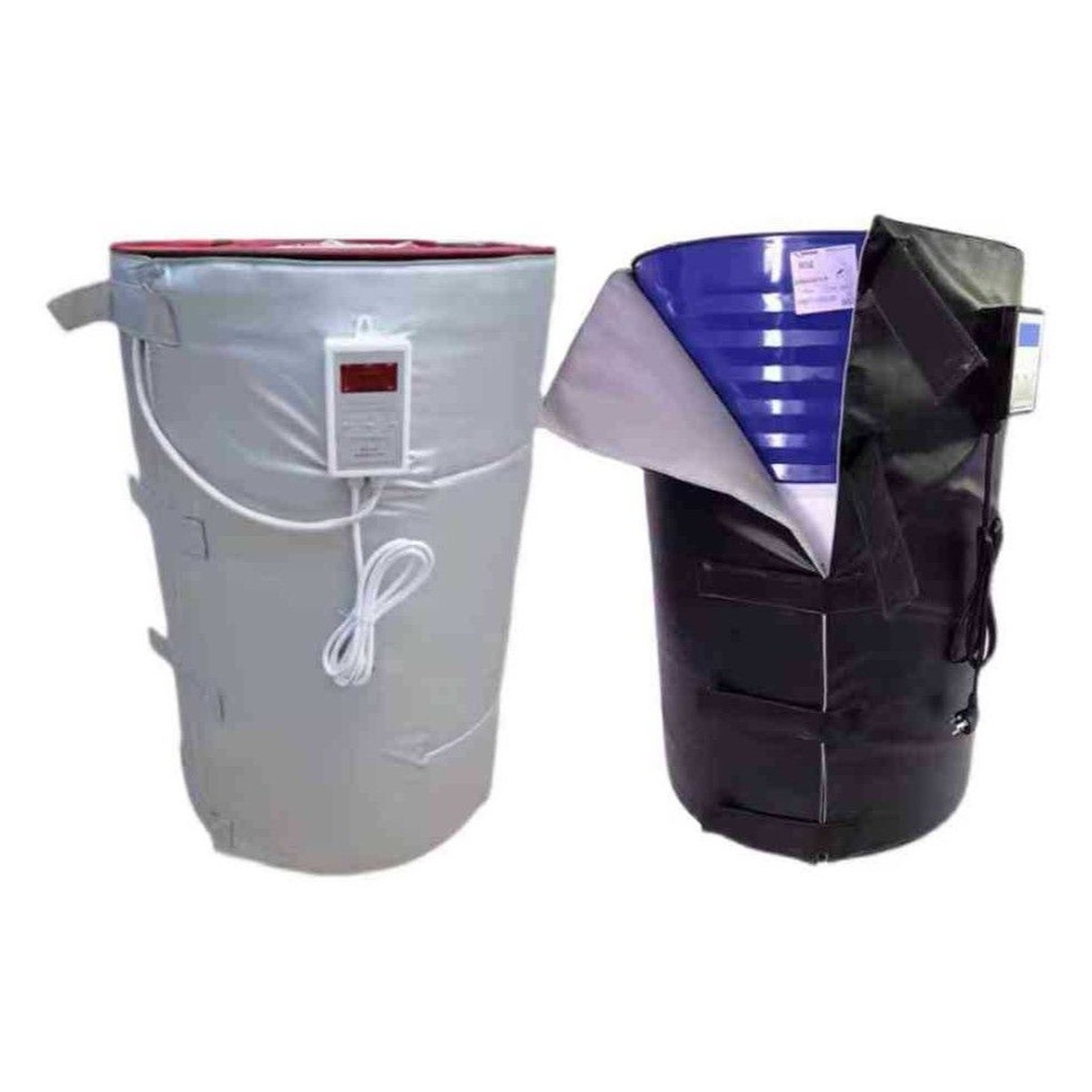
Drum blankets are built around the standard cylindrical drum and cover a defined portion of its circumference. The coverage area and the tightness of the fit decide how evenly heat transfers to the steel wall. A loose jacket leaves an insulating air gap and reduces conductive transfer, so fasteners and strap design are functional rather than cosmetic.
2.2 IBC Totes
IBC heating is more complex because the container is large, often plastic or composite, and holds a much greater volume. The blanket must cover the accessible faces while accommodating the frame, pallet and valve. Heat transfer through a composite wall is slower than through steel, and the temperature at the centre of a full tote lags the wall considerably, so the thermal design and the allowable heat-up time need to be realistic rather than based on a drum’s response.
2.3 Tanks and Equipment
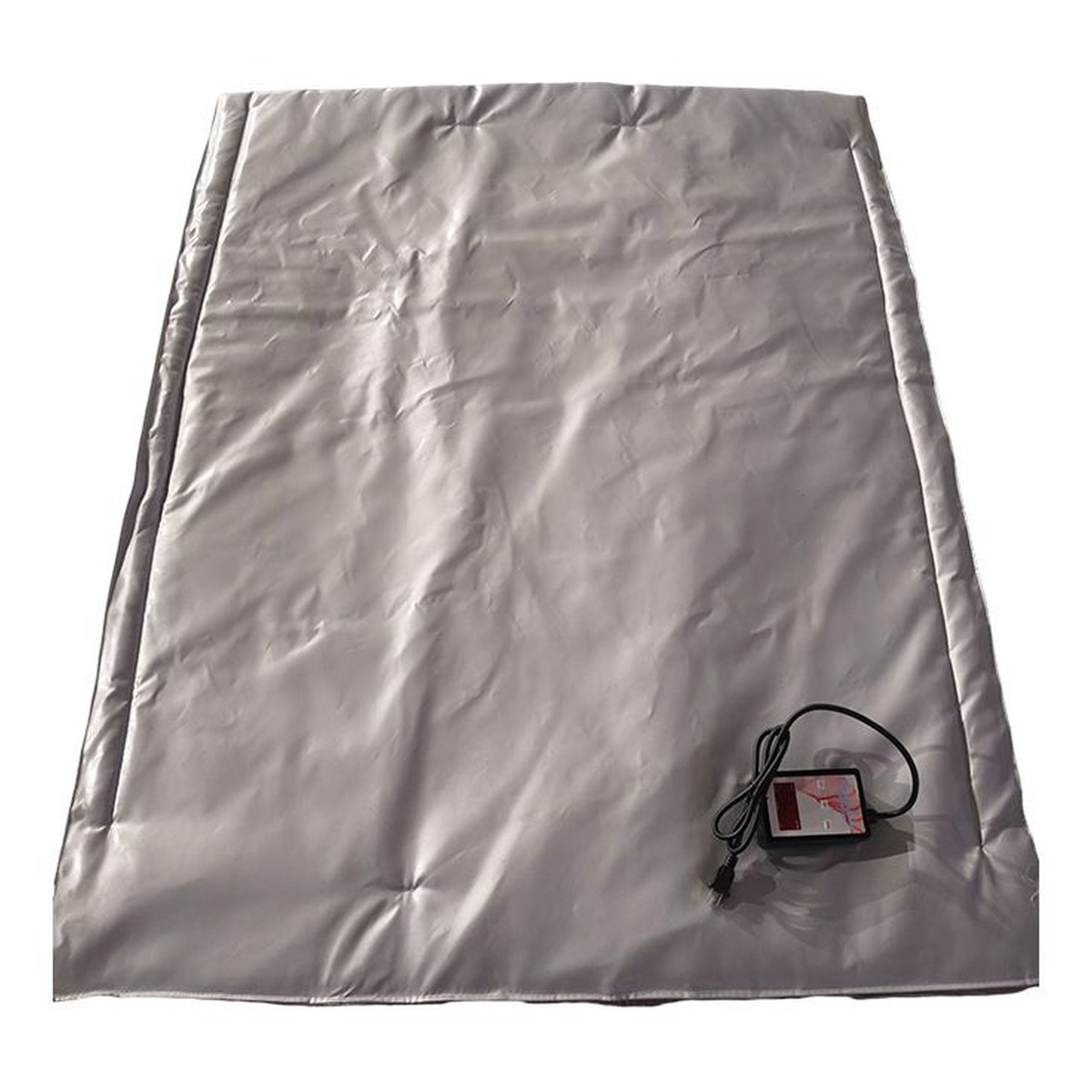
Larger tanks and non-standard equipment frequently need custom jackets shaped around nozzles, valves, pumps and fittings. A removable blanket that allows equipment to be serviced is more useful than a permanently fitted cover, and sections that must be opened regularly can be built as separate panels.
3. Understand Coverage and Heat Distribution
Even heating matters because a blanket’s job is to warm the whole product, not just the wall directly behind the element. Buyers should ask how the heating element is distributed across the jacket and whether the design avoids concentrated hot bands. A blanket that covers only a narrow strip will produce a warm wall in that strip while the rest of the container stays cold, forcing longer run times and widening the temperature variation. The contact area, the element layout and the fit together determine the uniformity that the material actually experiences. Per SunAura factory records, blanket function and temperature control are tested per production batch rather than assumed from the rated wattage.
4. Specify the Controls and Safety Devices
The control system is where a basic heater and a process-grade blanket diverge.
Adjustable controller. Allows the maintain temperature to be set to the specific material rather than a fixed value.
High-limit protection. Cuts power independently if the jacket exceeds a safe temperature, which is the key safety layer for heat-sensitive products and for insulated jackets that retain heat.
Temperature indication. Gives the operator visibility of the setpoint or the measured temperature and supports validation.
Sensing location. The position of the control sensor decides how closely the reading represents the product; a sensor that only reads the heater itself can mask a cold centre.
For materials that need documented handling, the buyer may require a way to record or verify temperatures, which should be raised at the specification stage rather than improvised later.
5. Insulation and the Operating Environment
Whether the blanket needs integrated insulation depends on the ambient temperature and the hold time. In a heated store with short holds, a basic jacket may be adequate; in an unheated winter bay, outdoors, or for long holds, an insulated jacket reduces the heat the heater must replace and shortens heat-up. The buyer should also define the moisture and dust environment, because the electrical connection and outer facing must survive it. Outdoor and wash-down locations call for appropriately rated connections, commonly IP67 for outdoor electrical components, and an outer facing that will not absorb water.
6. Certification and Compliance
Compliance is verified against documents rather than assurances. Buyers should confirm the electrical and safety certifications relevant to their market and request the specific evidence for the model rather than a generic statement. Per SunAura factory records, the company operates under ISO 9001:2015 quality management with ISO 14001 and ISO 45001 systems, and its heating products carry CE and RoHS compliance. The buyer should not invent or assume certificate numbers; the supplier provides the actual records that apply to the production batch, and any hazardous-area requirement is confirmed against a genuine rating for that environment.
7. Evaluate the Supplier
Beyond the product, the supplier’s manufacturing depth decides how reliably a custom or repeat order is delivered. Useful questions include the length of manufacturing experience, the production lines and in-house testing available, the quality control applied to each batch, the ability to produce custom sizes and the support offered after delivery. A supplier that batch-tests electrical safety and temperature function, and records the results, can stand behind a specification rather than merely ship a catalogue item. For OEM buyers, the ability to hold consistent construction across repeat orders and to provide documentation is part of the product’s value.
8. Total Cost, Not Purchase Price
The cheapest blanket is not always the lowest-cost solution. The total calculation includes the purchase price, the energy used to maintain temperature, the cost of downtime if a material cannot be pumped, and the replacement frequency of a jacket that fails in service. An insulated, well-controlled jacket may cost more upfront but run shorter cycles and protect a valuable material; a cheap jacket with poor coverage can run continuously and still leave a cold centre. Buyers should compare the full set of requirements—coverage, control, limit protection, insulation and certification—rather than reducing the decision to wattage or unit price.
8.1 Heat-Up Time and the Centre-Lag Problem
Buyers often judge a blanket by how quickly the wall warms, but the wall is not the product. Heat moves from the jacket through the container wall and then slowly conducts through the material itself. In a full IBC tote, the centre can lag the wall by hours, especially with a viscous product that does not circulate naturally. Three practical consequences follow. First, the heat-up time should be planned against the centre reaching the process temperature, not the wall reaching the setpoint. Second, a high wall temperature is not a shortcut to a warm centre, because it risks the material at the wall while the core remains cold, which is precisely why even coverage and accurate limits matter. Third, where a process cannot wait for slow conduction, buyers can specify greater coverage, a modestly higher but still safe output, or plan the heat-up to begin before the material is needed. Asking the supplier to explain the expected heat-up against a specific container and volume is more useful than accepting a generic warm-up claim.
8.2 Maintenance, Inspection and Service Life
A heating blanket is a durable asset when it is used within its design and inspected periodically. Routine care is straightforward and protects both safety and lifespan. The jacket is kept in close contact and checked for straps that have loosened, because a gap reduces heat transfer and can create local overheating. The outer facing is inspected for cuts, abrasion and absorbed moisture, and the electrical connection and cable are checked for damage, especially on jackets that are moved repeatedly between containers. Controllers and high-limit devices are confirmed to function, since a limit that no longer operates removes the main safety layer. Jackets that are removed and refitted often benefit from being rolled rather than folded sharply, which protects the internal element from repeated stress. A documented inspection routine, aligned with the site’s electrical checks, gives a clear view of remaining service life and prevents a damaged jacket from remaining in service on a hazardous material.
Container: drum, IBC or tank, dimensions, wall material, valve and frame constraints.
Coverage: element distribution, contact area, fit and expected uniformity.
Controls: adjustable setpoint, high-limit cut-off, sensing location, temperature indication.
Environment: ambient temperature, insulation need, moisture, connection rating.
Compliance: actual electrical and safety certificates for the model and batch.
Supplier: experience, in-house testing, custom capability, documentation and support.
Cost: purchase price plus energy, downtime and replacement over the service life.
9.1 Common Procurement Mistakes
A handful of recurring mistakes account for most unsatisfactory blanket purchases. Buying on wattage alone ignores coverage, fit and control, so two jackets with the same nominal power can perform very differently. Assuming a drum jacket will behave the same on a large IBC tote overlooks the slower wall transfer and the centre lag in a bigger volume. Treating the high-limit device as optional removes the protection that matters most for a heat-sensitive material, and skipping the actual certificates in favour of a verbal assurance leaves a hazardous-area claim unverified. Finally, ignoring the operating environment means a jacket rated for a dry store may be fitted somewhere damp or outdoors, where its connection and facing are not adequate. Each of these mistakes is avoided simply by working through the specification checklist and requiring evidence for the claims that carry safety or compliance weight.
10. Evidence and Data
Per SunAura factory records, the company has manufactured industrial heating products since 2008, operating six automated production lines and an in-house quality laboratory under ISO 9001:2015, ISO 14001 and ISO 45001 management, with CE and RoHS compliance on heating products and adjustable controllers plus high-limit protection on blankets. Electrical ratings and temperature-control function are recorded per production batch.
Conclusion
A heating blanket is a process investment that protects both a material and a schedule, and the decisions that determine its performance are made before the order is placed: the material’s temperature needs and limits, the container geometry, the coverage and uniformity, the control and safety devices, the environment, and the documented compliance. Working through those requirements and evaluating the supplier’s actual testing capability produces a jacket that heats evenly, controls accurately and can be validated, rather than one that merely matches a wattage on a quote.
We use cookies to improve your browsing experience, analyse site traffic and personalise content. By accepting, you consent to our use of cookies. You can choose "Essential only" to continue without non-essential cookies. Read our privacy policy