
Underfloor Heating Cost UK 2026: Electric System Prices
How much does underfloor heating cost in the UK in 2026? That question has two answers: the price on a supplier’s website, and the price on your first electricity bill. This guide separates the two. It is written by SunAura, a manufacturer of electric underfloor heating elements exporting to over 50 countries from our Qingdao plant, so the framing is deliberately honest: every figure below is an industry estimate range, indicative only, built from UK installer feedback, material costs and typical project scopes. It is not a quote. For real, project-specific pricing, request a factory quote with your room layout and floor build-up, and we will price the exact elements, thermostats and accessories you need.
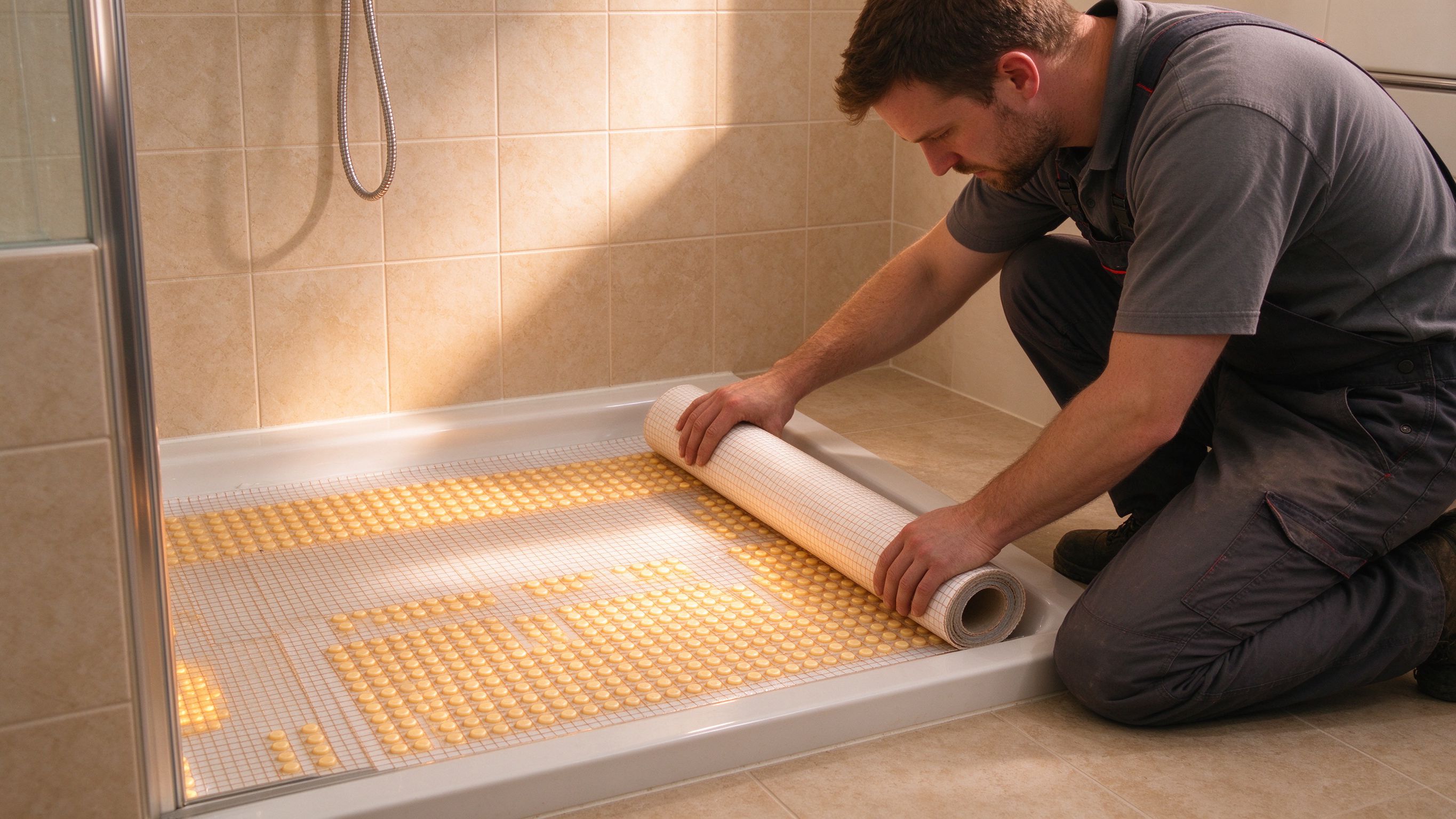
What this guide covers
We walk through the three cost layers that decide whether a UK underfloor heating project is good value: the material cost of the heating element itself, the installation cost (whether you DIY or pay an installer), and the long-term running cost on your electricity meter. We include worked arithmetic so you can swap in your own room size and your actual tariff, and we compare electric underfloor heating against the alternatives UK homeowners weigh up — panel radiators on a gas boiler, and whole-house water underfloor heating. We then explain how buying direct from a factory changes the material-cost layer, because that is where most UK buyers overpay without realising it.
A note on the numbers: UK energy prices move with the Ofgem energy price cap and wholesale markets, and material prices move with copper, silver-ink and logistics costs. Treat every range below as a planning estimate, not a guarantee. Verify your kWh price on a recent electricity bill and request a factory quote for current material pricing before committing.
Underfloor heating cost at a glance — UK
The table below gives the indicative order of magnitude for a typical 15–20 m² retrofit room. All figures are industry estimate ranges, indicative only — request a factory quote for current pricing. They include material and, where relevant, typical professional labour, but exclude flooring, screed and electrician final connection unless stated.
| System / option | Indicative installed cost range (per m², UK) | Best suited to |
|---|---|---|
| Electric heating film (laminate / LVT / wood) | £55 – £120/m² (industry estimate, indicative) | Retrofit over existing floor, low build-up height |
| Electric heating mat (tile / stone) | £50 – £110/m² (industry estimate, indicative) | Bathrooms, kitchens, hallways under tile |
| Electric heating cable (loose lay / screed) | £45 – £95/m² (industry estimate, indicative) | Irregular rooms, renovatable screed builds |
| Wet (hydronic) underfloor heating | £120 – £200+/m² (industry estimate, indicative) | New builds, whole-house with heat pump or boiler |
| Radiator replacement (for comparison) | £40 – £90/m² equivalent heat output (industry estimate, indicative) | Quick, familiar heat; no floor upgrade |
For a single 15 m² bathroom, a typical electric mat project therefore lands in the region of £750–£1,650 all-in (industry estimate, indicative), depending on finish and accessories. A whole-house wet system can run into many thousands of pounds because it requires a manifold, pump, boiler or heat-pump integration and several days of specialist labour. That gap is the central reason electric retrofit has become the default choice in UK extensions and bathroom upgrades.
Material cost: heating film, mat and cable per m²
The heating element is the heart of the system and the part where factory-direct buying matters most. The ranges below are industry estimate ranges, indicative only for the element itself, before insulation boards, thermostats and connection parts.
| Element type | Typical output | Indicative material cost per m² (UK, trade / factory-direct) |
|---|---|---|
| Infrared heating film (graphene / PET) | 150 – 220 W/m² | £30 – £80/m² (industry estimate, indicative) |
| Heating mat (mesh + cable, pre-spaced) | 150 – 200 W/m² | £25 – £65/m² (industry estimate, indicative) |
| Loose heating cable (single / twin conductor) | 100 – 200 W/m² on layout | £20 – £55/m² (industry estimate, indicative) |
Why such a wide band? Output rating matters: a 200 W/m² mat for a cold tile bathroom uses more conductor than a 150 W/m² film for a well-insulated lounge. Width and roll length affect packaging efficiency. And the channel matters enormously — a UK high-street retailer typically buys from a distributor, who buys from an importer, who buys from a trading company, who buys from the factory. Each layer adds margin. Buying electric underfloor heating direct from the manufacturer removes the middle layers and is the single largest lever on material cost, often pulling the per-m² figure toward the lower end of the range.
Installation cost: DIY vs professional
Installation is the second cost layer. It splits into two very different price brackets.
DIY-friendly installation
Heating film and pre-spaced mats are deliberately designed for competent DIY. You unroll the element over the prepared subfloor, run the cold tail back to a thermostat location, and lay the floor covering over it. The material cost is as above; the only added tradesperson cost is the final electrical connection to the mains, which UK wiring regulations (18th Edition / BS 7671) require to be done or certified by a competent person. A certified electrician typically charges an industry estimate range of £80–£200 (indicative) for a single-room connection and RCD protection, depending on how far the spur has to run. Total DIY-installed project cost for a 15 m² room is therefore roughly the element cost plus £100–£250 of electrician time.
Professional installation
A specialist underfloor heating installer charges labour on top of materials. Indicative UK installation labour is £30–£70 per m² (industry estimate, indicative), covering layout, insulation board fitting, element fixing, sensor placement and commissioning. What moves that number:
- Subfloor condition: concrete floors need levelling; suspended timber needs breather tape and insulation pads.
- Insulation upgrade: laying 10–30 mm XPS / PIR insulation boards adds labour and material but cuts running cost by reducing downward heat loss — usually the highest-return upgrade in the whole project.
- Floor build-up: if doors need trimming and skirtings lifting, labour grows.
- Number of thermostats: each independent zone needs its own thermostat and wiring back.
For a room where you are already tiling, the mat often goes in as part of the tiling quote, so the marginal installation cost is lower than a standalone job. Ask your tiler whether underfloor heating mat supply-and-fix is part of their package; many UK tilers buy mats trade-price and pass them on.
Running costs and a worked example
This is the number homeowners actually argue about. Running cost depends on four things: installed wattage per m², hours the element actually heats, your tariff per kWh, and how well insulated the floor is. We will take a worked example and show the arithmetic so you can recompute it for your own room.
UK electricity price context (approximate, verify on your bill)
Under the Ofgem energy price cap framework, a typical UK domestic electricity rate in 2026 is in the region of 24–28 pence per kWh (approximate regional average — verify your current tariff on your bill or via your supplier). Economy 7 / Economy 10 off-peak rates can be materially lower at night, and Octopus-style agile tariffs vary by half hour. None of these are fixed facts; they move every quarter. Always use your own standing charge and unit rate.
Worked example: 20 m² living room, 150 W/m²
Assume a well-insulated lounge of 20 m² with a 150 W/m² heating film, a programmable thermostat with floor sensor, and an average of 5 hours per day of heating output across the heating season. Tariff: 25 p/kWh (approximate, verify).
| Step | Calculation | Result |
|---|---|---|
| Installed load | 20 m² × 150 W/m² | 3,000 W = 3.0 kW |
| Daily energy use | 3.0 kW × 5 h/day | 15 kWh/day |
| Daily running cost | 15 kWh × £0.25 | £3.75/day |
| Monthly cost (30 days) | £3.75 × 30 | ≈ £112/month |
| Heating season (6 months, Oct–Mar) | £112 × 6 | ≈ £675/season |
That is an indicative range, not a guarantee. If the room is poorly insulated and the element runs 8 hours a day instead of 5, the same room can push toward £1,000+ per season. If you use off-peak storage and 30 mm of insulation board, it can fall toward £400. The lesson is consistent: insulation and a properly programmed thermostat do more for your bill than the choice of element brand. Read our separate deep dive on electric underfloor heating running costs for the full breakdown of the four levers.
Electric vs hydronic underfloor heating in the UK
UK retrofit norms have converged on electric, and for good reason. Wet (hydronic) underfloor heating circulates warm water through pipes in a screed, needs a manifold, a pump, a mixing valve and a connection to a boiler or air-source heat pump. It is excellent for whole-house new builds sized for a heat pump’s low flow temperature, but it is a heavy, invasive installation in an existing property. The indicative installed cost of £120–£200+/m² (industry estimate, above) reflects that specialist labour and materials. It also has a larger thermal mass: it takes hours to react, which is fine for a continuously heated home but poor for a room you heat only occasionally.
Electric systems, by contrast, are thin (3–8 mm), zone-per-room, and heat up in minutes. They pair naturally with the UK’s growing off-peak and flexible tariffs because you can pre-heat a room during cheap hours and let it retain the heat through the evening. For a bathroom, a kitchen, a snug or a conservatory — the classic UK retrofit rooms — electric is almost always the lower-cost, lower-disruption option. Whole-house electric heating is a separate conversation that depends on your EPC, your electrical supply capacity and your tariff stack; discuss it with an electrician before committing.
System components and their indicative cost
The element is only part of the bill. The supporting components below are also priced as industry estimate ranges, indicative only.
| Component | Indicative cost (UK, industry estimate) | Notes |
|---|---|---|
| Programmable / WiFi thermostat | £40 – £150 | Floor-sensing, weekly programming; see thermostats and controls |
| Floor temperature sensor probe | £5 – £15 | Usually supplied with thermostat; one per zone |
| XPS / PIR insulation boards (10–30 mm) | £10 – £25/m² | Highest-return upgrade; reduces downward loss |
| RCD / RCBO protection & spur wiring | £100 – £300 (electrician labour) | Required by BS 7671; must be competent-person signed off |
| Aluminium spreader plate (for timber / dry builds) | £8 – £20/m² | Spreads heat under timber floors |
Why buy electric underfloor heating direct from the factory
When a UK homeowner buys a mat or film from a high-street tile supplier, the product has passed through an importer, a distributor and a retail margin. SunAura is the factory. We manufacture heating film, heating mats, heating cables and thermostats in-house under ISO 9001 and CE / RoHS certified processes, and we ship direct to contractors, installers and project buyers. What that means for your project:
- Factory-direct pricing on material cost — typically the lower end of the ranges in the tables above.
- OEM / ODM flexibility: we can match output width, voltage and roll length to your project rather than forcing you to buy off-the-shelf widths.
- 15–25 year warranty on the heating element itself, backed by factory test data (every roll is resistance-tested before packing).
- CE / ISO / RoHS compliance documentation supplied for UK building control and Part P sign-off.
- Engineering support: send us your room layout, floor build-up and floor covering, and our engineers will spec the output W/m² and zone count rather than you guessing.
If you are comparing quotes from UK installers, ask them what element they are specifying and request the same spec from us. The difference is usually enough to cover the electrician’s connection cost on a single-room job, and far more on a multi-room or commercial job.
Does underfloor heating add value in the UK?
UK estate agent commentary consistently lists underfloor heating as a desirable upgrade, particularly in bathrooms and open-plan kitchen-diners. It is rarely the deciding factor in a house sale, but it is frequently mentioned as a “premium finish” that supports a higher asking price — especially when paired with a heat-pump-ready electric installation that avoids the look of radiators. The more tangible “return” is day-to-day: lower maintenance (no bleeding radiators, no annual boiler service on the heated rooms), silent operation, and freedom from wall space that radiators steal from furniture layout. For EPC-conscious sellers, electric UFH on a smart tariff is an easy story to tell in a listing.
Underfloor heating cost UK — FAQ
Is underfloor heating expensive to run in the UK?
As the worked example shows, a 20 m² room at 150 W/m² with 5 hours/day of heating and a 25 p/kWh tariff costs roughly £675 per six-month heating season (industry estimate, indicative). Poor insulation and long hours can push it higher; off-peak tariffs and insulation boards can pull it lower. It is not inherently expensive — it is a function of insulation, control and tariff.
Can I install underfloor heating myself in the UK?
Yes for the physical lay-down: heating film and mats are designed for DIY over a prepared subfloor. The electrical connection to the mains must be carried out or certified by a person competent under BS 7671 (18th Edition), with RCD protection. Most DIYers fit the element and then book a local electrician for the final connection and commissioning.
How long does an underfloor heating installation take?
A single bathroom or kitchen retrofit is typically completed in one to two days, including insulation board, element laying, tiling or floor covering, and electrician connection. Whole-house wet systems take much longer because of screed curing and manifold plumbing.
Which type of underfloor heating is cheapest?
Loose heating cable is usually the lowest material cost per m² (industry estimate £20–£55/m², indicative), but it is slower to lay. Pre-spaced mats and film cost slightly more per m² but save installation time. Total project cost depends on whether the labour saving outweighs the material premium.
Does underfloor heating add value to a UK house?
It is widely regarded as a premium finish, especially in bathrooms and open-plan living spaces, and supports a higher perceived value. It is rarely the single deciding factor in a sale, but it removes the maintenance and wall-space drawbacks of radiators and pairs cleanly with heat-pump-ready EPC narratives.
Do I need insulation boards under the heating element?
They are strongly recommended, especially on concrete ground floors. Without insulation, a meaningful share of heat (up to 30–40% on solid floors, industry estimate) goes downward into the slab instead of into the room. The boards cost around £10–£25/m² (industry estimate, indicative) and typically pay back in lower running costs within the heating season.
Get the factory price for your UK project
The ranges on this page are planning estimates built from industry experience. Your real price depends on your exact room sizes, floor build-up, floor covering, voltage and the number of zones. SunAura quotes project-specific prices directly from the factory — no importer, no distributor, no retail markup. Send us your room schedule and floor type, and we will come back with the element spec, thermostat count and a firm factory quote.
Related products and reading: electric underfloor heating systems, infrared heating film, heating mats, heating cables, thermostats and controls, and our guide to underfloor heating running costs. For cold-climate projects that also need driveways, paths and steps free of ice, see our snow melting mats.