
Applications
How to Choose the Right SunAura Heating Solution
SunAura makes six families of electric heating products, and the right choice depends on where you are heating, what floor or surface you are working with, what voltage you have available, and whether the system will run occasionally or around the clock. The goal of this page is to walk you through the most common applications, explain which product family suits each one, and give you enough technical context to send us a useful first enquiry. If you would rather skip ahead, our engineers will recommend the correct product, power density and thermostat layout within 24 hours of receiving your floor plan and room dimensions.
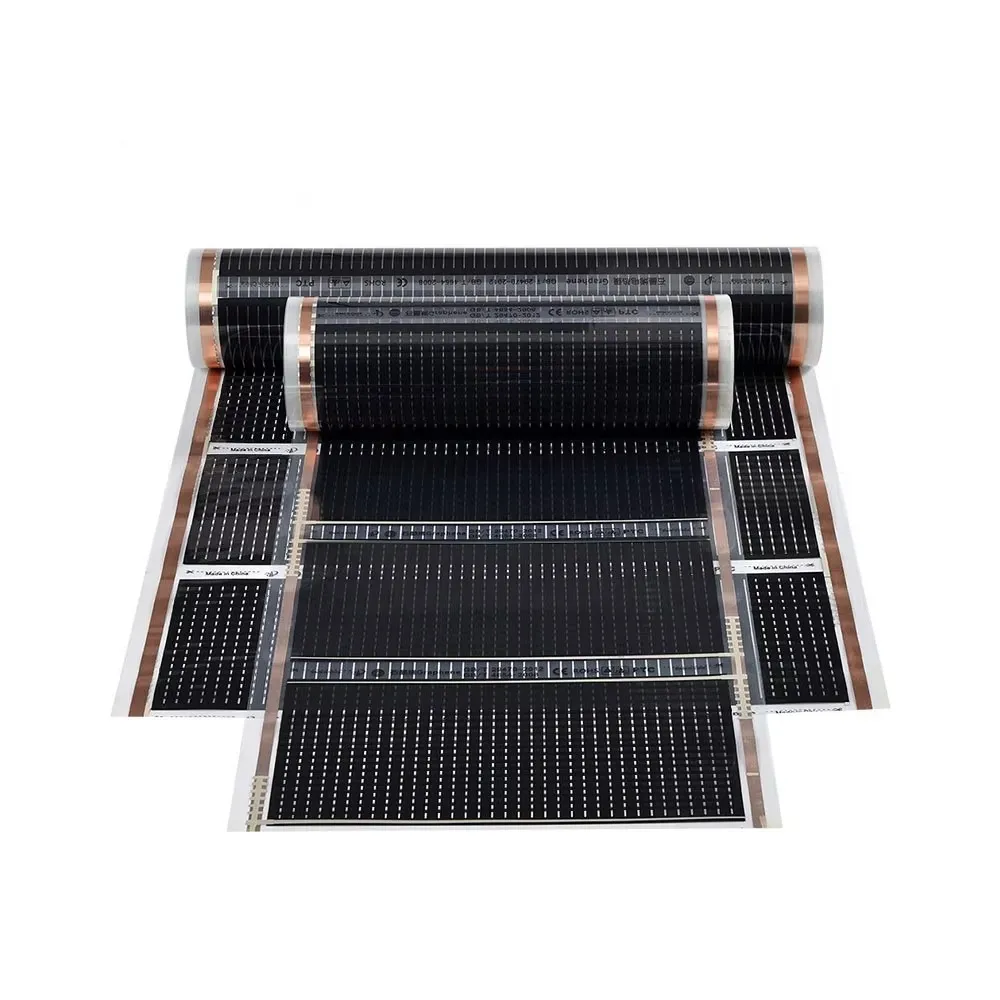
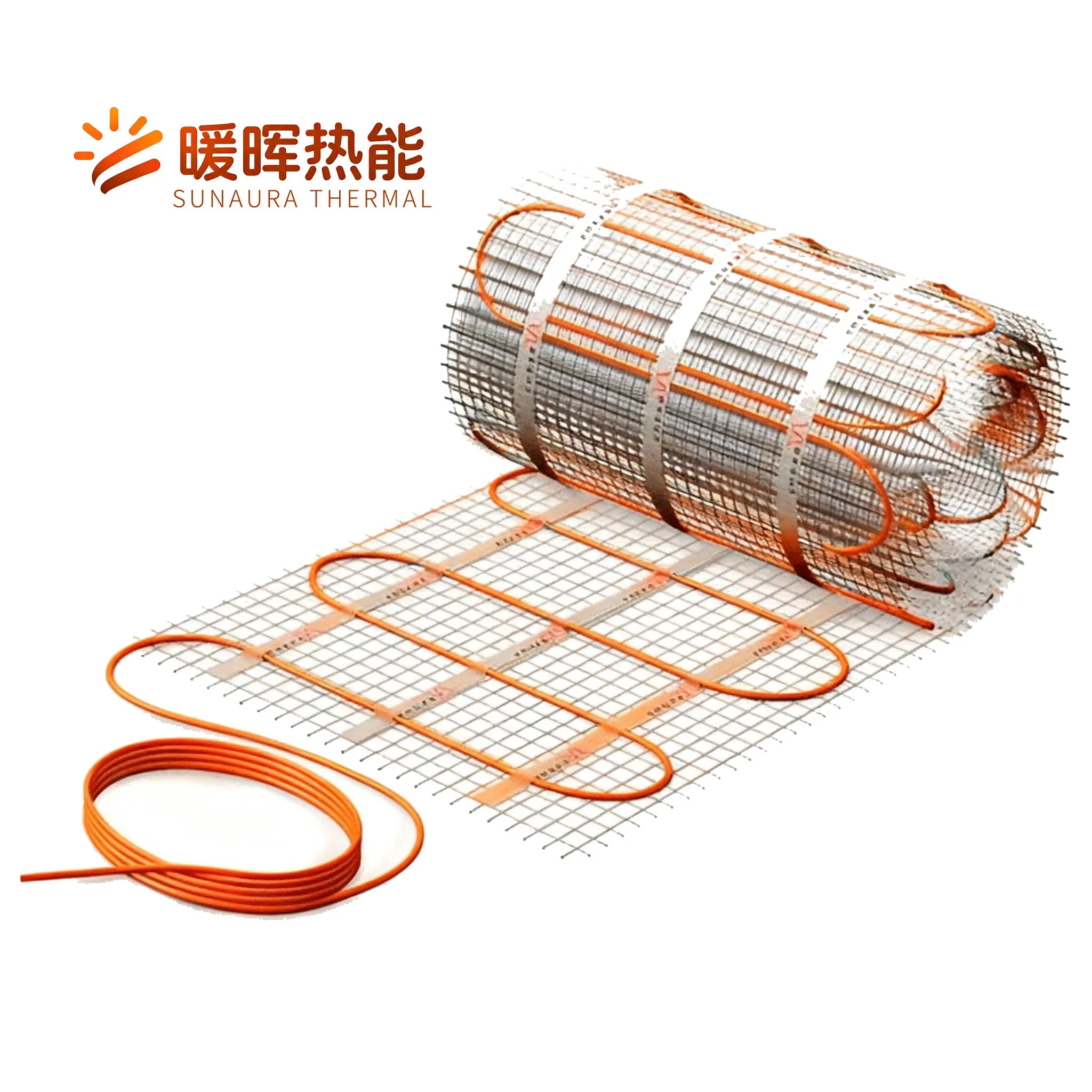
As a starting rule of thumb: ultra-thin graphene heating film is the default choice under floating floors such as laminate, engineered wood, vinyl and cork. Self-adhesive heating mats are the default choice under tile, stone and slate where a thin layer of tile adhesive will encapsulate the mat. heating cable systems are the default choice for irregular shapes, outdoor areas, pipe freeze protection and roof de-icing. Thermostats from our thermostats and controls range are paired with every system, and installation accessories from our accessories line make the project installable without extra sourcing.
01Residential Heating: Bathrooms, Kitchens, Living Rooms, Bedrooms and Attics
Homeowners choose electric underfloor heating for three reasons: the comfort of radiant warmth underfoot, the freedom from radiators that get in the way of furniture, and…
Read the full guide — Residential Heating: Bathrooms, Kitchens, Living Rooms, Bedrooms and Attics
Homeowners choose electric underfloor heating for three reasons: the comfort of radiant warmth underfoot, the freedom from radiators that get in the way of furniture, and the simplicity of a system that has no boiler, no water pipes and almost no annual maintenance. SunAura film and mats are designed to do exactly this job, in room sizes ranging from a single bathroom to a full villa.
Bathrooms. A tiled bathroom is the classic underfloor heating application. The floor warms up within thirty to sixty minutes, dries out moisture after a shower, and removes the cold shock of stepping onto tile in the morning. We typically recommend a self-adhesive heating mat at around 160 W/m² in a well-insulated bathroom, paired with a WiFi thermostat that has a floor sensor. The floor sensor is essential in a bathroom because tile can overheat if it is controlled by air temperature alone. For very small bathrooms where a mat will not fit neatly, a cut-to-length film roll is often easier to lay around the toilet and vanity.
Kitchens and dining areas. Kitchen floors are usually tile or stone, which makes them another natural fit for heating mats. Because kitchens are occupied at predictable times, a programmable thermostat can schedule warmth for breakfast, lunch and dinner, and let the floor idle in between. This zoning behaviour is what keeps running costs reasonable in a modern home.
Living rooms and bedrooms with floating floors. Where the finish is laminate, engineered wood, vinyl or cork, film is the better choice. It is only a few millimetres thick, does not raise the floor level noticeably, and warms the surface evenly without the cold spots that can occur when cables are spaced too far apart. Because wood-based floors have a maximum safe surface temperature, the thermostat must include a floor sensor rather than relying on air temperature alone. Our range of smart thermostats is designed for exactly this pairing.
Attics, spare rooms and seasonal spaces. In rooms that are used only occasionally, film is again the most practical option. It can be rolled out when the room is in use and scheduled to stay low in between. There is no need to run a hydronic loop to a rarely used room; the film simply turns on when the thermostat calls for heat.
Renovation versus new build. In new build, insulation boards are placed under the heating element to reduce downward heat loss. In renovation, where raising the floor is costly, film is often laid directly over the existing floor with a thin underlay, and the new floor finish goes on top. This is the reason film is so popular with homeowners who want to add comfort heating without rebuilding the whole floor.
Explore Residential Heating: Bathrooms, Kitchens, Living Rooms, Bedrooms and Attics →
02Commercial Buildings: Hotels, Offices, Clinics, Schools and Retail
Commercial buyers care about four things: predictable commissioning, zoned control, low maintenance and a warranty that survives multi-room projects. SunAura supplies fil…
Read the full guide — Commercial Buildings: Hotels, Offices, Clinics, Schools and Retail
Commercial buyers care about four things: predictable commissioning, zoned control, low maintenance and a warranty that survives multi-room projects. SunAura supplies film, mats, cables and thermostats to hotels, offices, clinics, schools, restaurants and retail spaces across more than fifty countries, and we support these projects with layout drawings, commissioning guidance and batch documentation.
Hotels. Hotel bathrooms are one of the highest-volume commercial uses of underfloor heating. Guests expect a warm tile floor when they step out of the shower, and a thermostat that is simple to use without a manual. We supply heating mats paired with intuitive touch-screen thermostats, and we work with hotel operators to standardise the specification across rooms so that housekeeping and maintenance staff only need to learn one model. For hotel retrofits, film is often the better option because it adds very little floor height, which matters when doors and skirting boards have already been installed.
Offices and co-working spaces. Open-plan offices benefit from zoned underfloor heating because staff occupancy varies by desk and by time of day. Film laid under raised access flooring, or mats laid under carpet tile, lets each zone be scheduled independently. This is more efficient than heating the whole building from a central boiler, and it removes the draughts and hot corners that radiators tend to create.
Clinics, spas and wellness centres. Clinical environments value the absence of forced air movement, which can disturb dust and contaminants. Radiant underfloor heating warms surfaces without a fan, and the smooth floor is easy to clean. For treatment rooms, changing areas and spas, film or mats are a natural fit.
Schools and nurseries. In classrooms and nurseries, floor heating provides a warm, draught-free surface at child height. It also removes radiators that small children could touch. Safety-wise, our film and mats are EMF-free and controlled by thermostats with a maximum floor temperature limit, which makes them suitable for learning environments.
Retail and restaurants. Shop floors and restaurant dining areas benefit from the comfort of warm stone or tile, especially at entryways where customers walk in from cold weather. A mat or film system under the main dining area improves perceived warmth without raising heating costs, because the system is scheduled for trading hours.
For commercial projects, we recommend starting the conversation early. Send us the floor plan, the room schedule, the target surface temperature and the local voltage. Our engineers will calculate heat load, recommend power density, and provide a layout drawing that your installation team can work from. Bulk orders are packed per room, with labels that match the drawing, so that on-site installation is fast and unambiguous.
03Industrial Trace Heating: Pipe Freeze Protection, Roof and Ramp Snow Melting, Process Heat
Beyond buildings, SunAura heating cables are used wherever a pipe, tank, roof or piece of equipment needs to stay above a critical temperature. The same double-conductor …
Read the full guide — Industrial Trace Heating: Pipe Freeze Protection, Roof and Ramp Snow Melting, Process Heat
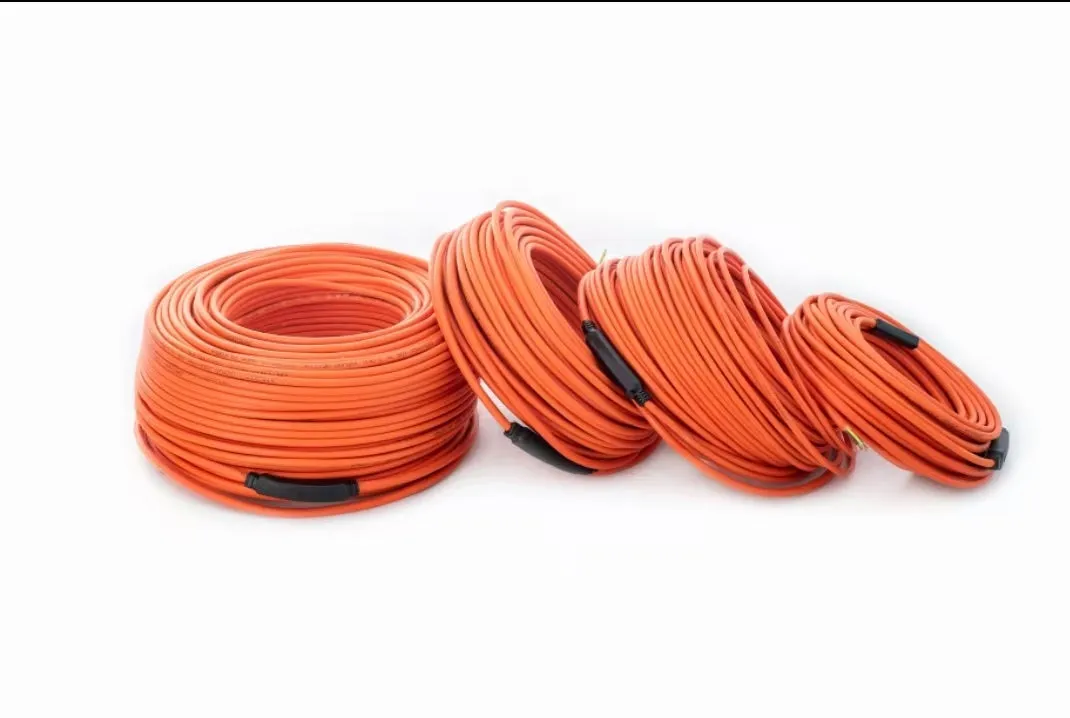
Beyond buildings, SunAura heating cables are used wherever a pipe, tank, roof or piece of equipment needs to stay above a critical temperature. The same double-conductor cable that warms a bathroom floor can be rated for outdoor use, buried in concrete or strapped to a pipe, and controlled by a thermostat that reads a pipe or ambient sensor.
Pipe freeze protection. Exposed water pipes, fire-suppression lines, sprinkler pipes, drainage pipes and outdoor process piping can freeze even in moderate climates when the wind chill drops. A heating cable strapped to the pipe, insulated and controlled by a thermostat that switches on near freezing, keeps the pipe above 5 °C and prevents burst damage. Double-conductor cables are preferred because they are easier to terminate, less prone to earth leakage, and can be cut to length on site. We supply cable in continuous lengths, with connection kits and end seals, and we can pre-terminate sections to order.
Roof, gutter and ramp snow melting. In colder climates, ice dams in gutters and sliding snow on ramps and walkways are a real safety hazard. Heating cables embedded in ramp concrete, laid in gutter channels, or run along roof edges melt snow and ice on demand. A weather-sensing thermostat or a simple ambient thermostat ensures the system runs only when freezing conditions occur, rather than continuously. For accessibility ramps, loading bays and pedestrian walkways, this is often the difference between a usable site and a closed one during winter.
Process temperature maintenance. Industrial pipes carrying viscous fluids, oils, syrups or chemicals often need to stay above a minimum temperature so that the material flows properly. Heating cable, wrapped in insulation and controlled by a thermostat that reads the pipe surface, maintains that temperature around the clock. We work with contractors to select the correct watt density, cable length and sensor placement for the fluid and pipe material.
Tank and vessel warmth. Small tanks, drums and intermediate bulk containers can be kept at process temperature with flexible heating mats or cable-wrapped insulation. This is common in food, chemical and agricultural applications where a material would otherwise solidify overnight.
For industrial projects, we always recommend talking to our engineers before you specify a product. Cable length, power density, sensor type and control strategy depend on pipe diameter, insulation thickness, ambient minimum temperature and the desired maintenance temperature. Get these right once, and the system runs for years without intervention.
Explore Industrial Trace Heating: Pipe Freeze Protection, Roof and Ramp Snow Melting, Process Heat →
04Agricultural and Horticultural Heating: Seedling Propagation and Greenhouses
Bottom heat is one of the most reliable tools a grower has. Seed germinates faster and more evenly when the root zone is warm, cuttings root more successfully, and young …
Read the full guide — Agricultural and Horticultural Heating: Seedling Propagation and Greenhouses
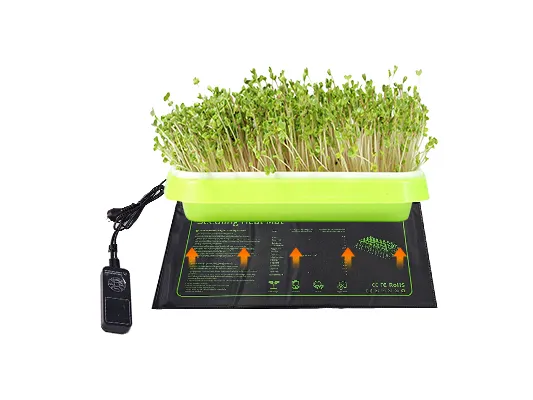
Bottom heat is one of the most reliable tools a grower has. Seed germinates faster and more evenly when the root zone is warm, cuttings root more successfully, and young plants grow stronger before they move to cooler outdoor conditions. SunAura seedling heat mats and heating panels are used by commercial nurseries, greenhouse operators, hydroponic growers and home gardeners who need consistent, low-energy root-zone warmth.
Seedling propagation. A seedling heat mat placed under propagation trays warms the growing medium from below, while the air above remains at normal greenhouse temperature. This temperature differential encourages root growth without forcing top growth. Our seedling heating mat range is available in standard tray sizes, with optional thermostats that hold the root zone at a set point between room temperature and around 30 °C. The mat is waterproof enough to sit in a propagation tray humidifier, and the surface is easy to wipe down between seasons.
Greenhouse bench heating. In larger greenhouses, film or cable laid under the bench surface provides bottom heat to rows of pots and trays. Compared with heating the entire greenhouse air volume, bench heating is dramatically more efficient because warmth is concentrated exactly where the roots are. For commercial growers, this can reduce heating bills while improving germination and growth rates.
Hydroponics and aquaponics. Nutrient solution temperature is critical for healthy root systems. A too-cold reservoir slows growth and encourages disease; a too-warm reservoir deprives roots of oxygen. Flexible heating panels controlled by a thermostat with a water-safe sensor keep the solution within the optimal band. We work with hydroponic installers to size panels for reservoir volume and ambient temperature.
Livestock and brooder warmth. Heat panels and mats are also used in livestock contexts, such as brooder boxes for chicks, whelping boxes for puppies and kitten rearing. These applications overlap with our pet heating range, and the same safety and low-EMF construction applies.
For agricultural buyers, we recommend telling us the tray or bench size, the desired root-zone temperature, the ambient minimum in your greenhouse, and whether you need a simple on-off control or a digital thermostat with a probe. We will recommend the correct mat or panel size and control strategy, and we can supply mixed cartons that include mats, thermostats and spare probes for retail distribution.
Explore Agricultural and Horticultural Heating: Seedling Propagation and Greenhouses →
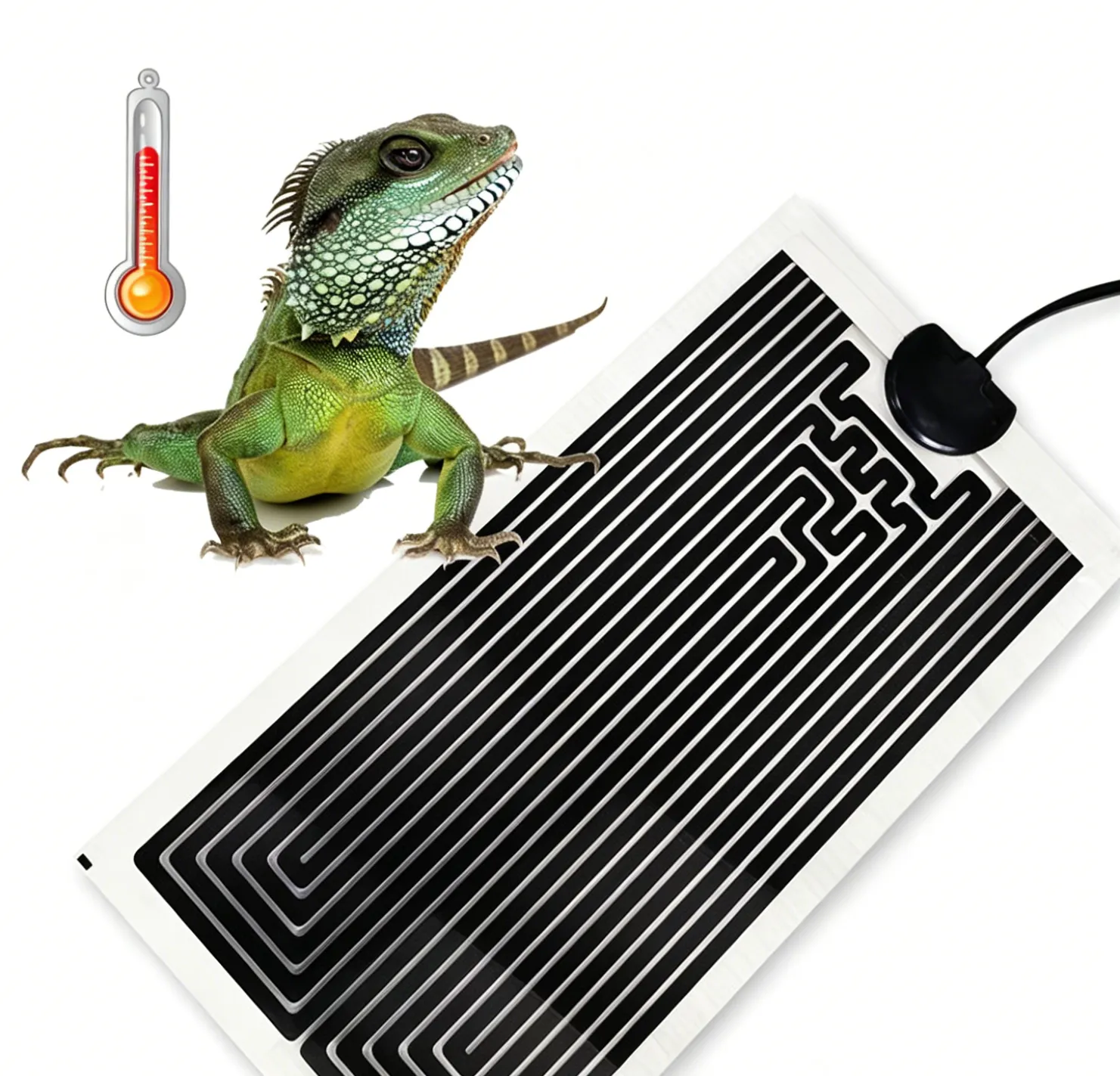
05Pet and Reptile Heating: Terrariums, Whelping Boxes, Cat and Dog Beds
Reptiles, amphibians, birds, small mammals and domestic pets all rely on external heat to regulate their body temperature. SunAura pet and reptile heating products are de…
Read the full guide — Pet and Reptile Heating: Terrariums, Whelping Boxes, Cat and Dog Beds
Reptiles, amphibians, birds, small mammals and domestic pets all rely on external heat to regulate their body temperature. SunAura pet and reptile heating products are designed to provide safe, uniform bottom heat in enclosures, with simple controls that an owner can set and forget.
Reptile and amphibian terrariums. Tropical and desert species require a temperature gradient across the enclosure: a warm basking spot at one end and a cooler retreat at the other. A reptile heating pad mounted under one section of the terrarium creates that gradient without drying out the air as quickly as an overhead lamp. Our reptile pads are available in several sizes and with ten-speed temperature control, so an owner can tune the surface temperature to the species and the room. Low-EMF construction and a stable outer layer make the pad safe for glass, plastic and wooden vivariums.
Cat and dog beds. Indoor dogs and cats, especially older animals with joint stiffness, benefit from a gently warmed bed in winter. Pet heating pads are sized to fit standard beds and whelping boxes, and are controlled by a thermostat that holds a comfortable surface temperature. The surface is water-resistant enough to handle accidents and easy to wipe down.
Whelping and rearing boxes. Breeders use heat pads to keep newborn puppies and kittens warm during the first weeks, before the litter can regulate its own temperature. A thermostat-controlled pad, placed under part of the box rather than the whole box, lets the mother and puppies move between warm and cool zones as needed.
Birds, small mammals and poultry. Heat panels are also used in aviaries, rabbit hutches, guinea pig cages and chick brooders. The same film technology that warms a bathroom floor, at a much lower wattage, provides the steady radiant warmth these animals need.
For pet retailers and breeders, we supply mixed cartons of pad sizes, thermostats and replacement probes, with multilingual packaging and manuals. If you are developing your own pet heating brand, we can also produce private-label pads with your artwork and your model number.
Explore Pet and Reptile Heating: Terrariums, Whelping Boxes, Cat and Dog Beds →
06OEM and Private-Label Projects
Many of SunAura’s customers are not end users at all. They are heating brands, electrical distributors, pet-product companies, garden-tool importers and installation firm…
Read the full guide — OEM and Private-Label Projects
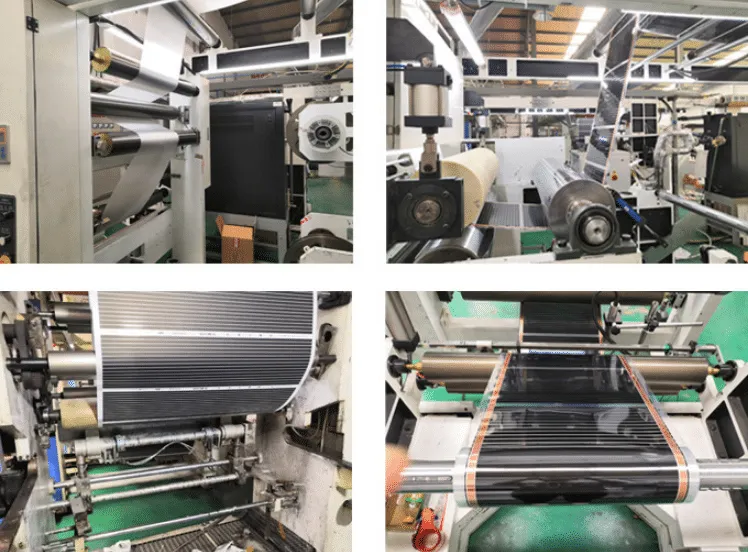
Many of SunAura’s customers are not end users at all. They are heating brands, electrical distributors, pet-product companies, garden-tool importers and installation firms that want to sell our products under their own name. We have operated as an OEM and ODM partner for more than fifteen years, and we treat these projects as a core part of the business rather than an afterthought.
What we can customise. Custom widths and lengths of heating film, custom watt densities on mats and cables, custom thermostat housing colours and button layouts, custom firmware schedules, custom packaging and printed manuals in your target language, and custom model numbers on labels. We can also combine film, mat, thermostat and accessories into a retail kit that is ready to sell on a shelf or on an e-commerce listing.
How the project runs. We start with a technical specification: voltage, wattage, dimensions, certification target, packaging language and estimated annual volume. We then produce a pre-production sample, which you validate in your market. After sign-off, we release the configuration into mass production, run the standard incoming, in-process and outgoing QC, and ship to your warehouse. Repeat orders follow the same approved configuration, so your customers receive a consistent product every time.
Documentation for your market. We provide CE, RoHS, IEC 60335 and SGS test reports that you can reference in your own DoC and product listings. We can supply multilingual manuals, safety labels and packaging artwork in English, German, French, Spanish, Italian, Portuguese, Russian, Dutch or Japanese. See our certifications page for an overview of the documentation we hold.
If you are exploring a private-label heating range, the fastest way to start is to send us your target retail price, your target market and the product family you want to sell. We will come back with a realistic factory price, a sample plan and a lead time. You can read more about how we work on the OEM and ODM page.
Sizing Your Project: A Quick Specification Checklist
Whether you are heating a bathroom, a warehouse pipe run or a greenhouse bench, the information below will help you send us an enquiry that gets you a useful answer on the same day.
What are you heating: a floor, a pipe, a roof, a propagation tray, a terrarium or a bed?
For floors, give us the room dimensions. For pipes, give us pipe diameter, length and insulation thickness. For roofs and ramps, give us the area and the required snow-melting intensity.
Most residential systems run at 220–240 V in Europe, the Middle East, Asia and Oceania, and 120/240 V in North America. Tell us the local supply.
Tile, stone, laminate, engineered wood, vinyl, carpet or concrete. The finish determines whether film or mat is appropriate.
Is the room well insulated, or are you heating a slab on grade, an attic or an outdoor surface?
Do you want a simple thermostat, a WiFi app-controlled thermostat, or a sensor-based controller for pipes or weather?
Approximate quantity and destination country, so we can quote the correct incoterms and suggest the most efficient shipping option.
With this information, our engineers can recommend a product family, a power density, a thermostat model and an accessory list. For larger projects, we can also provide a layout drawing and a bill of materials.
Energy Use, Running Cost and Common Questions
A question we hear on almost every first enquiry is how much the system will cost to run. The honest answer depends on three things: the heat loss of the room, the local electricity price, and how the thermostat is sched
Running cost depends directly on what you pay per kWh. A smart thermostat with weekly scheduling and open-window detection typically cuts consumption far below an always-on system.
uled. As a rough guide, a well-insulated bathroom with a 160 W/m² mat will use energy only while the floor is warming up; once it reaches setpoint, the thermostat cycles the element on and off, and the heat stored in the
Three questions we hear on almost every first enquiry:
How much will my floor heating cost to run?
A question we hear on almost every first enquiry is how much the system will cost to run. The honest answer depends on three things: the heat loss of the room, the local electricity price, and how the thermostat is scheduled. As a rough guide, a well-insulated bathroom with a 160 W/m² mat will use energy only while the floor is warming up; once it reaches setpoint, the thermostat cycles the element on and off, and the heat stored in the tile keeps the floor warm with relatively little input. A modern WiFi thermostat with open-window detection and weekly scheduling typically uses far less energy than a always-on system.
For whole-house projects, our engineers can work with your heat-loss calculation to recommend a power density that keeps the room comfortable without oversizing the element. Oversizing wastes money on upfront hardware and shortens element life; undersizing leaves the room cold on the coldest days. We would rather calculate the right figure once than sell you a generic product that disappoints.
Is film safe under wood and laminate flooring?
A second common question is whether film is safe under wood flooring. The answer is yes, provided the system is controlled by a thermostat with a floor sensor set to the maximum surface temperature recommended by the floor manufacturer. Wood-based floors are sensitive to sustained overheating, which is why we do not recommend air-temperature-only control in these rooms. Our floor sensors are included with the relevant thermostat models, and we can supply additional sensor probes as spares.
Can film and mats be cut or shaped on site?
A third question is whether film can be cut or shaped on site. Standard film rolls can be cut to width between the busbars, following the manufacturer’s instructions, but they must never be cut across the busbar itself. Mats are pre-made and should not be cut; irregular shapes are handled with cable or with a custom-made mat cut to your drawing. For bathrooms with awkwardly placed fixtures, we will happily size a custom mat so that it fits around the toilet, vanity and shower tray without overlapping.
Installation Accessories and Kits
Reduce downward heat loss and shorten warm-up time.
Prevent heat transfer into surrounding walls.
Secures the element and evens surface temperature.
Protect the cold tail connection; clean, serviceable sensor wiring.
Read the full accessory and kit details →
A heating system is only as good as the accessories it is installed with. SunAura supplies a full range of installation accessories so that contractors and DIY buyers can buy everything from one source. Insulation boards reduce downward heat loss and shorten warm-up time. Edge insulation strips prevent heat transfer into surrounding walls. Aluminium tape secures the element and evens surface temperature. Junction boxes and conduit protect the cold tail connection. Floor sensors and sensor conduit make thermostat wiring clean and serviceable.
For first-time installers, we also sell complete installation kits that bundle film or mat, thermostat, insulation, tape, clips, sensor and instructions in one carton. These kits are especially popular with retail distributors and e-commerce sellers who want to give their customers a ready-to-install package rather than a list of separate parts. We can also assemble custom kits to your bill of materials. To see the full accessory range, visit our heating accessories page or the installation kits product page.
Safety, Certifications and Warranty by Application
Tested to IEC 60335 household-safety requirements with CE and RoHS documentation.
Rated for the relevant IP protection level; insulation continuity tested at high voltage.
Same low-EMF construction as floor film — safe to run 24/7 in an enclosure.
EMC and safety tested; each model carries its own CE and RoHS documentation.
Read the full safety and warranty details →
Underfloor film and mats are tested to IEC 60335 household-safety requirements, with CE and RoHS documentation. Heating cables for outdoor and industrial use are rated for the relevant IP protection level and tested for insulation continuity at high voltage. Pet and plant heating pads are built with the same low-EMF construction as our floor film, so they are safe to run 24/7 in an enclosure. Thermostats are tested for EMC and safety, and each model carries its own CE and RoHS documentation.
Warranty terms are calibrated to the application. Mats and film are covered against manufacturing defects for a long structural period under normal use. Thermostats are covered against electronic defects. Cables are covered against insulation failure when installed to our guidelines. Pet pads are covered against element failure. In every case, the warranty is backed by our QC records: we know which batches were produced on which line, with which raw materials, and we can trace a returned unit back to its production date.
If you are specifying products for a regulated market, we recommend reading the documentation before you buy. Our certifications page summarises the reports we hold, and we are happy to send the actual test report for the exact model you are evaluating. We do not ask you to trust a generic claim; we ask you to read the document.
Choosing by Climate and Building Type
Whole-house underfloor heating as primary heat: higher power-density mats, insulation boards and multi-zone WiFi thermostats.
Film in bathrooms and living rooms transforms winter-evening comfort without a full-house retrofit.
Pipe freeze protection and ramp de-icing cables, plus sealed waterproof mats and sensors for greenhouses.
Read the full climate guidance →
The right application also depends on the climate you are designing for. In cold climates with long winters, whole-house underfloor heating is often the primary heat source, and we typically specify higher power density mats, insulation boards under the element, and multi-zone WiFi thermostats that schedule each room independently. In temperate climates where heating is needed only in winter evenings, film in bathrooms and living rooms is enough to transform comfort without a full-house retrofit. In mild climates where frost is rare but still damaging, pipe freeze protection and ramp de-icing cables are often more valuable than floor heating, because a burst pipe in a garage or a slippery ramp at a loading bay can cost far more than the heating system itself.
For coastal and humid environments, we pay extra attention to insulation ratings and cable jacket material. For dry, dusty industrial environments, we specify cable with a durable outer jacket and robust junction boxes. For greenhouse and nursery environments, where ambient humidity is high and surfaces are frequently wetted, we recommend waterproof heat mats and thermostats with sealed sensor probes. Talking through these conditions early in the specification process prevents expensive mistakes later on.
Why Specify SunAura for Your Application
Producing heating elements since 2008, exporting to more than fifty countries.
Consistent batch quality with CE, RoHS and ISO documents you can actually read.
One contact from first enquiry to after-sales, with batch traceability to production date.
Read the full story →
You can buy heating film, mats and cables from many suppliers. The reason buyers come back to SunAura is the combination of a real factory, documented testing and engineer-backed support. Our factory in Qingdao, China has been producing heating elements since 2008 and exports to more than fifty countries. That history means the products are not new to the market: they have been installed in tens of thousands of bathrooms, greenhouses, pet rooms and pipe runs, and the feedback from those installations is built into the current product range.
The other part of the answer is risk management. When you buy from SunAura you get batch traceability, honest delivery dates and a single point of contact from first enquiry to after-sales. If a batch ever needs to be traced, the engineer who helped you specify the product is the same engineer who will trace your batch if a problem ever arises. For distributors, installation firms and OEM brands, that predictability is worth more than a small unit-price saving. It means fewer call-backs, simpler warranty handling, easier customs clearance and a product range you can stand behind with your own customers.
Free Layout Drawing and Engineer Consultation
Floor plan, sketch or room dimensions — area size, floor type and voltage.
We mark film or mat placement, thermostat position, floor sensor, spacing and insulation.
Product recommendation, power density, accessory list and transparent pricing.
Read the full consultation process →
One of the services we offer free of charge to serious buyers is a layout drawing. Send us your floor plan, sketch or room dimensions, and we will mark out where the film or mat should go, where the thermostat should be mounted, and where the floor sensor should be placed. We will also indicate recommended spacing, insulation board thickness and any accessories you need. This service is available to homeowners, installers and distributors alike.
You can reach our engineering team through the contact page, by messaging us on WhatsApp, or by email. For frequently asked technical questions, our FAQ page covers running cost, floor compatibility, thermostat wiring and warranty. For deeper application notes, browse the SunAura blog. We look forward to helping you spec your next heating project, whether it is a single bathroom, a hotel retrofit, a pipe freeze-protection job or a full private-label range.
Every enquiry starts the same way: tell us what you are trying to heat, how big it is, what voltage you have, and what surface you are working with. Within one working day you will receive a product recommendation, a power-density estimate, a shortlist of thermostats and accessories, and a transparent price indication with realistic lead time. No generic pitch, no obligation, only the technical information you actually need to move the project forward with confidence. That is how SunAura has grown from a single film line in 2008 into a manufacturer serving more than fifty countries today, and it is the standard we apply to every new project that crosses our desk, whether the order is a single sample mat or a full shipping container.
Application FAQ — Answered by Our Engineers
How much does electric underfloor heating cost to run?
Running cost depends on room insulation, local electricity price and thermostat scheduling. A well-insulated bathroom with a 160 W/m² mat uses energy mainly during warm-up; once at setpoint the thermostat cycles the element and the tile stores the heat. A WiFi thermostat with weekly scheduling typically cuts consumption far below an always-on system — our engineers can estimate running cost from your room dimensions and heat-loss figures.
Is graphene heating film safe under wood and laminate flooring?
Yes, provided the thermostat includes a floor sensor set to the maximum surface temperature recommended by the floor manufacturer. Wood-based floors must not be controlled by air temperature alone, which is why we pair film floors with a floor-sensor thermostat and supply spare probes.
Can heating film and mats be cut or shaped on site?
Film rolls can be cut to width between the busbars following the instructions, but never across a busbar. Mats are pre-manufactured and should not be cut — for irregular bathroom shapes we supply a custom mat cut to your drawing, or recommend heating cable for the odd angles.
Which thermostat should I pair with my SunAura heating system?
It depends on your load and control preference. WiFi models (K1M, K2M, K9, K5, KC02, K6H, touch, knob, piano-key, SDM5, SDM6) add app scheduling and remote control; the K1 wired thermostat suits simple reliable control; the RF wireless boiler thermostat handles wall-hung boiler systems. See the full range on our thermostats & controls page.
Can I buy SunAura heating as a wholesale or private-label distributor?
Yes — we supply distributors and heating brands factory-direct with volume pricing, low MOQ, custom widths and wattages, your branding and packaging, multilingual manuals and certification documents. Send your target market, target price and annual volume through our contact page for a quotation within 24 hours.
Start Your Project — Factory-Direct, Wholesale & OEM
Whether you need a single bathroom kit or a full container of private-label heating film, mats and thermostats, our Qingdao factory ships worldwide with transparent wholesale pricing, flexible MOQ and realistic lead times. Send us your application, area, voltage and floor type — our engineers reply within 24 hours with a product recommendation, power density, thermostat shortlist and a clear price indication.
Keep Exploring SunAura
From heating elements to smart thermostats to factory quality — see the whole picture.