Heat Tracing for Sewage and Wastewater Lines and Lift Stations
Drainage Lines Are Not Designed to Hold Ice
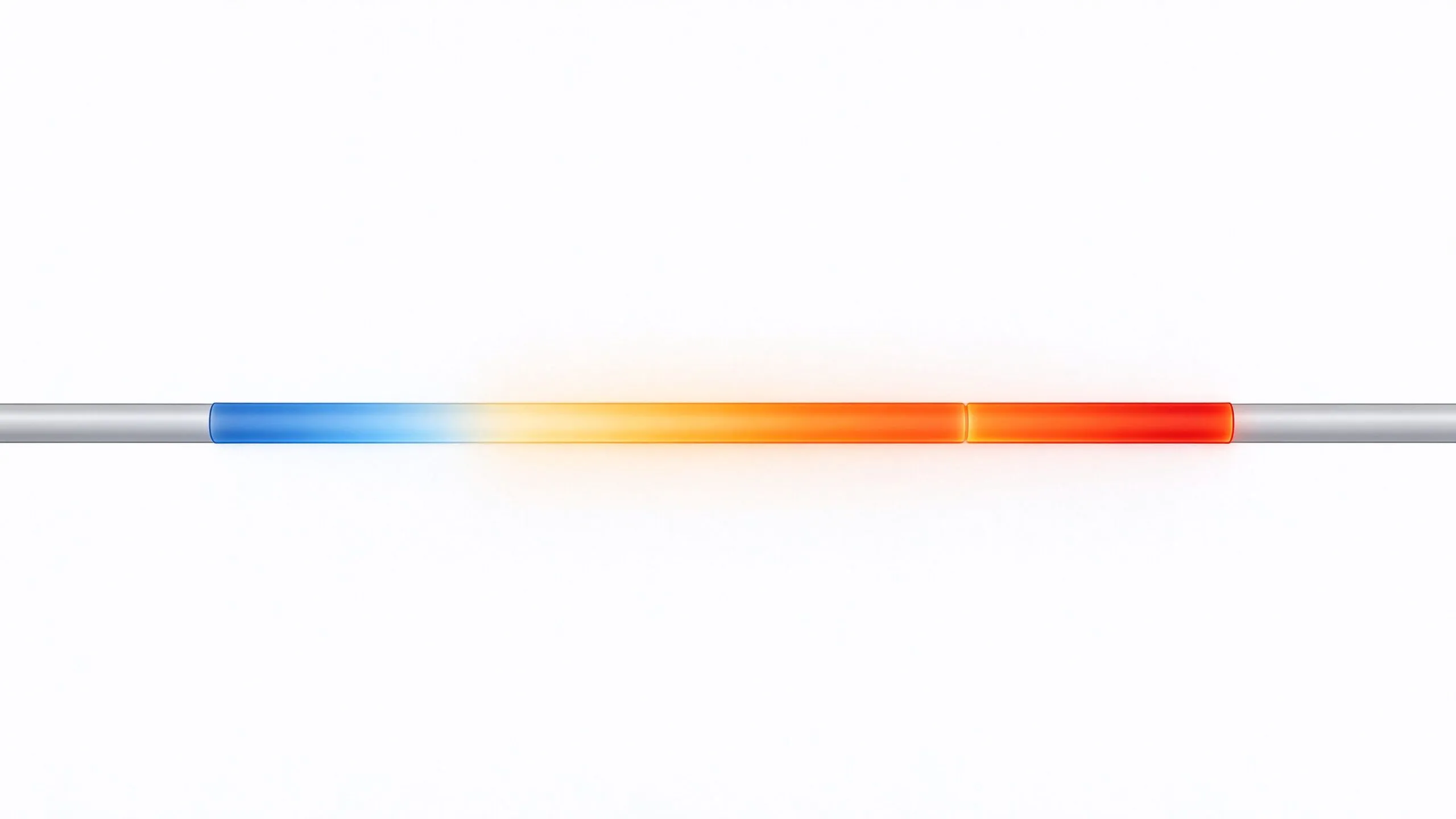
The cable raises output where the insulated pipe cools.
Most freeze-protection engineering focuses on the clean water side: potable supply lines, sprinkler risers and process pipes. The drainage network is assumed to keep moving and therefore to stay safe. In a sustained freeze that assumption fails. Gravity drains with shallow gradients, exposed sewer laterals, lift stations and outdoor grease interceptors can cool enough that their contents thicken, slow and eventually block. Heat tracing for sewage and wastewater lines is a specialised application because the cable is protecting flow in a pipe that is often only partially full and that carries solids rather than clean water.
SunAura Thermal supplies self-regulating and constant-power heat tracing cables, together with the insulation and control components, for wastewater and drainage freeze protection in commercial, municipal and industrial settings.
Where Wastewater Freeze Risk Actually Appears
Shallow or exposed gravity sewers. A line laid above the frost line, run through an unheated crawl space or carried on an external pipe bridge loses heat steadily along its length.
Lift stations and pump houses. The discharge piping, check valves and wet-well superstructure in an unheated station can freeze during a power or pump cycling event.
Grease interceptors and outdoor drains. Fats and wastewater cool and solidify at the edges of an outdoor interceptor, narrowing its working volume.
Temporary and seasonal facilities. Construction sites, camps and seasonal processing plants often have drainage that is only used for part of the year and left exposed.
Why Self-Regulating Cable Suits Drainage Work
Insulation and a vapour barrier are as important as the cable.
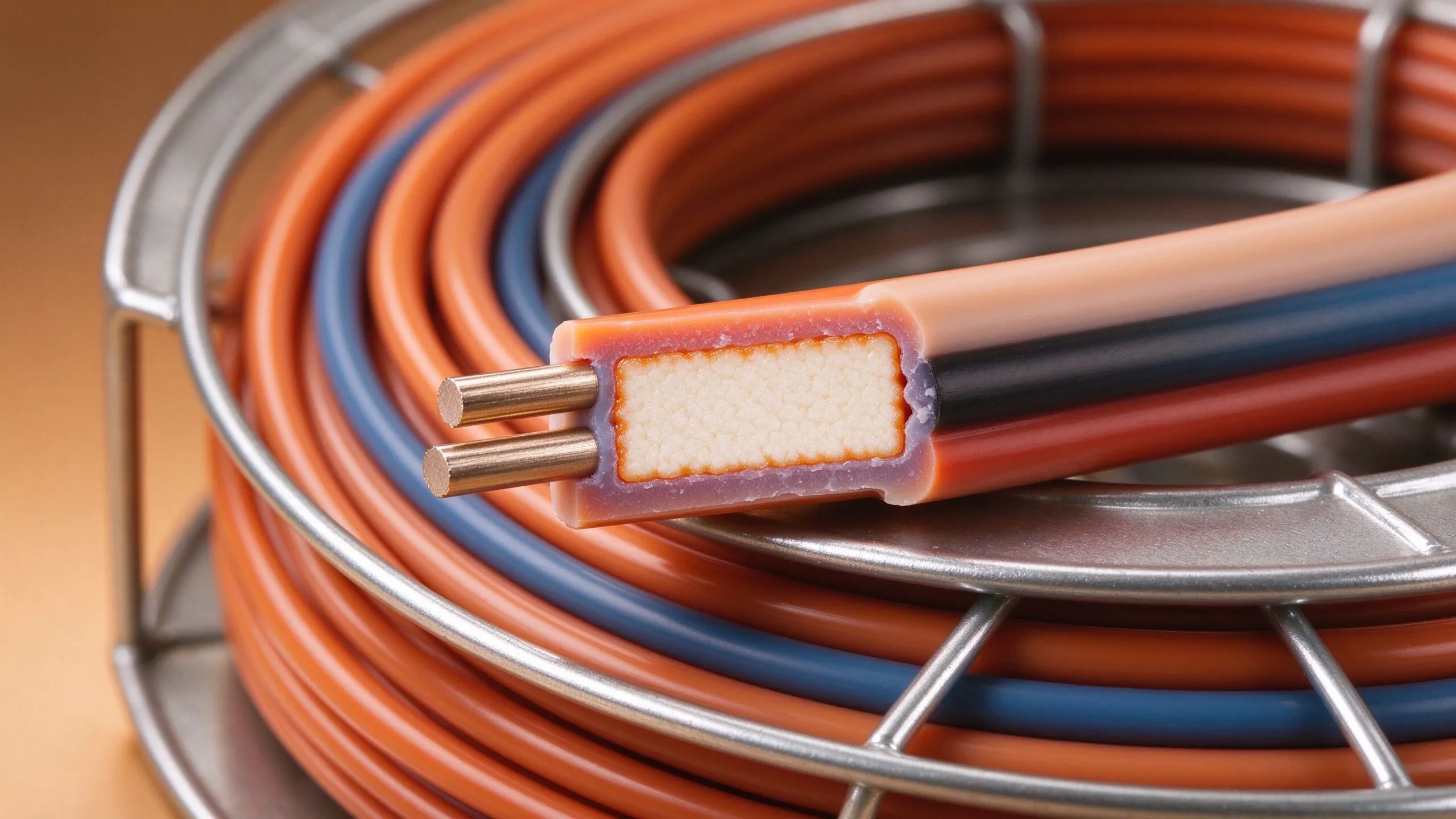
Wastewater heat tracing is well matched to self-regulating (PTC) cable. The cable lowers its heat output where the insulated pipe is warm and increases it where the pipe cools, so it cannot overheat on a section that runs dry or only partially full. It can be cut to length on site and laid along the complex geometry of a lift station without a fixed cable length constraint. Constant-power cable is used where a defined, higher output is required over a long straight run, and silicone-rated cables serve flexible equipment connections.
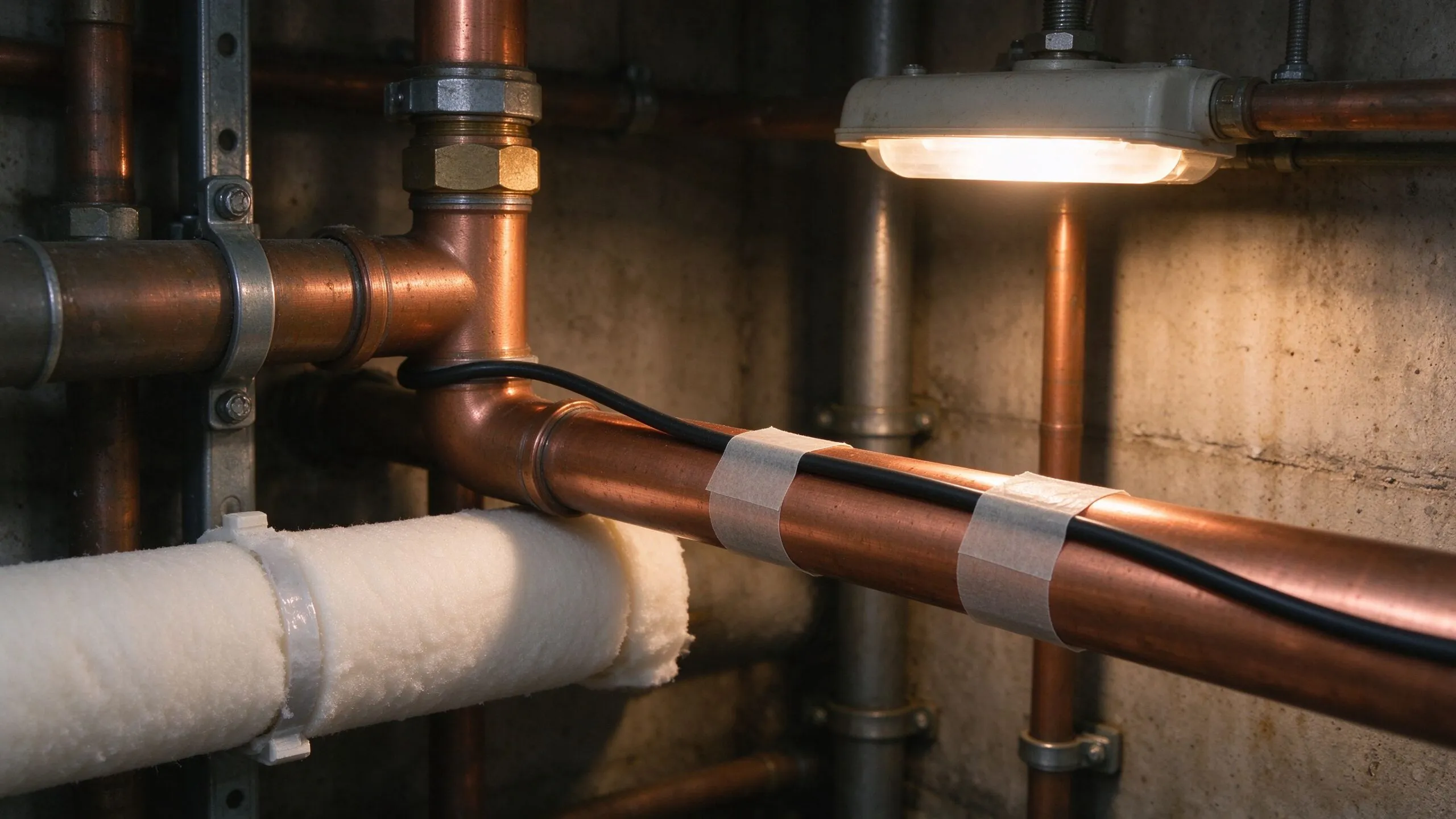
Because a gravity sewer is not always full, the cable sits on the outside of the pipe under the insulation. The thermal design assumes heat conducts through the pipe wall to the contents, so the insulation and vapour barrier are as important as the cable rating. A correctly traced but poorly insulated line simply wastes energy to the surrounding air.
Control and Monitoring
Wastewater systems are commonly controlled by an ambient or line-sensing thermostat that energises the tracing below a set temperature, rather than running continuously. Critical lift stations add monitoring and alarm functions so that a circuit failure is reported before it becomes a blockage. Per SunAura factory records, trace heating components are produced with insulation resistance and high-voltage withstand testing, including AC withstand checks on flexible heating cable, and outdoor electrical connections are rated to IP67.
Design and Compliance Points
Several points separate a compliant wastewater tracing build from a basic pipe heater.
Coordination with insulation thickness. The required cable output is calculated against the chosen insulation, the design minimum ambient and the maintain temperature, not selected in isolation.
Protection of valves and fittings. Flanges, check valves and pump connections lose more heat than straight pipe and receive extra tracing length while staying removable for maintenance.
Electrical protection. Dedicated circuits, residual current devices and clear labelling allow each traced section to be isolated without shutting the whole station.
Documentation. As-built cable routes, circuit schedules and test records support inspection and give maintenance crews a safe map before any work on the line.
Maintenance Through the Winter
A tracing system on a drainage line is low maintenance but not zero maintenance. At the start of the season, each circuit is energised and checked for correct thermostat operation, and the insulation is inspected for gaps or water damage, especially where pipework has been worked on. A wet insulation jacket loses most of its value and can hold moisture against the pipe, so damaged vapour barriers are repaired promptly. During the season, the alarm and monitoring functions at a lift station confirm that the tracing is live; after winter, the system is left in a tested, ready state rather than being disconnected. These simple checks keep the cable available for the next cold period and avoid discovering a failed circuit only after a blockage has formed.
Evidence and Data
Per SunAura factory records, the company has manufactured heat tracing and heating cable products since 2008 under ISO 9001:2015 quality management, with ISO 14001 and ISO 45001 systems and CE, RoHS and related electrical compliance. Self-regulating, constant-power and silicone heating cables are batch tested, with ratings and withstand results recorded per production run.
The Practical Decision
Wastewater heat tracing is rarely the largest line item in a winter project, but a frozen sewer or lift station is among the most disruptive failures a site can suffer, because it stops every fixture upstream and is difficult to clear once blocked. Specifying trace heating on the exposed drainage sections, properly insulated and monitored, protects flow through the coldest weeks with a running cost limited to the periods that actually need it. The cable does not heat the waste; it holds the line just warm enough that gravity and the pumps can keep doing their job.
Source: SunAura Thermal (www.sunaura.ltd), manufacturer of self-regulating and constant-power heat tracing cables and drainage freeze-protection systems from Qingdao, China.
We use cookies to improve your browsing experience, analyse site traffic and personalise content. By accepting, you consent to our use of cookies. You can choose "Essential only" to continue without non-essential cookies. Read our privacy policy