Heated Stair Treads and Entryway Mats: Keeping Steps Slip-Free in Winter
Why Building Steps Are the Highest-Risk Square Metres in Winter
Entryway mats cover the walking surface rather than the whole site.
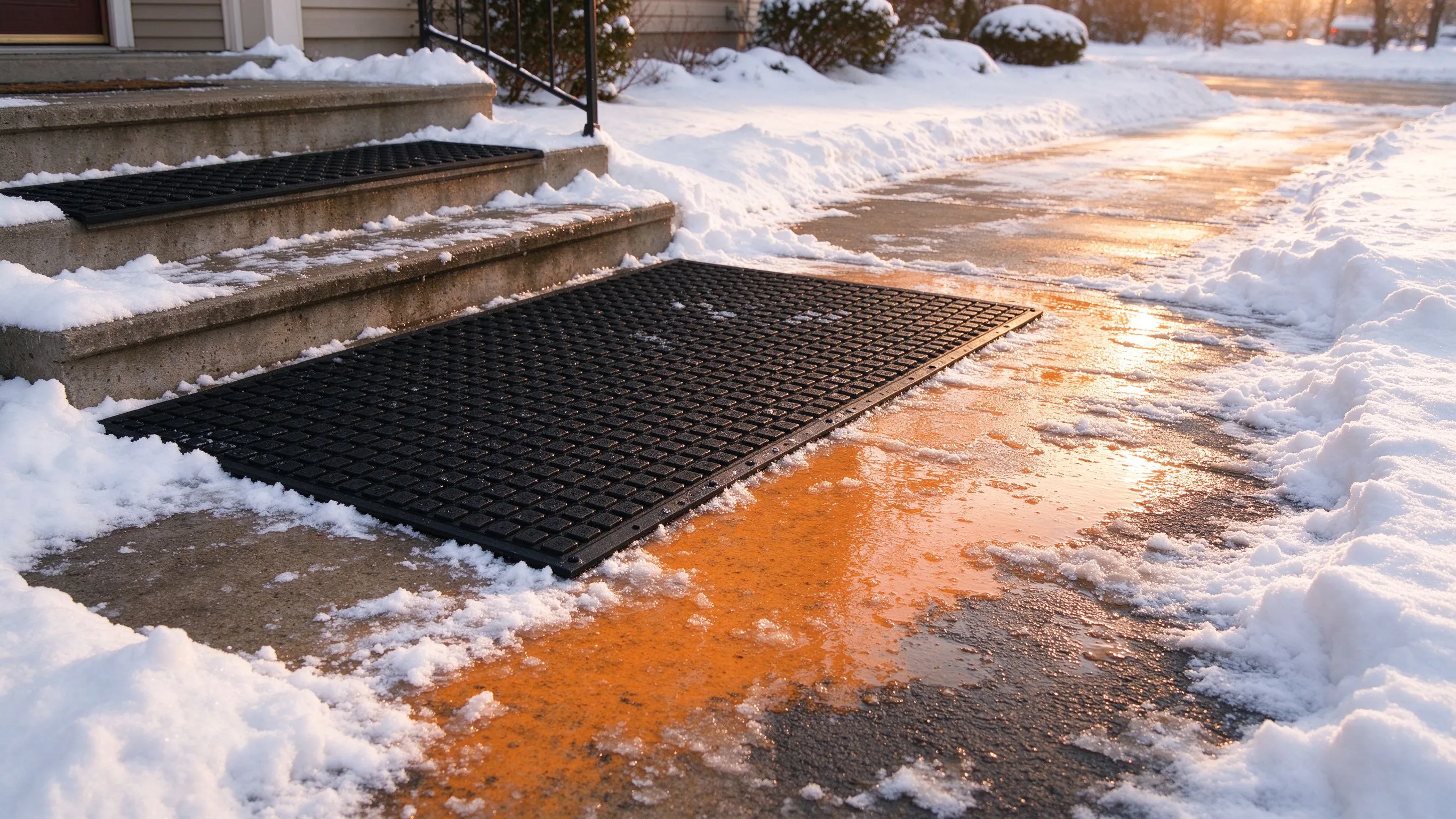
When a property manager maps winter slip risk, the open driveway rarely ranks first. The short flight of steps at the main entrance does. Stairs concentrate foot traffic, freeze faster than flat ground because cold air reaches both the tread and the riser, and they are the one place where a single patch of black ice can cause a fall rather than a stumble. A heated stair tread and entryway mat system is built specifically for this narrow, high-risk zone rather than for whole-area snow melting.
SunAura Thermal manufactures electric heating mats and cables for exactly these entryway applications: entrance steps, stair treads, ramps, landings and the short walkway between a car park and a door. The engineering goal is not to keep an entire site clear. It is to keep the walking surface that people actually use free of ice, with the minimum installed load and the simplest control.
How a Heated Stair Tread Differs From a Driveway Mat
A driveway snow-melting mat is laid in a broad, flat run and sized to cover tyre paths or the full slab. A stair system has to follow geometry that changes every 280 to 350 millimetres. Three details decide whether a stair installation survives its first few winters.
Tread-shaped coverage. The heating element is laid to cover the nosing and the front two-thirds of each tread, where the foot lands and where ice forms first. The riser is usually treated only where the cable must turn down to reach the next step.
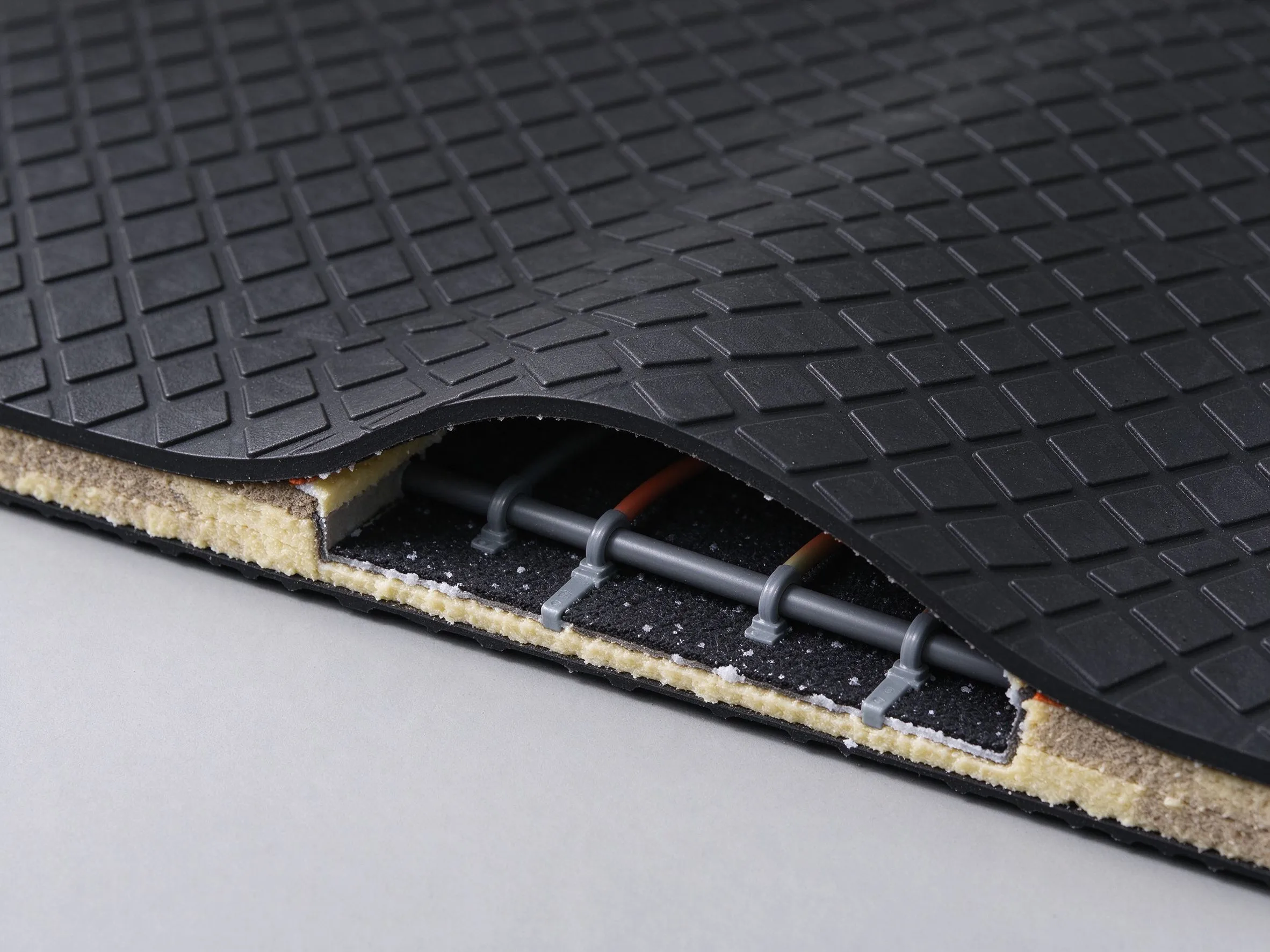
Flexible, crush-resistant construction. A cable or mat on a stair has to survive the bend over a nosing and the point load of heels and boot studs. SunAura entryway mats use a robust insulated heating cable on a supportive carrier, with outdoor-rated connections rated to IP67.
Weatherproof junctions. Every splice, end seal and sensor connection on an outdoor step is a potential water ingress point. Factory-moulded or properly sealed terminations are the difference between a system that lasts and one that trips after a thaw.
Typical Power and Coverage
Outdoor connections are sealed to IP67 to survive thaw cycles.
Flat walkways and landings are commonly specified around 300 W/m² for routine winter conditions. Steps and exposed entrance zones often justify a higher figure because they lose heat on more than one face and are expected to be clear on demand. Per SunAura factory records, outdoor stair and entryway builds are frequently laid in the 300 to 400 W/m² range, with the upper end reserved for severe-climate or high-traffic commercial entrances. The exact figure is set against local snowfall, expected response time and the floor build-up rather than a single universal number.
Because the heated area is small, the total load stays modest even at a higher density. A flight of six entrance steps and a landing may represent only a few square metres of heated surface, which means a dedicated circuit can usually protect the highest-risk part of a site for a fraction of the energy and capital cost of heating the whole car park.
Control Options: Manual, Automatic and Scheduled
Stair heating only earns its keep when it is on before the first arrival. Three control strategies are common.
Manual switch with indicator. Lowest cost, suitable for sites with staff on hand who can activate the system when a storm is forecast.
Snow and moisture sensor. An outdoor sensor activates the mat only when moisture and low temperature coincide, then runs a post-storm drying cycle. This avoids heating empty steps through a cold, dry week.
Scheduled or networked control. For buildings with predictable opening hours, a timer brings the system up before the first delivery and shuts it down after the last departure.
Installation Sequencing
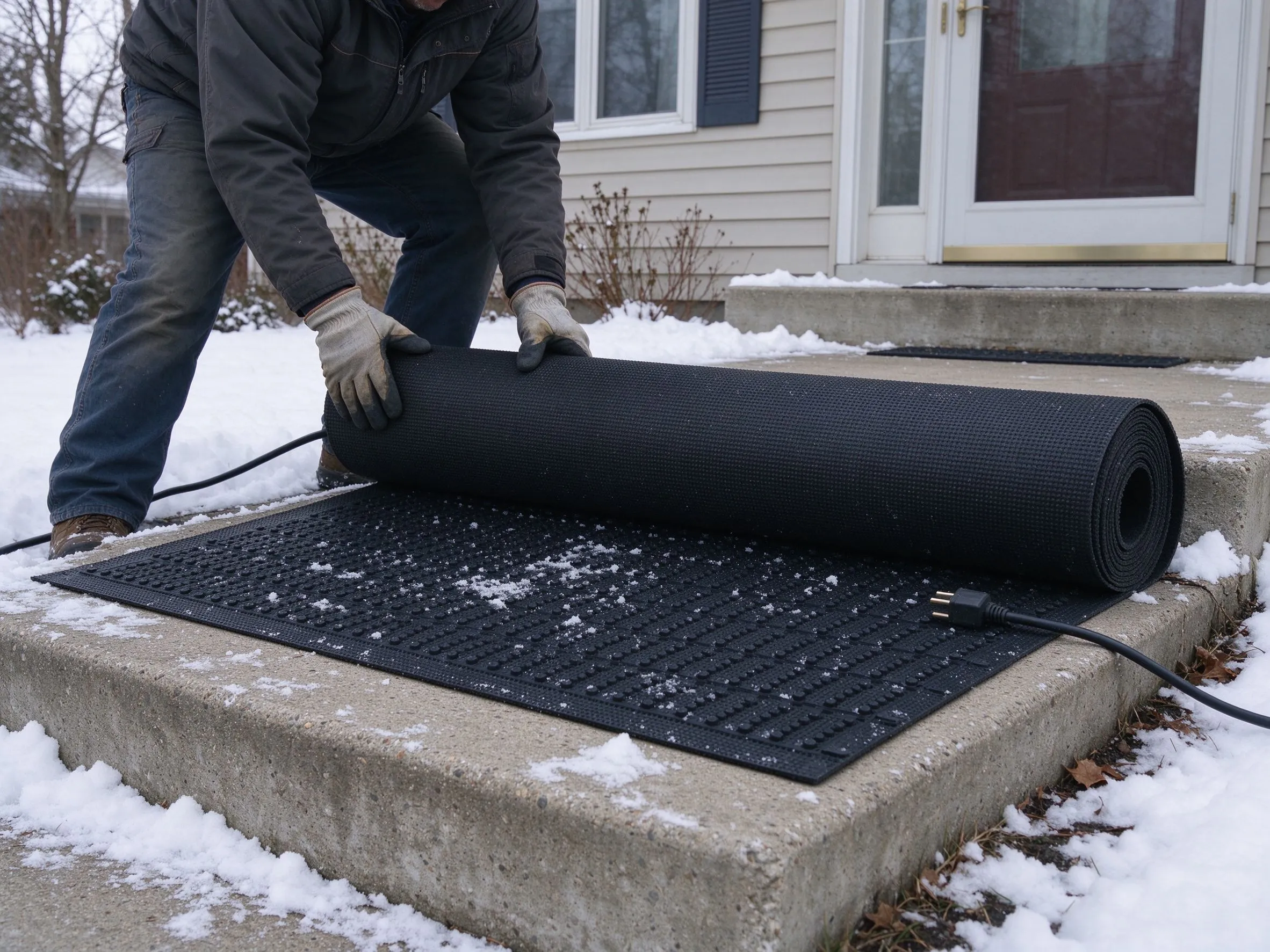
Most entryway systems are installed during new construction or a planned refurbishment, embedded in a mortar or screed bed under the final tread surface. Retrofit builds are also practical where the existing tread can accept a thin mat and a new wearing surface. The electrical work is completed by a qualified installer, with residual current protection and a clearly labelled dedicated circuit. A record of the cable layout, insulation resistance test and circuit load is handed over at commissioning so that any future drilling into a tread can be avoided.
Evidence and Data
Per SunAura factory records, the company has manufactured electric heating products since 2008 and operates six automated production lines with an in-house quality laboratory. Outdoor heating mats and cables are produced under an ISO 9001:2015 quality management system, with CE and RoHS compliance and outdoor connections rated to IP67. Figures for power density and component ratings are recorded per production batch rather than estimated after the fact.
Who Should Specify Heated Steps
The strongest case is a property with a fixed entrance that stays open all winter: multi-let office buildings, hotels, healthcare facilities, retail units, schools and industrial sites with worker walkways. For these buildings, the decision is not whether winter maintenance is needed, but whether the cost of gritting, signage and residual liability is better met by a system that keeps the steps clear automatically. A focused stair and entryway installation protects the precise metres where a fall is most likely, without the expense of heating ground that nobody walks on.
Source: SunAura Thermal (www.sunaura.ltd), manufacturer of electric snow-melting mats, heating cables and outdoor entryway systems from Qingdao, China.
We use cookies to improve your browsing experience, analyse site traffic and personalise content. By accepting, you consent to our use of cookies. You can choose "Essential only" to continue without non-essential cookies. Read our privacy policy