
Bathroom Underfloor Heating
A warm, fast-drying bathroom floor with 12–20 mm build-up: electric mats, cable layouts and the controls that keep tile from cracking.
- 150–200 W/m²
- 12–20 mm build-up
- IPX7 floor sensor
- CE · RoHS
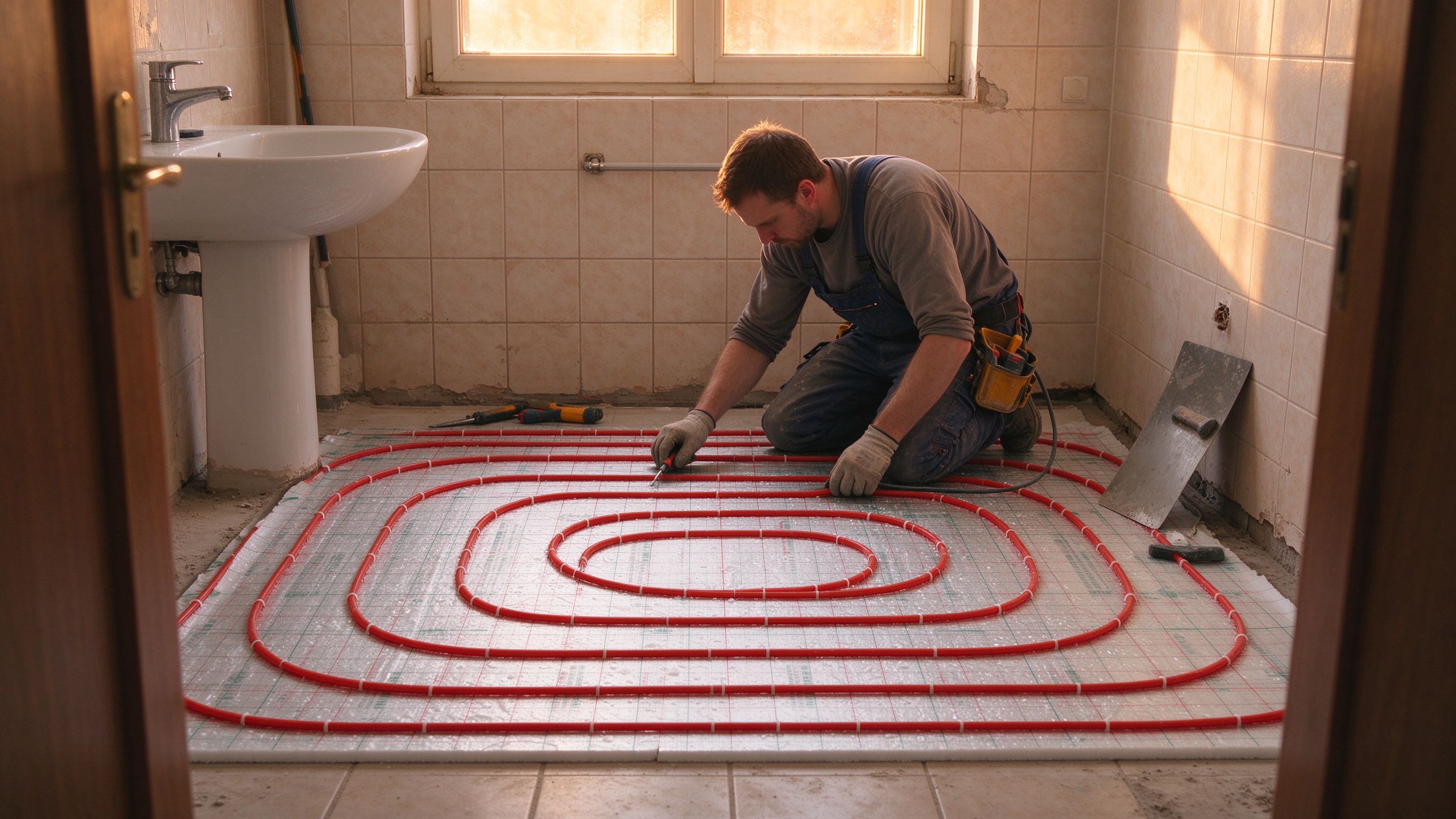
A bathroom underfloor heating system is a thin electric mat or cable laid in the adhesive bed under the tiles, bringing the floor to 27–29 °C within 30–45 minutes. It is the one heating upgrade that also solves the room’s other problem: a warm floor evaporates condensation and surface water faster, so tiles and grout dry instead of staying damp.
This page collects the SunAura bathroom range and the rules that make it work: mat sizes from 1 to 12 m² in 0.5 m widths, 150–200 W/m² densities, sealed floor sensors, and the layouts that fit around a WC, a vanity and a shower tray without cutting the element.
Where bathroom floor heating is used
Floor under tile and stone
The standard case: a 150 W/m² mat in a 10 mm adhesive bed, 6 mm porcelain on top. Heats in 30–45 minutes and keeps the whole floor dry.
See the mat range →Showers, wet zones and trays
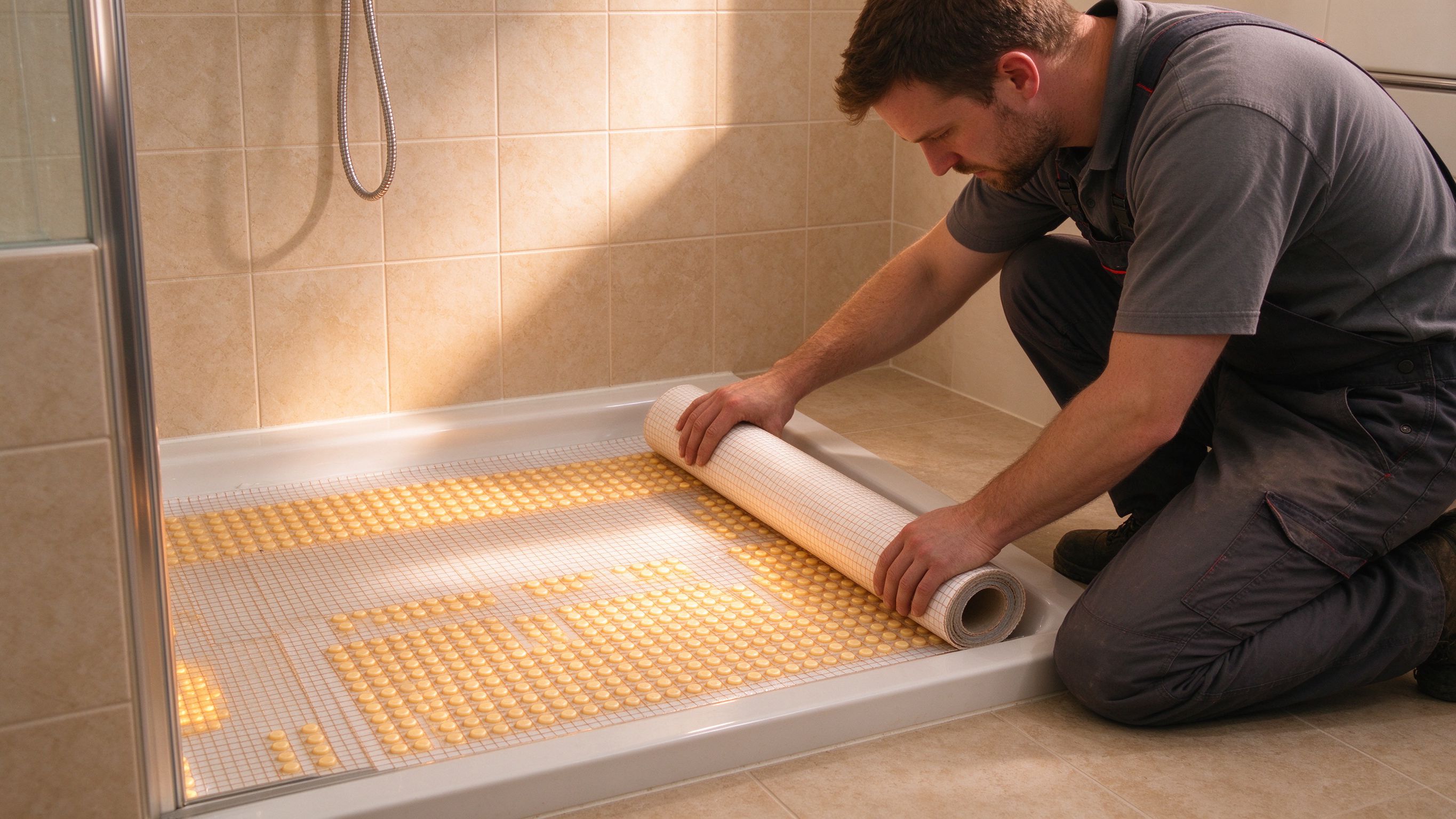
A tray needs its own circuit and a tighter density; a mat cut to reach around the drain is scrap. Use a small dedicated section, 200 W/m² for a raised tray.
Read the installation guide →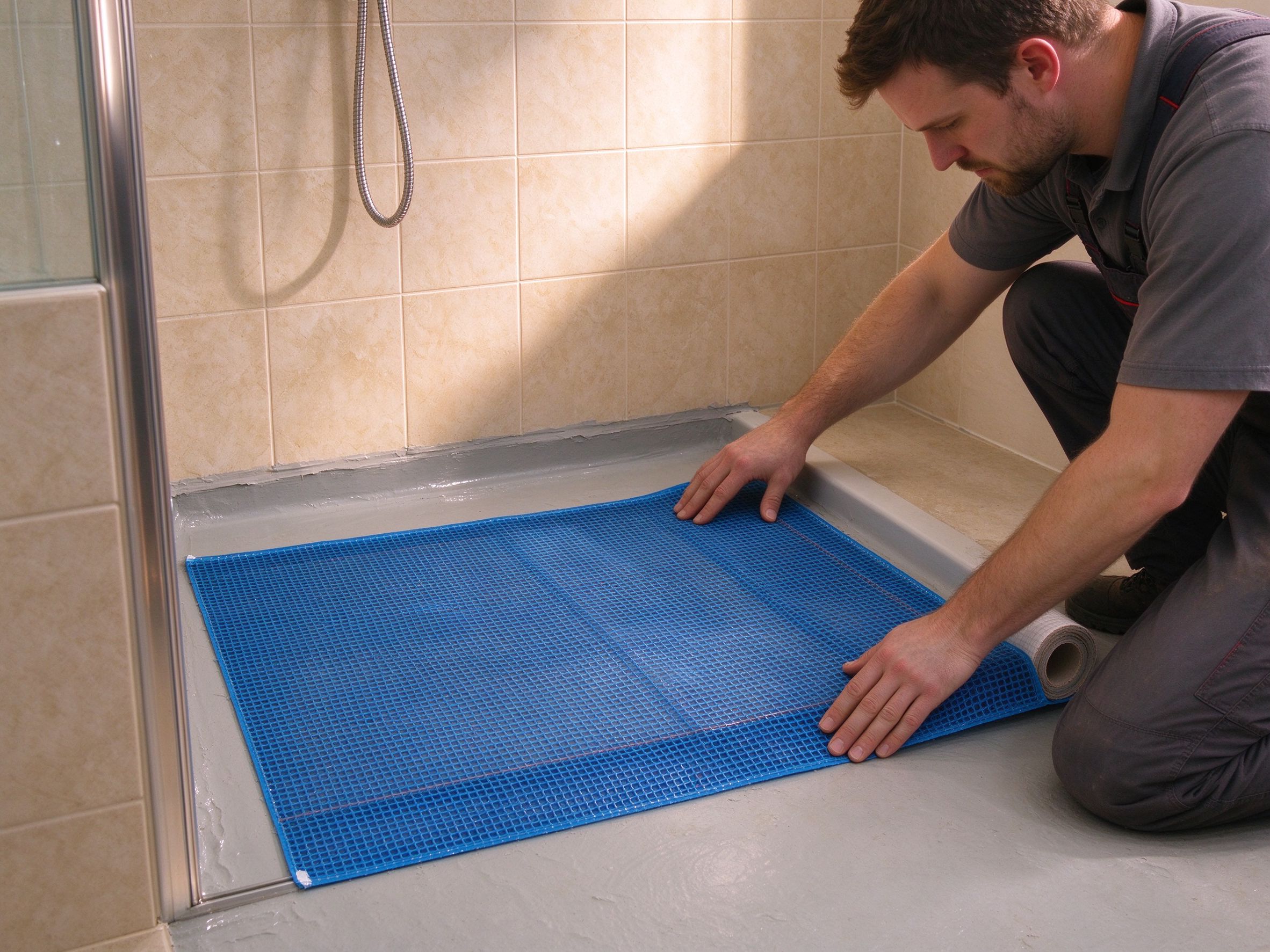
Small bathrooms and cloakrooms
A 6 m² bathroom usually has 4.5 m² of heated area. Sizing the mat to the floor wastes 25 % and forces a cut; order by heated area instead.
Sizing rules →Retrofit without raising the floor
A mat adds 8–12 mm, a self-levelling compound over it another 3–5 mm. Where the door clearance is tight, the adhesive route or a 0.5 mm film is the answer.
Build-up comparison →Irregular plans and loose cable
Where a mat will not fit around a pipe chase or a curved wall, a 10–20 W/m cable traces the free floor at the spacing you choose.
See the cable range →Technical specifications
| Parameter | Specification |
|---|---|
| Mat sizes | 0.5 m wide × 2–24 m long, 1–12 m² per section; custom lengths on ODM |
| Power density | 150 W/m² standard, 160–200 W/m² for stone or high-loss rooms |
| Voltage | 230 V standard; 110 V and 12–380 V wide-range builds available |
| Build-up | 8–12 mm mat plus 8–10 mm adhesive bed; 0.5 mm film where height is critical |
| Protection | 30 mA RCD on the circuit; 10 mA where the mat sits in a wet zone |
| Controls | Sealed IPX7 floor sensor plus programmable thermostat; 16 A relay covers 3.6 kW |
| Certification | CE & RoHS, LVD and EMC tested, 100 % batch-tested in Qingdao |
Choosing the right bathroom system
Measure heated area, not floor area. Subtract the vanity, the WC footprint and any raised tray; a 6 m² room is typically 4.5 m² of mat.
Set density by build-up. Tile on adhesive: 150 W/m². 20 mm stone or a screed bed: 160–200 W/m², or accept a 2–3 hour heat-up.
Plan the thermostat and sensor before ordering. The cold lead is 2 m; the sensor belongs in the heated area, never at the edge or under a run.
Split irregular rooms into rectangles and use one mat per rectangle, wired in parallel. Two 3 m² mats beat one 6 m² mat cut and rejoined.
FAQ
How warm should a bathroom floor be?
Can a heating mat go under a shower tray?
Does bathroom floor heating dry the room faster?
What RCD do I need?
Related scenarios
Next step
Send a bathroom plan with dimensions, the tray and vanity positions, and the tile thickness. Our export team returns a mat schedule with layout, wattage, thermostat and circuit within one working day.