
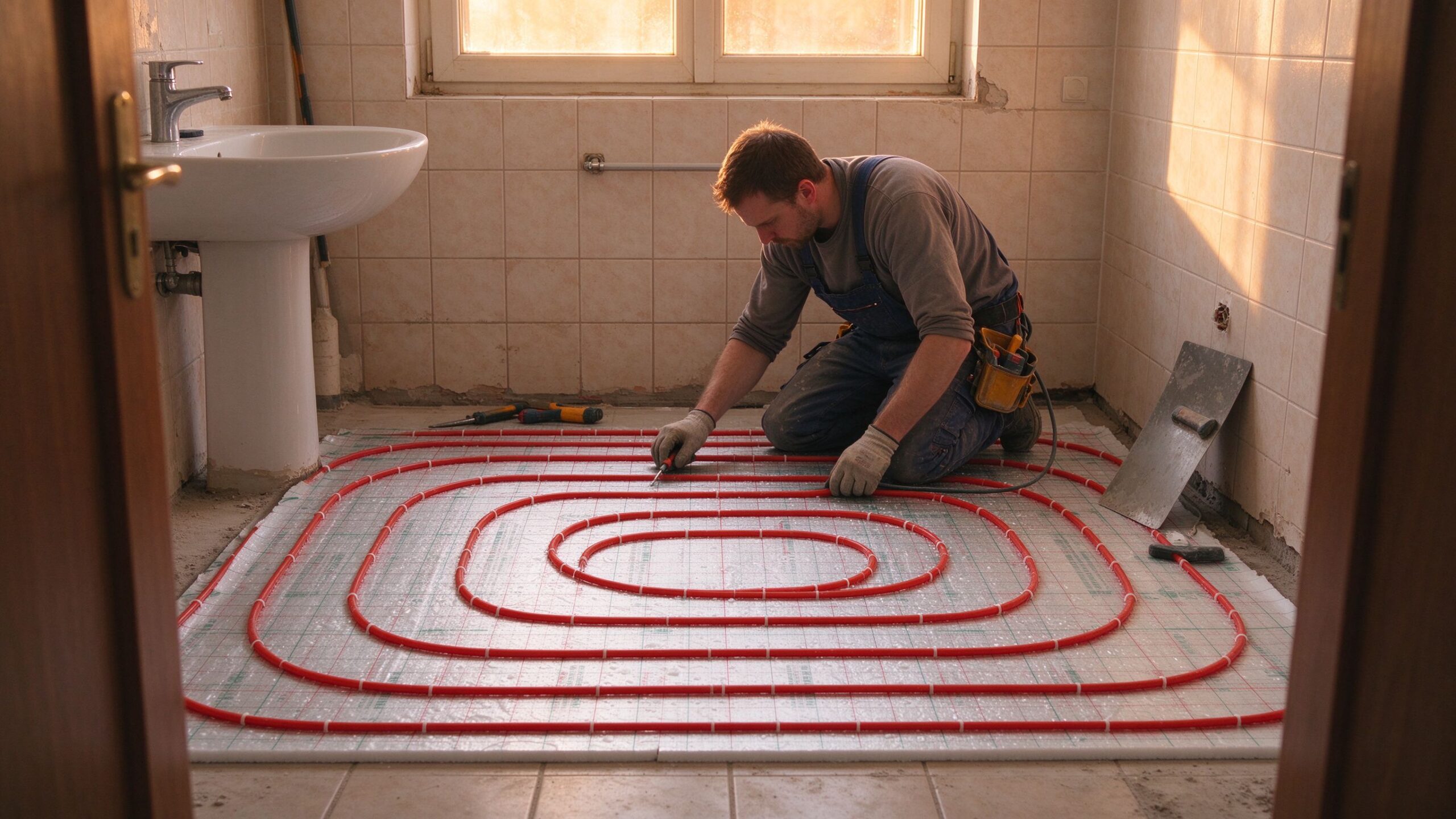
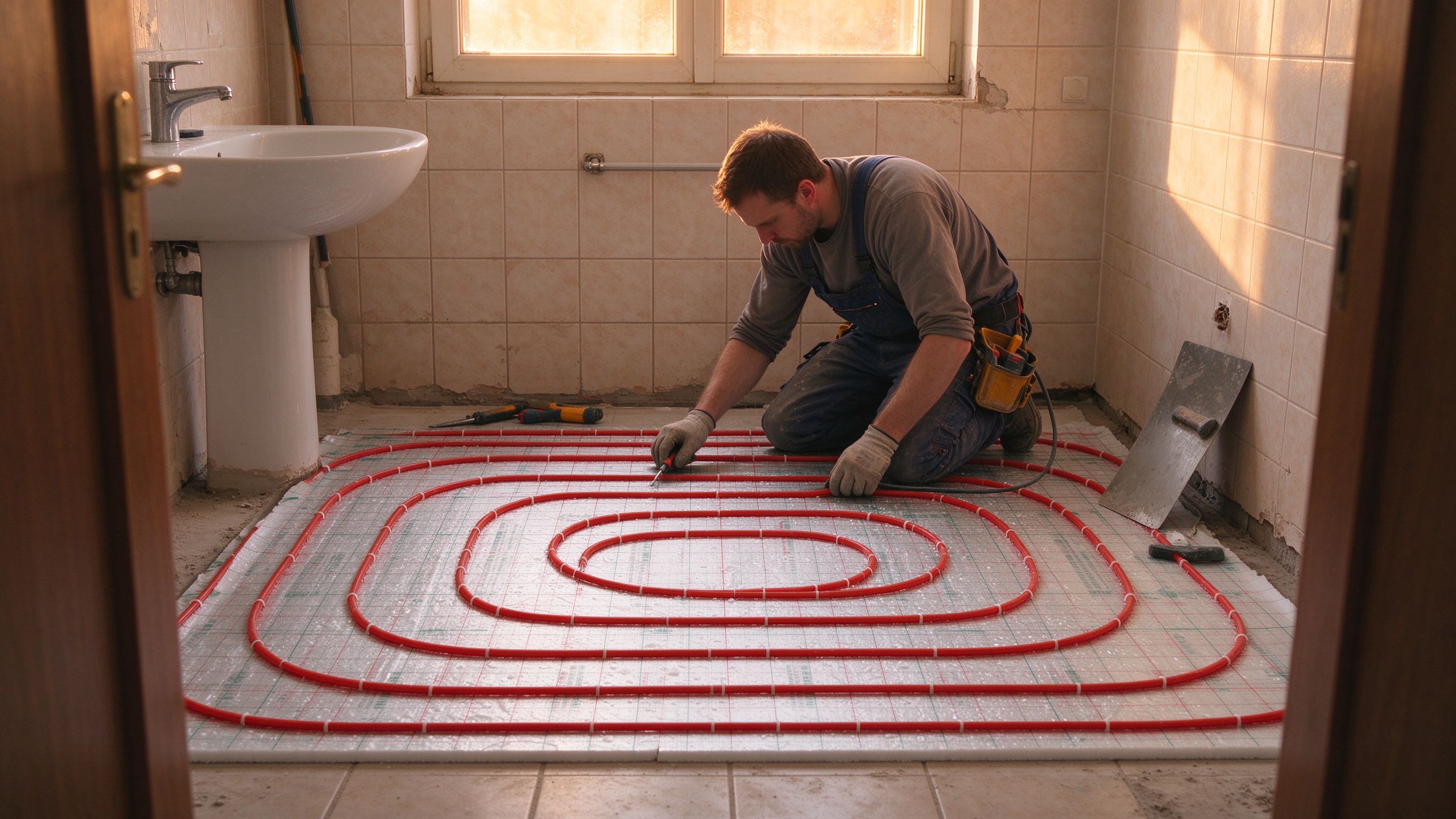
The bathroom is the room where electric underfloor heating earns its keep. Tile floors are cold against bare feet, towels and bath mats stay damp, and the air hangs humid after a shower. A well-installed bathroom underfloor heating system changes all three: the floor surface reaches a comfortable 26-29 °C, the radiant warmth dries the room faster because the floor is the driest surface in the room, and the thermostat controls the schedule so the floor is warm exactly when the household uses the room. This guide explains the three ways to heat a bathroom floor—cable, mat and film—and how to lay out each one correctly.
The choice between cable, mat and film for a bathroom comes down to the shape of the room, the floor finish and the installer’s preference. Cable suits irregular layouts with many fixtures; mat is the fastest option for rectangular floors; film is the thinnest and best for retrofit over an existing floor. This article walks through each system, the layout rules that prevent cold spots and overheating, the wiring and thermostat details, and the data that shows the system is working before the tile goes down.
1. Choosing the Right System: Cable, Mat or Film for a Bathroom
The decision table for a bathroom is short. Heating cable is a long, flexible element that can be routed around toilets, basins and corners, which makes it the right choice for irregular bathroom footprints where a pre-formed mat would not fit. The trade-off is installation time: the cable must be laid by hand, spaced and fixed, so the labour is higher.
Heating mat is cable pre-spaced on a mesh, rolled out like a rug. For a rectangular bathroom, a mat installs in a fraction of the time of loose cable, because the spacing is already fixed by the mesh. The limitation is shape: the mat must not be cut across the heating element, so it suits rooms without many obstructions. Heating film is the thinnest option—around 0.5-1 mm—and it is the choice for retrofit projects where the floor cannot be raised. Film works under tile and under vinyl, and it can be cut to length at marked lines, which gives it flexibility that a mat lacks.
2. Bathroom Heating Cable Layout: Routing Around Fixtures
With loose cable, the layout starts at the coldest zone and works outward. In a bathroom the coldest zones are the outer wall edge, under the window and the area near the shower screen, so the cable spacing should be tighter there and wider in the middle of the room. The standard spacing for a 15 W/m cable is about 100-120 mm in the cold zones and 120-150 mm elsewhere, and the spacing table from the manufacturer gives the W/m² for each spacing; the installer measures, does not guess.
The critical rule is to keep the cable away from fixtures that trap heat. The area under a freestanding bathtub, a vanity unit or a toilet base should be left cold, because heat trapped under a sealed fixture raises the element temperature above the design point. The cable must also stay at least 50-80 mm away from walls and any drain or pipe that runs through the floor, and the cold tail—the unheated lead—is routed to the thermostat junction box without crossing the heating zone.
3. Heating Mat for Bathroom Floors: Roll, Fit and Avoid Cutting
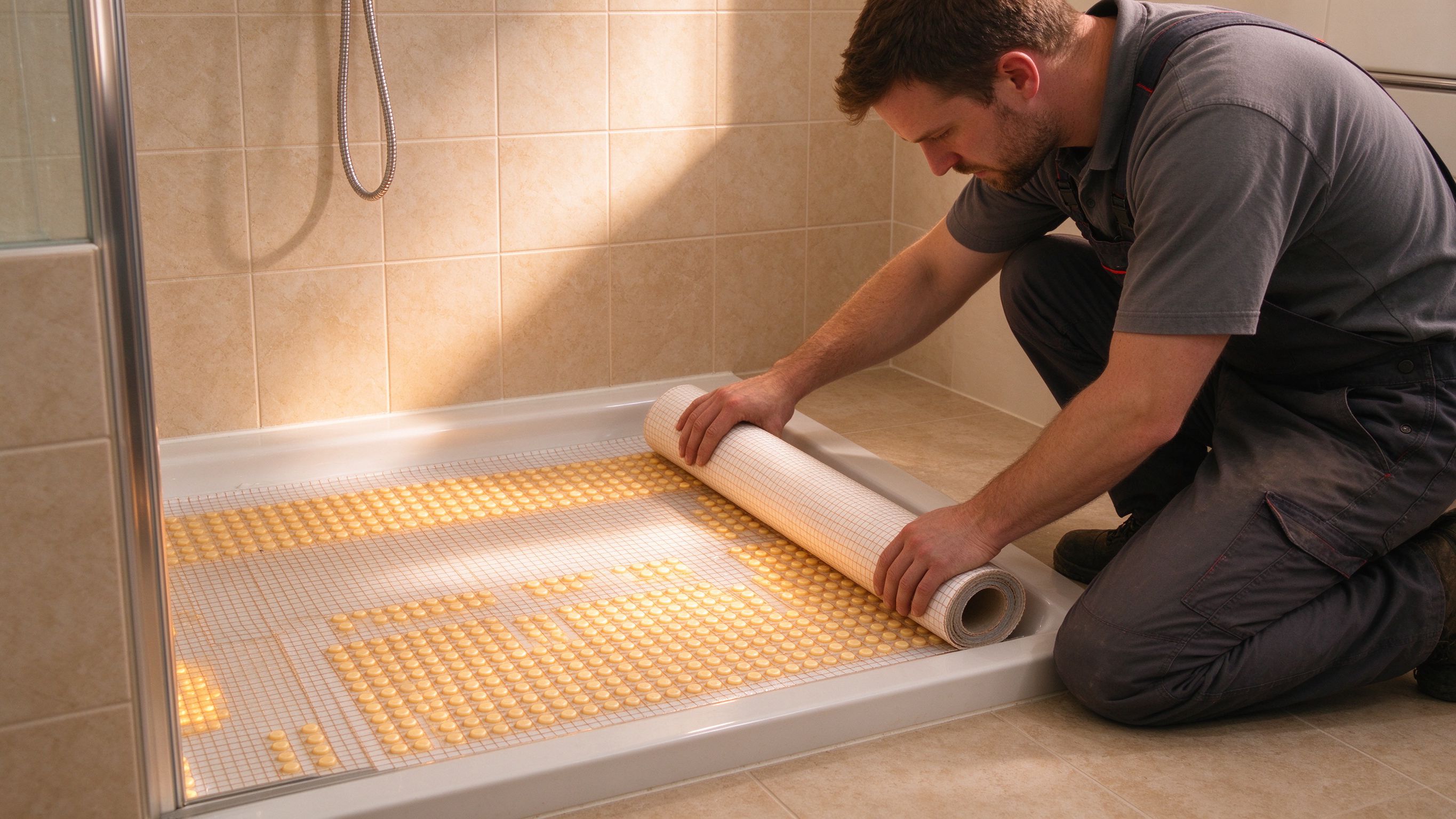
The mat method is the fastest for a bathroom: roll out the mat, position it so the mesh covers the heated area, and turn the mat at the edges where the room shape demands it. A heating mat for bathroom floor use is typically 100-200 W/m², and the installer must check the mat fits the floor plan before the adhesive goes down—it is far easier to re-roll a mat than to cut and re-terminate it.
If the mat is too long, it can be turned in a U-shape where the mesh allows it, but it must never be cut across the element. The mesh can be cut between the element runs to separate sections, but each section keeps its own connection. In a small bathroom, a single mat often covers the whole floor with one turn at the door threshold; the floor sensor goes between two runs in the warmest walking area, and the cold tail runs to the wall box.
4. The Drying Effect: Why a Warm Floor Dries a Bathroom Faster
The drying argument is the one that convinces many homeowners. After a shower, a cold tiled bathroom collects moisture on every cool surface—mirror, walls, floor—and that moisture takes hours to evaporate. A warm floor changes the moisture balance because the floor is the largest horizontal surface in the room and the lowest point where moisture settles. When the floor sits at 26-28 °C, the water on it evaporates continuously, and the warm air layer rising from the floor carries that moisture upward instead of letting it condense back onto the tile.
In practice, a bathroom with underfloor heating dries noticeably faster than the same room without it: towels dry between uses, the mirror clears sooner and the musty smell that lingers in cold bathrooms largely disappears. The effect is strongest with tile, which absorbs and releases heat well, and slightly weaker with vinyl, which is why the floor-probe limit for vinyl is set lower. The drying benefit is also a hygiene benefit—less standing moisture means less mould in the grout and around the shower seal, which is the maintenance saving that owners notice over years.
5. Heating Film for Bathroom Retrofits: The Thinnest Option
Where the floor cannot be raised, heating film is the answer. At under a millimetre, a film layer under vinyl or tile adds almost nothing to the floor height, which makes it the retrofit choice for bathrooms over an existing tiled or screed floor. The film is laid in strips with printed cutting marks, spaced evenly across the room, and each strip is terminated at the busbar end and wired to the supply.
The layout rule for film is coverage and spacing: strips run along the main walking direction, spacing is even so the surface temperature is uniform, and the film stops before fixtures. Because film is a low-profile surface emitter, it heats quickly, which suits a bathroom where the heat is wanted in short bursts—morning and evening—rather than continuously. For tile over film, the adhesive bed must fully support the film so no air pocket forms under the tile.
6. Thermostat and Floor Sensor: The Installation That Decides Accuracy
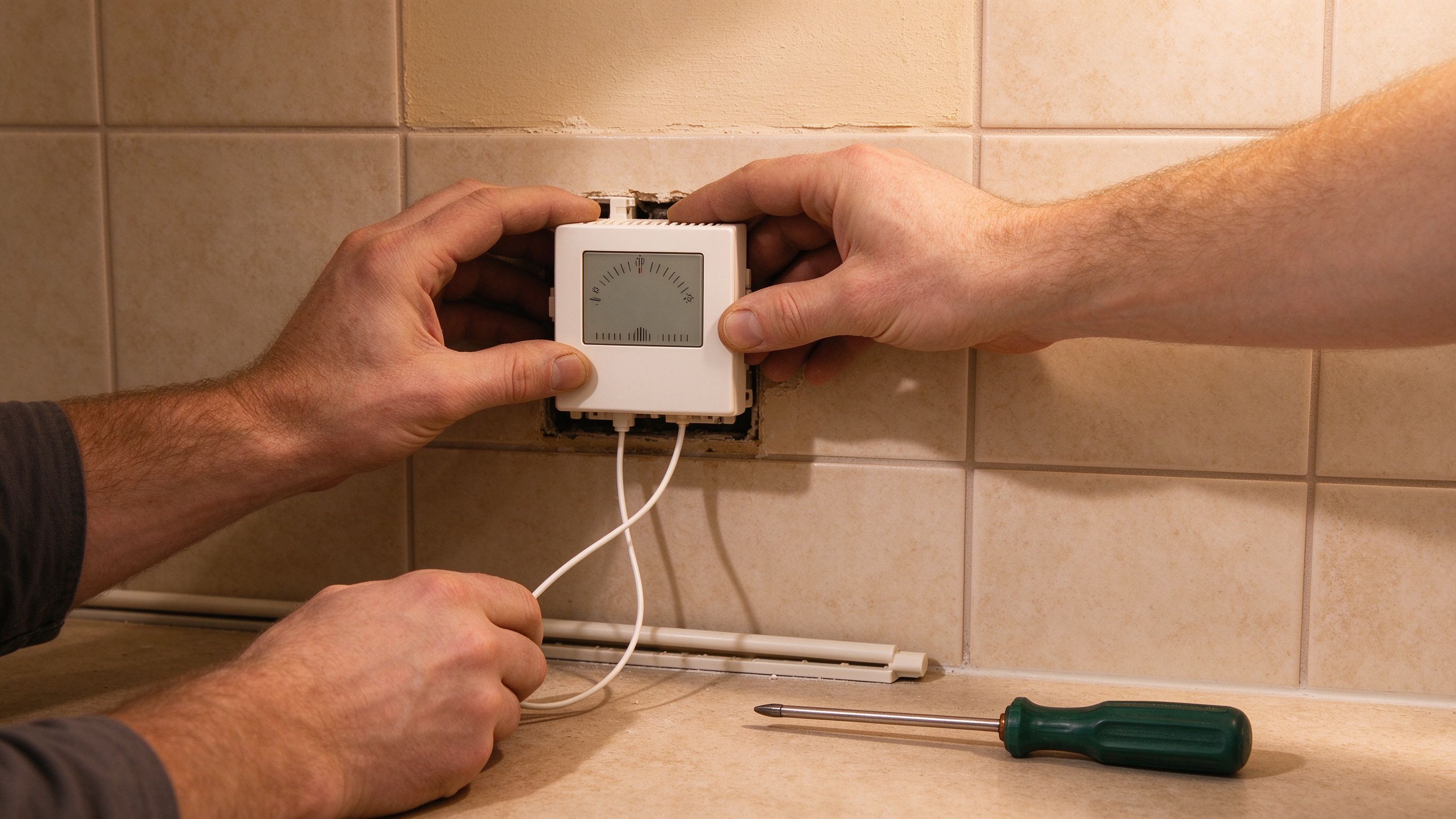
The thermostat location and the floor sensor position decide whether the bathroom is warm when it should be. The thermostat goes on an interior wall at hand height, away from the shower spray and direct sunlight, and it is wired with the supply and the floor sensor cable. The floor sensor is the accuracy device: it is embedded in the floor between two heating runs, in the middle of the heated zone, so it measures the floor surface temperature rather than the air.
In a bathroom, the thermostat is set to floor-probe mode, with a floor limit around 28 °C for tile and lower for vinyl, so the floor cannot overheat regardless of the air setting. A touchscreen or WiFi thermostat adds a weekly schedule—warm floor at 6-8 am and 6-10 pm, cooler in between—and, for households with solar or off-peak tariffs, a programme that uses cheap hours. The wiring must include the residual current protection required by local codes for heating circuits.
The most common installation mistake is not the element—it is the layout planning. An installer who starts laying cable or unrolling a mat without a written floor plan usually ends up with a cold corner by the door or an element that runs under a vanity unit that was moved half a metre during the renovation. The fix is a simple drawing: mark the fixtures, the door swing, the shower tray and the toilet, then lay out the heating zones on paper before the first roll is opened. The drawing is also the record that the cold zones stayed cold, which matters if a warranty question ever arises.
The second common mistake is skipping the resistance test after the tile adhesive sets. The test before laying proves the element arrived intact; the test after laying proves it survived the trowel. Installers who test only once cannot say whether a failure happened in transit or on site, and a thermostat that shows a dead zone is a much more expensive fix after the grout is in. The two-test habit, with the values written on the installation certificate, is the professional standard and the fastest way to protect both the installer and the homeowner.
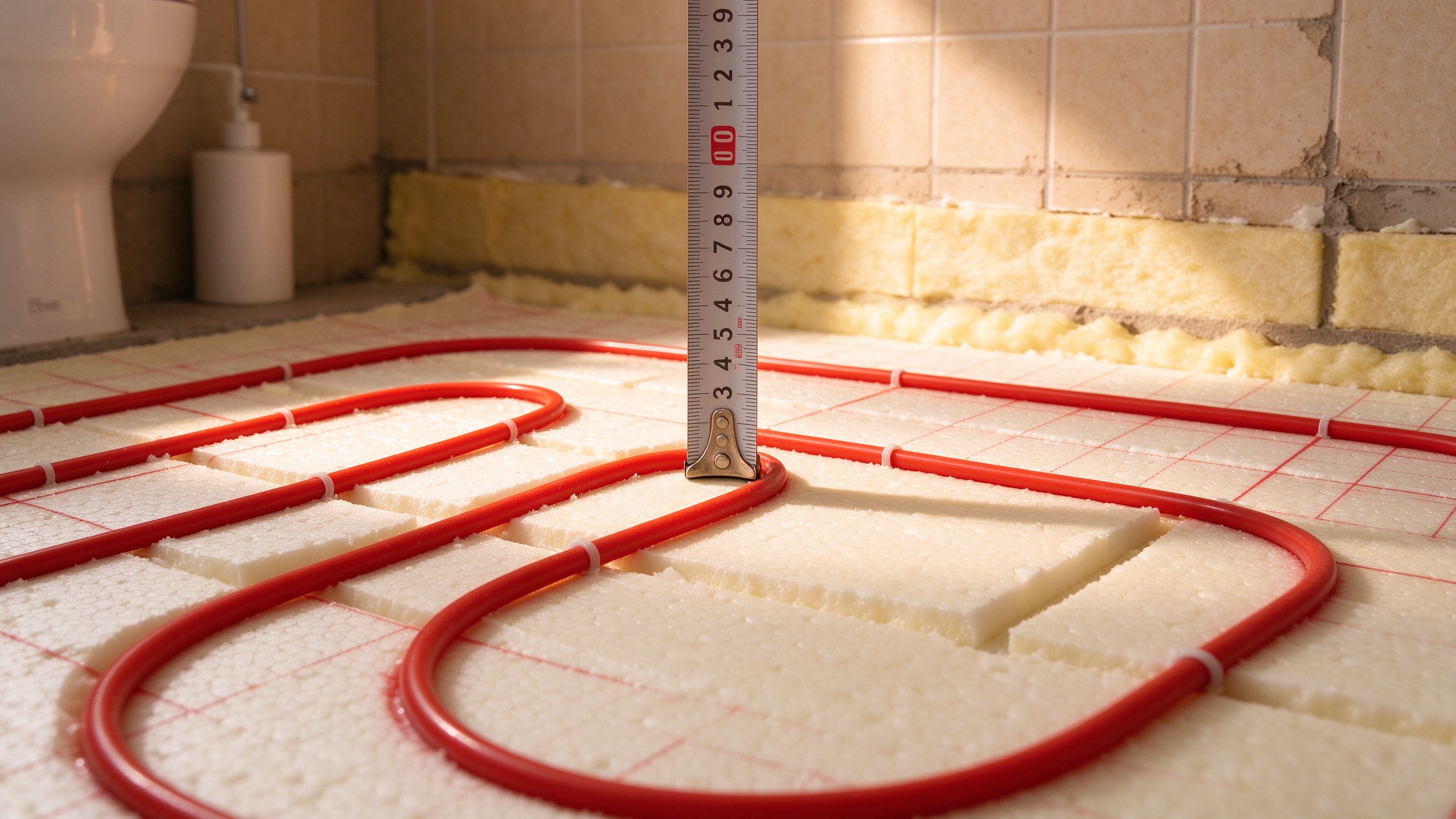
7. Data and Evidence: Testing Before the Tile Goes Down
Per SunAura factory records, every heating cable, mat and film batch is tested for insulation resistance and wattage at rated voltage before shipment, and the batch record is part of the delivery file. The standard site test is the same two measurements: insulation resistance between the heating circuit and earth, and resistance of the heating element—both measured before and after the tile is laid, with the values recorded on the installation certificate. The before-and-after comparison is the evidence that the element survived the installation.
The manufacturer’s data behind the product: SunAura Thermal has manufactured heating elements since 2008—17 years—at its Qingdao Huangdao factory, holds ISO 9001, ISO 14001 and ISO 45001, and ships CE, RoHS, LVD and EMC compliant products to more than 50 countries. The bathroom products are part of that compliance scope, and the installer should request the test report and the installation instructions with the order—they are part of the safety file, not an optional extra.
One more practical note concerns the order of work on site. The heating element and the floor sensor must be in place and tested before the tiler starts, because the tiler works over the finished element and the sensor cable must be routed to the wall box before the adhesive bed covers the floor. The agreed site sequence is: subfloor prepared and cleaned, insulation or decoupling layer if specified, element laid and fixed, sensor positioned and wired, resistance test recorded, then tiling or vinyl over the top. Each trade signs off the step they own, and the resistance values travel with the installation certificate.
8. FAQ: Bathroom Underfloor Heating Installation
Can underfloor heating be installed under the bathtub? Not under a sealed bathtub base, because trapped heat overheats the element. Keep the heating area to the open floor and the shower zone.
How long does a bathroom installation take? A mat or film system is typically a one-day job for the floor heating element and thermostat, excluding tiling; loose cable adds half a day for the layout.
Is it safe with the shower water? Yes, when installed per the manufacturer’s instructions and protected by residual current protection; the heating elements are sealed and rated for the wet environment.
Can film be used under porcelain tile? Yes, with a fully bedded adhesive layer and a tile adhesive rated for the application; the film is laid flat and fully supported.
9. Conclusion: Layout Is the Difference Between Warm and Patchy
Bathroom underfloor heating installation is a layout discipline. Cable routes around fixtures, mat covers rectangular rooms fast, and film makes retrofit possible without raising the floor—but all three succeed only when the cold zones get the coverage, the fixtures stay cold, the sensor is placed correctly and the resistance is measured before and after the tile. A bathroom floor that dries faster and feels warm underfoot is the reward for those details. If you are planning a bathroom renovation, draw the fixture plan, choose the system that fits the shape, and ask your supplier for the test report and the batch record before the adhesive goes down.
Where the budget allows, a small upgrade improves the result further: a thermostat with floor-probe mode and a weekly schedule, and a slightly higher output film under the walking area so the floor recovers quickly after the morning shower. These are specification details, not luxuries—they are the difference between a bathroom that is warm on schedule and one that is warm only when someone remembers to touch the dial.
Ethan Sun, Founder & CEO, SunAura Thermal
Related Products & OEM Inquiries
Looking for a tidy bathroom underfloor heating installation or a factory-direct OEM/ODM partner? Explore our complete electric underfloor heating systems, electric underfloor heating mats, and smart thermostats and floor-sensing controls, then request a quote for your project — we supply distributors, installers and brands in 50+ countries.