
Livestock & Poultry House Heating
Zoned floor heat for farrowing pens, broiler houses and water lines: lower bills than heat lamps, dry bedding, and no frozen pipes at −25 °C.
- 5–35 W per pen
- IPX7 sensor
- tested at −25 °C
- CE · RoHS
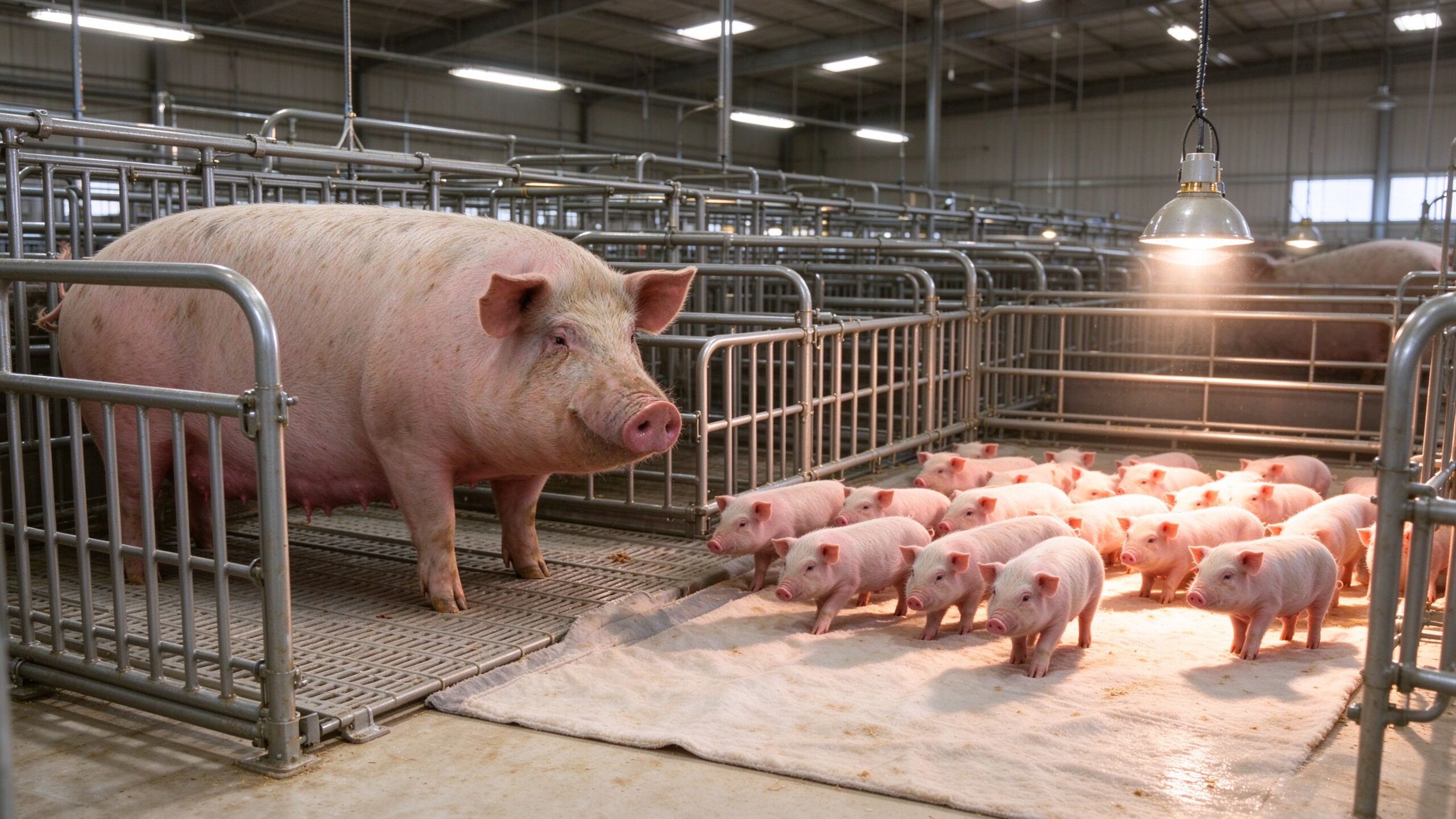
Livestock and poultry house heating moves warmth from lamps above the animals to the floor beneath them. A 5–35 W floor section per farrowing pen or brooder zone holds the litter at 28–32 °C, dries the bedding, and uses a fraction of the energy of a 250 W heat lamp running all day.
This page collects the SunAura farm programme: heating mats for pens and brooding areas, self-regulating and double-conductor cable for poultry houses and water lines, plus the two field case studies where a 300-sow farm and a broiler unit replaced lamps and traced their drinker lines through a −25 °C winter.
Where farm heating is used
Farrowing pens and brooder zones
One 0.5 m mat section per creep area, 5–35 W depending on pen size. Piglets lie on a dry warm patch instead of clustering under a lamp.
See the mat range →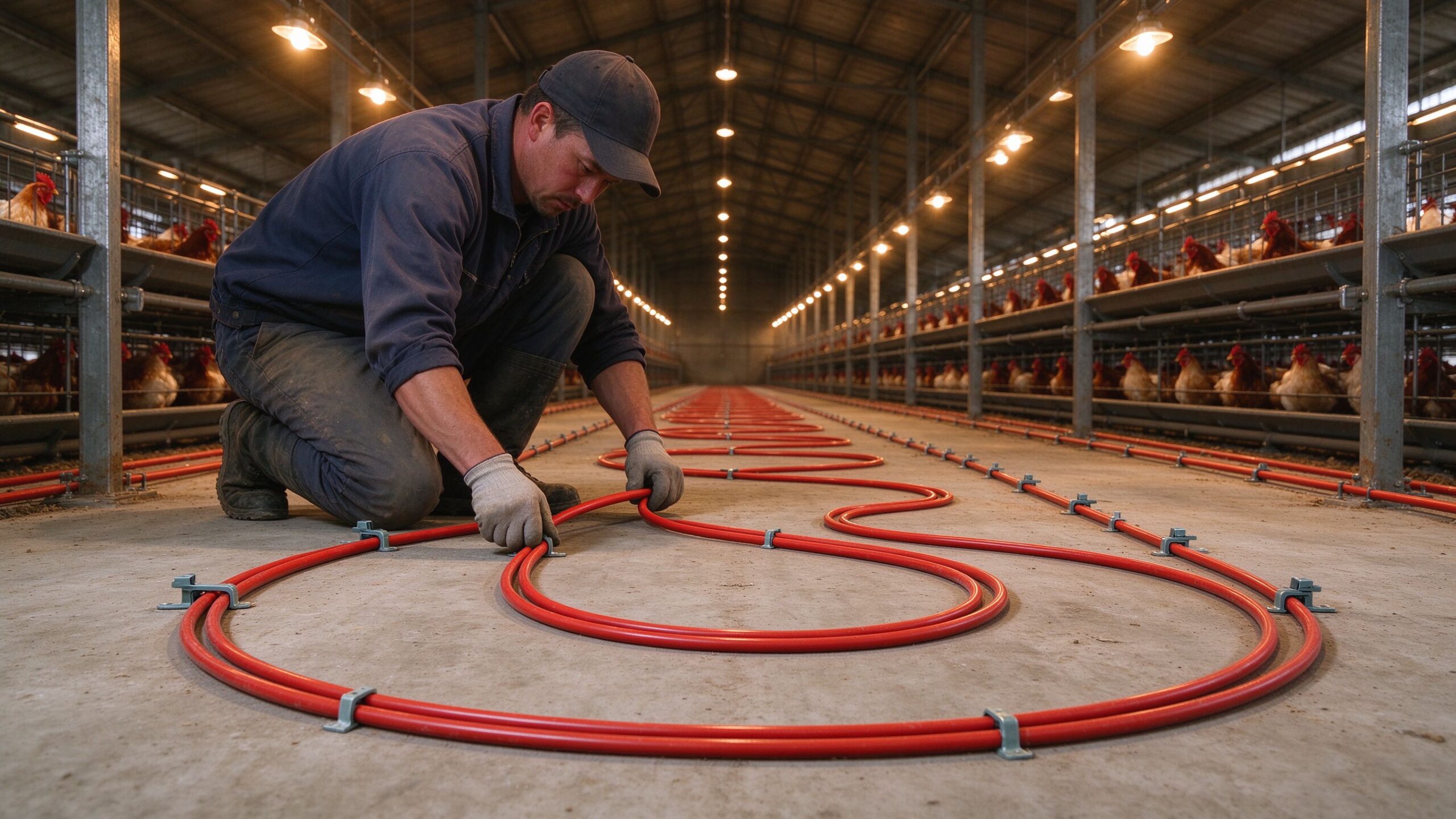
Broiler and layer houses
Cable traced along drinker lines and floor edges keeps litter friable and drinkers flowing; zoning by house section cuts run time to the coldest hours.
See the cable range →
Water lines and frost protection
Self-regulating cable on headers, drinker manifolds and exposed runs holds water above 5 °C without a thermostat running blind. A dairy farm traced 400 m this way.
Read the case →Replacing heat lamps
A 300-sow unit swapped lamps for zoned floor heat and cut both consumption and piglet scattering. The full retrofit is documented.
Read the case study →Technical specifications
| Parameter | Specification |
|---|---|
| Mat sizes | 0.5 m wide, 0.5–6 m² per pen or creep area; custom widths on ODM |
| Power per zone | 5–35 W per pen at 150 W/m²; 80–200 W/m² for concrete brooder floors |
| Cable output | 10–30 W/m double-conductor; 15–40 W/m self-regulating for water lines |
| Voltage | 230 V standard; 110 V and 12–380 V wide-range for solar or generator sites |
| Protection | IPX7 sealed construction, 30 mA RCD per circuit; ammonia-resistant jacket |
| Certification | CE & RoHS, LVD and EMC tested, 100 % batch-tested in Qingdao |
Choosing a farm heating layout
Heat the animal, not the building. Size by pen footprint and litter depth; a 1.5 m² creep area needs 10–15 W, not the whole room.
Zone the house. One thermostat per section (farrowing row, brooder half, drinker bank) beats a single sensor reading the warmest corner.
Design for wash-down. IPX7 elements, sealed junction boxes off the floor, and a 30 mA RCD per circuit survive pressure washing and ammonia.
FAQ
Is floor heat cheaper than heat lamps?
Can mats survive a high-pressure wash-down?
What cable for a −25 °C water line?
Related scenarios
Deeper read
The question that comes up most often in farm projects — whether heating film can go under the slatted floor — has its own article: what the slurry channel does to a bare film, why the scraper and the open void defeat it, and the three layouts that keep piglets warm, with a section drawing. Read it before you cut into a pen floor.
Next step
Send pen dimensions, animal count, house layout and the lowest winter temperature. Our engineers return a zoned layout with wattage per pen, cable routing and control points within one working day.