
Is Underfloor Heating EMF Safe? What Buyers Should Check Before Choosing a Heating System
By Ethan Sun, Founder & CEO, SunAura Thermal
If you are comparing underfloor heating EMF safety against forced air or radiators, you are asking the right question. Most buyers who reach us at SunAura Thermal ask the same three things: how strong is the electromagnetic field around an electric floor, whether it matters for sleep and children’s rooms, and which product design keeps exposure lowest. This article answers those questions with measured numbers, standard limits, and a practical comparison you can take to any supplier.
The short answer: electric underfloor heating operates at 50 Hz mains frequency, and typical exposure at floor level sits far below the public limits recommended by international exposure guidelines. But the difference between a well-shielded cable and a poorly made film can be meaningful, especially for buyers running heating under a bed or a nursery. That difference is exactly what this guide helps you evaluate.
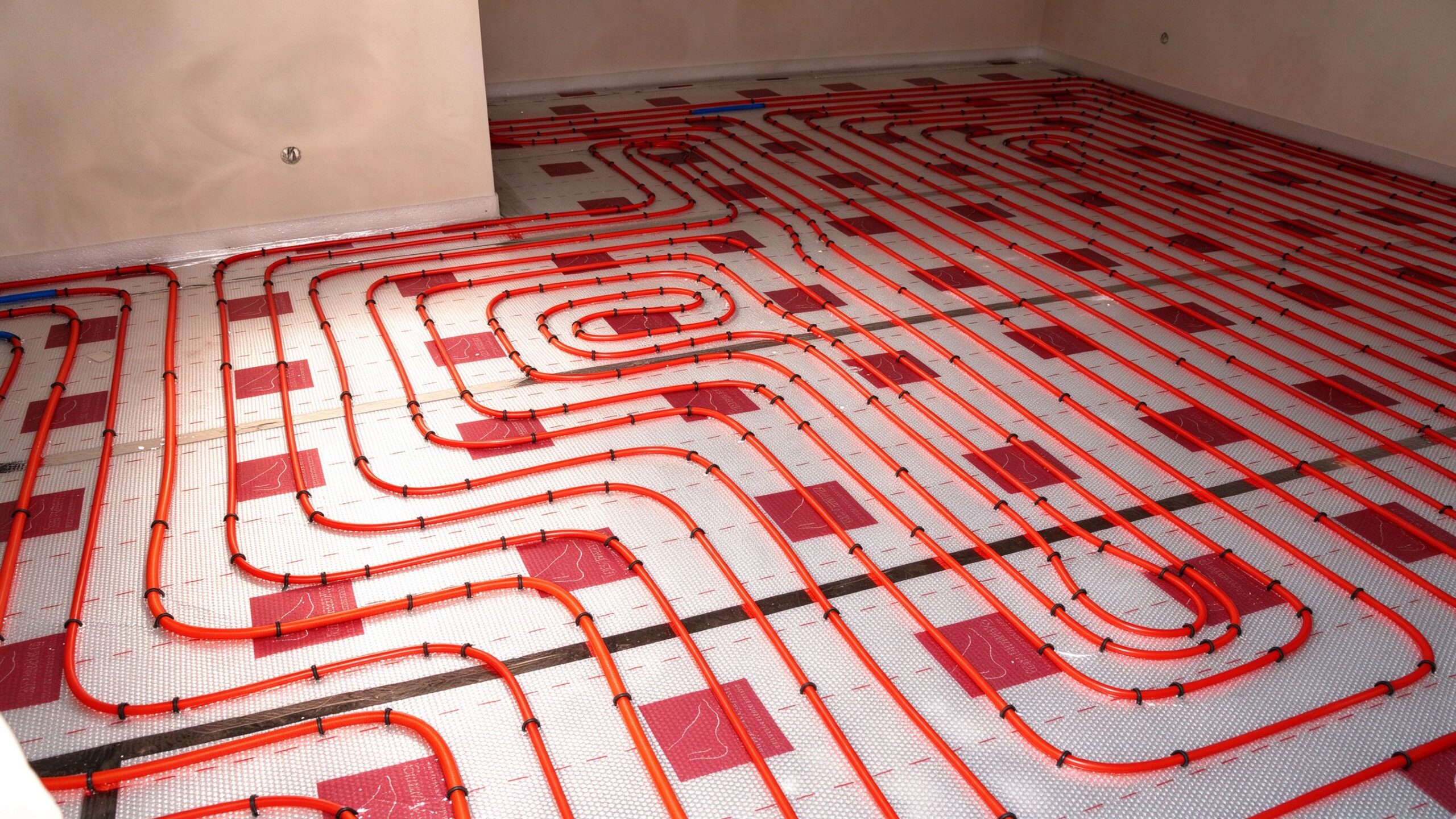
What Is EMF and Why Does It Show Up in Heating Specs?
EMF stands for electromagnetic field. Around any live electric conductor, two things exist: an electric field from voltage and a magnetic field from current. Both decay quickly with distance, which is why exposure close to a heating element is the only case that deserves attention. International exposure guidelines, such as those issued by ICNIRP and adopted into national frameworks in most EU states, set reference levels for 50 Hz public exposure. For magnetic fields the general public limit is 100 µT; for electric fields it is 5 kV/m. A typical underfloor heating cable in operation produces a magnetic field in the range of a few tenths of a microtesla to a few microtesla at skin distance, depending on layout and current.
To put that in context: a hair dryer measured at close range commonly reads in the tens of µT, a microwave oven more, and a power line directly overhead can reach several µT at ground level. The heating cable under your floor is among the lower emitters because it is a balanced load drawing modest current over a long length. Per EN 1264 guidance on electric floor heating design, cable spacing and output are set so surface temperatures stay uniform, which also keeps current density low per metre.
Electric Floor Heating vs Hydronic: Does Water Make the Field Disappear?
Hydronic systems circulate warm water and, once installed, carry no electricity into the floor at all, so their field reading is essentially zero. That is the main reason some buyers with extreme sensitivity or strong caution prefer water systems. The trade-off is structural: hydronic floors are thicker, need a boiler or heat pump with a much higher upfront cost, and are impractical for retrofit projects with limited floor height. Electric film and cable systems stay between 3 and 15 mm of build-up and can be wired zone by zone.
For most households the practical exposure difference is small. At 30 cm above the floor, which is roughly where you sleep in a low bed or where a toddler plays, the field from a normally spaced electric floor drops to a level comparable to background household wiring. The more relevant engineering question is shielding and conductor layout, covered next.
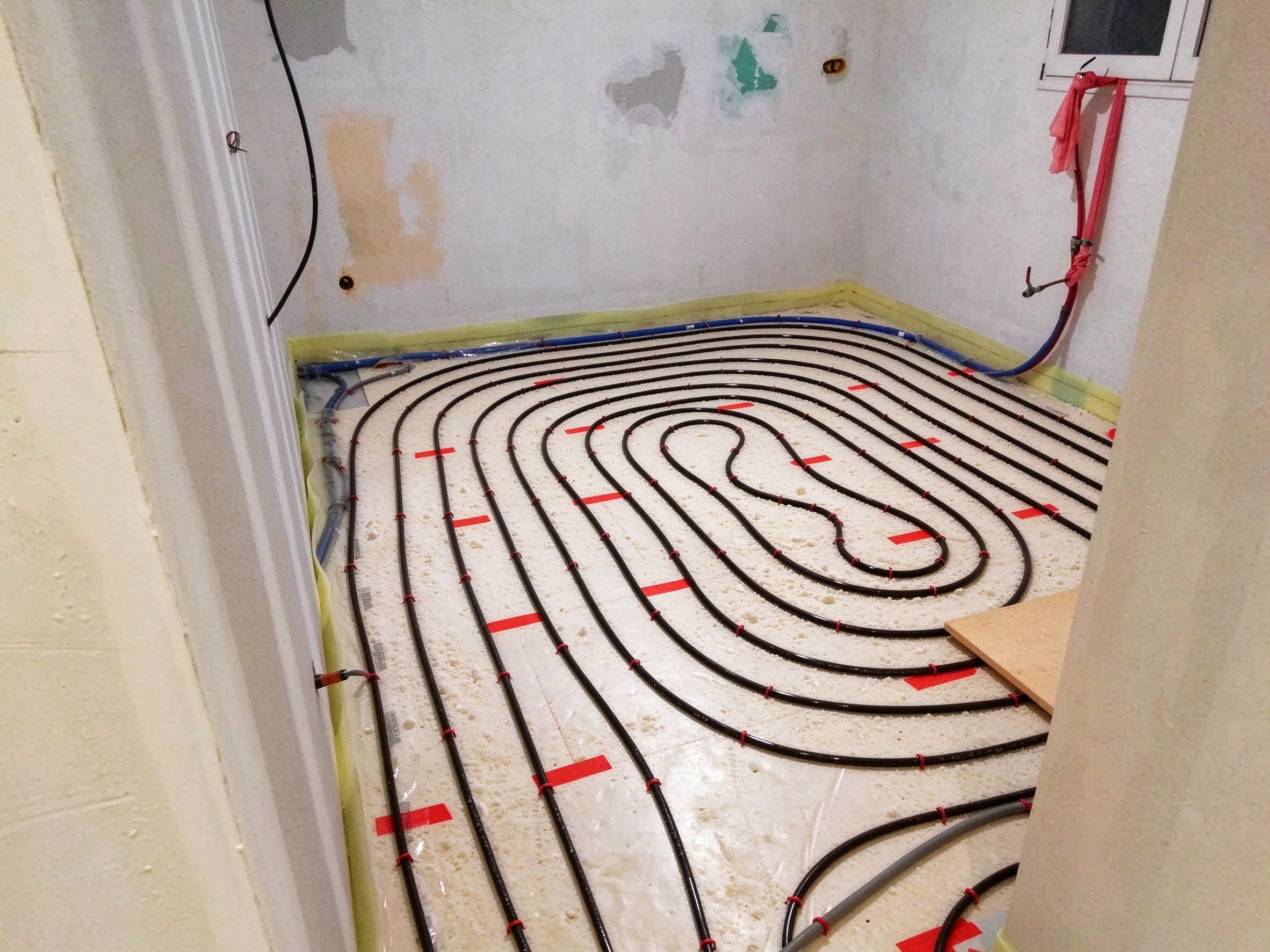
Shielded Cable vs Standard Cable vs Film: How Construction Changes the Reading
Product construction decides most of the EMF story, and this is where a procurement comparison table helps more than marketing claims.
| Design | Typical conductor layout | Relative field at floor level | What it means for buyers |
|---|---|---|---|
| Single-conductor cable | One live conductor, return in the loop | Higher; loop fields add locally | Cheapest option, but hotter spots and higher local field near terminations |
| Twin-conductor shielded cable | Live and return side by side inside a screen | Low; fields largely cancel | The standard choice for bedrooms; screen also gives continuity for earthing |
| Carbon or graphene heating film | Wide carbon strips, low current per strip | Low to very low | Very uniform surface; current density per strip is small |
| Self-regulating PTC cable | Semiconductive core between bus wires | Low at normal load | Used for pipes and outdoor; field depends on supply wiring |
Two construction details matter more than the element type itself. First, whether live and return conductors run close together in the same sheath; side-by-side conductors produce opposing fields that cancel at distance. Second, whether a braided or foil screen surrounds the element and is properly earthed; a bonded screen acts as a Faraday cage and collapses the external field further. Reputable suppliers publish these details in datasheets. At SunAura Thermal, heating cable product lines use a twin-core layout with bonded screen for bedroom and bathroom applications, and our heating film uses wide low-current carbon strips precisely because the thermal uniformity and low per-strip current are both measurable.
What the Standards Actually Require (and What They Don’t)
Standards bodies do not classify heating products by “safe” or “not safe”; they set limits and testing methods. On the product side, EN 60335 household appliance safety covers electrical safety, and IEC/EN standards for heating elements define creepage, insulation and thermal limits. On the exposure side, the reference values in the ICNIRP guidelines and the WHO fact sheet on EMF explain that low-frequency fields below the recommended limits have not been shown to cause health effects. What the standards do not do is measure a finished floor installation. That is why smart buyers ask for a field measurement protocol rather than a certificate word.
A practical measurement approach for a site inspection: set the heating to full output, wait for steady state, then read with a calibrated meter at floor surface, 30 cm, and bed height. Record the reading in the centre of the zone and near terminations. If a supplier cannot or will not provide reference readings from their own factory test rig, treat it as a red flag. This is a standard part of our own QC routine at the Qingdao Huangdao factory: every production batch is energised and thermally profiled, and EMF reference data is captured for twin-core cable lines on request.
Reading a Field Measurement: What the Numbers Mean
Once you have a measurement, you need a frame to read it. A reading of 0.2 µT at floor level and 0.05 µT at 30 cm is typical for a properly installed twin-core or film system; a reading of 2–5 µT close to a single-core loop or near an unshielded termination is still far below the 100 µT general public reference, but it tells you the design is sloppy. What should worry a buyer is not “above zero” but readings that jump near terminations or run hot spots, because both point to layout problems that also affect comfort and cable life.
A second frame is the comparison against everyday household appliances. Background household wiring and phone chargers already produce low-frequency fields in normal use; the heating floor joins that environment rather than dominating it. The right question in a datasheet review is therefore not “is there any field” but “how does this product’s conductor layout and screen construction keep the field low at bed height and in the termination zone”.
Room-by-Room Selection: Bedroom, Nursery, Living and Office
The same W/m² output can be delivered with very different field profiles depending on the product and layout. For a bedroom where a low bed sits directly over the heated zone, prefer twin-conductor shielded cable with terminations routed to the wall, or a wide-strip film with low current per strip; keep the thermostat and supply wiring out of the head zone. For a nursery, the same logic applies plus one extra step: choose a system with a bonded screen and verify the RCD circuit, because the child spends more time near floor level. For living areas and offices, standard twin-core cable or film is fine, and the higher the floor finish is (stone over screed), the lower the field at seating height.
Buyers who are renovating an old building often ask whether a thin film under laminate is a worse EMF choice than a cable in screed. In practice both are low; the film’s wide strips carry small current each, and the cable’s twin-core construction cancels fields. The deciding factors are build-up height, floor finish and how terminations are placed, not the element family.
Supplier Questions That Separate Fact from Marketing
Marketing pages like to say “low EMF” without numbers. The questions that get a factual answer are these: what is the conductor layout of the element, is there a bonded screen and how is it earthed, what is the rated current per metre at nominal output, and can you provide a factory measurement protocol? A supplier who answers with datasheets and a test procedure is giving you engineering; a supplier who answers with adjectives is giving you a sales page. This distinction is worth more than any single field reading, because it predicts how the supplier will behave when a project question comes up later.
Buyer’s Checklist: How to Compare EMF Claims Across Suppliers
Before you request a quote, run this checklist. It keeps the comparison objective and avoids being sold on adjectives.
- Ask for the conductor layout: single-core or twin-core, and whether a screen is bonded and earthed.
- Ask for the datasheet current per metre at rated output; lower current per metre means lower field locally.
- Ask how terminations and cold leads are routed; junction boxes should be outside the heated zone or shielded.
- Ask for reference field readings from a factory test, not a photocopied certificate.
- Check the build-up height and whether the floor finish affects the reading; thick stone increases distance and reduces field.
- For bedrooms, prefer twin-conductor shielded cable or wide-strip film, and keep the thermostat and supply wiring clear of the pillow zone.
Data and Evidence
Exposure reference values for 50 Hz public exposure are taken from ICNIRP and WHO EMF guidance, as adopted in national frameworks. Floor heating design assumptions follow EN 1264 guidance for electric floor heating. Product construction details (twin-core layout, bonded screen, wide carbon strips) are described per SunAura factory records; SunAura Thermal has manufactured heating elements in Qingdao Huangdao since 2008 (17 years), holds ISO 9001/14001/45001 and CE/RoHS/LVD/EMC compliance for its product lines, and exports to more than 50 countries. No specific certificate numbers are cited because buyers should verify them against their target market requirements.
FAQ
Does underfloor heating EMF matter under a bed? At 30 cm above a properly spaced twin-core or film system, readings fall to background levels comparable to household wiring. If you want the lowest possible figure, choose shielded twin-core cable and keep terminations away from the head area.
Is electric floor heating EMF higher than Wi-Fi or phones? They are different frequencies. At 50 Hz, the heating floor is a low-frequency source; Wi-Fi is radio-frequency. Both are far below their respective guideline limits in normal operation.
Do shielded cables need to be earthed to work? The screen should be bonded and earthed for the cancellation and safety function to be meaningful. Unbonded screens provide little benefit, so check the termination instructions.
Is there a difference between 230 V and 120 V systems for EMF? At the same wattage, a 120 V circuit carries double the current, so fields can be higher unless the cable is twin-core. North American buyers should prioritise twin-conductor construction.
Should I worry about EMF from the thermostat and supply wiring? Wiring close to a bed is a more relevant source than the floor itself in many rooms. Route supply cables and keep transformers or junction boxes away from sleeping areas.
Can I measure the field myself? Yes, with a calibrated EMF meter. Measure at full output, at floor, 30 cm and bed height, and compare against the 100 µT magnetic reference level.
Conclusion: What to Choose, and Where to Start
If EMF is your deciding factor, choose a twin-conductor shielded heating cable for bedrooms and bathrooms, or a wide-strip carbon heating film for large open areas where uniformity matters. Ask every supplier for conductor layout, screen bonding and factory field readings before comparing price. For procurement guidance, electric floor heating vs forced air and insulation R-value explain the other two variables that decide comfort and running cost.
Need a spec sheet with measured values and a factory-direct price? Email Ethan at [email protected], or browse the shielded cable range and send your room plan for a tailored W/m² recommendation.