
If you run a greenhouse, a seedling nursery or a propagation bench, you have probably seen two completely different answers to the same question: how do you warm the root zone without heating the whole building? One grower insists on air heaters, another swears by soil heating cable buried a few centimetres under the trays. The difference is not preference — it is cost, energy use and crop quality. This article walks through the practical selection of agricultural soil heating cable: what wattage you actually need per square metre, how far apart the cable runs should be, and how the jacket material and control strategy change the buying decision for a commercial operation.
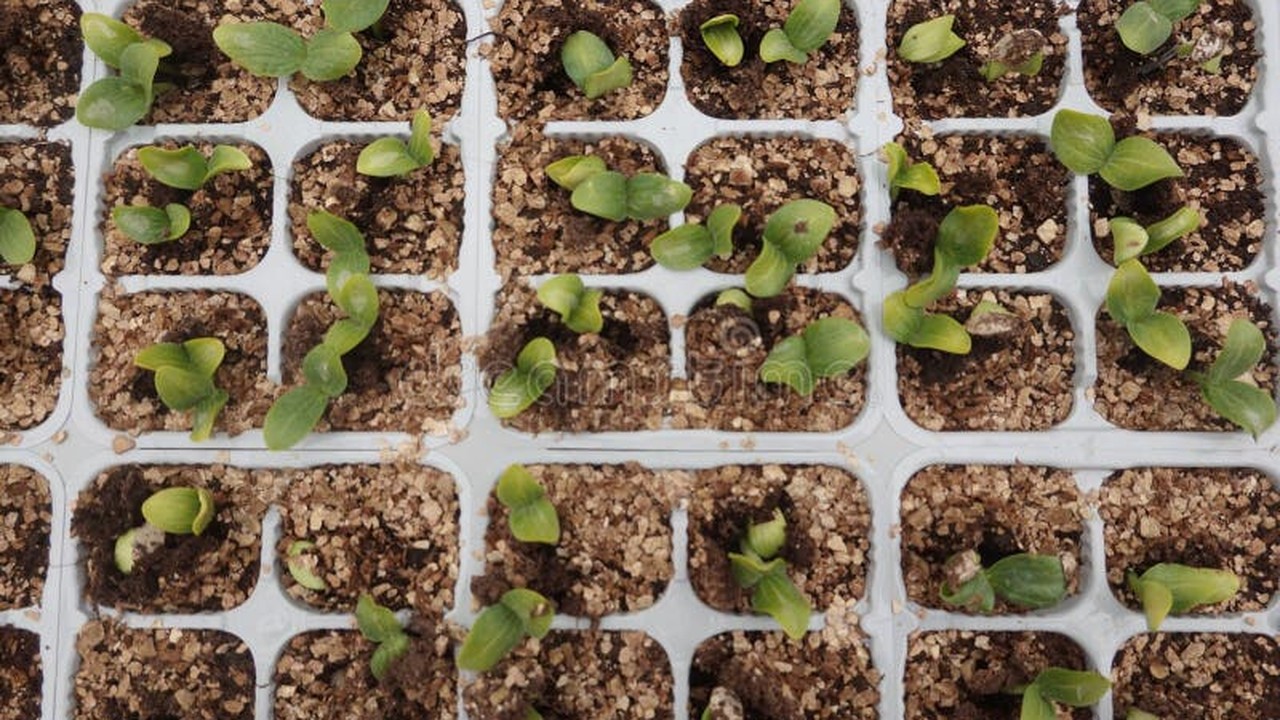
Why Root-Zone Heating Beats Air Heating for Propagation
Seed germination and rooting of cuttings depend on media temperature more than air temperature. Most horticultural reference guidance puts the optimum media temperature for common crops in the 20–25 °C band, while air temperature can sit several degrees lower without hurting germination. Heating the soil or propagation media directly therefore uses energy where the plant needs it, instead of warming the whole greenhouse volume.
The practical consequence for buyers is that an agricultural soil warming cable system typically consumes less energy than a fan heater or radiator to maintain the same growth result, because losses to ventilation and glazing are not reheated continuously. For a bench of 20 m², the difference in connected load is roughly 2–4 kW versus 6–10 kW for air heating, which changes both the electrical installation and the running bill.
Soil Heating Cable Wattage per Square Metre: The Numbers That Matter
Before comparing brands, decide the installed density. The target wattage depends on three variables: the desired media temperature, the ambient temperature you are holding, and the insulation layer underneath the bench or bed.
- Propagation benches and seedling trays (20–25 °C media): 150–250 W/m² is the working range for most heated benches with an insulating layer below.
- Greenhouse ground beds in cold climates: 200–400 W/m² when the soil bed sits directly on the ground and heat is lost downwards.
- Outdoor cold frames and early-season tunnels: 250–400 W/m², run only during frost risk periods.
These figures align with the way soil heating cable wattage per square meter is calculated in practice: take the heat loss of the bed (based on construction and delta-T), divide by the heated area, then add a safety margin of 10–15% for control deadband and voltage tolerance. A 300 W/m² bed of 10 m² therefore needs roughly 3 kW of connected cable, which at 230 V splits cleanly into standard circuit loads.
Spacing and Burial Depth: How Centres Decide Even Heat
Once wattage is fixed, spacing turns linear power into area power. A cable rated at 18 W/m laid at 12 cm centres delivers about 150 W/m²; the same cable at 9 cm centres delivers around 200 W/m². The relationship is simple, but the decision is not just arithmetic.
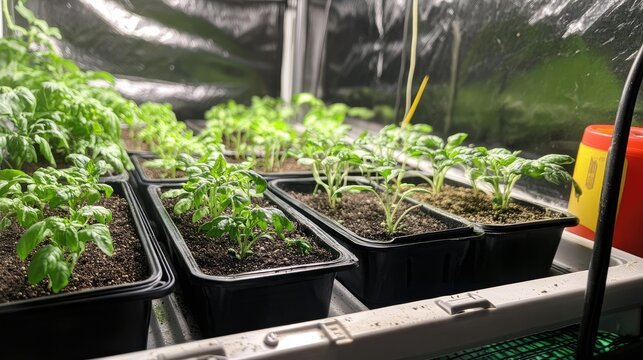
For propagation benches, spacing of 10–15 cm with a burial depth of 4–8 cm in sand or perlite is a dependable starting point, because the media is shallow and the thermostat probe must sit at root level, not at the cable. For ground beds and nursery soil warming, burial depth moves to 10–20 cm and spacing to 15–25 cm, so the heat field overlaps before it reaches the root zone. Uniformity is the practical goal: the temperature spread across the bench should stay within about 2 °C, which is only achievable if the cable layout avoids doubling back on itself in tight loops and keeps the heating element away from the bench edges by 5–10 cm.
Constant Wattage vs Self-Regulating Cable: Which to Buy
This is the biggest procurement fork in agricultural heating. Both types are sold as soil heating cable, but they behave differently under partial burial, crossing points and cold start.
| Parameter | Constant wattage (series) cable | Self-regulating (PTC) cable |
|---|---|---|
| Output behaviour | Full rated W/m whenever energised | Output drops as temperature rises, rises when cold |
| Overlap / crossing tolerance | Overlaps can overheat locally | Overlaps are inherently safe |
| Typical agricultural use | Propagation benches, fixed beds with careful layout | Pipe and gutter freeze protection, beds with uneven depth |
| Control needed | Thermostat essential; power density fixed by layout | Thermostat recommended; self-limiting adds safety margin |
| Relative cost | Lower per metre | Higher per metre |
For a nursery bench where layout is controlled and you want predictable W/m², constant wattage cable with a soil thermostat is the conventional choice and usually the lower-cost option. For retrofit into beds of varying depth, or where an unskilled crew will do the burying, a self-regulating heating cable removes the biggest installation risk — accidental overlap — at a higher price per metre. Both options are manufactured at SunAura’s Qingdao Huangdao plant; the factory recommends matching the cable type to the skill level of the installer as much as to the crop.
Jacket Material: PVC, Silicone and the Water Factor
Greenhouse soil is damp, acidic from fertiliser residues and in direct contact with the cable. The jacket is therefore a genuine specification point, not a detail.
- PVC outer jacket is the economical standard for dry propagation benches. It resists abrasion and moisture well when buried in sand or perlite, and most bench kits use it.
- Silicone or fluoropolymer jackets matter when cables run in permanently wet ground, around fertiliser dosing lines, or where a short section must survive contact with metal bench frames. Silicone keeps flexibility at low temperature, which helps winter installation.
- Double insulation and earthing screen (braided shield) are worth specifying for ground beds in public-facing operations such as botanic gardens or teaching facilities, because the shield contains any fault current and satisfies stricter local inspection rules.
Whichever jacket you choose, the electrical safety chain stays the same: an RCD (residual current device) rated at 30 mA, a dedicated circuit, and a soil temperature probe wired to the thermostat. SunAura’s agricultural cable range is CE, RoHS, LVD and EMC compliant per current factory records, and the ISO 9001 quality system covers the extrusion and screening process, so the incoming goods test sheet should show insulation resistance values from the production batch, not just a marketing claim.
Data and Evidence: What the Standards and Factory Records Show
For buyers who want numbers behind the advice: European design guidance for embedded electric heating (the EN 1264 family for floor systems, applied by analogy to soil heating) expects the heat source to be sized against calculated heat loss and covered by a temperature limiter, which is exactly the control loop described above. Independent horticulture extension literature commonly cites media temperatures of 20–25 °C for germination of most vegetable and ornamental crops, and warns that media above 30 °C reduces germination in many species — so more wattage is not automatically better.
On the manufacturing side, per SunAura factory records, the company has been producing heating elements since 2008 — 17 years of continuous production at the Qingdao Huangdao facility — and exports to 50+ countries. Every soil heating cable batch is tested for insulation resistance and continuity before packing, and the ISO 9001, ISO 14001 and ISO 45001 management systems cover production, environmental control and occupational safety. Certificates are real and audited, but the factory deliberately does not publish certificate numbers in marketing copy; if your buyer documentation requires them, request the current certificate pack through the sales channel.
Common Buying Mistakes in Soil Heating
Four errors show up repeatedly in RFQs and installations:
- Specifying wattage without insulation. A bed on bare ground can lose 40–50% of its heat downwards. A 50 mm EPS board under the bed often lets you drop from 300 W/m² to 200 W/m² and still hit the same media temperature.
- Ignoring the probe position. A thermostat reading cable temperature instead of soil temperature oscillates badly. The probe must sit at root depth, between cable runs, not on top of the element.
- Buying by metre length instead of W/m². Two suppliers can quote the same total length with very different installed power. Always convert to W/m² before comparing prices.
- Skipping the RCD. Soil cable lives in damp conditions. A 30 mA RCD is cheap insurance and often a legal requirement.
Selection Framework: Which Soil Heating Solution for Which Operation
- Small nursery or hobby greenhouse, dry benches: 150–250 W/m² constant wattage PVC cable, 10–15 cm spacing, 4–8 cm depth, simple soil thermostat. Lowest cost, easy to repair.
- Commercial propagation house, hundreds of trays: 200 W/m² constant wattage cable on insulated benches with a multi-zone controller, because zonal control lets you hold different crops at different media temperatures on the same circuit.
- Ground beds in cold climates or frost-sensitive crops: 250–400 W/m² with an insulation layer, shielded jacket if public access is possible, and a frost-stat plus soil thermostat in series.
- Retrofit with unknown bed depth or unskilled labour: self-regulating cable at 10–20 W/m, slightly wider spacing, accepting the higher per-metre price in exchange for overlap safety.
Budget Tiers: What Small, Medium and Large Operations Actually Pay
To make the comparison concrete, here is how the cost structure scales with the size of the operation, based on typical wholesale ranges for agricultural heating components:
- Hobby and small nursery (10–30 m² of benches): the budget sits around USD 3–8 per m² for constant wattage PVC cable plus a simple soil thermostat and an RCD. Total project cost, including insulation board and sand bedding, is usually USD 150–500. This tier is sold as kits, and the buyer should pay attention to whether the kit includes the probe and the mounting clips, because those are the parts most often missing from cheap listings.
- Commercial propagation house (100–500 m²): per-m² cost drops to USD 2–5 as cable comes in long reels and control moves to a multi-zone panel. The real budget items here are the contactors, the multi-zone controller and the labour of laying out beds — often two to three times the material cost. Expect USD 500–2,500 for a full installation, with zone control paying for itself in the first season through lower running hours.
- Large ground-bed or tunnel operation (1,000+ m²): material cost falls below USD 2 per m² for constant wattage cable in bulk, but the project is dominated by insulation, earthworks and electrical distribution. At this scale, a shielded cable and a proper sub-distribution board are standard, and the buyer should ask for W/m² verification on the as-built layout before the topping goes on.
These are planning numbers, not quotes — actual pricing moves with copper, jacket polymer and freight, and SunAura quotes per project against the buyer’s area, density and control specification. But they are useful for sanity-checking supplier prices: a quote wildly outside these bands deserves a second look at what is actually included.
Checklist Before You Send the RFQ
Put these items in your enquiry so the quote is comparable across suppliers:
- Heated area in m² and target media temperature (°C)
- Ambient minimum temperature and whether the bed is insulated
- Supply voltage (230 V, 110 V or DC options)
- Cable type: constant wattage or self-regulating, jacket material
- Required W/m² and estimated total connected load
- Number of zones and probe positions
- Certification pack needed (CE/RoHS/LVD/EMC, ISO) and incoming inspection data
Frequently Asked Questions
Can I lay soil heating cable on top of the soil instead of burying it? Surface laying works for frost protection of pipes and gutters, but not for root-zone heating — the media temperature becomes uneven and the cable is exposed to mechanical damage. Bury it at the depth that matches the crop root zone.
How many square metres can one thermostat control? A single thermostat can switch one contactor feeding several benches if the load is contactor-driven; directly switched loads should stay within the thermostat rating, typically 16 A at 230 V (about 3.5 kW).
Do I need a soil temperature probe, or is an air thermostat enough? A probe in the media is the difference between holding 22 °C at the roots and cycling on air temperature that lags the media by an hour. Use a soil probe.
Can I use residential underfloor heating cable for soil heating? Physically yes — it is a heating element — but check two things first. Residential cable is rated for embedment in screed and may not carry a jacket tested for direct contact with fertiliser-laden media or wet ground; the moisture specification and the sheath temperature rating are what separate an agricultural product from a floor product. If the soil bed is dry and shallow, a standard cable can work with a soil thermostat, but for wet beds or permanent ground contact, specify an agricultural-grade jacket.
What is the typical lifespan of agricultural soil heating cable? Installed at rated W/m², kept below the jacket temperature limit and protected by RCD, constant wattage cable in a dry bench routinely exceeds 10 seasons; wet ground beds shorten this unless the jacket is selected for the environment.
CTA
If you are planning a propagation bench, greenhouse bed or frost-protection project, send your area, target temperature and supply voltage to the SunAura sales team, and ask for the heating cable options with W/m² calculations for your bed construction. For soil heating cable wholesale quantities and OEM packaging, request the factory price list and the current certificate pack directly from the Qingdao Huangdao plant. The wattage calculation guide on this site walks through the same method for floor heating, and the heating mat range covers operations that prefer a fixed pre-spaced layout over loose cable.
Ethan Sun, Founder & CEO, SunAura Thermal