
Thermal Storage Heating in 2026: How Night Storage Systems Compare with Direct Electric Floor Heating
Storage heating is the oldest trick in the electric heating playbook and, in 2026, one of the fastest-moving procurement categories in Europe. The logic is simple: buy electricity when the grid is cheap and abundant, store it as heat in dense ceramic mass, release it through the day when the grid is tight and expensive. What has changed is the context around that logic — a grid that is now roughly half renewable in the UK, a statutory push away from gas and oil, a subsidy environment that favours heat pumps, and the staged retirement of the Radio Teleswitch Service that has switched millions of off-peak installations for decades.
This is a buyer’s comparison, not a technology celebration. It sets thermal storage heating against the alternatives a household or small commercial client is actually offered in 2026 — direct electric underfloor heating, storage heat batteries, heat pumps with wet underfloor heating, and electric boilers — on the parameters that decide outcome: capital cost, storage capacity, controllability, comfort response, tariff dependency and the buildings where each one fails. Storage heating is genuinely good in some of those buildings and genuinely poor in others, and the difference is usually visible in the tariff and the heat-loss calculation rather than in the product brochure.
Why storage heating is being re-examined now
Three structural changes are behind the renewed interest. First, the electrification of heat is no longer theoretical: the Centre for Sustainable Energy notes that around 90 % of UK homes still run on gas or oil, and that nearly all of them will need to convert to electric heating over the next 10 to 15 years to meet climate targets. Second, grid carbon intensity has fallen far enough that running electric heat at night is meaningfully cleaner than it was when storage heaters were first mass-installed. Third, the metering infrastructure that made off-peak heating practical is being rebuilt — the RTS system is being phased out in stages, which forces every legacy off-peak household to re-examine its tariff and its heater at the same time.
Against that, the economics have not become kind. Electricity remains roughly four times the unit price of gas for most households, which is exactly why the storage model matters: it is one of the few ways a direct electric heater can compete on running cost, by shifting consumption into a cheaper window rather than by becoming more efficient.
What a storage heater actually does, and what it cannot do
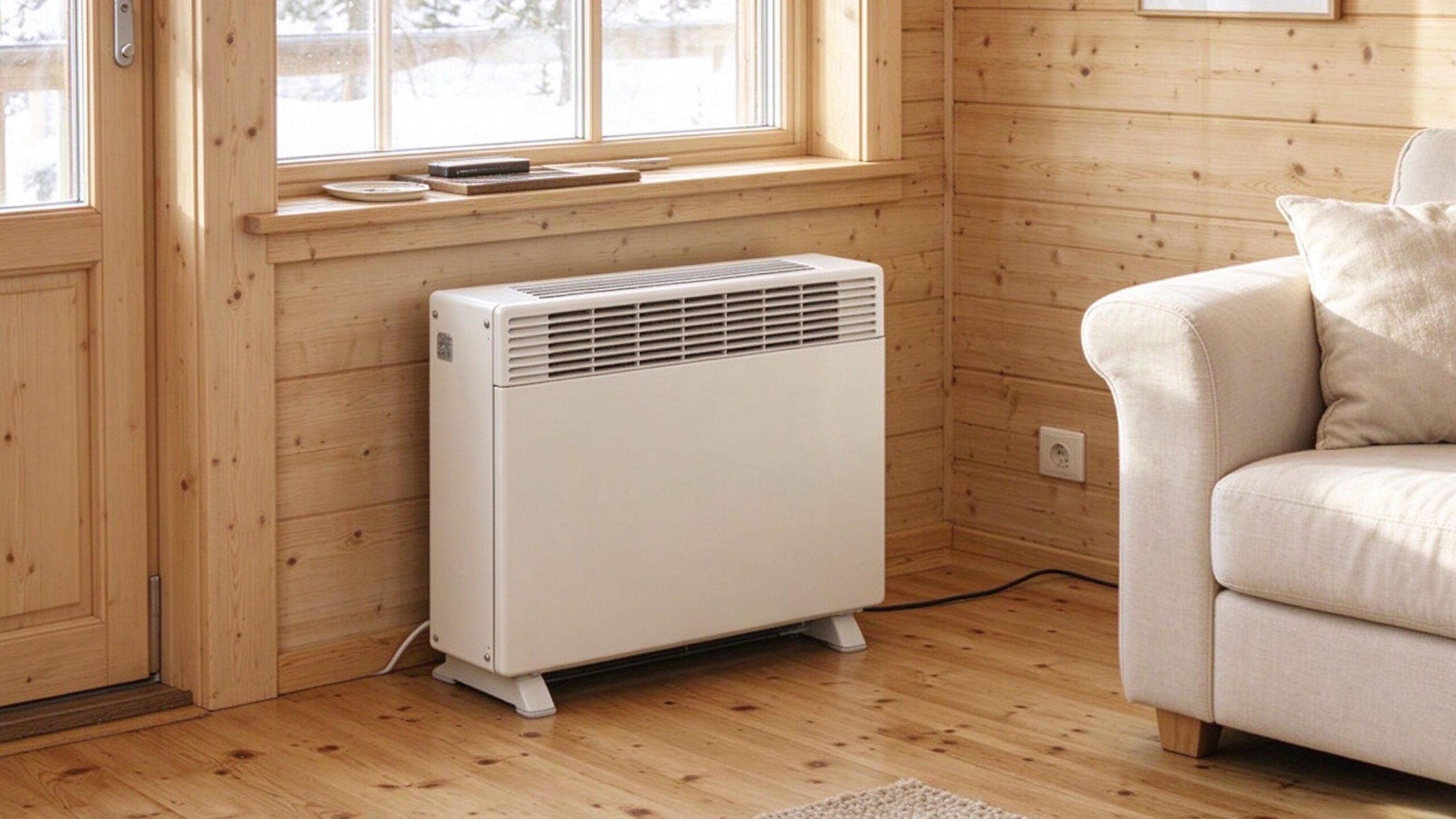
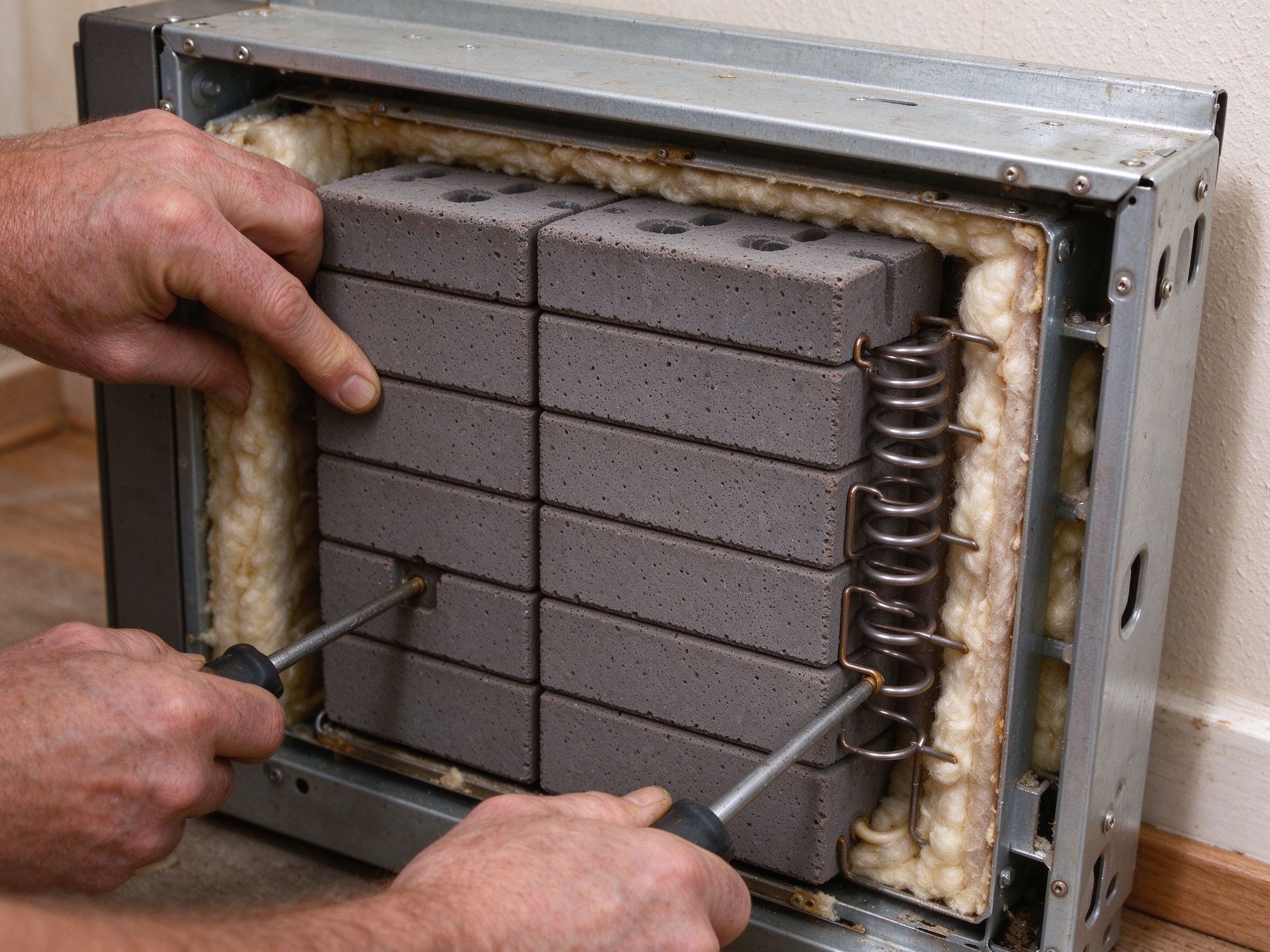
A classic night storage heater contains a core of high-density ceramic bricks, a set of resistive elements, insulation and a damper-controlled airflow path. It charges during the off-peak window — commonly a seven-hour overnight period on a legacy Economy-style tariff, or a split window on a newer time-of-use product — and releases heat the following day, partly by natural convection and partly by a fan or damper that the occupant can control.
Three limits follow directly from that design and every buyer should hear them before signing:
Storage is fixed. The core holds a defined quantity of heat. If the day turns colder than forecast, there is nothing left to draw; if it turns milder, the heat is released anyway or lost. Modern units mitigate this with intelligent charge control that reads the weather forecast and modulates input, but the physical ceiling remains.
Response is slow. A storage heater cannot respond to a sudden cold snap in the way a radiant floor or a heat pump can. It is a planning device, not an instant one.
It is room-scale, not building-scale. Each heater serves one room. A four-room flat needs four units, four circuits and four control points, which is exactly the cost structure that makes people reconsider distributed systems.
Direct electric underfloor heating inverts all three. It has no storage, responds quickly because it heats a thin assembly near the surface, and can cover large areas from a single manifold of circuits. What it lacks is the ability to buy cheap energy and hold it — unless it is paired with a storage battery or a thermal store, which changes the capital cost picture considerably.
Five options side by side for a 2026 retrofit
| Parameter | Night storage heaters | Direct electric underfloor heating | Storage heat battery (thermal core) | Air-source heat pump + wet UFH | Electric boiler |
|---|---|---|---|---|---|
| Typical capacity per unit | 3–9 kWh stored per heater | No storage; 100–160 W/m² output | 10–25 kWh per unit | Output 6–16 kW thermal | 6–18 kW direct |
| Charge window | 7-hour overnight, or split off-peak windows | Any time; best shifted to off-peak if tariff allows | Flexible, tariff or grid-signal driven | Continuous, most efficient in mild weather | Any time |
| Heat-up response | Slow, 30–90 minutes to useful output | Fast, 20–40 minutes for thin assemblies | Fast at the emitter, if hydronic distribution is warm | Slow, 2–4 hours for slab systems | Fast at the radiator |
| Comfort quality | Room-level, convective, can stratify | Even radiant floor comfort, no drafts | Depends on emitter paired to it | Even, low-temperature radiant | Radiator convection |
| Capital cost band | Low per room, adds up across a house | Medium, dominated by floor access and prep | High, 2–4 times a storage heater per kWh | Highest, plus £7,500 grant potential | Medium |
| Running cost logic | Depends entirely on off-peak spread and sizing | Depends on tariff and control discipline | Depends on spread and round-trip losses | Lowest per kWh of heat delivered (COP 2.5–4) | Expensive, no storage benefit |
| Best-fit building | Well-insulated flats, off-gas-grid homes with an off-peak tariff | Renovations with floor access, wet rooms, extensions | Homes with large off-peak spread and limited space | Fabric-first homes with hydronic distribution | Flats with existing wet distribution |
| Main weakness | Fixed storage, slow response, bulky units, per-room cost stacking | No storage; full price electricity unless tariff-shifted | High capital cost, still 10–20 % round-trip loss | High capital cost, weather-dependent output, retrofit complexity | Highest running cost of the five |
The table hides one important asymmetry. Storage heaters are cheap per unit and expensive per house; heat pumps are expensive per house and cheap per kWh delivered. The crossover depends on how much heat the building actually needs. For a small, well-insulated flat with a genuine seven-hour off-peak tariff, storage heating can undercut everything on installed cost. For a 150 m² house with a real heat loss, storage heaters become a large, slow, room-by-room fleet that is hard to control and hard to future-proof.
The tariff is the product: running-cost maths that buyers skip
Storage heating only works if the tariff spread pays for the hardware. The reference arithmetic for 2026 looks like this. At a standard rate of roughly 26 p/kWh, a household using 6,000 kWh of heat a year through direct electric heating spends around £1,560. If a storage system shifts 70 % of that consumption into an off-peak rate of, say, 11–13 p/kWh while the remaining 30 % runs at the standard rate, the blended cost falls to roughly £1,050–£1,150 — a saving of several hundred pounds a year, which is the entire business case.
Three conditions must hold for that case to survive:
- The off-peak window must actually be available on the property’s meter and supplier, and it must be long enough to recharge the storage capacity the building needs.
- The building must be insulated well enough that the stored capacity covers the day’s heat loss. Storage heaters sized for a leaky house run out of heat by mid-afternoon and then either go cold or draw peak-rate power.
- The occupier must be at home to benefit, or the tariff must still be worth paying for the standing charge and the meter arrangement.
Modern time-of-use tariffs with multiple windows and app-based price signals change the picture again, because they can reward storage that charges opportunistically rather than on a fixed overnight clock. A storage heater with intelligent charge control can ride those signals; a 1990s unit with a mechanical input dial cannot.
Storage heater or electric underfloor heating: the decision framework
Choose storage heating when: the property is off the gas grid, the floor cannot be opened, the rooms are individually occupied and controlled (bedrooms, a small flat), a genuine off-peak tariff is available, and the capital budget is tight. In that combination, storage heaters deliver heat at a lower installed cost and a lower blended unit cost than a direct floor system running at standard rates.
Choose direct electric underfloor heating when: the floor is accessible or being replaced, the priority is even comfort and fast response rather than tariff arbitrage, the rooms are wet rooms, extensions, kitchens or open-plan living areas, and the electrical supply can carry the load. Pair it with a time-of-use tariff and a programmable thermostat and it competes well without storage, simply by heating when the price is low and the room is occupied.
Choose a storage heat battery when: the property has space for a single thermal core, the tariff spread is wide, and the client wants one controlled appliance rather than a room-by-room fleet. Treat the higher capital cost as the price of centralised control, and check the round-trip efficiency and the standing losses before comparing it to a storage heater array.
Choose a heat pump when: the fabric is good, the budget can carry it, and the grant is accessible. The Boiler Upgrade Scheme offers up to £7,500 toward installation, which materially changes the comparison — but only if the building’s heat loss is low enough for the heat pump to run at a good seasonal efficiency, and only if the distribution system can run at low flow temperatures.
Retrofit checklist before you buy a thermal storage system
A storage heating purchase that goes wrong almost always goes wrong on the inputs, not the hardware. Check these ten items first:
- Current tariff, meter type and whether the property can access an off-peak product at all
- Length and timing of the available off-peak window, and whether it is a fixed clock or a dynamic signal
- Room-by-room heat loss, not a whole-house average
- Required stored capacity per room, derived from the overnight-to-day temperature swing the client will accept
- Available floor and wall space for units, including clearance for airflow and future service access
- Electrical supply capacity, circuit arrangement and whether each heater can be individually protected
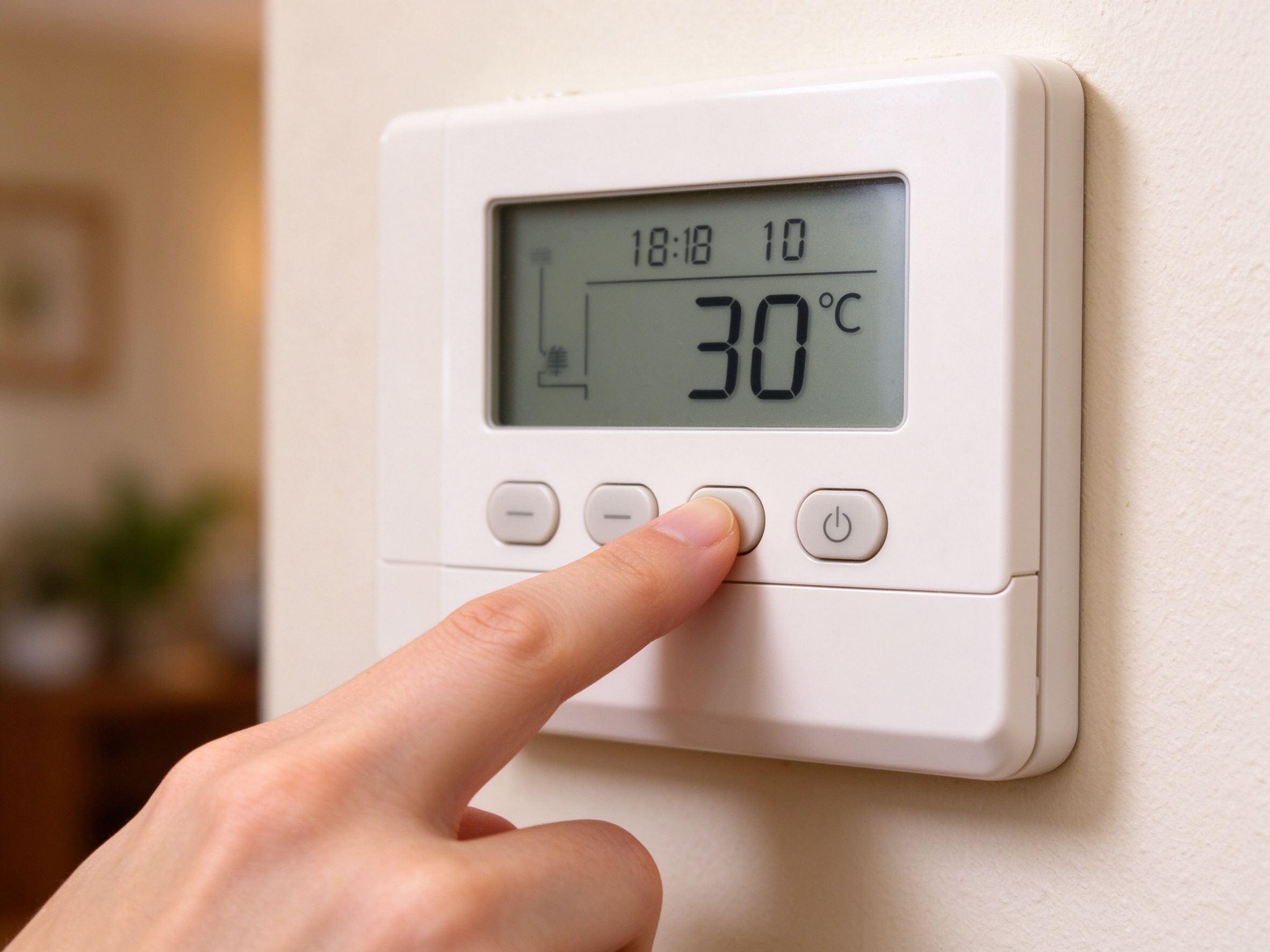
- Control strategy: fixed input dial, weather-compensated charge, room thermostat, or app and tariff integration
- Age and condition of any existing storage heaters, particularly insulation condition and any legacy materials that require specialist disposal
- Whether the client expects fast response or is content with planned, slow-release heat
- Exit strategy: if the tariff changes or the grid incentives shift, can the units be reused, resold or repurposed
Five mistakes that make storage heating look worse than it is
1. Sizing on floor area. Storage capacity is sized on heat loss and occupancy hours. Two identical flats with different insulation need different cores.
2. Buying storage without checking the tariff. The cheapest heater on a standard-rate tariff is simply an expensive way to use peak electricity.
3. Mixing storage and direct heaters on one uncontrolled circuit. The storage units charge at night while the direct units fire in the morning peak — the meter sees the worst of both.
4. Ignoring the summer. Storage heaters sit idle for months. Buyers should compare the annualised cost, including standing charges, not the winter performance alone.
5. Treating storage as future-proof. Storage heating is a good answer for a specific building and tariff today. It is not automatically a good answer in 2035, when the tariff structure and the grid mix will have moved again.
What a hybrid looks like in practice
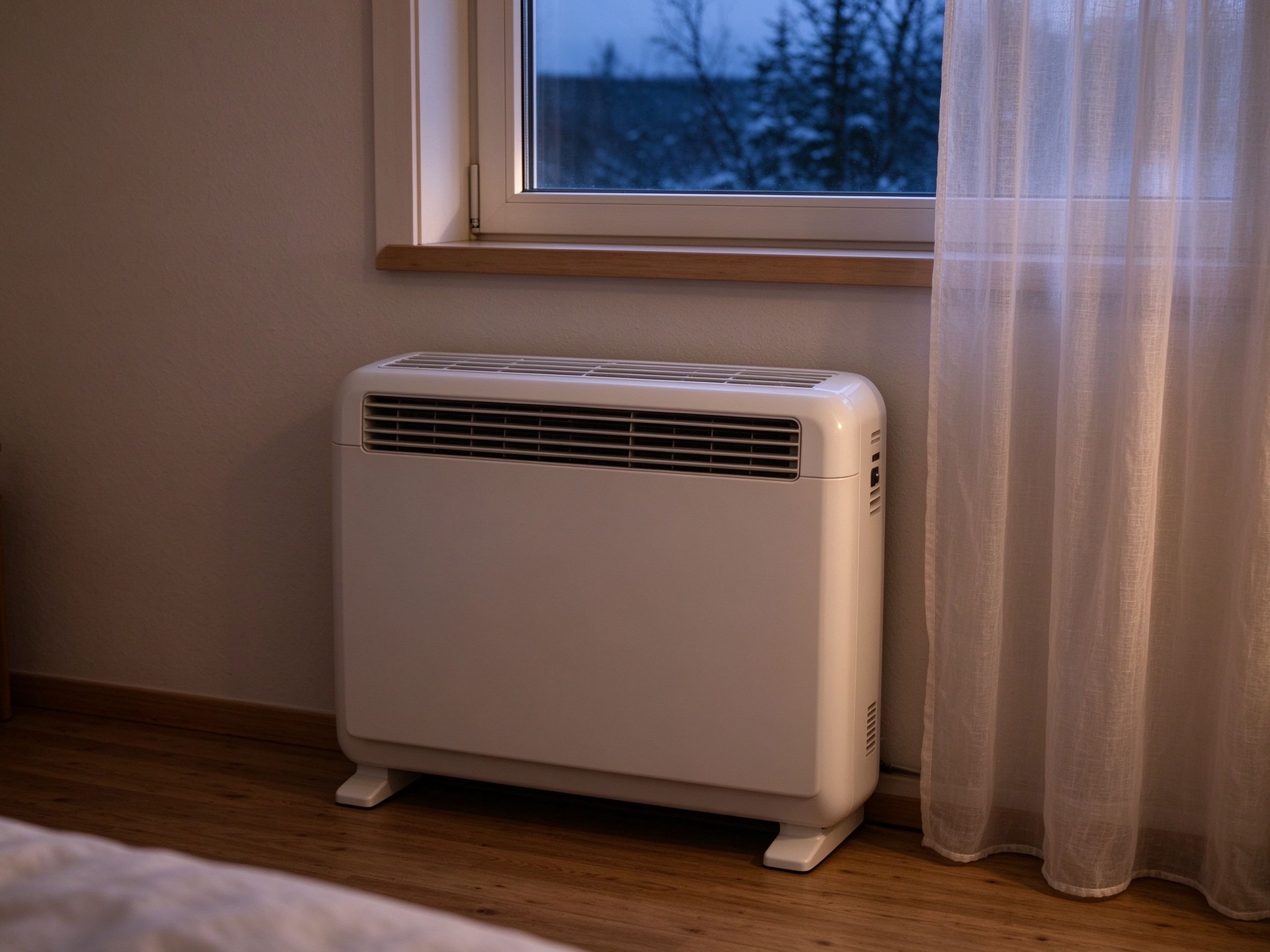
The most common configuration SunAura sees in 2026 is neither pure storage nor pure direct heat. It is a hybrid: storage heaters in the rooms that are occupied on a predictable schedule and have the largest steady heat loss, direct electric underfloor heating in the wet rooms, kitchen and extension where fast response and comfort matter, and a single time-of-use tariff controlling both. The storage units absorb the base load overnight; the floor system handles the peaks and the rooms where a slow-release heater would be unacceptable.
This hybrid is not glamorous, and it is not the configuration that marketing departments promote. It is, however, the configuration that tends to survive a tariff change, because each element has a job that the other cannot do.
Data and evidence
From SunAura factory records:
- 17 years of electric heating element manufacturing since 2008, at the Qingdao Huangdao plant
- ISO 9001, ISO 14001 and ISO 45001 certified management systems
- CE, RoHS, LVD and EMC compliance documented per production batch
- Export to 50+ countries, including markets with mature off-peak tariff structures in Scandinavia and the UK
From published third-party sources:
- Energy Saving Trust guidance on electric heating, describing storage heaters as units that charge when electricity is cheaper and release heat through the following day, and noting that electricity remains around four times the unit cost of gas
- Centre for Sustainable Energy analysis stating that around 90 % of UK homes heat with gas or oil and that nearly all will need to convert to electric heating within 10–15 years, with Boiler Upgrade Scheme grants of up to £7,500 available
- Published UK running-cost references using a standard rate of approximately 26 p/kWh for illustrative electric heating calculations
- German market comparisons of electric heating types citing monthly consumption and cost bands for storage, direct and radiant systems in a 100 m² detached house
FAQ
Are storage heaters still worth installing in 2026? In a well-insulated off-gas-grid property with a genuine off-peak tariff and predictable occupancy, yes — on installed cost and blended running cost. In a leaky house, or on a standard-rate tariff, no: the storage case collapses.
Can storage heaters work with underfloor heating? They can share a property and a tariff, and often should. They should not share an uncontrolled circuit, because the two have opposite charging patterns.
What happens when the Radio Teleswitch Service is retired? The switching that legacy off-peak tariffs rely on is being replaced. Households with storage heating should confirm with their supplier which tariff and switching method will apply, and whether the existing heater’s charge control is compatible.
Do storage heaters need servicing? Far less than a boiler, but not never. Dampers, fans and charge controls fail, and very old units may contain materials that require specialist handling at disposal.
Next step
If you are weighing storage against direct electric heat, send us the room schedule, the available tariff window and the heat-loss figures. We will tell you which rooms suit storage, which suit a floor system, and where a hybrid is the honest answer. For the floor side of that comparison, start with our electric versus hydronic underfloor heating analysis and our guide to how long heating film, mat and cable last; for a Nordic view of the same decision, see our Scandinavian underfloor heating market review. Product options and control hardware are listed on our heating film and thermostat pages.
Ethan Sun, Founder & CEO, SunAura Thermal