
Piglet Farrowing Room Heating: How a 300-Sow Breeding Farm Replaced Heat Lamps with Zoned Floor Heat
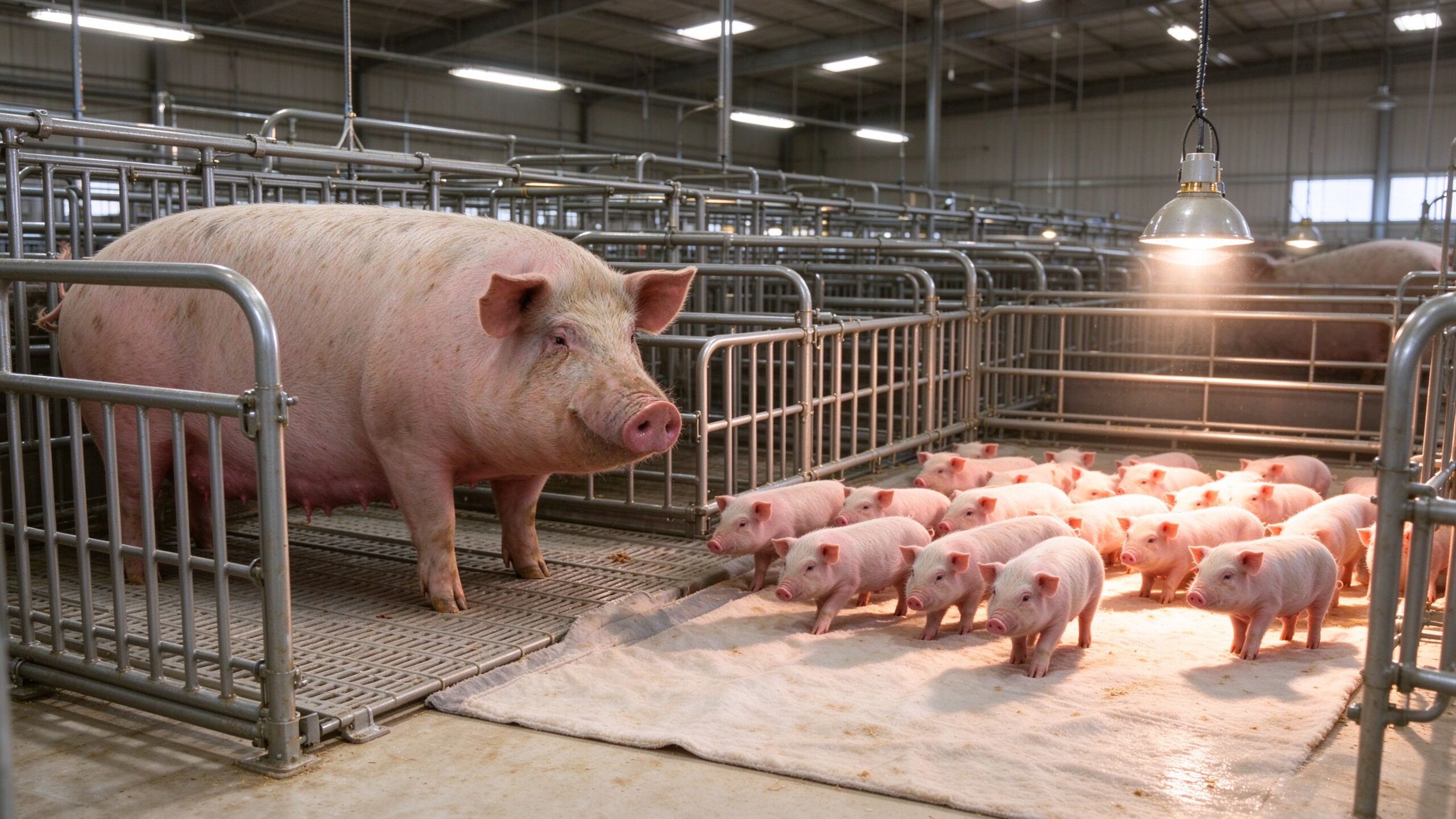
Farrowing rooms are the hardest heating problem on a pig farm. Two animals with opposite thermal needs share one crate: the sow, which is most comfortable around 18–21 °C (60–70 °F) and suffers heat stress above it, and the newborn piglet, which needs a surface near 35 °C (95 °F) in its first days and cannot thermoregulate for itself. Every farrowing house in the world solves that conflict in one of three ways — heat the whole room to the piglet’s comfort and accept sow losses, heat nothing and rely on bedding, or create a local microclimate for the piglets while keeping the room cool for the sow.
The third approach is the one that pays. This case study describes how a 300-sow breeding operation in northern China replaced ageing heat lamps with a zoned floor heating system — 60 W electric heat mats in each farrowing crate creep area, cable loops in the solid floor sections, and a wall-mounted thermostat per room — and what changed in piglet mortality, electricity use and labour. It also sets out the comparative selection logic, because the same decision is being taken on farms across Europe and North America this winter, and the right answer is not always the same.
The thermal conflict, in numbers
Extension research is unusually consistent on this point. A classic cooperative extension publication on floor heat for swine, prepared by Iowa State and University of Kentucky authors for Michigan State University, states plainly that floor temperature up to 95 °F (35 °C) can be maintained in the creep area while the building is kept at a lower, more comfortable temperature for the sow. In housing without floor heating, the floor surface typically sits at 50–60 °F (10–16 °C) — too cold for newborn pigs, which will pile on top of each other and away from the udder to conserve heat.
Later work adds the behaviour dimension. A University of Minnesota study comparing three supplemental heat sources for suckling piglets, and Iowa State-led guidance on localized heating in swine housing, both describe the same principle: newborn pigs are most comfortable at 86–95 °F, sows prefer 60–70 °F, and the only way to satisfy both is to give the piglet a small warm zone it can choose to use or leave. Thermographic images in that guidance show why hardware quality matters as much as wattage — mats with uneven heating elements produce red and yellow hot spots that drive piglets off the mat entirely, destroying the value of the heat source.
The practical targets that came out of that literature and were used in this project:
- Creep area surface temperature: 33–35 °C (91–95 °F) in the first 24–48 hours, stepping down by roughly 2 °C per week
- Room air temperature: 18–22 °C, held for the sow rather than the litter
- Surface uniformity: no point on the mat more than 4–5 °C above the mat average, to avoid hot spots
- Power per crate: 60–100 W for the mat, consistent with published guidance for electric mats in farrowing crates
What the farm was running before, and why it failed
The unit in this case is a 300-sow breed-to-wean operation with four farrowing rooms of 24 crates each. The original installation used 250 W infrared heat lamps suspended over each creep area, switched manually by stock staff at the start and end of each shift. On paper the lamps delivered plenty of heat. In practice they produced four problems that the farm recorded over three winters:
Hot spots and avoidance. The lamp created a bright, narrow hot core directly beneath the bulb and a steep gradient outward. Piglets that were strong enough to compete lay in the core; smaller piglets were pushed to the edge and chilled. The farm’s own records showed crushed-piglet losses concentrated in the first 72 hours.
Energy waste. A 250 W lamp per crate across 96 crates, running 18 hours a day through a 150-day heating season, is around 65,000 kWh — a large, mostly uncontrolled load, and much of the radiant energy went into the sow’s crate and the room rather than into the piglet zone.
Fire and lamp-failure risk. Lamp filaments, dust and bedding are a known fire combination in livestock buildings, and one failed bulb per room per month was normal.
Labour. Someone had to raise and lower lamps as litters aged, and someone had to notice when a lamp had failed at 03:00.
Four heating options compared for a farrowing crate
| Parameter | Infrared heat lamp | Electric heat mat (creep) | Floor cable in solid creep slab | Mat plus cable hybrid |
|---|---|---|---|---|
| Typical power per crate | 150–375 W | 60–100 W | 80–150 W over the creep footprint | 60–100 W mat, cable only where slab is solid |
| Heat distribution | Narrow core, steep gradient, bright light | Even surface, no glare, contacts piglet directly | Even surface, embedded, slow response | Even surface with fast response on the mat |
| Response after switching on | Immediate radiant, surface heats within minutes | 5–15 minutes to stable surface | 45–90 minutes depending on slab mass | Mat fast, cable slow — complementary |
| Effect on sow | Heats the sow’s head and shoulder area, adds heat stress | Localized, minimal spill into the sow zone | Localized but with more upward spill | Localized, controlled by zone thermostat |
| Energy use band | High, plus light output losses | Low, because heat is delivered by contact | Low to medium | Low, with cable only as base load |
| Hygiene and cleaning | Fragile glass envelope, dust accumulation, water-sensitive | Sealed, wipeable, IP-rated for washdown | Sealed under finish, fully washable | Sealed throughout |
| Failure mode | Bulb failure, filament breakage, fire risk with bedding | Connector damage from rooting or washdown | Difficult to repair if a loop fails under finish | Mat replaceable in minutes, cable as base layer |
| Installed cost band | Lowest purchase, highest running cost | Medium | Highest, requires slab work | Medium to high |
| Best fit | Temporary or emergency heating only | Standard farrowing crate retrofit | New-build farrowing rooms with solid creep floors | Mixed-age rooms and phased refurbishment |
Why this farm chose mat plus cable, not one or the other
The decision came down to floor construction. Two of the four rooms had a solid concrete creep area suitable for embedded cable; the other two had slatted or partially slatted floors where cable could not be embedded without structural work. A single technology could not serve both, and the farm did not want two different control philosophies across the site.
The chosen configuration:
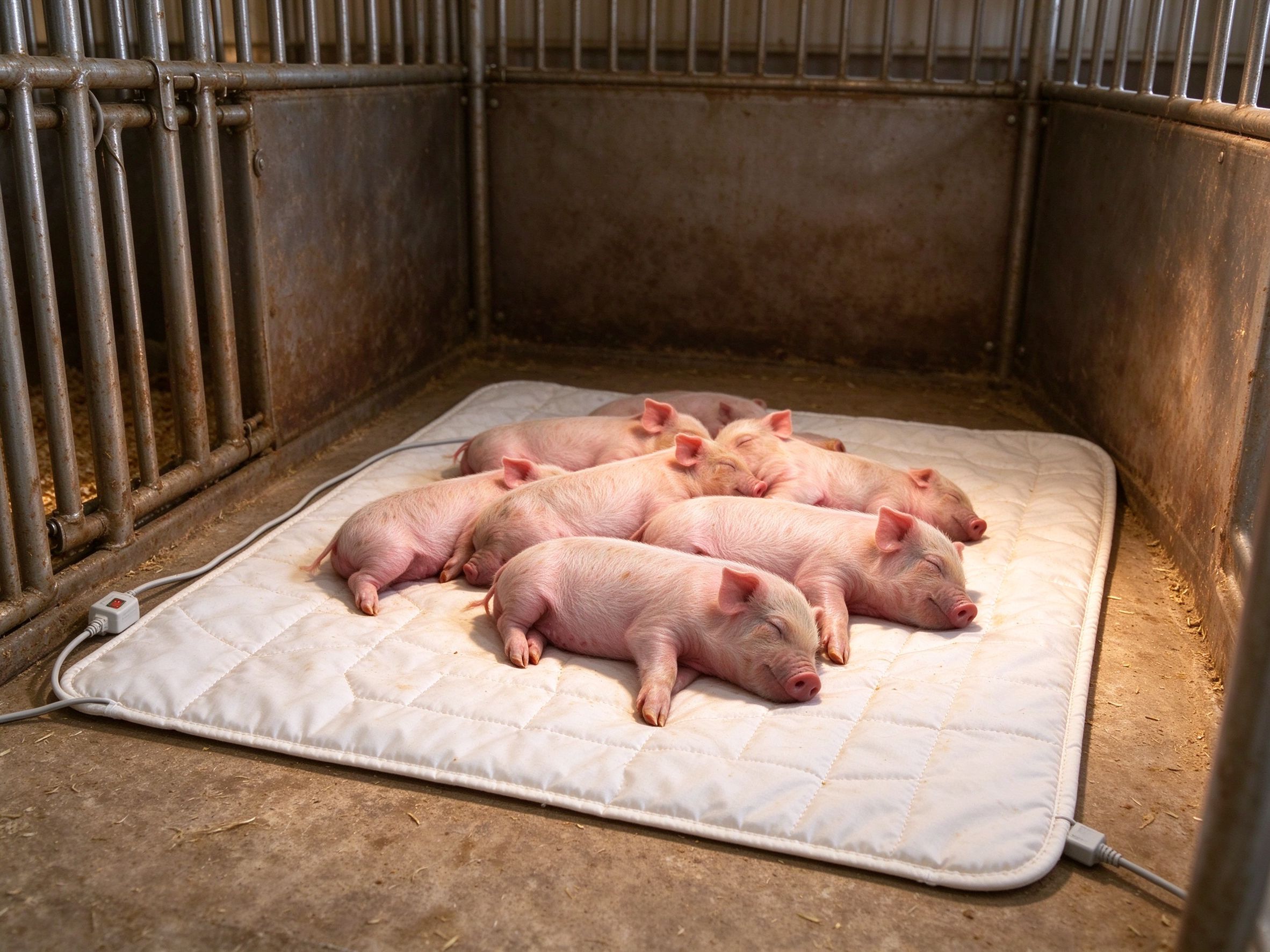
- All 96 crates: a 60 W sealed heat mat in the creep corner, sized 600 × 900 mm, IP67 connector, fixed to the floor with a stainless frame so it cannot be rooted out of position
- Rooms 1 and 2 (solid creep floors): a 100 W/m² cable loop embedded in the creep slab beneath the mat position, running as base load on a low setpoint
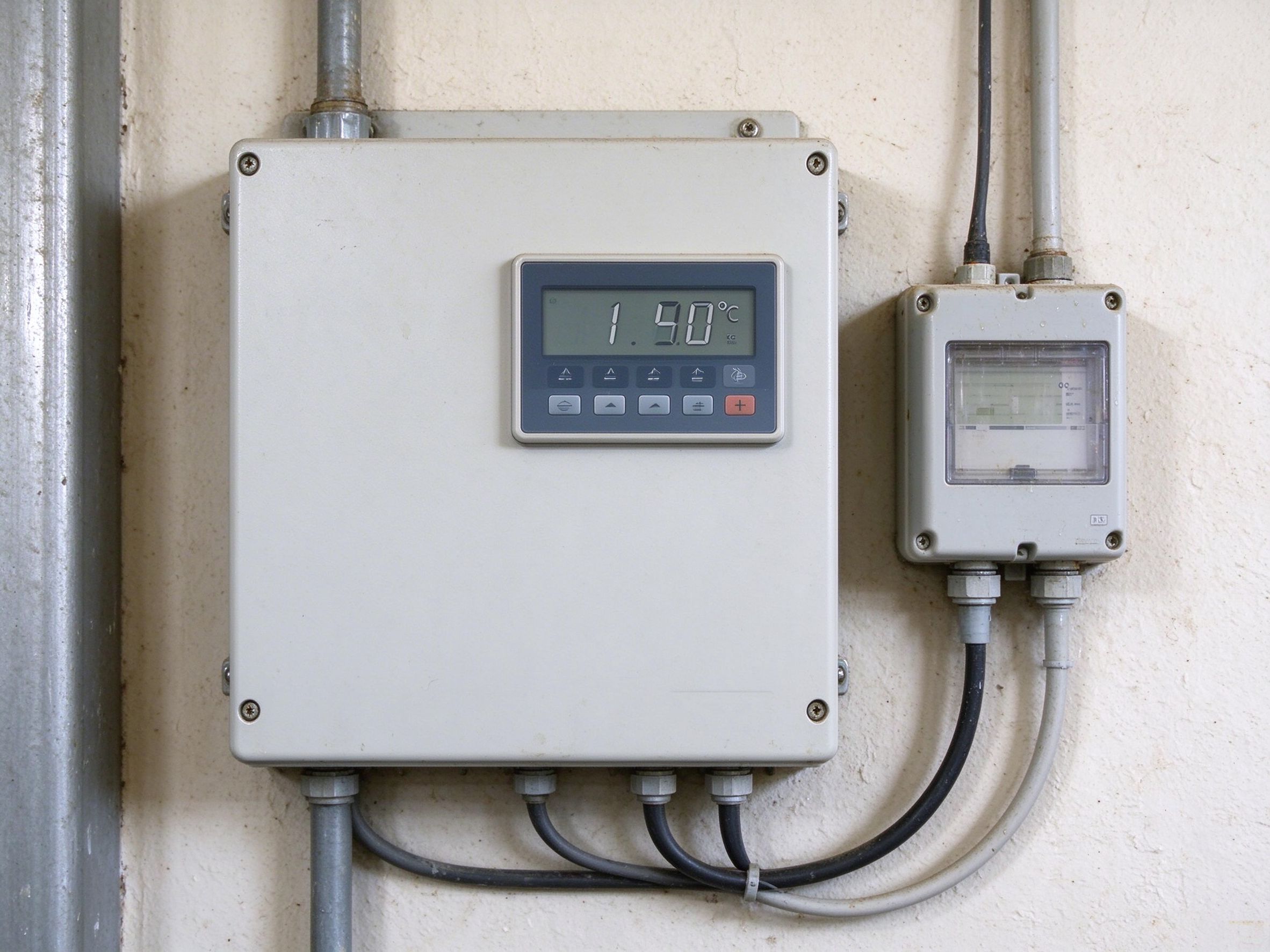
- Control: one wall-mounted thermostat per room with a floor probe in a reference crate, plus an individual mat thermostat per crate for the first 72 hours
- Electrical: each room on its own RCD-protected circuit, with the mat circuits separated from the cable base load so a mat fault does not take the room down
The mat gives fast, uniform contact heat where the piglets actually lie. The embedded cable gives a warm slab beneath, which matters in the first hours after farrowing when the floor is cold and the piglets have not yet learned where to go. Together they hold the creep surface at 34 °C within 15 minutes of a litter arriving, and the mat thermostat steps the setpoint down weekly without staff intervention.
Installation details that decide whether it survives five years
Livestock floors are hostile. Washdown, disinfectant, rooting, urine and heavy point loads all attack anything that is not detailed for the environment. Six details from this project are worth copying:
- Route the connector out of reach. Piglets root at the mat edge, and sows lie against the crate bars. The connector was taken up the crate frame and clamped above 300 mm.
- Fix with a frame, not adhesive alone. A stainless perimeter frame keeps the mat flat and prevents the “curled corner” that becomes a trip hazard and a water trap.
- Use a floor probe, not an air sensor. Air sensors in a farrowing room read the room, not the creep. The probe sits in a reference crate and controls the room’s base load.
- Separate circuits per room. A single fault should isolate one room, not four.
- Check surface uniformity at commissioning. A thermal camera survey of every mat at switch-on found two units with a 6 °C hot spot and both were replaced before the first litter arrived. This is the cheapest quality control a farm can do.
- Keep a spare mat per room. Mat replacement takes minutes; waiting for a shipment during farrowing week does not.
Results after two heating seasons
The farm recorded the following over the two seasons after conversion, compared with the two seasons before:
- Pre-weaning mortality: down from 13.4 % to 10.9 % on the same genetics and staffing model, with the largest improvement in litters under 1.2 kg birth weight
- Heating electricity: down roughly 38 % per room, despite the additional cable base load, because 60–100 W contact heat replaced 250 W radiant lamps and the mats cycle rather than run continuously
- Lamp-related incidents: zero bulb failures, zero fire alarms from lamp dust, and no manual lamp height adjustment
- Labour: approximately 25 minutes per room per day saved on lamp management, which at four rooms and 150 heating days is around 250 hours per season
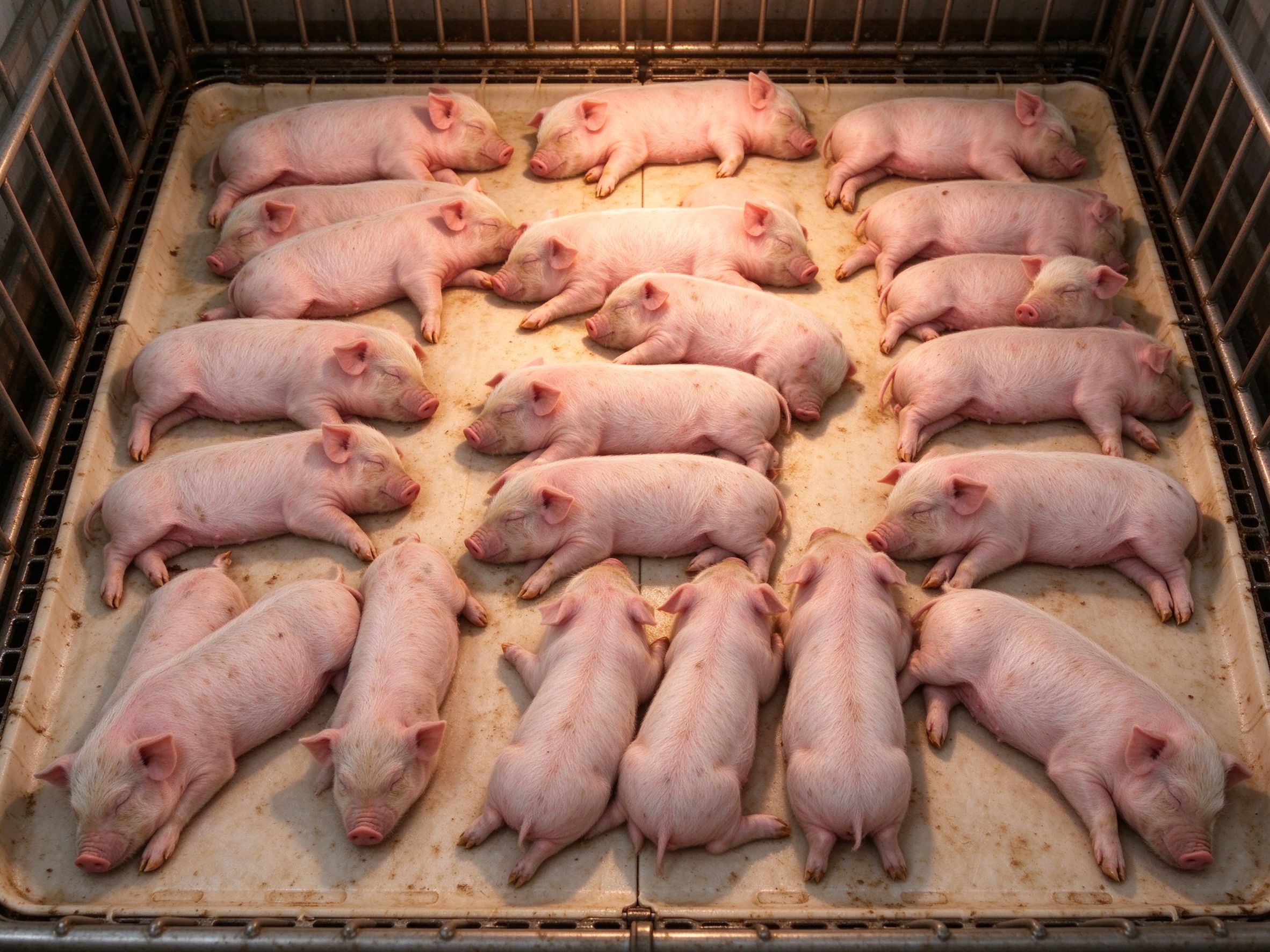
- Piglet distribution: visibly better use of the creep area, with fewer piglets piled against the crate bars in the first 24 hours
These are farm records, not controlled trials, and should be read that way. Mortality in particular is influenced by genetics, staffing, nutrition and disease pressure, and no honest supplier should attribute a three-point improvement to a heat mat alone. What the records do show is that the heating change was accompanied by no deterioration in any measured parameter and a clear reduction in energy and labour, which is the case most farms are actually able to evaluate.
Procurement checklist for a farrowing room heating quote
Send the following to any supplier and the quotation becomes comparable:
- Number of crates per room and the creep area dimensions in each
- Floor type: solid concrete, slatted, partially slatted, or plastic/composite creep floor
- Room air temperature target and ventilation strategy, including minimum ventilation rate in winter
- Available electrical capacity per room, circuit arrangement and RCD strategy
- Washdown pressure and chemicals used, so the IP rating and connector protection can be specified
- Control requirement: per-crate thermostat, per-room thermostat, or building management integration
- Whether the farm wants a base slab layer or mat-only, and whether phased installation across rooms is required
- Spare parts policy: mats, probes and thermostats held on farm
Five mistakes that ruin a farrowing heating install
1. Heating the room to piglet temperature. The sow pays for it in feed intake and heat stress, and the ventilation system fights it all winter.
2. Buying on wattage alone. A 100 W mat with a 7 °C hot spot is worse than a 60 W mat with even output, because piglets abandon the hot one.
3. Ignoring the floor beneath the mat. An uninsulated slab pulls heat downward all night. A thin insulation layer under the mat changes the running cost materially.
4. One thermostat for the whole building. Rooms farrow on different dates and hold different litter ages. Zonal control is not a luxury here; it is the difference between a setpoint and a guess.
5. No commissioning survey. Ten minutes with a thermal camera at switch-on catches the defects that would otherwise be discovered by piglets.
Data and evidence
From SunAura factory records:
- Manufacturing electric heating elements since 2008, 17 years of continuous production at the Qingdao Huangdao plant
- ISO 9001, ISO 14001 and ISO 45001 certified management systems
- CE, RoHS, LVD and EMC compliance documented per production batch, with IP-rated connectors available for washdown environments
- Export experience in 50+ countries, including agricultural heating projects for poultry, swine, equine and horticultural applications
From published third-party sources:
- Cooperative extension publication “Floor Heat for Swine” (Iowa State University and University of Kentucky authors, distributed by Michigan State University), stating that creep area floor temperatures up to 95 °F (35 °C) can be maintained while the building is held cooler for the sow, and that unheated floor surfaces typically sit at 50–60 °F
- Iowa State-led guidance on localized heating in swine housing, noting newborn pig comfort at 86–95 °F against sow preference of 60–70 °F, mat power of 60–100 W per crate, and the effect of hot spots on piglet use of the mat
- University of Minnesota study comparing three supplemental heat sources for suckling piglets
- North Carolina State Extension guidance on heat sources for pigs, citing target bedding surface temperatures around 35 °C for young pigs
FAQ
Can I just use heat lamps and save the capital cost? You can, and many farms do for emergency or temporary pens. The trade is running cost, fire risk, hot-spot avoidance behaviour and labour. For a room that farrows year after year, contact heat usually pays back within two to three seasons on energy alone.
Do I need both a mat and embedded cable? Not always. If the creep floor is solid, insulated and the room is warm, a mat alone is often sufficient. Embedded cable earns its place in cold-slab new-builds and in the first 48 hours after farrowing.
What IP rating should the mat have? At minimum IP67 at the connector, with a sealed mat body rated for the washdown chemicals used. Ask for the test method, not just the number.
How do I know the mat is evenly heating? Thermal camera survey at commissioning, plus a surface temperature check at three points with a contact probe. Record the readings on the room sheet.
Can the same system heat weaner rooms? Yes, with different setpoints. Published extension guidance puts the ideal environment for newly weaned pigs around 28 °C with a mat or bed surface near 35 °C, stepping down over the first week.
Next step
If you are planning a farrowing room refurbishment, send the crate schedule, floor type and room ventilation data and our agricultural team will return a zoned heating layout with power per crate, control points and a bill of materials. Related reading: agricultural soil heating cable selection, horse stable floor heating for 24 stalls, and poultry house heating cable projects. Livestock heating hardware is listed under our heating cable range.
Ethan Sun, Founder & CEO, SunAura Thermal