
Ethan Sun, Founder & CEO, SunAura Thermal
A heating cable quote that was valid in March is often unbuildable by June, and the reason is rarely labour or energy. It is the copper inside the cable, the polymer around it, and the aluminium behind a heating film. Buyers who understand which line items move can negotiate a price that holds; buyers who treat the quote as a fixed number end up either paying a mid-project increase or accepting a substitution they did not ask for.
This is not a market commentary. It is a costing structure, written so that a procurement manager can look at a quotation and see which part of it is raw material, which part is conversion, and which part is the supplier’s exposure to a commodity neither of them controls.
What is actually inside the price of a heating cable
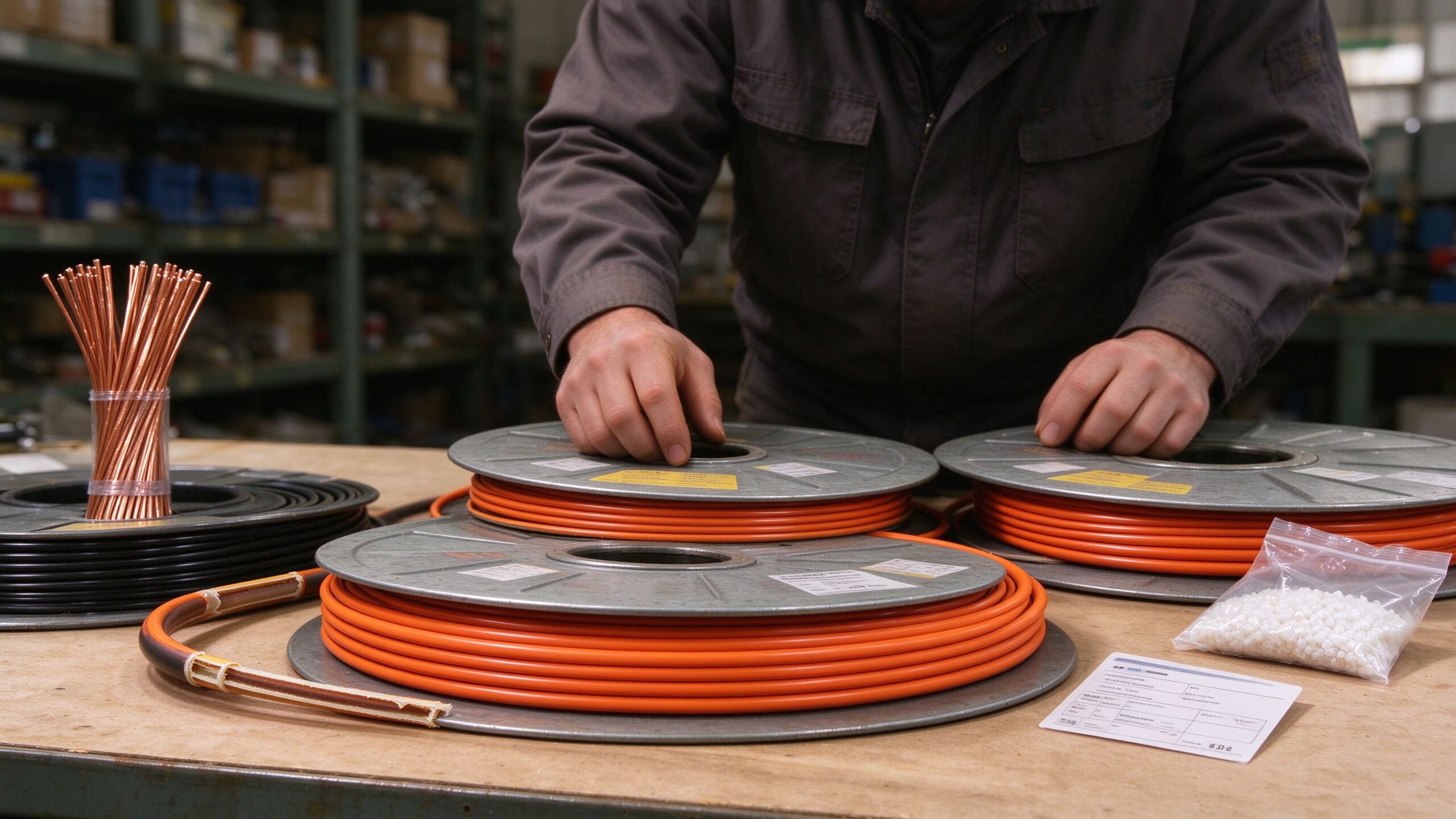
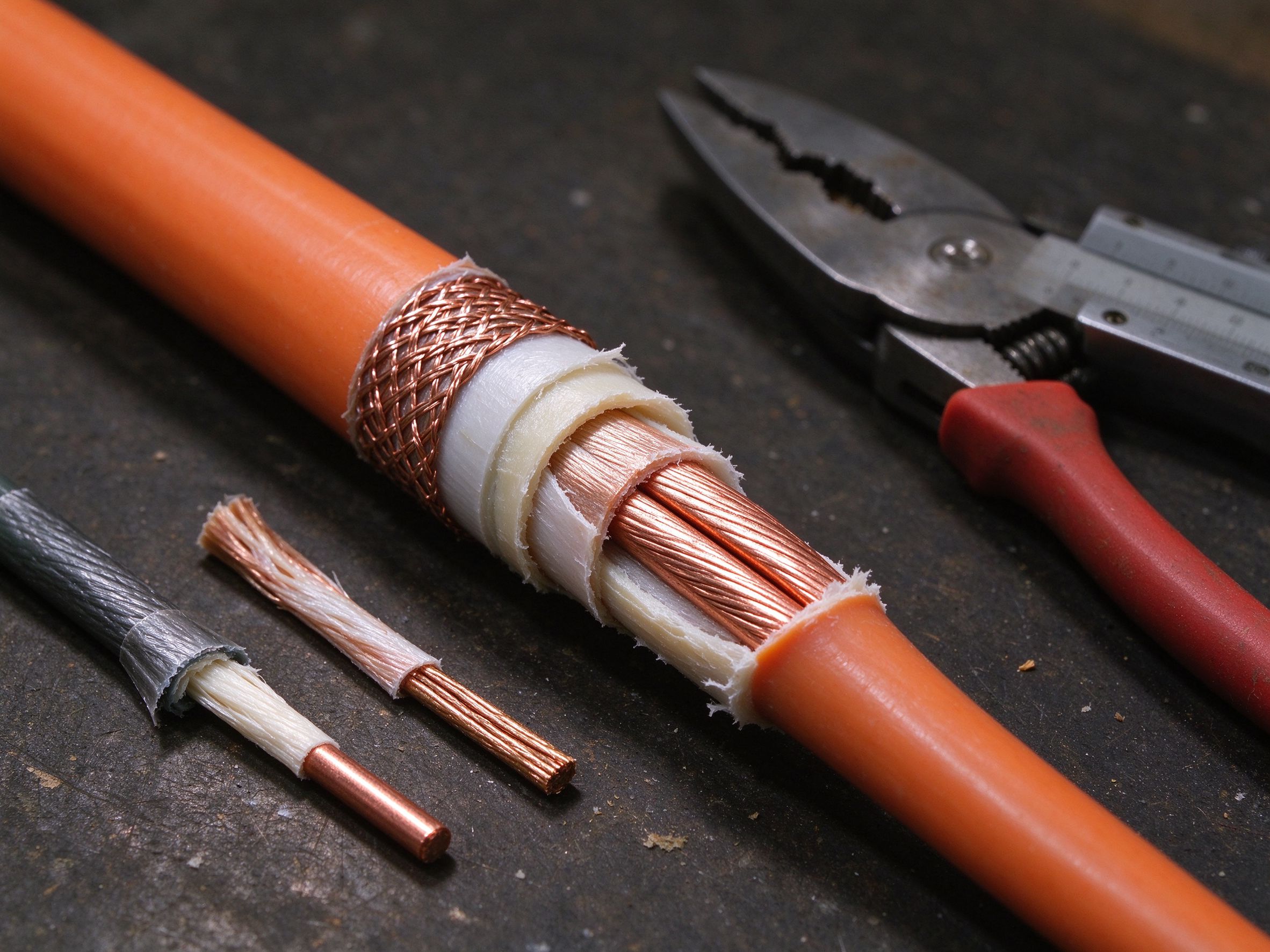
A constant-wattage heating cable is a small assembly of four material families. The conductor is copper or a copper alloy, sized for the current at the rated output per metre. The insulation is XLPE, PVC or silicone depending on temperature rating. The screen is either a copper braid or an aluminium foil with a drain wire, and the outer jacket is PVC or PE. Of these, the conductor and the screen are copper, the insulation and jacket are petrochemical polymers, and the foil is aluminium.
Self-regulating cable adds a fifth family: the PTC compound that forms the heating core, plus an irradiation cross-linking step. That core is a formulated polymer with carbon loading, so its cost tracks both polymer and carbon black markets, and its conversion cost is higher because the cross-linking is an extra process pass rather than a drawing operation.
A heating film replaces the metal conductor with a printed carbon or silver track on a PET or polyimide carrier, laminated between protective layers with a busbar of copper foil or silver paste at the edges. Here the dominant material is the carrier film and the conductive ink, with aluminium or copper busbar as a smaller line item. A heating mat is a cable or film element bonded to a mesh, so its material profile follows whichever element it uses, plus the mesh and the adhesive.
The practical consequence is that the same “heating product” category has very different commodity exposure depending on construction. A copper-cored constant-wattage cable is a copper price product. A PET-based heating film is a polymer and ink product. A self-regulating cable sits in between, with polymer and carbon dominating and copper limited to the conductor and screen.
How a copper move reaches a cable price, in numbers you can check
Take a 20 W/m constant-wattage cable with a conductor of roughly 0.75 mm² equivalent copper and a braided screen. The conductor mass is about 6.7 kg per kilometre, and a light braid adds perhaps 3–4 kg per kilometre. Round the copper content to 10 kg per kilometre, which is 0.01 kg per metre.
At an illustrative copper price of USD 10 per kilogram, the metal in that cable costs about USD 0.10 per metre. If copper moves to USD 12 per kilogram, the same metre carries USD 0.12 of metal. The difference is USD 0.02 per metre, or USD 20 per kilometre. On a 200 m project that is USD 4. On a 5,000 m container order it is USD 100, which is real but still small against the total invoice.
This is why copper alone seldom justifies a large percentage increase on a heating cable order. The metal is a meaningful share of a low-cost product but a minority share of the finished price, because drawing, insulation, screening, jacketing, testing and packaging all sit on top of it. Where copper does bite is on large-section, high-output industrial cable, where the conductor mass per metre is several times higher and the metal share of the price climbs accordingly.
Heating film is different again. A 0.5 mm aluminium-film mat uses a thin aluminium layer plus a PET carrier, and the conductive track is printed carbon. The material cost per square metre is dominated by the carrier and the lamination, not by metal. That makes film pricing more stable against copper and more exposed to PET film and ink prices, which move with polymer and specialty chemical markets rather than with the LME.
Which material actually drives the quote, by product type
| Product | Dominant material cost | Second line item | Price sensitivity to copper | Typical price validity a factory can offer | Best protection for the buyer |
|---|---|---|---|---|---|
| Constant-wattage heating cable | Copper conductor and screen | XLPE or silicone insulation, jacket | Moderate; rises with conductor section and output per metre | 15–30 days | Copper pass-through clause with a published index and a symmetric up/down mechanism |
| Self-regulating (PTC) cable | PTC core compound and cross-linking | Copper conductor, braid, jacket | Low to moderate | 15–30 days | Fixed price on a defined volume, with a defined substitution clause |
| Heating film (PET carrier) | PET film and conductive ink | Aluminium or copper busbar, lamination | Low | 30–60 days | Fixed price with volume bands; specify carrier grade in the drawing |
| Heating film (polyimide carrier) | Polyimide film | Ink, busbar, lamination | Low | 30–45 days | Fixed price; polyimide grade specified by temperature class, not by brand |
| Heating mat (cable element) | Element cable plus mesh | Adhesive, factory termination | Moderate, inherited from the cable | 15–30 days | Price per mat size rather than per m², to avoid area tolerance disputes |
The table explains a pattern buyers notice but rarely articulate: film quotations tend to hold longer than cable quotations, and cable quotations move in steps that track metal news. It is not that film suppliers are more generous. It is that their cost base is less exposed to a commodity that trades on a screen.
The other lines that move, which buyers usually miss
Raw material is only one of four cost lines that shift between quotation and delivery. The others are freight, currency and compliance documentation.
Freight on heating products is volume-driven rather than weight-driven. Cable coils and film rolls are bulky relative to value, so container rates matter more than product weight. A 40-foot container of heating mat is a full container whether the product is 8 mm or 3 mm thick, and the per-unit freight cost therefore moves with rate levels rather than with the goods. Buyers who fix the product price but leave freight as “to be confirmed at shipment” have fixed the smaller number and left the larger one open.
Currency exposure sits between the factory’s cost currency and the buyer’s payment currency. A factory that buys copper and polymer in one currency and invoices in another carries the mismatch, and it will price that mismatch into the validity period. A 30-day validity and a 7-day validity are often the same price with different risk priced in.
Compliance documentation is a real cost when the destination requires it. CE documentation under LVD and EMC, RoHS and REACH declarations, and CPR-related fire classification for cables all require testing and file maintenance. None of that is raw material, but all of it appears in the price of a compliant product, and a quote that is 15 % cheaper because the documentation is “available on request” is not the same product.
How to structure a purchase that survives a commodity move
There are three workable structures, and they suit different order sizes.
Fixed price with a defined validity. Best for orders under one container where the buyer needs budget certainty. The factory absorbs commodity movement inside the validity window and prices the risk into the margin. Expect a validity of 15–30 days on cable and 30–60 days on film, and expect the price to be a few percent above a floating structure. That premium is the cost of certainty, and for a project with a fixed budget it is usually worth paying.
Copper pass-through with a published index. Best for large cable orders where both sides want the metal risk to sit with the party who can hedge it, which is usually neither the buyer nor the factory but the mill behind them. The clause should name the index, the reference period, the base price, the trigger threshold and the direction. A one-way clause that only passes increases is not a hedge, it is a price increase with a delay.
Volume bands with locked conversion cost. Best for OEM and repeat programmes. The conversion element, meaning labour, energy, testing and packaging, is fixed for twelve months, while the material element floats within a narrow band. This gives the buyer predictability on the part the factory actually controls and transparency on the part it does not.
Whichever structure is chosen, the specification has to be pinned at the same time. “20 W/m cable, 230 V” is not a specification that can be held: conductor section, insulation class, screen type, jacket material, outer diameter and termination method all change the material content. A price that holds against an unpinned specification will be held by substituting something cheaper inside it.
Ten questions that turn a quote into a cost model
- What is the copper mass per metre, or the film weight per square metre, in the offered construction?
- Which material index does the price track, and over what reference period?
- How long is the price valid, and what happens at day 31?
- Is freight included, and is it fixed or quoted at shipment?
- Which currency is the cost base, and which currency is the invoice?
- What is the minimum order quantity at the quoted price, and what does the next volume band cost?
- What documentation is included: LVD, EMC, RoHS, REACH, and fire classification if applicable?
- What is the production lead time at the quoted volume, measured from deposit rather than from order?
- If a material becomes unavailable, what substitution is permitted, and who approves it in writing?
- What is the warranty period and does it survive a change of distributor?
Five mistakes that cost buyers money on material-driven products
Comparing price per metre across different constructions. A 20 W/m cable with a 0.5 mm² conductor and a light braid is not the same product as one with 0.75 mm² and a dense screen, even though both are “20 W/m”. The cheaper one has less copper in it, which is exactly why it is cheaper, and it will behave differently on a long run at low ambient temperature.
Accepting a long validity without a fixed specification. A 60-day price on an open specification is an invitation to substitute. The longer the validity, the more precisely the construction has to be drawn and referenced in the purchase order.
Leaving freight open. On bulky heating products freight can be a double-digit percentage of landed cost. A quote that excludes it is not a landed cost, and comparing it against an inclusive quote is comparing two different numbers.
Treating compliance documents as paperwork. A product without current LVD and EMC documentation is not a cheaper version of a compliant product; it is a different product with a customs and liability profile the buyer has accepted without pricing it.
Ignoring the effect of order timing on price. Factories buy material in batches. An order placed just after a material purchase can be priced against that batch; an order placed in the middle of a mill allocation may wait. Lead time and price validity are connected, and a buyer who asks for both without acknowledging the link usually gets an optimistic answer to one of them.
So which structure fits your order
Under 500 m of cable or 200 m² of film, take a fixed price with the longest validity you can get and accept the small premium. The absolute exposure is too small to justify a pass-through clause and the administration would cost more than the risk.
Between 500 m and a full container, ask for a fixed price plus a documented escalation trigger. That gives budget certainty with a defined exit if the metal moves beyond a stated band, and it is the structure most European contractors actually work with.
Above a container, or on a repeat OEM programme, move to volume bands with locked conversion cost and a symmetric index clause. At that scale the material element is large enough that neither party should carry it alone, and the transparency is worth more than the negotiating optics.
For film-heavy projects, the same logic applies but the index changes: ask what the price tracks on the PET and ink side rather than on copper, because that is where the cost actually sits.
Data and evidence
Material mass figures in this article are calculated from conductor cross-section and density for representative constructions, and are presented as worked examples rather than as catalogue values; the exact mass per metre for any product should be taken from the supplier’s construction drawing. The copper price of USD 10 per kilogram used in the example is an illustrative figure chosen to make the arithmetic checkable, not a market quotation.
Standards referenced: IEC 60228 for conductor classes, EN 50575 for cables subject to construction products regulation, and the LVD and EMC directive framework under which CE documentation is issued. SunAura Thermal has manufactured heating film, mat, cable and controls since 2008 at the Qingdao (Huangdao) plant, operating under ISO 9001, ISO 14001 and ISO 45001, with CE, RoHS, LVD and EMC documentation and distribution into more than 50 export markets; the cost structure described here reflects our own procurement and quotation practice per SunAura factory records.
FAQ
Why did my cable price rise when copper barely moved? Check the other lines first: freight, currency and the specification. A change of jacket material or screen density moves the price more than a small copper move on a standard construction.
Is film really less exposed to commodity prices? Less exposed to copper, yes. It is exposed to PET film and conductive ink, which are specialty materials with their own cycles and usually fewer published indices.
Should I ask for a copper clause on a small order? Usually no. The administrative cost and the negotiation time exceed the exposure on a few hundred metres. Take a fixed price and a defined validity instead.
Does a longer validity always mean a higher price? Often, but not always. A factory with a large material batch in stock can offer a long validity at a competitive price, which is why order timing matters as much as negotiating skill.
Can I lock a price for a project that ships in three phases? Yes, with a phased call-off agreement that fixes the price and the specification per phase and states what happens if a phase is delayed beyond its window. Without the delay clause, the price lock ends silently at the first slippage.
Next step
Send us the construction you intend to buy, not just the wattage: conductor section, insulation class, screen type and jacket material for cable, or carrier film and ink type for film. We will return a cost breakdown that separates material from conversion, state the validity honestly, and tell you which index the material line tracks. Start with the heating cable range or the heating film range for the available constructions, and read our note on how long these constructions actually last before you decide that the cheaper build is the better buy.