
Overview
Tile floor heating hides a thin graphene heating film directly beneath ceramic tile, porcelain, marble or natural stone. Powered film emits gentle far-infrared radiant heat that rises evenly through the stone — warming your feet first, then the whole room, with no radiators, pipes or visible units.
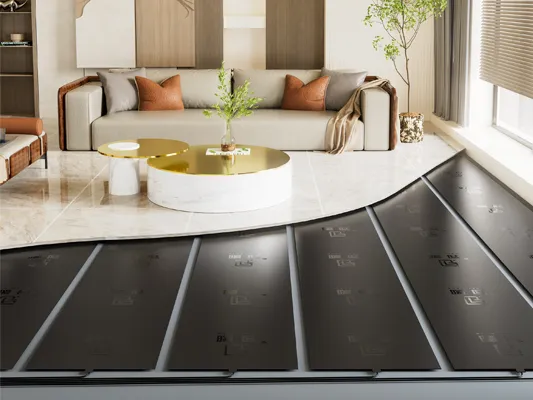
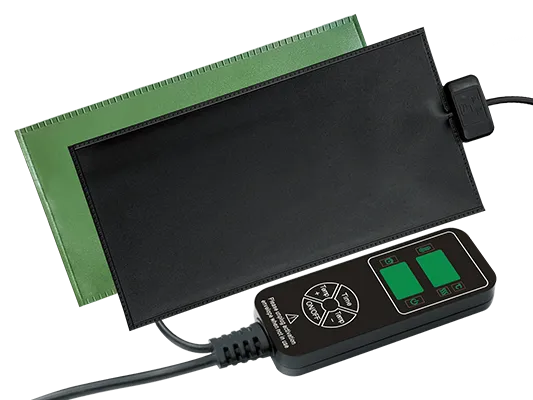
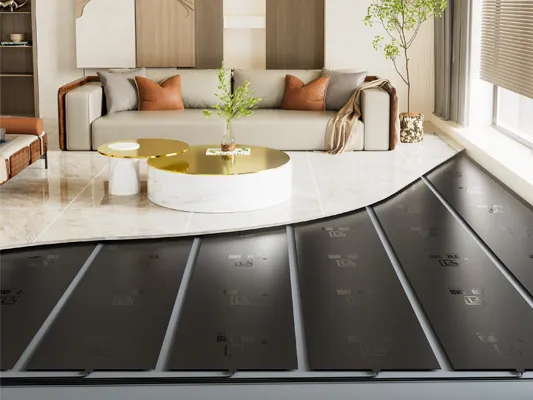
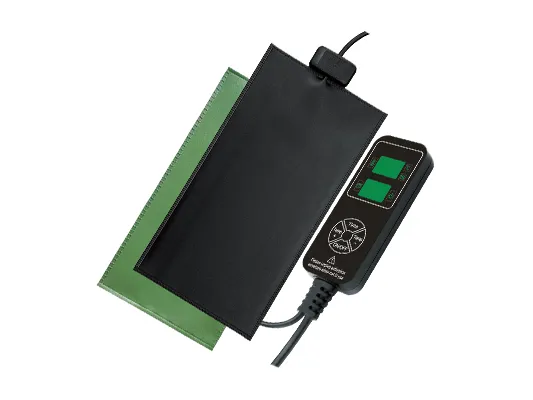
Because heat arrives as radiation rather than moving air, there is none of the dry, stuffy feel of gas or forced-air heating. The film runs at a low surface temperature (max 60 °C), so there is no scalding risk — just silent, invisible warmth underfoot.
Key Features
- Graphene far-infrared heat under stone — a thin film laid directly beneath ceramic, porcelain, marble or natural tile, rising as gentle radiation rather than moving air.
- 60 °C surface cap — the thermostat holds the film surface below 60 °C, so there is no scalding risk under bare feet in bathrooms and wet rooms.
- IP67 encapsulated film — fully sealed construction, safe for wet rooms and shower areas when paired with a bathroom-rated wall thermostat and floor sensor.
- Parallel strip wiring — strips connect in parallel, so a fault in one strip never stops the rest of the circuit.
- Cut-to-room widths, 10–100 cm — twelve standard widths are cut to your exact room layout, in 110 V or 220–230 V builds.
- Retrofit-friendly thin profile — lays over a sound existing floor with almost no height gain, so door frames and skirting usually survive renovation.
- CE, RoHS & ISO 9001:2015 — manufactured under ISO 9001:2015 with CE and RoHS compliance; SGS, ZCT EMC/IEC 60335 and CNAS evidence available on request.
Key Specifications
| Parameter | Value |
|---|---|
| Heating element | Graphene far-infrared heating film |
| Rated voltage | 110 V / 220–230 V |
| Film widths | 10–100 cm, cut to room size |
| Max surface temperature | ≤ 60 °C, thermostat-held |
| Control | Wall-mounted room / floor thermostat |
| Waterproof rating | IP67 encapsulated film |
| Circuit layout | Parallel — one strip fault does not stop the rest |
| Compliance | CE, RoHS, ISO 9001:2015 |
Applications
- Bathrooms — warm tile underfoot, suitable for wet rooms
- Kitchens & hallways — even warmth where you stand most
- Living rooms & bedrooms — silent radiant comfort under stone
- Commercial spaces — hotels, shops and showrooms
Certification & Compliance
Made under ISO 9001:2015 with CE and RoHS compliance. Independent evidence: SGS RoHS report No. 20ZCTC0703009RR, a ZCT EMC / IEC 60335 report, and a CNAS inspection report — available on request.
Installation & Use
- Lay thermal insulation on the base floor so heat cannot escape downwards.
- Unroll the film strips and connect them in parallel to the thermostat circuit.
- Bed the film in tile adhesive and lay the tile or stone on top.
- Set the floor sensor and target temperature on the wall thermostat.
No annual maintenance — no pipes, radiators or convection dust. Used ~4 months/year, the film lasts decades.
Frequently Asked Questions
Can it go under existing tiles in a renovation?
Yes — the film is extremely thin and lays over a sound old floor before new tile adhesive and finish are applied, without noticeably raising floor level.
Is it safe in a wet bathroom?
The film is IP67 waterproof. Pair it with a bathroom-rated wall thermostat and floor sensor so surface temperature stays controlled.
How is temperature controlled?
A wall thermostat with a floor-probe sensor switches the film on and off to hold your chosen floor temperature. Smart WiFi models allow phone scheduling.
Does it heat the whole room or just the floor?
It heats the floor first; the warm stone then radiates gentle far-infrared warmth to people and objects in the room.
Why Choose SunAura
- Factory-direct — film, thermostats and accessories from our own Qingdao plant.
- Since 2008 — years of graphene heating-film manufacturing experience.
- Exported to 50+ countries — 110 V / 220–230 V builds, US/EU/AU/UK plug options.
Looking for underfloor heating film for tile floors — warm bathroom tiles in the morning, invisible warmth under kitchen stone, or a whole hotel project spec’d in graphene? This page section gathers the practical purchasing information behind the tile floor heating system: factory-direct wholesale pricing, free layout design, custom-width film production and OEM/ODM support. The system hides a thin graphene film directly beneath ceramic, porcelain, marble or natural stone, and the notes below explain how to order it project by project.
Factory-Direct Wholesale Pricing & How to Buy
SunAura tile floor heating is sold factory-direct from our Qingdao plant — film, thermostats and accessories from one source, so there is no middleman mark-up. The wholesale price depends on film widths (standard sizes from 10 cm to 100 cm), total heat area, voltage (110 V or 220–230 V) and order volume, with EXW or FOB export terms. Send us your tile schedule or floor plan and our engineers will draw a free zone layout and quote the same day.
| Item | Details |
|---|---|
| MOQ | Flexible — sample pieces for evaluation; production MOQ and pricing depend on heat area, widths and quantity, confirmed in your quotation |
| Bulk discounts | Volume tiers for contractors, distributors and hotel/housing projects; larger heat areas receive preferential wholesale pricing |
| Lead time | Standard widths from stock where available; cut-to-size orders produced to schedule after confirmation |
| Samples | Film samples and cut pieces available so installers can check handling before a full order — ask our sales team for current terms |
| OEM / ODM | Custom widths, private-label packaging, bundled thermostats and bilingual manuals for wholesale programmes |
| Export terms | EXW / FOB; CE, RoHS and ISO 9001 documents plus test reports issued with the shipment |
To request a project quote, contact our sales team with your room list — or message us on WhatsApp for a quick answer on stock widths and sample dispatch.
Ordering & Shipping Process
A tile floor heating order normally takes four steps. First, send the floor plan: room dimensions, tile type, and whether the build is new or a renovation over an existing slab. Second, our engineers return a free layout showing which film widths cover each zone, where the parallel connections run, where the floor sensor sits, and the estimated electrical load per circuit. Third, we cut and terminate the film to those lengths, resistance-test every strip, and pack it with the installation guide and CE/RoHS documents. Fourth, we ship by sea, air or express courier under EXW or FOB terms; for hotels and showrooms we can consolidate film, sensors and smart thermostats into one container.
Because the film is thin and rolls flat, freight costs are low compared with heavy screed systems, and there are no wet-mix logistics to plan around. Neutral or private-label packing and drop shipping are available for selected e-commerce partners — ask whether your region qualifies.
Customization & OEM Support
We have manufactured graphene heating film since 2008, so customisation is mature: twelve standard widths from 10 cm to 100 cm, bespoke widths for large OEM programmes, 110 V or 220–230 V builds for your market, and matched smart thermostat bundles with floor sensors. The parallel circuit layout means one strip fault never stops the rest — a selling point we happily explain to your specifiers and installers. Private-label branding, printed packaging and bilingual manuals are routine for distributors, and complete whole-house film-and-control packages are offered for developers.
Where Tile Floor Heating Works Best
Bathrooms and wet rooms — the IP67 encapsulated film sits under tile adhesive, and a bathroom-rated thermostat with floor sensor keeps surface temperature controlled. Kitchens and hallways — even warmth exactly where people stand most. Living rooms and bedrooms — silent far-infrared radiant comfort under stone, with no radiators taking wall space. Commercial spaces — hotels, shops and showrooms use it for invisible, maintenance-free warmth that guests never see but always feel.
For very large or irregular tiled areas, installers sometimes choose the pre-spaced 160 W heating mat under tile instead of loose film, because cable spacing is already guaranteed on the mesh. And when the finished floor is wood rather than stone, the same graphene technology moves over to our graphene heating film dry-install range. The complete family is listed on the underfloor heating category page; see real layouts on our applications page and common questions in the FAQ hub.
Energy & Comfort Compared With Other Tile Heating
Graphene film heats the floor directly rather than warming a heavy screed, so the stone reaches a comfortable surface temperature quickly and switches off again between uses — on a timer schedule this is where the savings come from, especially in bathrooms that are only used for short periods. Because heat arrives as far-infrared radiation rather than moving air, there is none of the dry, stuffy feel of gas or forced-air heating, and no dust is stirred around. The film surface stays capped at 60 °C under thermostat control, so there is no scalding risk under bare feet — just silent, invisible warmth that lets you turn the radiator off entirely.
Installation Best Practice
Three details make or break a tile floor heating job. First, insulation under the film is not optional — heat must reflect upward instead of disappearing into the slab, otherwise running costs climb. Second, the parallel strips must be bedded flat into tile adhesive without trapping air bubbles, and the floor sensor must sit in its protective tube on the cold side of the room so it reads the floor honestly. Third, resistance is measured on every zone before tiling begins and again before handover; a reading at commissioning creates the baseline any future check is compared against. We include this sequence in the guide shipped with every order, and our engineers will review your plan drawing free of charge before you commit.
Warranty & After-Sales Support
Every film strip is resistance-tested before packing, and the system runs with no annual maintenance — no pipes, radiators or convection dust. Used seasonally for about four months a year, the film is engineered to last decades; the 110 V or 220–230 V builds are already field-proven across more than 50 countries since we began manufacturing in 2008. If a circuit reads abnormally after commissioning, send us the zone drawing and the multimeter reading and our engineers will help trace the cause before tiles are sealed over. For developers and hotels we keep layout drawings and test records on file across the project, so warranty questions are answered without anyone chasing paper.
Specifier & Contractor Notes
What tiling contractors tell us after the first job repeats the same points: the film lays flat and cuts cleanly, the parallel layout makes fault-finding simple, and commissioning takes one resistance reading per zone rather than a long commissioning routine. For specifiers and hotel buyers, the important part is that film, sensors, smart thermostats and documentation all come from one Qingdao factory — one warranty, one contact, one shipment — instead of piecing a system together from four suppliers. Because we have manufactured graphene heating film since 2008 and export to more than 50 countries, both 110 V and 220–230 V builds with US/EU/AU/UK plug options are already proven in the field. If your spec is still in the comparing stage, send us the tile schedule and we will show you, room by room, where the film layout saves material versus a full-screed system.
Purchasing & Installation FAQ
How do I get a wholesale price for electric floor heating under bathroom tiles?
Send us the bathroom dimensions and tile type; our engineers return a free zone layout with a same-day quotation. Wholesale tiers apply to trade and project volumes, and MOQ plus pricing are confirmed in writing per order because they depend on widths, heat area and quantity.
Can the graphene heating film for bathrooms be ordered in custom widths for a hotel project?
Yes. Twelve standard widths run from 10 cm to 100 cm, and for large OEM programmes we produce bespoke widths — always with the parallel circuit layout tested per strip. State your market voltage so the 110 V or 220–230 V build and the right certification documents are prepared.
Do you supply samples of the tile floor heating film before we commit?
Film samples and cut pieces are available so your installers can check roll handling, connector detail and heat output on site. Contact our sales team or message us on WhatsApp, stating your project size and voltage, and we will confirm current sample terms and dispatch.
What is the lead time for a tiled-floor heating order for a housing development?
Standard widths ship from stock where available; cut-to-size and bundled orders are produced to schedule after confirmation, normally a few weeks depending on volume and season. For phased building programmes, ask us to reserve stock widths and we will plan deliveries around your site schedule.
Which thermostat is used for tile floor heating, and can it be WiFi controlled?
The system is controlled by a wall thermostat with a floor-probe sensor that switches the film to hold your chosen floor temperature. WiFi smart models allow phone scheduling and pair with compatible voice assistants. We can bundle the matched thermostat and sensor with the film in one shipment.
FAQ
1. Can tile floor heating film be laid over an existing concrete screed?
Yes. The film is extremely thin and lays over a sound old floor before the new tile adhesive and finish go down, which is exactly how it handles renovations without noticeably raising floor level. A graphene film over existing screed is one of the most common retrofit layouts we quote for.
2. Which tile types work best over graphene heating film?
The system is designed for ceramic, porcelain, marble and natural stone set in adhesive; all of these conduct the film’s far-infrared heat upward evenly. A well-laid under-tile heating film with stone finish both looks better and feels warmer than a cold tile floor with no heating at all.
3. Why is the parallel circuit layout important under tile?
The strips are wired in parallel, so a fault in one strip never stops the rest of the circuit heating — an important safety feature when the element is hidden under stone. This parallel heating film circuit design also means each zone can be diagnosed individually when the floor is still open.
4. How close to walls, baths and fixtures can the film be laid?
The film covers the open walking area only and keeps the manufacturer’s edge distance from walls and from fixed fixtures such as baths and cabinets. For a bathroom tile heating film edge distance you can trust, our free layout drawing marks every strip position and leaves the correct clearance automatically.
5. Where should the floor sensor be placed — under the film or beside it?
The floor sensor sits in its protective tube in the coolest part of the room, typically on the cold side beside the film rather than directly over the hottest strip. This floor sensor under tile installation detail is what makes the thermostat hold a stable floor temperature instead of cycling.
6. Can natural marble or stone crack from floor heating?
No — the film surface is capped at 60 °C and the thermostat-held temperature rises gradually, so the stone warms evenly without thermal shock. Stone is a good conductor, which is why a marble floor heating film installation feels comfortable rather than scorching under bare feet.
7. Is the film suitable for wet rooms and shower areas?
Yes — the film is IP67 encapsulated and safe in wet rooms when paired with a bathroom-rated wall thermostat and floor sensor. A wet room underfloor heating film layout follows the same parallel structure, with the cold tail routed outside the wet zone.
8. How do I order a hotel or showroom project with many tiled bathrooms?
Send the floor plan and tile schedule: our engineers draw a free layout per room, quote the whole project at once, and consolidate film, sensors and thermostats into one shipment. For such a hotel tile floor heating project order, we also provide bilingual installation manuals and phased delivery to match your build schedule.
Related Products You May Need
Pair this product with compatible SunAura components — one factory, one warranty.
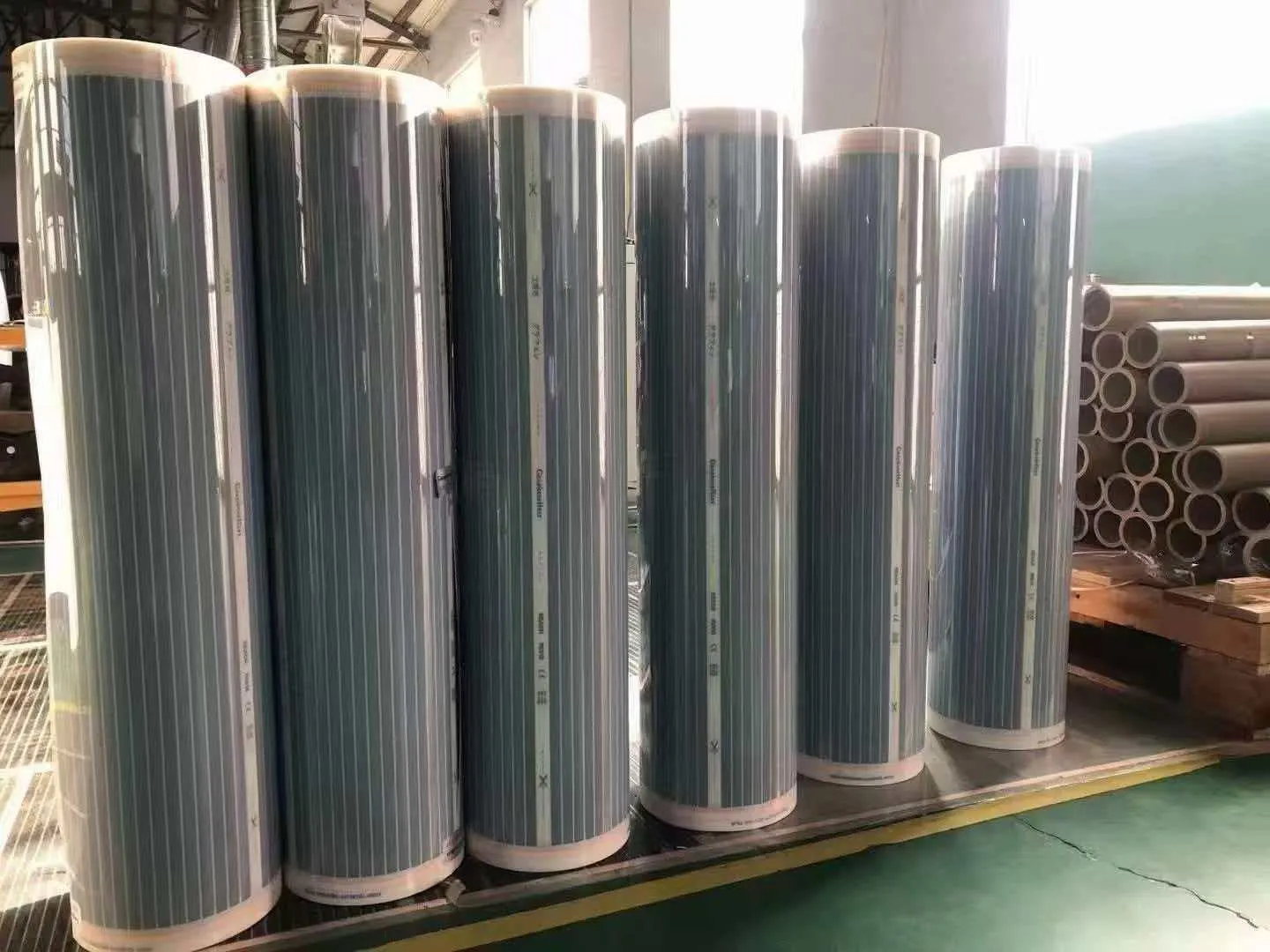
Graphene Heating Film
Ultra-thin, flexible far-infrared film with >99% heating efficiency. Widths 10–100 cm, IP67 waterproof, custom lengths for any project.
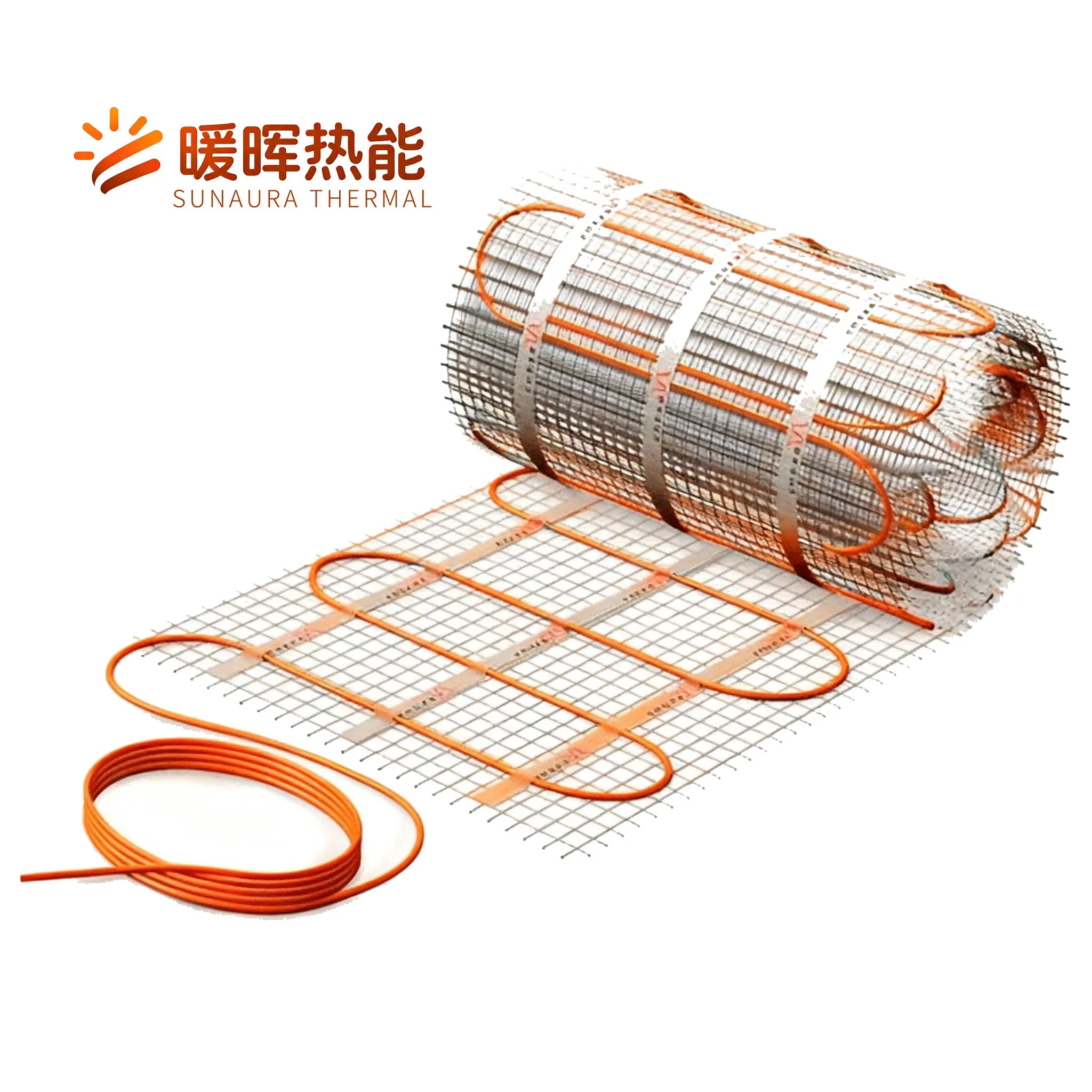
Electric Heating Mats
Self-adhesive 160 W/m² mats for ceramic and stone floors. 3.6 mm thin, EMF-free, 25-year warranty, ready to install under tiles.
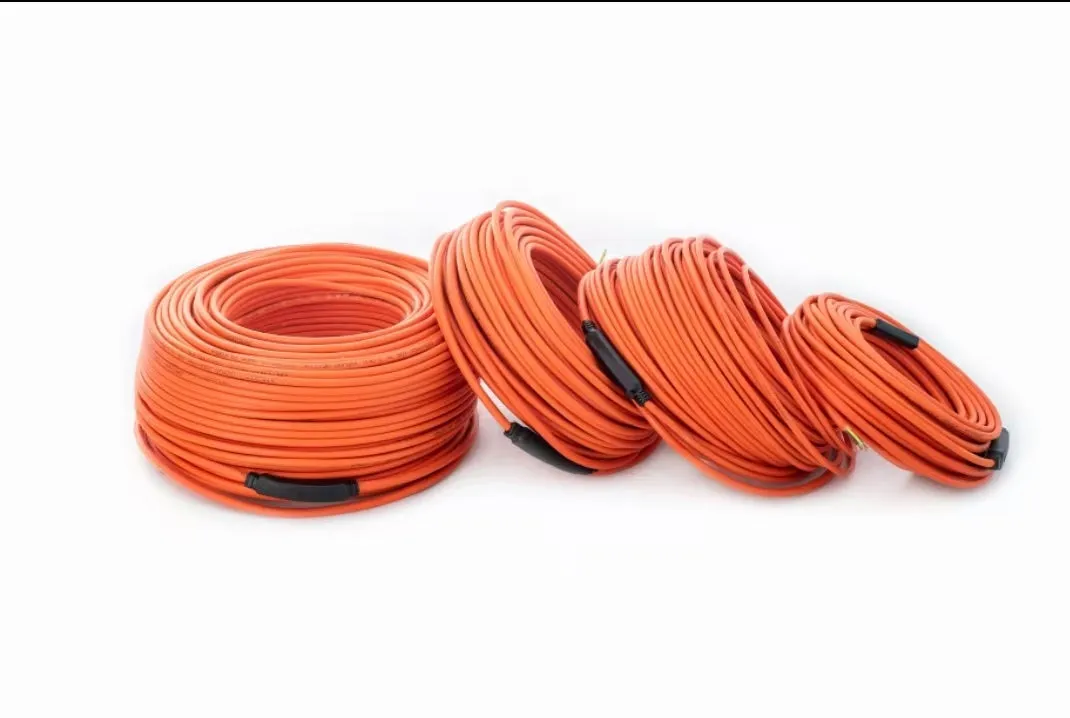
Heating Cables
Durable alloy-resistance cables for underfloor heating, pipe antifreeze, roof and road snow melting and equipment insulation. IPX8 rated.
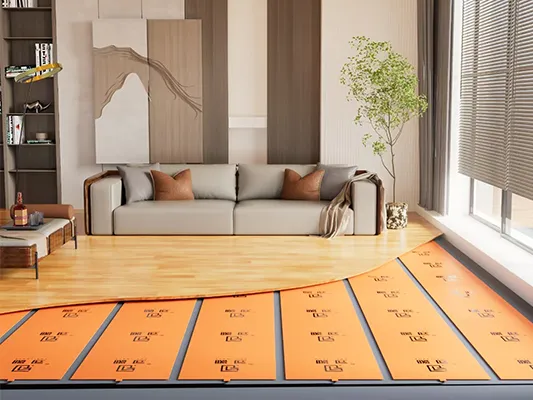
Wood Floor Heating
Low-profile film heating engineered for engineered wood and laminate floors, with insulation options for energy savings.