
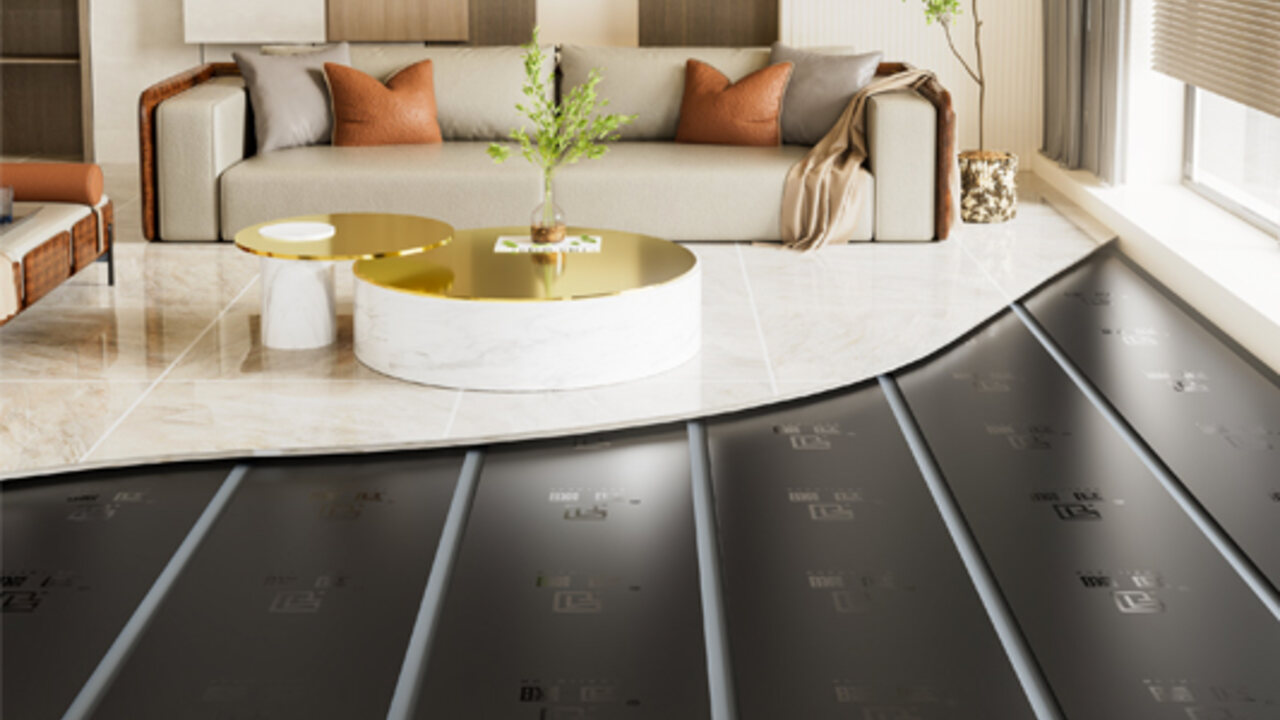
Two quotes for the same room, 2.4 times apart
A buyer in Manchester sends the same 18 m² kitchen drawing to four suppliers and gets back 1,150, 1,680, 2,240 and 2,760 per square metre rates that, once normalised, still differ by a factor of 2.4. Nothing about the room changed. What changed is what each quote counted: one priced a mat only, another priced mat plus thermostat plus adhesive plus labour, a third added a 60 mm screed rebuild, and the fourth assumed the floor was already insulated.
This is the single most common confusion in electric floor heating procurement, and it is not a pricing trick. It is a specification problem. The number a buyer should compare is not the headline price per square metre but the delivered cost per square metre of finished, commissioned, warrantable heated floor. This article breaks that number into its parts, gives the 2026 bands we see in European and North American projects, and sets out the questions that close the gap between two quotes.
Ethan Sun, Founder & CEO, SunAura Thermal
The cost stack: what sits inside a square metre
A heated floor is five purchases stacked on top of each other. Only one of them is the heating element, and it is usually the smallest line.
| Line | Film (220 W/m²) | Mat (160 W/m²) | Cable (20 W/m) | What moves the number |
|---|---|---|---|---|
| Heating element | €11–16 / m² | €14–20 / m² | €13–19 / m² | Output, width, drum length, order volume |
| Thermostat and probe | €32–85 per zone | €32–85 per zone | €32–85 per zone | Wired vs Wi-Fi, load capacity, zone count |
| Insulation board | €6–11 / m² | €6–11 / m² | €6–11 / m² | Thickness, thermal resistance, floor height |
| Levelling / adhesive | €5–9 / m² | €6–12 / m² | €9–18 / m² (screed) | Adhesive vs self-levelling vs 60 mm screed |
| Labour | €18–30 / m² | €20–34 / m² | €28–45 / m² | Region, floor prep, curing time |
| Commissioning and test | €0–120 per project | €0–120 per project | €0–120 per project | Whether insulation resistance is recorded |
Read the table vertically and the reason for the 2.4× spread becomes obvious. A quote at €95/m² and a quote at €230/m² can both be honest; they simply include different lines. The one that omits insulation board is not cheaper, it is a colder floor with a longer heat-up time and a higher running cost for the next fifteen years.
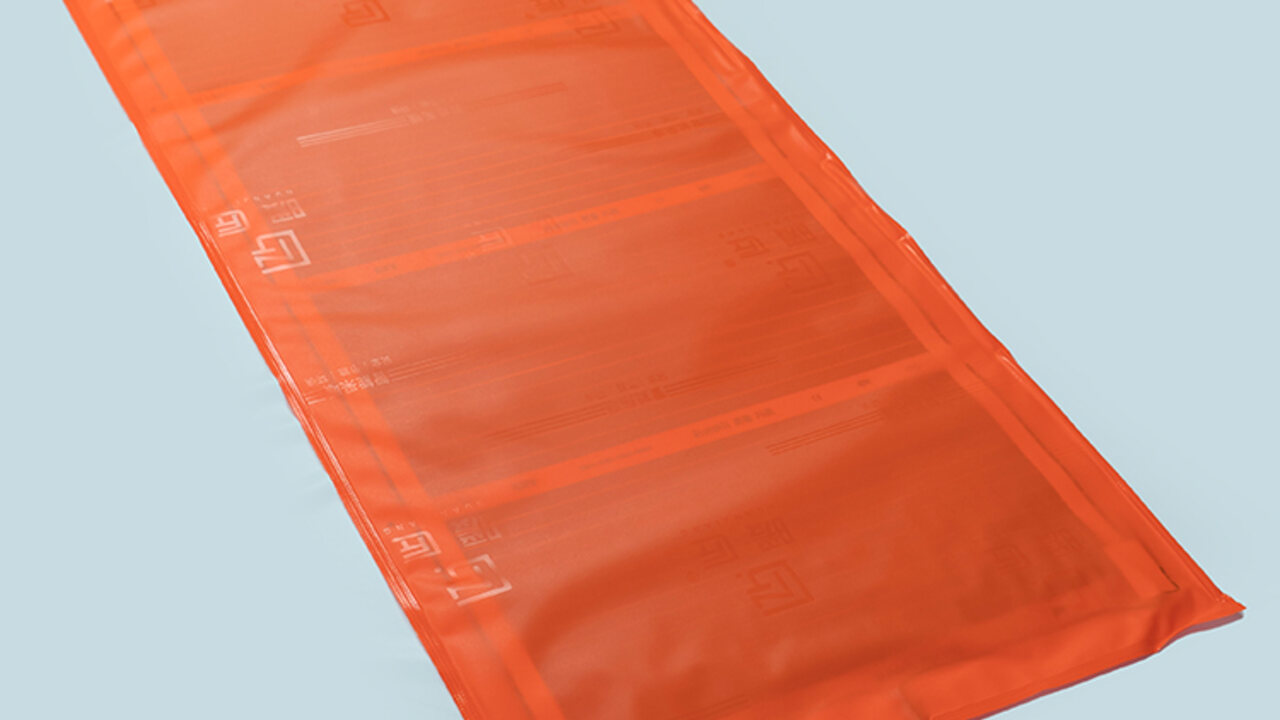
2026 price bands by market
These bands are for a completed electric floor, material plus labour, single zone, in an existing room with floor preparation included. They are compiled from project quotes and installer feedback in the markets we ship to most, and they should be treated as a planning range rather than a quotation.
| Market | Mat, finished | Cable, finished | Film, finished | Notes |
|---|---|---|---|---|
| UK | £95–150 / m² | £110–170 / m² | £105–160 / m² | VAT treatment and screed removal are the biggest variables |
| Germany | €110–165 / m² | €125–185 / m² | €115–175 / m² | Electrician sign-off and DIN-compliant testing add a fixed cost |
| France | €100–150 / m² | €115–170 / m² | €105–160 / m² | Renovation-heavy market; thin build-ups price at a premium |
| Netherlands / Belgium | €105–160 / m² | €120–180 / m² | €110–170 / m² | Labour share is high; material choice matters less |
| North America | $130–200 / ft² equivalent $14–21 | $150–230 / m² | $140–210 / m² | 120 V vs 240 V changes the circuit count, not the element price |
The interesting pattern is not the absolute level but the shape. In markets where labour is expensive, the gap between mat and cable narrows, because cable takes longer to lay but costs about the same per square metre of element. In markets where screed work is cheap, cable wins on total cost. Buyers comparing across borders should compare installed cost, never element cost.
Five variables that move a quote more than the element price
1. Heated area against room area
A kitchen of 18 m² may only have 11 m² of usable heated area once units, island and door swing are excluded. Suppliers who price per room area and suppliers who price per heated area will quote very different totals. Ask which figure the rate refers to.
2. Floor build-up available
If the finished floor can rise by 3 mm, a film or a 3.6 mm mat is possible. If it can rise by 15 mm, a mat in adhesive works. If it can rise by 60 mm, a cable in screed becomes available, and that is usually the cheapest per square metre but the most expensive in disruption.
3. Zone count
Each thermostat, probe and circuit adds €32–85 in material and roughly an hour of electrical work. A 120 m² clinic with four zones carries four times the control cost of one open-plan area. Zoning is a comfort decision that shows up as a line item, and it should be justified room by room rather than applied by default.
4. Insulation already present
Over an uninsulated concrete slab, 150 W/m² will not hold a room at setpoint in a cold snap. The honest supplier will add insulation board to the quote, which raises the price by €6–11/m² and cuts the running cost by far more than that.
5. Order route
A container of material bought factory-direct and installed by a local contractor typically lands 20–35 percent below a supply-and-install package from a distributor, because the distributor margin covers stock, warranty administration and installer support. For a single room that margin buys convenience. For a developer with 40 units it buys very little.
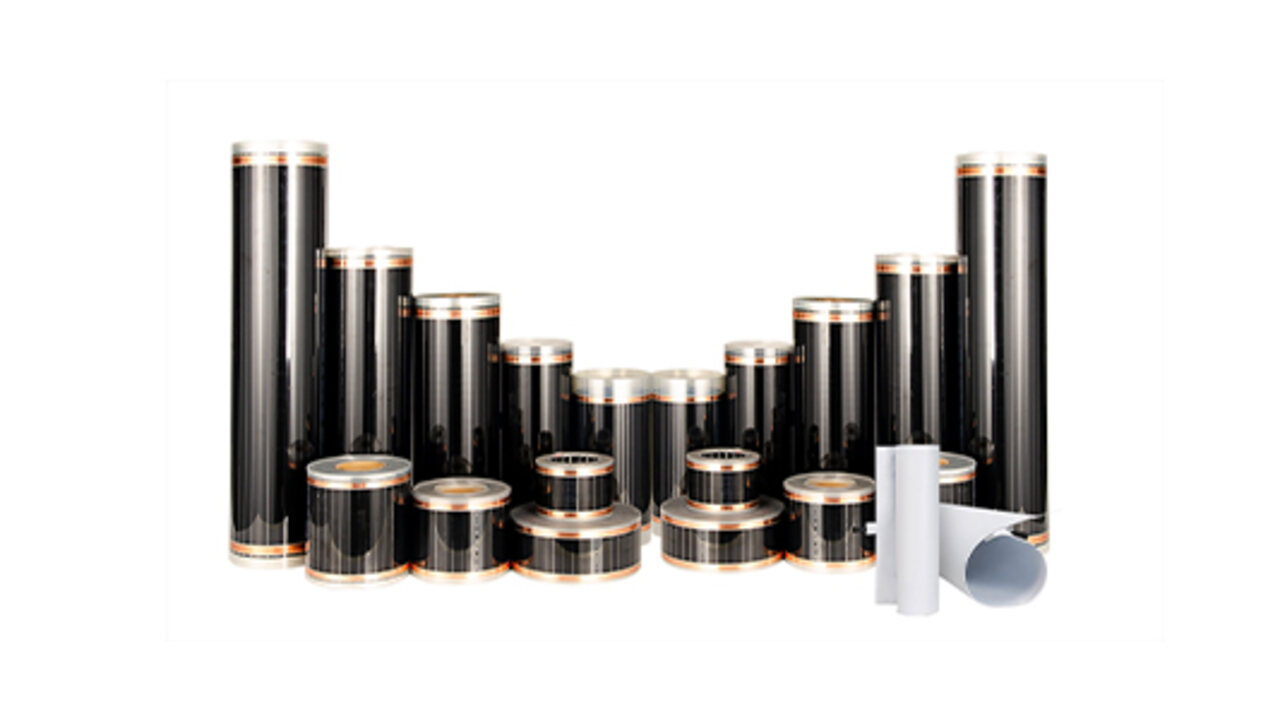
Data and evidence
The bands above are planning ranges built from project quotes and installer feedback, not from a single price list. Where a figure is a factory fact, it is marked as such, per SunAura factory records:
- 17 years of heating element manufacturing at the Qingdao Huangdao plant; cable, mat and film produced and tested on one site.
- Certification to ISO 9001, ISO 14001 and ISO 45001, with product compliance documented to CE, RoHS, LVD and EMC.
- Export to more than 50 countries, which is why the price bands above are expressed per market rather than as one global number.
- Element pricing in the table reflects factory-direct bands at container volume; single-room quantities sit 10–18 percent above those bands.
- Published warranties: 15 years on heating film, 15 years on mats, 25 years on the twin conductor cable, stated on the invoice rather than in marketing copy.
Two caveats. First, labour rates move faster than material prices and are the least reliable part of any 2026 band. Second, a quote that excludes commissioning is not necessarily cheaper — it simply moves the test cost to the electrician’s invoice, and often removes the record of insulation resistance that a warranty claim would need.
How to compare two quotes in ten minutes
Put both quotes into the same six-line table: element, control, insulation, levelling, labour, commissioning. Then check four things. Is the heated area the same in both? Is the thermostat load capacity adequate for the connected load? Is the insulation included or assumed? Is the warranty period the same, and does the cheaper quote void it by specifying a different bedding method?
If the answers line up and the difference is still 40 percent, the difference is in the element: different output, different drum volume, different origin. That is the point at which it is worth asking for the resistance test label, the drum length and the certification package — the three documents that separate a comparable quote from a cheap one.
For a factory-direct price on film, mat or cable by project schedule, send the heated area, the floor build-up and the destination port. We return a line-item quote with drum lengths and a lead time, usually within one working day, and we will say plainly when a distributor route is the better commercial choice for a small order.
FAQs
Why is a mat more expensive per square metre than a cable?
The mat carries the cost of factory assembly — mesh, adhesive, fixed spacing and a tested lead — which is labour the installer no longer performs. For a rectangular room the total installed cost often ends up close to cable; for an irregular room the mat’s waste factor of 10–15 percent pushes it higher.
Does a higher price per square metre mean a better floor?
Not necessarily. The most common overpay is insulation specified twice, and the most common underpay is insulation omitted. The useful comparison is heat-up time and running cost at a stated setpoint, not the headline rate.
How much does zoning add to a 100 m² project?
Each additional zone adds roughly €32–85 in controls and about an hour of electrical work, so three extra zones typically add €300–600 in material and labour before any wall work for thermostat positions.
Is factory-direct purchasing worth it for one room?
Usually not. Freight, customs and the loss of local installer support outweigh a 20–35 percent material saving on a single room. From about 200 m² or three repeat projects, the arithmetic changes.
Buyers who need the element line priced by schedule can compare the film, mat and cable ranges side by side. For a like-for-like quotation on a specific project, the mat specification page and the cable specification page carry the output and build-up figures the cost stack depends on.