
Overview
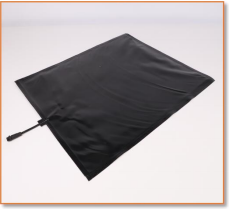
A custom encapsulated heating film is a fully sealed, far-infrared graphene heating element built specifically for wet, damp and corrosive environments where an ordinary printed film would degrade. SunAura Thermal engineers the XGF220V/A series as a factory-terminated, hermetically encapsulated element: the graphene–carbon heating layer, copper busbars and connection points are sealed inside a multi-layer polymer jacket so that moisture, steam and chemical vapour cannot reach the conductive circuit. There is no field cutting, no on-site jointing and no exposed conductor — every piece is manufactured to your exact length on our Qingdao line and shipped ready to install.
Because the film is encapsulated rather than merely laminated, it is the element we recommend first for bathrooms, wet rooms, spa areas, greenhouse benches, livestock and agriculture zones, and any industrial location where humidity, condensation or occasional wash-down is normal. The element runs at 220 V, delivers 230 ± 10% W/m² of uniform radiant output, and consumes roughly 0.07 kWh per square metre under normal thermostat cycling.
How Graphene Far-Infrared Heating Works
Like all SunAura heating elements, the encapsulated film converts electrical energy directly into radiant heat rather than heating the air first. When current passes through the printed graphene–carbon composite, the material emits far-infrared radiation in the 5–14 µm band — the same wavelength range the human body absorbs naturally. That radiation warms surfaces, objects and people directly, so a room feels warm before the air temperature has fully climbed, and there is no forced-air movement to lift dust or stir allergens.
The printed-film geometry is planar and continuous, which is why heat is spread evenly across the whole surface instead of concentrating at a few hot wires. Measured electrical-to-thermal conversion is above 99%, so virtually every watt drawn is delivered as useful heat rather than lost as resistance or exhaust. Encapsulation adds a sealed outer jacket around this layer; it does not change the radiation physics, it protects it.
There are two practical consequences of radiant, planar heating that buyers care about. First, because heat rises from warm surfaces rather than being blown in, the room warms from the floor or wall upward and the temperature feels comfortable at a lower air reading — people stop noticing draughts and cold feet. Second, with no fan and no airflow there is no dust circulation, which matters in bathrooms, wellness rooms and any space where moisture and airborne particles already need controlling. The encapsulated film simply sits in the build-up and works silently for decades.
Key Specifications
| Parameter | Value (XGF220V/A) |
|---|---|
| Heating element | Graphene–carbon composite, printed-film process |
| Rated voltage | 220 V |
| Nominal power density | 230 ± 10% W/m² |
| Typical energy use | ≈ 0.07 kWh/m² under thermostat cycling |
| Standard width | 54 cm |
| Length | Custom to order, cut in 5 cm steps (factory-terminated) |
| Field cuttable | No — must be factory cut and sealed |
| Dielectric withstand | 3750 V (hipot tested) |
| Service life rating | 40+ years in service |
| Material properties | High-temperature resistant, corrosion resistant |
| Recommended environment | Damp / moist / humid spaces |
| Standard lead time | About 1 week from confirmed drawing |
| Compliance | CE, RoHS; manufactured under ISO 9001:2015 |
Available Models, Widths & Power Options
The XGF220V/A platform is built around a 54 cm encapsulated band. Width is fixed for this series because the encapsulation seal, busbar layout and dielectric barrier are engineered as a matched system; changing the width would require re-validating the 3750 V hipot barrier, which we do only as a dedicated OEM project.
Length is fully customised. You tell us the footprint — a bathroom floor, a bench run, a wall section — and we cut each element to the millimetre within a 5 cm increment grid, seal both ends and pre-fit the power lead. Because the film is not cuttable on site, the measuring step matters: we provide a simple layout worksheet so you can lay the room out on paper first, and our engineers review the drawing before production. Standard output is 230 ± 10% W/m²; for higher-load projects we can quote a higher-density printed variant as an OEM option.
Key Features & Benefits
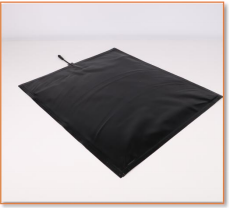
- Fully sealed encapsulation — the heating circuit, busbars and terminals are jacketed inside a corrosion-resistant polymer film, so the element tolerates steam, condensation and wash-down that would shorten the life of an open laminated film.
- 220 V high-voltage core — designed for direct connection to 220 V building circuits via a fused, thermostatically controlled feed, ideal for whole-room wet-area heating without a separate low-voltage driver.
- Uniform 230 W/m² output — the printed planar layer delivers even radiant heat across the full 54 cm width, with no cold strips between wire runs.
- 40+ year service life — with no moving parts, no glowing filament and no open nichrome wire, the encapsulated film is rated for 40+ years under normal thermostat-controlled cycling.
- 3750 V dielectric withstand — every batch is hipot tested to 3750 V, giving a wide safety margin against the 220 V working voltage.
- Factory-cut, factory-sealed — because the film must never be cut on site, each element arrives terminated and tested, which removes the single largest failure point in underfloor film installs.
- Fast 1-week lead time — standard custom lengths ship in about one week from drawing approval, and we hold raw material stock for repeat OEM orders.
Materials, Build Quality & Service Life
The build starts with the printed graphene–carbon heating layer on a stable polymer substrate. Copper busbars run along the edges to distribute current evenly across the width; the busbars are then encapsulated between layers of high-temperature, corrosion-resistant film that is heat-laminated under controlled pressure. The end seals are the critical detail: a damp-room film fails at the edge seal, not in the middle of the heating area, which is why we heat-seal and then hipot-test each finished element to 3750 V before it leaves the line.
Rated at 40+ years of service, the film ages slowly because it operates below its material temperature limit and is cycled by a thermostat rather than run continuously. The outer jacket resists both elevated surface temperature and the mild chemical attack found in bathrooms, spas, agriculture buildings and light industrial wash-down zones. We do not recommend unprotected outdoor burial or direct burial in screed without the correct membrane and installation kit.
Why “Encapsulated” — Built for Damp and Moist Environments
A standard heating film is laminated but not hermetically sealed; its edges are exposed and moisture can track along the busbar. The waterproof heating film for damp rooms problem is solved by encapsulation: the entire circuit is jacketed, so steam, condensation and spilled water sit on the outside of the film rather than on the conductor. This is why the XGF series is our recommendation for:
- Bathrooms, wet rooms and shower-tile underfloor heating
- Spa, sauna ante-room and swimming-pool surround heating
- Greenhouse, propagation bench and livestock/mushroom-house heating
- Laundry rooms, kitchens and food-prep zones with regular wash-down
- Corrosive light-industrial environments where standard film would oxidise
The film must still be paired with a residual-current device and a thermostat with a floor sensor — encapsulation protects the element, it does not replace correct electrical protection.
Installation & Layout Guidance
Because the element is factory-cut, layout happens on paper before production. For a bathroom or wet room, you first sketch the finished floor, mark the fixed fixtures — toilet, vanity, shower tray — and then plan the 54 cm-wide bands to cover the open walking and standing areas. The film must not run under fixed cabinets, the bath or the shower tray, where heat would be trapped and cannot dissipate. We provide a dimension worksheet and check your drawing so the number of bands and the total loaded area match the thermostat and the floor build-up.
Under a finished floor the sealed element sits above a closed-cell thermal insulation layer and below a vapour membrane, with the power lead routed to a sealed junction box. A floor temperature sensor must be placed between two bands, away from the leads, so the thermostat reads the true slab temperature rather than a local hot spot. On wall or ceiling installations the same rules apply: keep the element clear of boxes and fittings, and terminate the lead in a rated box. Because the film cannot be cut in the field, a careful layout drawing is what turns this into a fast, clean install rather than a wasted order.
Typical Applications
- Wet-room underfloor heating — tile-over electric radiant heat in bathrooms and wellness areas.
- Bench and surface heating — propagation beds, drying racks, animal-rearing floors.
- Wall and ceiling panels in humid zones — sealed panels behind tile or stone in steam rooms.
- Industrial process heating — condensation control, frost protection and panel heaters in moist workshops.
- OEM appliance elements — sealed elements integrated into customer machinery that needs a durable, moisture-proof heater.
Why Choose SunAura as Your Encapsulated Heating Film Manufacturer
SunAura Thermal has manufactured electric heating elements in Qingdao since 2008, exporting to EU, UK, North American, Middle Eastern and Southeast Asian customers. The encapsulated film line is ours: we control the printing, encapsulation, sealing and hipot test in-house, which is what lets us quote a custom encapsulated heating film at factory price with a one-week lead time rather than a long import queue.
We work as an encapsulated heating film manufacturer for brands, contractors and heating-system integrators on an OEM / ODM basis. That means your private-label packaging, your cut-sheet drawings, your own connector style and your branded test report. Minimum order quantities are modest for first trials, and repeat orders are stock-held so reorders ship faster. Every order is backed by our ISO 9001:2015 production system and CE / RoHS documentation.
When you buy wholesale directly from our factory, you also get engineering support rather than a catalogue price. If your project has an unusual footprint, a corrosive atmosphere or a non-standard connector requirement, our team reviews the drawing and proposes a cut plan before any material is committed. This matters on damp-room work, where a badly laid-out film either wastes power or leaves a cold corner. We treat the first order as a technical collaboration: send the dimensions, get the layout back, then approve production. That is the difference between ordering a commodity heating element and working with a specialist manufacturer.
Safety & Compliance
The 220 V element is engineered with a wide dielectric margin — 3750 V hipot versus 220 V working — and each unit is individually tested. Installation must always include an RCD / GFCI protection device and a compatible thermostat with a floor temperature sensor; for damp rooms we recommend a sealed conduit for the lead and a junction box rated for the environment. Full CE, RoHS and ISO 9001 documentation, plus third-party test reports, is listed on our certifications page and is available on request for customer audits.
Operationally, the film carries no exposed live parts once encapsulated and terminated, and it does not get hot enough to burn skin on its surface; the thermostat and floor sensor together cap the floor temperature. The element itself has no on/off cycling contactor, no glowing filament and no pressure switch, which removes the components that usually fail first in heaters. On the installation side, the responsibility for safety sits with the qualified electrician who connects the RCD, earths the build-up and sets the floor-sensor limit — we provide the element, the cut layout and the test data, and we recommend an installer familiar with electric underfloor heating.
Related SunAura Products
For a complete heating system, pair this element with the controls and complementary elements in our range:
- WiFi smart thermostat — schedule and floor-sensor control for the encapsulated film.
- General-purpose graphene heating film — for dry rooms where encapsulation is not required.
- Underfloor heating mat — pre-assembled mat form for quick tile-out installs.
- Case studies — see how installers and brands deploy SunAura elements in real projects.
Related Graphene Heating Products
- large-width flexible heating film rolls — the 140 cm planar film for high-voltage blankets, mats and mattresses.
- low-voltage heating cloth for wearables — the 5–36 V foldable element for smart textiles.
- indoor heated floor mat — a damp-room-safe stand-on mat using the same sealed-element logic.
- silent graphene heating painting — a wall-mounted far-infrared panel alternative to film underfloor installs.
- the graphene home heating product range — the hub comparing films, panels, wearables and bedding.
Frequently Asked Questions
Can I cut the encapsulated heating film on site to fit a room?
No. The XGF220V/A is a sealed, factory-terminated element. Cutting it on site would break the encapsulation and the 3750 V dielectric barrier. Instead, measure the room, send us the layout, and we cut and seal each element to your exact length in 5 cm steps before it ships.
What voltage is available?
This series is a 220 V element (the XGF220V/A model). If your market runs on 110 V or you need a low-voltage variant for a specific OEM project, tell us the target voltage on your inquiry and we will quote the matching platform.
What is the minimum order quantity for custom encapsulated heating film?
We accept small trial orders so you can validate a project or a sample batch before committing to volume. Production pricing improves with quantity, and repeat OEM orders are stock-held. Contact us with your lengths and quantities for a firm quote.
How long is the lead time?
Standard custom lengths ship in about one week from drawing approval. Large or fully bespoke OEM tooling programmes are quoted separately with their own timeline.
Is the film really waterproof?
The encapsulation seals the conductor against steam, condensation and splash, which is why we recommend it for damp and wet rooms. It is not designed for permanent underwater immersion; for submerged use cases, ask us about our specialised sealed-element programme.
Do you offer private label / OEM manufacturing?
Yes. We produce under your brand with custom packaging, connectors, cut sheets and test reports. We supply 220 V heating film roll and bespoke encapsulated elements to heating brands and system integrators worldwide.
What warranty and certification do you provide?
The film is rated for 40+ years of service and carries CE and RoHS compliance under our ISO 9001:2015 quality system. Full certificates and third-party test reports are available on our certifications page or on request.
Which thermostat should I pair with this film?
Use a 220 V electric-underfloor thermostat rated for the total load of your installed area, with a built-in or remote floor temperature sensor. For smart scheduling, our WiFi smart thermostat is the matching control; it holds the target slab temperature and lets you schedule the film by day and time.
Get a Quote / OEM Inquiry
Send us your room or project dimensions, target voltage and required quantity, and our engineers will return a cut layout, power density check and factory price. Whether you need a one-off bathroom element or a private-label OEM programme, the contact us page opens a direct line to our export sales and engineering team. Samples are available for evaluation before volume orders.
Download Datasheet
Download the official SunAura product datasheet (PDF, English) with full specifications, features and application guidance — or request a custom OEM quote and we will send the latest revision, pricing and lead time within 24 hours.
Request a Quote for Custom Graphene Encapsulated Heating Film
Tell us your target quantity, destination country, custom sizing or OEM branding needs. Our export engineers reply within 24 hours with factory pricing, MOQ, lead time and a free-sample offer.
Request Wholesale Price WhatsApp an Engineer
Related Products You May Need
Pair this product with compatible SunAura components — one factory, one warranty.
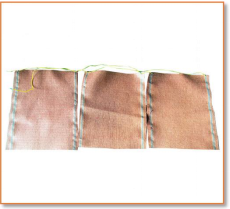
Flexible Planar Graphene Heating Film
Wide 70 / 140 cm planar graphene heating film roll for electric blankets, pet mats, floor mats and mattresses. 220 V, uniform 230 W/m2, 50+ year life.
Low-Voltage Graphene Heating Cloth
Washable, foldable graphene heating cloth on safe 5 / 12 / 24 / 36 V USB power. 6 cm wide, whole-surface heat, for wearables, home textiles and delivery liners.
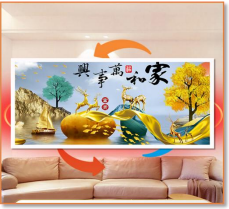
Graphene Infrared Heating Painting
Silent wall-art heater that doubles as decor. 1000 / 1500 / 2000 W far-infrared graphene panel, fan-less, baby-safe, overheat shutoff, 50+ year life.
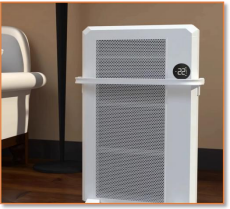
Graphene Far-Infrared Space Heater
Fanless graphene far-infrared space heater in 2300 / 2600 / 3000 W tiers for rooms up to 40 m2, with APP + LCD touch, 5-65 C setpoint and tip-over shutoff.