
Overview
A flexible heating film roll is a continuous, planar graphene heating element supplied by the metre, designed to be integrated into soft goods and flat products rather than laid under a floor. SunAura Thermal’s XDB220V/A series is the wide-format member of our film family: built on a woven textile substrate with a dye-printed graphene–carbon layer and a laminated outer jacket, it arrives as a roll that a manufacturer can cut, shape and sew or bond into electric blankets, pet mats, floor mats, mattress toppers and similar flat heated products. At 70 cm and 140 cm wide it is one of the broadest single-piece planar elements we make, which is why it is chosen where a single, uninterrupted heating surface matters more than a grid of small wire heaters.
Rated for 220 V operation, the film delivers a uniform 230 ± 10% W/m² across its width and draws around 0.06 kWh/m² under normal cycling. Its core value to a brand is consistency: because the heating layer is printed and laminated on our own lines, every roll from the same production run has the same resistance, the same heat profile and the same dielectric margin (3750 V hipot), so your product line behaves the same on day one as it does after five years.
Unlike underfloor film, which is hidden forever inside a floor build-up, this roll element is a sub-component that a manufacturer touches, cuts and assembles. That changes the requirements: it must bend, it must take a seam, it must survive a customer folding and washing the outer cover, and it must be reproducible across thousands of units. The dye-print-plus-lamination build on a woven substrate is our answer to those requirements — flexible enough to live inside a textile, robust enough to last 50+ years, and consistent enough to certify once and repeat forever.
How the Planar Graphene Element Heats
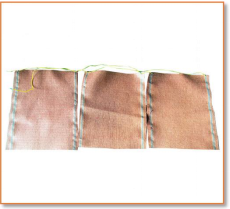
The element emits far-infrared radiation in the 5–14 µm band rather than convected hot air. Current passes through a dye-printed graphene–carbon layer bonded to a woven substrate; the planar layer heats as one continuous sheet, so the surface warms evenly instead of running as a set of separate hot wires. Electrical-to-thermal conversion is above 99%, which is why the energy figure sits near 0.06 kWh/m² — almost none of the power is wasted in resistance or in heating a fan.
For a soft-goods product this matters in two ways. First, even heat across the whole area means no cold strips between wires and no “hot rail” sensation under a blanket or mat; the user feels a warm, uniform surface. Second, because there is no glowing wire and no forced air, the product runs silent, dust-free and comfortable against skin. The woven substrate also means the film bends and flexes with the product, which is what separates a roll element built for textiles from a rigid underfloor film.
Key Specifications
| Parameter | Value (XDB220V/A) |
|---|---|
| Heating element | Graphene–carbon composite, dye-printed on woven substrate |
| Construction process | Dye-print + weave + lamination |
| Rated voltage | 220 V |
| Nominal power density | 230 ± 10% W/m² |
| Typical energy use | ≈ 0.06 kWh/m² under cycling |
| Standard widths | 70 cm and 140 cm |
| Heating geometry | Planar / uniform whole-surface |
| Dielectric withstand | 3750 V (hipot tested) |
| Service life rating | 50+ years |
| Form | Continuous roll, cut to size in production |
| Typical end products | High-voltage electric blankets, pet mats, floor mats, mattresses |
| Compliance | CE, RoHS; manufactured under ISO 9001:2015 |
Available Widths, Lengths & Power Options
The XDB220V/A platform ships in two standard widths: 70 cm for blankets, pet beds and narrower mats, and 140 cm as a large-width heating film 140cm for double blankets, mattress tops and wide floor mats where a single unbroken panel avoids joins. Length is supplied by the roll and cut to your pattern in production; because this is a roll element rather than a factory-sealed underfloor film, your factory can die-cut the shape it needs once the element design is validated.
Standard output is 230 ± 10% W/m² at 220 V. For lower-voltage versions of the same product family (5 V, 12 V, 24 V, 36 V) we point you to our low-voltage heating cloth line, which is engineered for battery and USB power. If your product needs a different power density or a custom zone layout, we can adjust the print pattern on an OEM basis and re-validate the dielectric test before tooling.
Key Features & Benefits
- True planar, uniform heat — the dye-printed layer heats the whole surface evenly, with no wire-run hot spots and no cold gaps, which is why it reads as comfortable skin-contact warmth.
- Wide 70 cm / 140 cm format — one wide roll covers a double blanket or a mattress panel without splicing narrow strips, simplifying your assembly and reducing seam failure points.
- 50+ year service life — no moving parts, no glowing filament, no nichrome wire to oxidise; the laminated element is rated for 50+ years under thermostat cycling.
- 3750 V dielectric margin — every batch is hipot tested, giving a wide safety margin above the 220 V working voltage.
- Woven, flexible substrate — the film bends and flexes with the product, so it survives folding, rolling and normal use inside a blanket or mat.
- Consistent OEM output — because we control printing and lamination in-house, resistance and heat profile are repeatable run to run, which keeps your product QA tight.
- High-voltage ready — the 220 V core suits mains-powered blankets and mats where a low-voltage PSU would add cost and bulk.
Why a Wide Roll Beats Traditional Wire Grids
Most cheap heated blankets and mats use resistance wire sewn in a grid. Wire grids have three weak points that a planar film removes. First, the heat is concentrated along each wire, so the user feels a series of hot lines separated by cold fabric; a flat film warms the whole surface as one panel. Second, a wire can flex at its fixing points until it fatigues and breaks, which is the most common failure in budget blankets. Third, a grid of narrow wires cannot cover a wide mattress or double blanket without many parallel runs and joins, each join a potential fault. A 140 cm wide planar film covers the same area in one piece, with no joins across the width.
For a brand, that translates to a better product and a cleaner bill of materials. The customer perceives even warmth, the warranty claim rate drops because there are fewer wire fatigue points, and assembly is simpler because you bond or sew one flexible panel rather than lace dozens of wires. The trade-off is that the element must be designed into the product rather than retrofitted, which is exactly why we offer engineering support from the first prototype.
Materials & Build Quality
The build is a three-step process: weave, dye-print and laminate. We start from a stable woven textile substrate, then dye-print the graphene–carbon heating layer in the pattern that defines the power density, and finally laminate a protective outer jacket that seals the printed circuit and the busbar connections. The woven substrate is what gives the roll its flexibility and hand; the lamination is what protects the conductor and holds the dielectric barrier.
Rated at 50+ years, the element ages slowly because it operates well below its material limit and is controlled by a thermostat or a multi-level controller rather than run flat-out. Each finished roll undergoes resistance check and a 3750 V hipot test before release, and we hold batch records so a customer can trace a roll back to its production run. For brands, this traceability is what makes a CE / RoHS submission straightforward — the test data already exists.
Typical Applications
This is an integration element: our customer builds it into a finished heated product. Common end uses include:
- High-voltage electric blankets — mains-powered blankets and throws where wide, even heat beats wire-grid comfort.
- Heated pet mats and beds — durable, washable-cover pads for dogs and cats in homes and vet clinics.
- Heated floor mats — under-desk and entryway mats that run warm without bulky wire heaters.
- Mattress and mattress-topper heating — silent, even bed warming built into the mattress layer.
- Industrial flat heaters — process panels, bench warmers and de-icing pads that need a flexible planar element.
The choice between the 70 cm and 140 cm widths usually comes down to the finished product. A single-person throw or a pet bed rarely needs more than 70 cm, and the narrower roll wastes less off-cut. A double blanket, a king-size mattress topper or a wide entry mat benefits from the 140 cm roll because one panel covers the full width without a centre seam. In both cases the element sits inside the product’s own outer cover and is never meant to be exposed to the user directly — the finished blanket or mat provides the touch surface, the insulation and the washable enclosure.
Why Choose SunAura as Your Heating Film Supplier
SunAura Thermal has manufactured electric heating elements in Qingdao since 2008, and we export film to blanket, mat and home-textile brands across the EU, UK, North America and beyond. Because the printing and lamination lines are ours, we act as a genuine flexible heating film roll manufacturer at factory price — you are not buying through a trading layer. We support OEM and ODM programmes: your connector, your zone layout, your packaging and your branded test report.
For a product brand, the practical advantage is engineering hand-holding. Tell us the finished blanket or mat size, the target surface temperature and the controller you use, and we will recommend the width, power density and zone layout, then send a sample for your trial. We keep MOQ low for first samples and stock raw material for repeat orders, so a pilot run does not lock you into a huge batch. This is how a home-textile brand moves from a prototype to a certified product without re-inventing the heating layer.
Safety & Compliance
The 220 V element is built with a 3750 V hipot margin and individually tested. In the finished product it must be paired with a multi-level controller or thermostat that includes over-temperature protection, and the product must carry its own appliance-level certification based on the end construction. Our CE and RoHS documentation plus third-party test reports support that certification and are listed on our certifications page. Because the film is an internal component, the final product’s safety case is built around our element’s test data plus your enclosure, controller and insulation design. We recommend designing the controller early: a good blanket controller not only offers three heat levels but also includes a thermostat that cuts power if the surface exceeds a safe limit, plus a timer that switches the product off after a set period. We can recommend controller partners and provide the electrical data your certifier needs, so the component and the appliance are tested as a matched system rather than two unrelated parts.
Related SunAura Products
Explore the rest of our heating element range:
- General-purpose graphene heating film — for underfloor and wall heating in dry rooms.
- Low-voltage heating cloth — the 5–36 V washable fabric for USB wearables and textiles.
- WiFi smart thermostat — scheduling control for mains heating products.
- Customer cases — how brands integrate SunAura elements into finished products.
Related Graphene Heating Products
- custom encapsulated heating film — a factory-sealed 220 V film for damp rooms and custom lengths.
- electric heated blanket — a finished 24 V/36 V bedding product built on our film.
- heated floor mat — an indoor vinyl-finish mat that uses the same printed-film element.
- the graphene home heating line — the index comparing film types, panels and finished goods.
Frequently Asked Questions
What products is this heating film designed for?
The XDB220V/A is engineered as a building element for high-voltage electric blankets, pet mats, floor mats and mattresses. It is a 220 V mains element; for battery or USB-powered products, use our 5–36 V low-voltage heating cloth instead.
What widths do you offer?
Two standard widths: 70 cm for narrower blankets and pet mats, and 140 cm as a large-width heating film for double blankets and mattress panels. Custom widths are opened for volume OEM programmes.
Can I cut the roll to size in my own factory?
Yes — this is a roll element for integration, and your production line can cut and shape it once the element pattern and busbar termination are validated. We provide guidance on termination so the dielectric barrier stays intact after cutting.
What is the minimum order quantity?
We accept sample and pilot orders so you can build and certify a prototype before committing to volume. Production pricing improves with quantity, and repeat orders are stock-held. Send your dimensions and target volume for a firm quote.
Do you supply OEM / private-label film?
Yes. We produce under your brand with custom print patterns, connectors, packaging and test reports. We are an established heating film for electric blanket OEM supplier to home-textile brands worldwide.
What voltage options exist?
This platform is 220 V. If you need 110 V or a low-voltage 5/12/24/36 V element for battery products, ask — we manufacture those on our low-voltage cloth line and can quote the matching platform.
How long does it last?
The element is rated for 50+ years under thermostat or multi-level-controller cycling, because it has no moving parts, no filament and no nichrome wire to oxidise. The finished product’s warranty is set by the brand based on the overall construction.
What certifications support my product?
The film carries CE and RoHS compliance under our ISO 9001:2015 quality system, with third-party test reports available on request to support your appliance certification.
How do you ship the rolls and protect them in transit?
Rolls are wound on a core, sealed against moisture and packed so the lamination and busbars are not crushed in transit. We ship by sea for volume and by air for urgent samples, and we can label each roll with your PO and batch number so your incoming QC is traceable straight back to our production record.
Get a Quote / Sample
Send us your finished-product dimensions, target surface temperature and annual volume, and our engineers will recommend width, power density and zone layout, then quote factory pricing. Whether you need a sample for a prototype or a private-label OEM programme, the contact us page opens a direct line to our export sales and engineering team. Where a pre-sized, self-adhesive mesh mat is preferred over a cut-to-roll film, our electric underfloor heating mats arrive pre-spaced on a fibreglass mesh for direct tiling.
Download Datasheet
Download the official SunAura product datasheet (PDF, English) with full specifications, features and application guidance — or request a custom OEM quote and we will send the latest revision, pricing and lead time within 24 hours.
Request a Quote for Flexible Planar Graphene Heating Film
Tell us your target quantity, destination country, custom sizing or OEM branding needs. Our export engineers reply within 24 hours with factory pricing, MOQ, lead time and a free-sample offer.
Request Wholesale Price WhatsApp an Engineer
Related Products You May Need
Pair this product with compatible SunAura components — one factory, one warranty.
Custom Graphene Encapsulated Heating Film
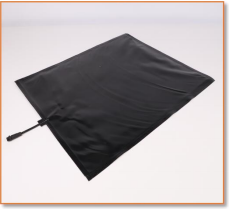
Factory-sealed 220V graphene heating film for damp and wet rooms. 54 cm wide, 230 W/m2, 3750 V hipot, factory-cut in 5 cm steps, 40+ year life.
Low-Voltage Graphene Heating Cloth
Washable, foldable graphene heating cloth on safe 5 / 12 / 24 / 36 V USB power. 6 cm wide, whole-surface heat, for wearables, home textiles and delivery liners.
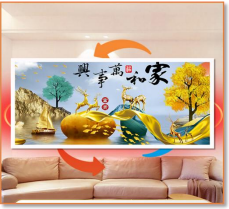
Graphene Infrared Heating Painting
Silent wall-art heater that doubles as decor. 1000 / 1500 / 2000 W far-infrared graphene panel, fan-less, baby-safe, overheat shutoff, 50+ year life.
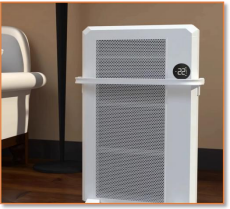
Graphene Far-Infrared Space Heater
Fanless graphene far-infrared space heater in 2300 / 2600 / 3000 W tiers for rooms up to 40 m2, with APP + LCD touch, 5-65 C setpoint and tip-over shutoff.