
Overview
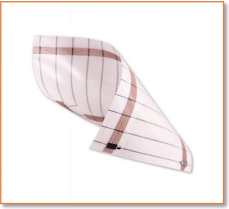
A low voltage heating cloth is a washable, foldable, textile-grade heating element that runs on safe extra-low voltage — typically 5 V, 12 V, 24 V or 36 V — instead of mains power. SunAura Thermal’s XDB5V series is built as a woven heating fabric: a dye-printed graphene layer bonded into a textile substrate, supplied as a narrow 6 cm cloth that a brand can sew into a garment, a home-textile, a delivery liner or a portable pouch. Because it runs below touch-safe voltage and has no exposed conductor, it is the element we recommend for anything the customer will wear, fold, wash or hold close to the body.
Where our 220 V film is built to disappear inside a floor or a blanket, the low-voltage cloth is built to live inside soft, everyday products: heated jackets and vests, USB hand and seat warmers, warming liners for food-delivery bags, portable drying pouches and heated bedding accessories. It heats the whole surface of the cloth as one even panel rather than as a few wires, folds and flexes with the product, and — when correctly enclosed — is washable. Rated for 30+ years and powered from a USB port, a power bank or a small 12 V adapter, it is the safest heating surface we make for human-contact products.
The difference between this cloth and a generic “heating pad” element is the substrate. Cheap USB warmers often use a small resistive pad that heats one spot; our cloth is a continuous textile strip that warms its whole area evenly, so the warmth feels like a soft blanket rather than a single hot button. That even, textile-like warmth is what customers notice first, and it is why wearable and bag brands come back to us for repeat orders rather than switching to a cheaper point-source pad.
Why Low Voltage Changes What You Can Build
Mains-voltage heating elements are powerful, but they cannot go next to skin, into a garment, or into a product a customer will fold and pack in a bag. Low-voltage elements change that. At 5–36 V the cloth runs below the level that poses an electric-shock risk, so it can be sewn into clothing, slipped into a jacket pocket, or built into a child-safe home-textile. The trade-off is lower total power per square metre, but for warming the body, keeping food delivery bags hot, or gently drying small items, that lower power is exactly right — you do not want a 220 V blanket against your chest.
The cloth emits the same 5–14 µm far-infrared band as our larger elements, so the warmth is radiant and comfortable rather than a hot wire. Because the element is woven, it flexes with the fabric of the finished product; because it is low voltage, the power comes from a USB power bank or a small adapter that the customer already carries. That is the combination that makes heated wearables and USB warmers practical to own.
Key Specifications
| Parameter | Value (XDB5V series) |
|---|---|
| Heating element | Graphene–carbon composite, dye-printed into woven cloth |
| Construction process | Weave + dye-print |
| Rated voltage | 5 V standard; 12 V / 24 V / 36 V configurable |
| Standard width | 6 cm |
| Heating geometry | Whole-surface, uniform planar heating |
| Flexibility | Foldable, flexible, bends with the product |
| Washable | Washable when correctly enclosed / encapsulated |
| Service life rating | 30+ years |
| Typical end products | Smart wearables, home textiles, delivery-box liners, portable drying bags |
| Compliance | CE, RoHS; manufactured under ISO 9001:2015 |
Available Voltages, Sizes & Configurations
The platform is built around 5 V as the default — the USB voltage every phone charger and power bank supplies — and extends to 12 V, 24 V and 36 V for products that need more power without stepping up to mains. Width is a slim 6 cm, which makes the cloth easy to stitch into a seam, a collar, a pocket or a pocket liner without adding bulk. Length and shape are customised to your product pattern: send us the garment or pouch design, and we will lay out where the heating strips sit, how many zones you want, and how the USB lead exits.
Because the cloth is a building element, the finished product design is yours. We can supply a single strip for one warming zone, or several strips wired in parallel for multi-zone heating (back, abdomen, shoulders in a jacket; floor, seat and back in a cushion). The 5 V version pairs naturally with a 3-level USB controller; the 12–36 V versions suit larger liners and drying bags that draw more current. Tell us your target surface temperature and available power, and we will recommend the strip count and layout.
Key Features & Benefits
- Touch-safe low voltage — runs on 5–36 V from a USB port, power bank or small adapter, with no mains conductor near the body.
- Washable heating fabric — when enclosed in the correct pouch or sealed pocket, the cloth tolerates washing and normal textile care.
- Foldable and flexible — the woven substrate bends with the product, so it survives being folded into a bag, packed in a suitcase or worn against movement.
- Whole-surface even heat — the printed cloth warms the entire strip as one panel, with no point-source hot wires pressing into the skin.
- Slim 6 cm width — easy to sew into seams, collars and pockets without adding visible bulk.
- 30+ year element life — no filament, no moving parts, no nichrome wire to oxidise.
- Fully customisable — voltage, length, zone layout, lead position and connector are all configurable for your product.
Materials & Build Quality
The cloth is made on a weave-and-dye-print line: a textile substrate is woven for flexibility, the graphene–carbon heating layer is dye-printed onto it, and the conductor is bonded into the fabric rather than sewn on as a separate wire. That is what makes it foldable and washable in a way that a taped-on film cannot be — the heating layer is part of the cloth, not a sheet glued on top. The result is a strip that behaves like a piece of fabric: it bends, it rolls, it flexes with the wearer.
Rated for 30+ years, the element is conservative on purpose: low voltage means low stress on the conductor, and a 3-level controller keeps surface temperature in a comfortable band rather than pushing the cloth hard. Washability depends on the enclosure — we recommend the cloth sit in a sealed, removable pouch or a properly stitched pocket, and we can advise on the enclosure design so washing does not stress the lead exit. Every batch is resistance-tested before dispatch.
Typical Applications
- Smart wearables — heated jackets, vests, neck warmers, gloves and insoles powered by a USB power bank.
- Home textiles — heated throws, cushion pads and mattress accessories that run from a safe low-voltage supply.
- Delivery and takeaway liners — warming strips inside food-delivery bag liners to keep meals hot on the route.
- Portable drying bags — gentle, even warmth inside a pouch for drying gloves, footwear or small outdoor kit.
- Health and comfort products — heating pads, lumbar supports and animal warming mats that benefit from low-voltage safety.
The common thread across these uses is that the product is handled, folded and often washed by the end user. A 220 V film is the wrong tool for that job, which is why the cloth exists: it trades maximum power for touch-safe voltage, flexibility and washability. For a delivery-bag liner, the gentle even heat keeps a meal warm without cooking it; for a drying pouch, the low surface temperature dries gloves and boots without damaging them; for a wearable, the warmth sits against the body the way body heat would. In every case the cloth is the silent, safe heating layer inside a product the customer already knows how to use.
Designing With the Cloth: Zones, Power and Power Banks
Three decisions drive how a low-voltage product performs, and they are worth making before you choose a supplier. The first is zone layout: decide which parts of the product actually need warmth. A jacket usually heats the chest, upper back and pockets; a seat cushion heats the seat and the lower back; a delivery liner heats the base and the side walls. More strips means more comfort but more current, so we size the strip count to the power bank you expect the customer to carry.
The second decision is the power source. A standard 5 V / 2 A USB power bank will comfortably run one or two heating strips for a few hours; a 10,000 mAh bank extends that, and a 12 V or 24 V supply is needed for larger liners and drying bags. We design the strip resistance to match the supply so the cloth reaches target temperature without drawing more than the controller can deliver. The third decision is the lead and connector: it must exit the garment at a point that does not chafe, and it should use a detachable USB connector so the customer can remove the battery before washing. Getting these three right is the difference between a heated product that works in the field and one that feels weak or dies early.
Why Choose SunAura as Your Heating Fabric Supplier
SunAura Thermal has made electric heating elements in Qingdao since 2008, and our low-voltage cloth line is the natural partner for wearable and home-textile brands that need a safe, certified 5V heating fabric for wearable products. Because we weave, print and laminate in-house, we are a direct manufacturer at factory price, not a trading middleman. We work on OEM and ODM terms: your product pattern, your connector, your USB controller, your branded packaging and test reports.
For a wearable brand, the practical support is in the layout. Designing a heated jacket is not just buying a heater strip — you need to decide where the zones go, how the power bank sits in the pocket, how the lead routes without chafing, and how the whole garment survives washing. Our engineers review your tech pack and propose a zone layout and strip count before you tool up. We keep sample MOQ low so you can build a prototype, and we stock material for repeat orders. This is how a clothing or home-textile brand adds a heated line without hiring an electrical team.
Safety & Compliance
The defining safety feature of this cloth is its low voltage: at 5–36 V it sits in the touch-safe range, which is the reason it can go into garments and child-adjacent products. The finished product should still use a 3-level USB controller with over-temperature protection and ideally an auto-off timer, so the cloth cannot overheat if it is trapped under bedding or folded on itself. Our CE and RoHS documentation plus test reports support your product certification and are listed on our certifications page. Because the cloth is an internal component, the final appliance certification follows your enclosure and controller design; we supply the element data that case needs.
Related SunAura Products
Pair the cloth with our finished heated products and controls:
- Mains graphene heating film — for when you need 220 V underfloor or wall heat instead of low-voltage fabric.
- Flexible heating film roll — the 220 V wide-format element for blankets and mats.
- WiFi smart thermostat — mains control for your heating products.
- Customer cases — see how brands integrate SunAura heating elements.
Related Graphene Heating Products
- heated vest — a finished 5-zone wearable built on low-voltage heating cloth.
- heated neck wrap — a 5 V neck warmer using the same foldable fabric.
- heated hand warmer pad — a USB pillow pad cut and sewn from washable heating cloth.
- heated jacket — a waterproof shell wearable lined with graphene heating cloth.
- the graphene home heating line — the hub for low-voltage textile and wearable integration.
Frequently Asked Questions
What voltages can this heating cloth run on?
The default is 5 V (USB), and we can configure the same cloth for 12 V, 24 V or 36 V depending on your product’s power supply. Tell us your supply and target surface temperature and we will quote the matching build.
Is the cloth actually washable?
Yes — when the cloth is enclosed in a sealed or removable pouch, the finished product can be washed. We recommend designing the lead to detach or exit safely, and we advise on the enclosure so washing does not stress the connection point.
Can it be cut and sewn into my own garment?
The cloth is designed for integration. Your factory stitches it into a seam or pocket following our layout guidance; the heating strip and busbar are sealed, and we show where the lead must exit. Send your tech pack and we will return a zone layout.
What is the minimum order for samples?
We keep sample and pilot orders small so you can build and test a prototype before volume. Production pricing improves with quantity, and repeat orders are stock-held.
Do you make the finished heated garments, or just the cloth?
We manufacture the heating element (the cloth) and supply it as an OEM component to brands and factories. We can also recommend partner assembly routes, but our core product is the certified heating fabric itself.
Is low-voltage heating safe next to skin?
Yes — at 5–36 V the cloth is in the touch-safe range, and the far-infrared warmth is comfortable rather than hot. Pair it with a 3-level controller and over-temperature protection for a safe wearable product.
What certifications support my product?
The cloth carries CE and RoHS compliance under our ISO 9001:2015 quality system, with third-party test reports available to support your wearable or textile product certification.
Can you supply the USB controller too?
We focus on the heating cloth element, but we work with established USB controller suppliers and can recommend a matching 3-level controller with over-temperature protection and auto-off timer. We design the cloth resistance to pair with that controller so the finished product reaches target temperature reliably.
Get a Quote / Sample
Send us your product design or tech pack, your available voltage and your target quantity, and our engineers will return a zone layout, strip count and factory price. Whether you need a sample for a wearable prototype or a private-label OEM programme, the contact us page opens a direct line to our export sales and engineering team.
Download Datasheet
Download the official SunAura product datasheet (PDF, English) with full specifications, features and application guidance — or request a custom OEM quote and we will send the latest revision, pricing and lead time within 24 hours.
Request a Quote for Low-Voltage Graphene Heating Cloth
Tell us your target quantity, destination country, custom sizing or OEM branding needs. Our export engineers reply within 24 hours with factory pricing, MOQ, lead time and a free-sample offer.
Request Wholesale Price WhatsApp an Engineer
Related Products You May Need
Pair this product with compatible SunAura components — one factory, one warranty.
Custom Graphene Encapsulated Heating Film
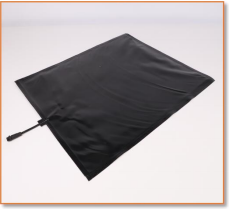
Factory-sealed 220V graphene heating film for damp and wet rooms. 54 cm wide, 230 W/m2, 3750 V hipot, factory-cut in 5 cm steps, 40+ year life.
Flexible Planar Graphene Heating Film
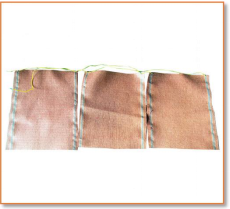
Wide 70 / 140 cm planar graphene heating film roll for electric blankets, pet mats, floor mats and mattresses. 220 V, uniform 230 W/m2, 50+ year life.
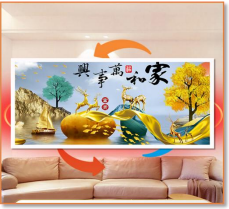
Graphene Infrared Heating Painting
Silent wall-art heater that doubles as decor. 1000 / 1500 / 2000 W far-infrared graphene panel, fan-less, baby-safe, overheat shutoff, 50+ year life.
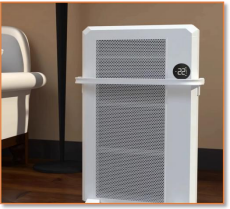
Graphene Far-Infrared Space Heater
Fanless graphene far-infrared space heater in 2300 / 2600 / 3000 W tiers for rooms up to 40 m2, with APP + LCD touch, 5-65 C setpoint and tip-over shutoff.