
Overview
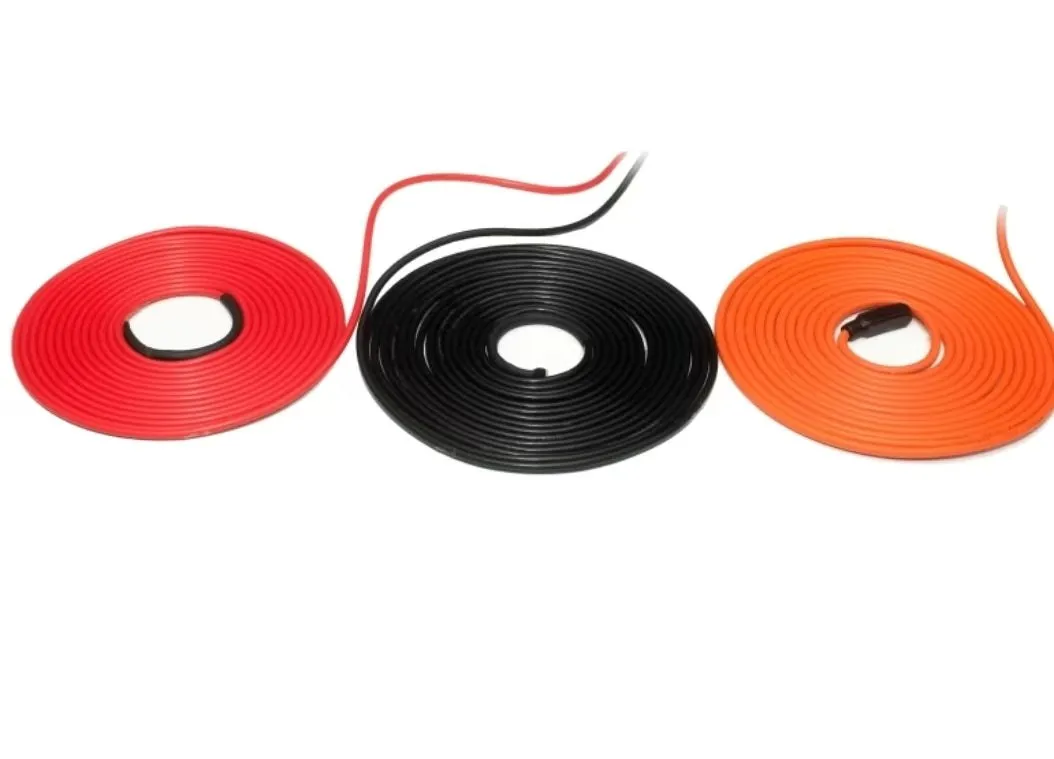
The Self-Regulating Fire Pipe Heating Cable is a pre-assembled, plug-and-play trace heating kit engineered to keep fire sprinkler lines, standpipes and risers fully operational in sub-zero weather. Frozen fire protection piping is more than an inconvenience — an iced-up sprinkler main can disable a life-safety system at exactly the moment it is needed. This self-regulating fire pipe heating cable wraps directly around the pipe, is held in place with fixing tape, and is covered by standard pipe insulation so the heat stays where it belongs.
Every cable arrives factory-terminated with a heavy-duty industrial plug (120 V or 240 V), so installation is a wrap-and-plug job rather than an electrical termination job. It is part of our self-regulating heating cable range, built in-house from the PTC conductive core out to the shield and jacket.
Key Features
- PTC self-regulating core — output drops automatically as the pipe warms, so a sprinkler line can never overheat, even where the cable overlaps itself near a valve or tee.
- Pre-terminated plug-and-play design — each fire pipe heat trace cable ships with an industrial plug fitted at the factory; no field electrical termination required.
- Universal pipe compatibility — safe on copper, steel, stainless, PVC and PEX fire service piping, with no surface-temperature restriction from the cable itself.
- Moisture- and chemical-resistant jacket — suitable for moist riser rooms, unheated basements and exterior standpipes.
- Cut to length on site — parallel PTC construction means the cable can be trimmed to the exact pipe run without changing its output.
- Fit-and-forget duty — once wrapped and insulated, the system needs no seasonal adjustment and virtually no maintenance.
Technical Specifications
| Parameter | Value |
|---|---|
| Heating technology | PTC self-regulating conductive polymer core, parallel construction |
| Output at 10 °C | 16 / 30 / 45 W/m (selectable at order; self-trims as the pipe warms) |
| Rated voltage | 120 V or 240 V AC, factory pre-terminated heavy-duty plug |
| Inner insulation | FEP, rated to 200 °C on high-temperature builds |
| Outer jacket | Modified polyolefin, moisture- and chemical-resistant |
| Earth shield | Aluminium foil + tinned copper braid, full 100% coverage |
| Cut-to-length | Yes — on site, output unchanged by trimming |
| Pipe compatibility | Copper, steel, stainless, PVC, PEX |
| Overlap tolerance | Safe — PTC core self-limits temperature on overlaps |
| Control | Thermostat or contact thermostat; WiFi smart models available |
| Compliance | CE, RoHS; manufactured under ISO 9001 |
Available Options & Variants
Tell us your supply voltage and the required run length, and we assemble the kit to match. Output density is chosen from 16, 30 or 45 W/m depending on pipe diameter, insulation thickness and the design minimum winter temperature. Longer branch lines on the same project usually pair this fire pipe heating cable with our self-regulating water pipe heating cable for the domestic cold-water mains, so the whole fire and plumbing system shares one control logic. Plug type, cold-tail lead length and mounting clips are all specified at order.
Applications
- Fire sprinkler risers and mains — keeps sprinkler piping in unheated lofts, car parks and exterior closets free of ice blockages all winter.
- Standpipes and hose connections — protects the vertical standpipe network so firefighters always have a clear water path.
- Pump rooms and booster sets — trace heating around fire pump pipework in cold plant rooms.
- Exterior hydrant and valve protection — freeze protection on exposed fire service valves and drain points.
- General plumbing freeze protection — for the adjacent potable lines, see the matching water pipe heating cable and the self-regulating heating cable overview.
How Self-Regulating Works
The heating core is a polymer matrix loaded with carbon particles, sandwiched between two parallel bus wires. When the cable is cold, the polymer contracts, the carbon particles stay in contact, and current flows through the core between the bus wires — the cable puts out its rated watts per metre. As the local temperature rises, the polymer expands, the conductive pathways break apart, and resistance climbs automatically, so the cable dials its own heat down. When a section sits against a cold wall while another section passes through a warm ceiling, each metre behaves independently: cold sections work harder, warm sections back off.
This is exactly why PTC trace heating is specified on life-safety pipework: overlapped runs cannot overheat, covered sections cannot cook themselves, and the system cannot enter a thermal runaway state the way a fixed-resistance element can if it is misapplied. For fixed-wattage jobs where the run is fully planned, buyers often compare this product against our double-conductor fixed-resistance heating cable — the PTC version trades a small unit-price premium for on-site trimming and inherent overlap safety.
Installation Guide
- Measure the pipe run, including valves, tees and meter bypasses — PTC cable is trimmed to the measured length with normal snips after de-energising.
- Run the cable along the pipe at the 4 or 8 o’clock position (not at 6 o’clock, where condensation pools), and hold it with aluminium fixing tape every 30 cm.
- Spiral an extra turn around valves and flanges, which lose heat faster than straight pipe; overlapping is safe on PTC cable.
- Install thermal insulation over the whole trace before first power-up — uninsulated PTC cable works, but wastes energy and reacts slower.
- Set the control: a contact thermostat sensing the pipe surface, or a simple ambient thermostat set just above freezing, switches the circuit on.
- Commission: measure insulation resistance, confirm the plug rating matches the circuit, and label the circuit in the consumer unit as fire-system trace heating.
Safety & Certifications
The cable is CE-marked and RoHS-compliant, produced in an ISO 9001-certified facility, and every finished kit receives a resistance and insulation check before packing. The 100%-coverage aluminium-foil-plus-braid shield provides continuous earth continuity, which is the safety requirement for wet and outdoor trace circuits. Because the PTC core is self-limiting, the fire pipe heating cable cannot reach a runaway temperature even if insulation is disturbed during building maintenance — an important property on systems that must remain commissioned year after year. Outdoor and wet circuits should still be protected by the earth-leakage device required by local wiring rules.
Factory & Quality Control
SunAura has manufactured electric heating elements since 2008 from our Qingdao production base, and self-regulating trace heating is built on the same lines that supply heating contractors and OEM brands in more than 50 countries. Every roll of PTC core is screened for resistance per metre, every finished cable goes through a water-immersion or wet-sponge insulation test, and every pre-assembled plug pull-torques to spec. Batch test records are kept on file for the product’s life, so replacement kits match the original installation exactly when a building expands its fire service.
Packaging & Shipping
Cables are coiled, sealed in a moisture bag and packed in export cartons with fixing tape, installation manual and the CE/RoHS declaration inside. Standard builds ship from stock where available; custom lengths, plug types or output densities are produced to schedule after order confirmation. Delivery is by sea, air or express courier under EXW or FOB terms, and trace-heating kits can be consolidated with controllers and junction boxes in one shipment to save on freight.
OEM/ODM & Private Label
We supply fire-system trace heating kits to fire-protection contractors, plumbing wholesalers and equipment brands under OEM and ODM agreements: custom cable lengths, pre-assembled plug options, printed cartons, private-label installation manuals and full branding on the kit. For alarm-and-suppression manufacturers we can also supply the loose PTC element with field-termination ends for integration into engineered packages.
Wholesale Pricing & How to Buy
Pricing is factory-direct, with volume tiers for contractors, distributors and OEM programmes. MOQ is flexible — sample lengths are available for evaluation before a full building order. To get a quotation, send us the pipe diameter, insulation thickness, minimum design temperature, total footage and supply voltage; our engineering team sizes the output density and returns a same-day quote. Contact our sales team with the project parameters, or browse the full catalogue from the products hub. A matched smart thermostat can be bundled into the same kit.
Frequently Asked Questions
Can this fire pipe heating cable be cut to length on site?
Yes. Because it is a parallel PTC self-regulating element, trimming the cable to the measured pipe run does not change its wattage per metre. Fixed-resistance cable cannot be cut on site, which is the main reason fire-system contractors prefer the self-regulating version.
Is the cable safe to wrap around plastic sprinkler pipe?
Yes. The PTC core self-limits its surface temperature, so PVC and PEX fire service piping is not exposed to the runaway temperatures a fixed-wattage element could produce on an overlapped or poorly insulated section.
Does it come with a plug, or do I need an electrician to terminate it?
Every kit is pre-terminated at the factory with a heavy-duty 120 V or 240 V plug, so a wrap-tape-insulate-and-plug install is possible on straight runs. A qualified electrician should still confirm circuit protection and earth-leakage protection for the wet or outdoor parts of the installation.
Which wattage do I choose for a sprinkler riser?
16 W/m suits insulated small-bore pipe in mild climates; 30 W/m is the common choice for typical commercial risers; 45 W/m is for uninsulated or thin-insulation pipe exposed to severe cold. Send us the pipe diameter, insulation thickness and minimum winter temperature and we will recommend the density.
Do you supply kits for OEM fire-protection brands?
Yes — custom lengths, plug options, private-label manuals and cartons are all available under OEM/ODM programmes. Sample kits can be ordered first for evaluation.
Related Products You May Need
Pair this product with compatible SunAura components — one factory, one warranty.
Self-Regulating Sewage Pipe Heating Cable
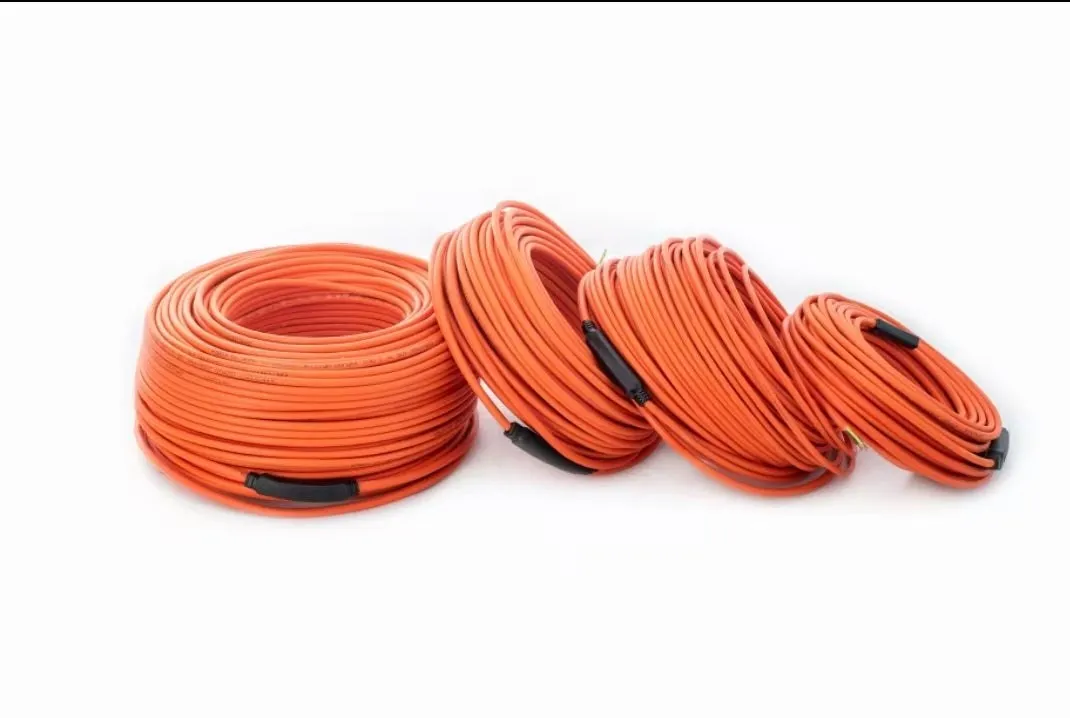
Self-regulating trace cable for outdoor and unheated sewage and drainage lines — keeps drains flowing through winter with a heavy-duty plug and point-by-point thermal response.
Self-Regulating Water Pipe Heating Cable
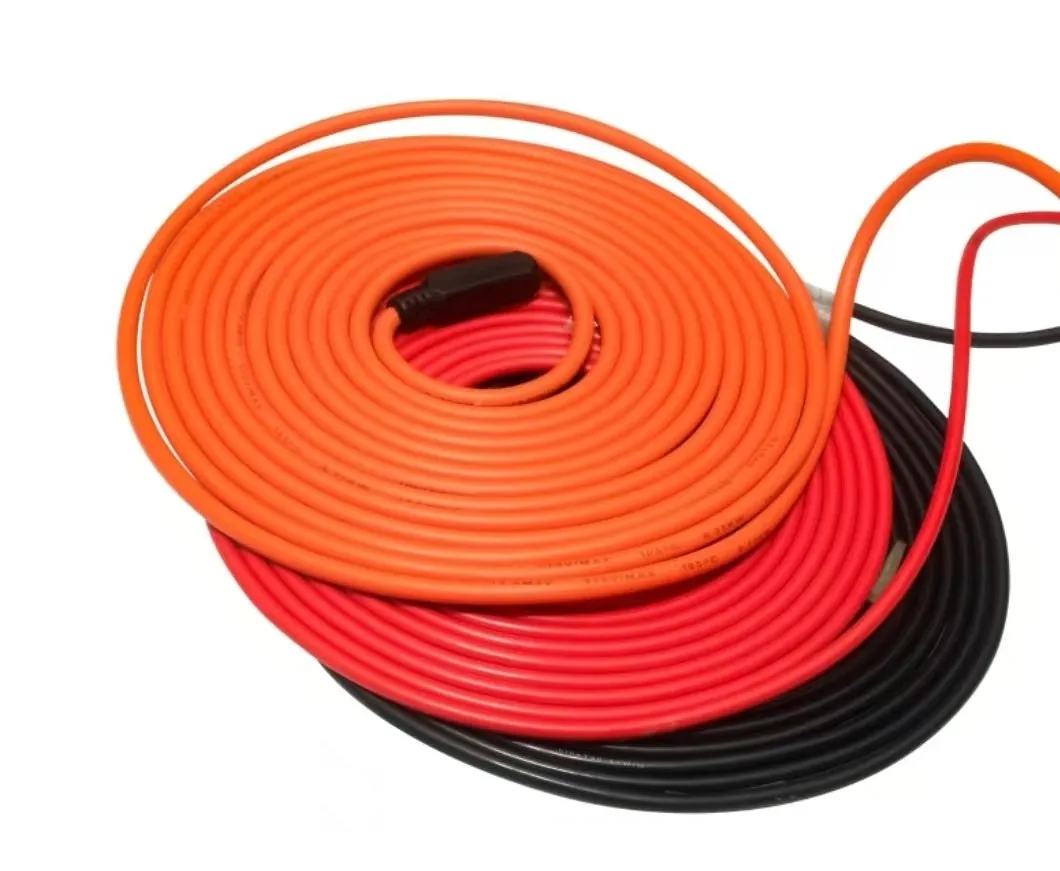
Plug-and-play PTC heating cable for potable water pipes — raises output only where the pipe gets colder, preventing burst pipes in cold climates without wasting energy.