
Fermentation is a temperature problem before it is anything else
Ask a winemaker or a craft brewer what controls the quality of a batch and the answer is rarely the recipe — it is temperature. Yeast works inside a surprisingly narrow comfort band. Too cold and fermentation stalls, leaving unfermented sugar and a slow, sluggish finish; too warm and the yeast produces off-flavours, fusel alcohols and harsh esters that no amount of ageing will remove. In a cellar that swings with the seasons, holding a barrel or tank at the right temperature is the difference between a clean batch and a write-off. A heating blanket built for barrels offers a gentler and more controllable answer than the room heaters and heat lamps most small producers improvise with.
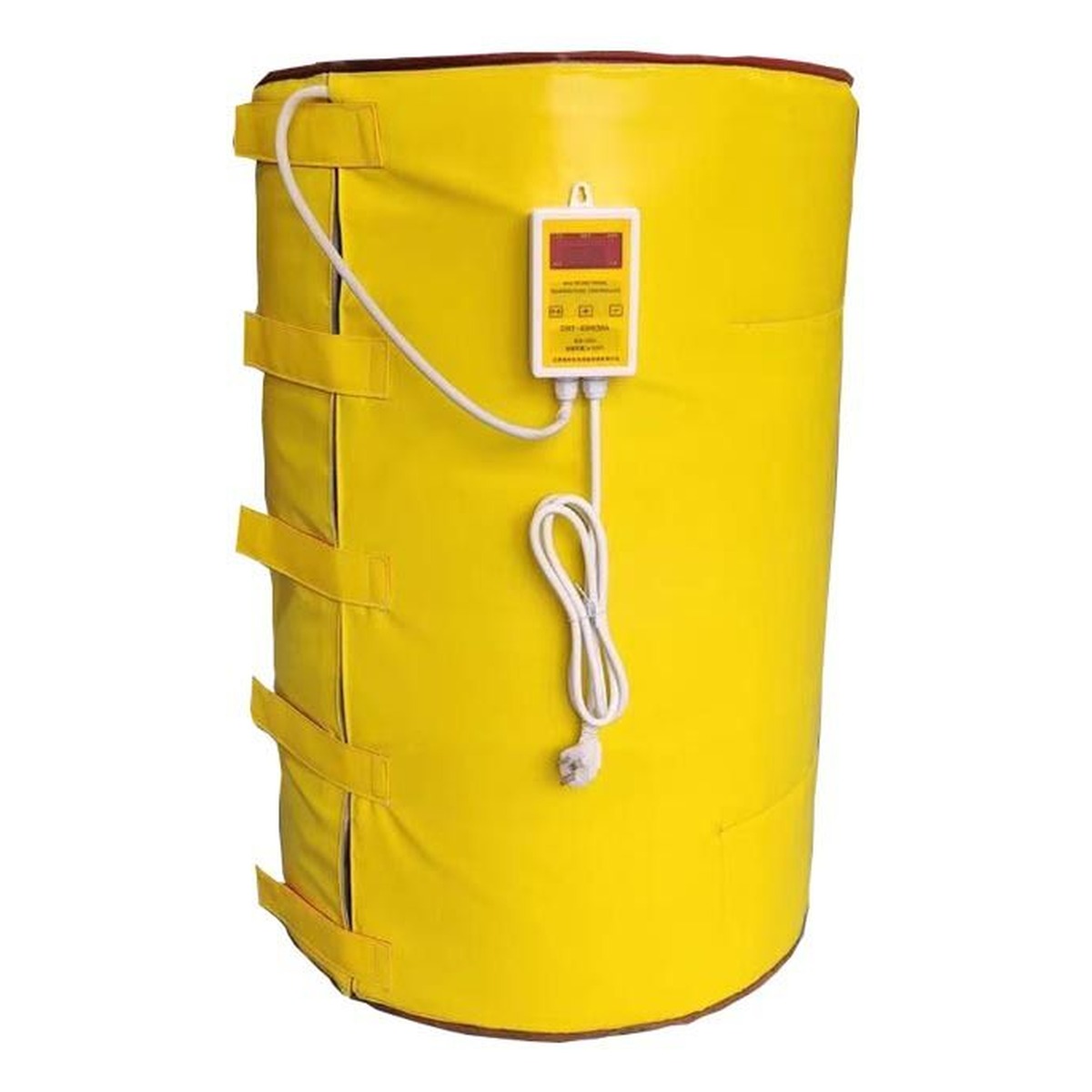
Unlike a space heater that warms the air and hopes some of it reaches the liquid, a barrel heating jacket wraps the container and applies even, conductive heat across the wall. The thermostat reads the barrel surface, so the heat is delivered precisely where the fermenting liquid actually is, and the element is distributed in a uniform pattern with an aluminium reflective layer to avoid the hot band that a single heat pad creates. For wine, beer, cider and food-grade liquids, the key word is even: the wall stays within a narrow band all the way around, rather than one side being warm while the other remains cold.
Anna Kowalski, Food and Beverage Applications Specialist, SunAura Thermal
Why yeast is so fussy about temperature
Fermentation is a living process, and yeast is a living organism with a preferred temperature range. Ale yeasts generally work comfortably at the warmer end of the scale, lager yeasts at the cooler end, and wine yeasts somewhere in between, but every strain has a window outside which it either slows down or starts producing unwanted compounds. At the low end, the yeast goes dormant and a stuck fermentation can leave residual sugar that invites spoilage. At the high end, stressed yeast generates fusel alcohols and solvent-like notes, and the risk of bacterial contamination rises. The target is not a single fixed number but a stable band held consistently through the most active phase of fermentation.
Stability is precisely what makes surface heating valuable. A barrel in a stone cellar follows the room temperature, which can fall several degrees overnight; a jacket with a calibrated thermostat compensates for those swings rather than reacting to them after the fact. Because the nickel-chromium element heats the whole wall and the insulation keeps the warmth against the barrel, the liquid experiences a steady temperature rather than a series of peaks and troughs. For producers who have previously relied on the weather, this removes one of the largest uncontrolled variables in the cellar.
Food-grade requirements are not an optional extra
Anything that touches a food or beverage process demands a different specification from an industrial oil-drum heater, and this distinction has to be made at the point of manufacture rather than retrofitted. A food-grade barrel jacket uses materials and construction suited to the hygienic environment, with a smooth outer that can be wiped down, sealed connections and a controller accurate enough to hold the narrow fermentation band. The jacket sits on the outside of the barrel, so it never contacts the liquid directly, but the build quality, certification and temperature accuracy still matter because the whole batch depends on them.
Buyers should specify the food-grade requirement early and confirm the available certification for their market. Standard industrial jackets carry CE and RoHS, with FCC or ETL on selected export models, and the controller should be calibrated so the wall temperature is trustworthy. A jacket that overshoots by even a few degrees can push a delicate fermentation out of its ideal range, so a readable digital set point and a surface-mounted sensor are worth choosing over a basic dial for beverage work.
How barrel heating compares with the alternatives
Small producers have traditionally managed cold cellars with a mix of room heaters, heat lamps, heating pads and sometimes nothing at all. Each has a drawback. A room heater in a damp, draughty cellar wastes energy heating a large volume of air and offers little control over the temperature of any single barrel. A heat lamp concentrates radiant heat on one small area and can create a hotspot while leaving the far side cold. A single heating pad does the same on a smaller scale. A full-wrap jacket solves the distribution problem by heating the entire circumference, so there is no warm side and cold side and no need to rotate barrels through the season.
The efficiency argument is equally strong. Rather than heating the cellar to keep one batch warm, the jacket puts roughly 1.3–2 kW directly onto the barrel and cycles off once the set point is reached, with around 15 mm of insulation holding the heat against the wall. Multiple barrels can each run their own jacket and set point, which means a winemaker can hold a red and a white, or an ale and a lager, at different temperatures in the same cellar — something a single room thermostat can never do.
Sizing a jacket for a wine or beer barrel
The sizing process starts from the vessel and the strain rather than the available heater. Producers should identify the barrel or tank size and material, the yeast strain and its target temperature band, the coldest cellar temperature expected, and the supply voltage. A standard 200 L (55 gal) drum uses a full-wrap jacket around 1,900×880 mm, while smaller barrels and larger tanks move to custom dimensions; the same heating technology scales from small vessels to IBC containers. The controller range on a standard jacket runs from 0 to 145 °F, which comfortably covers every fermentation band, and the surface-mounted sensor keeps the wall — rather than the air — at the set point.
Because beverage jackets are built to order, the food-grade specification, the required certification and the controller type should all be confirmed when the order is placed. Lead times and custom dimensions vary, and a jacket cannot be converted from industrial to food-grade after manufacture, so this is a decision to make at the start of the project rather than after a standard jacket arrives.
Practical applications across the beverage range
- Wine fermentation and ageing held at a stable temperature through cold nights in stone and concrete cellars.
- Craft beer and lager kept within the strain-specific band, including the cooler, longer lagering phase.
- Cider, mead and fruit ferments protected from stuck fermentation when the cellar temperature drops.
- Juice concentrates and syrups kept fluid and pourable without hotspots or contamination.
- Multiple barrels on independent set points in a single cellar, so different products run at different temperatures.
Frequently asked questions
How even is the temperature around the barrel?
The element is laid in a uniform pattern with an aluminium reflective layer, so the wall stays within a narrow band without a hot strip. The thermostat reads the barrel surface rather than the air, and a full-wrap jacket heats the entire circumference, so there is no need to rotate the barrel.
Is the jacket safe in a damp cellar?
Production jackets carry an IP44 splash-resistant rating and are designed for damp locations when supplied through an RCD, with an overheat cut-out and protective earth. Keep the controller and plug above any standing water; the jacket itself is not submersible.
Can different barrels run at different temperatures?
Yes. Each jacket has its own controller and set point, so several barrels in the same cellar can be held at different temperatures, which is the main advantage over a single room heater or thermostat.
Does the jacket come into contact with the wine or beer?
No. It wraps the outside of the barrel and never touches the liquid. The food-grade requirement still matters because it governs the materials, construction and temperature accuracy of the jacket used in the beverage process.
Related reading
For the full specifications, dimensions and reference price guide, see the drum heating blanket product page. The range of beverage and industrial uses is summarised in the applications guide, and the broader family sits under industrial heating blankets. For fixed cellar pipework, our heat trace cable covers the same temperature-control principle.
Next step
If a cold cellar is making fermentation hard to control, tell us the barrel size, the yeast strain and its target band, the lowest cellar temperature and your supply voltage. Our team will recommend a food-grade jacket, controller and set point within one working day. Request a beverage layout or discuss custom dimensions for a cellar of multiple barrels.