
The Starting Point: The Material, Not the Container
Intermediate bulk containers make handling and storing liquids efficient, but many of the materials carried in them — oils, syrups, waxes, fats, adhesives, and chemical feedstocks — become difficult or impossible to pump as temperature falls. A heating blanket wrapped around the tote restores and maintains the temperature that keeps the material workable.
The first specification question is not the blanket dimensions but the material’s behaviour. A buyer needs to know the temperature at which the product stores comfortably, the minimum temperature at which it can be dispensed, and how its viscosity changes across that range. A material that merely thickens needs a different approach from one that solidifies or separates. Some products require gentle, even warming to avoid local hot spots or degradation; others need a faster recovery before a shift starts. The ambient conditions matter equally: a tote in a conditioned warehouse and one on an external loading pad see different heat losses, and the blanket has to offset the loss through the container walls in the coldest expected conditions.
Sizing the Blanket to the IBC
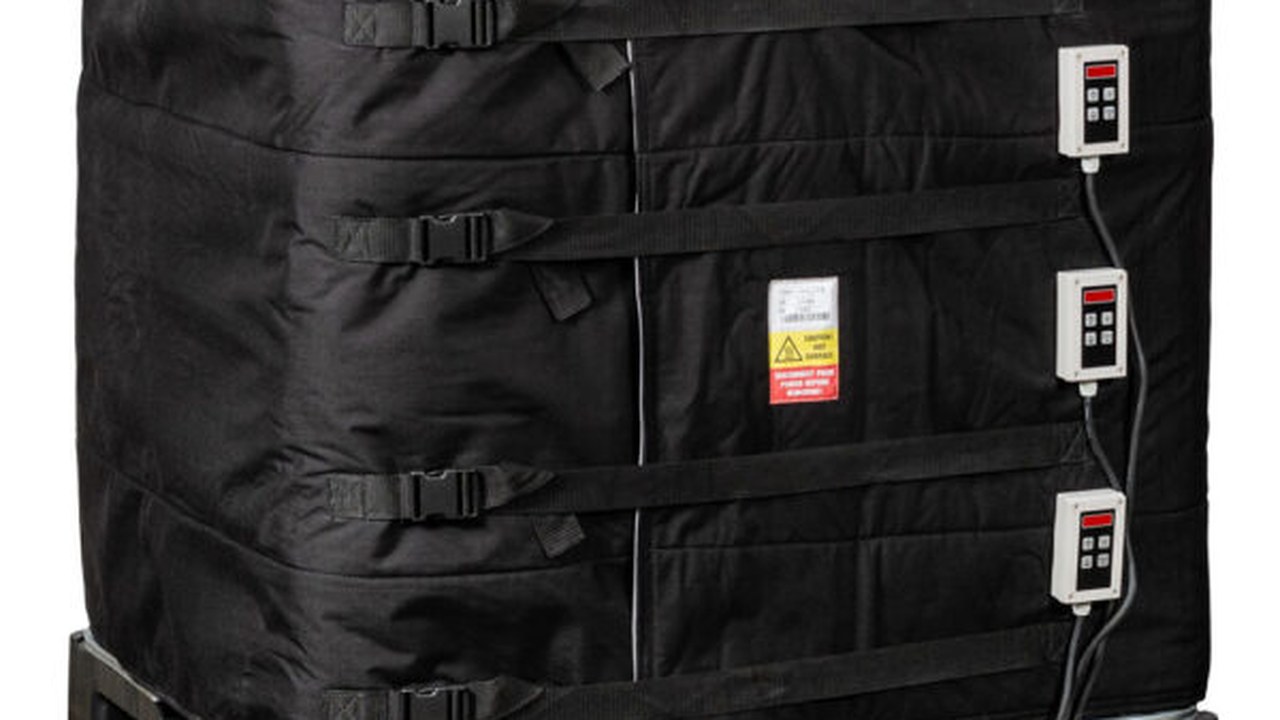
IBC heating blankets are built around the standard tote geometry, but coverage is a real design variable. Full-wrap blankets cover the bulk of the container’s side wall and deliver the most even heating, suited to materials that need a consistent temperature across the whole volume. Partial or base configurations target specific zones and are used where access, frame geometry, or budget limits full coverage. Adjustable or multi-size constructions accommodate slight variations in tote design and allow reuse across a fleet.
The blanket must fit within the metal cage that surrounds most IBCs, secure without interfering with the valve and dispensing area, and tolerate repeated fitting and removal. Jacket material, edge finishing, and fastenings are selected for durability rather than consumer-grade comfort. Because the metal cage and the pallet base create fixed clearances, dimensions are checked against the actual tote model rather than assumed from nominal litre capacity.

Output and Heat-Up: Matching Wattage to the Task
Blanket wattage determines two things: the temperature the system can hold against ambient losses and the time it takes to raise a cold tote to the target. A blanket that is under-specified will hold a temperature in mild conditions but fail to recover a cold or solidified material in winter. An over-specified blanket without proper control risks cycling hard and applying uneven heat. Where fast turnaround is required, the common approach is to pre-warm the tote before dispensing rather than applying maximum heat at the point of use, which gives even, controlled warming and reduces the risk of stressing the material.
Temperature Control: The Part That Protects the Product
Control is where industrial blankets differ decisively from simple heaters. Adjustable thermostats allow the target temperature to be set to the material’s requirements rather than a single fixed value; high-limit protection reduces the risk of overheating if a blanket is energised on an empty or insulated container; and the sensor reading should represent the material or heated surface accurately, not the surrounding air. Indicators show when the system is energising, which helps operators confirm the blanket is actually working. For materials sensitive to temperature, tighter control and even distribution are more important than raw wattage.
Insulation and Operating Efficiency
Much like pipe heat tracing, a heating blanket works best when heat loss is managed. An insulated blanket or an added insulating layer reduces the output needed to hold temperature, shortens heat-up time, and lowers running cost — particularly for totes stored in cold or draughty locations. Without insulation, much of the blanket’s output dissipates into the surrounding air. For fleets that heat totes continuously through winter, the energy difference is substantial and should be included in the procurement decision rather than treated as optional.
How It Relates to the Rest of the Range
The same engineering principles apply across the container-heating family. For single drums, the drum heating blanket keeps high-viscosity oil pumpable through winter; for equipment that cannot be drained, pump and valve heating blankets protect specific components; and where the priority is preventing freezing rather than managing viscosity, the dedicated IBC and container freeze protection guidance applies. Buyers are encouraged to specify the container model, the material and its target temperature, the storage environment, and the required heat-up time, so the correct blanket and control arrangement are selected rather than a generic unit.
The Practical Takeaway
Specifying an IBC heating blanket correctly begins with the material’s viscosity and dispensing temperature, then matches blanket coverage, wattage, and control to the container and the ambient conditions, with insulation to keep running cost in check. Selected that way, the blanket turns a tote of difficult material into a reliably pumpable resource — a process improvement measured in fewer delays and less waste.