
When buyers say heating film, they usually mean one of three different constructions. A bare printed film, a fully encapsulated film, and an aluminium film mat share the same core idea — a planar resistive element that radiates heat — but they are built for different jobs, carry different safety margins, and sit in different budget bands. Treating them as the same product is the fastest way to spec a dry-room element into a wet room or to overpay for a sealed jacket the project never needs.
This guide compares the three constructions layer by layer: how each is made, where its waterproofing and voltage limits sit, what it costs, and the exact conditions that call for each one. The figures are SunAura factory data and the kind of construction rules heating manufacturers publish. We make all three on the same Qingdao lines, so there is no incentive to push one over another.
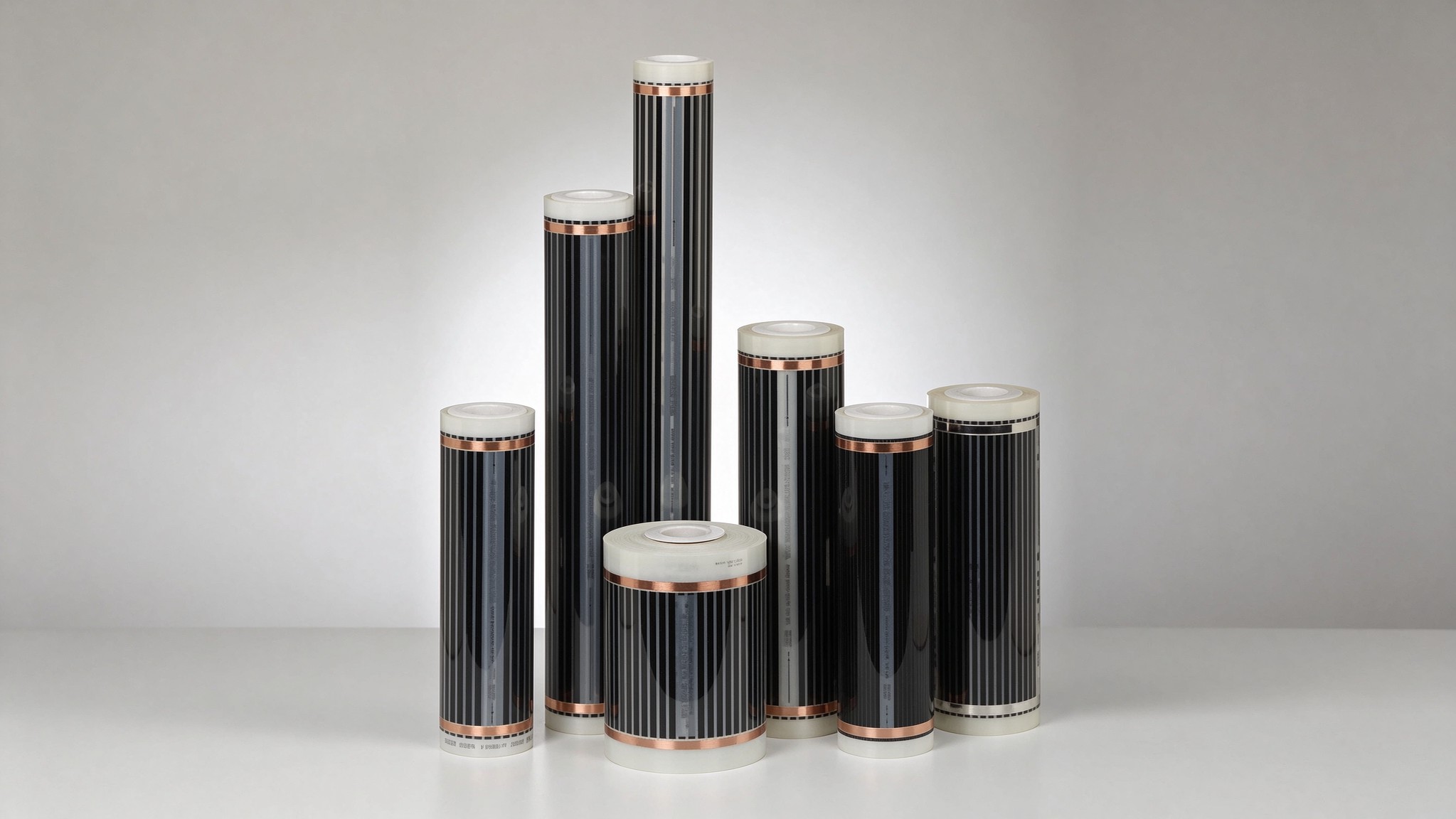
Start with the shared core
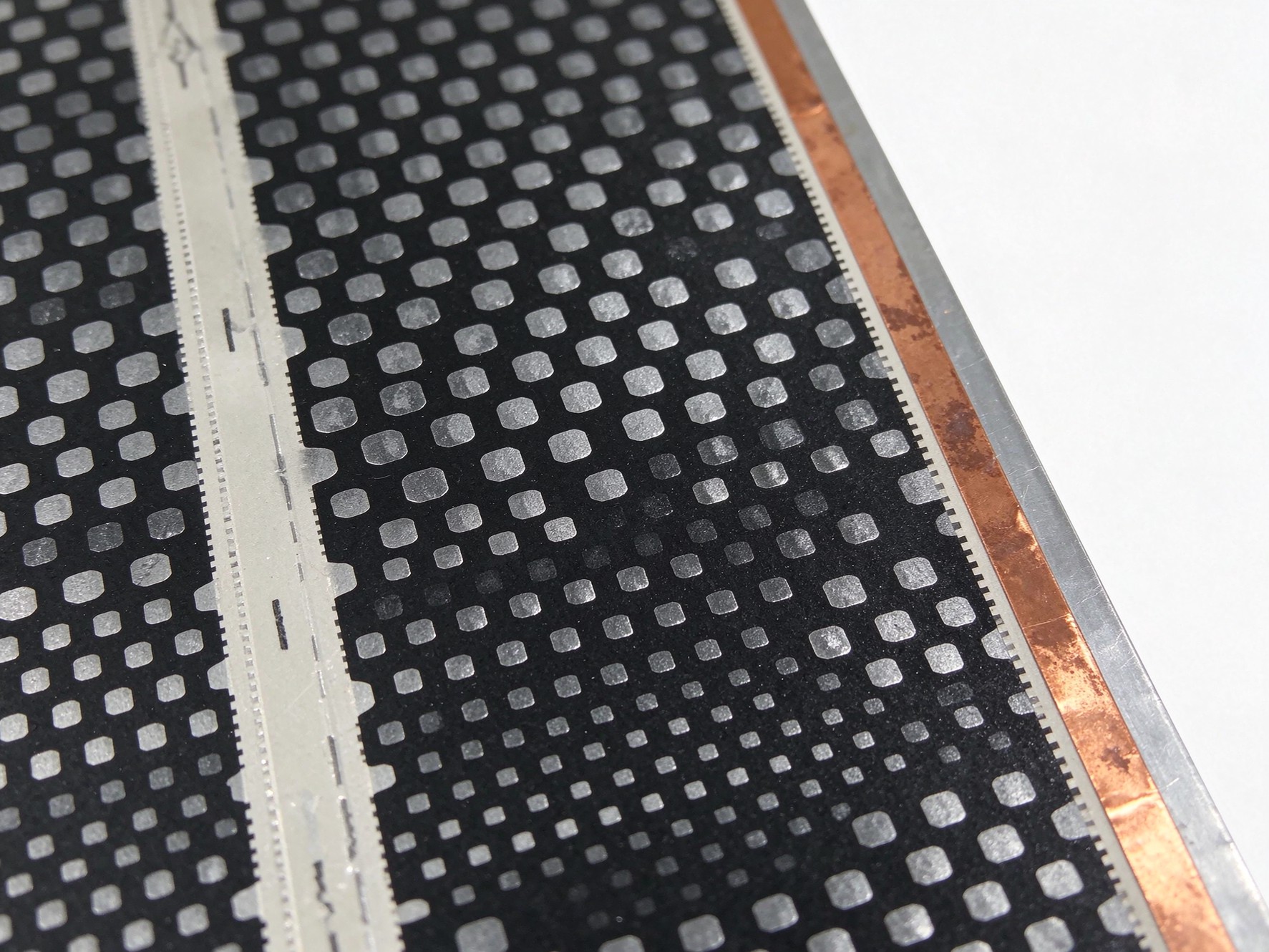
All three begin from the same element. A graphene-carbon composite is printed onto a PET carrier film, with copper busbars running along the edges to collect current. When voltage is applied, the printed layer resists and heats across the whole surface, and the film delivers far-infrared radiant heat with electrical-to-thermal conversion above 99%. The busbars, the printed coating and the PET carrier are common to every build.
What changes is what happens around that core. A bare film leaves the printed layer exposed between the busbars. An encapsulated film adds a sealed polymer jacket over the whole element. An aluminium film mat adds a conductive aluminium spread layer and an ultra-thin profile. Each addition solves a specific problem and adds a specific cost, which is why the three should be chosen against the environment rather than ranked on a single quality scale.
How a heating film is built: the layers
Understanding the layer order makes the comparison concrete. From the working face inward, a typical printed film contains the PET carrier, the printed graphene-carbon resistive layer, and the copper busbars that feed it. The variants differ in what wraps or backs this stack.
Bare film: the printed layer and PET carrier are the finished product. The edges are terminated and the leads are connected, but there is no additional jacket. It is the lightest and most direct build, intended for dry, enclosed floor and wall builds where the element sits protected behind a floating floor or a board.
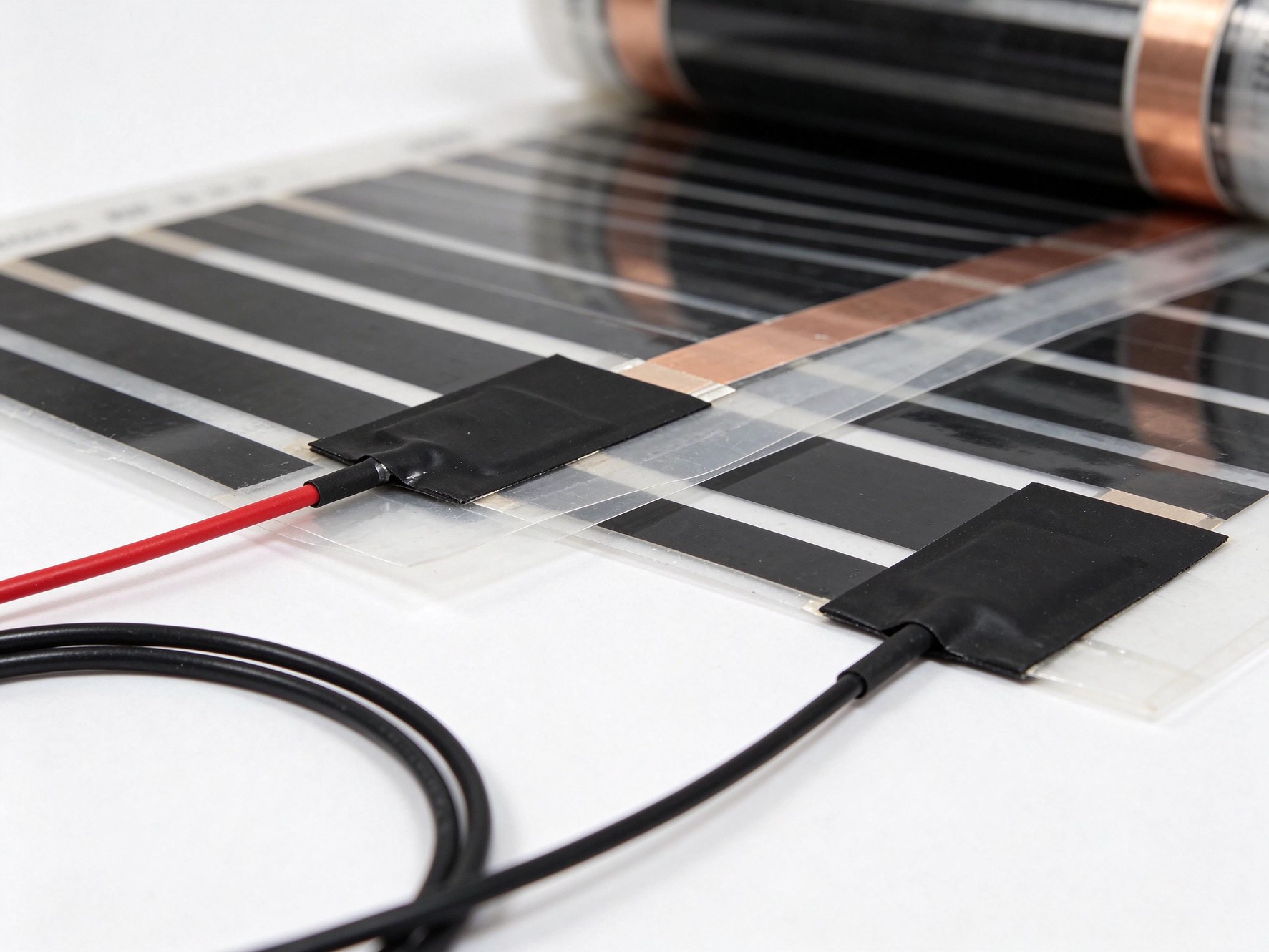
Encapsulated film: the same printed element is sealed inside a polymer jacket that wraps the element and the terminations. The factory cuts it in fixed steps and seals every edge, so moisture cannot reach the busbar or track along the film. This is the build for damp, humid and wash-down spaces.
Aluminium film mat: a half-millimetre build that pairs a film element with an aluminium spread layer. The aluminium conducts heat sideways, evens the surface and removes local hot spots, and the whole mat rolls flat at a very low profile for renovation floors.
Bare film: the direct, economic build
The bare or standard graphene film is the default for a reason. It is the simplest path from the resistive element to the floor, with no extra layer to add cost or build height, and it is the most flexible to specify because it comes in twelve standard widths from 10 to 100 cm and is cut to length for the project.
Where it works. Dry living rooms and bedrooms under a floating laminate or engineered-wood floor, wall and ceiling builds behind boards, and any enclosed space where the element is protected from water. Output is tuned from about 100 W/m² upward, and the film is produced at both 110 V and 220 to 230 V to match the market.
What it cannot do. It is not the element for a wet room, a wash-down area or a high-humidity space, because there is no jacket to keep moisture off the busbar. It also relies on the surrounding build for protection, so it has to be installed behind the floor or wall rather than left exposed. Spec the bare film where the environment is dry and the floor build already encloses the element. That covers most residential rooms, and it is the lowest-cost route per square metre.
Encapsulated film: the sealed jacket
The encapsulated film exists to solve moisture. The printed element is fully jacketed, factory cut and sealed, and every batch is hipot tested to confirm the dielectric barrier is intact. The model built for wet spaces runs at 220 V with a nominal 230 plus or minus 10% W/m², a standard 54 cm width, and a rated service life above 40 years.
Why the jacket matters. In a bathroom, spa, greenhouse or wash-down area, condensation and splash are constant. An open film can let moisture track the busbar over time. The sealed polymer jacket puts the circuit behind a barrier that is hipot tested to 3750 V against a 220 V working voltage, a wide margin. The ends and the lead are sealed as part of the factory process, so there is no exposed conductor once the unit is terminated.
The trade-off. Encapsulated film is not field cuttable. Cutting it on site breaks both the jacket and the dielectric barrier, so it is cut in 5 cm steps at the factory against the customer’s drawing and shipped ready to install, with a lead time of about one week from a confirmed layout. It also carries a higher cost per square metre than bare film. The extra spend buys waterproofing and a longer rated life, both of which are wasted in a dry room. Spec it where moisture is genuinely present, not as a blanket upgrade.
Aluminium film: the spread layer
The aluminium film mat answers a different problem: build height and surface evenness. At 0.5 mm total thickness it is one of the slimmest electric layers available, and the aluminium spread layer conducts heat sideways to give a uniform floor without hot strips. It runs at 220 to 240 V, in custom widths from 100 to 1000 mm, with selectable density from 90 to 220 W/m² and a floor-sensor target of 18 to 45 °C.
Where it works. Retrofit over an existing floor where the height cannot change, thin LVT and vinyl builds, and low-tog renovation floors. The aluminium layer evens the heat so a thin vinyl does not telegraph local differences, and the half-millimetre profile means doors rarely need trimming.
What to watch. In a wet room the aluminium mat still needs a waterproof membrane and an RCD; it is not itself a sealed wet-room element in the way the encapsulated film is. For a tiled bathroom, an IPX7 mat or the sealed film is the safer spec. The aluminium mat is the right tool when the constraint is height and evenness on a dry floor, not moisture.
Side-by-side construction comparison
This is the table to use when the three are on the same quotation. It covers the build, the rated output, the safety margin, where each is specified and the main limitation.
| Dimension | Bare film | Encapsulated film | Aluminium film mat |
|---|---|---|---|
| Construction | Printed graphene-carbon on PET, no jacket | Printed element sealed in polymer jacket | Film element with aluminium spread layer |
| Model reference | Standard film | XGF220V/A | 0.5 mm mat |
| Voltage | 110 V / 220–230 V | 220 V | 220–240 V |
| Power density | ~100 W/m² upward, tuned | 230 ±10% W/m² | 90–220 W/m² selectable |
| Widths | 10–100 cm, 12 standard | 54 cm, 5 cm factory steps | 100–1000 mm custom |
| Field cuttable | Per marked cut lines | No, factory cut and sealed | Trim between segments |
| Dielectric test | Standard production tests | 3750 V hipot | Standard production tests |
| Rated service life | 15–25 years | 40+ years | 15–25 years |
| Warranty | 15 years | Per sealed-build terms | 15 years |
| Best environment | Dry rooms, floating floors | Damp, wet, wash-down | Low-height retrofit, vinyl |
| Main limitation | No moisture jacket | Higher cost, not field cut | Needs membrane in wet rooms |
Waterproofing and voltage compared
Two specifications cause the most confusion, so they deserve a direct treatment.
Waterproofing is not a single mark. The bare film is rated for dry enclosed builds and depends on the floor or wall for protection. The encapsulated film carries an IP67 fully waterproof rating through its sealed jacket and is the element for wet spaces. The aluminium mat is built for dry renovation floors and needs a separate waterproof membrane if it is used in a splash zone. Do not read the presence of a film element as proof that the assembly is waterproof; the jacket and the membrane are the parts that decide.
Voltage is fixed at manufacture. All three are produced to a specific voltage build, and the paste laydown, busbar cross-section and thermostat rating are sized for that one supply. A 110 V element on a 220 V circuit over-dissipates and fails, while a 220 V element on 110 V delivers roughly a quarter of its rated output. The standard film is made at both 110 V and 220 to 230 V, while the sealed and aluminium builds quoted here run at 220 to 240 V. State the market on the inquiry and the correct build is produced rather than converted on site.
Cost and budget bands
Exact pricing depends on width, total length, density and order volume and is confirmed in the written quotation, but the relative bands are stable and useful for early budgeting.
Bare film sits at the entry band. It is the simplest build and the lowest cost per square metre, with volume discounts for distributors and project orders. It is the economic choice for a multi-room dry residential project.
Aluminium mat sits in the middle. The spread layer and ultra-thin profile add some cost, but it removes the need to raise the floor or trim doors, which saves labour on renovation work. Factor the installation saving in alongside the material price.
Encapsulated film sits at the upper band. The sealed jacket, the per-unit hipot test and the factory cutting against a drawing add cost, and the lead time is around a week. That premium is justified in a wet or wash-down environment where the alternative is a shorter-lived open element, and it is unjustified in a dry room where the bare film does the same job.
Buying more film than the environment needs is a real and common waste. The disciplined approach is to spec each construction only where its added feature is actually used.
Scenario selection: which construction where
A quick decision path for the most common builds.
Dry new-build living room or bedroom under a floating floor: the bare standard film. Lowest cost, full width choice, protected by the floor. Add a floor sensor under wood or vinyl.
Bathroom, wet room or spa under tile: the encapsulated film, sealed and hipot tested, with an RCD and a waterproof membrane. The 230 W/m² output covers the high heat loss of a cold wet room.
Greenhouse bench, livestock zone or wash-down floor: the encapsulated film again, because constant humidity and wash-down age an open element quickly. The corrosion-resistant jacket tolerates the environment.
Retrofit with a locked floor height, LVT or vinyl: the 0.5 mm aluminium mat. It adds almost no build height and the spread layer keeps the thin floor even.
Wall or ceiling build behind boards: the bare film in wall or low-density format, which leaves the floor plan free and is fully enclosed by the board.
Soft-goods such as blankets and mattresses: a separate flexible planar roll on a woven substrate, not one of these three building elements. Treat it as a different product family.
Pre-inquiry checklist
- Environment: dry, damp, wet or wash-down, and whether splash is present.
- Floor build and the available height, to flag a locked-height retrofit.
- Market and voltage: 110 to 120 V or 220 to 240 V.
- Heated area and room dimensions, separate from total area.
- Required density or the heat-loss inputs so it can be set.
- For sealed film: the layout drawing, since it is factory cut in 5 cm steps and not field cut.
- Waterproofing plan: whether a membrane and an RCD are being fitted.
- Quantity and whether the order is a distributor volume, which sets the discount tier.
Common selection mistakes
Specifying bare film in a wet room. The missing jacket is the entire issue. Moisture can track the busbar over years even if the system works on day one. Use the sealed build.
Over-specifying encapsulated film in a dry room. The jacket and hipot margin add cost and a factory lead time that buy nothing when the floor is dry. The bare film is the correct economic choice.
Treating the aluminium mat as waterproof. It is a spread-layer build for dry floors. In a wet room it still needs a membrane and an RCD, or the sealed film should be used.
Cutting encapsulated film on site. A field cut breaks the sealed jacket and the 3750 V dielectric barrier. Confirm the drawing and have it factory cut.
Switching voltage after delivery. The build is fixed at manufacture. Confirm the market before production rather than trying to adapt a finished roll.
Why the service life differs across the three builds
The rated lives printed in the table are not marketing numbers. They follow from how hard each element runs and how well it is protected. A film ages through two slow mechanisms, and the constructions differ on both.
Thermal ageing. The resistive coating and the carrier break down faster when they run close to their material temperature limit. In a normal build the element is cycled by a thermostat and spends most of its time below the limit, which is why the standard film reaches 15 to 25 years. The sealed wet-room element runs at a higher nominal density, but it is engineered to operate below its jacket’s temperature limit and is rated beyond 40 years because the sealed build keeps the coating stable and the thermostat prevents it running flat out. The deciding factor is not the raw wattage but the margin between the operating temperature and the material limit.
Environmental ageing. This is where the jacket does its long-term work. An open film in a dry, enclosed space is protected by the floor and ages slowly, because nothing reaches the coating. The same open element in a humid room sees condensation, oxygen and occasional chemicals, which attack the busbar and the printed layer over years. The sealed jacket removes that exposure entirely, which is the second reason the encapsulated build carries the longer rating. The aluminium mat sits between the two: the spread layer protects the surface on a dry floor, but it is not a moisture barrier, so it follows the standard 15 to 25 year band rather than the sealed-film figure.
The practical point for a buyer is simple. The longer rated life of the sealed film is tied to the wet environment it is built for, and it should not be read as a reason to fit that film everywhere. In a dry room the bare element already reaches the same comfort life it will ever need, and paying for protection that never gets used does not extend the real service life by a single year. Match the protection to the exposure and the rated life looks after itself.
Data and evidence
The construction and output figures come from the factory’s own product records: the printed graphene-carbon element on PET, the 110 V and 220 to 230 V builds, conversion above 99%, the IP67 sealed option with a 3750 V hipot test, the 0.5 mm aluminium mat with 90 to 220 W/m², and the warranty and service-life ratings of 15 years and 15 to 25 years for the standard builds, rising to 40 plus years for the sealed element under normal thermostat cycling. The way waterproofing and dielectric protection are specified follows standard heating-manufacturer practice and the published safety approach for electric radiant elements.
The factory has produced heating elements since 2008 under ISO 9001 quality management, with CE and RoHS documents issued with shipments and exports to more than 50 countries. We quote only the marks the product carries and recommend confirming the assembly’s waterproofing plan against the local electrical code.
Frequently asked questions
Which is the best all-round film?
There is no single best, only the build that matches the environment. The bare film is the default for dry rooms, the sealed film for wet spaces, and the aluminium mat for low-height retrofits. Specifying against the environment is the whole method.
Is the higher cost of encapsulated film worth it?
Only where moisture is present. There the sealed jacket and hipot margin protect the busbar and the longer rated life pays back. In a dry room it is an unused premium.
Can I cut the sealed film to adjust the length on site?
No. It is factory cut in 5 cm steps and sealed. Send the layout and the correct length is produced; cutting it on site breaks the waterproof and dielectric barrier.
What is the thinnest option for an existing floor?
The 0.5 mm aluminium mat, with the spread layer that keeps a thin vinyl floor even and no need to raise the floor or alter doors.
Do all three need an RCD?
An RCD is required in wet-room and bathroom builds as part of the local code, and is good practice generally. The sealed film is specified with the RCD and floor sensor in wet spaces.
Final recommendation
Match the construction to the environment and stop there. Use the bare film for the majority of dry, enclosed residential builds and take the lowest cost per square metre. Move to the encapsulated film wherever moisture, humidity or wash-down is real, accept the factory cutting and the upper price band, and rely on the sealed jacket and 3750 V hipot margin. Choose the aluminium mat when the binding constraint is floor height and surface evenness on a thin renovation floor, and add a membrane if any water is present. Spec each added layer only where it does a job, and the three constructions stop competing and start covering the exact set of builds they were made for.