
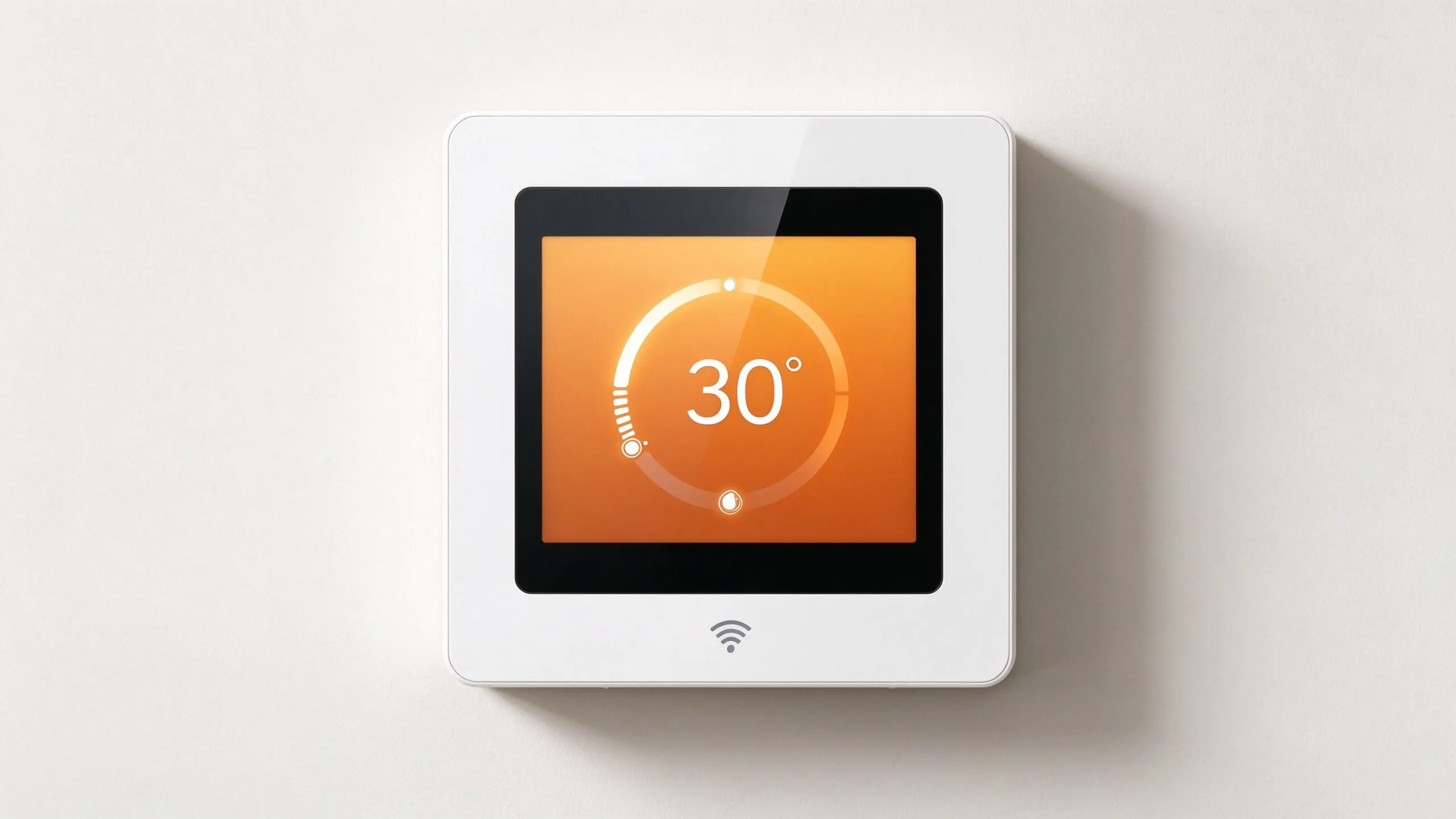
The integration of WiFi technology into heating thermostats has revolutionized how we control and optimize our home heating systems. No longer limited to simple on/off controls or basic programmable schedules, modern WiFi thermostats offer a level of intelligence, connectivity, and energy management that was unimaginable just a decade ago. This article explores the technology behind WiFi thermostats and how they can significantly reduce energy consumption while improving comfort.
Article by Ethan Sun, Founder & CEO, SunAura Thermal — based on 17 years of manufacturing heating elements and the smart thermostats that control them.
The Evolution of Heating Controls
Heating controls have come a long way from the simple bimetallic strip thermostats of the mid-20th century. The first major advancement came with programmable thermostats in the 1980s, which allowed users to set different temperatures for different times of day. The 2000s saw the introduction of digital thermostats with precise temperature control and backlit displays. But the real transformation began around 2011 with the launch of the first smart thermostat, which introduced WiFi connectivity, learning algorithms, and smartphone control.
Today, WiFi thermostats represent the state of the art in heating control technology. These devices combine precise temperature sensing, internet connectivity, machine learning algorithms, and intuitive user interfaces to create a heating control experience that is both powerful and accessible. SunAura Thermal WiFi thermostats incorporate all of these advances, providing users with comprehensive control over their underfloor heating systems from anywhere in the world.
Core Features of Modern WiFi Thermostats
Remote Control via Smartphone Apps
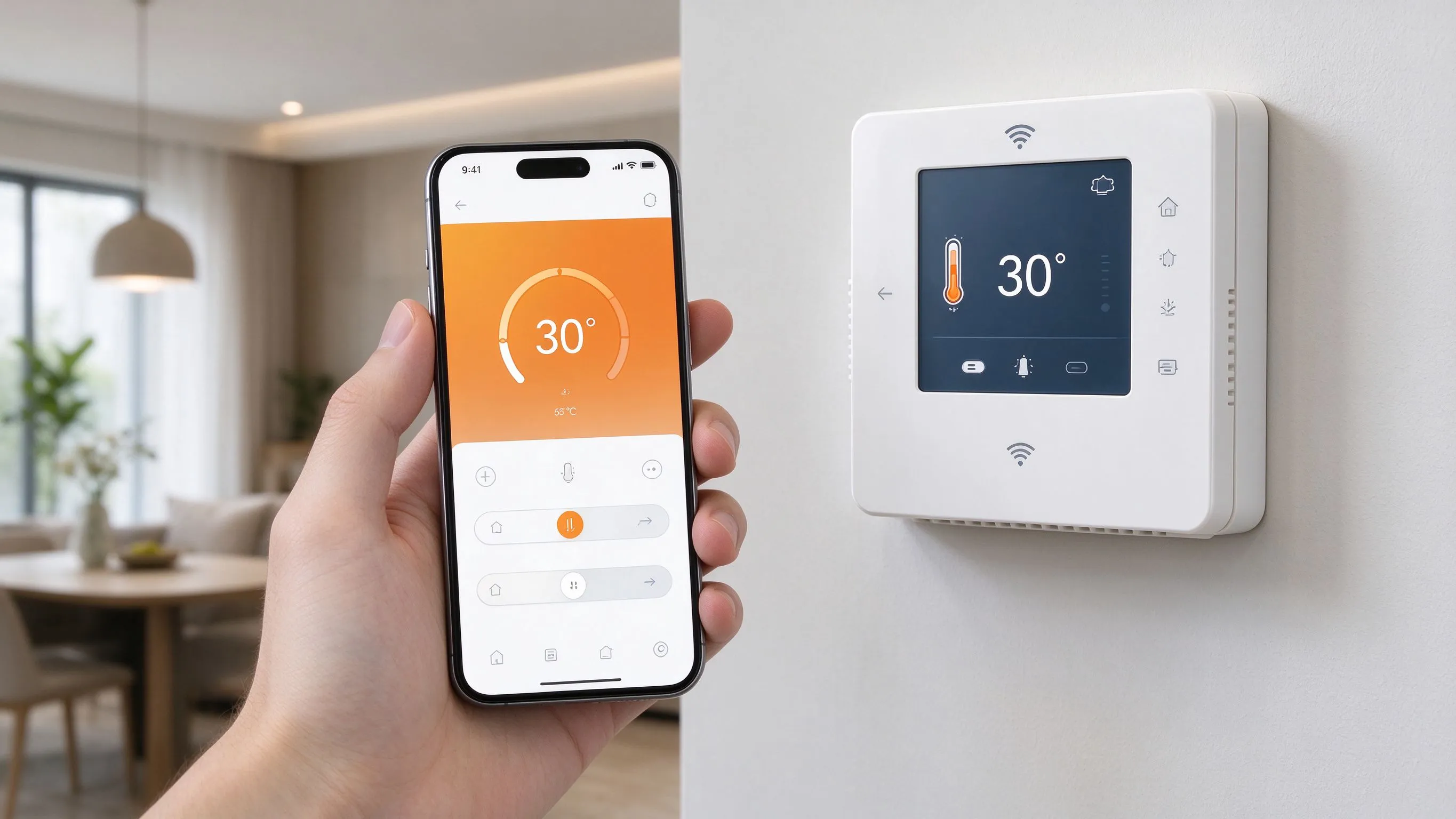
The most immediately apparent benefit of a WiFi thermostat is the ability to control your heating system remotely. Whether you are at work, on vacation, or simply in another room, you can adjust the temperature, change operating modes, or turn the system off entirely using a smartphone app. This capability eliminates the common scenario of leaving for a trip and wondering whether you remembered to turn off the heating, or arriving home to a cold house and having to wait for it to warm up.
Intelligent Scheduling and Programming
While programmable thermostats have been available for decades, WiFi thermostats take scheduling to a new level. Rather than being limited to a simple 7-day program with a few temperature setpoints per day, WiFi thermostats can support complex schedules with different settings for each day, multiple periods per day, and even seasonal adjustments. Some models also offer geofencing capabilities, where the thermostat uses your smartphone location to automatically adjust the temperature when you leave or approach home.
Energy Monitoring and Analytics
One of the most valuable features of WiFi thermostats is energy monitoring. By tracking the actual runtime of the heating system and correlating it with outdoor temperature data, these thermostats can provide detailed insights into your energy consumption patterns. The companion app typically displays daily, weekly, and monthly energy usage reports, helping you identify opportunities for optimization. Some advanced models can even compare your energy usage to similar homes in your area, providing context for your consumption.
Adaptive Learning Algorithms
The most sophisticated WiFi thermostats incorporate machine learning algorithms that study your heating preferences and daily routines. Over time, these algorithms can predict when you will need heating and pre-emptively adjust the temperature, ensuring comfort while minimizing energy waste. The thermostat learns how long your specific heating system takes to reach the target temperature, factoring in variables such as outdoor temperature, floor construction, and insulation quality.
Weather Integration and Forecasting
By connecting to online weather services, WiFi thermostats can access real-time and forecast weather data for your location. This information is used to proactively adjust heating output based on upcoming weather conditions. For example, if a cold front is approaching, the thermostat can gradually increase the floor temperature in advance, avoiding the sudden energy demand that would occur if the system had to react to the temperature drop after it happens.
Dual Temperature Sensing Technology
SunAura Thermal WiFi thermostats utilize dual temperature sensing, monitoring both the ambient air temperature and the floor surface temperature simultaneously. This dual-sensor approach provides superior control compared to single-sensor systems. The air sensor ensures room comfort, while the floor sensor prevents overheating of floor coverings and provides faster response to temperature changes.
Smart Home Integration
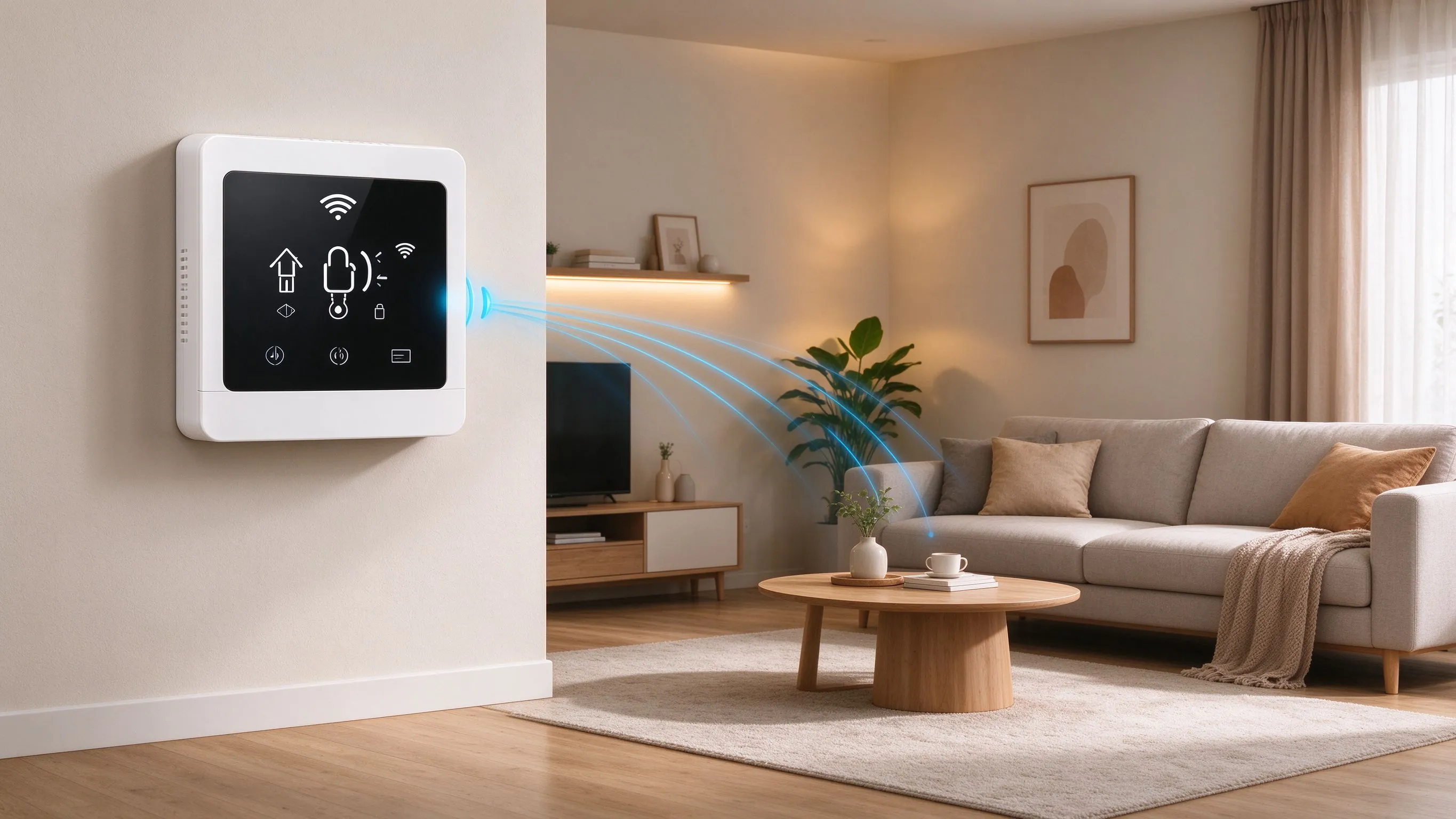
Modern WiFi thermostats are designed to integrate seamlessly with popular smart home ecosystems. SunAura Thermal thermostats are compatible with Amazon Alexa, Google Home, and Apple HomeKit, allowing voice control of your heating system. Integration with other smart home devices enables scenarios such as automatically lowering the heating when smart blinds are opened to let in sunlight, or activating the heating when a smart door sensor detects someone arriving home.
The thermostats also support IFTTT automation, enabling users to create custom rules that connect their heating system to hundreds of other smart devices and online services. For example, you could create a rule that turns on the bathroom floor heating when your smart alarm clock goes off in the morning, or one that sends you a notification if the floor temperature drops below a certain threshold.
Energy Savings: The Numbers
Independent studies have consistently shown that WiFi thermostats can reduce heating energy consumption by 15-25% compared to manual thermostats. The savings come from multiple sources: optimized scheduling ensures heating is only active when needed, adaptive learning eliminates the energy wasted by heating an empty house, weather integration prevents over-heating during mild periods, and energy monitoring encourages behavioral changes that further reduce consumption.
For a typical 100-square-meter home with electric underfloor heating consuming approximately 5,000 kWh per year, a 20% reduction represents savings of 1,000 kWh annually. At current electricity rates in many European countries, this translates to savings of 200 to 400 euros per year, meaning the thermostat can pay for itself within 1 to 2 years of installation.
Wiring, Load Ratings and Compatibility
A WiFi thermostat is only as reliable as its electrical installation. Most underfloor heating thermostats are mains-voltage (230 V or 120 V) mains-switched controllers, not low-voltage relays, so they must be sized for the resistive load they will switch. A 16 A rated thermostat carries up to 3,680 W at 230 V; a 20 A unit reaches 4,600 W. Overloading the relay — by, for example, wiring two large mats through a single thermostat without an auxiliary contactor — is the single most common cause of early relay failure and must be avoided by sizing the circuit on paper before installation begins.
Compatibility also depends on the sensor circuit. Electric underfloor heating expects a 10 kΩ NTC floor probe routed in conduit alongside the heating element; a wifi thermostat for electric floor heating should always be specified with both an air sensor and a floor probe input. For wet rooms, choose a model with a sealed relay compartment and a minimum IP20 rating at the back box, and always run the circuit through a 30 mA RCD. Where the heating load exceeds the thermostat’s relay rating, a separate contactor — controlled by the thermostat’s relay output — solves the problem cleanly.
For larger properties, hard-wired WiFi thermostats compete with RF wireless thermostat technology, which removes the need to run neutral wires to every room. Hard-wired WiFi is preferred where a neutral is already available at the back box and where the home WiFi network is stable on every floor; RF wireless wins retrofit projects where pulling new cables through solid walls is impractical. Our smart thermostat for underfloor heating range covers both routes, so installers do not need to mix brands across zones.
Choosing the Right Thermostat for Your Heating Element
The fastest way to choose a WiFi thermostat is to start from the load it will switch, not from the app features. Calculate the total watts of the heating circuit — watts per square metre multiplied by the heated area — and confirm it sits comfortably below the relay rating, with a 20% safety margin. If the circuit exceeds 3,680 W at 230 V, specify a 20 A thermostat or add a contactor. Next, confirm the sensor configuration: electric underfloor heating always needs a floor probe, gas boilers and heat pumps usually need only an air sensor, and water-based UFH needs a room sensor plus a valve actuator on the manifold. Finally, match the ecosystem — Alexa, Google Home or HomeKit — to the household, because a thermostat nobody opens is a thermostat that wastes energy.
For installers buying at scale, our guide on programming a WiFi thermostat for maximum energy savings documents the exact schedule templates that produce the documented 15–25% savings, including setback temperatures, adaptive recovery margins and floor-sensor limits. Using those templates on commissioning day means the homeowner receives a system that is already optimised, rather than one they must learn to program over an entire winter.
Factory Evidence: Design, Testing and Certification

SunAura Thermal designs and manufactures thermostats at our Qingdao Huangdao facility as part of the same production chain that builds the heating elements they control. That vertical integration is rare in the industry: most heating-element brands rebrand third-party controller PCBs, which means firmware bugs, sensor drift and relay sizing problems surface only years after sale. Under ISO 9001, ISO 14001 and ISO 45001 management systems, our thermostats pass a 48-hour burn-in cycle, relay-life testing to 100,000 operations, ±0.5 °C calibration checks and WiFi pairing stress tests before shipment, per SunAura factory records. They carry CE, RoHS, LVD and EMC marks for the EU market and equivalent certifications for North American and Middle Eastern export destinations across more than 50 countries.
Energy monitoring only matters if the underlying hardware meets independent efficiency benchmarks. The Energy Star programme recognises smart thermostats that deliver verified energy savings through scheduling, auto-away and adaptive recovery, and the US Department of Energy Energy Saver portal documents how programmable and smart setbacks cut heating bills without sacrificing comfort. Buyers comparing a smart thermostat wholesale price across brands should therefore ask for both the relay rating and the documented setback savings — the cheapest unit is rarely the lowest running cost over a ten-year occupancy.
Frequently Asked Questions
Does a WiFi thermostat need a neutral wire at the back box?Most mains-switched WiFi thermostats for electric underfloor heating do require a permanent live and neutral at the back box, because they switch the heating element directly. Battery-powered thermostats are usually reserved for gas boiler or heat-pump controls. Always confirm the wiring diagram before chasing the wall, and choose an RF wireless model where a neutral cannot be pulled.
What happens to the heating if the WiFi goes down?Every reputable WiFi thermostat continues to run its last downloaded schedule locally when the internet drops. The heating does not fail — only remote app control and energy reporting pause. Once connectivity returns, the app synchronises automatically. Check the product manual explicitly for offline scheduling support; some bargain models revert to a fixed temperature without the cloud.
Can one app control thermostats in multiple homes?Yes. Modern multi-zone platforms let the same account manage properties in different countries, which is useful for rental owners, hotel groups and installers commissioning projects remotely. Our own app supports up to dozens of thermostats across properties, and our article on smart home heating integration and IoT ecosystems explains how those devices share data with Alexa, Google Home and HomeKit.
How much can a WiFi thermostat actually save on electric underfloor heating?Independent field data and utility programmes consistently show 15–25% savings versus manual control, driven by setback schedules, geo-fenced auto-away and adaptive recovery. For a 5,000 kWh/year electric heating bill, that is 750–1,250 kWh saved annually — typically €190–€380 at 2026 European electricity prices.
What floor temperature limit should I set for wood and laminate?Cap the floor surface sensor at 27 °C for engineered wood and laminate, 29 °C for tile and stone. These limits protect the adhesive and wood-based layers from drying out and delaminating over decades. Never operate without the floor probe — air-sensor-only control is the leading cause of premature wood-floor failure.
Conclusion
WiFi thermostat technology represents a significant leap forward in heating system control and efficiency. By combining internet connectivity, machine learning, dual temperature sensing, and smart home integration, these devices transform a simple heating system into an intelligent, adaptive, and energy-efficient climate control solution. As energy costs continue to rise and environmental concerns become more pressing, the value of smart heating controls will only increase. SunAura Thermal remains committed to advancing thermostat technology, bringing cutting-edge features to our customers at accessible price points.
Related Products & OEM Inquiries
Looking for a smart Wi-Fi thermostat for efficient heating or a factory-direct OEM/ODM partner? Explore our smart thermostats and floor-sensing controls, then request a quote for your project — we supply distributors, installers and brands in 50+ countries.