
Concrete Curing Heating Cable: How Winter Pouring Teams Keep Slabs on Schedule and Within Spec
Concrete does not cure in the cold the way it does in warm weather. Below about 5°C, the hydration reaction that turns cement, water and aggregate into a load-bearing slab slows almost to a stop; below freezing, the water in the mix can expand and permanently damage the structure you are trying to build. For contractors pouring slabs, footings, bridge decks or industrial floors between November and March, the choice is not whether to heat the pour — it is which heating method to buy, and most teams end up comparing concrete curing heating cable against blankets, steam and chemical accelerators for the first time when the forecast has already turned.
This article is written from the buyer’s side of that decision. We compare curing cable against the other common winter-pour solutions, give you the sizing math in watts per square metre, and finish with a checklist you can send to a supplier before you commit money. The guidance follows IEC and ACI practice, and the factory data is drawn from SunAura Thermal’s own heating element records in Qingdao.
If you are evaluating suppliers, request a heating cable for concrete OEM quotation with the parameters in the checklist below — it takes a supplier five minutes to confirm, and it prevents the two most expensive mistakes: undersized power and the wrong cable type for your pour.
Why Concrete Needs Heat to Cure in Winter
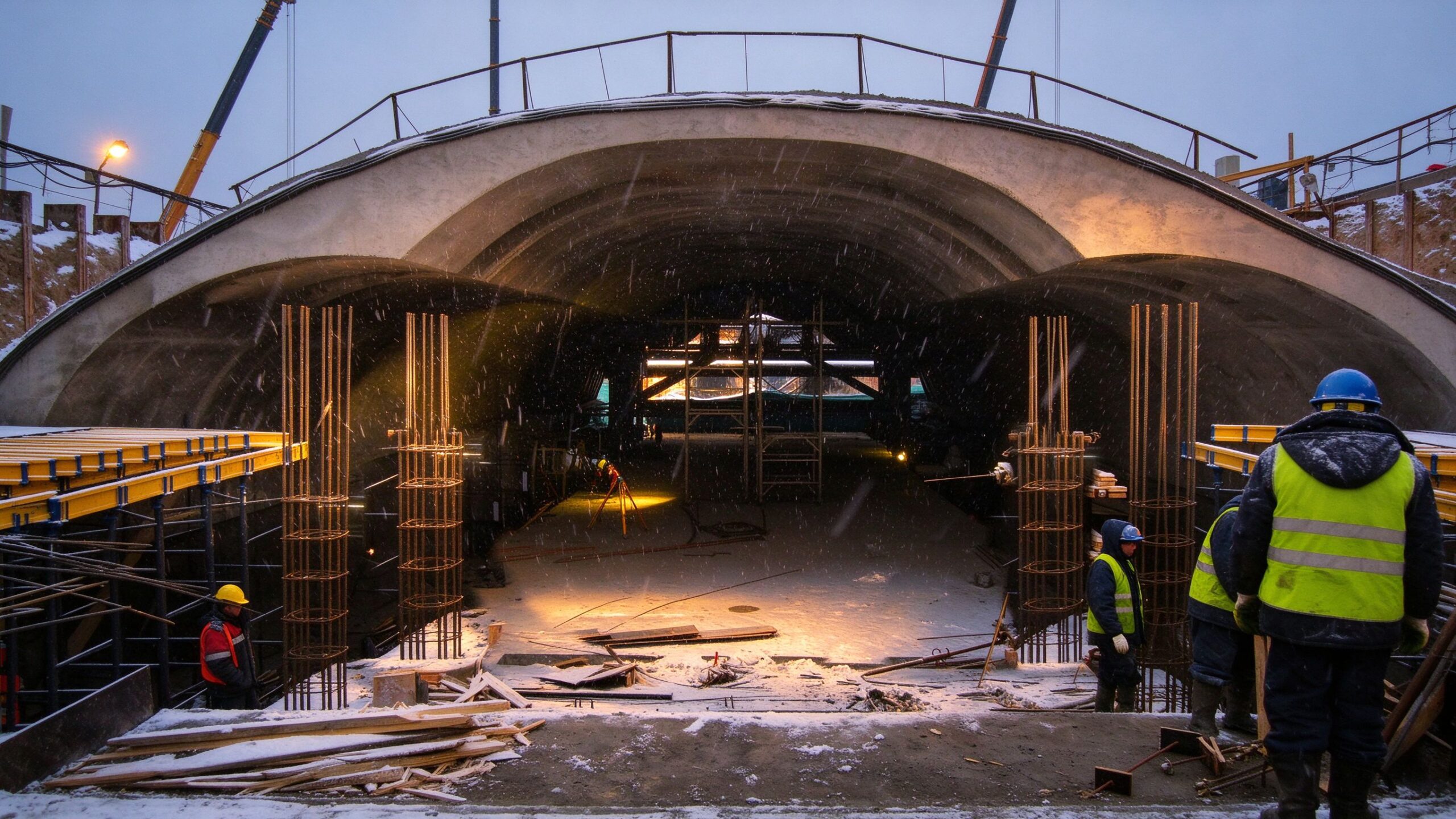
Concrete strength does not develop by drying — it develops by hydration, a chemical reaction between cement and water that generates its own heat and needs the right temperature window to complete. The standard rule used on most sites is that concrete should be kept above 10°C during curing for the first three to seven days, and never allowed to freeze before it reaches a critical strength of around 3.5 MPa (500 psi).
What actually happens below 5°C is that hydration slows dramatically. At 0°C it nearly stops. If the water inside the fresh mix freezes, ice crystals form and push the structure apart internally — the classic “frost damage” that shows up months later as surface spalling, cracking and low compressive strength. The American Concrete Institute guidance for cold-weather concreting is straightforward: protect the concrete, keep it warm, and maintain its temperature until it gains enough strength to resist freezing.
That is exactly what a curing heating cable does. Laid in or on the formwork before the pour — or embedded in a slab that is poured in cold conditions — the cable holds the concrete mass at the temperature the hydration reaction needs, so the slab reaches its design strength on schedule instead of sitting at 40% strength for six weeks.
Curing Cable vs Blankets vs Steam vs Accelerators: The Buying Comparison
Before you choose, it is worth putting the four main winter-pour solutions side by side. Each solves the same problem with different equipment costs, power densities, labour and risk profiles. The table below is written in procurement terms, not marketing terms.
| Method | Typical power / equipment | Surface or mass heating | Labour & supervision | Approx. equipment budget (per 100 m² pour) | Key limitation |
|---|---|---|---|---|---|
| Concrete curing heating cable (resistance) | 150–300 W/m² laid in formwork or embedded | Mass heat from within | Low after install; thermostat can automate | Medium | Must be installed before pour; needs planning |
| Self-regulating cable (PTC) | 30–60 W/m, output varies with temperature | Mass heat, self-limiting | Lowest; cannot overheat zones | Medium-high | Lower peak output than fixed-wattage; cost per metre higher |
| Insulated curing blankets / tarps | Passive (trapped heat) or with heaters | Surface only | High — must be placed and weighted; wind lifts them | Low | Top surface only; slab edges and mass still cold |
| Steam curing | Boiler + distribution | Surface / enclosure | Very high; needs enclosure and moisture control | High | Overkill for slabs; condensation and temperature swings |
| Chemical accelerators / admixtures | Cost per m³ of mix | Chemical | Low | Low-medium | Does not raise mass temperature; does not replace heat below 5°C |
For most slab pours — footings, house slabs, warehouse floors, bridge decks — a fixed-wattage constant wattage curing cable is the workhorse choice: predictable output, simple to size, and cheap per metre. Self-regulating (PTC) cable is the safer pick when the pour shape is irregular, when zones will be powered in stages, or when a section of cable could be exposed to air and you cannot risk overheating. The table above is the self-regulating vs constant wattage heating cable decision applied specifically to cold-weather concreting.
How to Size a Curing Cable System: The W/m² Math
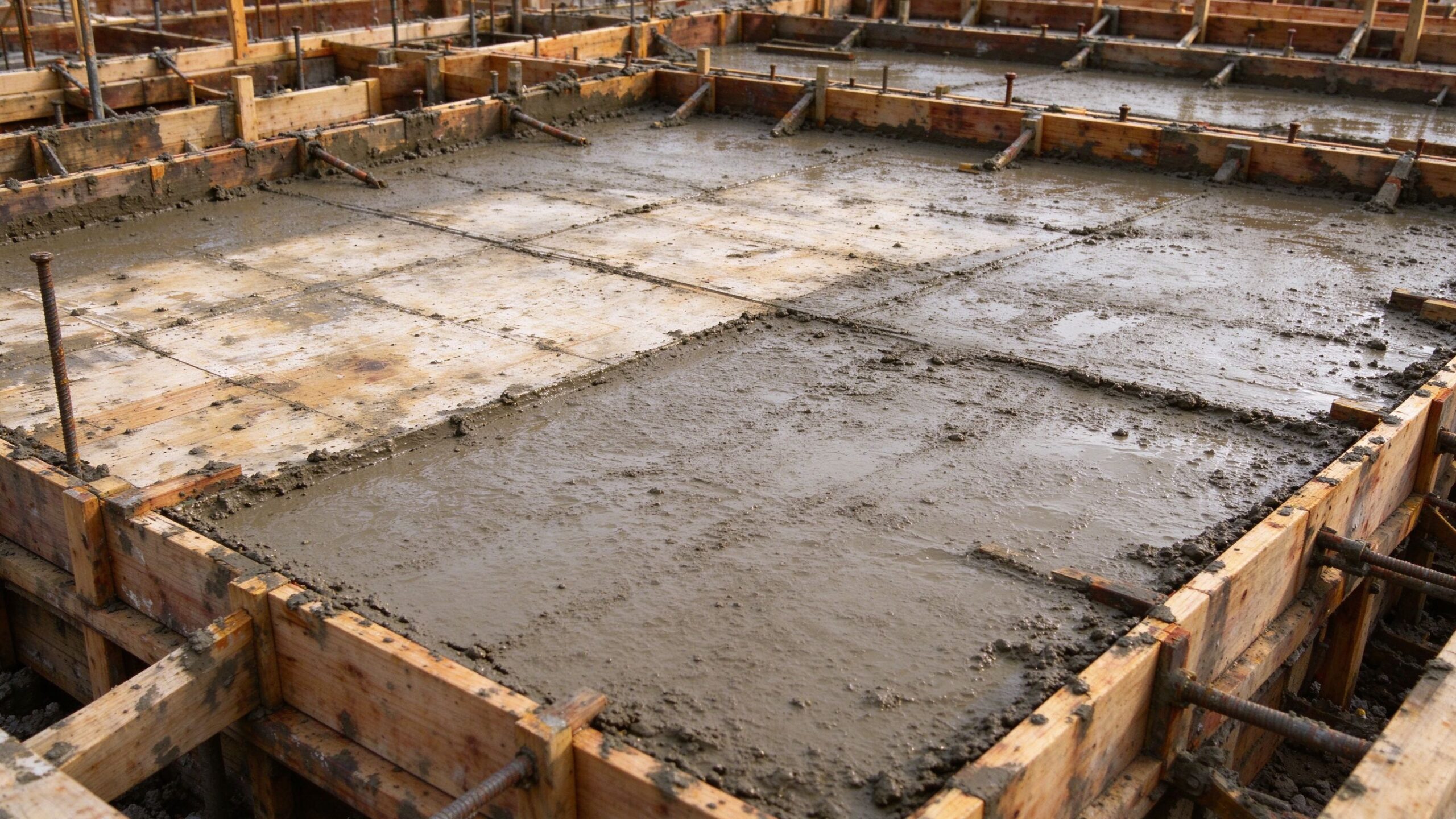
Sizing a curing system is a heat-balance calculation, and you can do it accurately with three numbers: the surface area of the pour, the heat loss through the formwork and exposed surfaces, and the target temperature you need to hold.
Step 1 — Required power density. In practice, well-insulated formwork with curing cable laid at 150–250 W/m² holds a slab above 10°C in most winter conditions. Uninsulated steel formwork or exposed pours in -10°C weather need 250–350 W/m². If you are pouring a large industrial floor and the cable will be laid in the slab itself (not under it), you size for the slab volume, not just the surface.
Step 2 — Cable spacing. Divide the W/m² target by the cable’s rated output per metre. A 15 W/m constant wattage cable at 200 W/m² gives roughly 0.75 m spacing — that is the maths most site engineers run. The formula is the same one used for underfloor heating wattage calculations, just with higher density and wider spacing.
Step 3 — Voltage and circuit count. On site you will usually feed from 220–240 V single phase or 380–400 V three phase. Check the cable’s rated voltage (230 V cables must not be run on 400 V phases without the correct configuration) and split the area into circuits under the breaker capacity — a 16 A breaker at 230 V handles roughly 3.6 kW, which is about 15–20 m² of slab at 200 W/m².
Worked example. A 150 m² warehouse slab pour in a -5°C February week, insulated plywood formwork. Target: 15 W/m² of heat loss compensation plus curing needs ≈ 200 W/m². Total load ≈ 30 kW. Split into 8 circuits of 3.75 kW each. At 15 W/m cable, 200 W/m² ÷ 15 W/m = 13 m of cable per m², so roughly 2 000 m of cable for the whole slab. That is the number you hand to a supplier when you ask for a concrete slab heating cable quotation.
Buying Checklist Before You Order Curing Cable
Send this list with your inquiry. A supplier that answers all six points cleanly is usually a manufacturer, not a trader; one that answers two is selling you a generic product and hoping you will not ask.
- Voltage and phase — single or three phase, and the actual site feed voltage (not the nominal one).
- Rated output per metre — W/m at the rated voltage; ask for the tolerance.
- Cable construction — conductor material, insulation (XLPE vs silicone), jacket (PVC vs PE), and whether it is shielded for direct burial in concrete.
- Termination — cold lead length, pre-moulded joints or field terminations, and the IP rating of the joints.
- Certification — CE, RoHS and any national approvals for the destination market; request the certificate numbers, not just the claims.
- Thermostat / controller — is a curing thermostat with a sensor supplied, or must you add your own control loop?
Common Selection Mistakes on Winter Pours
Mistake 1 — Buying the cheapest cable per metre. Curing cable is buried in concrete. If the jacket is not rated for alkaline contact or the insulation is thin, you find out one year later when a circuit trips and the slab has to be chased. Cheap per metre is the most expensive per year.
Mistake 2 — Confusing curing cable with underfloor heating cable. The products look similar and share the same factory line, but the output and spacing differ. Underfloor cable is sized at 100–160 W/m² for comfort; curing needs 200 W/m² or more. Buy the right product family — most manufacturers, including heating cable OEM lines at SunAura, build both and will tell you which is which.
Mistake 3 — Forgetting the sensor position. The thermostat should read the concrete mass temperature, not the air. A sensor taped to the formwork reads the formwork temperature, which is always colder than the slab core, and drives the system to overheat.
Mistake 4 — No backup if the power fails. A January pour with one circuit and no spare breaker will freeze if a fuse pops overnight. Build redundancy into the circuit plan.
What to Choose for Your Site: The Decision Framework
Use this as the short version of the whole article:
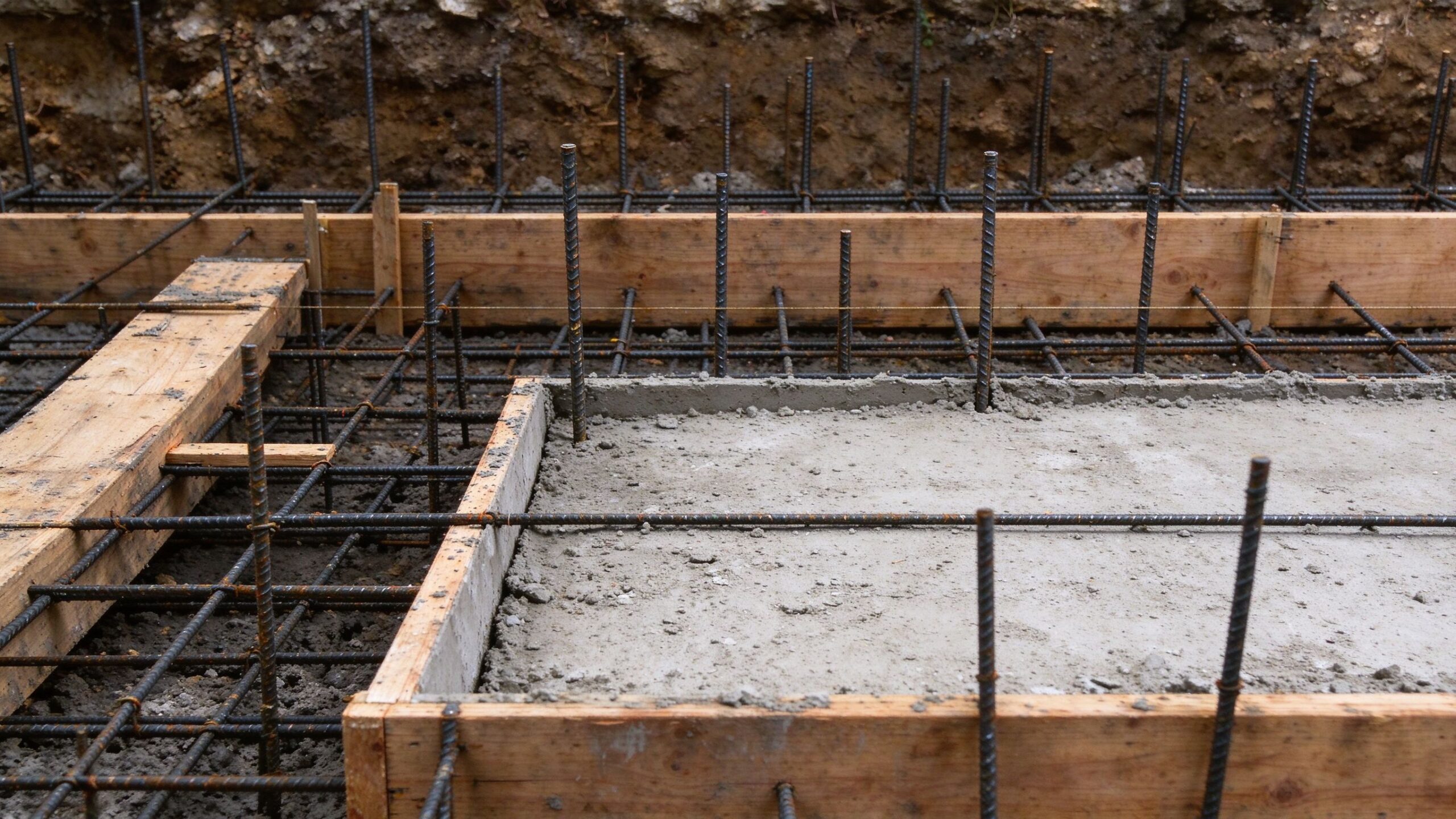
- House slabs, footings, small pours above 0°C: a 150–200 W/m² constant wattage curing cable on insulated formwork, with a curing thermostat. Lowest equipment cost, predictable result.
- Industrial floors, bridge decks, pours below -5°C: 250–350 W/m², three-phase split into multiple circuits, better insulation under the slab, and a logging thermostat so you can prove the curing temperature to the engineer.
- Irregular shapes, staged pours, or sections that may be exposed: self-regulating PTC cable at 30–60 W/m with a lower per-metre output but zero overheating risk.
- Very small or emergency pours: blankets plus a chemical accelerator can be enough — but only if the mass is small and the air temperature stays above -5°C.
Data & Evidence: What the Factory Floor Tells Us
SunAura Thermal has manufactured heating cables and films in Qingdao’s Huangdao district for 17 years, exporting to more than 50 countries. The curing cable family shares the same production and testing line as our underfloor heating cable: conductor resistance is measured on every reel, jackets are tested for dielectric strength, and each production batch is documented under ISO 9001. The plant operates to ISO 9001, ISO 14001 and ISO 45001, and exports CE, RoHS, LVD and EMC compliant elements (per SunAura factory records).
What that means for a buyer is practical: you can ask for the batch test report for the cable you are buying, the jacket material certificate, and the CE declaration — and you will get them. That is the difference between a heating element factory and a box-mover, and it matters most when the cable is going to be permanently buried in a structural slab.
FAQ
Can I use ordinary underfloor heating cable for concrete curing?
Technically both are resistance heating cables, but the rating differs. Curing cable is designed for continuous higher output in cold conditions and, in most cases, a jacket rated for alkaline concrete contact. Check the W/m rating and the jacket specification before substituting.
How long does the cable stay on?
Typically three to seven days, until the slab reaches about 70% of its design strength or the specified minimum (often 3.5 MPa before exposure to freezing). A curing thermostat with a time profile handles this automatically.
Is self-regulating cable better for curing?
It is safer where zones may be exposed or the pour shape is irregular, because it cannot overheat itself. For simple rectangular pours, constant wattage cable delivers more heat per metre for the same money.
Do I need special certification for curing cable?
For EU and most export markets, CE marking under the relevant standard plus RoHS material compliance is expected, and many tenders ask for the manufacturer’s ISO 9001 certificate. Ask for documentation before you order, not after.
Get a Sizing Confirmation Before You Pour
Winter concrete does not wait for a second quote. Before your next pour, send your slab dimensions, pour date and ambient temperature range to a manufacturer and ask for a concrete heating cable supply proposal with the checklist above. With the correct W/m², circuit plan and cable type, a cold-weather pour stops being a risk and becomes a schedule you can plan around.
Ethan Sun, Founder & CEO, SunAura Thermal