
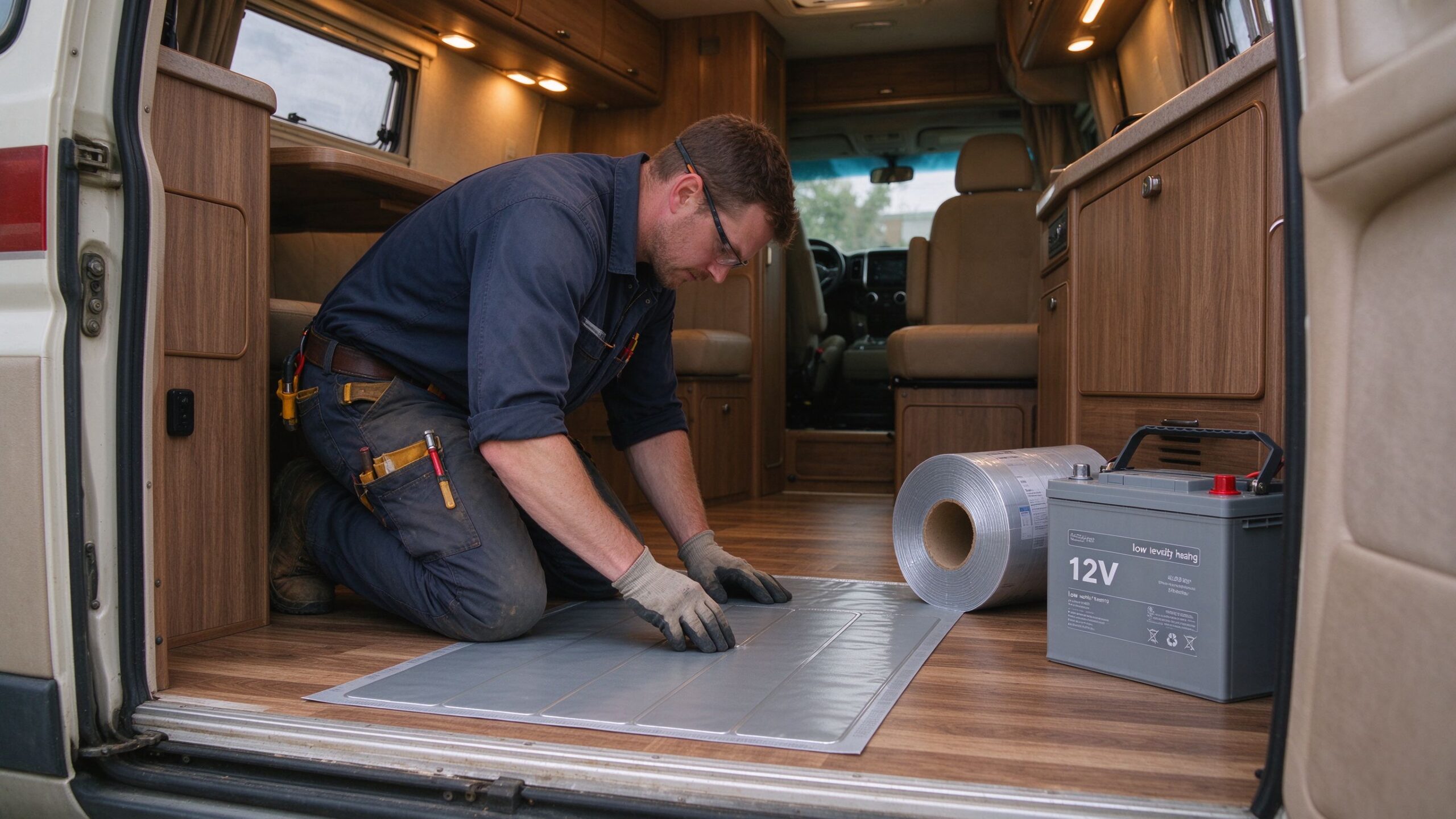
Why Voltage Choice Matters More Than the Film Itself
When buyers specify low-voltage heating for an RV, a boat or an off-grid cabin, the first decision is rarely about the film — it is about the system voltage. A low voltage heating film rated at 12V draws twice the current of a 24V film for the same wattage, and that one difference changes the wire gauge, the fuse rating, the controller compatibility and how much of a 12V house battery bank the heater consumes. Ordering the wrong voltage is the most common specification error we see in OEM and distributor orders for mobile and off-grid heating.
This article compares 12V and 24V heating film systems across the dimensions that matter to buyers — power density, current draw, battery compatibility, controller options, installation and total cost — then gives a selection framework and an RFQ checklist you can send to any factory, including our own. Factory data below reflects SunAura Thermal production records in Qingdao, China, where the company has manufactured heating film and related elements for 17 years (per SunAura factory records).
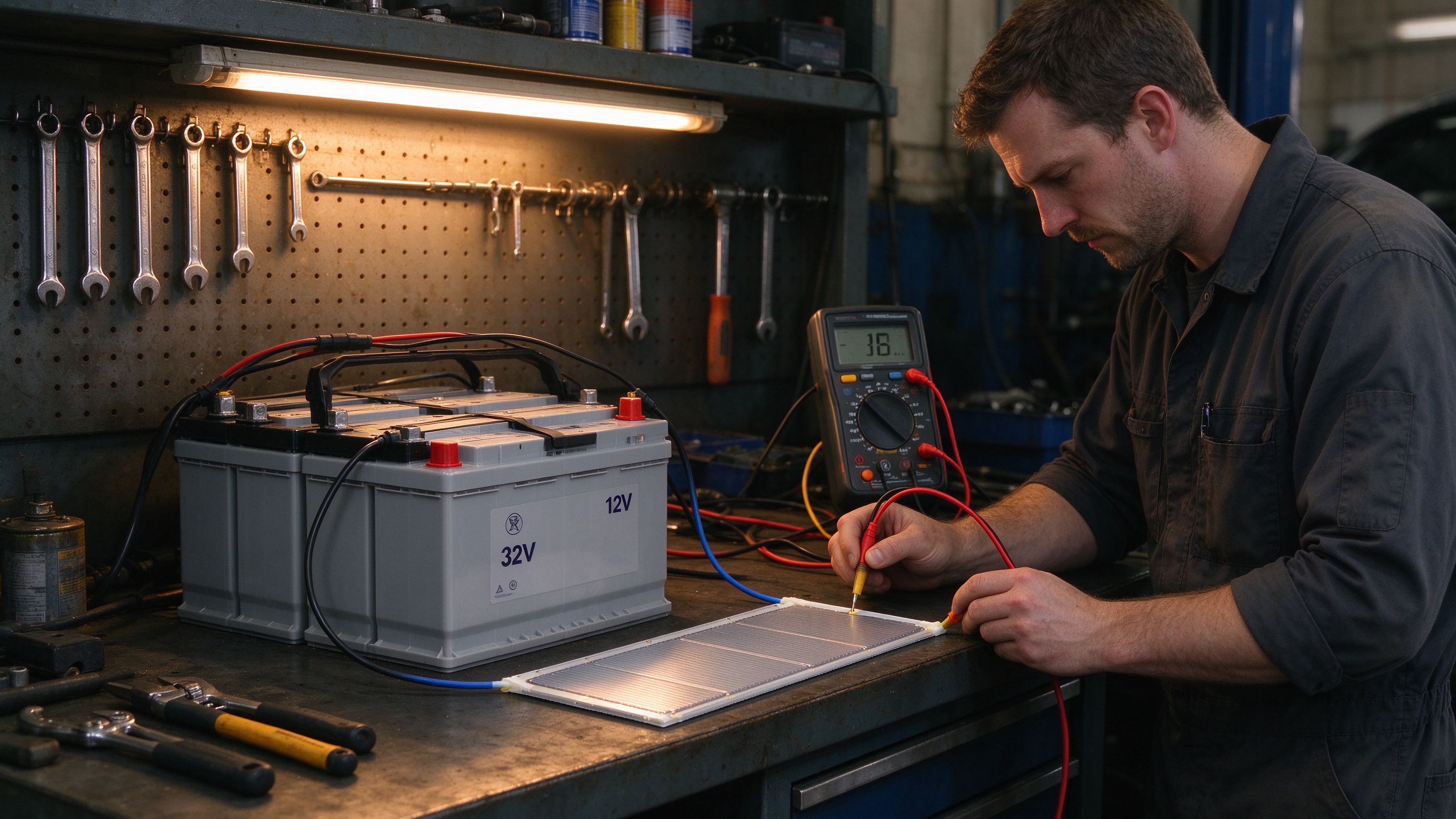
How 12V Heating Film Works — and Where It Fits
A 12V heating film is a low-voltage DC heating element designed to run directly from a 12V battery system — the standard in most RVs, camper vans, small boats and 12V off-grid setups. Because 12V is the common denominator of automotive and marine electrical systems, the film can be connected without a DC-DC converter in most cases, which keeps the BOM simple.
Practical consequences of 12V:
- Double the current of 24V for the same wattage — a 120 W film draws 10 A at 12V; the same film at 24V draws 5 A. Wiring must be sized for the higher current.
- Direct battery compatibility — no converter needed on a 12V system; the heater can be switched through a standard relay or controller.
- Lower wattage per square metre practical — at 12V, achieving very high W/m² demands heavy bus bars and thick wire, so most 12V films run at moderate densities (60–120 W/m²).
- Voltage drop over long runs — at 12V, a 5% voltage drop happens over a much shorter wire length than at 24V, so the wiring layout must be planned.
Where 12V shines: small camper conversions, van living spaces, boat cabins with modest heating duty, pet and livestock heating pads, and any system already built around a 12V house battery.
How 24V Heating Film Works — and Where It Fits
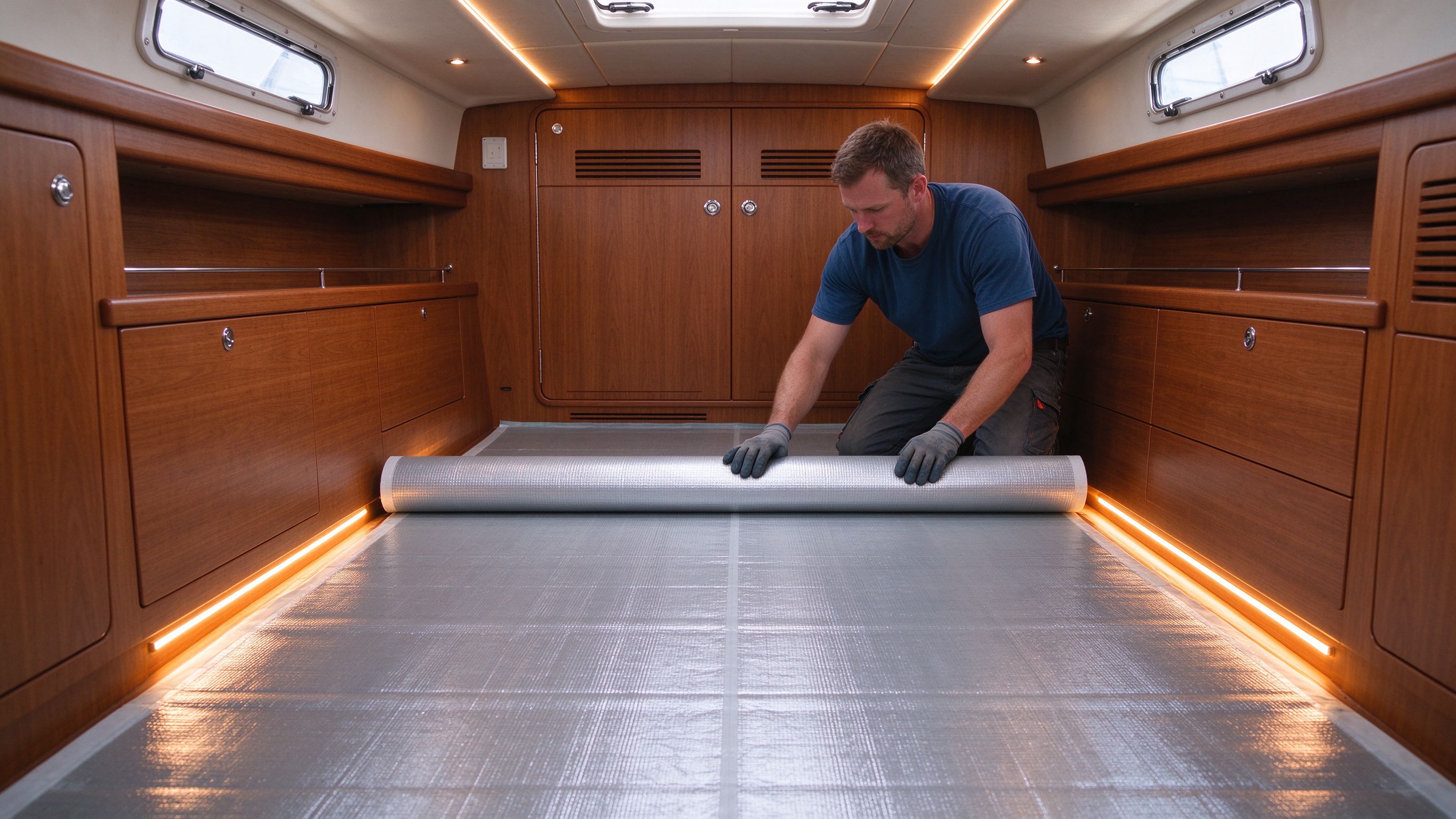
A 24V heating film is designed for 24V DC systems — common in larger boats, marine electrics, some RV platforms, electric scooters and off-grid cabins with 24V battery banks. It can also run from a 12V system through a DC-DC step-up converter, which some installers do deliberately to halve the current.
Practical consequences of 24V:
- Half the current of 12V for the same wattage — thinner wire, smaller fuses, less loss in long runs, and easier switching through standard relays.
- Higher practical power density — because current is lower, higher W/m² films are practical without oversized bus bars, making 24V the usual choice for primary heating duty.
- Needs a 24V source or a converter — on a 12V vehicle you need a DC-DC converter, which adds a component and a small efficiency loss.
- Broader controller compatibility — many DC thermostat and PWM controllers are designed for 24V systems, giving more choice for temperature control and zonal scheduling.
Where 24V shines: larger vans and RVs with higher heating demand, marine cabins where 24V electrics are standard, off-grid cabins with 24V battery banks, and OEM products that need higher power density in a compact area.
12V vs 24V Low Voltage Heating Film: Comparison Table
| Dimension | 12V film | 24V film |
|---|---|---|
| Current for 120 W | 10 A | 5 A |
| Typical power density | 60–120 W/m² | 80–200 W/m² |
| Typical wire gauge for a 5 m run | 2.5–4 mm² | 1.5–2.5 mm² |
| Voltage drop over 5 m at rated load | Higher (up to 5%+ at long runs) | Lower (roughly a quarter of 12V for the same wire) |
| Direct battery compatibility | 12V house battery, no converter | 24V bank, or 12V with DC-DC step-up |
| Typical heating duty | Warming, spot heat, low demand | Primary heating, higher W/m² |
| Controller options | 12V DC thermostats, PWM dimmers | 24V DC thermostats, PWM, broader range |
| Best fit | Small vans, pet pads, 12V off-grid, spot warmth | Large vans, marine 24V, off-grid cabins, OEM primary heat |
The table is the starting point. The definitive input is your wattage requirement per area — work it out with the underfloor heating wattage calculation method — because only then do you know whether 12V can carry the duty or whether you should step up to 24V.
Application-by-Application Selection Guide
Use these rules of thumb to pick the voltage before you talk to suppliers:
- Camper van with a 12V house battery, small living area (3–6 m²) → 12V film at 60–100 W/m² for warming duty; simplest integration, no converter.
- Large van or RV with real heating demand (6–12 m²) → 24V film, either from a 24V bank or via DC-DC; the current savings make wiring and switching cleaner.
- Marine cabin on a 24V electrical system → 24V film directly; matches the existing distribution and keeps wire runs short and loss low.
- Off-grid cabin with a 12V or 24V solar battery bank → match the bank voltage; if the bank is 12V and heating duty is high, consider a 24V film with a converter to protect the wiring.
- Pet, livestock or reptile heating pads (OEM) → 12V is the usual choice for low-power pads; 24V only when the pad needs more than about 50 W and a 24V supply already exists.
If your product will be sold into multiple markets with different vehicle platforms, a dual-voltage construction (film tested at both 12V and 24V with different bus-bar layouts) may be the better OEM choice — see our DC heating film for RV and marine guide for how the same film family covers both.
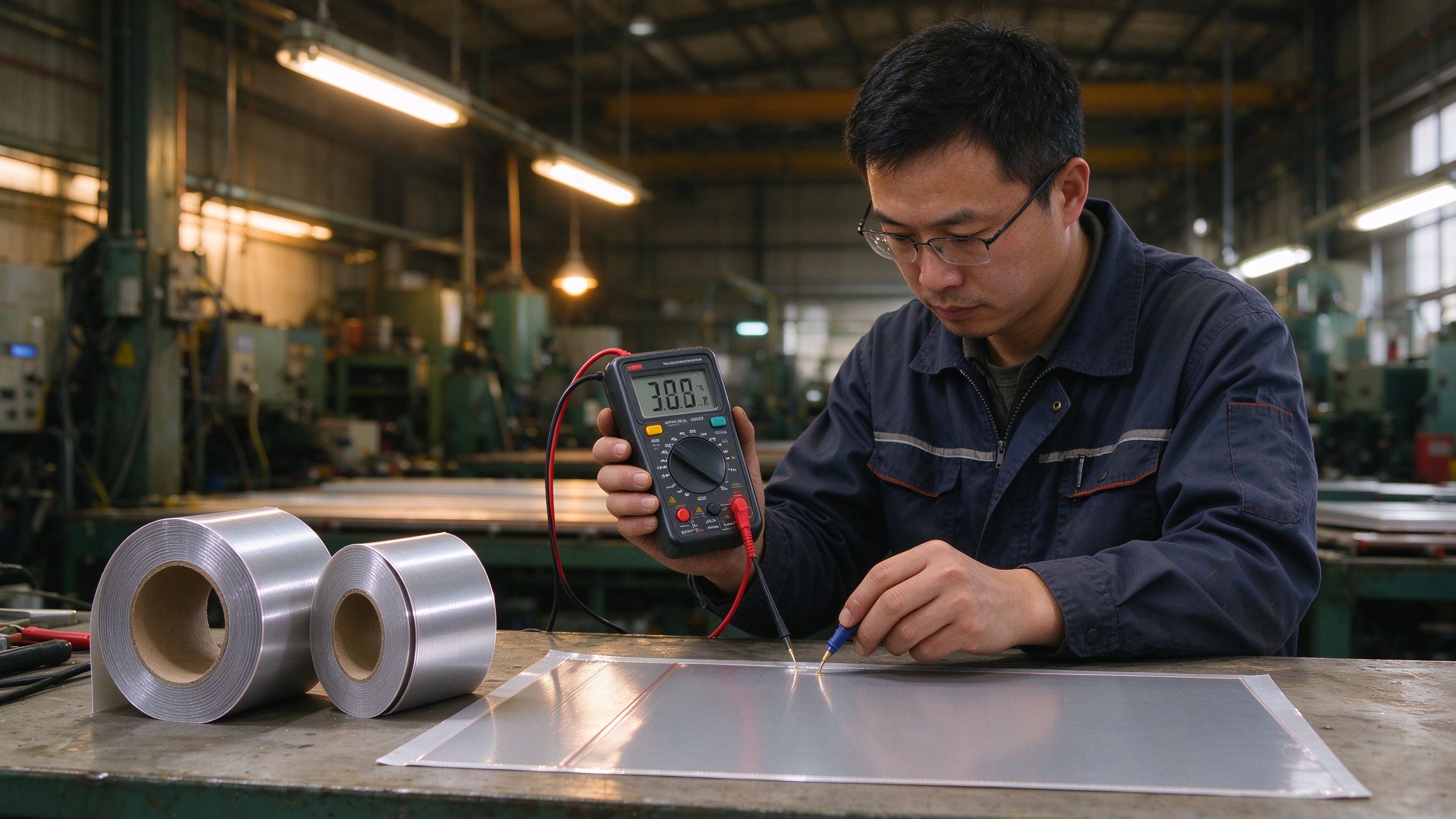
Data & Evidence: What the Factory Verifies
Voltage is a tested electrical specification, not a label. Our factory verifies the following on every low-voltage film production run (per SunAura factory records):
- Rated voltage confirmation — every reel is produced and tested for its exact rated voltage (12V or 24V); mixed-voltage orders are flagged before production.
- Resistance matching — finished film is resistance-tested so the wattage at rated voltage matches the specification within tolerance.
- Bus-bar and connection integrity — low-voltage film depends on the bus-bar layout; each run is checked for uniform heating across the width using thermal imaging on a sample basis.
- Dielectric and insulation tests — performed on the finished construction, including the terminated leads.
- Compliance — production runs under ISO 9001, ISO 14001 and ISO 45001 management systems; finished products are CE marked and assessed for RoHS, LVD and EMC where applicable. Certificate copies and batch reports are provided on request.
We deliberately do not quote certificate numbers in this article — verify the documents for your specific order and destination market.
Procurement Checklist: What to Send a Supplier
To get a correct 12V or 24V quotation, include these points in your RFQ:
- System voltage — 12V or 24V, and whether a DC-DC converter is planned or not.
- Area and wattage — square metres per zone and target W/m²; reference the wattage calculation guide if unsure.
- Battery bank details — nominal voltage, capacity in Ah, and how much of the bank the heater may draw (this decides whether 24V is worth the converter).
- Heating duty — warming vs primary heating, ambient conditions, and how many hours per day the system will run.
- Wiring plan — distance from battery to film, wire gauge planned, and switching method (relay, PWM controller, thermostat).
- Controller preference — 12V/24V DC thermostat, PWM dimmer, or none; we supply matching low-voltage controllers where required.
- Termination and packaging — lead lengths, connectors, OEM labels and packaging for your brand.
- Certification and lead time — CE/RoHS documents, MOQ, sample policy, and the delivery window.
SunAura Thermal manufactures low-voltage film in custom widths and voltages, and our engineers confirm the voltage and wattage on every order before production — we will not ship a 12V film into a 24V system or vice versa. For bulk projects we are a direct low voltage heating film supplier with factory pricing.
Installing 12V and 24V Film: Wiring and Connection Notes
Low-voltage film installation is simpler than mains-voltage floor heating, but the wiring rules are different and just as important. Three points decide whether a 12V or 24V system works reliably for years.
Wire sizing for voltage drop. Because DC voltage is low, even a few volts of drop meaningfully reduce the film’s output. A 12V film losing 0.6 V in the supply wire loses 5% of its voltage and about 10% of its power. Size the supply wire so the total drop stays under 3–4% at full load — for 12V that usually means 2.5 mm² minimum for short runs, and heavier for longer runs; 24V gives you more headroom with the same wire. Ask the supplier for the film’s current draw per metre, not just the W/m figure, and check the wire table against your layout.
Switching and protection. Use a DC-rated fuse or breaker sized close to the circuit current, and switch the film through a relay or DC controller rather than a household AC switch. When a thermostat is used, confirm it is a DC model rated for the system voltage — an AC thermostat on a DC circuit will not work correctly. GFCI-style protection is not applicable in the same way on DC; instead, rely on correct fuse sizing and quality terminations.
Termination and bus-bar connections. Low-voltage film is typically connected at the bus-bar edge with crimped or soldered terminals. The connection quality is the most common field failure point, so specify pre-fitted leads or proper crimp kits, protect the joint from moisture, and test continuity and insulation resistance before covering. At our factory, low-voltage film can be supplied with pre-terminated leads and a matching connection kit, which simplifies installation and reduces field errors (per SunAura factory records).
Layout planning. Because current is carried along the film’s bus bars, plan the layout so the feed connection is near the power source where practical, and avoid daisy-chaining many strips through one small connection point. For OEM products, define the lead exit position and connector type at the specification stage — changing it after tooling is costly.
FAQ
Can the same heating film run on 12V and 24V? No — the bus-bar and element resistance are designed for the rated voltage. Running a 12V film at 24V quadruples the power and can overheat the element; running a 24V film at 12V delivers a quarter of the designed output.
Is 24V more efficient than 12V? In delivered heat, both convert nearly all input power to heat. The practical efficiency difference is in wiring loss: at 24V, current is halved, so resistive loss in the wiring is roughly a quarter for the same wire gauge.
Do I need a DC thermostat? Yes for temperature control — a standard AC thermostat is not compatible with DC low-voltage systems. Low-voltage DC thermostats and PWM controllers are available; specify the system voltage when ordering.
What power density can 12V film reach? Typically 60–120 W/m² in standard constructions; higher densities are possible with heavier bus bars but are usually better served by 24V film, where current is lower.
Can low-voltage film heat a whole van in winter? For primary heating of a larger van, plan for 24V at 100 W/m² or more and confirm the battery budget — heating is the largest energy consumer in any off-grid build, and the battery bank must be sized for it.
Next Step: Confirm the Voltage, Then Compare Suppliers
The 12V vs 24V decision is a wiring decision, not a film decision. Work out your wattage per area, confirm your battery and wiring plan, and send the eight-point checklist to our export team. You will receive a voltage-correct quotation, samples where needed, and factory pricing backed by 17 years of manufacturing.
Contact us for bulk pricing and OEM samples at [email protected].
About the author: Ethan Sun, Founder & CEO, SunAura Thermal. SunAura has manufactured electric heating film, mat and cable in Qingdao, China, for 17 years, supplying CE/RoHS-compliant heating products to more than 50 countries.