
FAQ
Frequently asked questions about electric underfloor heating — answered by our engineers with 17+ years of experience.
Buyers ask us the same questions in every language: how much it costs to run, which floor it fits under, how to order samples, and what certificates we can actually produce. Below are the twenty questions we answer most often, grouped by topic — every answer comes from the engineers who build the film, mats, cables and thermostats in our Qingdao plant, not from a script.
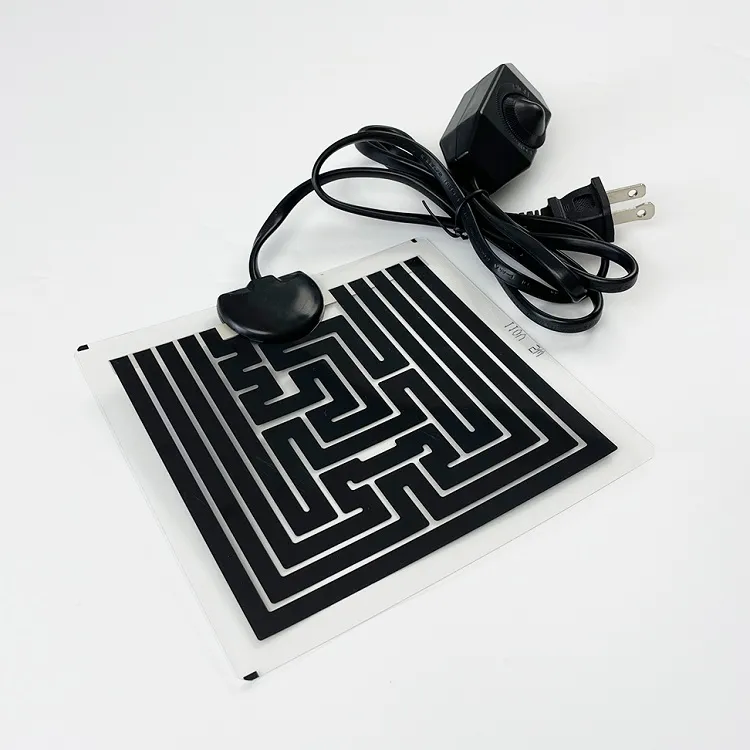
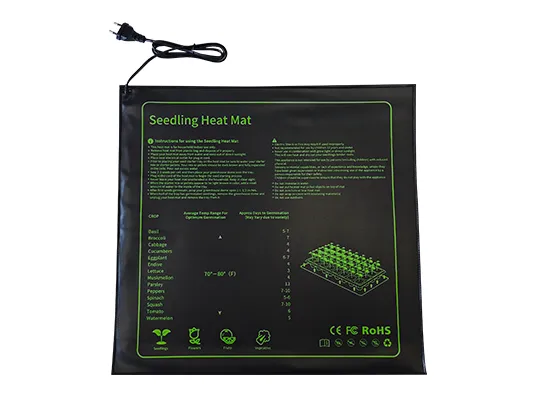
Understanding Electric Underfloor Heating
Start here if you are new to electric radiant heating — what it is, how it feels to live with, and why buyers trust it over legacy systems.
What is electric underfloor heating?
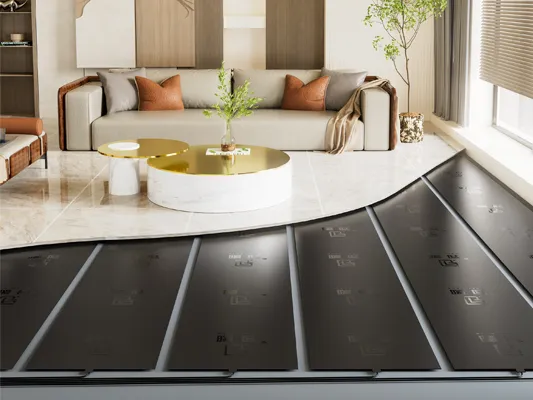
Electric underfloor heating uses electric heating elements (film, mat or cable) installed beneath the floor surface. It produces radiant heat that warms the floor and rises evenly through the room — quiet, invisible and easy to control with a thermostat.
How long does underfloor heating take to warm up?
Heating film systems typically warm up within 15–30 minutes because the element sits close to the surface. Mats under tile warm within 30–60 minutes. Cable systems embedded in thicker screed take longer to reach temperature but hold heat longer.
Is electric underfloor heating safe?
Yes. SunAura products are double-insulated, shielded and EMF-free, tested to IEC 60335 and CE / RoHS compliant, and protected by thermostats with floor sensors that prevent overheating.
Does underfloor heating need maintenance?
No. Electric underfloor heating has no moving parts, no filters and no boiler service. Once installed and commissioned, it is effectively maintenance-free for the life of the system — one of its biggest advantages over wet systems.
Running Costs and Energy Efficiency
What it actually costs to keep a room warm, and how smart scheduling lowers the bill.
How much does electric underfloor heating cost to run?
Running cost depends on room size, insulation and usage. As a rule of thumb, electric underfloor heating costs about $0.10–$0.20 per square metre per hour at full output. With good insulation and smart-thermostat scheduling, consumption can be reduced by up to 30%.
Installation and Flooring Compatibility
Whether you can do it yourself, which floor finishes the system will live under, and what the installed cost looks like per square metre.
Can I install electric underfloor heating myself?
DIY installation is possible for heating film and mats using our installation kits and step-by-step guides. For safety and warranty, electrical connections should be made by a qualified electrician, and we recommend professional installation for large or complex projects.
Which flooring types work with underfloor heating?
Most flooring works: tile and stone give the best heat transfer, followed by laminate, engineered wood and vinyl. Carpet works but reduces efficiency because it insulates. Wood and laminate should respect the floor manufacturer’s maximum surface temperature (typically 27–28 °C).
How much does electric underfloor heating cost per square metre to install?
The installed cost depends on the system type, floor build-up and your local electrician rates — film under laminate is the thinnest and fastest option, while cable in screed covers larger open areas. We return transparent manufacturer pricing on request, with no hidden markups: send your room sizes and floor type through our contact form and our sales team will reply within one business day. You can compare film, mat and cable options first on the underfloor heating collection page.
Can I install SunAura heating film under laminate flooring?
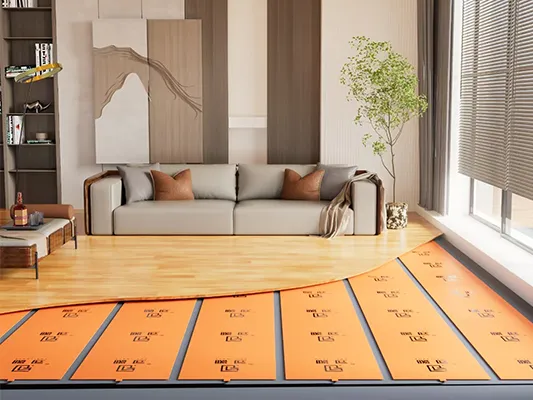
Yes — film under laminate is one of our most common installations because the film is only a few millimetres thick and sits neatly under 2–3 mm foam underlay. Keep surface temperature within the laminate manufacturer’s limit (usually 27–28 °C) and always run the included floor sensor beneath the film. See room-by-room install photos in the applications gallery, and pick up replacement sensors, junction boxes and cable from the underfloor heating accessories page.
Choosing Between Film, Mat and Cable
Three element types, three typical jobs — how to match the right product to your floor build-up.
How do I choose between heating film, mat and cable?
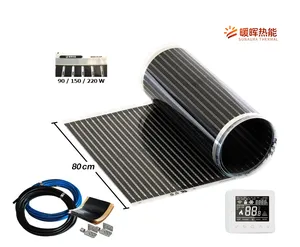
Film: fastest warm-up, thinnest profile, ideal under laminate/wood and for renovations. Mat: self-adhesive 160 W/m² under tile and stone, 25-year warranty. Cable: for screed, wet rooms, pipe trace heating and industrial snow melting. Send us your project details and we will recommend the best fit.
Smart Thermostats and Controls
How film, mats and boilers are controlled, and which WiFi thermostat suits an electric versus hydronic system.
Which WiFi thermostat is best for hydronic and electric underfloor heating?
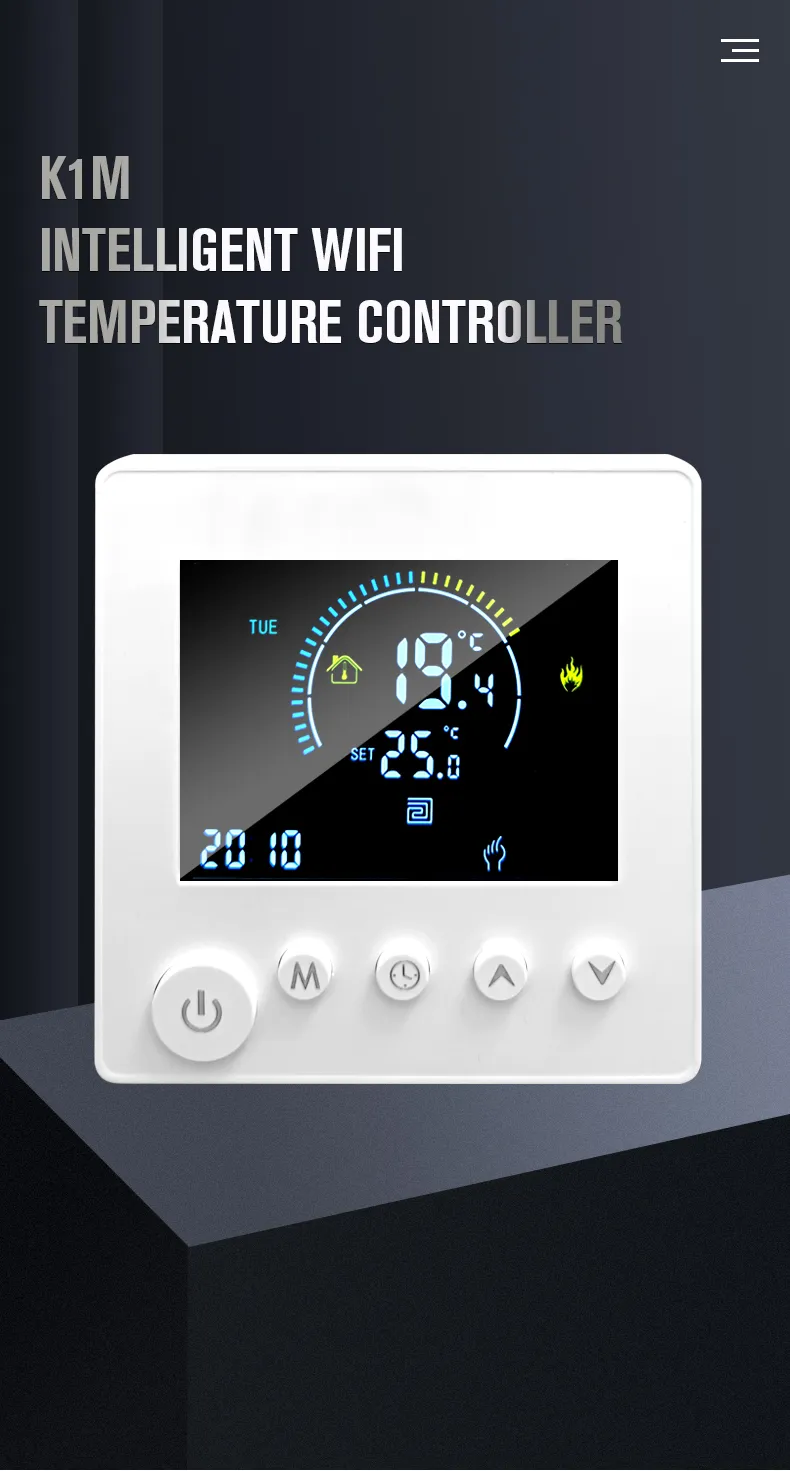
SunAura smart thermostats support both electric floor sensors and boiler or hydronic valve actuators, with app scheduling, open-window detection and voice-assistant compatibility. A 16 A relay suits heating film and mats, while a 3 A or dry-contact model pairs with gas boilers and zone valves. Explore the full line on the thermostats and controls range, and read our buying guides on the blog for a step-by-step selection walkthrough.
Graphene Film Safety for Homes, Children and Pets
What the test data says before graphene film goes into a living space.
Is graphene heating film safe for bedrooms, children and pets?
Yes. Our graphene heating film is double-insulated, shielded to near-zero EMF, IP67 water-resistant and tested to IEC 60335 with CE and RoHS compliance; it reaches only gentle surface temperatures (typically 25–35 °C) controlled by a floor-sensor thermostat. Certificates and SGS test reports are available on request from the certifications page, and every batch ships with a QC PASS record from our Qingdao factory.
Samples and Wholesale Pricing
For distributors, contractors and resellers: how to evaluate product before you commit to a container.
Can I get samples before placing an order?
Yes — samples are available for evaluation. Sample cost is deducted from the first production order, and lead time for standard samples is 3–7 days after confirmation.
Do you supply graphene heating film wholesale to distributors and contractors?
Absolutely — SunAura has manufactured heating film in Qingdao since 2008 and exports to 50+ countries, serving distributors, HVAC contractors and e-commerce resellers with tiered wholesale pricing. Standard film widths, custom cut lengths and private-label packaging are all supported, and evaluation samples ship within 3–7 days. Start the conversation on WhatsApp with our export team or request a price list through the contact page.
OEM, ODM and Private Label
How custom specifications, private-label branding and distributor MOQs actually work at our factory.
Can you make custom sizes or private-label products?
Yes. As the manufacturer, we offer OEM/ODM services across the whole range — custom widths, lengths, wattages, thermostats, branding, packaging and multilingual manuals. Minimum order quantities are flexible and samples are available.
What is the MOQ and lead time for thermostat distributor orders?
MOQ is flexible — sample cartons are available for evaluation, and standard distributor MOQs are kept low enough for new partners to test the market. Lead time is 7–15 working days for stocked models and 20–30 days for custom private-label versions, depending on cable length and packaging. Browse the current smart thermostat catalogue for in-stock models, and pair them with self-adhesive heating mats for complete project quotes.
How does your private-label thermostat OEM process work?
It is a straightforward four-step flow: send us your logo and packaging artwork, we produce engineering samples for approval, you confirm a pre-production run, then mass production begins — typically 20–30 days. OEM covers custom housing colours, firmware, app branding, multilingual manuals and retail boxes, supported by our in-house R&D team in Qingdao. Message our WhatsApp line with your target order volume, or discuss options on the thermostats and controls page.
Shipping, Payment and Trade Terms
Where we ship, how the container moves, and what the paperwork looks like when it reaches your dock.
Do you ship worldwide? What are the payment terms?
We export to 50+ countries by sea, air and express (DHL/FedEx/UPS) with FOB, CIF and EXW terms. Payment is typically 30% deposit and 70% balance before shipment via T/T, or L/C for larger orders.
What shipping and trade terms do you offer — EXW, FOB or DDP?
We support EXW Qingdao, FOB Qingdao, CIF and DDP to most major destinations, by sea, air or express courier (DHL/FedEx/UPS). DDP is popular with resellers who want a landed-price quote with customs duty handled, while EXW suits forwarders who prefer to book their own containers; payment is typically 30% deposit and 70% before shipment. Small-parcel items such as the pet and plant heating range ship easily by express, and our shipping guides on the blog walk you through the first-order process.
Warranty and After-Sales Support
What is covered, for how long, and what ships in the box with every order.
What warranty do SunAura products carry?
Heating mats carry a 25-year warranty, heating film 15 years, and other products 15–25 years depending on the line, covering manufacturing defects under normal use. Warranty cards ship with every order.
Still Have a Question?
If your question is not covered above, you are unlikely to be the first person to ask it. Send your room size, floor type, voltage and target quantity through the contact page, or message us directly on WhatsApp — our export team replies within one working day during Qingdao business hours. For longer technical reading on power density, floor compatibility and thermostat wiring, browse the SunAura blog, and compare the full range on the underfloor heating, thermostats and controls, pet and plant heating and installation accessories category pages.