
Overview
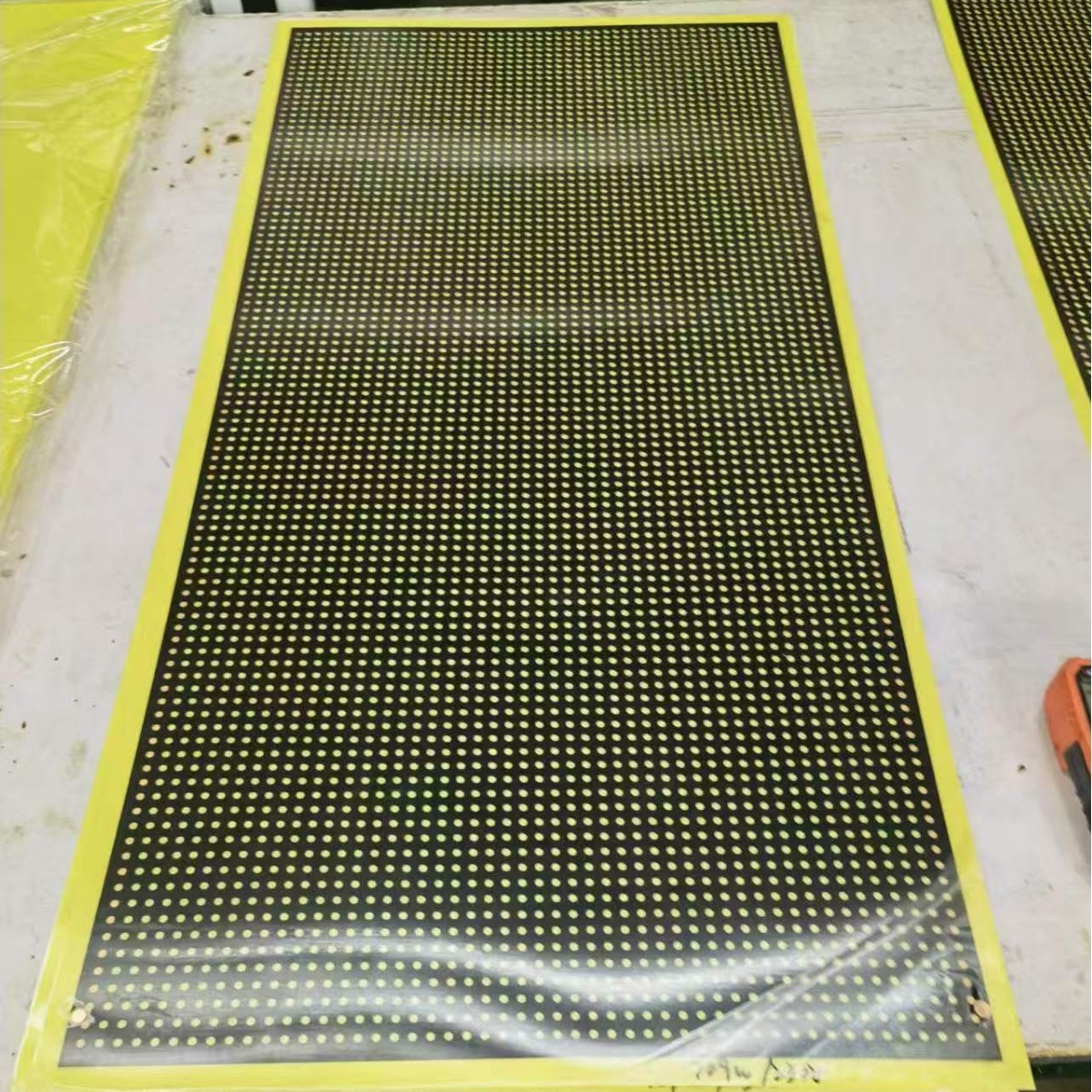
The SunAura graphene heating panel is a thin, flat, far-infrared heating element built for OEM appliance brands, sauna builders and wall-heating installers. At just 0.8 mm thick, it combines a printed graphene heating layer with an FR4 epoxy-resin fiberglass encapsulation, bonded under heat and pressure into a single flexible board. The standard unit runs on AC 220 V, delivers up to 1,500 W/m² with more than 99.5% electrical-to-thermal conversion, and radiates across the 8–15 µm far-infrared band. It is the same planar heating technology we have supplied to appliance and textile brands for over a decade, now offered as a factory-direct component with full custom sizing, voltage and private-label support.
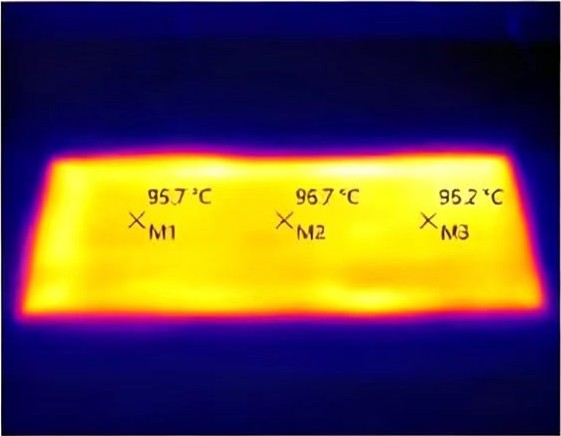
Unlike a nichrome-wire heater, which concentrates heat along a thin coil, the graphene heating board heats across its entire surface with a surface-temperature spread held within 8 °C. That uniformity, the ultra-thin profile and the ability to bend to an R75 radius make it practical where a rigid heater or a bulky wire element cannot fit — inside sauna cabins, behind wall panels, under bench surfaces and inside sealed heating appliances. This page documents the construction, full specifications, the complete size-and-power matrix, our quality-control regime and the engineering details buyers ask for before a production order.
What Is a Graphene Heating Panel?
A graphene heating panel is a laminated planar heating element. The functional core is a conductive coating formulated from high-grade graphene and carbon, printed or coated onto the substrate and then cured. Two copper busbars run along opposite edges to distribute current evenly across the whole sheet. The heating layer is then sandwiched between layers of epoxy-resin fiberglass cloth and consolidated in a hot-press, which fuses the stack into one sealed, electrically insulated board. The result is a self-contained heating surface that needs no separate heating coil, reflector or fan.
The “panel” differs from our flexible low-voltage heating cloth in two ways: the FR4 epoxy encapsulation gives it a rigid, dimensionally stable board structure with high dielectric strength, and the standard build is engineered for direct 220 V mains operation rather than wearable low-voltage use. It is the correct choice when you need a fixed, mains-powered heating surface that can be laminated, bonded or clamped into a product or a room assembly. For a fully sealed film used in damp rooms, see our custom encapsulated heating film; for wide underfloor and wall film, see the flexible heating film rolls.
How the Graphene Heating Panel Works
The heating mechanism is resistive, but at the nanoscale. The graphene layer is built from stacked graphene sheets. When current passes through the coating, electrons are energised and move rapidly between carbon atoms, colliding and scattering — the microscopic motion described as Brownian movement. Electrical energy is converted into heat and emitted primarily as far-infrared radiation with a wavelength peak of 8–15 µm, the same band associated with gentle, penetrating radiant warmth rather than scorching contact heat.
Because the conductive material is distributed across the whole sheet rather than concentrated in a wire, the panel radiates uniformly. It reaches roughly 90% of its peak temperature within ten minutes of switch-on and holds a stable surface temperature with no moving parts, no fan noise and no air being blown around. The far-infrared output heats objects and surfaces directly rather than first warming the air, which is why the same element is used in sauna rooms and wall heating: it delivers the characteristic even radiant heat those applications depend on, while the sealed FR4 encapsulation keeps the live element fully isolated.
Construction, Layers and Manufacturing Process
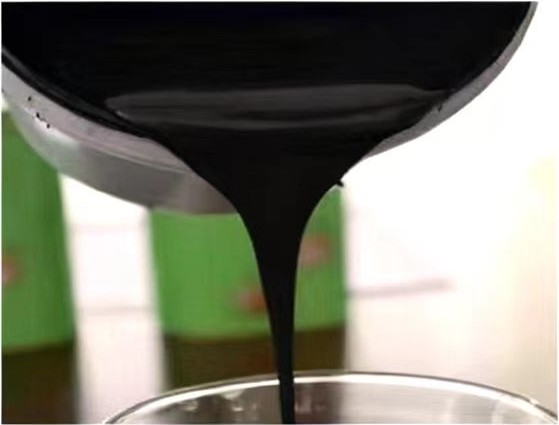
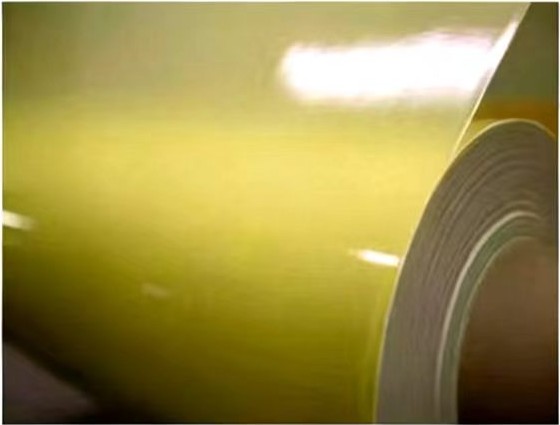
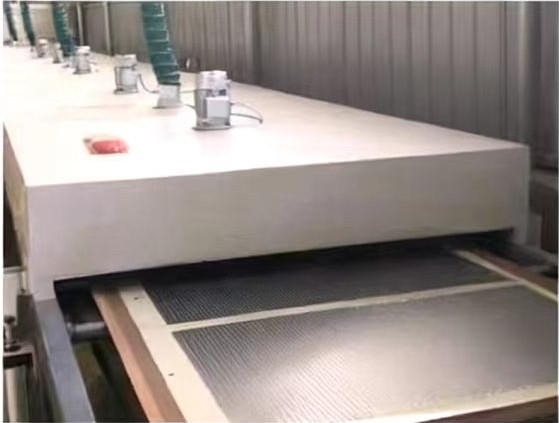
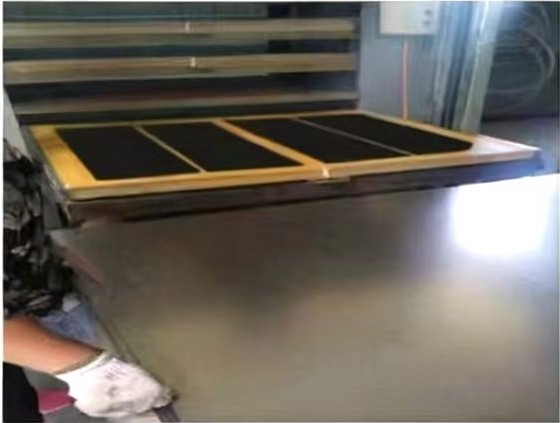
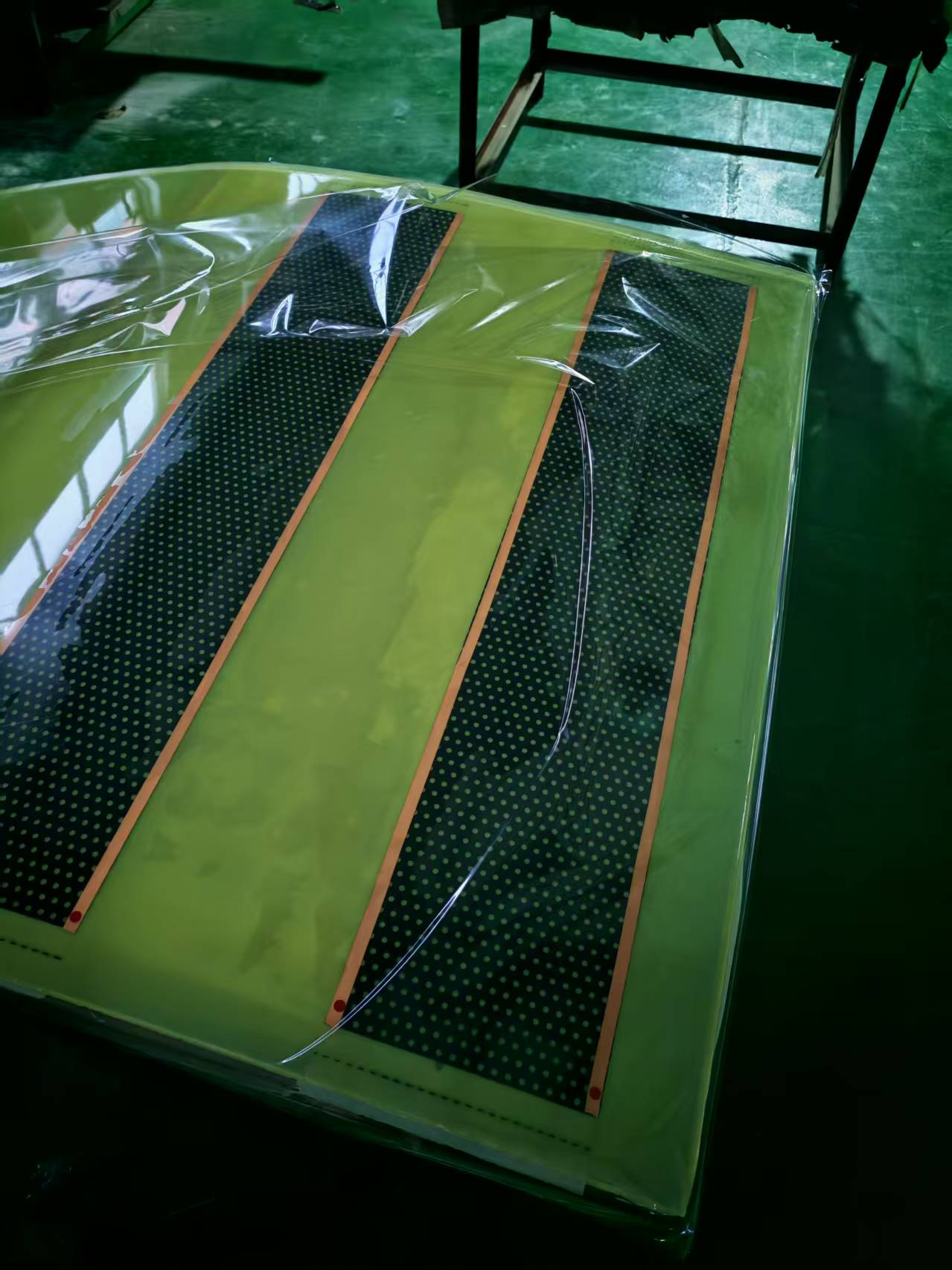
Every panel is a multi-layer laminate. Reading the cross-section from the outside in, the heating layer is surrounded by epoxy fiberglass cloth on both faces, with the graphene heating body at the centre and copper current-collecting busbars at the edges. The standard build is 0.8 mm thick and is hot-press consolidated so the layers cannot delaminate in service. The manufacturing line runs from raw graphene paste through printing, infrared curing, hot-press lamination and final electrical and thermal inspection.
Key Specifications
The values below describe the standard 220 V build. Test conditions and the relationship between power density and surface temperature are stated so the figures can be compared directly with your own design requirements.
| Parameter | Specification |
|---|---|
| Product type | FR4-encapsulated planar graphene heating panel |
| Heating element | Printed graphene–carbon layer |
| Encapsulation | FR4 epoxy-resin fiberglass cloth, hot-press laminated |
| Maximum sheet size | 1,250 × 1,050 mm |
| Standard thickness | 0.8 mm (custom 0.4–2.0 mm, tolerance ±0.05 mm) |
| Standard voltage | AC 220 V |
| Optional voltages | 5 / 12 / 24 / 36 / 110 / 380 V |
| Power density | Up to 1,500 W/m² |
| Long-term working temperature | ≤ 120 °C |
| Short-term peak temperature | ≤ 150 °C |
| Electrical-to-thermal conversion | ≥ 99.5% |
| Heat-up rate | ~90% of peak within 10 minutes |
| Infrared band | 8–15 µm far-infrared |
| Dielectric / withstand voltage | 2,500 V rated (hi-pot test 3,750 V / 60 s, current ≤ 5 mA) |
| Insulation resistance | 500 MΩ |
| Flame retardancy | UL94 V0 |
| Ingress protection | IP64 |
| Minimum bend radius | R75 |
| Shore hardness | 80 HD |
| Tensile strength | 100 MPa |
| Service life | 100,000 hours theoretical; 1,000 h ageing at 100 °C with ≥95% conversion retention |
Power Density and Surface Temperature
Surface temperature is set primarily by the power density, which is why we quote the two together. The reference points below are the basis for matching a panel to a target operating temperature: 500 W/m² corresponds to approximately 70 °C, 1,000 W/m² to approximately 100 °C, and 1,500 W/m² to approximately 120 °C. Actual measured temperature varies with mounting, insulation and airflow, so we recommend confirming the final power density against the thermal environment of the finished product.
Standard Sizes and Power Ratings
The standard range is offered in four widths — 30, 40, 50 and 60 cm — and lengths from 10 to 123 cm. The table lists the rated power in watts for every standard combination at 220 V. The underlying rule is simple and useful for estimating custom sizes: rated power in watts is approximately equal to the panel area in cm² divided by 100. A 30 × 10 cm panel is rated 30 W, a 60 × 60 cm panel 360 W, and the largest 60 × 123 cm panel 720 W.
| Length (cm) | 30 cm wide (W) | 40 cm wide (W) | 50 cm wide (W) | 60 cm wide (W) |
|---|---|---|---|---|
| 10 | 30 | 40 | 50 | 60 |
| 20 | 60 | 80 | 100 | 120 |
| 30 | 90 | 120 | 150 | 180 |
| 40 | 120 | 160 | 200 | 240 |
| 50 | 150 | 200 | 250 | 300 |
| 60 | 180 | 240 | 300 | 360 |
| 70 | 210 | 280 | 350 | 420 |
| 80 | 240 | 320 | 400 | 480 |
| 90 | 270 | 360 | 450 | 540 |
| 100 | 300 | 400 | 500 | 600 |
| 110 | 330 | 440 | 550 | 660 |
| 123 | 360 | 480 | 600 | 720 |
The ratings are measured at an ambient temperature of 25 °C, with the panel laid flat on insulation and read after 15 minutes of operation; the reference surface temperature is 100 °C and the rated voltage is 220 V. Nominal power tolerance is +5% to −10%. If your product needs a size outside this matrix, send the dimensions and target surface temperature and we will calculate the required power density and produce a custom build.
Custom Voltage, Dimensions and OEM Options
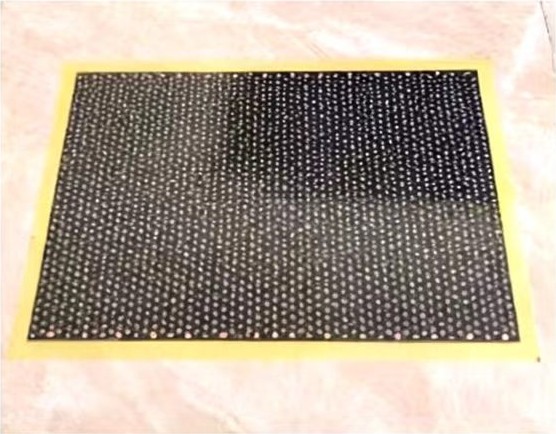
The standard 220 V build covers the majority of wall and sauna applications, but the same line supports a wide custom envelope. Maximum custom sheet size is 1,250 ×1,050 mm, thickness can be specified from 0.4 to 2.0 mm, and voltage can be built at 5 V, 12 V, 24 V, 36 V, 110 V or 380 V. Low-voltage versions are used where the panel is integrated into a product with contact-safety requirements, while 110 V builds serve North American mains markets and 380 V builds serve industrial three-phase equipment.
For OEM and ODM programmes we also customise the power density, lead-wire length and termination, edge finish, colour and packaging, and we can supply panels with or without pre-attached controls. Pairing the panel with our thermostats and controls gives a single-vendor solution with overheat protection, while a WiFi smart thermostat adds scheduling and remote setpoint for room and sauna installations. Tell us the application, target surface temperature and mounting method and our engineers return a dimensioned drawing and a sample before tooling.
Quality Control and In-House Testing
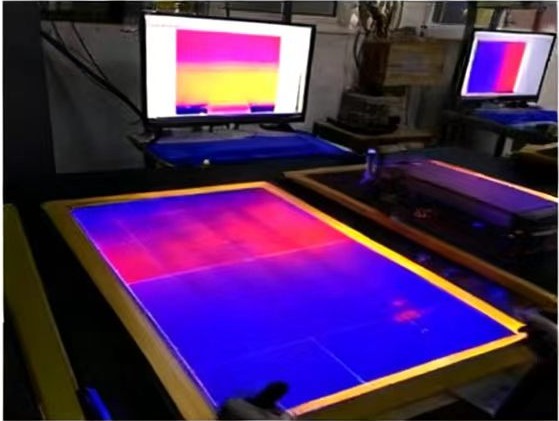
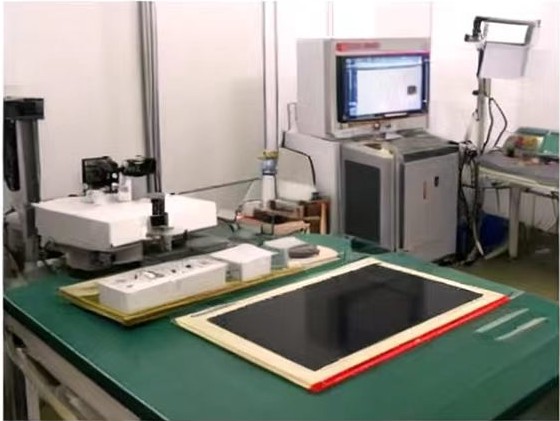
Quality is built around a defined final-inspection and electrical-safety routine rather than a single end-of-line check. Each panel is verified against the material and dimensional standard — FR4 epoxy resin, 0.8 mm thickness with a ±0.05 mm tolerance — and then goes through the electrical and thermal tests below. The same criteria are applied to custom builds.
| Test / inspection | Acceptance criterion |
|---|---|
| Dimensions | Custom length/width within +1 mm; thickness within ±0.05 mm |
| Appearance | Clean surface, no scratches, complete release film, no exposed white edges, no leakage, no edge lifting |
| Continuity | Resistance within ±5% to −10% of nominal |
| Electrode pull-off | External pull-off force ≥ 8 kg |
| Component security | No loosening or detachment |
| Hi-pot (withstand voltage) | 3,750 V / 60 s, current ≤ 5 mA, no breakdown |
| Scratch test | Blade scoring does not cut through to the heating layer or conductive layer |
| Bend / flex test | Bent through 30–80° with no arc, no resistance change, no surface cracking |
| Rated power | Nominal power within +5% to −10% |
| Peel strength | ≥ 3.0 |
| Solder float / immersion | −60 °C to 140 °C; edge immersion 5 s × 2 with no delamination |
| Temperature uniformity | Surface temperature difference ≤ 8 °C |
| Leakage current | ≤ 0.25 |
| Ageing test | 150 °C ageing, resistance change ≤ ±5%; withstand 3,000 V / 60 s ≤ 8 mA |
| On/off cycling | 5,000 cycles with good temperature control; resistance change within ±3% |
| Low-temperature storage | Resistance change within ±4% |
| High-temperature storage | Resistance change within ±4% |
Key Features and Benefits
- Far-infrared health-comfort heat — the 8–15 µm band delivers even radiant warmth without drying the air or generating fan noise.
- Rapid, uniform heating — reaches about 90% of peak within ten minutes, with a surface-temperature spread within 8 °C and no hot spots.
- Thin, light and robust board — the 0.8 mm FR4 panel is easy to integrate into confined wall, bench and appliance spaces.
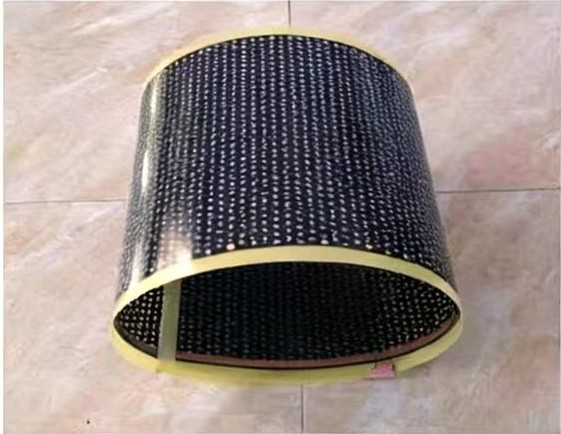
- Flexible and bendable — tolerates bending to an R75 radius and repeated flexing without cracking or resistance drift.
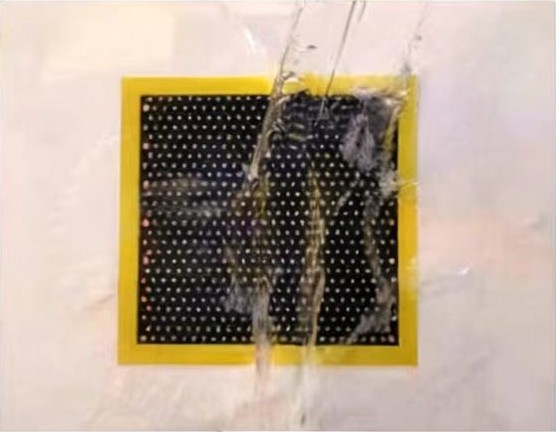
- Waterproof and corrosion resistant — IP64 sealing with encapsulated lead junctions for reliable service in humid environments.
- Flame retardant and high-temperature safe — UL94 V0 rating with a long-term working temperature up to 120 °C.
- Long service life — 1,000-hour ageing at 100 °C retains at least 95% of initial conversion, supporting a 100,000-hour theoretical life.
- OEM/ODM ready — custom size, thickness, voltage, power density, termination, colour and packaging to your specification.
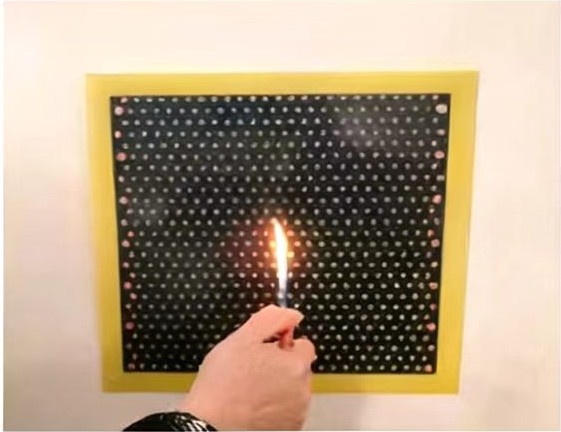
Typical Applications
- Sauna rooms and cabins — uniform far-infrared heating panels built into walls, benches and backrests.
- Wall heating — thin radiant panels mounted behind wall finishes for whole-room comfort with no floor space.
- Heating appliances — OEM planar elements inside sealed heaters, incubators, drying and warming equipment.
- Bench and seat warming — low-profile heated surfaces for furniture, wellness and therapy products.
- Panel and radiator integration — replacement heating cores for branded far-infrared panels and space heaters.
- Industrial process heating — 380 V custom boards for equipment requiring an even, controlled heated surface.
Installation and Integration Guidance
Correct mounting has a measurable effect on both output and life. The panel is designed to be bonded or clamped against a clean, flat surface; it should not be left floating, because an air gap behind the element changes the thermal balance and can raise local temperature. When the panel is used for wall heating, ensure the backing structure is stable and that any insulation is placed behind the panel so the radiant output is directed into the room rather than lost to the structure. Lead wires should be routed without sharp pulling at the junction — the electrode is rated for a pull-off force of at least 8 kg, but the connection should still be mechanically relieved rather than load-bearing.
For mains installations, always run the panel through a rated control or thermostat with overheat protection and confirm the total connected load is within the controller’s rating. Do not exceed the 120 °C long-term working temperature in the assembled product; if the enclosure is insulated or enclosed, derate the power density accordingly. Where the panel is bent to fit a curved surface, keep the radius at or above R75 and avoid repeated creasing at the same line. Following these points keeps the panel within the conditions validated by the ageing and cycling tests, which is what the 100,000-hour life figure assumes.
How to Size a Panel for Your Product
Start from the target surface temperature rather than a wattage. Select the power density that corresponds to that temperature — 500, 1,000 or 1,500 W/m² for roughly 70, 100 or 120 °C — then multiply by the available heated area in square metres to obtain the required power. If the design is constrained by a fixed area, work backwards from the area and the maximum power density to find the achievable temperature. For quick estimates on standard rectangles, the area-in-cm²-divided-by-100 rule gives the wattage directly. Our engineering team is happy to run these calculations with your actual mounting and insulation conditions, since real thermal environments shift the numbers from the flat-panel reference.
Safety and Compliance
The 220 V architecture is protected by the FR4 encapsulation, which provides a rated dielectric strength of 2,500 V and is hi-pot tested at 3,750 V for 60 seconds with leakage held below 5 mA. Insulation resistance is at least 500 MΩ, the board is rated UL94 V0 for flame retardancy and IP64 for moisture, and the recommended control path includes overheat shutoff. These baseline properties support CE and RoHS export builds under our ISO 9001 quality system. Independent test documentation and the certificates relevant to each destination market are available through our certifications page or on request; state your target market at quotation so the correct documentation is prepared.
Why Choose SunAura as Your Heating Panel Manufacturer
SunAura Thermal has manufactured far-infrared heating elements in Qingdao since 2008, controlling the paste, printing, curing, lamination and inspection stages in-house. That vertical integration lets us quote a direct factory price on graphene heating panel and graphene heating board programmes, hold a flexible MOQ and keep the engineering discussion directly with your product team. We supply OEM appliance brands, sauna and wellness manufacturers, heating-appliance makers and distributors across export markets, and we build both finished components and custom ODM elements to the same quality standard.
Real installations and export builds are documented on our customer case studies page. Send us your target dimensions, voltage, surface temperature and quantity, and we return a sample, a dimensioned drawing and a written quotation — because the element, encapsulation and testing all happen under one roof, sampling loops are short and you are not waiting on a separate subcontractor.
Factory Video: Graphene Heating Panels in Production
The short video below shows heating panels being produced and stacked on our Qingdao line, including the finished planar elements and the scale of a production batch. It is hosted directly on our own server and marked up with structured video data so search engines can read it without errors.
Related Products and Internal Links
The heating panel sits within our broader graphene home heating range. For wall and underfloor surfaces, our graphene wall heating film and underfloor heating systems cover the installed-film side; for finished room heaters, the graphene infrared heating painting and graphene far-infrared space heater are the ready-to-use products. If you are developing wearables or soft goods, the low-voltage heating cloth, heated vest and heated jacket use the same graphene technology at low voltage. Controls are covered by our WiFi smart thermostats and thermostats and controls.
Related Graphene Products
- custom encapsulated heating film — a fully sealed 220 V film for damp rooms and custom lengths.
- flexible heating film rolls — wide planar film for mats, blankets and mattresses.
- heated floor mat — a finished anti-slip foot mat using the same heating technology.
- the graphene home heating range — the hub for the full category and its products.
Frequently Asked Questions
What is the standard voltage and can it be customised?
The standard panel runs on AC 220 V. It can be built at 5 V, 12 V, 24 V, 36 V, 110 V or 380 V for OEM applications, including low-voltage contact-safe builds and North American 110 V mains.
How thick is the panel and can it be bent?
The standard thickness is 0.8 mm, with a custom range of 0.4–2.0 mm. The board is flexible and can be bent to a minimum R75 radius without damage or resistance change, which suits curved wall and bench installations.
How do I choose the power density for a target temperature?
As a reference, 500 W/m² gives roughly 70 °C, 1,000 W/m² roughly 100 °C and 1,500 W/m² roughly 120 °C. We confirm the final figure against your actual mounting and insulation, and the panel is rated for long-term use up to 120 °C.
What is the largest panel you can produce?
The maximum single sheet is 1,250 ×1,050 mm. Standard widths are 30, 40, 50 and 60 cm with lengths from 10 to 123 cm, and non-standard dimensions are available as custom builds.
How is electrical safety verified?
Every panel is hi-pot tested at 3,750 V for 60 seconds with leakage below 5 mA, has insulation resistance of at least 500 MΩ, and is rated UL94 V0 and IP64. Supporting CE and RoHS documentation is available on request.
What is the expected service life?
In accelerated ageing, panels run continuously for 1,000 hours at 100 °C while retaining at least 95% of initial conversion efficiency. Under the recommended operating conditions this supports a theoretical service life of around 100,000 hours.
Do you supply samples and custom OEM builds?
Yes. Reference samples are available for evaluation, and pre-production samples confirm custom dimensions, voltage, power density and branding. We can customise size, thickness, voltage, termination, colour and packaging, with a flexible MOQ and short sampling loops.
Can the panel be paired with a thermostat?
Yes. It integrates with any thermostat rated for the connected load, and we recommend our own WiFi smart thermostats and controls for a single-vendor solution with scheduling and overheat protection.
Request a Quote for Graphene Heating Panels
Tell us your dimensions, voltage, target surface temperature, quantity and destination country, along with any custom termination or branding needs. Our export engineers reply within 24 hours with a factory price, MOQ, lead time and a free-sample offer. Start from the contact page or message us on WhatsApp.
Request Wholesale Price WhatsApp an Engineer
Related Products You May Need
Pair this product with compatible SunAura components — one factory, one warranty.
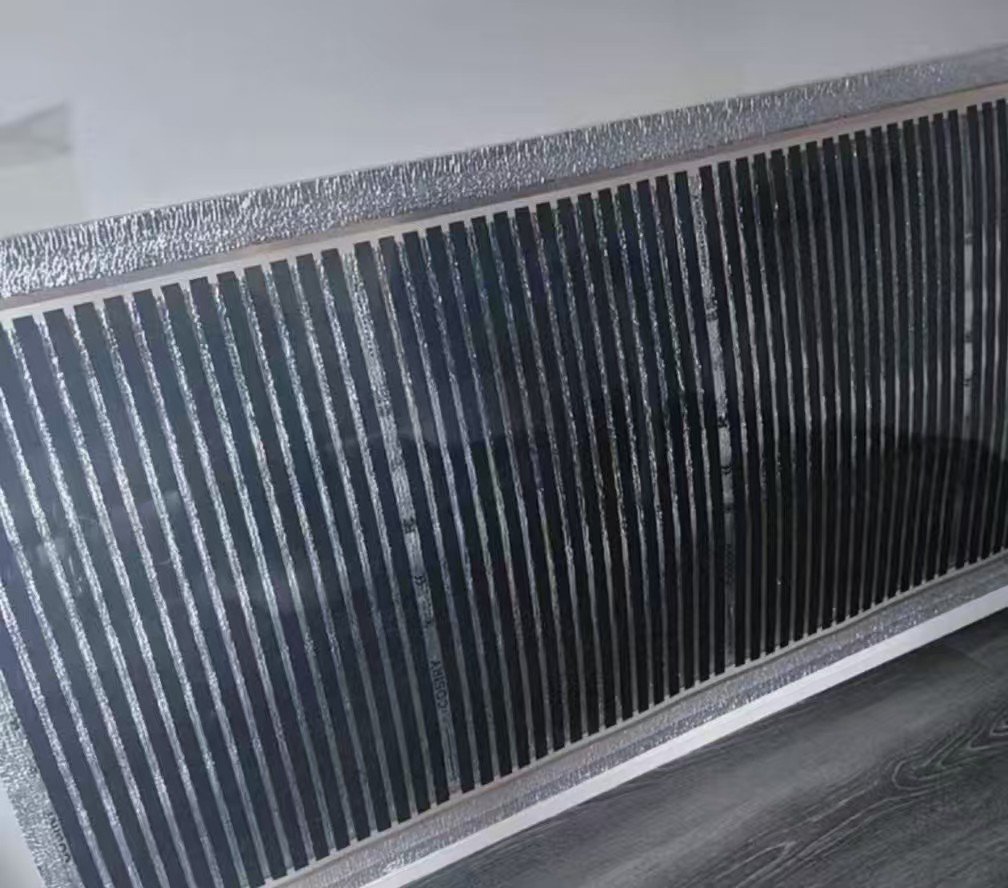
Graphene Wall Heating Film
Ultra-thin 50 cm-wide 220 V far-infrared wall film with plug-and-play in-line thermostat and zero floor space. 125-1000 W per panel, CE/RoHS, factory Qingdao since 2008.
Custom Graphene Encapsulated Heating Film
Factory-sealed 220V graphene heating film for damp and wet rooms. 54 cm wide, 230 W/m2, 3750 V hipot, factory-cut in 5 cm steps, 40+ year life.
Flexible Planar Graphene Heating Film
Wide 70 / 140 cm planar graphene heating film roll for electric blankets, pet mats, floor mats and mattresses. 220 V, uniform 230 W/m2, 50+ year life.
Low-Voltage Graphene Heating Cloth
Washable, foldable graphene heating cloth on safe 5 / 12 / 24 / 36 V USB power. 6 cm wide, whole-surface heat, for wearables, home textiles and delivery liners.