
When a water pipe freezes, the water inside expands, the pipe splits, and the leak does not always appear until the thaw — by which time a basement, a pump house or an entire warehouse floor is already flooded. A pipe freeze protection system built around a heat trace cable (also called heat tape for pipes, pipe heating cable or trace heating) is the standard engineering answer: an electric heating element run along the pipe, under insulation, that replaces the heat lost to the cold outdoors and holds the pipe above 0 °C. This guide explains how heat trace actually works, how to size it by pipe diameter, how to install and control it, and where the common — and expensive — mistakes happen.
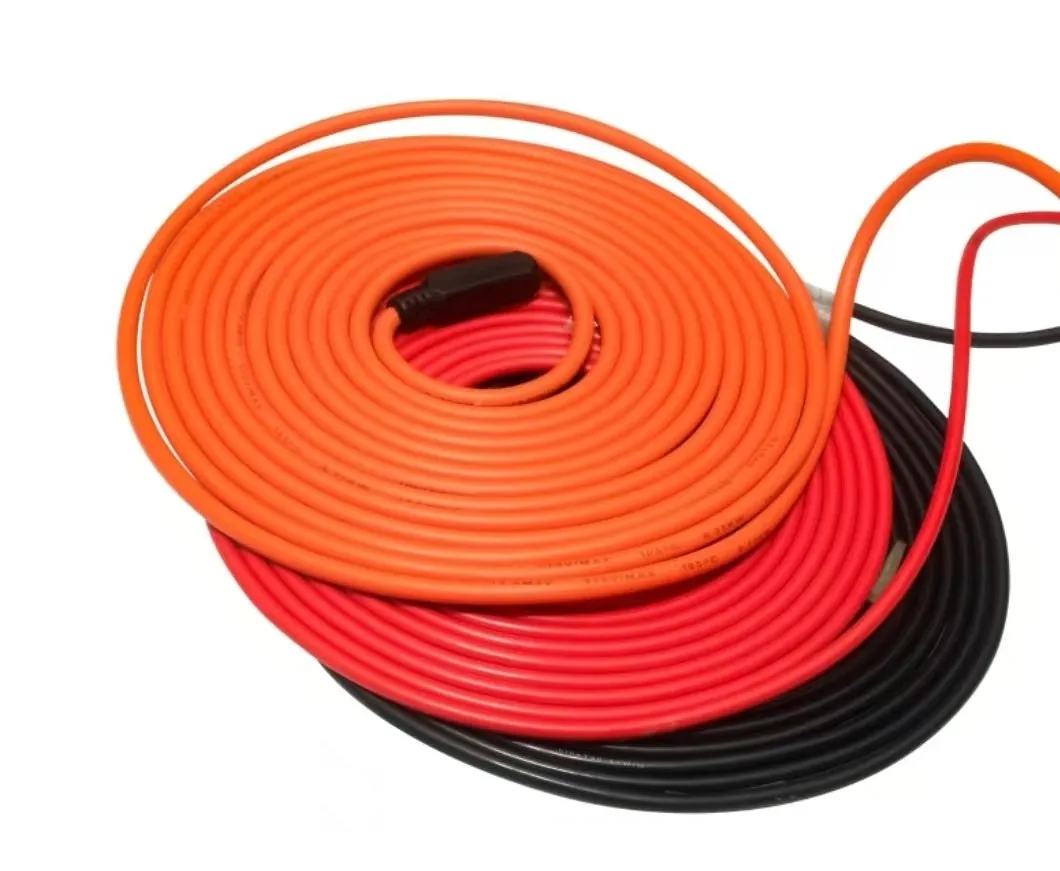
What Is Pipe Freeze Protection and Why It Matters
Water expands by roughly 9 % when it turns to ice. A closed, pressurised pipe cannot absorb that expansion, so the weakest point — a solder joint, a threaded elbow, a plastic coupling or a corroded section — bursts. The burst is invisible while the pipe is still frozen; it reveals itself when the ice thaws and water flows again. That is why frozen-pipe claims are among the most expensive winter losses for homeowners, farms, warehouses, retail units and municipal pumping stations.
Pipe freeze protection is therefore not a comfort heating task. It is a maintenance-of-flow task: you only need to keep the pipe above the freezing point of water, with a small safety margin. There is no requirement to heat the water to a comfortable temperature, no need to heat the surrounding air, and no value in over-sizing the system. A correctly sized heat trace cable runs at low average wattage, draws power only on cold nights, and pays for itself in a single avoided burst. SunAura has manufactured self-regulating heat trace cable for this exact application since 2008, and the engineering rules below are the ones our export team uses on real pipe schedules.
How Heat Trace Cable Works: Self-Regulating PTC vs Constant Wattage
There are two fundamental electric heat trace architectures, and choosing between them is the first decision on every freeze-protection project.
Constant-wattage (series-resistance) heat trace is a resistive heating wire — often a double-conductor or braided cable — that puts out a fixed number of watts per metre regardless of temperature. It behaves like a toaster element: the more voltage you apply, the hotter it gets, and it will keep trying to heat until something limits it. Because the output does not change with temperature, it must be paired with an external thermostat, and it cannot be overlapped on itself (overlap causes a hot spot because the same length of wire is now heating a smaller area). It is ordered to a fixed length, trimmed in the factory, and terminated in the factory. In our range this is the role of the double-conductor heating cable (SA-CABLE).
Self-regulating PTC heat trace is a parallel circuit: two bus wires run the length of the cable, and between them sits a conductive polymer matrix doped with carbon. As the polymer warms up, its crystalline structure expands and the conductive paths break — resistance rises and output drops. As it cools, the matrix contracts and output rises. The cable therefore puts out more watts per metre when the pipe is cold and fewer watts when the pipe is warm, all without an external thermostat per circuit. Crucially, because each inch of the core is its own parallel heater, the cable can be cut to length on site, overlapped on itself without overheating, and terminated in the field with a kit. This is the technology behind our self-regulating heating cable range.
For pipe freeze protection, self-regulating PTC is the default choice in 90 % of exposed-water-line applications: it tolerates variable pipe temperatures, it tolerates insulation gaps, and it is forgiving of installer error. Constant-wattage cable still earns its place on long, uniform, fully-insulated industrial runs where a fixed output and a single central controller are preferred, and on high-temperature process tracing where PTC polymers are not rated. For very hot processes — tank tracing up to 200 °C — engineers move to our silicone heating cable instead.
Heat Trace Sizing: Watts Per Metre by Pipe Diameter
Sizing a freeze-protection circuit comes down to a single question: how many watts per metre of pipe do you need to replace the heat lost through the insulation at your design minimum ambient temperature? The heavier the pipe and the thinner the insulation, the more watts per metre you need. The table below gives typical guidance values for insulated water pipe at a design ambient of roughly −10 °C, holding the pipe at +5 °C. These are rule-of-thumb starting points, not a substitute for a formal heat-loss calculation on insulated pipe.
| Nominal pipe OD | Typical insulation | Recommended cable output (typical) | Typical application |
|---|---|---|---|
| 15–20 mm (½–¾ in) | 13–19 mm closed-cell foam | 10–16 W/m | Indoor exposed runs, garden hose bibs, condensate lines |
| 25–32 mm (1–1¼ in) | 19–25 mm closed-cell foam | 16–25 W/m | Outdoor residential water mains, pump-house pipework |
| 40–50 mm (1½–2 in) | 25 mm closed-cell foam | 25–30 W/m | Commercial service lines, fire-sprinkler risers |
| 65–100 mm (2½–4 in) | 25–32 mm closed-cell foam | 30–45 W/m | Warehouse mains, unheated basement steel pipe |
| >100 mm (4 in+) | 32 mm+ mineral wool or similar | 45 W/m and up / dual circuit | Industrial process lines, large fire mains — formal calc required |
SunAura stock self-regulating cable in the 16 W/m, 30 W/m and 45 W/m output classes, which covers the columns above. If your design ambient is colder than −10 °C (for example northern North America, northern Europe or high-altitude sites), move up one wattage class. If the pipe is uninsulated or exposed to wind, treat it as two size classes up — bare pipe loses heat far faster than insulated pipe, and the cheapest fix is usually better insulation, not a hotter cable.
Insulation, Ambient Temperature and the Real Heat Load
A heat trace cable is matched to the total heat loss of the insulated pipe, not to the pipe wall. That means insulation is half the system. A 25 mm closed-cell elastomeric sleeve (Armaflex or equivalent) on a 25 mm copper pipe at −10 °C loses roughly 10–15 W per metre; the same pipe with no insulation loses 80 W per metre or more. For the same power bill, adding insulation halves the cable wattage required and halves the annual energy draw.
Three insulation rules that catch installers out:
- Seal every joint and gap. Insulation that is split at a valve, a union or a support hanger becomes a cold spot. Use insulation covers on valves and flanges, and run a separate short length of cable under them.
- Do not compress the insulation. Compressed foam loses its effective R-value. Use the correct sleeve ID for the pipe OD.
- Weatherproof the outside. Outdoor insulation must be jacketed with a UV-resistant PVC or aluminium wrap; bare foam absorbs water and turns into a heat sink.
The design ambient temperature is the coldest 1-in-10-year outdoor temperature for the site, not today’s weather. Oversizing to a local 50-year low wastes energy; undersizing to a mild winter guarantees a burst in the cold week. Use the local weather-service extreme minimum, add 5 °C of margin, and size the cable to that.
Choosing Between Self-Regulating and Constant-Wattage Heat Trace
Once you have the watts-per-metre number, the next question is which architecture delivers it. Use this decision list:
- Self-regulating PTC — runs: variable environment, mixed insulated/uninsulated sections, overlapped on itself at elbows, cut on site, multiple branch tees, freeze protection only, no single master thermostat. Safer for installers and for long unattended runs.
- Constant wattage — runs: long straight uniform pipe, fully specified and factory-terminated, single central thermostat, fixed output required, longer circuits at lower installed cost per metre. Requires a thermostat on every circuit and careful overlap avoidance.
- Silicone / high-temperature — runs: process pipe above the PTC polymer limit, drain lines with condensate temperatures, tank and instrument tracing. See our silicone heating cable page for the 200 °C construction.
For domestic, farm, retail and most commercial freeze-protection work, self-regulating PTC is the right default. It is slightly more expensive per metre than constant-wattage cable, but it removes the cost of a per-circuit thermostat, removes the risk of installers overlapping cable and creating hot spots, and survives insulation gaps that would destroy a fixed-wattage circuit.
Installing Heat Trace Cable on Water Pipes: Step by Step
Good heat trace installation follows a repeatable sequence. Cut the power, plan the circuit, then work top-down so the cold tail can land in a junction box or plug.
- Measure the pipe run including valves and fittings. Cable length = straight pipe + 2× valve length + 1× flange length + the exposed support-hanger sections. Add 10 % for corner wraps. Do not forget that valves and flanges lose more heat than straight pipe and need the cable spiralled for a turn or two.
- Affix the cable to the pipe. For self-regulating PTC, run the cable straight along the bottom third of the pipe (the coldest side) at 4 or 5 o’clock, secured with aluminium tape every 30 cm. The aluminium tape spreads heat across the pipe wall. On small pipes (≤25 mm) a straight run is enough; on larger pipes or cold-climate sites, spiral the cable around the pipe at 5–10 cm pitch. Never run the cable through a pipe lug or support without a thermal break.
- Branch runs and tees. On a tee, continue the cable straight through the main run and add a separate branch off the tee — do not try to split a self-regulating cable mid-run.
- Terminate the cold tail. Use the manufacturer’s end-seal kit on the cut end of the heating core; do not twist or tape the cut end. The cold tail (a non-heating lead) lands in a weatherproof junction box or plugs directly into a GPO. For outdoor use the junction box must be IP65 or higher.
- Insulate immediately after electrical testing. Megger-test the cable before and after insulation. Wrap the closed-cell sleeve, tape every longitudinal seam, fit valve covers, and jacket the outside if outdoor.
- Label the circuit. Every heat trace circuit should be labelled at the breaker and at the thermostat so winter service staff know what is on what.
Thermostats, Sensors and Control Strategies
Even self-regulating PTC cable benefits from control: without a thermostat it will draw partial power all winter, which is safe but wasteful. The control choice depends on the circuit.
- Plug-in mechanical thermostat — the simplest option for a single domestic pipe run. A bimetallic switch mounted on the pipe turns the circuit on below ~5 °C and off above ~10 °C. Fine for one hose bib or pump house.
- Pipe-sensing digital thermostat — a surface-mount NTC probe strapped to the coldest part of the pipe, with the controller indoors. Holds the pipe at a setpoint (typically +5 °C) and shows the reading on screen. The right choice for commercial and agricultural circuits. Browse our thermostats and controls range for probe-wired units.
- Ambient + moisture sensor (snow/ice sensor) — used where the same circuit also covers roof de-icing. The controller energises only when it is both below freezing and wet. Overkill for a pure water-pipe circuit.
- Smart / Wi-Fi thermostat — adds remote monitoring, fault alarms and energy reporting; useful when the protected site is unmanned (a remote pump house, a weekend cabin).
The sensor placement rule that matters: strap the pipe sensor to the pipe itself, not to the insulation and not in the air. An air sensor reads the building temperature, which can be warm while the exposed pipe at the wall penetration is freezing. Fix the probe at the coldest point on the run — usually the last 30 cm before an outdoor faucet, or the pipe section nearest an unheated vent.
Freeze Protection vs Comfort Process Heating: Know the Difference
A common sizing mistake is to confuse freeze protection with process or comfort heating. They are different design problems:
- Freeze protection holds the pipe at +1 to +5 °C. Heat-up time is irrelevant; the cable runs continuously through the cold season and only has to counter steady-state heat loss. Low wattage, low setpoint, simple thermostat.
- Process / comfort tracing holds a fluid at 40, 60 or 120 °C so it flows, mixes or stays safe. It needs higher wattage, higher-temperature cable constructions, and often a closed-loop PID controller with over-temperature backup.
If you are protecting a drinking water pipe, size for freeze protection. Do not size for hot-water maintenance — that cable class will be over-built, expensive to run, and (on a plastic pipe) will risk softening PEX or PVC if it ever runs dry. SunAura’s 16/30/45 W/m self-regulating range is deliberately built for the freeze-protection end of the market; for process tracing we will spec a higher-temperature construction separately.
Safety, Certification and Electrical Codes
A heat trace circuit on a water pipe is a 24/7 electric heating load touching a wet environment. Treat it with the same care as any fixed electrical installation:
- Ground-fault protection (GFCI / RCD). Every outdoor or wet-location heat trace circuit must be on a 30 mA residual-current device. This is not optional on any commercial installation and is strongly recommended on every domestic one.
- Breaker sizing. The breaker must handle the cold-start inrush of a PTC cable (which can be several times the steady-state wattage for the first few seconds). Size the breaker at 1.25× the nameplate circuit load.
- Certifications. Look for CE and RoHS on the cable jacket and braid; for North American installations, look for UL/CSA-listed assemblies. SunAura ships every reel with batch DC-resistance, insulation-resistance and high-voltage test reports from our Qingdao laboratory.
- Potable water contact. The cable does not touch the water — it runs outside the pipe, under insulation — so food-contact certification is not required, but the jacket material must be rated for the pipe temperature and not leach on long-term heat aging.
- Do not run under floor finish. Pipe freeze trace stays accessible for inspection; it is not embedded like underfloor heating.
Common Installation Mistakes That Cause Failures
Field failures almost always trace back to one of these five errors:
- Insulation installed without testing the cable. Once the sleeve is closed, a damaged core is invisible. Megger-test before insulation, not after.
- Running the cable through a support hanger without a bridge. The hanger crushes the cable, creates a local hot spot, and eventually faults.
- Using a constant-wattage cable and letting it overlap. This is the classic fire-cause: overlapping fixed-wattage cable doubles the watts per metre in the overlap and cooks the jacket. Use PTC if overlap is unavoidable.
- No end seal. A cut self-regating core without the manufacturer’s end seal absorbs moisture and fails within a season.
- Thermostat sensor in the wrong place. Air sensors, sensors on warm sections, or sensors on the wrong side of an insulation gap all read too warm and leave the actual pipe frozen.
Frequently Asked Questions
What size heat trace cable do I need for a 25 mm water pipe?
As a typical starting point, a 25 mm (1 inch) insulated outdoor water pipe at a −10 °C design ambient calls for a 16–25 W/m self-regulating cable class. If the pipe is uninsulated, exposed to wind, or in a colder climate, move up to 30 W/m. Send us the pipe diameter, insulation thickness and design minimum temperature and we will size it for free.
What is the difference between heat tape and heat trace cable?
In practice they are the same thing for water-pipe freeze protection: an electric heating element run along the pipe. “Heat tape” usually refers to the flexible, plug-and-play domestic form; “heat trace cable” usually refers to the industrial, cut-to-length, field-terminated form. Both can be self-regulating PTC or constant-wattage.
Can I cut self-regulating heat trace cable to length on site?
Yes. Because the PTC core is a parallel circuit, the cable can be trimmed to any length on site without changing its watts-per-metre output. You must terminate the cut end with the manufacturer’s end-seal kit — never leave the exposed bus wires open.
Do I need a thermostat with self-regulating heat trace?
Safety does not require one — the PTC core self-limits — but energy efficiency does. Without a thermostat the cable draws partial power all winter. A pipe-sensing thermostat (see our thermostats and controls range) cuts power whenever the pipe is above +5 °C and typically cuts annual energy use by 50 % or more.
Is heat trace cable safe on PVC, PEX and copper pipes?
Yes, when sized for freeze protection (low surface temperature). PTC self-regulating cable caps its own temperature and will not overheat the pipe wall. On plastic pipe, always use a low-wattage class (10–16 W/m) and keep the pipe insulated so the heat spreads evenly rather than concentrating under the cable.
How much does pipe freeze protection heat trace cost?
As an order-of-magnitude estimate (2026, factory-direct export pricing), the self-regulating cable itself runs roughly USD 3–8 per metre depending on wattage class, plug type and length. A 15 m domestic water-pipe circuit with a plug-in thermostat and end seals is typically a few tens of dollars of material. Larger commercial circuits are quoted per project — contact us with your pipe schedule for a firm number.
Get Sizing Help From the Manufacturer
SunAura is a factory-direct heat trace cable manufacturer in Qingdao, shipping self-regulating PTC cable to distributors, contractors and installers in North America, Europe and the Middle East. Send us your pipe schedule — diameter, material, insulation thickness, design minimum ambient and circuit length — and our engineers will confirm the wattage class, circuit count and controller, free of charge. We support OEM and ODM programmes with custom voltage, wattage class, cold-tail length and plug type for your market, and we stock the 16/30/45 W/m classes for fast sample reels. Start from the self-regulating heating cable product page, or contact our export team with your drawings.
Related Products & OEM Inquiries
Looking for pipe freeze-protection heat-trace cable or a factory-direct OEM/ODM partner? Explore our self-regulating PTC heat-trace cables and silicone heating cables, then request a quote for your project — we supply distributors, installers and brands in 50+ countries.