
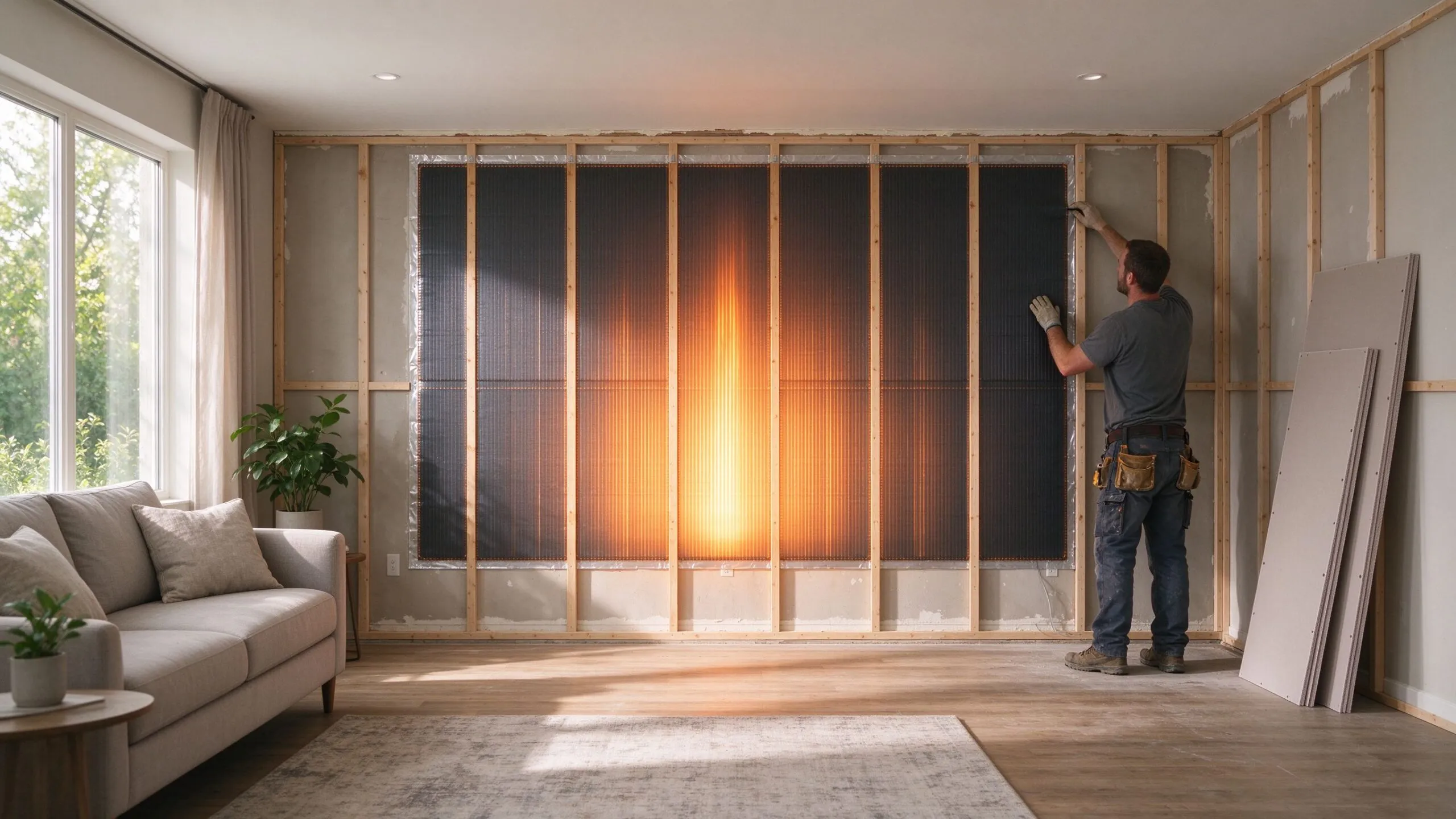
Floor heating gets the attention, but walls are where a surprising amount of heat escapes — and where the same graphene film technology can work just as hard. This article explains how graphene heating film for wall heating is used in real installations: the physics, the mounting method, the control and the numbers behind it. Written by Ethan Sun, Founder & CEO, SunAura Thermal.
Why Heat Walls Instead of Floors?
Every home loses heat through its envelope, and in an existing building the walls are the largest surface in the room. Wall heating does not try to beat the heat loss — it neutralises it. A warm wall surface raises the mean radiant temperature of the room, which is the temperature your body actually feels, so the air thermostat can sit lower while comfort stays the same.
That is the same principle that makes floor heating comfortable, applied to a different surface. Where floor heating works on the coldest surface you stand on, wall heating works on the surface you lose heat through. The two are complementary: many projects use film on exterior walls to counter cold radiation from the envelope, and floor heating or another system for the rest of the room.
There are three practical reasons installers choose wall-mounted film in renovation:
- No screed, no height build-up — wall film is mounted in a dry layer behind plasterboard or in existing wall panels, which suits renovation work where the floor build-up is not available.
- Fast response — a wall-mounted element heats the air and surfaces in the room more directly than a floor element buried under screed, so the room reaches temperature faster.
- Furniture freedom — walls are rarely covered by furniture the way floors are, so the heated area stays clear of rugs, sofas and beds that would block a floor element.
For a distributor, wall film is also a range extension: the same film rolls, the same thermostat family and the same installation training serve both floor and wall projects, which keeps stock and spare parts unified.
How Graphene Film Heats a Wall Surface
A graphene heating film is a laminate in which a printed graphene-based carbon layer sits between two insulating polyester films, with copper busbars at the edges and cold leads exiting for connection. When mains power passes through the carbon layer, it converts electricity into heat by resistance — no filament, no element wire, no hot spots. The heat transfers to the wall surface by conduction through the film laminate and then radiates into the room.
The graphene layer gives three properties that matter on a wall:
- Even surface temperature — the carbon layer heats uniformly, so the wall surface holds a consistent temperature across the whole panel rather than showing warm and cold bands.
- Fast warm-up — the film is millimetres thin with low thermal mass, so the wall surface responds to the thermostat within minutes.
- Safe surface temperature — the element is designed so the wall surface stays within a comfortable and code-compliant range; the exact figure is stated in the product specification and should always be checked before specifying (per SunAura factory records, film surface temperatures are factory-set and verified per batch).
Because the element is fully enclosed in the laminate, wall-mounted film needs no earthing mesh or specialised tile adhesive — it is a dry product, which is exactly why it suits plasterboard and panel constructions. This construction is the same family as our flexible heating film wholesale range, with the mounting method changed for vertical surfaces.
Mounting Methods for Wall Heating Film
Wall film is mounted in one of three ways, and the choice depends on the wall construction and the finish:
- Behind plasterboard (dry wall) — the film is fixed to the studs or the existing plaster surface, and a new plasterboard layer is screwed over it. This is the cleanest renovation method: no wet work, no dust, and the film is fully hidden. The cold leads run down inside the cavity to a junction box at skirting height.
- In wall panels — for retrofit panel systems, the film is bonded into a pre-made panel or fixed to the wall behind a decorative panel. This is the fastest method where panels are part of the design.
- Under a skim finish — in specific constructions, film can be set in a thin adhesive layer and skimmed, but this is product-specific; most wall installations use dry methods because they keep the system serviceable.
The layout follows the same rule as every electric heating element: cover the net wall area, avoid cutting film through the active area except at the marked busbar lines, and keep the element away from fixtures that would be punctured by later fixings. The mounting instructions supplied with the film show the permitted cutting points and the minimum distances to edges and sockets — following them is what keeps the installation safe and the warranty valid.
Step-by-Step: Graphene Wall Heating Film Installation
A typical wall installation behind plasterboard runs through these steps:
- Measure the wall — calculate the net area to be heated (wall area minus doors, windows, sockets and fixed joinery) and select the film width and total wattage for the zone.
- Prepare the substrate — the wall surface must be flat, dry and free of loose material; any repair is completed before the film goes up.
- Fix the film — the film is fixed with adhesive or staples at the marked fixing zones only, never through the active carbon area. The busbars face the supply side and the cold leads are routed to the planned junction box.
- Install the sensor — a room sensor is placed in a representative position away from direct sun and heat sources; if surface control is used, the sensor is bonded to the film surface at a mid-panel point (per the product instructions).
- Electrical connection — the cold leads terminate in a junction box; the circuit is protected per local code and connected to the thermostat. Connections are photographed before the wall is closed.
- Close the wall — plasterboard is screwed over the film with screws at the permitted fixing lines; the board edges are taped and finished as normal.
- Commission — the thermostat is set, a full heating cycle is run, and the surface temperature and current draw are checked against the specification sheet.
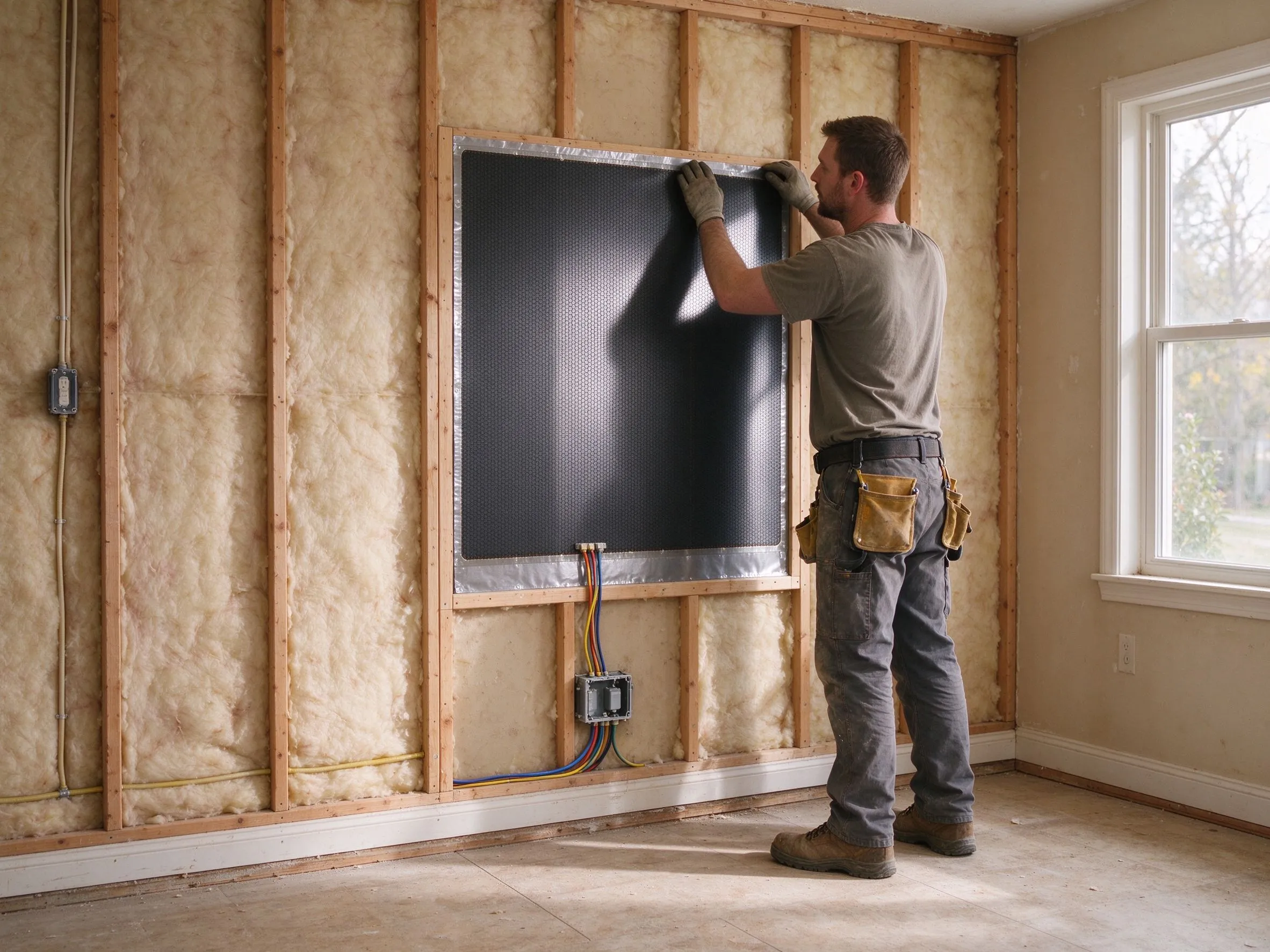
The whole sequence is a dry build
, which is why graphene wall heating film installation is popular with renovators who want heat without wet trades. The same steps are covered in our installation guide, and the engineering team supports layout drawing and zone selection for every order.
Controls and Zoning for Wall Heating
Wall heating zones follow the same control logic as floor heating, with one difference: the wall surface has low thermal mass, so the system responds quickly and the thermostat can use tighter schedules without comfort swings. A programmable thermostat with a room sensor handles the typical case; where surface temperature matters, a film-mounted sensor can be used (per the product instructions).
Each wall zone runs on its own thermostat
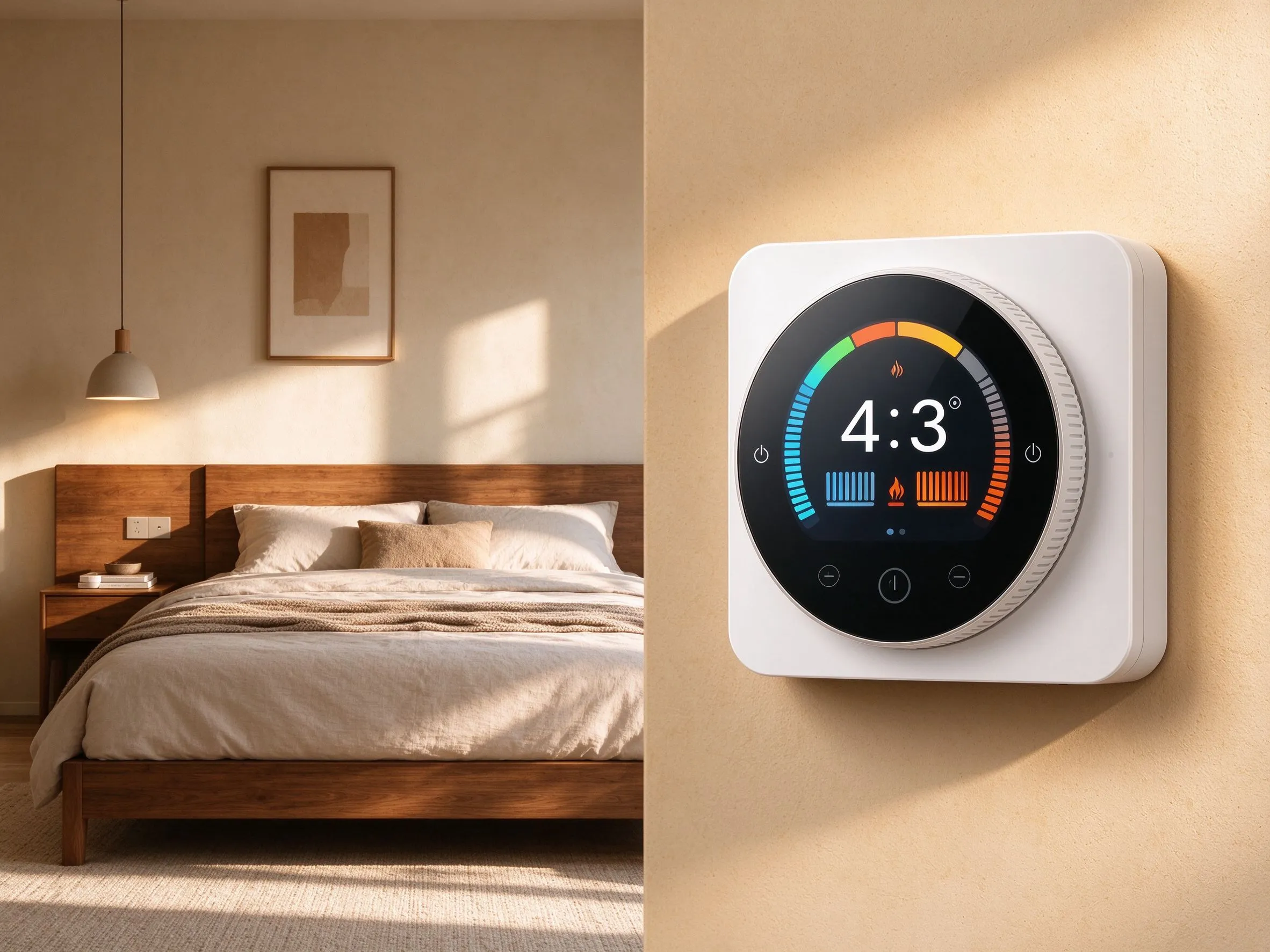
, so a bedroom wall can be setback overnight while a living-room wall holds the evening temperature. The smart thermostat for underfloor heating range doubles as the control platform for wall film — one control family across both applications, which keeps training and spares simple for installers and distributors.
Wall Heating vs. Floor Heating: Where Each Wins
| Consideration | Wall heating film | Floor heating |
| Build-up | Dry, thin (millimetres) | Needs screed or subfloor space |
| Renovation fit | Excellent — no wet trades | Depends on floor construction |
| Response time | Fast (low thermal mass) | Slower (mass in screed/floor) |
| Heat distribution | Radiates from wall surface | Radiates from floor surface |
| Furniture impact | Unaffected by rugs and furniture | Covered areas lose output |
| Best pairing | Exterior walls, renovation, panels | Tiles, full-room primary heating |
The two systems are not competitors in most projects — they are complementary. A common pattern is floor heating for wet rooms and main living areas plus wall film on cold exterior walls or in rooms where the floor build-up is not available. When we supply a mixed project, the layout drawings cover both surfaces so the installer works from one document.
Data and Evidence
This article is written from the product specification for wall-mounted graphene film and the installation practice used by our engineering team (per SunAura factory records). Supporting facts about the manufacturer:
- 17 years of continuous heating manufacturing since 2008, based in Qingdao’s Huangdao district (per SunAura factory records).
- ISO 9001 quality management, ISO 14001 environmental management and ISO 45001 occupational health & safety certification covering the product range.
- CE, RoHS, LVD and EMC compliance for EU-bound orders; documentation provided with every shipment.
- Products exported to 50+ countries across Europe, North America, Latin America, the Middle East and Southeast Asia.
- Film batches are tested before packing, with resistance and surface-temperature checks recorded per unit (per SunAura factory records).
For independent guidance on wall and radiant heating practice, the U.S. Department of Energy publishes a general overview of radiant heating systems, which is a useful reference for installers and buyers: energy.gov radiant heating overview.
Wall Heating in Different Room Types
The right wall-heating layout depends on the room’s function, and matching the zone to the room is where the engineering judgement sits:
- Bedrooms — an exterior-wall panel countering cold radiation, with a night-time setback schedule. The low thermal mass of wall film means the room responds quickly in the morning, which suits the way bedrooms are actually used.
- Bathrooms — wall film is often paired with a floor element: film on the exterior wall for radiant comfort, mat under the tile for a warm floor. The two zones are controlled separately, and both run off the same thermostat family.
- Living rooms — the largest wall surfaces offer the most output, but furniture and TV units change the usable area. The layout drawing marks the clear areas; the heated zone covers the open wall rather than the hidden one.
- Basements and garages — spaces with cold envelope surfaces benefit most from wall radiation. In a basement conversion, wall film behind plasterboard is the standard dry build; in a garage workshop, the film can be panel-mounted on the interior face of the exterior wall.
For each room type, the wattage is still sized from heat loss, not from wall area alone. The room’s insulation, window area and climate set the required output; the wall zone then supplies its share, with the remaining load covered by the floor system or existing heating. Our engineering team prepares the zone plan from the room details before quotation, so the split between wall and floor is decided on paper, not on site.
Frequently Asked Questions
Can heating film be installed on interior walls as well as exterior walls?
Yes. Interior walls are often used for panel-mounted heating in rooms where floor heating is impractical; exterior walls are the more common application because they counter envelope heat loss directly. The mounting method is the same for both.
What finishes can go over wall heating film?
Plasterboard is the standard finish, screwed at the permitted fixing lines. Decorative panels and specific skim systems are also used where the product instructions allow. Tile is generally not the finish of choice for wall film — for tiled surfaces, floor-style mat or cable systems are the usual route.
Is wall heating film safe with wall fixings like shelves and pictures?
Fixings must avoid the active film area and the busbars. The layout drawing marks the permitted fixing zones; any drilling elsewhere risks cutting the element. For walls that will carry many fixings, the film layout should leave those areas clear from the start.
How much wall area do I need to heat a room?
The rule is to size on heat loss, not on wall area: the required wattage depends on the room, the envelope and the climate. In practice, one exterior wall panel is often enough to counter cold radiation, with the main heating provided by the floor system. Our engineers size the wall zones from the building details before quoting.
Where can I buy wall heating film in bulk?
Wall film is part of our heating film wholesale program: bulk rolls, matched thermostat and sensor options, layout support and factory-direct pricing. Send the project details and the target wall area for a quotation.
Start a Wall Heating Project
If you are planning a renovation with wall heating — or adding wall film to your distribution range — send the wall plans and the building construction details to our engineering team. You will receive the zone layout, the film selection, the load summary and the thermostat recommendation within 24 hours, with installation and commissioning support from the same team. Email [email protected] for quotations, or message the export team on WhatsApp for specifications.
Related Products & OEM Inquiries
Planning wall heating with graphene film? Our graphene heating film installs behind plasterboard, lime paint or tile for warm-wall comfort without radiators. Combine with underfloor heating for whole-room radiant warmth. Ask for wall-heating design support — factory-direct film and system supply for installers, architects and brands in 50+ countries.