
Why the Tariff Suddenly Matters More Than the Wattage
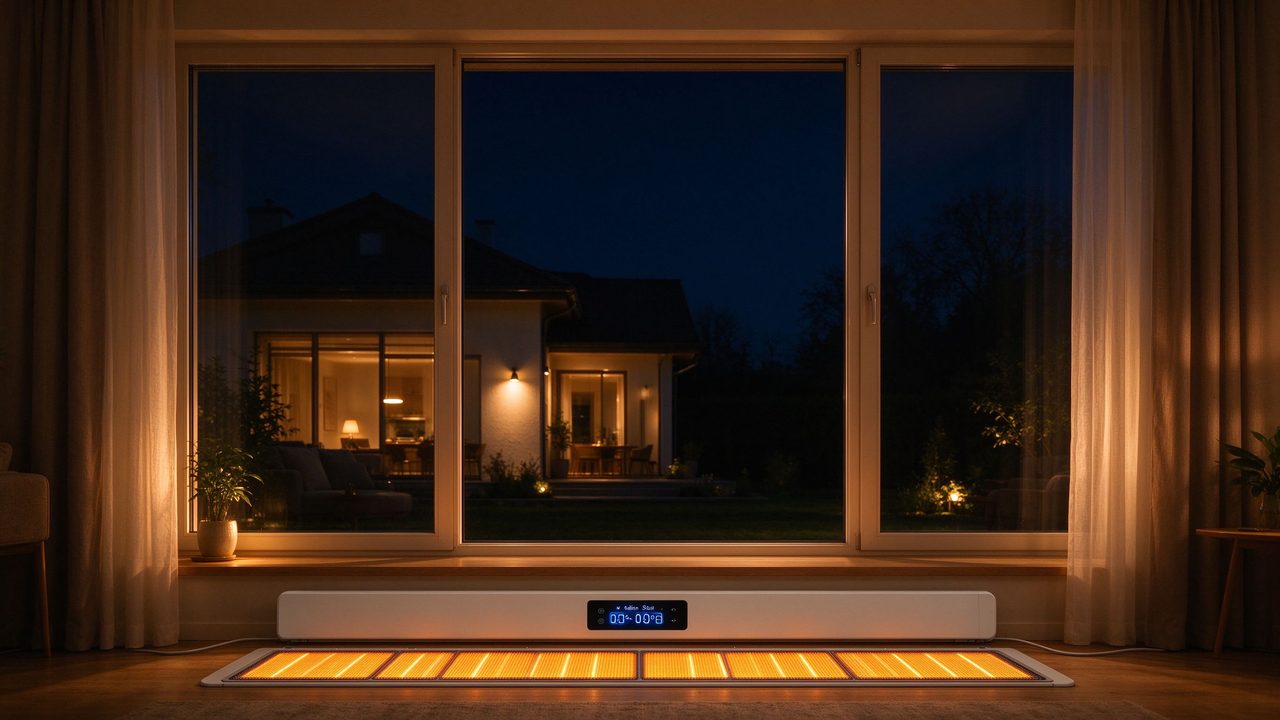
The conversation about electric heating costs usually starts with wattage: how many watts per square metre, how many hours per day, how many kilowatt-hours per season. That arithmetic is correct but incomplete, because the price of a kilowatt-hour is no longer a single number in most markets. Utilities in Europe, North America and parts of Asia have moved to time-of-use tariffs, where electricity bought at night or in the afternoon can cost a third of electricity bought at the evening peak. For an electric floor heating system — which can store heat in the slab and deliver it later — that tariff structure changes the whole cost equation. This article explains how off-peak electric underfloor heating works, what hardware and control features make it effective, and how to check whether your market and your utility make the strategy worth pursuing.
The physics that makes the strategy possible is thermal mass. A heated screed or a tiled floor is not a fast heater; it is a heat store that charges slowly and releases warmth over hours. That storage behaviour is exactly what a time-of-use tariff rewards: the system can heat the floor during the cheap night window, let the slab hold the heat, and keep the room comfortable through the morning without touching the expensive daytime electricity. The strategy is not new — storage heaters did it for decades — but electric floor heating does it better because the heat is delivered at floor level, the storage is distributed across the whole surface, and a modern thermostat can schedule the charge window automatically instead of asking the homeowner to remember it.
How Time-of-Use Tariffs Actually Work
A time-of-use tariff divides the day into price bands. The exact structure varies by utility and country: some use a simple two-band split (night vs day), others use three bands with a shoulder period, and an increasing number add a critical-peak band for the winter evening when the grid is under strain. The common thread is that the cheapest window is usually at night, often between 22:00 and 07:00, and the most expensive is the evening peak. On a two-band tariff, the night rate can be 30–60% cheaper than the day rate, which is a large enough gap to change the design of a heating system: a floor sized and scheduled to charge overnight is paying for kilowatt-hours at the low price.
The practical question is whether the gap is worth the effort in your market. The calculation is simple: take your night and day rates, estimate the share of heating that can move into the night window (typically 60–80% for a screed floor), and compare the annual bill with a flat-rate or daytime schedule. For a floor with good insulation and a programmable thermostat, the saving is usually substantial — and it compounds because the off-peak strategy also reduces the demand on the evening grid, which is the reason utilities offer the tariff in the first place. The tariff is not a fixed number; it changes seasonally and by market, so the honest advice is to check the current rate sheet of your utility rather than rely on a figure from a blog post.
What Hardware Makes Off-Peak Operation Possible
Off-peak operation needs three things: thermal mass, an insulated slab, and a thermostat that can schedule the charge window. The thermal mass is the screed or tile layer above the elements — a thicker build-up stores more heat and shifts more of the load into the night window, while a thin dry-lay film system responds faster but stores less, so it suits short pre-heat schedules rather than overnight charging. The insulation below the elements matters even more: without it, the stored heat leaks into the ground instead of into the room, and the off-peak advantage shrinks. The control layer is the piece that makes the strategy automatic: a thermostat with a weekly schedule and a pre-heat ramp can charge the floor only during the tariff’s cheap window and hold it through the day.
For time-of-use electricity underfloor heating installations, the thermostat specification is worth getting right the first time. The schedule should support at least two set-point changes per day and different weekday/weekend programmes, because the tariff bands often differ at the weekend. Some newer thermostats include a tariff-aware mode that accepts the cheap and expensive windows as settings and builds the schedule around them; where the utility offers a day/night signal, a smart meter or a tariff input can switch the system automatically. The important detail for buyers is that night-rate electric floor heating savings are delivered by the combination of mass, insulation and schedule — no single component delivers them alone, so a cheap thermostat on a thin film floor will not capture the tariff benefit even if the tariff is generous.

Heat Storage and the Morning Comfort Test
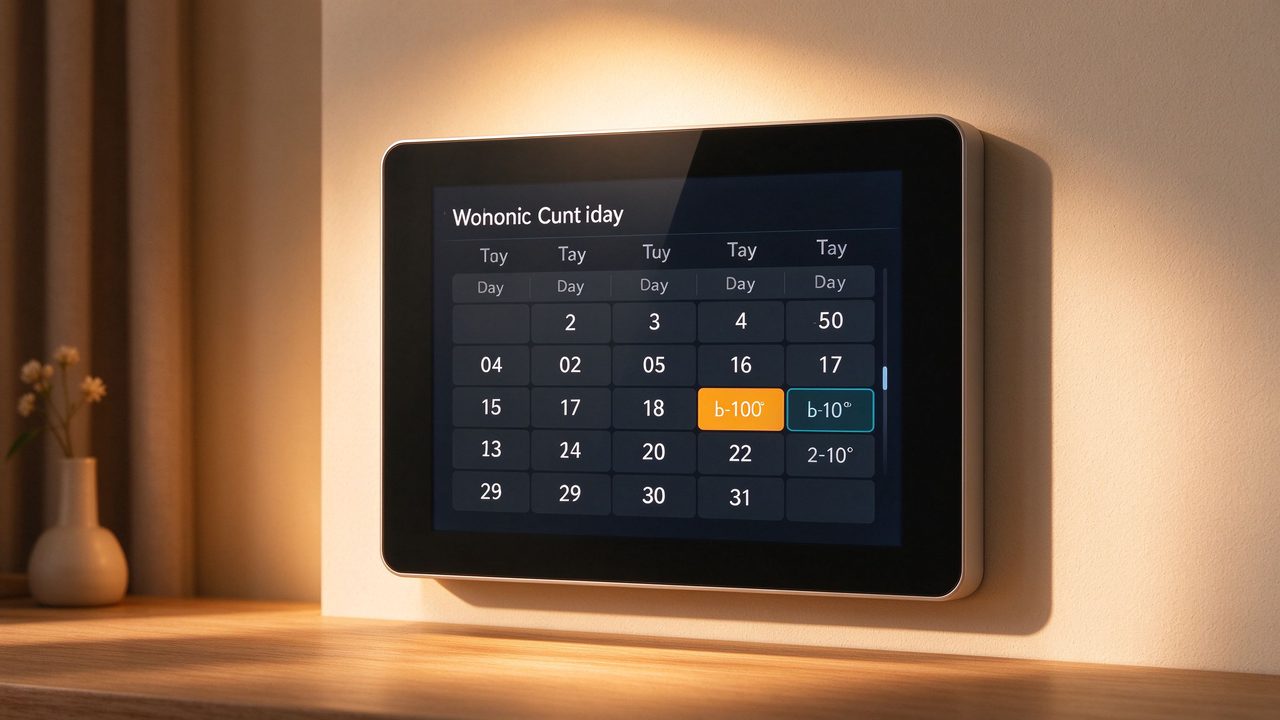
The design objective of an off-peak floor is simple: at the end of the night window the floor should hold enough heat to carry the room through the morning without another heating burst. That requirement sets three design parameters. First, the surface temperature during charging must stay inside the flooring manufacturer’s limit — a hard charge that spikes the surface risks the flooring even if the average temperature is fine. Second, the charge must be complete before the tariff window ends, so the pre-heat ramp needs to start early enough in the cheap window. Third, the morning comfort test should be done with the system, not with a spreadsheet: on the first cold morning, check whether the floor surface at 09:00 is still in the comfort band with the heating off since 07:00. That field test is the one that tells the truth about the insulation and the mass.
This is where the marketing and the physics part ways. A heat storage floor heating claim only holds if the storage is real: a thin film under laminate with no screed has almost no storage and will need daytime top-ups, while a screed build-up of 30–50 mm above the elements has real storage and can carry the morning. The honest specification therefore states the build-up depth, the insulation U-value and the expected storage window, and buyers should ask for those numbers. Per SunAura factory records, our installation documentation includes a build-up table with the storage behaviour for each system type, so the engineer can size the charge window instead of guessing.
Data and Evidence: Checking the Numbers Before You Commit
Before committing to an off-peak strategy, assemble five numbers: the night and day tariff rates from your utility’s current sheet; the floor’s insulation U-value from the project spec; the build-up depth above the elements; the thermostat’s schedule capability (set-point changes and weekend programmes); and the estimated share of heating that can move into the night window. The first and last numbers decide the saving; the middle three decide whether the strategy is technically deliverable. In markets where the night window is long (seven to nine hours) and the day rate is steep, the economics are almost always positive for a screed floor with good insulation; in markets with flat tariffs or thin film builds, the off-peak angle is marketing noise, not engineering.
The evidence basis for the product side is the factory record: 17 years of heating element and control manufacturing at our Huangdao plant in Qingdao, China, under ISO 9001, ISO 14001 and ISO 45001 management systems, with CE, RoHS, LVD and EMC compliance and exports to more than 50 countries (per SunAura factory records). The same evidence discipline applies to the tariff side: the numbers in this article are a framework, not a quote for your market, and the decision belongs to your current tariff sheet. What the industry can document is the mechanism — storage floors respond to time-of-use tariffs in predictable ways — and the mechanism is what the framework above describes.
Frequently Asked Questions
Will off-peak electric floor heating really save money? It saves money where a night/day tariff gap exists and the floor has enough mass and insulation to shift most of its consumption into the cheap window. The saving is tariff-specific, so check your utility’s rate sheet before sizing.
Do I need a special thermostat for off-peak operation? You need a thermostat with a weekly schedule and a pre-heat ramp; some models add a tariff-aware mode. The scheduling feature is the requirement, not a special certification.
How much of the heating can move to the night window? For a screed build-up with insulation, typically 60–80%, with the morning carried by the stored heat. Thin dry-lay systems shift less because they store less.
Does charging the floor overnight damage the flooring? No, if the surface stays inside the flooring manufacturer’s temperature limit. The schedule and the floor limit setting are what protect the floor covering during the charge.
Is this the same as storage heating? The principle is the same — charging thermal mass at a cheap rate — but floor heating stores the heat across the whole surface and delivers it at floor level, which is more comfortable and more controllable than a storage radiator.
Sourcing a Floor Heating System Designed for Tariff-Aware Control
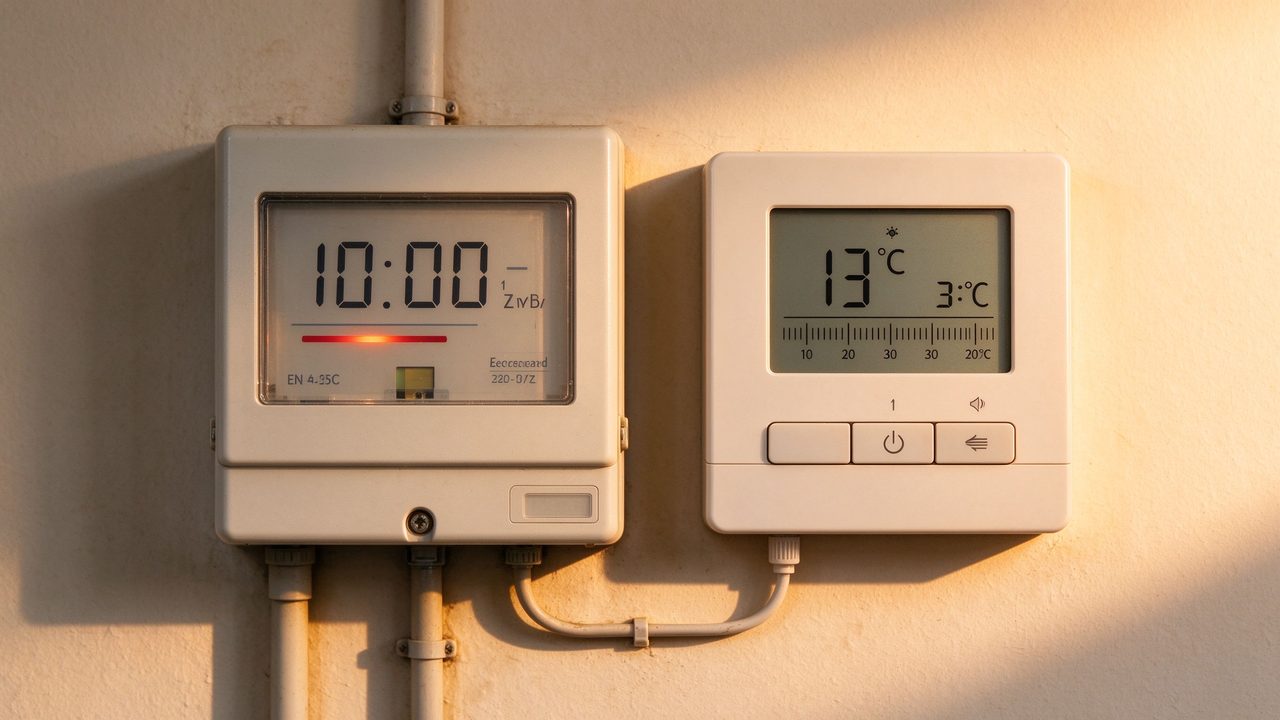
If you are planning a system in a market with time-of-use tariffs, specify the system with the tariff in mind: insulation with a documented U-value, a screed build-up sized for storage, and a thermostat with a full weekly schedule and pre-heat ramp. As an electric underfloor heating supplier with smart scheduling, we supply heating film, mat, cable and thermostat packages with the build-up documentation, and we support smart thermostat wholesale programmes for distributors serving tariff-aware markets. Send the floor plan, the insulation spec and the tariff bands, and our Qingdao engineering team will return a system layout with a charge-window estimate.
<Seasonal Reality: Why the Winter Tariff Bands Decide the Design
Tariff structures are seasonal, and the design should be checked against the winter bands, not the annual average. Many utilities run a different night/day split in winter, when heating demand peaks and the grid is under strain; some add a critical-peak band on the coldest evenings, which can be several times the day rate. For a floor heating design, the winter bands are the binding constraint: the charge window that works in October may be shorter or priced differently in January, and the storage capacity that carried the morning in autumn may need a longer charge in deep cold. The design should therefore be checked against the worst month, not the best, and the schedule should be adjustable seasonally — a thermostat with seasonal programme slots makes that a ten-minute task instead of a re-design.
The second seasonal reality is the interplay with the rest of the electric load. If the home or building already uses electric water heating, an EV charger or a heat pump, the night window may be shared, and the total load can push a single-phase connection toward its limit. The off-peak strategy works best when the floor heating is designed as part of the whole load picture: staggered charge start times per zone, a shared tariff-aware controller where the building has one, and a load calculation that includes all the night consumers. This is the difference between a strategy that works on paper and one that works at the meter, and it is why our engineering team asks for the whole electrical picture, not just the floor plan, when sizing tariff-aware systems (per SunAura factory records).
For homeowners the decision sequence is practical. Start by checking the tariff: does your utility offer a night/day split, and what are the current rates? Then check the floor: what is the build-up above the elements and the insulation below? Then check the control: can the thermostat schedule the charge window and hold the floor limit? If all three line up — a real tariff gap, a floor with storage, and a thermostat with a schedule — the off-peak strategy is worth designing in from the start, because retrofitting the schedule later costs nothing but the control upgrade. If any of the three is missing, the honest recommendation is to fix that missing piece before promising the saving, because the arithmetic only works when all three are present.
One more number completes the picture: the payback of the control upgrade. If the existing floor already has decent mass and insulation, moving from a basic thermostat to a tariff-aware model is usually the cheapest energy project in the house, because the hardware cost is small and the saving comes from shifting consumption into the cheap window rather than reducing it. The consumption history on the old thermostat, where available, gives the baseline, and the night-rate strategy shows the difference within one billing cycle. For distributors selling into tariff-aware markets, that message is stronger than any wattage comparison, because it speaks to the bill the customer actually pays.
Related Products & OEM Inquiries
Looking for off-peak electric underfloor heating with smart scheduling or a factory-direct OEM/ODM partner? Explore our complete electric underfloor heating systems and smart thermostats and floor-sensing controls, then request a quote for your project — we supply distributors, installers and brands in 50+ countries.