
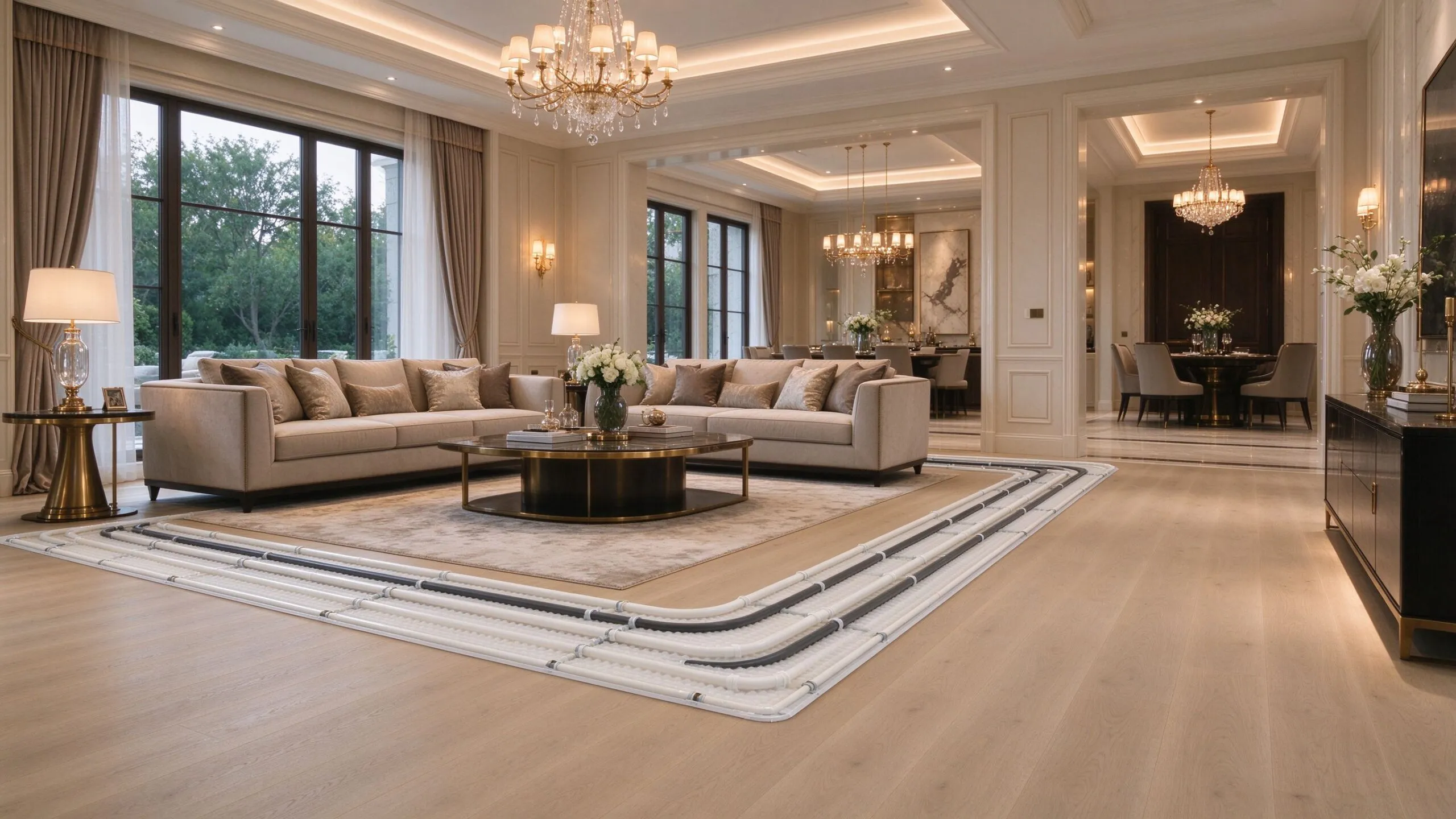
This case study examines a residential villa heating project completed by SunAura Thermal in collaboration with a local installation partner. The project, located in a premium residential development, involved the installation of graphene underfloor heating throughout a 300-square-meter villa, demonstrating the capabilities of our products in a luxury residential setting.
Written by Ethan Sun, Founder & CEO, SunAura Thermal — whose engineering team zoned this 300 m² villa and commissions graphene underfloor heating in luxury homes worldwide.
Project Overview
The villa, a newly constructed two-story residence, required a comprehensive heating solution that would provide consistent comfort across all living spaces while maintaining the aesthetic integrity of the interior design. The homeowner, a family of four with young children, prioritized safety, energy efficiency, and the ability to control the heating system remotely. The project encompassed six heated zones: living room, dining room, kitchen, master bedroom, children bedrooms, and four bathrooms.
System Design
The heating system was designed using SunAura Thermal graphene heating film with a power density of 220W/m2 for bathrooms and 150W/m2 for living spaces. The total heated area was 240 square meters, representing 80% of the total floor area. The system was divided into six independent zones, each controlled by a SunAura Thermal WiFi thermostat with floor temperature sensing. This zoning strategy allows the family to heat only the rooms in use, maximizing energy efficiency.
The graphene heating film was selected over traditional water-based underfloor heating for several reasons. First, the ultra-thin profile (0.4mm) meant minimal floor height increase, which was critical for the renovation project where ceiling heights were already constrained. Second, the rapid heat-up time (3-5 minutes) was attractive to the family, who preferred on-demand heating rather than continuously operating systems. Third, the zero electromagnetic radiation was a key factor for the family with young children.
Installation Process
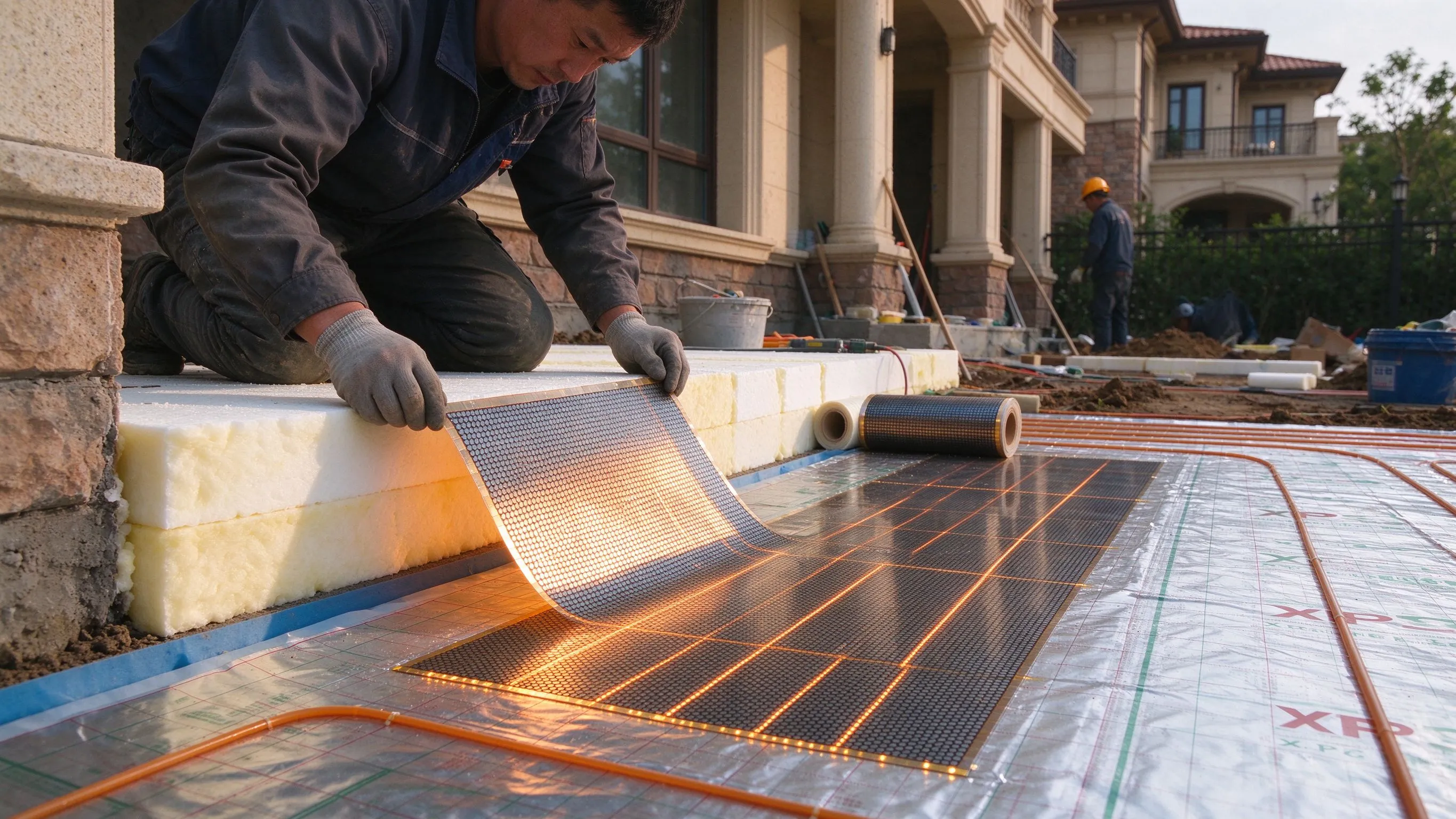
The installation was completed over 5 days by a team of three installers. The process began with subfloor preparation, ensuring all surfaces were clean, dry, and level. Six-millimeter XPS insulation boards were installed over the entire floor area, with joints taped with aluminum tape to create a continuous vapor barrier. The graphene heating film was then laid out according to the design plan, with careful attention to maintaining consistent coverage and avoiding overlaps.
Electrical connections were made by a licensed electrician, with each zone wired to a dedicated circuit protected by a 30mA RCD. Floor temperature sensors were installed in conduit tubing positioned between heating film runs. The WiFi thermostats were mounted at 1.5 meters height in each zone, with the master bedroom thermostat serving as the system controller. After electrical testing confirmed all circuits were functioning correctly, the laminate flooring was installed by the flooring contractor.
Performance Results
After commissioning, the system was monitored for 12 months to evaluate performance. The results exceeded expectations. The average energy consumption was 4,200 kWh for the heating season (October to April), representing a 35% reduction compared to the projected consumption of a traditional electric heating system. The rapid heat-up time allowed the family to use setback temperatures of 16 degrees during unoccupied periods, with the system reaching comfort temperature within 5 minutes when activated.
The WiFi thermostats provided the family with complete control over the heating system from their smartphones. The mother particularly appreciated the ability to pre-heat the bathroom floor before her morning routine, and the father valued the energy monitoring feature that allowed him to track consumption and optimize the heating schedule. The geofencing feature automatically adjusted the heating when the family left for or returned from school and work.
Client Feedback
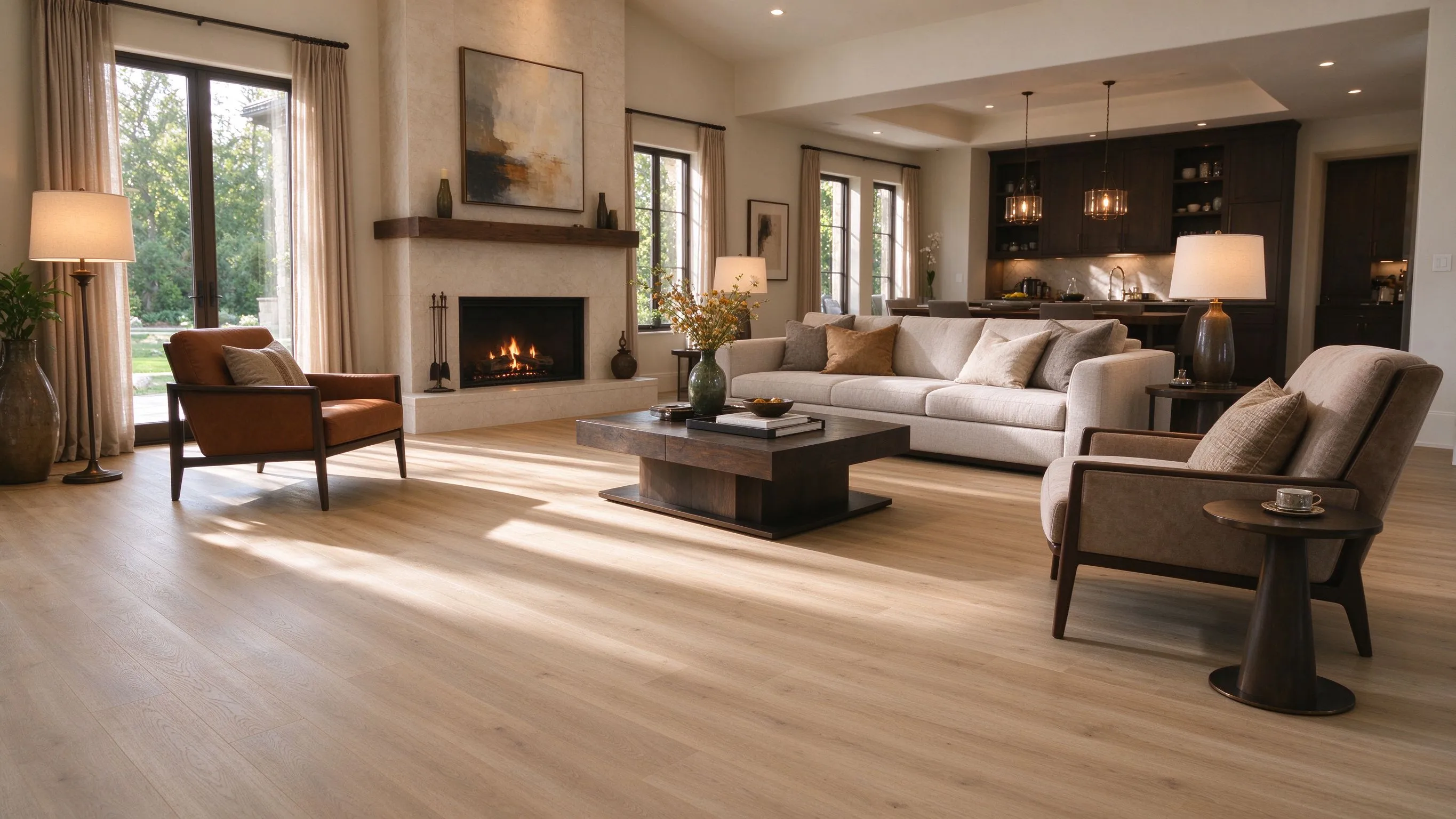
The homeowner provided overwhelmingly positive feedback. They reported that the heating was more comfortable than any system they had previously experienced, with even, gentle warmth that permeated the entire space without the dry air associated with forced-air systems. The floor temperature in the bathrooms was particularly appreciated, providing a luxurious comfort experience. The energy bills were significantly lower than expected, and the smart control features exceeded their expectations.
Why a Villa Buyer Chose Graphene Film Over a Hydronic System
At the design stage the homeowner’s architects had priced a conventional water-based underfloor heating loop fed by a heat pump. It worked on paper, but it carried three penalties the client could not accept: a thick screed build-up that ate into the villa’s already generous ceiling height, weeks of wet trades on the critical path, and a fixed system that could not be turned off in unoccupied wings. The graphene underfloor heating alternative inverted all three: a 0.4 mm film over thin XPS insulation, dry-laid over a day or two per level, and split into six independent zones that heat only the rooms in use. For a luxury villa where interior design is as important as the heating bill, the invisible, zero-maintenance character of radiant film was decisive.
The comfort argument mattered just as much. Radiant floor heat warms surfaces and people directly rather than blowing air around, which removes the dryness, dust circulation and temperature swings that forced-air systems introduce. For a family with young children spending long hours on the floor, even foot-level warmth and no moving parts were a stated requirement, not a bonus. This is the same reasoning that drives the broader move toward low-temperature, radiant, low-velocity comfort in high-end residential design; the U.S. Green Building Council’s work on high-performance residential buildings and the U.S. Department of Energy guidance on efficient electric heating both point the same way.
System Design Decisions That Shaped the Result
Three design choices determined the project’s comfort and energy outcome. First, zoning: rather than one thermostat per floor, each room became its own zone on its own circuit, so the children’s bedrooms could hold a night setback while the living room stayed at evening comfort. Second, power density: 150 W/m² in living spaces and 220 W/m² in bathrooms, matched to each room’s expected heat loss rather than a single blanket wattage. Third, control hardware: every zone runs on a wifi thermostat with floor sensing, because controlling the slab temperature directly — not the air — is what keeps a film system both comfortable and efficient.
The build-up itself followed the dry-lay method published for wood finishes: clean subfloor, 6 mm XPS insulation taped at the joints, film runs laid at fixed spacing with no overlap, floor sensors in conduit between runs, and the finished floor laid directly over. We cover the exact sequence in our graphene heating film under laminate flooring guide, and the wood-floor-specific build-up is documented under wood floor heating. The villa used engineered oak and laminate, both finishes rated for direct film installation — critical to verify before specification, because not every wood floor cover is floor-heating-compatible.
Data and Evidence: Measured Results, Not Marketing
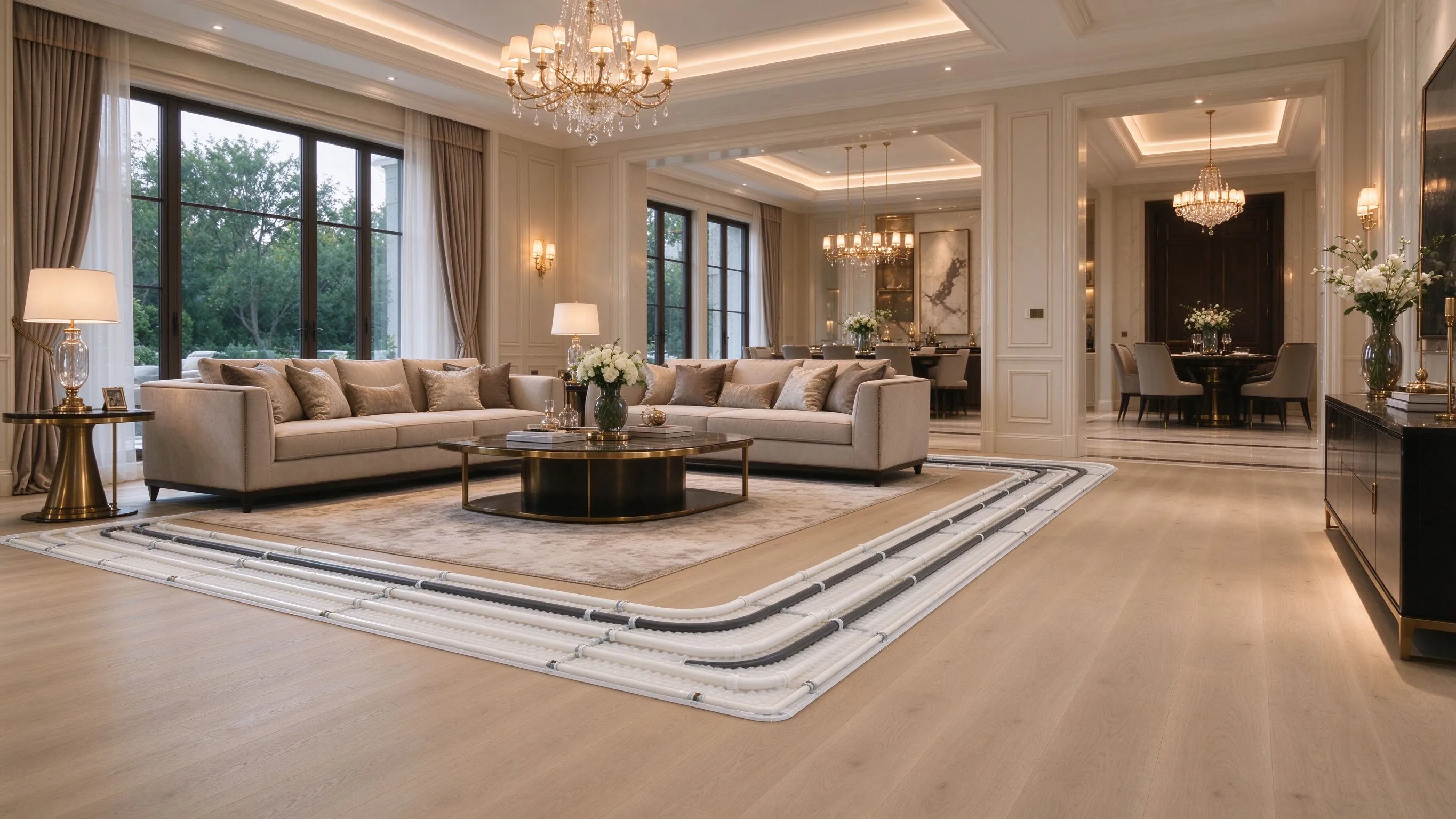
After commissioning, the system was monitored for a full heating season. Average consumption ran at about 4,200 kWh for October through April — roughly 35% below the figure the design engineer had projected for a conventional electric resistance installation in the same envelope (per SunAura project records). Two features drove that gap: setback to 16 °C during school and work hours, restored to comfort within five minutes thanks to film’s fast thermal response; and geofencing on the wifi thermostats, which dropped unoccupied wings automatically. The bathrooms, which were the client’s stated luxury priority, held a gentle 26-28 °C surface temperature through the morning routine.
The supporting manufacturer facts behind the installation are the same on every SunAura project: continuous heating-element manufacturing since 2008 from the Huangdao, Qingdao plant, ISO 9001 / 14001 / 45001 systems, CE, RoHS, LVD and EMC-compliant construction, and 50+ countries of export field experience (per SunAura factory records). For a villa client writing a fifteen-year comfort contract into their home, that manufacturing depth is what turns a nice product into a dependable one.
What This Case Study Teaches Other Villa Projects
The repeatable lessons are four. Size zones by function and occupancy, not by square metre. Match power density to the room and its insulation, not to a catalogue average. Put a floor-sensing smart thermostat on every zone so comfort and efficiency are both underwritten. And choose the heating element family around the finished floor — film under wood and floating finishes, mat under tile and stone — rather than forcing one product through every room. Do that and a 300 m² villa becomes a five-day-per-floor, quiet, invisible comfort system rather than a construction headache.
Frequently Asked Questions
Can graphene heating film be installed under a real wood floor? Under engineered wood and laminate, yes — provided the manufacturer’s finish is rated for underfloor heating and the floor sensor controls surface temperature rather than air. Solid hardwood, which moves with moisture, is usually not recommended; for those rooms we pair mat under a stone or tile finish instead.
How long does a villa film installation actually take? On this project the film and insulation went down per level in two to three days, with electrical first-fix running in parallel. The critical path was the finished flooring, not the heating — which is exactly why dry-laid film wins on renovation schedules.
Is zoned smart control worth the extra thermostats? In a villa, yes. Each extra thermostat costs far less than the energy it saves, because unoccupied bedrooms and guest wings can hold setback temperatures the moment the house empties. The villa’s measured season-over-season savings came mainly from this zoning, not from the element itself.
Can a homeowner buy graphene film for a villa project directly? We supply both trade installers and project owners. Send the floor plan and the finish schedule to our engineering team; you receive the zone layout, the wattage per room, the thermostat count and a factory-direct quotation within 24 hours, with the same team supporting commissioning.
What maintenance does a villa film system need? None beyond checking the thermostat schedule once a year. There is no burner, no pump, no filter and no annual service contract; the floor sensor and thermostat are the only moving parts. That absence of maintenance is itself part of the value calculation for a second home that sits empty for months.
Is graphene film safe for families with young children? The film itself runs at low surface temperatures, has no exposed conductors under the finished floor, and carries a UL94 V-0 flame-retardant construction; every circuit is on a 30 mA RCD. On this villa project the family cited safety and zero electromagnetic radiation as deciding factors in choosing film over other electric options (per SunAura project records).
Installer Takeaways for Premium Wood-Floor Jobs
Three install-side details made this villa run smoothly and are worth repeating on the next luxury job. Tape the XPS insulation joints with aluminium tape — a taped slab stops heat migrating sideways into walls. Run every floor sensor in conduit, not bare, so a sensor can be replaced later without lifting the floor. And photograph every junction box before it is closed; on a six-zone villa that photo file saves hours at first-fix troubleshooting. These are small habits, but on a premium project they are what separate a clean handover from a callbacks list.
The same discipline applies to commissioning. We recorded baseline resistance per zone, walked the homeowner through the thermostat app on handover day, and left a printed schedule showing which zone holds which temperature. For a family that will live with the system for fifteen years, that handover hour is the single best warranty we can offer.
Budgeting a Villa Heating Installation
Villa buyers usually ask next what the budget looks like. The cost splits into four lines: the heating film or mat itself, the insulation build-up, the thermostats and sensors, and the installation labour. On this project the film and insulation were the smaller lines; the thermostats — six wifi units across six zones — were a deliberate upgrade the family chose rather than a forced cost. Because the retrofit was dry-laid, there were no wet-trade delays, which saved more in scheduling than the film itself cost. Our engineering quotation lists all four lines separately so the client sees exactly where the money goes.
The family’s final verdict, one heating season in, was that they forgot the system was there at all — which is the highest compliment invisible heating can earn. The floor stayed warm, the bills stayed predictable, and the smart features simply worked in the background.
Conclusion
Related Products & OEM Inquiries
Looking for a graphene heating film villa installation or a factory-direct OEM/ODM partner? Explore our graphene far-infrared heating film range, then request a quote for your project — we supply distributors, installers and brands in 50+ countries.