
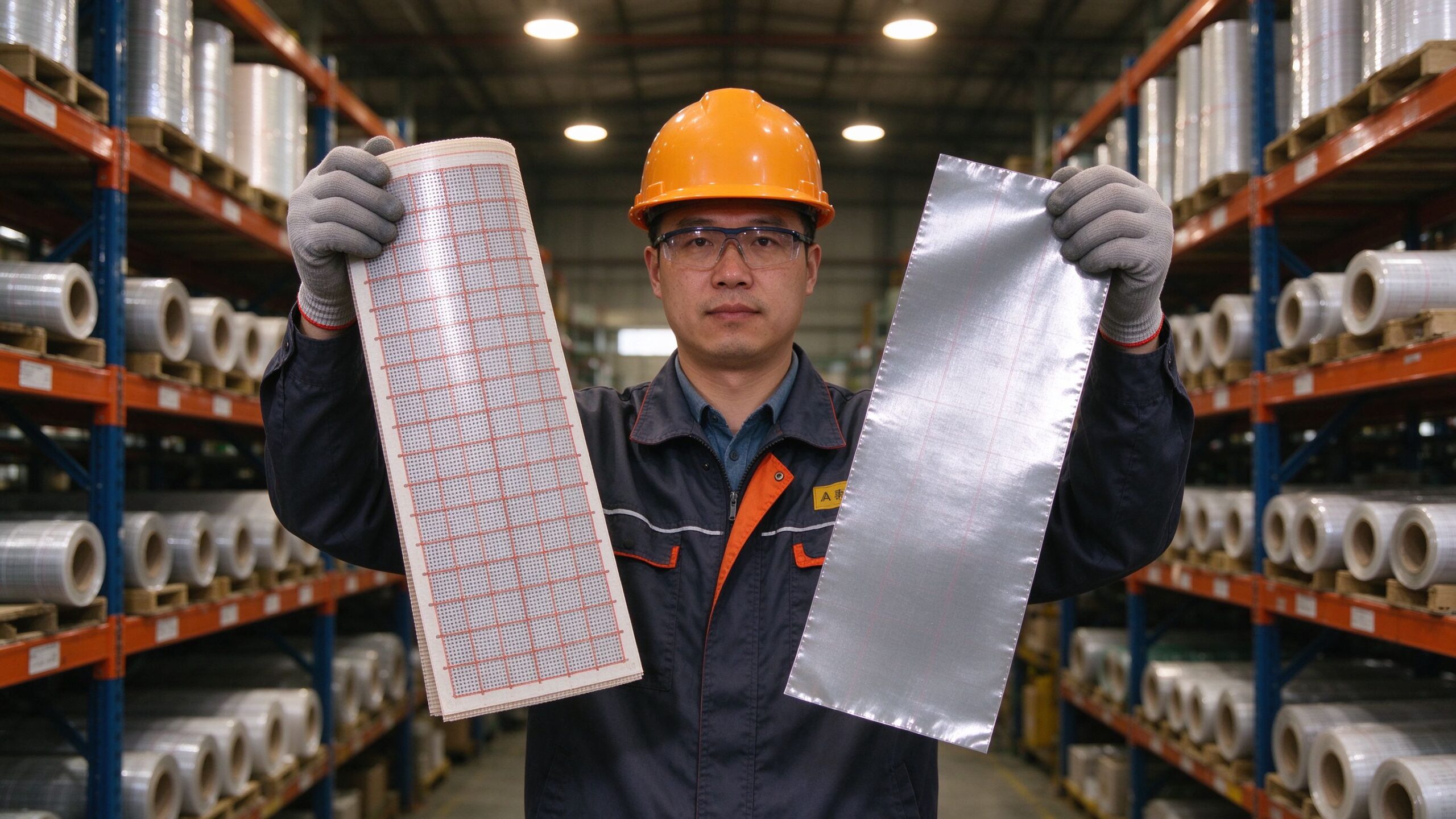
Mat or Film: The Question Every Buyer Asks the Factory
Ask any heating factory “should I buy heating mat or heating film?” and you will get a different answer depending on who you ask. The honest answer is: electric heating mat vs heating film is not a quality question — it is a build-up question. Both products heat floors with the same core technology; they differ in how the element is packaged, how thick the build-up is, which floor types they suit, and how fast they install. This article compares the two families the way a factory sees them, gives a selection framework by project type, and ends with a procurement checklist.
Factory data below reflects SunAura Thermal production records in Qingdao, China, where the company has manufactured heating film and mat for 17 years (per SunAura factory records).
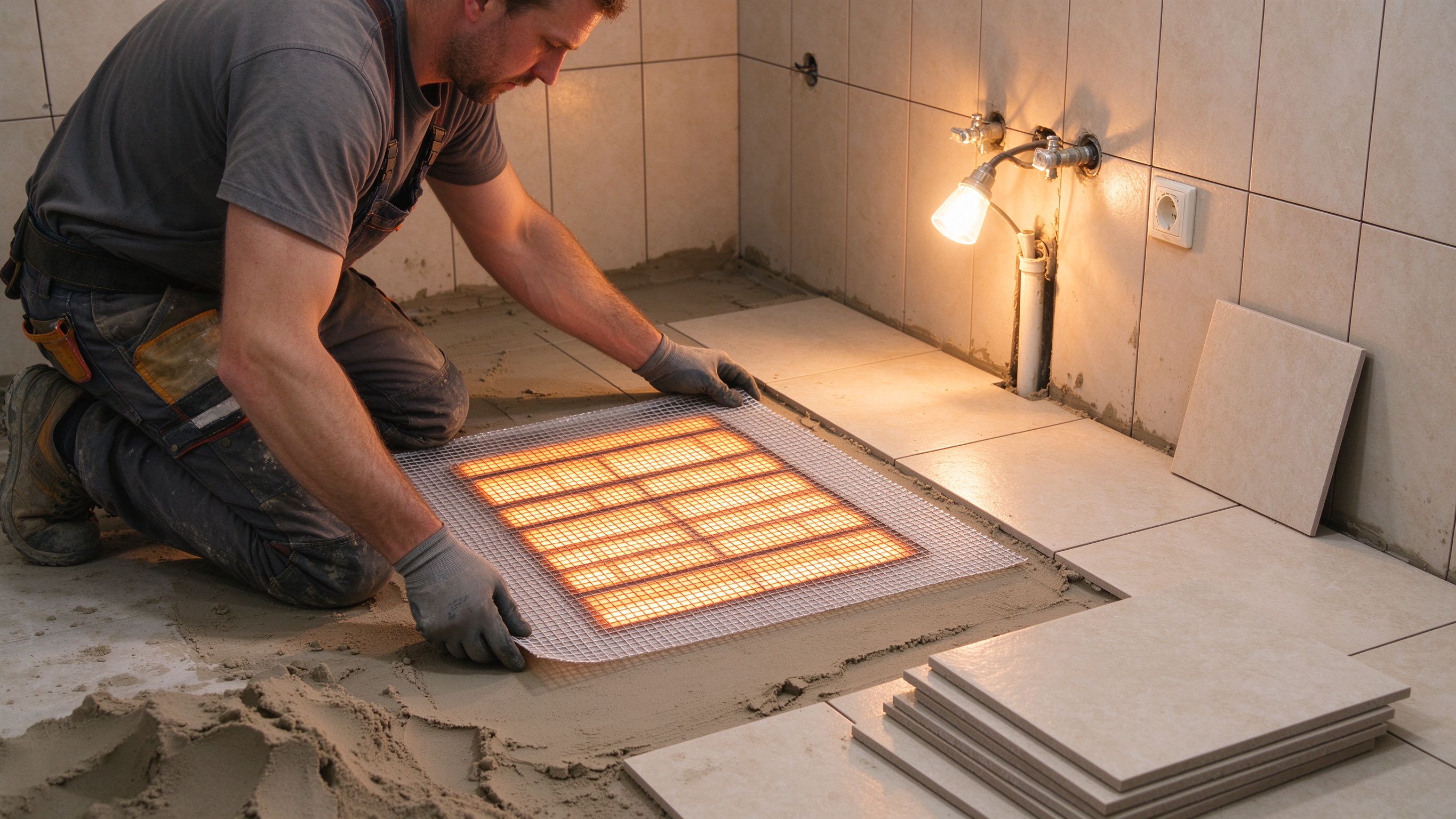
What Heating Mats Are — and Where They Fit
A heating mat is a pre-assembled grid: heating cable woven onto a mesh carrier, ready to unroll and cover in adhesive or self-levelling compound. Because the cable spacing is fixed at the factory, the installer does not calculate spacing — the mat does the work.
Practical consequences of heating mats:
- Fast, foolproof installation — unroll, position, cover; no spacing calculations, which suits tiled floors and contractors under time pressure.
- Uniform wattage per square metre — the factory-set spacing guarantees consistent output across the mat.
- Thin build-up — most mats add 3–5 mm, which fits within standard tile adhesive.
- Fixed geometry — mats come in set widths and lengths; irregular rooms need cutting of the mesh (not the cable) or a combination of mats, which adds planning.
- Best under tile and stone — the mesh sits well in adhesive, and the cable is protected by the tile bed.
Where mats win: bathrooms, kitchens, hallways, and any project where the floor is tiled and the installer wants speed and certainty.
What Heating Film Is — and Where It Fits
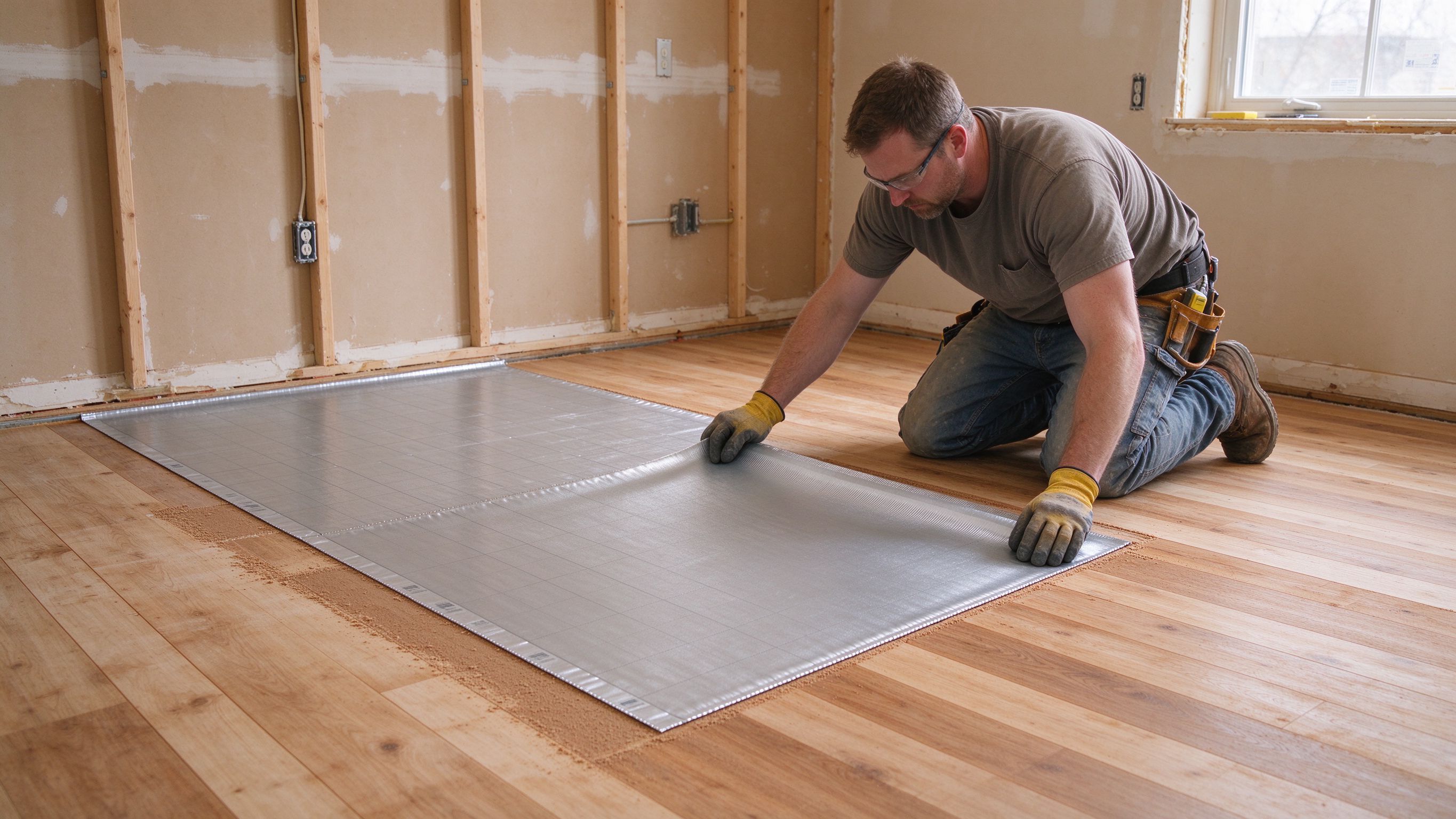
Heating film is a flat, rollable element — graphene or carbon-coated layers laminated into a film that heats by far-infrared radiation. It is laid as dry-lay under laminate, vinyl or parquet, and requires no adhesive bed or screed cover.
Practical consequences of heating film:
- Ultra-thin — typical film adds 0.3–0.5 mm, so it fits under floating floors with almost no height gain.
- Dry-lay installation — no wet trades; the film is unrolled and the floor is laid over it, which makes it the fastest product for DIY and renovation.
- Whole-width coverage — rolls come in widths from 10 cm to 100 cm, so coverage can be tailored to the room without cutting heating elements.
- Lower wattage per area typical — film usually runs at 60–150 W/m², which suits warming duty and well-insulated rooms rather than primary heating in a cold build.
- Needs even subfloor and no heavy furniture over the element — floating floors work, but the subfloor must be smooth and the element must not be compressed under static loads.
Where film wins: laminate and vinyl renovations, rooms where floor height cannot grow, DIY projects, and projects where the floor is being laid anyway.
Heating Mat vs Heating Film: Comparison Table
| Dimension | Heating mat | Heating film |
|---|---|---|
| Typical thickness added | 3–5 mm (in adhesive) | 0.3–0.5 mm (under floating floor) |
| Installation | Wet — adhesive/self-levelling cover | Dry-lay — no wet trades |
| Best floor types | Tile, stone, screed | Laminate, vinyl, parquet, floating floors |
| Typical wattage | 100–200 W/m² | 60–150 W/m² |
| Installation speed | Moderate (wet cure time needed) | Fast (dry, immediate) |
| DIY suitability | Moderate | High |
| Irregular rooms | Mat geometry needs planning | Widths from 10–100 cm, easy to combine |
| Typical project | Tiled bathrooms, kitchens, utility rooms | Laminate/vinyl living rooms, offices, renovations |
Both families are produced in our factory with the same quality gates; the choice is driven by the floor build-up and the install method, not by product quality.
Selection Framework: Which Product for Which Floor
Use these patterns when specifying for a project:
- Tiled floor (bathroom, kitchen, hallway) → heating mat; the mesh carries the cable evenly in the adhesive and the tile bed protects it.
- Laminate or vinyl floating floor → heating film; dry-lay, ultra-thin, and the film heats the floor above it by radiation.
- Parquet or engineered wood → heating film with manufacturer-approved temperature limits; confirm the wood’s heat tolerance first.
- Screed floor being rebuilt → heating cable in the screed is the classic choice (higher wattage, even distribution); mat can also be embedded.
- Renovation where floor height cannot grow → heating film; the 0.3–0.5 mm gain fits under almost any floating floor.
- Commercial fit-outs with tight schedules → heating film for dry-lay speed, or pre-formed mats where tiles are being laid.
If you are comparing the two for a specific room, the heating film vs heating cable guide and the wattage calculation article give the sizing method behind these recommendations.
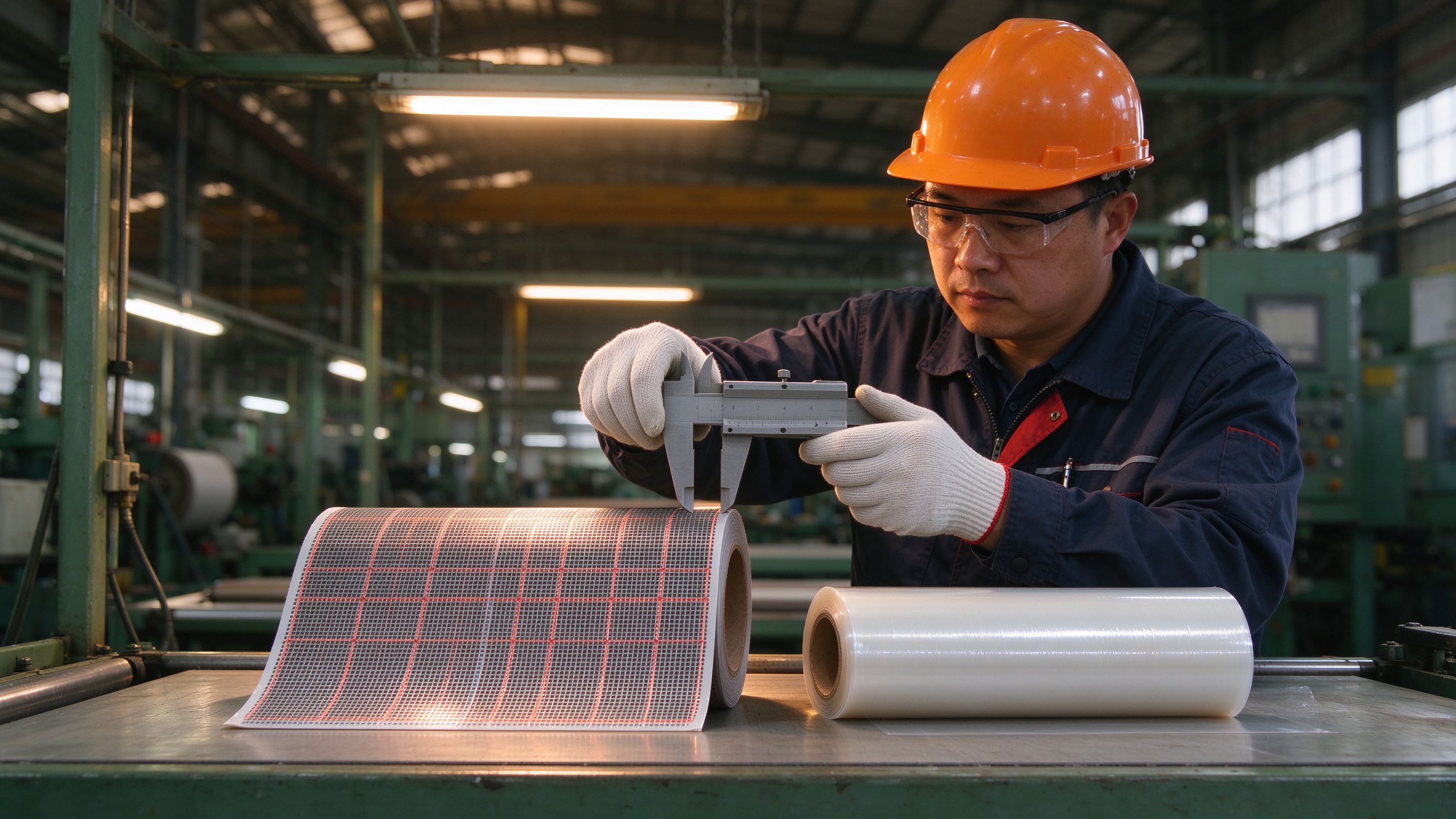
Data & Evidence: What the Factory Validates
Both families leave our factory under the same test discipline (per SunAura factory records):
- Resistance and wattage verification — mat and film are tested so installed wattage matches the specification within tolerance.
- Thermal uniformity — film rolls and mat sections are sampled and checked with thermal imaging for even heat distribution.
- Dielectric and insulation testing — every batch passes high-voltage and insulation-resistance tests with logged results.
- Bend and handling checks — film is verified for the bending radius used in dry-lay installation; mat cable for the handling during adhesive covering.
- Compliance — production runs under ISO 9001, ISO 14001 and ISO 45001 management systems; products are CE marked and assessed for RoHS, LVD and EMC where applicable, with certificates and batch reports on request.
We do not quote certificate numbers here — verify the documents for your specific order.
Procurement Checklist: What to Send a Supplier
To get an accurate quotation for mat or film, send the supplier these points:
- Room areas and floor types — square metres per zone and the finished floor (tile/laminate/vinyl/parquet/screed).
- Build-up constraint — how much floor height can you add? This alone usually decides mat vs film.
- Wattage target — W/m² per room; reference the wattage calculation guide if unsure.
- Voltage — 120V, 240V, or low-voltage DC for vehicle/marine builds.
- Install method — DIY or contractor, wet or dry; film is the dry-lay choice, mat suits wet.
- Control — thermostats per zone, floor or air probe, WiFi; see our floor heating thermostat range.
- Room shape — sketches or dimensions for irregular rooms, so the supplier can combine widths or mats efficiently.
- Certification and lead time — CE/RoHS documents, MOQ, samples, and delivery window.
SunAura Thermal manufactures both mat and film on the same campus, which makes mixed-basket sourcing simple: one quality system, one set of test records, one logistics partner. For bulk programmes we are a direct heating mat supplier and heating film supplier with factory pricing.
Installation Differences in Practice
The practical difference between mat and film shows up on site, not in the brochure:
- Mat in adhesive (wet). The mesh is unrolled onto the subfloor, fixed with notched trowel dabs or self-levelling compound, then covered by the tile adhesive bed. The installer must avoid cutting across the cable, photograph the layout before covering, and wait for the adhesive to cure before energising. Total added height is typically 3–5 mm.
- Film under a floating floor (dry). The film is unrolled on the prepared subfloor (or on a thin insulation layer where the build-up allows), the bus-bar connections are made at one edge, and the laminate or vinyl floor is laid directly over it. No curing time, no wet trades — the room can usually be walked on the same day. The film must not be covered by heavy fixed furniture, and the subfloor must be smooth and dry.
- Time and skill. A dry-lay film room can be installed in a few hours by a competent DIYer; a tiled mat room needs the same care as any tiling job plus the electrical connection. For commercial fit-outs, film’s speed is a real schedule advantage.
- Repair and rework. Both are covered constructions, so repairs mean lifting the finished floor in the affected area; this is why documented layouts and factory batch traceability matter, and why both families are tested before leaving the factory.
How the Factory Guides OEM Buyers
When OEM buyers order mat or film for a branded product line, our engineers use a short decision sequence:
- Finished floor type — tile/stone points to mat; laminate/vinyl/parquet points to film.
- Height budget — if the product must fit under an existing floor height, film wins on thickness.
- Wattage target — if the design needs 150 W/m²+, mat (or cable) is the realistic family; film suits 60–150 W/m².
- Install method in the customer’s market — markets with strong tiling trades default to mat; DIY and floating-floor markets default to film.
- Basket strategy — many distributors carry both families and let the room type decide; a single factory that produces both simplifies their sourcing and quality management.
For OEM buyers this matters because the choice affects packaging, installation instructions, and warranty risk in the field. We specify the family, voltage, wattage and control together so the final product installs correctly the first time (per SunAura factory records).
Thickness and Power Density: The Two Numbers That Matter
Two numbers on a data sheet separate mat from film in practice, and both should be read together:
- Thickness added to the floor build-up. Film is the thinnest electric floor heating product available (roughly 0.3–0.5 mm), which is why it dominates retrofit projects where floor height is fixed. Mat adds 3–5 mm inside tile adhesive — still thin in construction terms, but it belongs to the wet-build family. If the height budget is your hard constraint, the decision is already made.
- Power density (W/m²) at rated voltage. Mat commonly reaches 100–200 W/m² because the cable is a compact element embedded in a heat-spreading bed; film typically runs 60–150 W/m². For primary heating in a cold, poorly insulated space, the higher-density family (mat, or cable in screed) is the realistic choice; for warming duty and well-insulated rooms, film’s range is enough.
When a quotation lists only watts total without W/m², ask for the density — it is the number that tells you whether the product can actually heat the room. The wattage calculation guide explains how to turn heat loss into a W/m² target for either family.
FAQ
Which is warmer: mat or film? At the same wattage, both deliver the same energy per square metre; the difference is where the heat goes. Mat in adhesive heats through tile efficiently; film under a floating floor heats the floor layer above it. Wattage, not family, decides warmth.
Can heating film be used under tile? Film is designed for dry-lay under floating floors; for tile, heating mat (or cable) embedded in adhesive is the reliable choice. Using film under tile is not the standard practice.
Is heating mat safe for DIY installation? Yes, with care: the mat must not be cut across the cable, the layout must be photographed before covering, and the circuit must be protected correctly. Many installers find mat easier than cable for tiled rooms.
Can mat and film be mixed in one house? Yes — this is a common and sensible pattern: mat in tiled bathrooms and kitchens, film under laminate or vinyl in living rooms and bedrooms. Both families are designed for different floor build-ups, and a mixed installation lets each room use the product that fits its floor. When sourcing both from one factory, check that the controls and test documentation are compatible.
Which is cheaper: mat or film? Per watt, both are comparable; the total project cost depends on the floor build-up and installation method. Film often wins on speed (dry, no wet cure), mat on tiled applications where the adhesive is part of the job anyway.
Next Step: Know Your Floor, Then Source the Product
Electric heating mat vs heating film is decided by the floor build-up and the install method. Identify your floor type, height constraint and wattage target, then send the checklist above to our export team for a factory-direct quotation on the right family.
Contact us at [email protected] for bulk pricing and samples.
About the author: Ethan Sun, Founder & CEO, SunAura Thermal. SunAura has manufactured electric heating film, mat and cable in Qingdao, China, for 17 years, supplying CE/RoHS-compliant heating products to more than 50 countries.