
Why Silicone Matters in a Heating Cable
A silicone heating cable is not just a wire with resistance inside — the jacket material is the specification. Silicone rubber outer insulation stays flexible from roughly -60°C to +200°C, resists moisture and UV, and tolerates the kind of bending that a PVC-jacketed cable would crack after one winter. That flexibility is why installers reach for silicone when the cable has to wrap around pipes, follow roof edges, or lie exposed in gutters where other jackets fail. For buyers comparing silicone rubber heating cable for pipes, the jacket temperature rating is the first line on the datasheet you should read, because it decides where the cable can physically live.
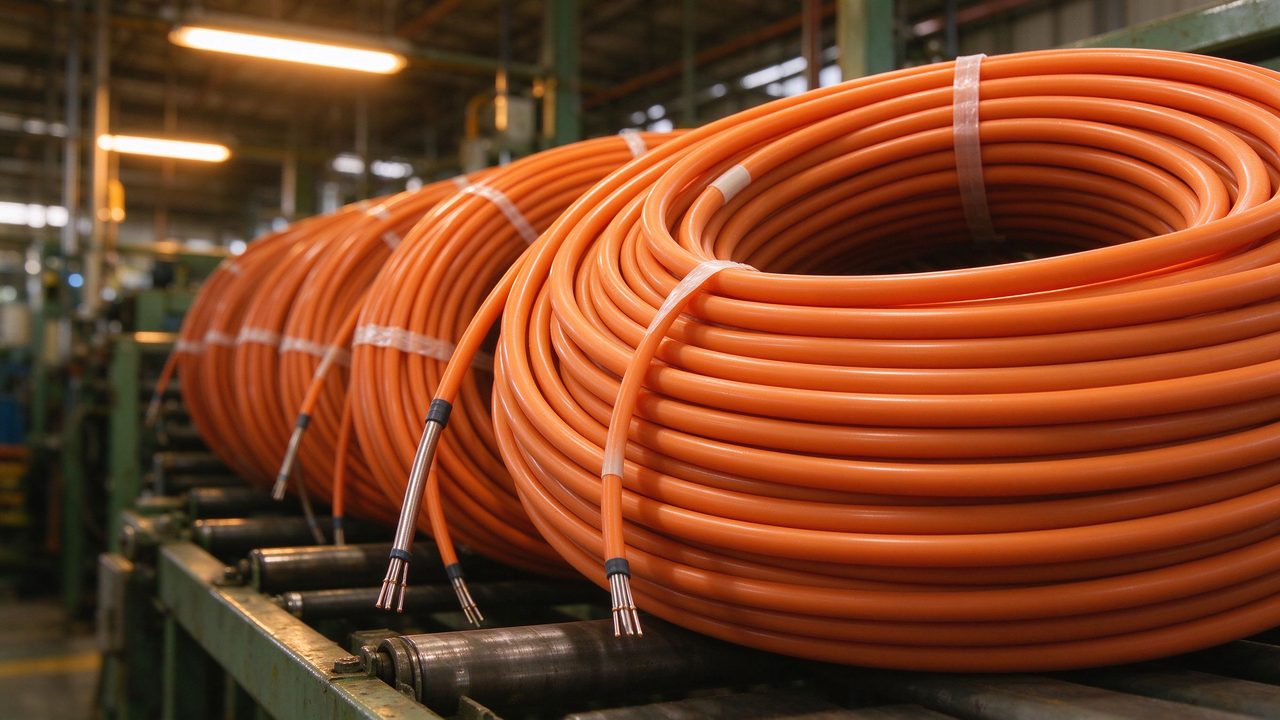
Inside the jacket, the construction follows the same controlled pattern as the rest of the SunAura Thermal cable family (per SunAura factory records): a nickel-copper alloy resistance element, a fibreglass insulation layer, and an outer silicone rubber sheath extruded in one continuous pass. Every roll is resistance-tested after extrusion, which means the wattage you order is the wattage you get — no hot spots, no weak sections, no surprises at commissioning.
The Three Applications That Buyers Actually Order
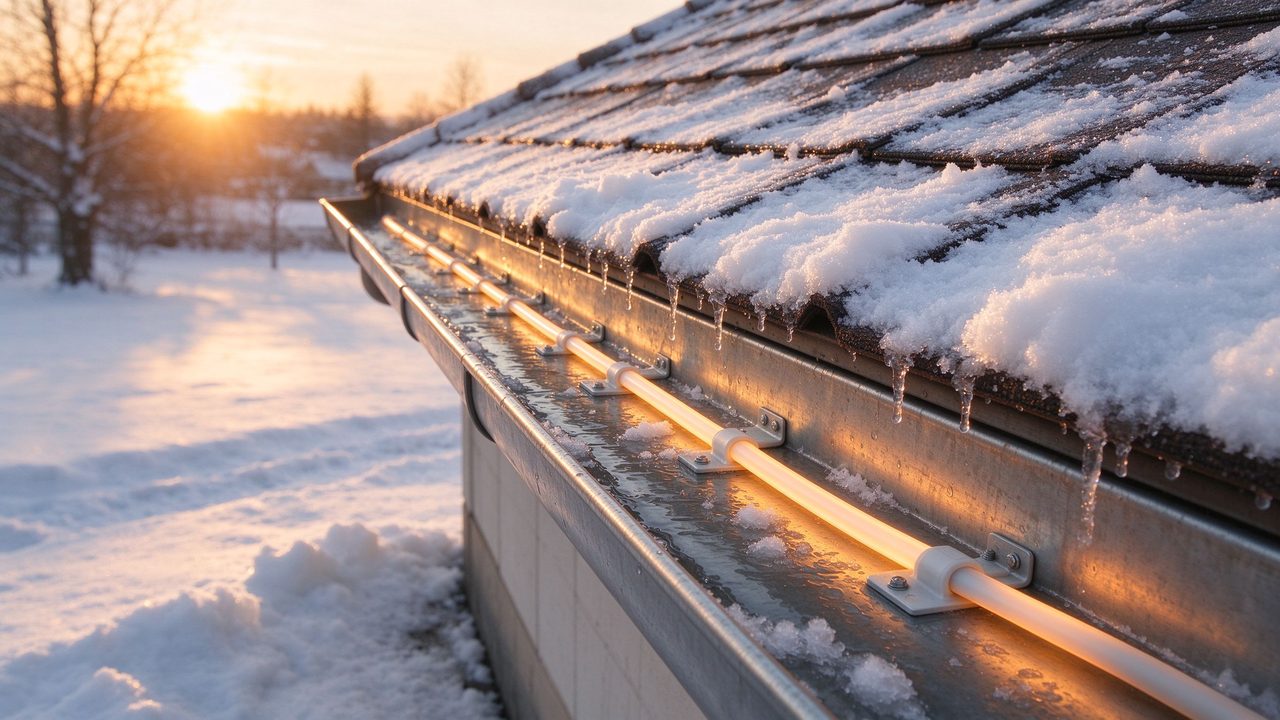
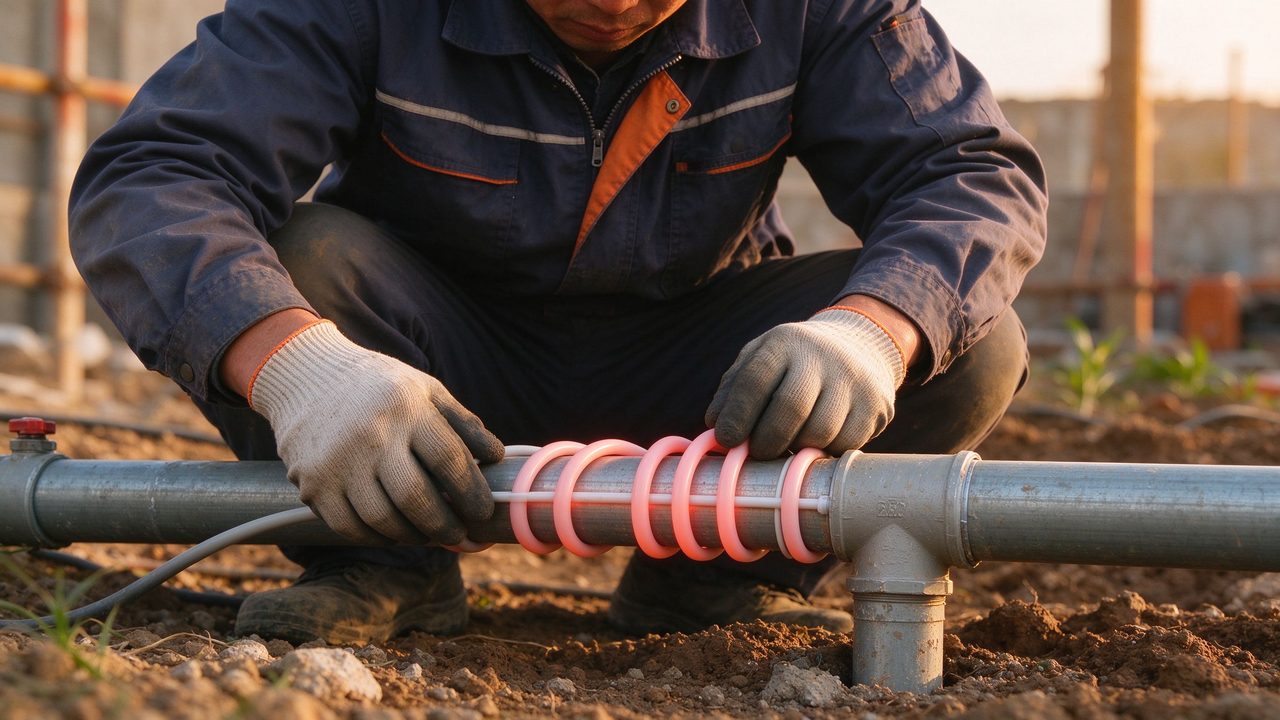
Most orders for silicone heating cable fall into three buckets. The first is silicone heating cable freeze protection on water supply lines, where the cable is spiral-wrapped along the pipe and the jacket must flex around bends without kinking. The second is roof and gutter de-icing: the cable runs along the gutter line and roof edge, exposed to ice, UV and temperature swings, where a silicone jacket with a high temperature rating lasts several seasons longer than cheaper alternatives. The third is process and industrial tracing, where the ambient heat around the cable can reach levels a standard jacket cannot survive. Each of these applications puts different stress on the cable, which is why the same core element is offered in different watt-per-metre outputs rather than one universal rating.

Reading the Datasheet: What the Numbers Tell You
When a supplier sends you a silicone heating cable datasheet, four numbers decide whether it fits your project. Wattage per metre (W/m) sets the heat output — 25 W/m suits pipe tracing in moderate climates, 40–50 W/m handles exposed gutters and colder regions. The jacket temperature rating tells you the maximum continuous ambient temperature the cable tolerates, which matters for industrial tracing. The minimum bend radius tells the installer how tightly the cable can turn without damaging the element. And the cold-lead connection — whether it is moulded or field-spliced — determines how the cable connects to the thermostat and supply. SunAura Thermal documents all four values for each silicone cable model (per SunAura factory records), and our sales team will send the full specification before you place an order.
Installation Practice: Wrapping, Fixing and Connecting
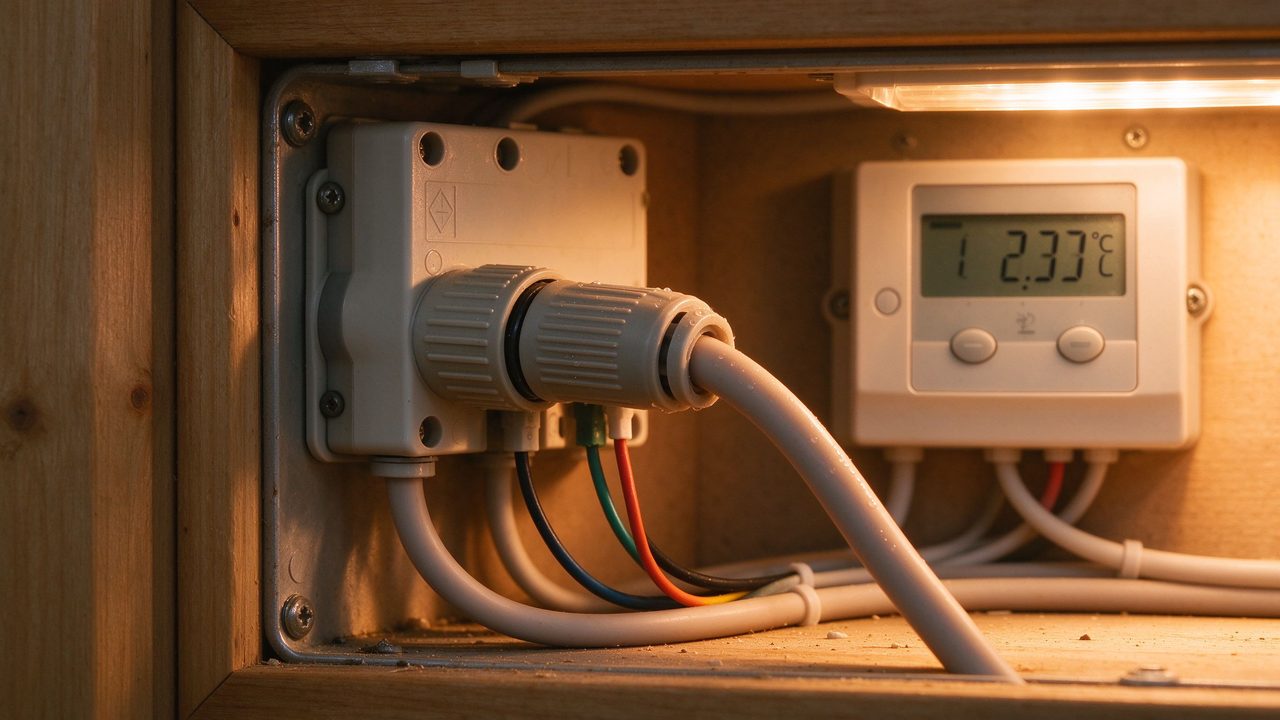
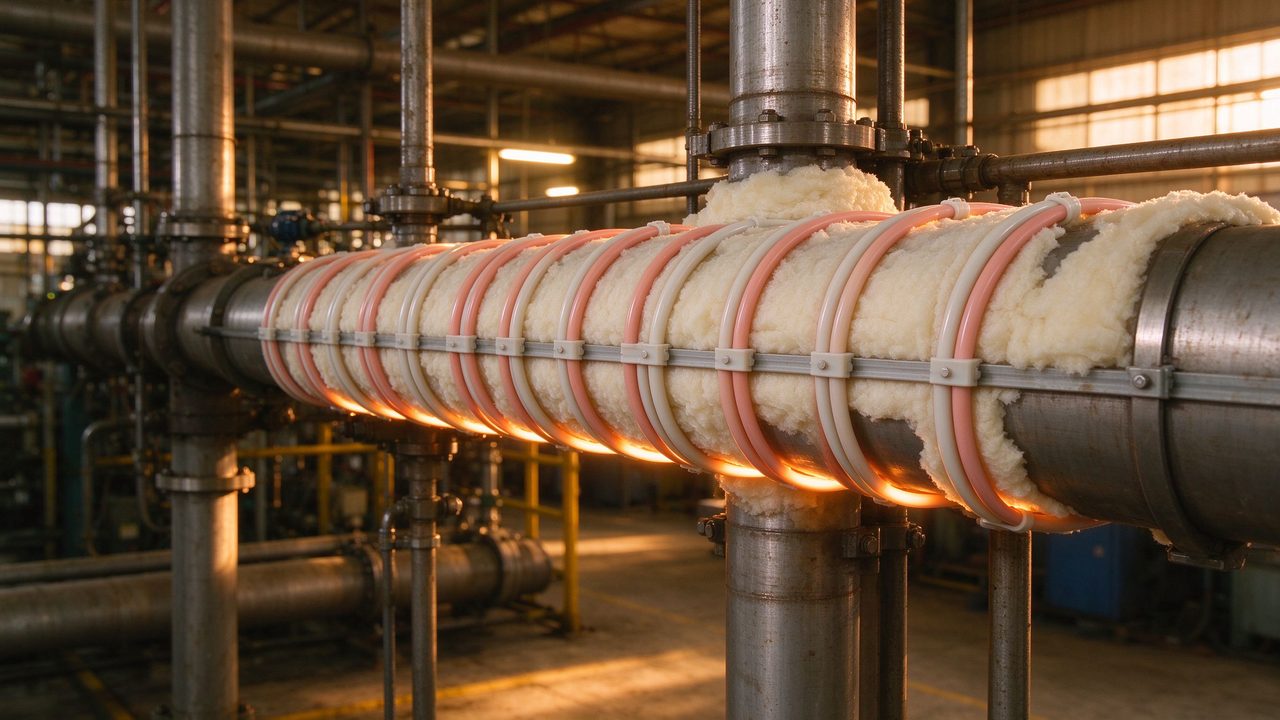
Correct installation is where silicone cables earn their reputation. On pipes, spiral-wrapping at a consistent pitch gives even heat distribution; clamping every 30–50 cm prevents sagging and keeps the cable in contact with the surface. In gutters, the cable is laid along the bottom channel and fixed with clips rated for outdoor use, with extra loops at downpipes where ice accumulates first. On roofs, the cable follows the eaves in a zigzag pattern, fixed by roof clips that do not penetrate the membrane. Every run terminates in a smart thermostat or a dedicated cold-lead kit, and the power side is connected by a qualified electrician per local codes. Field splicing of silicone cable is possible with the correct heatshrink kit, but factory-terminated cold leads remain the most reliable option.
Silicone vs Self-Regulating: Which One for Your Project
The two cable families solve different problems. A silicone heating cable is a constant-wattage element: it outputs the rated wattage whenever powered, so it needs a thermostat or control to switch it. A self-regulating heating cable reduces its own output as temperature rises, which suits pipes that must never overheat and installations where thermostats are impractical. The practical rule: if you want precise, controllable heat with high temperature tolerance and flexible routing, choose silicone; if you want passive safety with minimal control complexity, choose self-regulating. Many projects combine both — silicone for the high-temperature industrial run, self-regulating for the domestic supply line. That combination is common in the orders we ship, and it is worth planning for at specification stage.
Data and Evidence: What the Factory Tests
Quality control on the silicone cable line follows the same six-gate protocol used across the heating cable family at our Qingdao, Huangdao factory (per SunAura factory records): incoming material check, resistance test after extrusion, insulation resistance measurement, dielectric withstand test, thermal imaging on sample runs, and final continuity check before packing. The plant has manufactured electric heating products since 2008 — 17 years of continuous production — and operates under ISO 9001/14001/45001 with CE and RoHS documentation for the product range, including LVD and EMC compliance tested per market. Batch summaries travel with each order, so an incoming inspection can verify resistance values against the packing list. When a buyer asks for the test record, we send it; that is the evidence layer behind every claim in this article.
Frequently Asked Questions
Can silicone heating cable be used indoors? Yes — silicone jackets are safe indoors and are often used for underfloor tracing and drain lines, though for floor heating most projects choose film or mat elements for better heat distribution.
What is the difference between 25 W/m and 50 W/m cable? Output per metre. Higher wattage suits colder climates and exposed locations like gutters; lower wattage is more economical for insulated pipes in moderate winters.
Do you supply silicone heating cable for OEM projects? Yes. The cable is available for private-label programmes with your packaging and branding; OEM terms and MOQ are confirmed in writing per programme.
What is the typical lead time? Standard cable ships on a written schedule from our Qingdao factory; volume orders are planned against confirmed production slots. Ask for the lead-time commitment before you book installation.
What lengths and wattages are available? The silicone cable range is produced in a set of standard wattages per metre (typically 10–50 W/m) and supplied in coils cut to project length; custom ratings are available for OEM programmes with confirmed MOQ.
Common Specification Mistakes with Silicone Cable
Even with the right jacket, projects go wrong at specification time in predictable ways. The most common mistake is undersizing the wattage: a 25 W/m cable on an exposed gutter in a cold climate cannot keep up, and the ice returns at the exact spot the client complained about. The second is ignoring voltage — a cable ordered for 230 V run at 110 V outputs roughly a quarter of the rated heat, so the voltage must match the site before the order is placed. The third is treating minimum bend radius as a suggestion: forced bends kink the element and create a permanent hot or cold spot. And the fourth is skipping the thermostat: a constant-wattage silicone cable without control runs flat out in mild weather, wasting energy and shortening component life. A five-minute specification review at quotation time prevents all four, and it is part of the service our sales team provides on every order.
A Winter Example: Putting the Numbers to Work
To make the specification concrete, consider a typical residential water supply line in a northern European winter: 20 metres of exposed pipe, 230 V supply, and a design temperature of -15°C. At 25 W/m, the line needs 500 W of tracing power; a 30 W/m rating adds margin for wind exposure, bringing the run to 600 W. The installer spiral-wraps at roughly 10 cm pitch, fixes the cable every 40 cm, terminates into a thermostat with a pipe sensor, and the system holds the pipe at 5°C against freezing. Total energy use over a 120-day winter at 50% duty is about 720 kWh — under €200 at typical European rates, against the alternative of a burst pipe and a flooded building. This is the calculation pattern every buyer should run before ordering, and it is the same pattern our sales engineers use when quoting (per SunAura factory records).
Comparing Cable Families at a Glance
| Property | Silicone Heating Cable | Self-Regulating Cable | PVC Heating Cable |
|---|---|---|---|
| Jacket temperature range | Roughly -60 to +200°C | Limited by PTC element | Lower, stiffens in cold |
| Output behaviour | Constant wattage | Self-limiting with temperature | Constant wattage |
| Flexibility in cold | Excellent | Good | Moderate |
| Typical uses | Pipes, gutters, industrial | Pipes, roofs, safety-critical | Mild-climate general use |
| Control requirement | Thermostat required | Can run without thermostat | Thermostat required |
For most freeze-protection and de-icing projects, the choice between silicone and self-regulating comes down to control philosophy and operating temperature. Where the environment is hot, the routing tight, or the client wants maximum flexibility, silicone wins. Where passive safety matters more than precise control, self-regulating wins. And where budget is the only criterion and the climate is mild, PVC remains an option — with the trade-offs listed above. The table is the short version of the conversation our sales engineers have with buyers every day, and it is the reason the factory produces all three families rather than one.
Practical Buying Notes for Distributors
For distributors, silicone heating cable is a line-item product, and the buying discipline is about documentation. Confirm the datasheet values for every model you stock, because your customers will quote them back to you. Hold the two or three wattages that match your market rather than a long tail of SKUs. Keep the certificate set current for the product family, and make sure the batch record is retrievable per delivery. And agree the warranty terms in writing at the order stage, not after a claim. These four habits turn a commodity line into a professional offer, and they are the same habits our own distribution partners follow. When a distributor asks us for the documentation pack in advance, we treat that as a signal of a serious partner — and the pack is always available.
If you are sourcing for a specific project rather than stock, the same discipline applies at smaller scale: send the project parameters, get the cable schedule and wattage calculation in writing, and keep the datasheet with the installation file. The cable is a small cost relative to the damage it prevents, and the paperwork is the part that survives the winter.
About the author: Ethan Sun, Founder & CEO, SunAura Thermal — 17 years of manufacturing electric heating film, mats and cables from our Qingdao factory (ISO 9001 / 14001 / 45001 certified, CE / RoHS compliant), now exporting to 50+ countries worldwide.
Long-Term Reliability: What 17 Years of Production Taught Us
Reliability in a silicone heating cable is decided in the factory, not on site. Seventeen years of continuous production at our Qingdao, Huangdao plant have produced a short list of non-negotiables: the element must be resistance-matched to the datasheet before extrusion, the jacket must be extruded in one pass so there is no seam, and the finished roll must be tested twice — once electrically and once by thermal imaging on samples. These are not theoretical standards; they are the gates that run on the production line every day, and they are documented per batch (per SunAura factory records). The result is a product whose field behaviour matches the datasheet, which is the only honest promise a heating cable can make. When a buyer asks how we know a cable will still be working in its third winter, the answer is the batch record, not a warranty slogan.
For installers, that reliability converts directly into fewer callbacks. A cable that holds its resistance, keeps its jacket intact and connects cleanly at the cold lead is a cable that does not generate a service visit. Over a distribution programme spanning many installations, the difference between a factory that tests and a factory that trusts shows up in the claims rate. The test gate is cheap; the callback is expensive. That is the arithmetic behind the protocol described in this article, and it is the same arithmetic we present to every distributor before the first container ships.
Ordering Directly from the Factory
If you are planning freeze protection for a housing development, a warehouse roof or an industrial line, the fastest path is a factory-direct specification. Send your pipe or roof layout, voltage, climate data and the length required, and SunAura Thermal returns the cable schedule, wattage calculation and bill of materials — plus volume pricing for silicone heating cable wholesale price and OEM terms for distributors. Every order ships with the batch test record, the certification documentation and the wiring guidance your installer needs.
Related Products & OEM Inquiries
Looking for silicone heating cables for demanding applications or a factory-direct OEM/ODM partner? Explore our silicone heating cables and self-regulating PTC heat-trace cables, then request a quote for your project — we supply distributors, installers and brands in 50+ countries.