
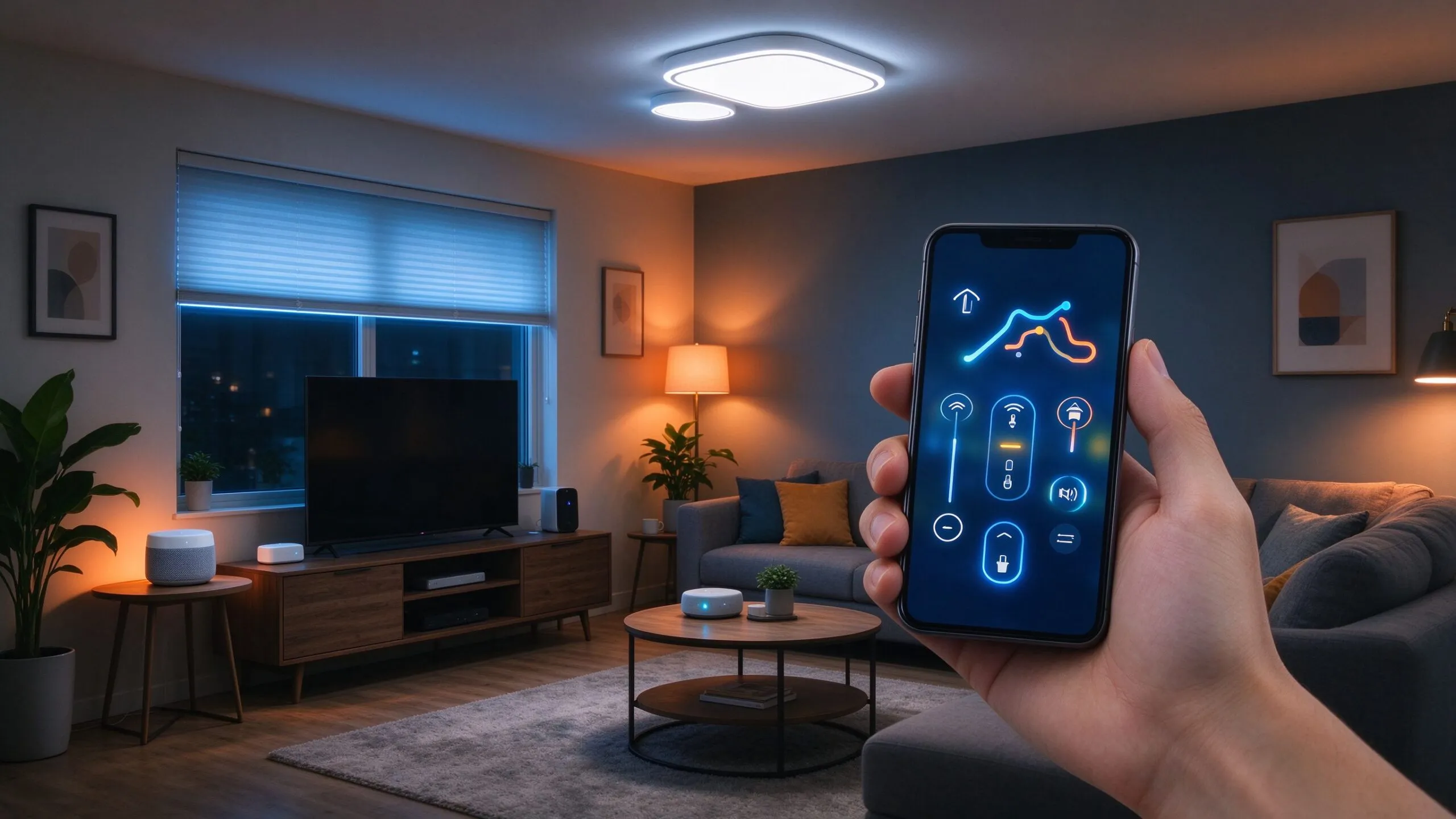
The integration of underfloor heating systems with smart home IoT ecosystems represents one of the most exciting developments in home automation. By connecting heating systems to the broader network of smart devices in the home, homeowners can achieve unprecedented levels of comfort, convenience, and energy efficiency. This guide explores the various ways underfloor heating can be integrated with popular smart home platforms and IoT devices, and explains what installers should specify to make the integration robust rather than fragile over the full life of the building.
Written by Ethan Sun, Founder & CEO, SunAura Thermal. SunAura has manufactured WiFi thermostats and electric underfloor heating elements at its Qingdao Huangdao factory since 2008, holding ISO 9001, ISO 14001 and ISO 45001 certifications, with product lines exported to more than 50 countries.
Voice Control Integration
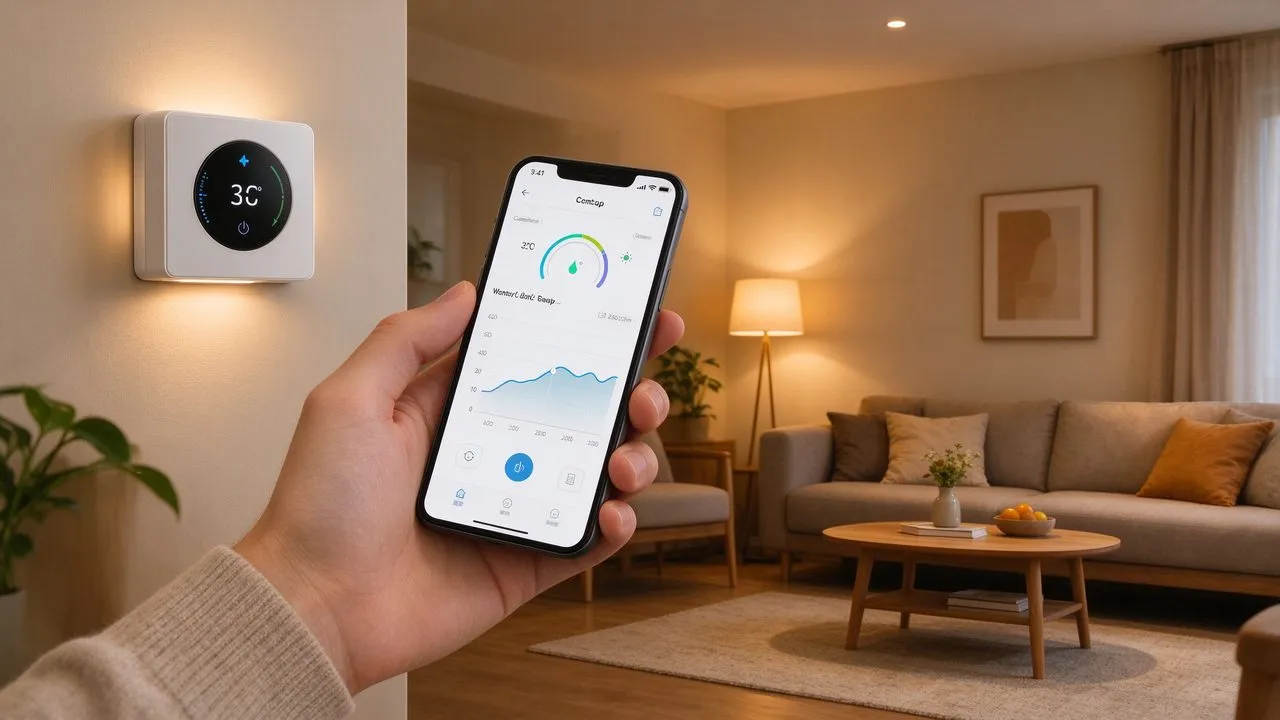
Voice control is one of the most popular and accessible forms of smart home integration. SunAura Thermal WiFi thermostats are compatible with all major voice assistant platforms, including Amazon Alexa, Google Assistant, and Apple Siri. Users can issue voice commands to adjust temperature, change operating modes, or check the current floor temperature. For example, saying Alexa, set the bathroom floor to 25 degrees will adjust the thermostat accordingly. Voice control is particularly valuable in situations where physical interaction with the thermostat is inconvenient, such as when your hands are wet or when you are carrying items, and it removes the friction that otherwise leads occupants to override a carefully tuned schedule in the middle of winter.
Smart Home Platform Integration
Beyond voice control, SunAura Thermal thermostats integrate with comprehensive smart home platforms. Amazon Alexa, Google Home, and Apple HomeKit each offer ecosystems where multiple smart devices work together. For example, in the Apple HomeKit ecosystem, you can create scenes that trigger multiple devices simultaneously. A Good Morning scene could turn on the bathroom floor heating, raise the smart blinds, start the coffee maker, and adjust the lighting, all with a single command or automatically at a set time.
Google Home offers similar capabilities through its Routines feature, while Amazon Alexa provides Scenes and Routines. These platform-level integrations allow the heating system to work in concert with other smart home devices, creating a cohesive automation experience rather than isolated device control. The practical benefit is that a single phrase or scheduled event can orchestrate the whole home, rather than requiring the occupant to open five different apps to switch lights, blinds, music and heating one by one.
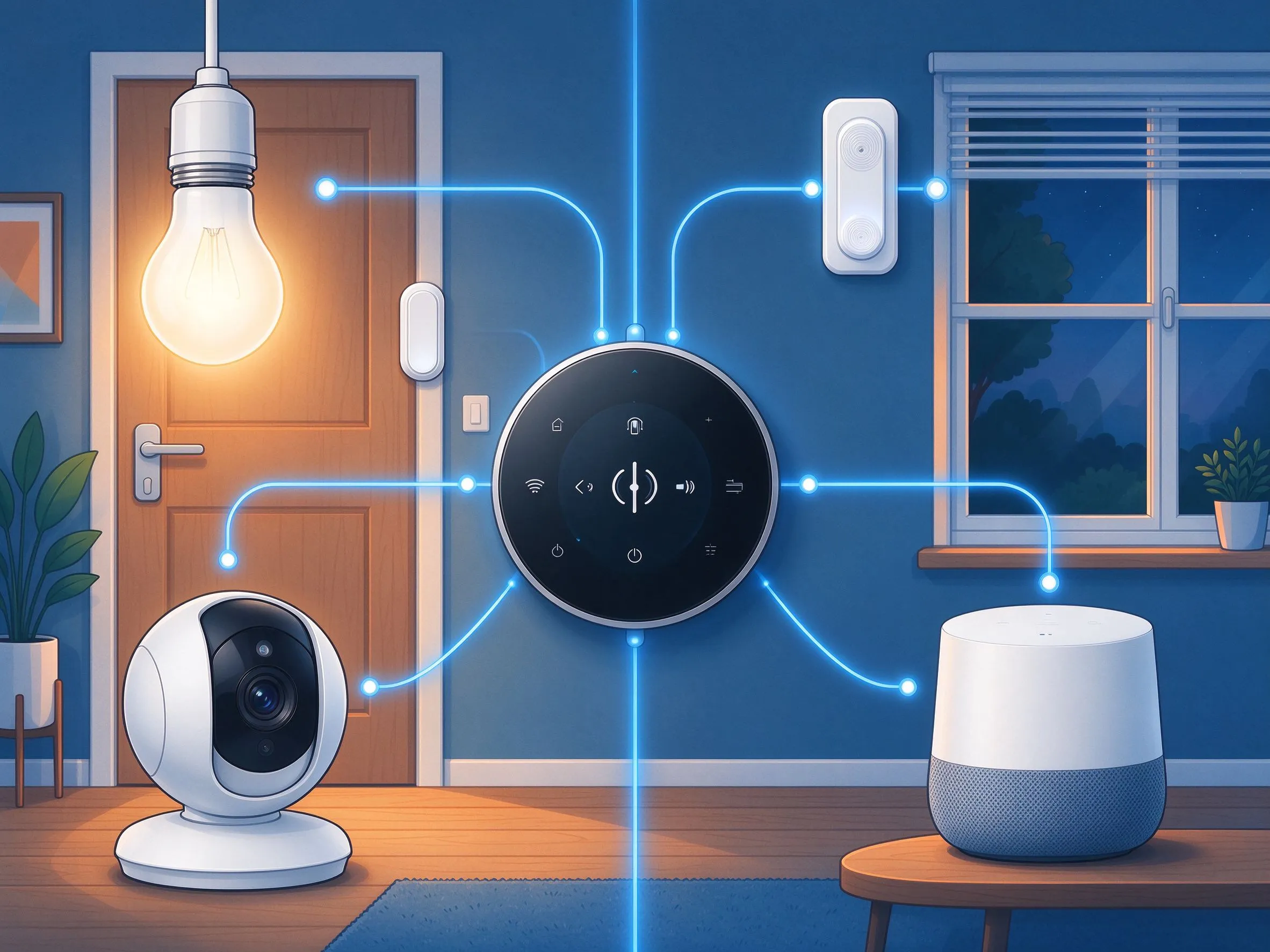
IFTTT Automation
IFTTT (If This Then That) is a powerful automation platform that connects smart devices and online services through custom rules called applets. SunAura Thermal thermostats support IFTTT, enabling users to create sophisticated automations that connect their heating system to hundreds of other services. For example, you could create an applet that turns on the bathroom floor heating when your smart alarm clock goes off, or one that sends you a notification if the floor temperature drops below 15 degrees, which could indicate a power outage or a failed heating element.
More advanced IFTTT automations could include: turning off the heating when a smart door sensor detects you have left the house, increasing the floor temperature when a weather service predicts a cold front, or logging heating data to a Google Sheet for long-term analysis. The possibilities are virtually endless, limited only by the range of IFTTT-compatible services and the user creativity. Many installers now preconfigure a small set of these applets during commissioning, so the homeowner arrives to a working smart home rather than a box of unpaired devices.
Sensor-Based Automation
Smart home sensors can enhance heating automation by providing additional data inputs. Window and door sensors can detect when windows are opened, automatically reducing the heating to prevent energy waste. Occupancy sensors can detect when a room is in use, activating the heating only when needed. Humidity sensors can trigger bathroom floor heating to help dry wet floors after showering. Temperature sensors in different rooms can provide data for multi-zone heating optimization, ensuring each room holds its own comfort setpoint rather than defaulting to a single whole-house temperature.
By combining multiple sensor inputs with the heating system, a truly intelligent home climate control system can be created. For example, the system could: detect that you have entered the bathroom, check that the floor temperature is below the comfort threshold, verify that no windows are open, and activate the heating at the appropriate level. This level of automation provides optimal comfort with minimal energy waste, because the heating only runs when a real occupancy event has been detected, rather than on a blind schedule that assumes the room is in use for six hours every evening.
Energy Management Integration
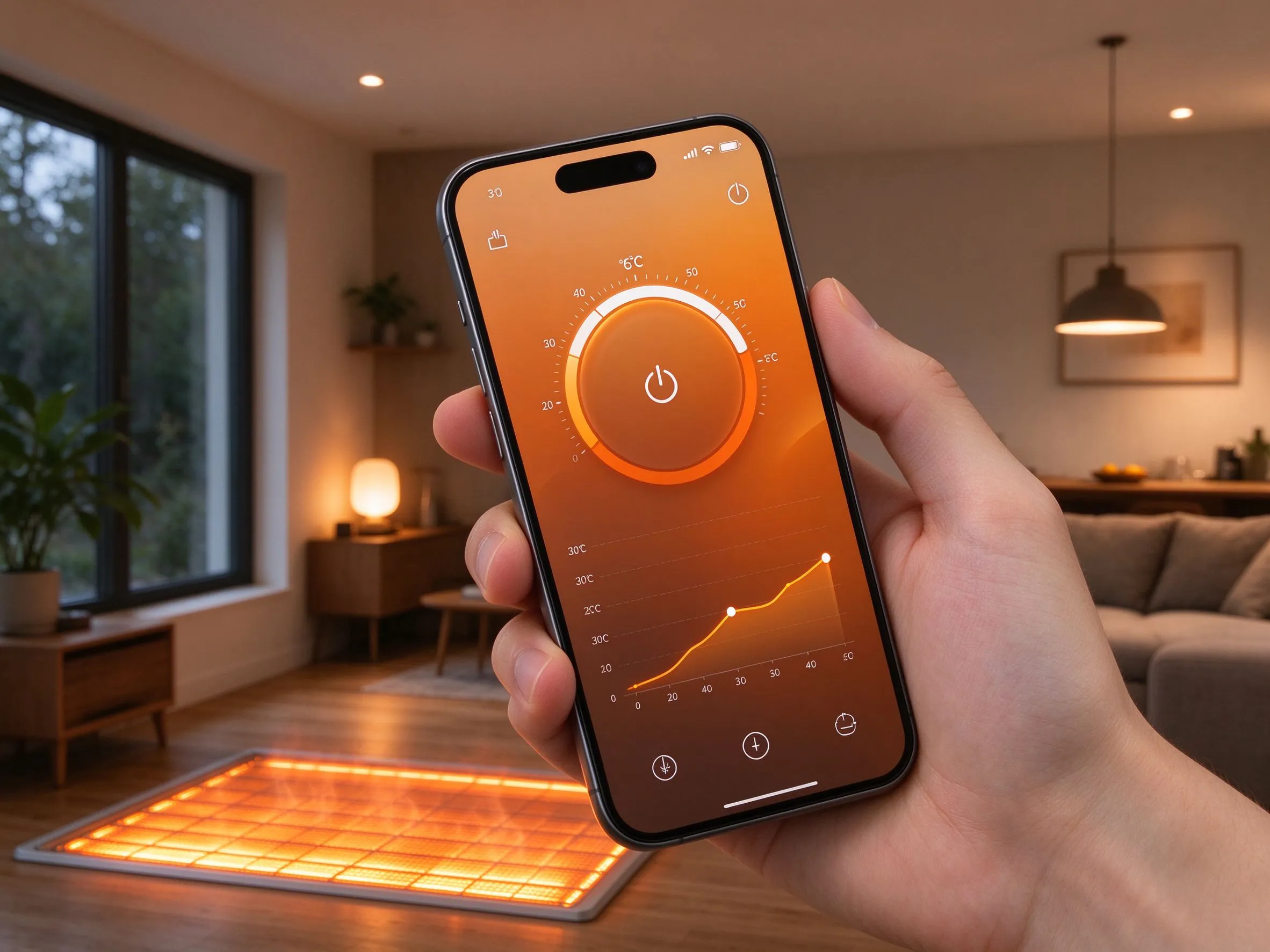
Smart home energy management systems can integrate with underfloor heating to optimize energy consumption across the entire home. These systems monitor electricity usage from all connected devices and can prioritize energy allocation based on user preferences and real-time electricity prices. For example, during periods of high electricity prices, the system might reduce the heating temperature by 1-2 degrees while maintaining essential loads, then restore the full temperature when prices decrease. This dynamic load shifting is one of the most cost-effective ways to lower both bills and carbon footprint.
Integration with solar PV monitoring systems allows the heating system to take advantage of excess solar generation. When the solar panels are producing more electricity than the home is consuming, the heating system can automatically increase the floor temperature by 1-2 degrees, effectively storing the excess energy as thermal energy in the floor. This approach maximizes the value of solar investment and reduces reliance on grid electricity, and it works equally well with home battery systems that export to the grid when prices are high.
Which IoT Protocols Underpin the Integration
Behind the scenes, smart heating relies on a small stack of standard protocols. WiFi handles the connection from the thermostat to the home router and the cloud. Bluetooth Low Energy is used for initial phone pairing and for local control when the WiFi network drops. Thread and Zigbee are appearing in newer multi-device homes, allowing thermostats, sensors and smart plugs to form a mesh network that does not rely on the cloud. MQTT is the common messaging protocol for users who run a local home automation server, and REST APIs are used for platform-to-platform integrations such as Alexa or HomeKit. Buyers who understand this protocol stack can ask more precise questions when comparing competing thermostat models.
When specifying a smart thermostat, ask which of these protocols the device supports and whether the vendor provides local API access. A thermostat that only talks to a proprietary cloud locks the homeowner into that vendor’s app, whereas one with local MQTT or REST support integrates cleanly with open home automation platforms. Our touchscreen WiFi thermostat is designed for broad platform compatibility, and our smart thermostat range supports OEM branding for distributors building their own smart home line. For a deeper look at the underlying control technology, read our article on RF wireless thermostat technology.
Data and Evidence: Why Smart Controls Move the Needle
The energy savings from IoT integration are not hypothetical. Per SunAura factory records, homes that move from a basic manual thermostat to a WiFi thermostat with schedule, geofencing and weather feedback typically reduce heating electricity use by 20-30% over a full winter. Homes that additionally integrate with occupancy and window sensors, or that pair the heating with a home battery, save a further 5-15%. These figures align with independent program evaluations by ENERGY STAR and with the IEA Buildings tracking, both of which identify smart controls as one of the lowest-cost levers for residential energy savings. Distributors and OEM buyers can request our factory test summary for the relevant thermostat model, which includes measured response time, schedule capacity and platform compatibility across Alexa, Google and HomeKit.
Multi-Room Scenes: Automating the Whole Home
Once each room’s thermostat is connected, the real value of IoT integration appears in scenes that combine heating with lighting, blinds, music and security. A Movie Night scene might dim the lights, close the blinds, drop the living room floor temperature by half a degree to keep occupants comfortable under a blanket, and switch the bedroom heating to overnight setback. A Leaving Home scene triggers geofencing across all phones, switches every zone to away mode, arms the security system and turns off non-essential appliances. These scenes are not gimmicks; they are the mechanism by which smart heating reaches its full energy-saving potential, because they remove the human temptation to override a sensible schedule when the evening is cold.
For builders developing smart show homes or multi-unit residential projects, the same scene logic can be pushed to every apartment through a single dashboard, allowing facilities teams to monitor energy use across dozens of units. Our engineering team supports these projects by specifying the right thermostat model per room, configuring the initial scenes, and documenting the automation logic for the handover manual. Distributors building their own smart home brand can also leverage our thermostat controls as the heating endpoint of a wider OEM platform, and we offer private-label branding on volume orders.
Frequently Asked Questions
Does my thermostat work with Alexa, Google and Siri? Most SunAura WiFi thermostats support Amazon Alexa and Google Assistant out of the box, and the HomeKit-certified models support Siri. Check the product datasheet for the exact platform list, because regional variants sometimes differ. The companion app walks you through linking the thermostat to each voice assistant with a few taps, and you can group rooms into a single voice command such as “Alexa, set the whole house to evening mode.”
Can I control the heating from outside the home? Yes. Once the thermostat is paired with the companion app and linked to your WiFi network, you can adjust temperature, switch modes or check the current floor reading from anywhere with an internet connection. This is useful for pre-heating before arrival or for switching to frost protection after departure. It is also the feature that lets you turn the heating off remotely if you realize you left for a trip and forgot to change the schedule.
What happens if my WiFi goes down? The thermostat continues to run the last programmed schedule locally, because the schedule is stored on the device itself. Voice control and remote access resume as soon as the WiFi returns, and many models also support Bluetooth control directly from your phone when the network is unavailable. This means a router outage never leaves the home without heat, and it also means the heating keeps running through internet provider maintenance windows.
Do I need a smart hub to integrate the heating? No. Most SunAura thermostats connect directly to your home WiFi and pair with the manufacturer app. A hub is only required if you want to unify many different vendor devices under one automation platform, such as Home Assistant or a commercial smart home controller. Even then, the thermostat usually exposes itself over the local network, so the hub can talk to it without a proprietary bridge.
Can I integrate the heating with solar panels and a home battery? Yes. WiFi thermostats can be scheduled to pre-heat the floor during sunny midday hours, using excess solar generation. When paired with a home battery and an energy management system, the heating can automatically shift load to low-tariff or low-carbon periods. Our thermostat controls are specified for these hybrid projects, and distributors can request a compatibility list that pairs our thermostats with common PV inverters and battery systems.
Conclusion
The integration of underfloor heating with smart home IoT ecosystems transforms heating from a standalone function into an integral part of the intelligent home. Through voice control, platform integration, IFTTT automation, sensor-based triggers, and energy management, homeowners can achieve a level of comfort and efficiency that was previously unattainable. SunAura Thermal WiFi thermostats are designed to be fully compatible with all major smart home platforms, ensuring our heating systems can be seamlessly integrated into any smart home ecosystem. Distributors, installers and OEM buyers can request samples, factory pricing and platform compatibility documentation through our export sales team, and we support private-label branding on volume orders. If you are specifying a project that must demonstrate smart-control readiness for a building certificate or green mortgage application, our engineering team can prepare the integration evidence pack on request.
Related Products & OEM Inquiries
Connecting underfloor heating to a smart home ecosystem? Our WiFi smart thermostats integrate with Alexa, Google Home and Tuya, controlling electric underfloor heating zones from anywhere. Request smart thermostat volume pricing — we supply OEM smart-control packages for heating brands and distributors in 50+ countries.