
The Combination That Is Quietly Growing
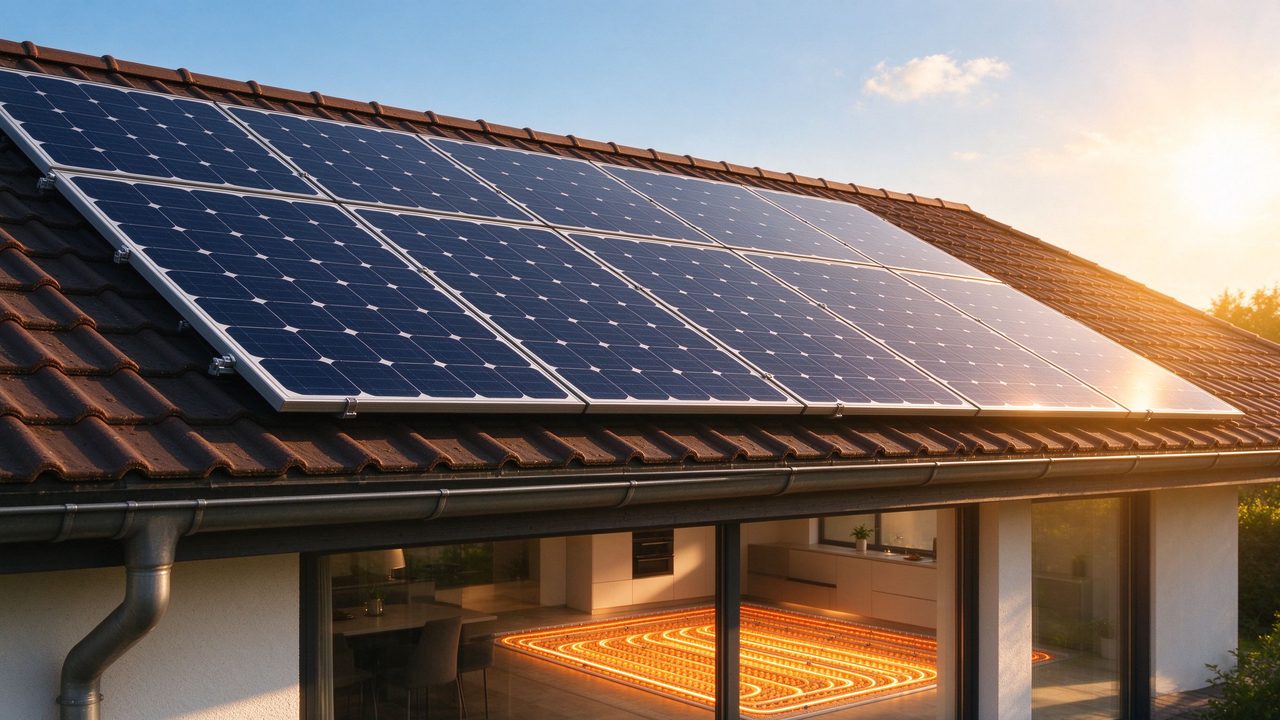
Solar powered underfloor heating is not a gimmick — it is a system architecture with a clear logic. Solar panels generate electricity during the day, an electric underfloor heating system converts that electricity into heat in the floor, and the floor’s thermal mass stores the warmth into the evening. In households that already own a PV array, the marginal cost of adding electric floor heating is simply the element and thermostat; the fuel is already being generated on the roof. That is why solar powered underfloor heating is appearing in more renovation plans than ever — it pairs the highest-efficiency heating distribution (radiant floor) with the lowest-carbon electricity source (roof PV).
For buyers, the shift is practical rather than ideological. Grid electricity prices are rising across Europe and North America, solar self-consumption is worth more than exported power in most tariff structures, and underfloor heating with solar panels captures that value directly: heat the floor when the sun shines, draw less from the grid at night. This article walks through how the system is built, what it costs, and the control strategy that makes it work.
How the System Is Wired
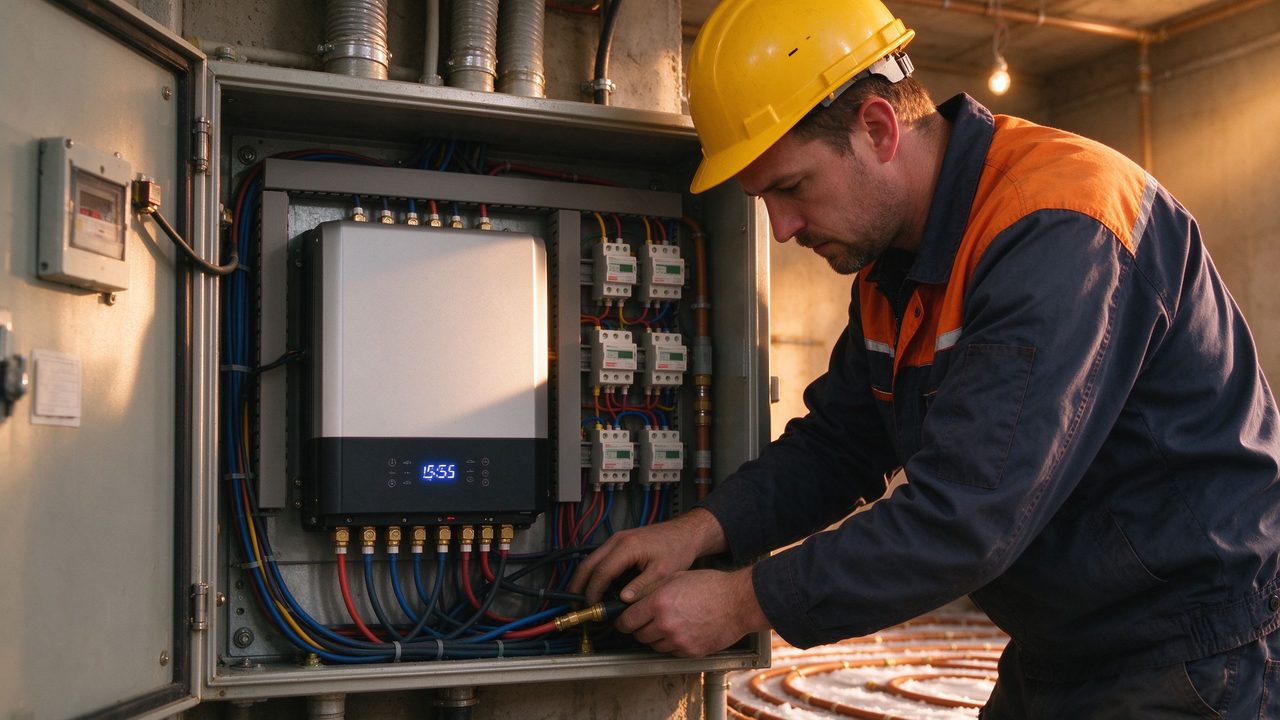
A solar-plus-floor-heating installation has four layers. On the roof, the PV array produces DC power; the inverter converts it to AC for the home. The floor contains the heating element — film, mat or cable — sized to the room heat loss. The thermostat controls the element, with a floor probe to limit surface temperature and an air probe for comfort. And the energy management layer, which can be as simple as a timer or as smart as a smart thermostat reading PV production, decides when the element runs. The simplest configuration needs nothing more than a scheduling thermostat set to heat during peak solar hours. The smart configuration uses live PV data to heat whenever surplus is available, which maximises self-consumption without any manual intervention.
The Economics: Self-Consumption Is the Whole Game
The economics of solar powered floor heating rest on one number: how much of your own solar electricity you use. In markets where exported power pays a low feed-in tariff and grid power is expensive, every kilowatt-hour you self-consume is worth the full retail price, not the export price. A 40 m² open-plan floor at 160 W/m² draws roughly 6.4 kW at full power, but with a schedule and a floor probe it runs intermittently — typically 4–6 hours of equivalent full-power operation per day. A 5 kW PV array in a decent climate produces 15–25 kWh per day in the heating season; a well-insulated electric floor heating system consumes 25–40 kWh per day in winter, so solar covers a meaningful share, and time-of-use heating during sunny midday hours cuts the grid share further. The exact split depends on your array, insulation and climate — which is why a calculation, not a rule of thumb, should drive the system size.
Control Strategy: Heat When the Sun Shines
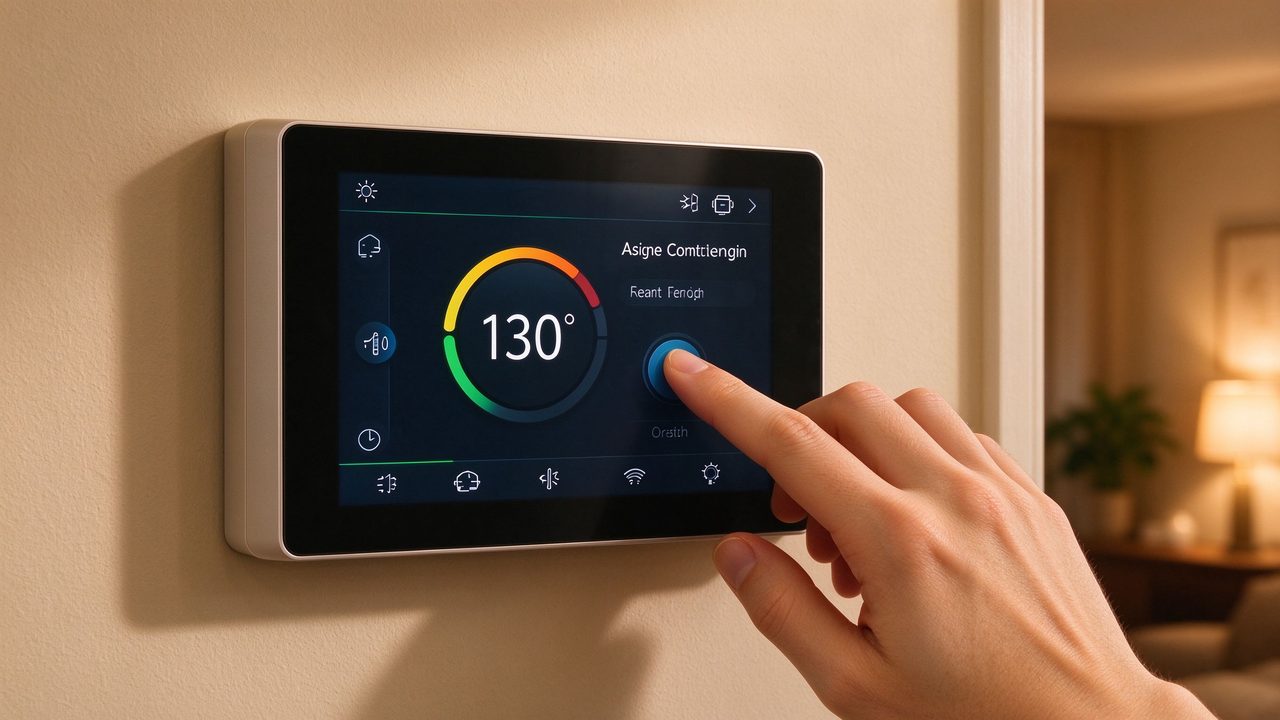
The control strategy separates a good solar-floor-heating project from an expensive one. The floor acts as a battery: pre-heated during solar hours, it releases warmth through the evening without burning grid power. The practical approach is to schedule the element to run between mid-morning and mid-afternoon, when PV output peaks, and to let the floor’s thermal mass carry the evening. Adding a floor probe prevents overshooting — the system switches off when the slab reaches its target temperature, even if the sun is still shining. For households with smart meters, pairing the schedule with a cheap-overnight tariff creates a second window: pre-heat at night when electricity is cheapest, and let solar top up the floor during the day. This two-window strategy is the pattern we see in the most cost-effective installations (per SunAura factory records of system guidance), and it works with any thermostat that supports scheduling and a floor sensor.
Element Choice: Film, Mat or Cable Under PV
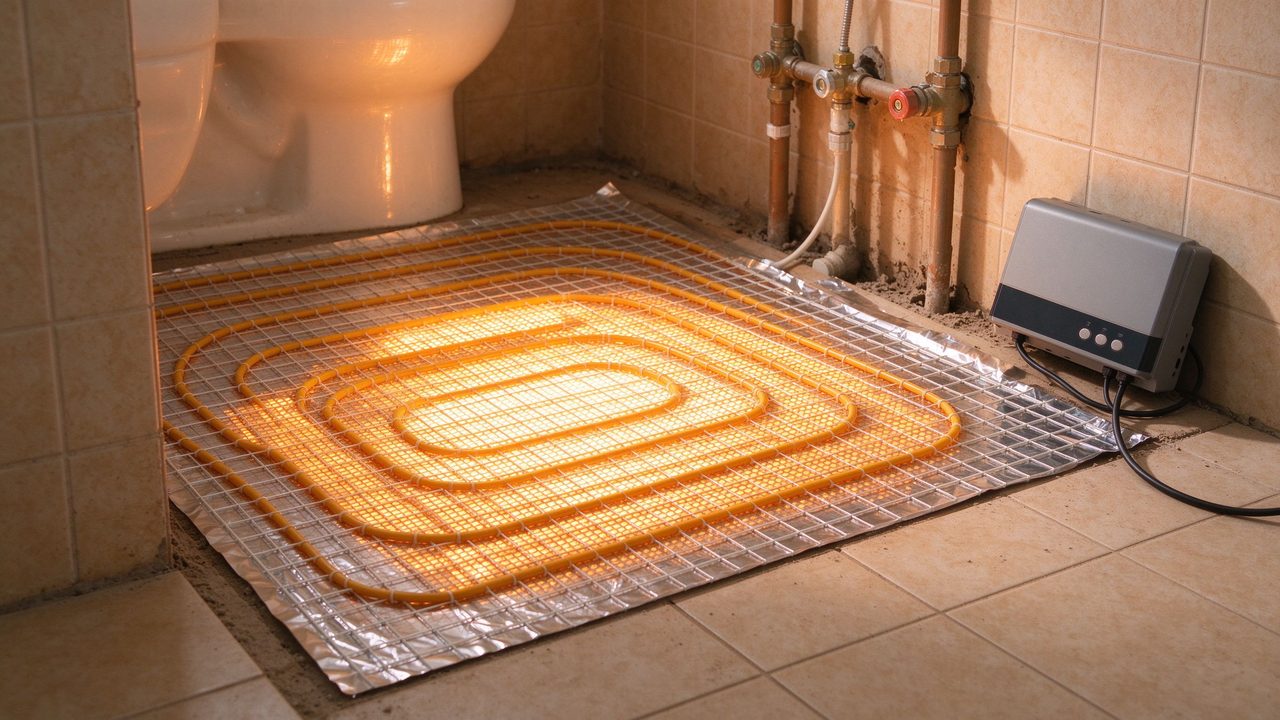
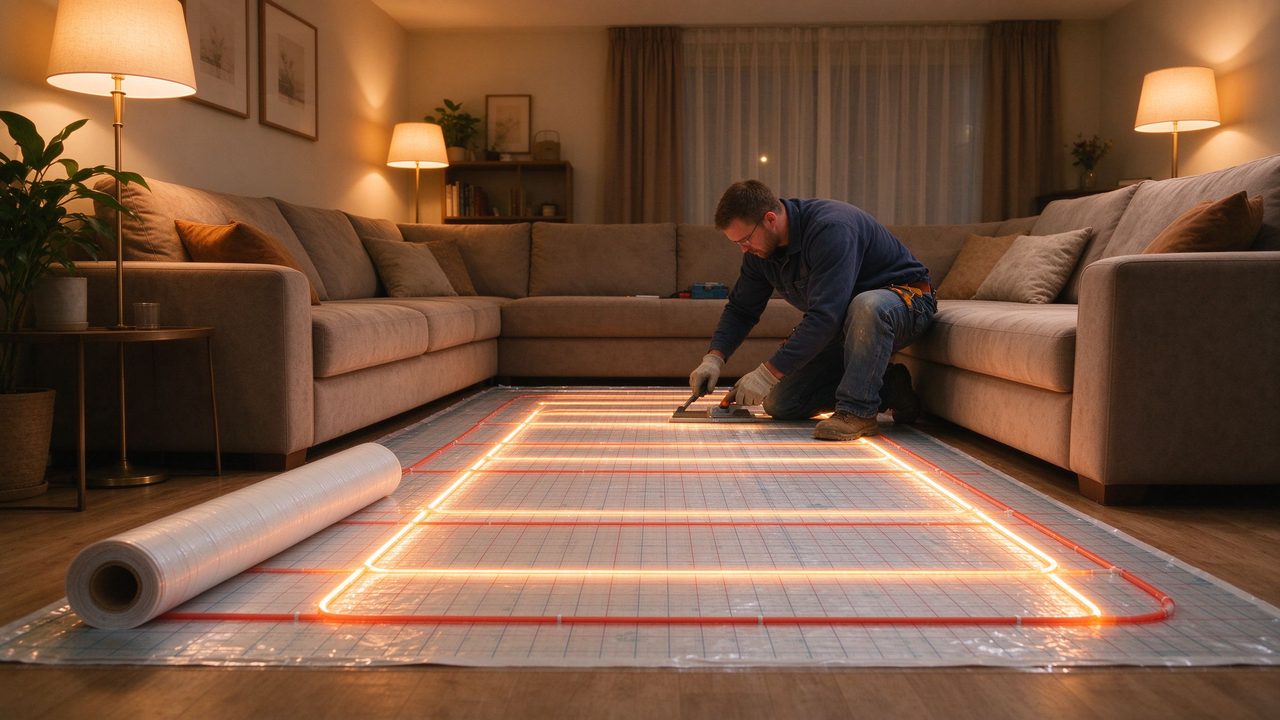
All three electric elements work with solar, and the choice follows the floor build rather than the energy source. Heating film suits low-profile dry-lay builds under laminate or engineered wood, with fast response and thin build-up. Heating mat suits tiled floors and bathrooms, with robust construction and even heat distribution. Heating cable suits screed installations and irregular room shapes, where a mat or film would be hard to fit. Under a solar strategy, the element’s efficiency matters less than its controllability — every element converts nearly all electricity to heat, so the differentiator is how precisely the thermostat can schedule it. A graphene heating film or mat with a programmable WiFi thermostat gives the same self-consumption benefit as any other element; what matters is the control package.
Data and Evidence: What We Can Document
The claims in this article rest on documented facts. SunAura Thermal has manufactured electric heating elements since 2008 at our Qingdao, Huangdao factory — 17 years of continuous production under ISO 9001/14001/45001, with CE and RoHS documentation and LVD/EMC compliance tested per market (per SunAura factory records). The wattage figures above are standard engineering values for electric floor heating (160 W/m² design output for insulated rooms is the common European design basis), and the PV yield figures are typical for residential arrays in moderate climates. For your specific numbers, the correct process is to size the element from the room heat-loss calculation and size the array from your consumption profile — both are calculations our team can run with you before you commit to a specification.
Frequently Asked Questions
Can I add electric floor heating to an existing solar installation? Yes — the element and thermostat are added to the electrical system like any appliance; no changes to the PV array are required.
Does solar storage make sense instead of floor thermal mass? Batteries store electricity; the floor stores heat. For heating-only projects, thermal mass is usually cheaper than battery capacity for the same useful energy.
Is electric floor heating compatible with heat pumps? Yes — low-temperature compatibility is a strength of electric systems; see our guide on underfloor heating with heat pump for the details.
Where do I start a solar floor heating project? Send your floor plan, insulation details and local tariff to our team for a written quotation including the wattage calculation and factory-direct pricing.
Regional Differences: Europe, North America and Beyond
The solar-plus-floor-heating equation looks different in each market. In Germany and the Netherlands, feed-in tariffs have fallen while grid prices rose, so self-consumption is strongly rewarded — the case for heating with your own PV is at its strongest. In Spain and Italy, high solar yield meets moderate heating demand, so the system tends to be smaller and the payback quicker. In the UK, the new-build and retrofit markets are both active, and smart-export tariffs make midday heating attractive. In North America, net metering rules vary by state, and the winter heating load is larger, so the system sizes grow accordingly. The common thread: wherever the sun shines during heating hours and the tariff rewards self-use, solar powered floor heating makes sense. The specification work is the same everywhere — element sizing from heat loss, array sizing from consumption, and a thermostat that schedules the heat into the solar window.
Designing the System Right: A Five-Step Checklist
Step one: calculate the room heat loss in watts, and size the element output to cover it with a margin — 150–160 W/m² for insulated rooms is the common design basis. Step two: choose the element family by the floor build (film for low-profile dry-lay, mat for tile, cable for screed and irregular shapes). Step three: confirm the electrical circuit can carry the element load and the thermostat is rated for it. Step four: set the control strategy — schedule into solar hours, add a floor probe, and use the overnight tariff window if available. Step five: document everything — the wattage calculation, the certificate set and the batch test record go in the project file. A project run through these five steps installs cleanly, runs predictably and disputes nothing at handover. That is the standard our engineering guidance is built around, and it is available to every buyer at no cost before they commit to a specification.
Cost Scenarios: Three Households Compared
| Scenario | System | Daily use | Grid share (no solar) | With 5 kW PV + schedule |
|---|---|---|---|---|
| Small bathroom (6 m²) | 160 W/m² mat | ~3 h | ~2.9 kWh | ~1.2 kWh |
| Open-plan (40 m²) | 160 W/m² film/mat | ~5 h | ~32 kWh | ~14 kWh |
| Large floor (70 m²) | 160 W/m² mixed | ~5 h | ~56 kWh | ~25 kWh |
The table shows the pattern in round numbers: solar with a schedule typically cuts the grid share by more than half in the heating season, and the saving scales with the floor area. The exact figures depend on array size, orientation, insulation and local tariff, so treat the table as a planning tool rather than a quote — the quote comes from the calculation, and the calculation comes from your floor plan and consumption profile. That is the process our team follows for every solar-heating enquiry, and the same figures underpin the guidance we send with each order (per SunAura factory records).
Frequently Asked Questions
Can I add electric floor heating to an existing solar installation? Yes — the element and thermostat are added to the electrical system like any appliance; no changes to the PV array are required. The schedule simply shifts toward solar hours.
Does solar storage make sense instead of floor thermal mass? Batteries store electricity; the floor stores heat. For heating-only projects, thermal mass is usually cheaper than battery capacity for the same useful energy.
Is electric floor heating compatible with heat pumps? Yes — low-temperature compatibility is a strength of electric systems; see our guide on underfloor heating with heat pump for the details.
Where do I start a solar floor heating project? Send your floor plan, insulation details and local tariff to our team for a written quotation including the wattage calculation and factory-direct pricing.
What happens on cloudy weeks? The grid covers the shortfall automatically — the system is still a normal electric floor heater; solar simply reduces the grid share on sunny days.
About the author: Ethan Sun, Founder & CEO, SunAura Thermal — 17 years of manufacturing electric heating film, mats and cables from our Qingdao factory (ISO 9001 / 14001 / 45001 certified, CE / RoHS compliant), now exporting to 50+ countries worldwide.
System Sizing: The Numbers in One Place
Putting the sizing numbers together makes the solar-floor-heating decision concrete. Start with the floor: measure the heated area in square metres and confirm the design output — 150–160 W/m² is the common basis for insulated rooms, giving a 20 m² living space about 3.2 kW of element capacity. Then the array: a typical residential PV system of 4–6 kW produces enough daily energy in the heating season to cover a meaningful share of that load when the schedule runs during solar hours. Then the tariff: check what your exported power pays versus what you pay for grid power, because the gap is the value of self-consumption. Finally the control: a thermostat with a floor probe and scheduling turns the calculation into an operating plan. Each number comes from a document — the heat-loss calculation, the array datasheet, the tariff sheet and the thermostat specification — and a project is ready to quote when all four documents are on the table.
That is the process our team follows on every solar-heating enquiry, and the same four documents form the basis of the written quotation. The point is not that the system is complicated — it is that a solar floor heating project deserves the same design discipline as any other heating investment, because the savings depend on the match between the array, the floor and the schedule. Get the match right and the system runs itself; get it wrong and no amount of smart controls fixes the sizing.
Sourcing for Solar-Heating Projects
If you are a distributor or installer building a solar-plus-floor-heating offer, the supply question is straightforward: one supplier for the elements, thermostats and documentation. SunAura Thermal provides film, mat and cable with matching thermostats and controls from the same factory, so the whole heating side of the solar package ships together with consistent quality and one set of certificates. For volume programmes we offer electric underfloor heating wholesale pricing, OEM branding and written lead times. Send us the project scope and we will return a complete bill of materials. The same four-document discipline applies whether the project is a single room or an entire house.
Related Products & OEM Inquiries
Looking for solar-coupled underfloor heating or a factory-direct OEM/ODM partner? Explore our complete electric underfloor heating systems, graphene far-infrared heating film range, and smart thermostats and floor-sensing controls, then request a quote for your project — we supply distributors, installers and brands in 50+ countries.