
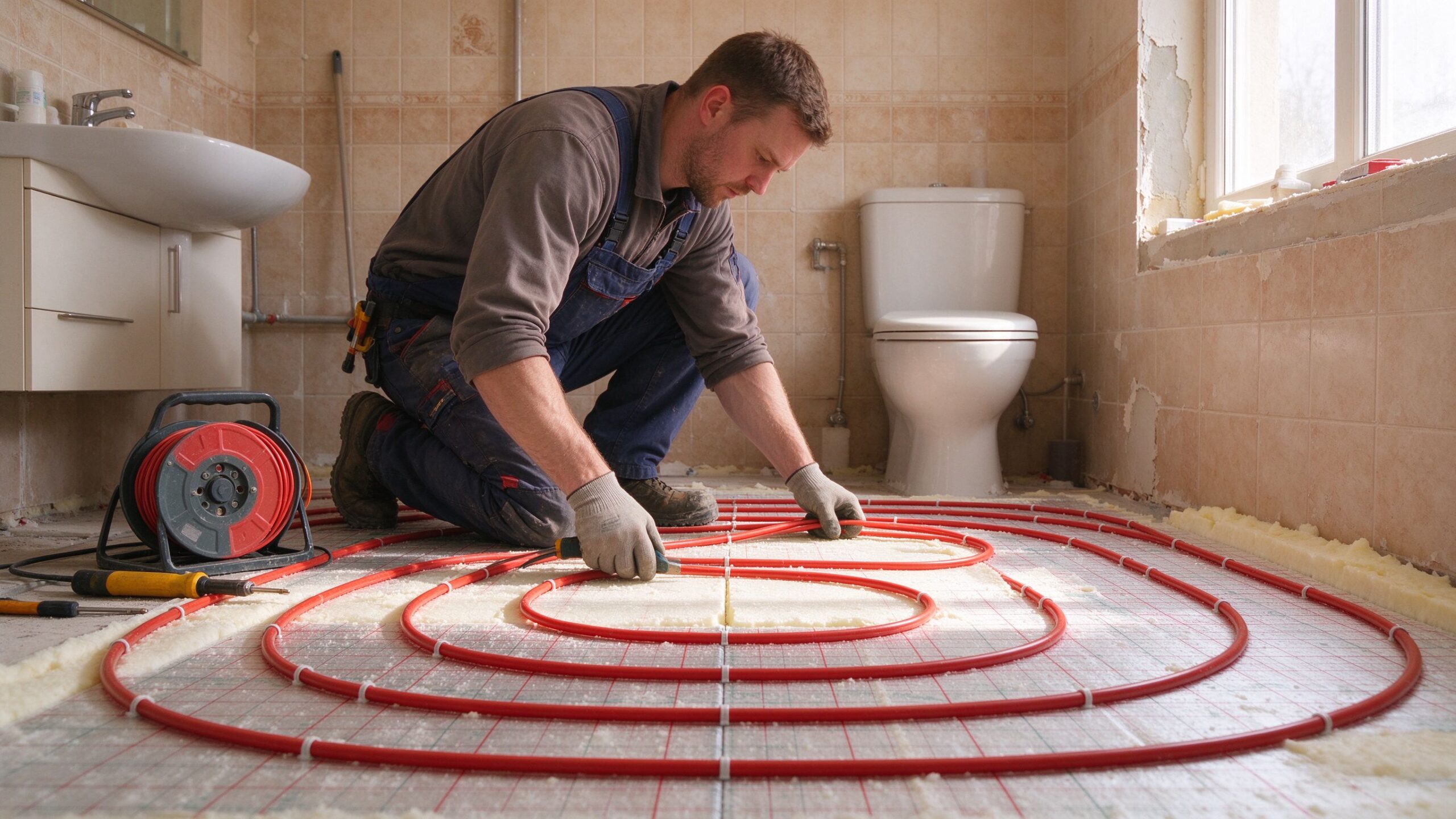
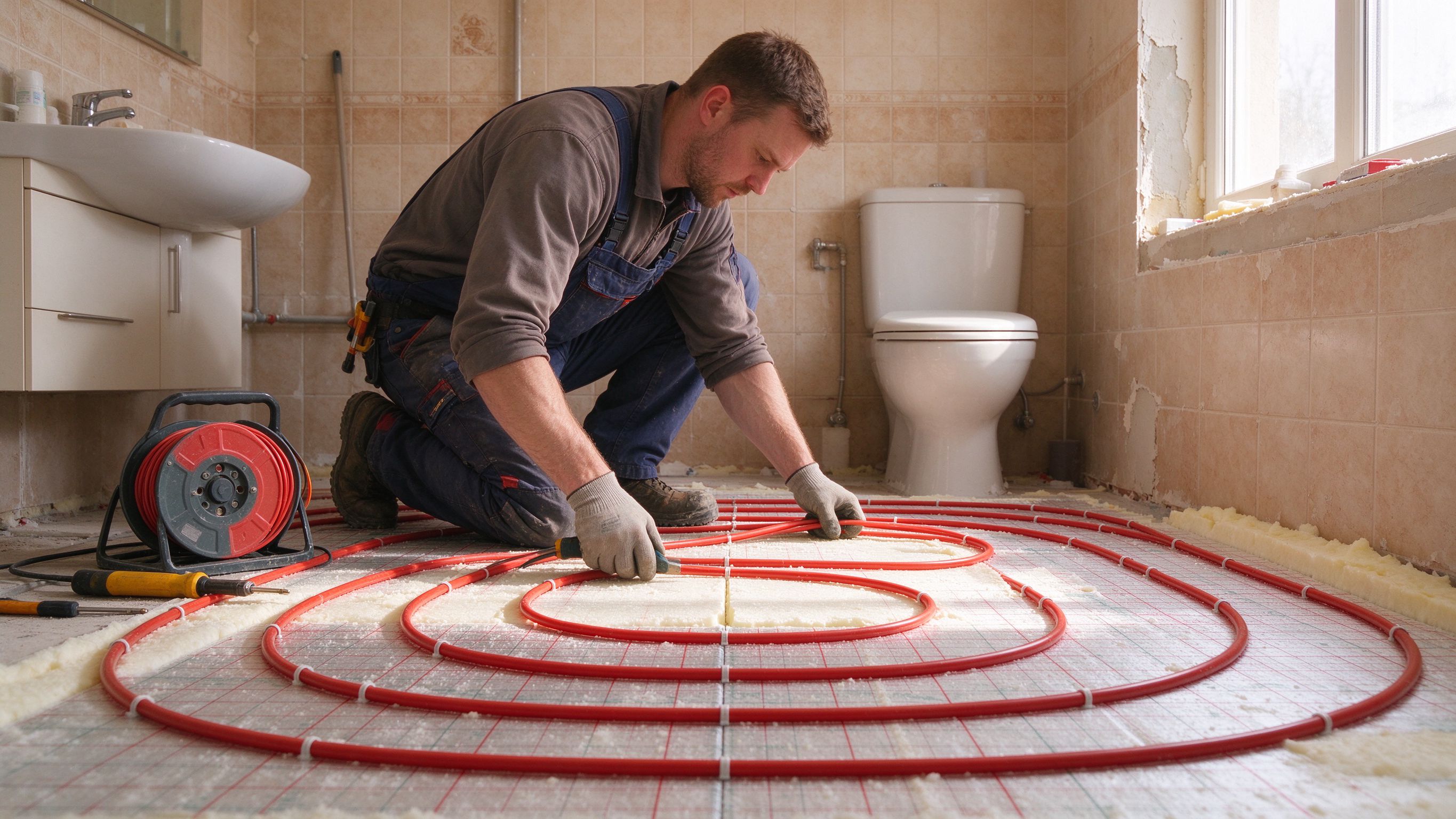
For most electric underfloor heating installations, the choice between a single-conductor and a twin conductor heating cable is decided before anyone unrolls a drum. The decision affects installation time, the electrical layout, the floor sensor arrangement and the long-term serviceability of the system, yet it is often made on habit rather than on an understanding of how the cable is built. This article explains the construction of twin-conductor cable, compares it with single-conductor designs, walks through a practical installation sequence and sets out the evidence a buyer should request from the factory. The intended reader is a heating contractor, an importer comparing suppliers, or a homeowner who wants to understand what the electrician is installing under the screed.
1. What Makes a Twin Conductor Heating Cable Different
A twin conductor heating cable contains two resistive conductors that run side by side inside a single insulation jacket. Power flows down one conductor and returns through the second, which means both ends of the circuit terminate at the same connection point. That single structural detail changes the entire layout of the installation. In a single-conductor cable the return leg has to travel all the way back across the room, doubling the wiring that has to be hidden and complicating the cold-tail joint. With a dual-core design the installer lays one continuous path and brings both tails back to the thermostat or junction box on the same edge of the room.
The practical benefit is a faster, cleaner installation in rooms where the floor plan is irregular. A bathroom with a shower tray, a corridor with a step, or a kitchen island can be routed around obstacles without planning a separate return path. For installers working to a day rate, the layout time saved on a typical 12 m² bathroom is often half an hour or more, and the risk of crossing the hot and return conductors is removed by design. For a renovation project, where the floor build-up is thinner and the access time is shorter, the single-loop layout is often the difference between finishing in one visit and making a second trip.
2. Twin Conductor vs Single Conductor Heating Cable: A Working Comparison
Specifiers regularly ask for a direct comparison, because the two designs sit at different price points and perform differently in the field. A twin conductor vs single conductor heating cable comparison needs to look at four things: installation complexity, magnetic field levels, serviceability and cost per square metre.
| Consideration | Twin conductor | Single conductor |
|---|---|---|
| Connection points | One, at the cable start | Two, at start and return end |
| Layout flexibility | High; single path around obstacles | Return leg must be planned |
| Magnetic field at floor level | Lower; opposing currents cancel | Higher near the return run |
| Typical installed cost | Higher per metre | Lower per metre |
| Best use case | Bathrooms, kitchens, renovations | Large open halls, cost-led projects |
For a renovation project the twin-conductor premium is usually worth paying, because the labour saving and the cleaner layout offset the material cost. The room is smaller, the floor plan is more complex and the schedule is tighter, so the design advantages matter more. For a warehouse or a sports hall with a regular grid, a single-conductor design can deliver the same output for less money, because there are no obstacles to route around and the electrician can plan the return leg in a straight line. The right choice depends on the floor plan, not on habit, and a good supplier will say so rather than pushing the more expensive option.
3. Cold Tails, Floor Sensors and the Connection Point
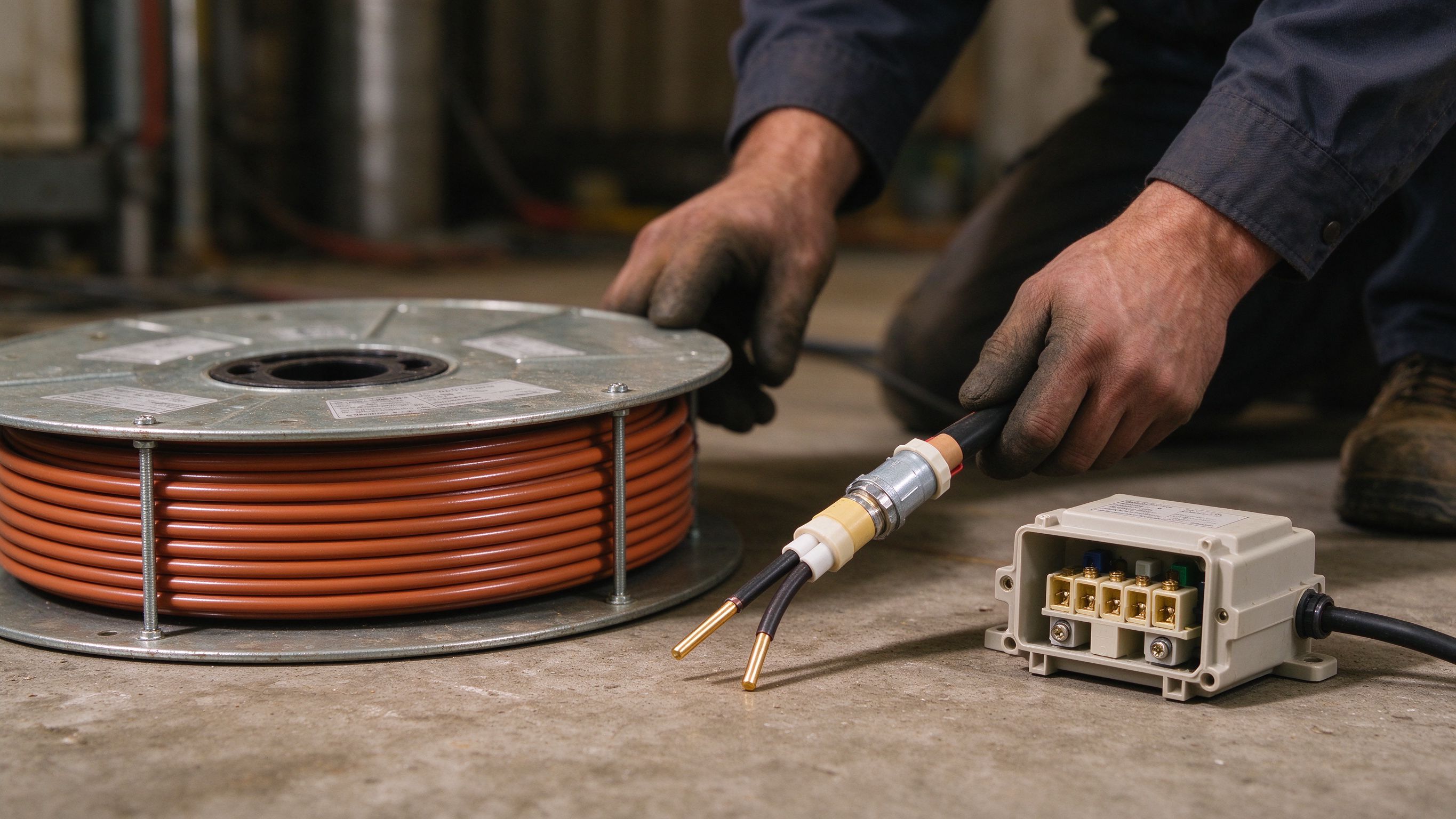
A quality dual core heating cable for renovation ships with two cold tails, each typically 2.5 to 3 m long, factory-jointed to the heating element. The joint is the weakest point of any heating cable, so it must be made in the factory, not on site. SunAura Thermal manufactures the joint inside the element with an encapsulated moulding rated IP67, so moisture from the screed cannot reach the connection. The cold tails are sized to reach a standard wall-mounted junction box or thermostat without an extra splice, and each tail is clearly labelled so the installer cannot reverse polarity at the box.
Most twin-conductor cables also carry an integrated sensing element for a heating cable with integrated floor sensor. The sensor wire runs inside the same jacket and terminates in the box, which lets the thermostat read the actual floor temperature at the cable rather than relying on a separate probe that can be displaced during screeding. For a bathroom floor this matters: a displaced probe reads air temperature, the system runs longer than necessary and the floor overheats in one corner while the rest of the room is cold. An integrated sensor keeps the control loop closed without extra installation risk, and it removes one more component from the shopping list.
4. How to Lay Twin Conductor Cable in Screed
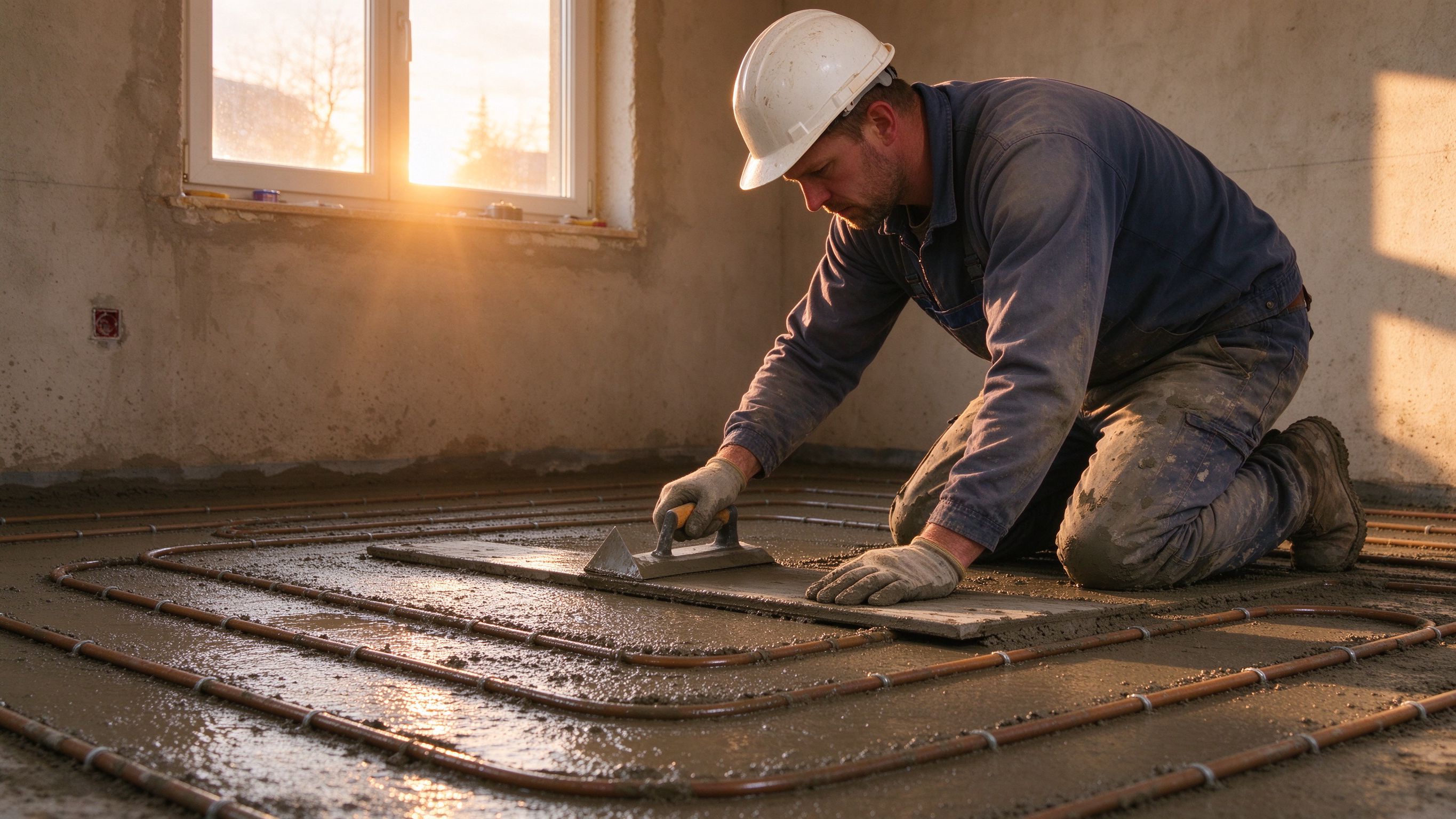
Installation follows a sequence that is well documented but often rushed. First, the substrate is cleaned and a primer is applied so that the insulation boards sit flat. Second, insulation boards are laid; for a ground floor this is not optional, because uninsulated screed leaks heat into the slab and can double the running cost. Third, the cable is laid at the spacing calculated for the room wattage, typically 100 to 150 mm between runs for a bathroom at 150 W/m². The cable is fixed with clips or tape, avoiding tight bends below the manufacturer’s minimum radius, which for most twin-conductor cables is about six times the cable diameter. Fourth, the cold tail joint is positioned away from the heating area, in the junction zone, and the floor sensor is installed in a conduit between two heating runs. Finally, the screed is poured to a minimum 3 cm cover, and the system is left to cure before first firing.
Two mistakes account for most call-backs. The first is laying the cable directly on insulation without a mesh or fixing system, which lets the cable float during the pour and produces uneven heat or a visible ridge in the screed. The second is starting the system before the screed has cured, which stresses the element and can crack the floor. SunAura Thermal’s commissioning guide recommends a 28-day cure for cement screed and a 7-day ramp-up, starting at 20 °C and increasing by 5 °C per day, before full-load operation. For a renovation contractor under pressure to hand over the room, skipping the cure is tempting and expensive.
5. Zoning, Thermostats and the Control Loop
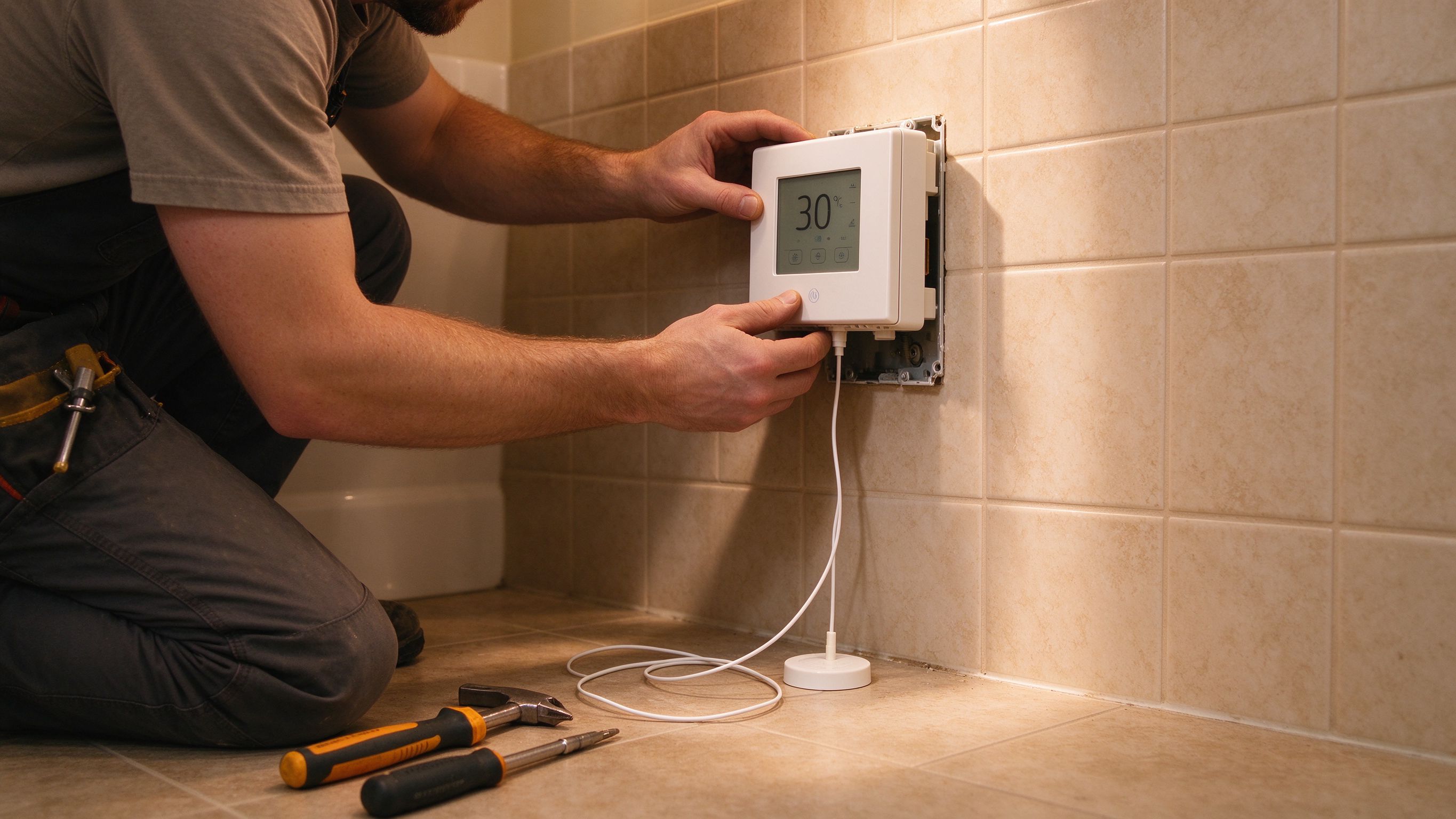
A twin-conductor cable system is normally controlled zone by zone. Each room, or each major area of a large room, has its own thermostat and floor sensor, so the system heats only the space that is in use. In a house with four zones, the schedule might run the bathroom at full output in the morning, the living area during the day and the bedrooms only in the evening. Zoned control is the largest single lever on running cost, because electric heating is metered energy and every unheated hour is saved energy.
The thermostat specification matters as much as the cable. A programmable thermostat with a floor-probe input can run in floor-probe mode, air mode or a hybrid, and the floor-probe mode is the right choice under screed because it responds to the floor temperature that the occupants feel. SunAura Thermal’s thermostat range includes models with an integrated or remote floor sensor, and the wiring diagram for twin-conductor cable is printed on the box, so the installer does not have to guess which terminal takes the sensor wire.
6. Data and Evidence: What Factory Records Show
SunAura Thermal has manufactured electric heating elements since 2008, giving the factory 17 years of production records across film, mat and cable lines. For twin-conductor cable specifically, the Qingdao Huangdao facility runs continuous DC resistance testing on every reel before shipment, per SunAura factory records. Each 100 m reel is tested for insulation resistance above 100 MΩ, conductor continuity and resistance tolerance within ±10% of the rated value. The factory holds ISO 9001, ISO 14001 and ISO 45001 certification, and the cable line is covered by CE, RoHS, LVD and EMC compliance. These are documented test steps, not marketing claims, and they are repeatable on any batch a buyer specifies.
The same records show the failure modes that justify the twin-conductor design. Across service returns, connection-point failures account for the majority of field issues, and factory-jointed cold tails with IP67 moulding eliminate the most common cause of those failures. The records also show that the largest share of underfloor heating complaints is not the element at all but the control: a missing floor sensor or a thermostat set to the wrong mode. That is why the integrated sensor and the printed wiring diagram are part of the product, not an afterthought.
7. FAQ: Twin Conductor Heating Cable
Can I cut a twin conductor cable to length? No. The cable is a fixed-resistance element; cutting it changes the wattage per metre and voids the guarantee. Order the reel length nearest to the calculated requirement and adjust the spacing within the published range instead.
What spacing should I use? Divide the room area into the required wattage, then select spacing from the cable’s W/m rating. A 15 W/m cable at 150 W/m² runs at 100 mm spacing; at 100 W/m² the spacing opens to 150 mm. Never exceed the manufacturer’s minimum and maximum spacing.
Is twin conductor cable safe under a wooden floor? It can be used in dry installations with a heat-spreading plate, provided the manufacturer’s maximum surface temperature for timber is respected, typically below 27 °C for oak.
Does a twin conductor cable use more electricity than a single conductor? No. Both convert the same wattage into heat; the difference is layout and field characteristics, not consumption.
Can I repair a damaged section of cable? No. A damaged heating element cannot be rejoined reliably; the damaged run must be replaced. That is why careful layout and the cold-tail joint quality matter more than the cable price.
8. What to Look for in a Wholesale Supply
For importers and distributors, the specification sheet is only the start. Ask for the DC resistance test report for the batch you are buying, the cold-tail joint construction detail and the insulation resistance figure. Confirm that the cable is supplied on fixed-length reels with a label stating W/m and total wattage, and that the factory can issue a heating cable wholesale supplier quotation with CE and RoHS documentation attached. SunAura Thermal provides all four documents with every heating cable OEM enquiry, and the factory in Qingdao Huangdao can schedule a video factory tour so the buyer sees the testing bench before placing an order.
If you are comparing suppliers, the decisive question is not the price per metre but the evidence package: test reports, certificates and the factory’s willingness to stand behind a fixed-length reel. A distributor who buys on price alone usually discovers the difference at the first return or the first customs query. That is the difference between buying a product and buying a documented system, and for a product buried under a screed for the next twenty years, the documentation is the only warranty that survives.
9. Common Installation Errors and How to Avoid Them
Field experience from SunAura Thermal’s technical support line, per SunAura factory records, shows the same five mistakes recurring on twin-conductor cable installations. The first is bending the cable too tightly at the turn, which pinches the insulation and can damage the conductor even when the cable tests fine before the pour. The second is laying the cable against an expansion joint, where thermal movement will eventually stress the element. The third is pouring a thinner screed than the specification, leaving less than 3 cm over the cable and exposing it to foot traffic or a later floor nail. The fourth is energising the system during the cure, which drives moisture out of the screed violently and cracks it. The fifth is installing the thermostat sensor in the wrong location, such as under a cabinet or in direct sunlight, which makes the control loop read the wrong temperature. Every one of these is preventable with a written installation checklist, and the factory’s commissioning guide doubles as that checklist, item by item, from substrate preparation to the first scheduled firing.
Ethan Sun, Founder & CEO, SunAura Thermal
Related Products & OEM Inquiries
Looking for twin-conductor heating cable systems or a factory-direct OEM/ODM partner? Explore our twin-conductor heating cables and complete electric underfloor heating systems, then request a quote for your project — we supply distributors, installers and brands in 50+ countries.