
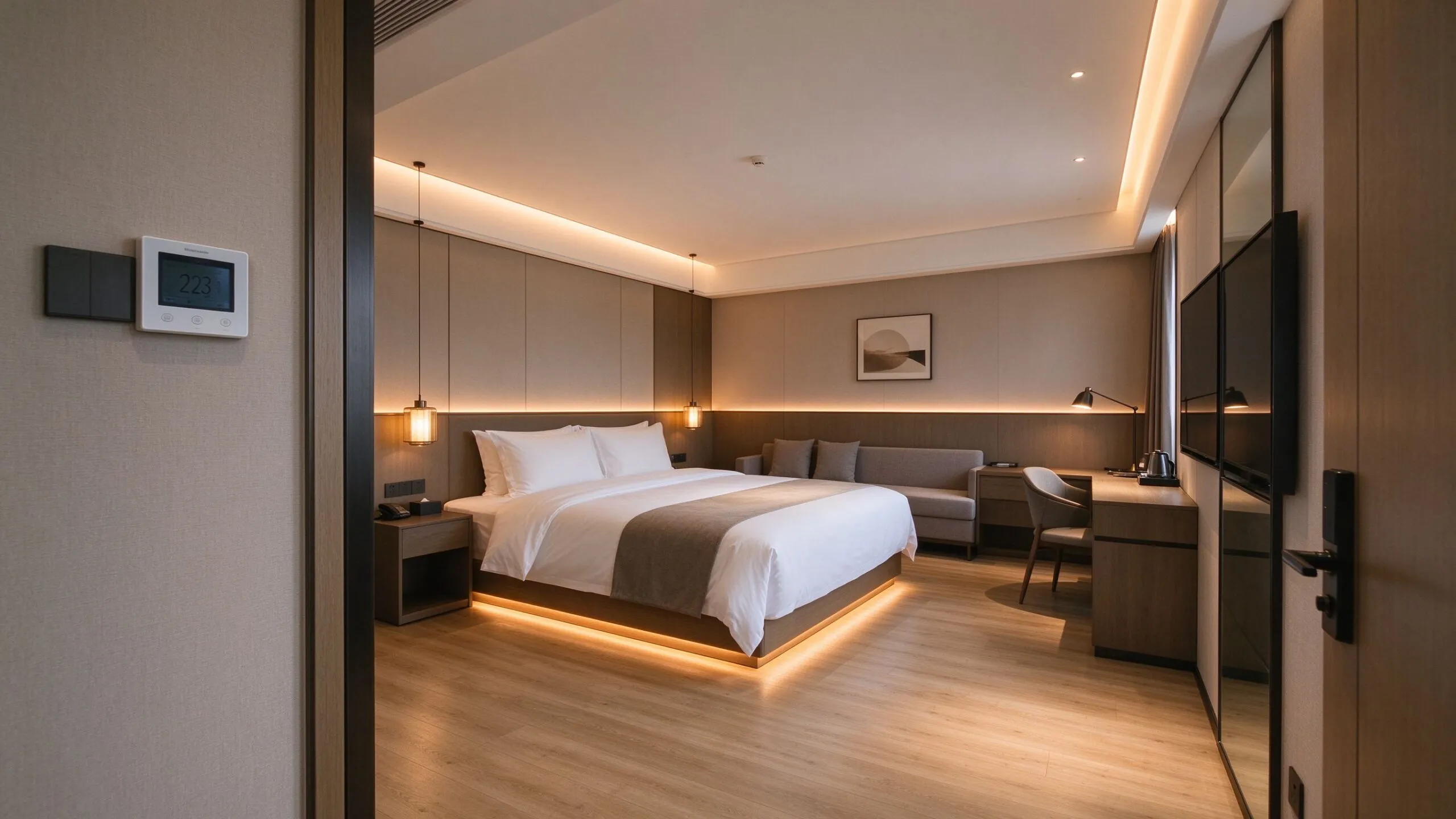
This success story examines a major European hotel chain retrofit project where SunAura Thermal smart WiFi thermostats and graphene heating film were installed across 200 hotel rooms. The project achieved 35% energy savings while significantly improving guest comfort and satisfaction, demonstrating the value of our products in commercial hospitality applications.
Written by Ethan Sun, Founder & CEO, SunAura Thermal — whose commercial team retrofits hospitality properties with smart-controlled electric heating across Northern Europe.
Project Background
The hotel chain, operating 15 properties across Northern Europe, was facing escalating energy costs and guest complaints about heating comfort. The existing heating systems varied by property, ranging from old electric resistance heaters to water-based radiator systems, all controlled by basic manual thermostats. The chain sought a unified heating solution that would reduce energy consumption, improve guest comfort, and provide centralized management capabilities.
After evaluating multiple options, the chain selected SunAura Thermal as their heating partner based on our product quality, smart control capabilities, and competitive pricing. The project scope included the installation of graphene heating film in 200 guest rooms across three properties, with SunAura Thermal WiFi thermostats providing individual room control integrated with a central management platform.
Installation Challenges and Solutions
The retrofit installation presented several challenges. The hotel rooms were occupied during the renovation period, requiring a phased installation approach with minimal disruption to guests. The thin profile of graphene heating film (0.4mm) was a critical advantage, as it could be installed under new laminate flooring with minimal floor height increase, avoiding the need for door frame modifications.
The installation was completed in phases, with 10-15 rooms renovated per week. Each room took approximately 4 hours to complete, including removal of old flooring, installation of insulation and heating film, electrical connections, thermostat installation, and laying of new laminate flooring. The rapid installation time was possible due to the pre-fabricated nature of the heating film and the straightforward electrical connections.
Smart Control and Central Management
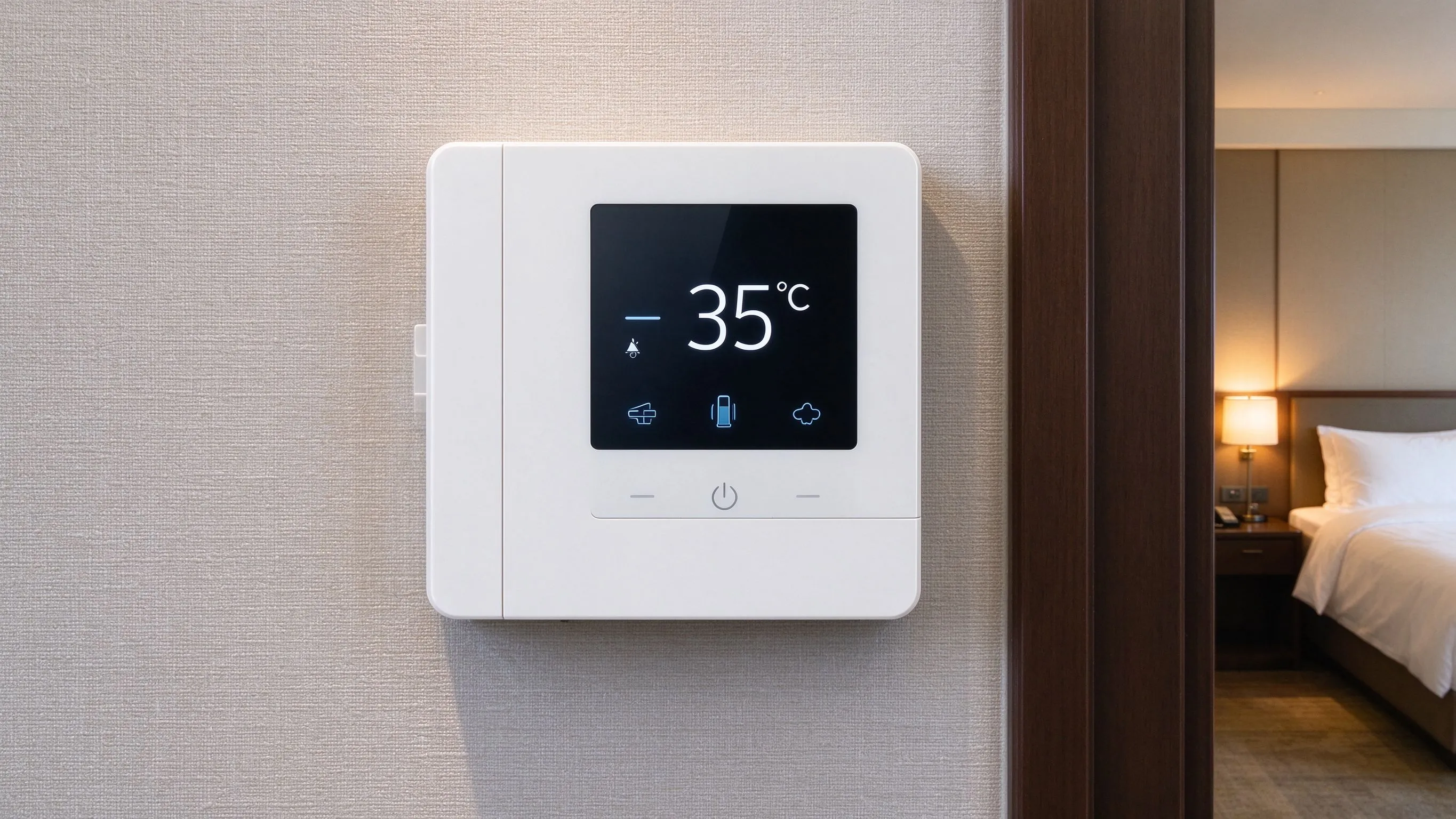
The SunAura Thermal WiFi thermostats were integrated with a central management platform that allowed the hotel management to monitor and control heating across all rooms from a single dashboard. The system included several key features designed for hotel operations. When a guest checks in, the thermostat automatically sets the room to a comfortable welcome temperature of 22 degrees. When the guest checks out, the thermostat reverts to a setback temperature of 16 degrees to save energy.
The system also included occupancy detection, using the thermostat motion sensor to determine if a guest was present in the room. If the room was unoccupied for more than 2 hours, the temperature was reduced by 2 degrees. When the guest returned, the temperature was restored to the comfort level. This feature alone contributed to approximately 15% of the total energy savings achieved.
Energy Savings Results
After 12 months of operation, the energy savings exceeded expectations. The average energy consumption per room decreased from 3,200 kWh per year to 2,080 kWh per year, a reduction of 35%. This translated to annual savings of approximately 280 euros per room, or 56,000 euros across the 200 rooms. The payback period for the investment was calculated at 2.8 years, after which the savings would continue to benefit the hotel bottom line.
The energy savings came from multiple sources. The graphene heating film provided 10-15% savings through superior thermal efficiency. The smart thermostat scheduling provided 10% savings through optimized heating periods. The occupancy detection provided 15% savings through setback during unoccupied periods. The central management platform provided 5% savings through bulk optimization and monitoring of system performance.
Guest Satisfaction Improvement
Beyond energy savings, the project significantly improved guest satisfaction. Guest complaints about heating comfort decreased by 80% in the renovated rooms. The even, gentle warmth of the underfloor heating was particularly appreciated in bathroom areas, where the warm floor provided a luxury experience that guests frequently mentioned in positive reviews. The ability to adjust the room temperature through the thermostat or via the hotel app was also well-received.
Why Hospitality Retrofits Favor Film and Smart Control
Hotels are the hardest heating retrofit environment there is: occupied buildings, thin floor-build budgets, tight room-turn times and a guest who never reads the thermostat manual. A water-based rebuild is simply incompatible with that schedule. Graphene film at 0.4 mm, laid over insulation under new laminate, lets a crew finish 10-15 rooms a week without touching door heights or structural screeds. Pair it with a smart thermostat for hotel energy savings and the property stops heating empty rooms by accident — the single largest waste stream in any old hotel.
The control layer is where the money actually is. Guestrooms spend most of the year half-empty, and the biggest lever is not a better element but a better schedule: welcome temperature on check-in, setback on check-out, occupancy-driven trim when the room sits empty, and central visibility across every property. The ENERGY STAR hospitality programme and ASHRAE’s commercial energy guidance both document the same lesson: measurement, scheduling and occupancy controls deliver the savings, and the heating element is just the delivery mechanism.
How the Phased Rollout Protected Guest Comfort
With rooms occupied throughout the project, sequencing mattered as much as specification. The chain renovated one property at a time, floor by floor, sealing each work zone at night so guests never heard or smelled the works. Each room took about four hours: old floor out, insulation and film in, thermostat on the wall, new laminate down. The pre-fabricated film rolls removed the measuring and spacing work that turns loose cable into a two-day room, and the fixed wiring tails removed most first-fix surprises. For wet rooms and bathrooms on the same properties, we paired the build with our hotel floor heating mat range, so the whole retrofit covered both wood and tile finishes with one supplier and one control platform.
Operationally, housekeeping became the silent partner in energy savings. When staff marked a room dirty or clean in the PMS, the thermostat followed: dirty rooms held welcome temperature; clean, unoccupied rooms drifted to setback. General managers reported that the central dashboard — which showed live temperature and consumption per room across three properties — changed how they thought about heating altogether. A property team that can see the problem can fix it; that is the difference between a retrofit project and an energy-management programme.
Data and Evidence: The Numbers Behind the 35% Saving
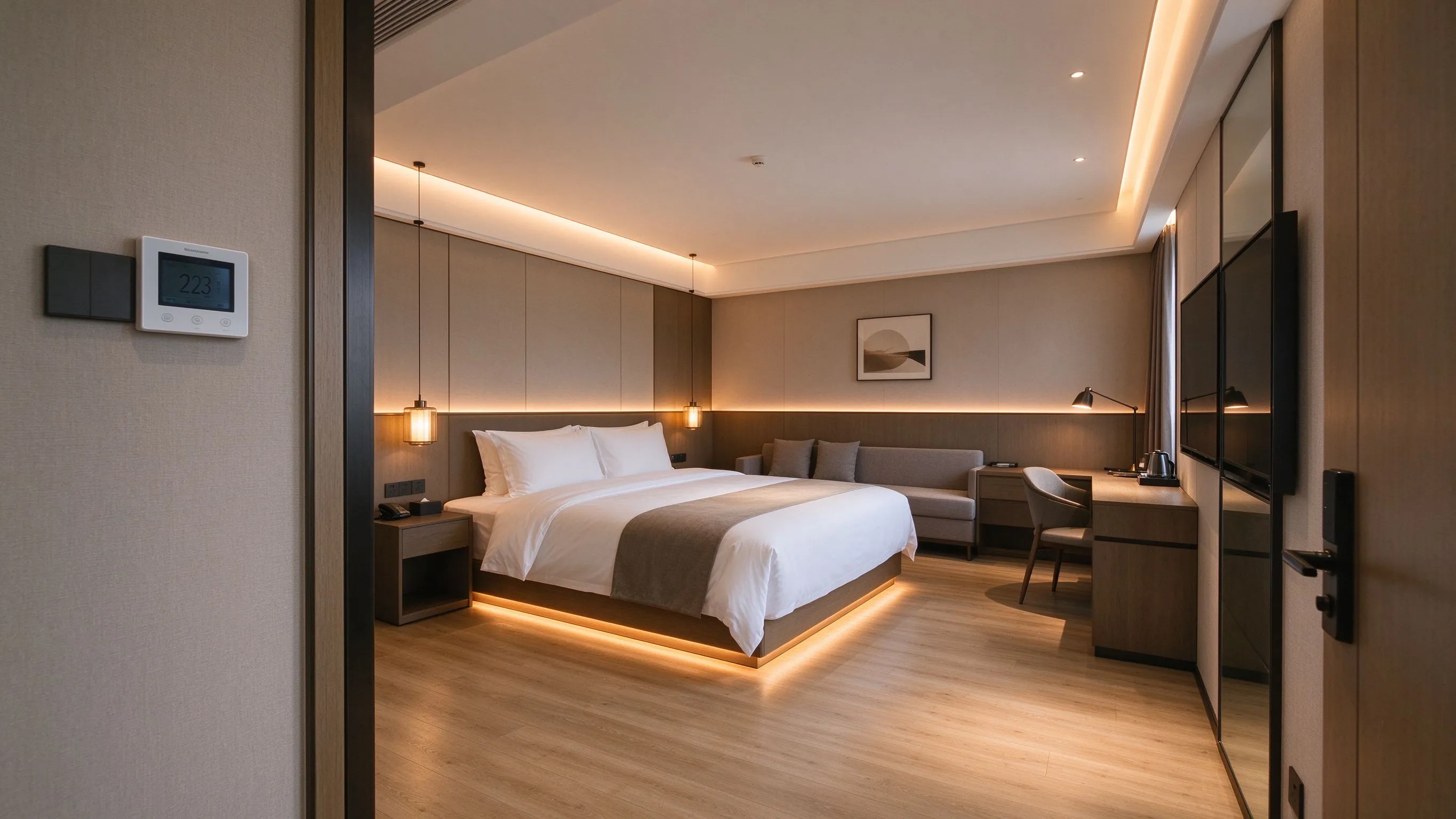
After twelve months of operation, average consumption per room fell from 3,200 kWh to 2,080 kWh per year — a 35% reduction worth about 280 euros per room annually, or 56,000 euros across the 200-room pilot, with a payback calculated at 2.8 years (per project records). The saving was deliberately decomposed so the chain understood what it paid for: roughly 10-15% from the film’s radiant efficiency, 10% from thermostat scheduling, 15% from occupancy-based setback, and 5% from central monitoring and bulk optimisation. Decomposing the savings is important — it tells the operator which levers to pull again at the next property. Buyers pricing their own retrofit should layer these four levers rather than expect the element alone to do the work; our guide to programming a wifi thermostat for maximum energy savings covers the scheduling side in detail.
The manufacturing depth behind the pilot is the same on every commercial order: continuous production since 2008 at the Huangdao, Qingdao plant, ISO 9001 / 14001 / 45001 systems, CE, RoHS, LVD and EMC-compliant construction, and export field experience across 50+ countries (per SunAura factory records). For a chain writing a multi-property expansion plan, that supplier stability is the difference between a one-off pilot and a repeatable rollout.
What This Means for Other Hotel Operators
The playbook transfers. Audit the room stock, count the unoccupied hours, price the four savings levers, then roll out floor by floor with one thermostat platform across all properties. Treat the retrofit as an energy-management upgrade, not a floor refresh, and budget the central dashboard as core equipment rather than an accessory. Done that way, a hotel chain retrofit pays for itself in under three years while turning warm floors and quiet rooms into review-generating comfort.
Frequently Asked Questions
Can hotel rooms be retrofitted while the property stays open? Yes — that was the point of this pilot. With dry-laid film and a phased, floor-by-floor sequence of 10-15 rooms per week, guests were undisturbed and each room took roughly four hours from old floor to finished floor.
How does central management connect to a hotel’s operations? Each wifi thermostat reports to a central dashboard showing live room temperature and consumption. Check-in and check-out events, or housekeeping status, automatically move rooms between welcome temperature and setback — no staff training required.
What was the measured payback on this retrofit? About 2.8 years across the 200-room pilot, driven by a 35% reduction in heating energy per room. After payback, the savings continue to flow straight to the property’s operating margin.
Do you supply heating elements and thermostats as one commercial package? Yes. Hospitality orders ship film, mat, thermostats and floor sensors on a single control platform, with a hotel heating retrofit supplier providing layout drawings, commissioning support and central-platform setup as part of the project package.
Can the same system expand to more properties later? Yes — the pilot chain has already approved expansion to further properties in the portfolio. Because every room runs on the same thermostat platform, adding a property to the dashboard is provisioning, not re-engineering.
The Pre-Retrofit Checklist for Hotel Owners
Before a hotel chain commits capital, a short diagnostic pays for itself. Walk three or four representative properties and count the heating hours the rooms actually use: occupied hours, unoccupied-but-locked hours, and turnover hours. Most operators are surprised how small the occupied share is — which is exactly where occupancy control earns its keep. Next, read the last twelve months of heating energy bills and separate gas, oil and electricity, because the savings percentage on the bill depends on which fuel you are displacing. Finally, check the floor build-up: how much height can be added without changing doors, thresholds and bathroom gradients. That three-part walk-through takes a day and produces the payback estimate a board will actually trust.
Then scope the pilot like this: 200 rooms, three properties, one thermostat platform, central dashboard included from day one, and a twelve-month measurement period with the savings decomposition written into the report. Compare the measured number against the predicted one before signing the chain-wide rollout. This chain did exactly that, and the measured 35% saving matched the predicted range — which is why the board approved the next phase without re-opening the business case.
How This Fits the Wider Energy Transition in Hospitality
Hotel groups face a triple pressure: rising energy prices, decarbonisation targets reported to investors, and guests who now expect quiet, comfortable, tech-aware rooms. Electric underfloor heating with central smart control addresses all three at once — it displaces fossil fuel at the room level, it produces the measured energy data that ESG reporting needs, and it delivers the warm, quiet, on-trend comfort that shows up in reviews. Suppliers that can deliver the element, the thermostat and the measurement dashboard as one documented package are the ones winning this procurement cycle (per SunAura project records).
What Guests Actually Notice
The finance team tracks the kilowatt-hours; the guests track the feel. In this pilot, the reviews that changed most mentioned the bathroom floors and the absence of any noisy blowing air — two things the retrofit delivered without the hotel having to market them. Warm stone underfoot at 6 a.m. and a silent room at night are exactly the kind of detail guests put into five-star feedback, and they cost the property nothing extra once the system is in. For a hotel chain, that is the quiet dividend: an energy project that also improves the product being sold.
For a hospitality operator deciding where the next retrofit pound goes, the evidence here is unusually clean: a measured, decomposed saving, a short payback, and a comfort upgrade guests can feel. That combination is what turns a capital expense into an operating advantage.
The numbers are one story; the repeat booking is the other. A chain that renovates 200 rooms and then asks for the next phase has already done the due diligence a new operator would need six months to finish.
Conclusion
Related Products & OEM Inquiries
Looking for smart thermostat upgrades for a hotel retrofit or a factory-direct OEM/ODM partner? Explore our smart thermostats and floor-sensing controls and complete electric underfloor heating systems, then request a quote for your project — we supply distributors, installers and brands in 50+ countries.