
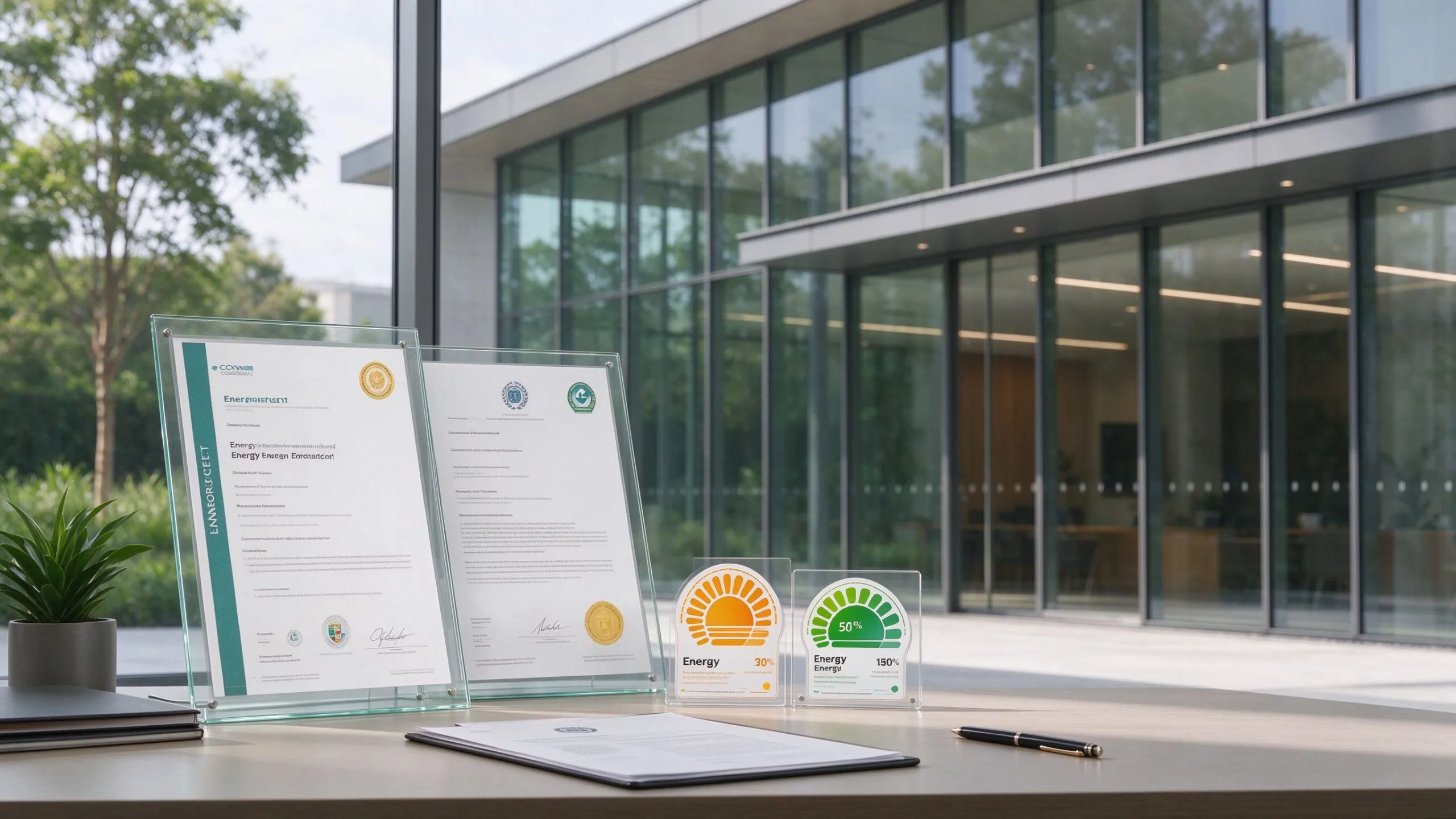
Energy efficiency regulations for heating systems have become increasingly stringent worldwide, reflecting the global commitment to reduce carbon emissions and combat climate change. For manufacturers, installers, and homeowners, understanding these regulations is essential for compliance and for making informed decisions about heating system selection. This guide provides a comprehensive overview of the key regulations in major markets around the world, and explains how they affect product choice, installation design and procurement.
Written by Ethan Sun, Founder & CEO, SunAura Thermal. SunAura has manufactured electric underfloor heating elements at its Qingdao Huangdao factory since 2008, holding ISO 9001, ISO 14001 and ISO 45001 certifications, with CE, RoHS, LVD and EMC approvals on product lines exported to more than 50 countries.
European Union Ecodesign Directive
The European Union Ecodesign Directive (2009/125/EC) sets minimum energy efficiency and environmental performance standards for energy-related products, including heating systems. Under this directive, specific regulations have been implemented for different product categories. Lot 20, which took effect in January 2018, sets minimum efficiency requirements for local space heaters, including electric underfloor heating systems. The regulation requires that electric heating products meet a minimum energy efficiency of 36% for heat pumps and 100% for direct electric heating (as electricity is counted at the point of use).
The Energy Labelling Regulation (EU) 2017/1369 complements the Ecodesign Directive by requiring energy labels on heating products, allowing consumers to compare the energy efficiency of different models. The labels use a scale from A++ to G, with A++ representing the most efficient products. SunAura Thermal heating products are tested and certified to meet all applicable Ecodesign requirements and carry appropriate energy labels.
United States DOE Standards
In the United States, the Department of Energy (DOE) sets minimum efficiency standards for heating equipment under the Energy Policy and Conservation Act (EPCA). For electric resistance heating, the standards focus on the efficiency of the heating element and the control system. The DOE also regulates the efficiency of heat pumps, which are increasingly used in conjunction with underfloor heating systems. The current minimum efficiency for air-source heat pumps is 8.2 HSPF (Heating Seasonal Performance Factor), and this threshold is reviewed on a rolling basis.
Additionally, the ENERGY STAR program, jointly managed by the DOE and EPA, provides voluntary certification for heating products that exceed minimum efficiency standards. Products bearing the ENERGY STAR label are typically 10-20% more efficient than standard models. While electric resistance heating does not qualify for ENERGY STAR certification (as all electric resistance heating is 100% efficient at the point of use), smart thermostats that control heating systems can earn the certification, and the label is widely recognized by US homebuyers and appraisers.
China GB Standards
China has implemented a comprehensive set of national standards (GB standards) for heating products. GB/T 19001 specifies quality management system requirements, while GB 4706 covers safety requirements for household and similar electrical appliances. For electric heating products specifically, GB/T 20118 addresses heating cable requirements, and GB/T 7287 covers testing methods for electric heating elements. Products sold in China must also comply with the China Compulsory Certification (CCC) mark requirements, which is administered by the Certification and Accreditation Administration and is widely recognized as the Chinese equivalent of the CE marking.
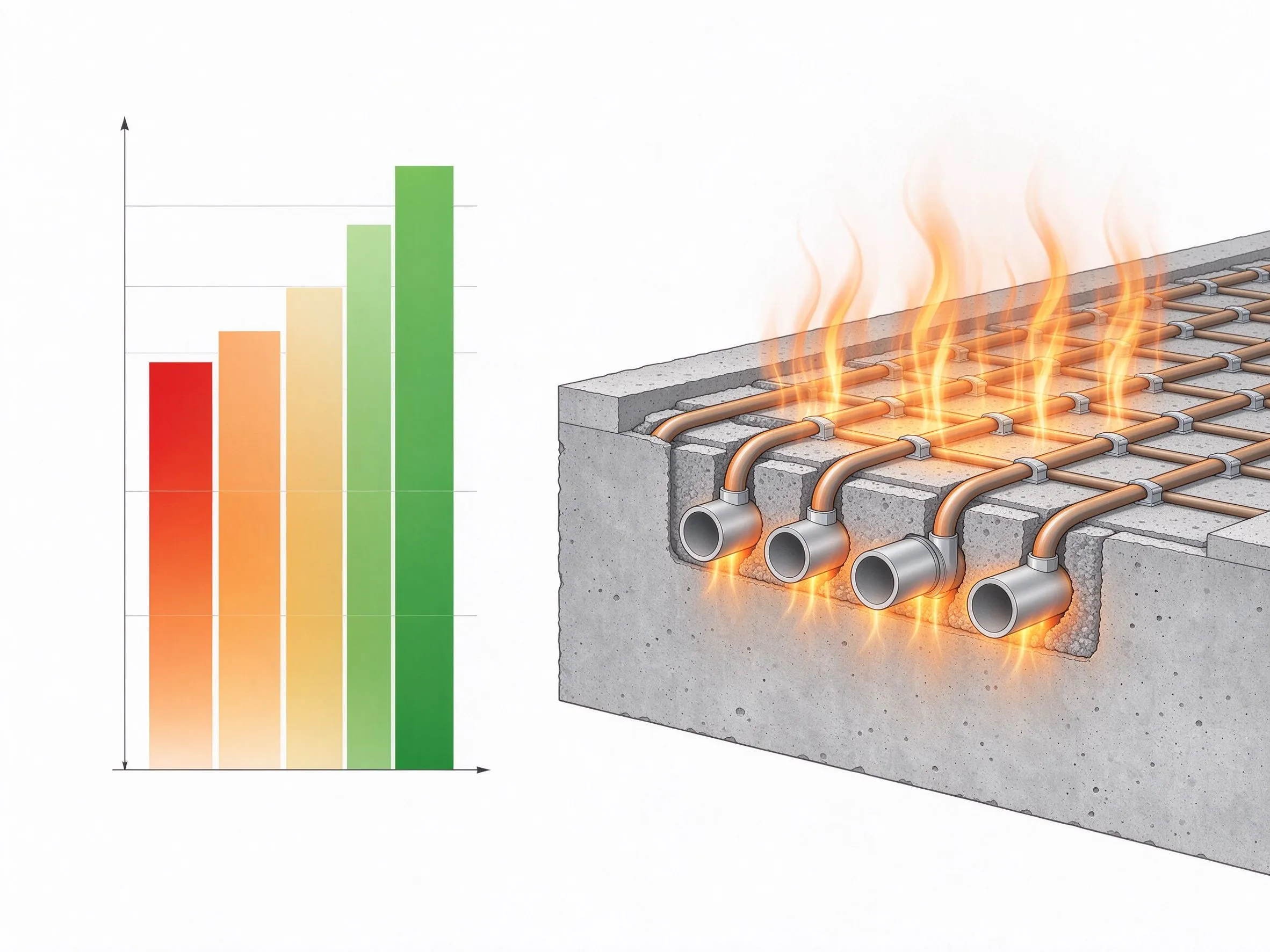
China has also implemented ambitious building energy efficiency standards. The Design Standard for Energy Efficiency of Residential Buildings (JGJ 26) requires new residential buildings to achieve energy savings of 65-75% compared to 1980s baseline levels. This has created strong demand for efficient heating systems, particularly electric underfloor heating, which can help buildings meet these stringent requirements. Northern Chinese cities in particular have expanded electric heating retrofits as a clean-air measure, replacing coal-fired district heating in older neighbourhoods with low-temperature electric underfloor heating and smart controls.
Impact on Product Design and Manufacturing
These regulations have a significant impact on how heating products are designed and manufactured. Manufacturers must invest in research and development to improve product efficiency, often through advanced materials, optimized designs, and smart control features. Products must undergo rigorous testing and certification processes to demonstrate compliance with applicable standards. SunAura Thermal products are designed to meet or exceed all applicable international standards, with CE certification for the European market, UL listing for North America, and CCC certification for China. This multi-market certification posture is unusual among smaller heating element factories, and it is what allows our distributor partners to stock a single SKU that can be sold across dozens of markets without re-certification.

Future Regulatory Trends
Looking forward, energy efficiency regulations are expected to become even more stringent. The European Union is developing a new Ecodesign regulation that will incorporate lifecycle assessment, considering the environmental impact of products from manufacture through disposal. Carbon footprint labeling is also being considered, which would require manufacturers to disclose the carbon emissions associated with their products. In the United States, the DOE is continuously updating efficiency standards, with the next round of updates expected to further tighten requirements for heating equipment. Buyers who specify products now should expect these lifecycle and carbon disclosures to become routine within the next product cycle, and should choose a supplier that already tracks its factory energy use and export logistics.
What the EU Energy Efficiency Directive Means for Buyers
Beyond Ecodesign product rules, the Energy Efficiency Directive (EED) sets binding national targets that push member states to require energy efficiency upgrades in existing buildings. In practice, this means homeowners replacing an old heating system in many EU countries are steered toward higher-efficiency options, and large companies and public buildings face energy audits on a regular cycle. For buyers specifying electric underfloor heating, this regulatory backdrop makes it more likely that the installed system will qualify for subsidy, tax credit or grant support, and it raises the resale value of the property. Retrofit programmes funded through national recovery plans are explicitly prioritizing low-carbon heating, so the timing of an upgrade can materially affect the financial case.
The EU Ecodesign framework continues to expand to new product groups, and heating controls, temperature regulators and combinations packages now fall within its scope. Buyers comparing products should look for the energy label, the Ecodesign compliance declaration and the CE marking, and ask the supplier for the test report behind the rating. Our article on underfloor heating energy labels walks through how to read the label and what the rating actually means on a monthly bill, including worked examples for a typical three-bedroom home.
Certification Supply Chain: How SunAura Complies
At SunAura Thermal, regulatory compliance is built into the manufacturing process rather than bolted on at the end of production. Per SunAura factory records, every production line is ISO 9001 quality managed, the factory operates under ISO 14001 environmental management and ISO 45001 occupational health and safety management, and each heating product line ships with the relevant CE, RoHS, LVD and EMC documentation. We do not fabricate certificate numbers; every declaration is traceable to an actual test report on file, and our customers in distributor and OEM roles receive the full technical file with each shipment. This discipline is what allows us to ship into 50-plus countries without customs holds or rejected product on the grounds of missing compliance paperwork.
Buyers sourcing from a certified supply chain also benefit from smoother customs clearance and fewer rejected shipments. Our article on CE and ISO dual certification across the product line explains which certificates apply to which products, and our electric underfloor heating systems and thermostat controls are routinely quoted for projects that require documented compliance for public tender or mortgage purposes. We can also provide the factory audit summary that larger distributors require before adding a new supplier to their approved list.
How Building Codes Translate Product Rules Into on-Site Requirements
Product regulations set the bar for what can be sold; building codes set the bar for what can be installed. In practice, this means a homeowner or installer may choose a compliant electric underfloor heating system, but the local building code will dictate how it is zoned, what temperature limits apply to the floor covering, and how the circuit is protected. In the EU, the Energy Performance of Buildings Directive (EPBD) requires every new building to meet nearly zero-energy standards from 2021, and member states transpose that into local calculations that reward efficient heating and intelligent controls. In the US, stretch codes such as California’s Title 24 and the IECC impose similar efficiency requirements on new builds and major renovations.
The practical takeaway for buyers is to specify the heating system at the design stage, not at the last minute. A system chosen after the walls are closed is constrained by where the electrician happened to put the circuits, whereas a system chosen during design can be zoned for the actual occupancy pattern and paired with the right thermostat for each room. Our engineering team regularly reviews design drawings for residential and light-commercial projects to make sure the electric underfloor heating specification aligns with both product standards and local building code, and we can issue the compliance paperwork needed for building control sign-off.
Frequently Asked Questions
Do I need to buy an A-rated heating system to be compliant? No. Regulations set minimum efficiency thresholds, not a requirement to buy the highest-rated product on the market. A correctly sized and controlled electric underfloor heating system that meets the applicable Ecodesign or DOE minimum is compliant, regardless of where it sits on the label scale. That said, a higher-rated system will usually cost less to run and is easier to justify when applying for a green mortgage or efficiency grant.
What is the difference between Ecodesign and energy labelling? Ecodesign sets the legal minimum efficiency and environmental requirements that a product must meet to be sold in the EU. Energy labelling is the consumer-facing scorecard that rates products on a scale from A to G, helping buyers compare efficiency at a glance. A product can be Ecodesign compliant without earning a high label grade; the two instruments work together, with Ecodesign removing the worst performers and the label nudging buyers toward the most efficient options.
Does electric resistance heating count as efficient under these rules? Direct electric heating is rated at 100% efficiency at the point of use, because all the electricity consumed becomes heat. Regulations treat the carbon impact as dependent on the grid, which is why electrification paired with renewables is the policy direction rather than a ban on electric heating. As grids decarbonize, the effective carbon intensity of an electric underfloor heating system falls every year without any change to the hardware itself.
How do I verify a supplier’s CE or ISO claims? Ask for the certificate number and the issuing notified body, then check it against the notified body register or the accreditation body. A legitimate manufacturer can produce the test report, the declaration of conformity and the quality manual on request. SunAura provides this documentation as standard on every order, and we are happy to walk procurement teams through the traceability of each certificate. Be wary of suppliers who cannot provide the underlying test report or who only show a CE sticker without a declaration of conformity.
Will future regulations make today’s heating systems obsolete? Minimum standards rise over time, but installed systems are usually grandfathered. New rules affect products placed on the market after a certain date, not systems already in service. Choosing a smart, future-ready thermostat today reduces the chance that a later upgrade will require replacing the whole control layer. Buyers should also expect carbon footprint disclosure rules to arrive over the next few years, which will make the supply chain behind a heating product as visible as the product itself.
Conclusion
Energy efficiency regulations are a powerful driver of innovation in the heating industry. By setting minimum performance standards, they push manufacturers to develop more efficient, more sustainable products. For consumers, these regulations provide assurance that the products they purchase meet established quality and efficiency benchmarks. SunAura Thermal is committed to not only meeting but exceeding these regulatory requirements, ensuring our products deliver superior performance while contributing to global carbon reduction goals. Distributors, installers and tendering buyers can request the full compliance file and test reports for any product line, and we support multi-country exports with the correct documentation for each destination market. If you are sourcing for a project that must demonstrate regulatory compliance in a public tender, green mortgage application or building control submission, our export sales team can prepare the technical pack needed to clear that hurdle.
Related Products & OEM Inquiries
Complying with global energy efficiency regulations? Our electric underfloor heating systems meet ErP, CE and ISO standards, and the smart thermostat range delivers the room-control accuracy that EU and UK ecodesign rules require. Explore OEM documentation or request compliance datasheets — we help distributors and brands in 50+ countries stay regulation-ready.