
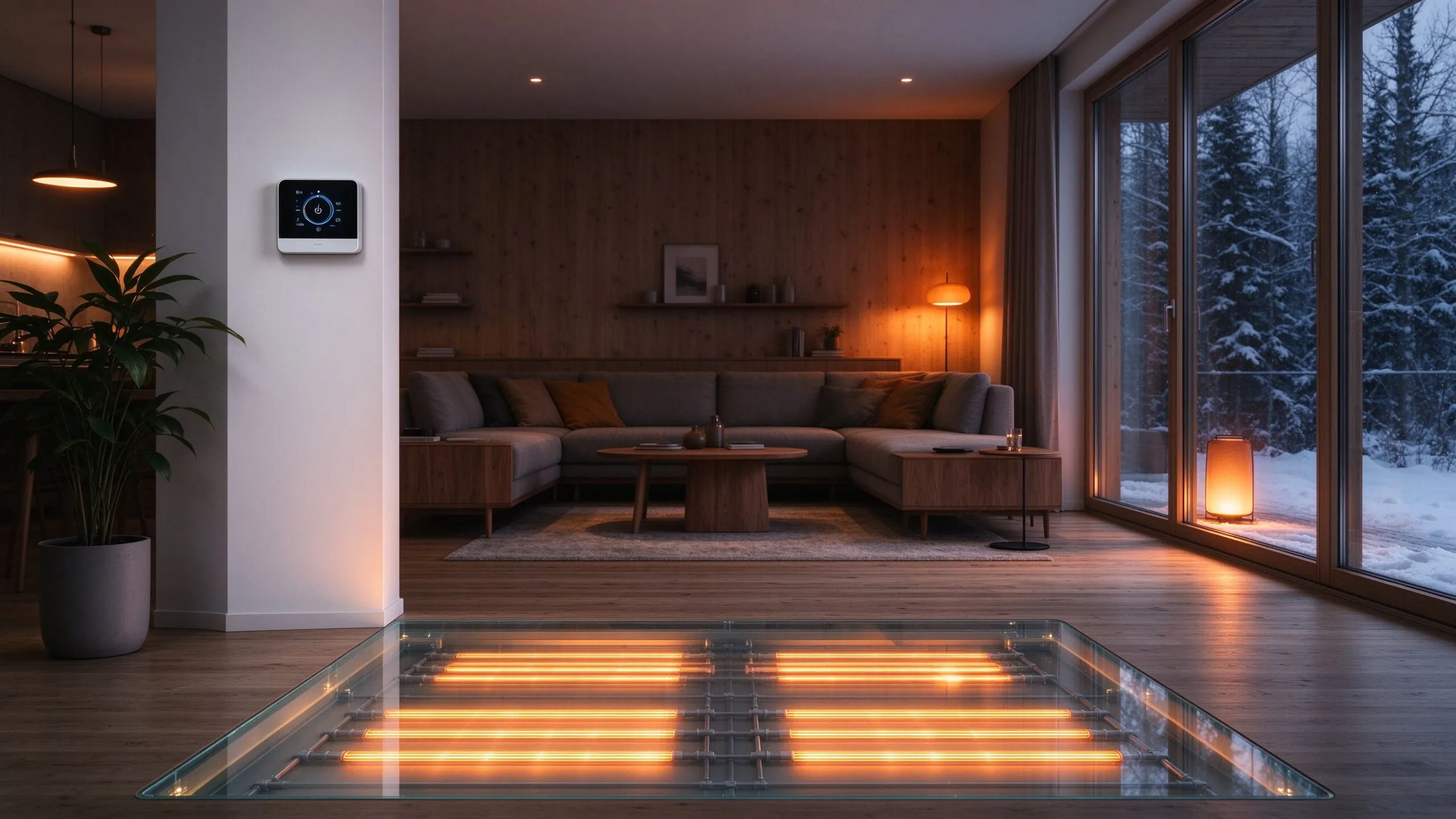
The home heating industry is undergoing a profound transformation, driven by technological innovation, environmental regulations, and changing consumer expectations. As we move through 2026, several key trends are emerging that will shape the future of how we heat our homes for decades to come. Understanding these trends is essential for homeowners, builders, and heating professionals who want to stay ahead of the curve.
Written by Ethan Sun, Founder & CEO, SunAura Thermal. SunAura has manufactured electric underfloor heating elements and graphene heating film at its Qingdao Huangdao factory since 2008, holding ISO 9001, ISO 14001 and ISO 45001 certifications, with product lines exported to more than 50 countries.
The Rise of Electric Heating
The transition from fossil fuel-based heating to electric heating is perhaps the most significant trend in the industry. Driven by the decarbonization of electricity grids and the rapid expansion of renewable energy sources, electric heating is increasingly seen as the sustainable choice for the future. Electric underfloor heating systems, particularly those using advanced graphene technology, are at the forefront of this transition, offering efficiency levels that rival or exceed traditional gas-based systems while producing zero on-site emissions.
Government policies are accelerating this transition. The European Union has set ambitious targets to reduce greenhouse gas emissions by 55% by 2030, with many member states implementing bans on new gas boiler installations in new-build homes. Similar policies are being adopted in the United Kingdom, where the Future Homes Standard will effectively mandate low-carbon heating in all new homes from 2025. These regulatory changes are creating a surge in demand for electric heating solutions.
Smart Home Integration Becomes Standard
The integration of heating systems with smart home ecosystems is no longer a premium feature but an expected standard. Consumers increasingly expect their heating systems to work seamlessly with voice assistants, smartphone apps, and home automation platforms. WiFi thermostats with adaptive learning algorithms, geofencing capabilities, and energy monitoring are becoming the default choice for new installations and retrofits alike.
The next frontier in smart heating is the integration with grid demand-response programs, where heating systems automatically adjust their operation based on electricity grid conditions. This allows homeowners to benefit from lower electricity prices during off-peak periods while supporting grid stability. SunAura Thermal WiFi thermostats are already being developed with this capability, positioning our products at the leading edge of this trend.
Graphene and Advanced Materials
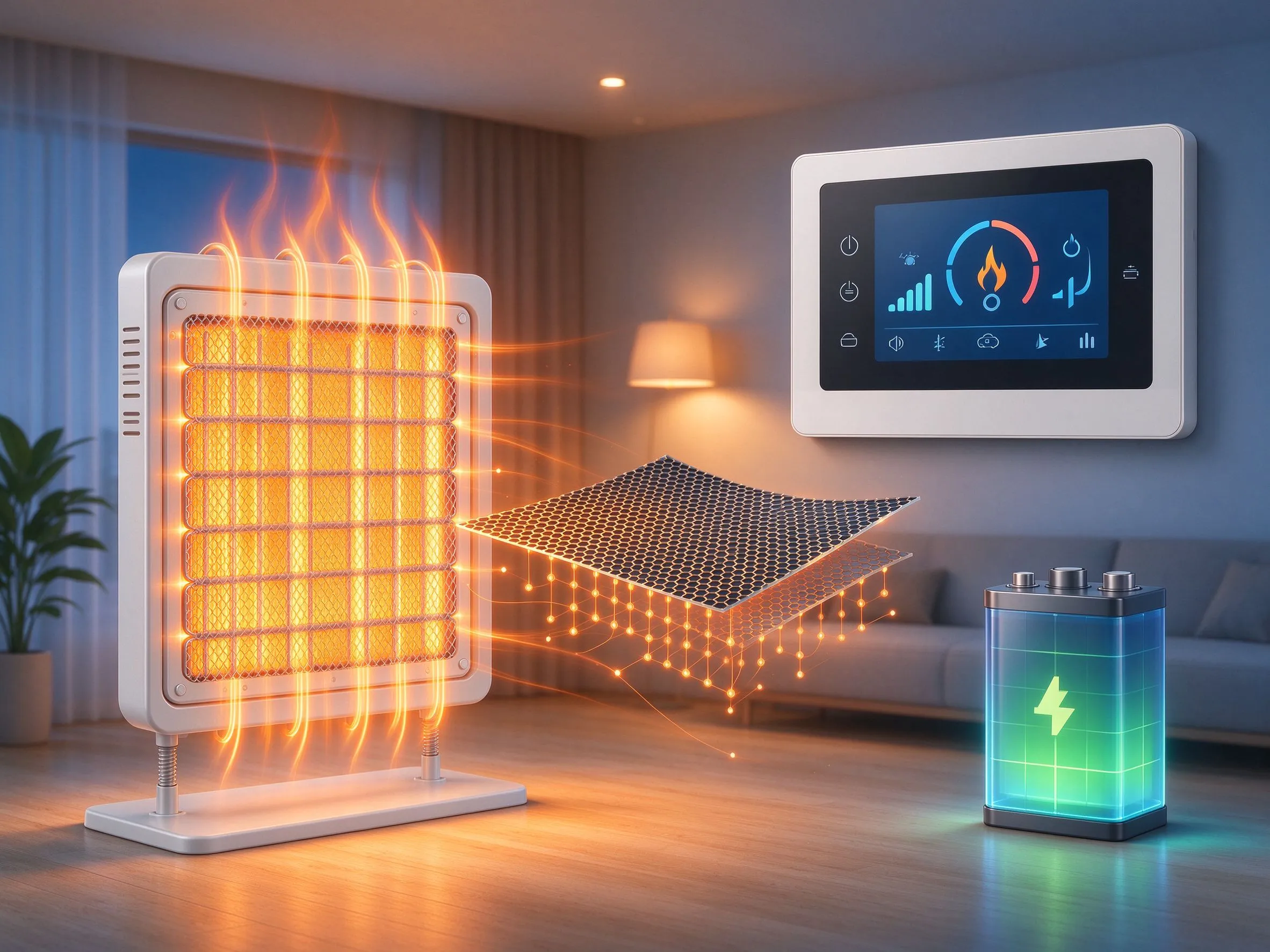
Graphene heating technology is moving from an innovative novelty to a mainstream heating solution. The unique properties of graphene, including its exceptional thermal conductivity, ultra-thin profile, and far-infrared heat emission, make it ideal for a wide range of applications. As manufacturing processes improve and costs decrease, graphene heating film is becoming competitive with traditional heating technologies on price while offering superior performance.
Beyond graphene, other advanced materials are being developed for heating applications. Carbon nanotube heating elements, conductive polymer composites, and metal-oxide heating coatings are all areas of active research. While these materials are not yet commercially viable for residential heating, they represent the future of heating technology and may eventually surpass graphene in performance and cost-effectiveness.
Energy Storage Integration
The integration of thermal energy storage with heating systems is an emerging trend that addresses the challenge of intermittent renewable energy. Phase change materials (PCMs) embedded in floor constructions can store heat during periods of excess renewable energy generation and release it during peak demand periods. This approach effectively turns the building fabric into a thermal battery, reducing the need for grid electricity during peak periods and lowering energy costs.
Electrical energy storage, in the form of home battery systems, is also being integrated with heating systems. When combined with solar panels and a smart controller, the battery can store solar energy during the day and use it to power the heating system in the evening, achieving near-complete energy independence. SunAura Thermal is developing integration protocols to allow our heating systems to work seamlessly with popular home battery systems.

Personalized Comfort Through AI
Artificial intelligence is transforming heating from a one-size-fits-all approach to a highly personalized comfort experience. AI algorithms can learn individual comfort preferences, daily routines, and even physiological responses to temperature changes. This enables the heating system to create a unique thermal profile for each occupant, adjusting temperature, floor warmth, and even humidity to optimize comfort on an individual basis.
In multi-occupant homes, AI can resolve conflicting comfort preferences by creating micro-zones within rooms, using directional heating and smart ventilation to satisfy different preferences simultaneously. While this level of personalization is still in the development stage, the foundational technologies are already available in today WiFi thermostats, which collect the data needed to train more sophisticated AI models.
Decarbonizing Heating: Why the Grid Transition Matters
The case for electrifying home heating rests on a single fact: electricity grids are decarbonizing faster than building-level gas infrastructure can. The International Energy Agency reports that heat supply for buildings accounts for roughly 40% of building-sector CO2 emissions, and that end-use electrification paired with renewable generation is the single largest lever available to cut those emissions. As wind and solar reach 40-60% of generation in leading markets, the carbon intensity of the electrons that power an electric underfloor heating system falls year after year, while a gas boiler’s emissions remain fixed by fuel.
This is why product developers are concentrating on heating elements that pair well with intermittent renewables. Graphene heating film heats up in minutes rather than hours, which means the system can flex on and off to match a sunny midday or a windy evening, rather than holding a thermal baseline. Our graphene heating film range is built around this short response time, and buyers sourcing for low-carbon projects can request graphene home heating specifications at factory-direct pricing. For a deeper look at how PV and electric floor heat work together, read our article on solar powered underfloor heating. The same short response time also reduces peak-demand load on the local grid, because the heating element can be paused for a few minutes during a grid stress event without any noticeable drop in comfort.
Hybrid Systems and Low-Temperature Compatibility
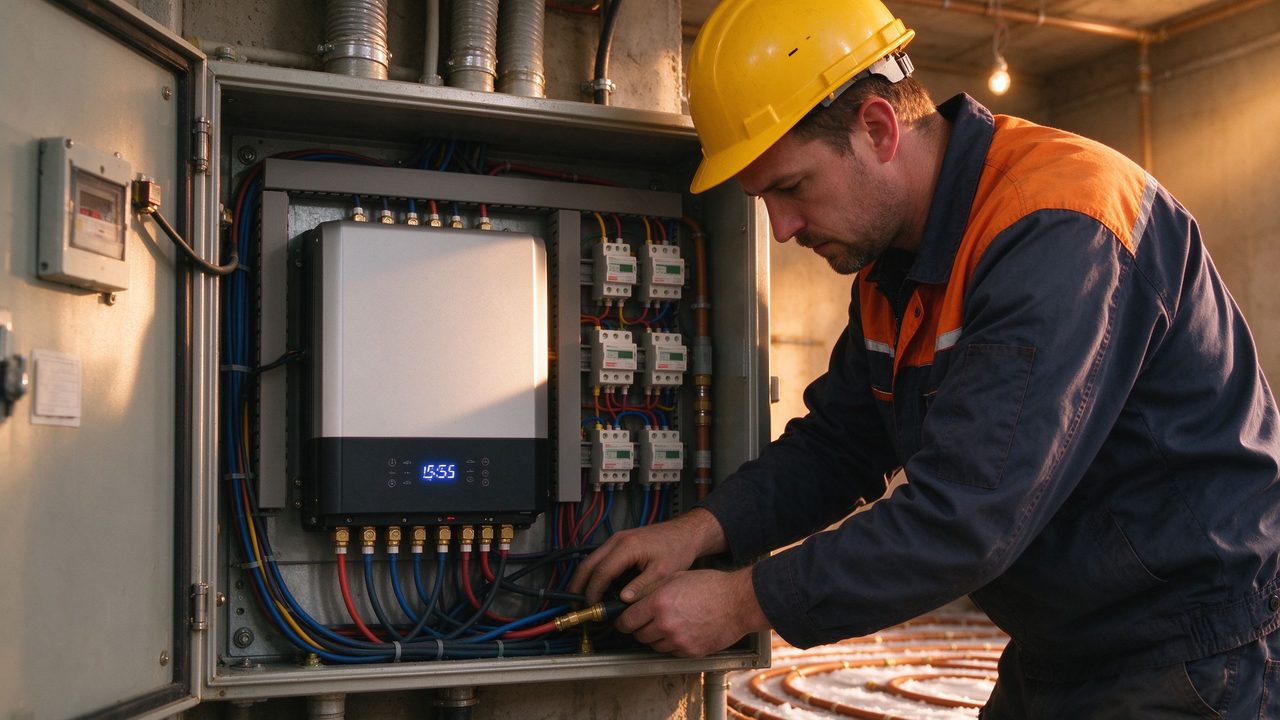
Not every home can jump straight to all-electric heating. A fast-growing middle path is the hybrid system, which pairs a heat pump with a traditional boiler for cold spells. Underfloor heating is the ideal low-temperature radiator for a heat pump, because it distributes heat across a large surface at 35-45 degrees flow, well below the 70 degrees that radiators need. This compatibility is the reason underfloor heating specification is rising even in retrofit projects where a full heat-pump conversion is still years away. Architects and M&E consultants increasingly specify underfloor heating on the assumption that a heat pump will be fitted later, so the low-temperature design is baked in from day one.
Our article on underfloor heating heat pump low-temperature compatibility covers the design rules in detail, and our electric underfloor heating range is engineered to work with both air-source and ground-source heat pumps as well as direct electric operation. Distributors and OEM partners can request a hybrid-design guide from our engineering team, which includes sizing rules, control wiring and commissioning checklists.
Data and Evidence: Market Signals Behind the Trends
The trends above are not speculative. Per SunAura factory records, the share of our export revenue from WiFi-enabled thermostats and graphene heating film has risen steadily since 2020, while demand for basic non-programmable thermostats has declined. Order patterns across our more than 50 export markets now cluster around low-carbon retrofit, heat-pump-ready underfloor heating, and smart multi-zone control. The IEA Buildings tracking reports the same direction globally: tighter building codes, heat pump adoption, and smarter controls are the three vectors moving in lockstep. Buyers reading this trend report should plan their next heating specification around these three vectors rather than around the fossil-fuel systems of the past.
Retrofit Versus New Build: How the Trends Play Out Differently
The future of heating does not arrive at the same speed in every home. New-build projects get the full package: highly insulated fabric, low-temperature underfloor heating, a heat pump, smart controls and rooftop solar as standard. Retrofit projects work with constraints: existing floor builds, limited wall insulation, and a heating circuit that may have been sized for radiators. The good news is that electric underfloor heating is unusually retrofit-friendly. Ultra-thin heating film adds only a few millimetres to the floor height, can be laid under existing laminate or engineered wood, and does not require a new boiler or manifold. This is why retrofit is the fastest-growing segment for electric heating film in many European markets.
For installers, the practical implication is to design the control system with future upgrades in mind. Specifying a WiFi thermostat today that can later talk to a heat pump, a home battery or a demand-response platform avoids a rip-out when the homeowner is ready to electrify further. Our graphene home heating range is positioned exactly for this retrofit-first buyer, and we supply the matching underlay, sensors and commissioning documentation on every order. This forward-compatible control layer is the single most cost-effective upgrade a homeowner can make today, because the heating element itself can then be iterated without touching the wall wiring.
Frequently Asked Questions
Will gas boilers be banned in new homes? In an increasing number of jurisdictions, yes. The EU, the UK, parts of North America and several East Asian markets have already introduced bans or phase-outs on fossil fuel heating in new-build housing. Existing homes are not usually forced to switch, but efficiency rules and rising gas prices are accelerating voluntary replacements, and mortgage and EPC rules increasingly nudge homeowners toward low-carbon options when they renovate.
Is electric heating actually cheaper to run than gas? It depends on local tariffs and the carbon intensity of the grid. Pairing electric underfloor heating with rooftop solar, a smart schedule and heat-pump-compatible design can bring running costs close to gas in many markets, and the gap closes every year as electricity grids decarbonize. In markets where night tariffs are cheap or where excess solar is otherwise exported at a low rate, the economic case for electric heating is already stronger than gas.
What is graphene heating film, and why is it important? Graphene heating film is an ultra-thin, flexible heating element that converts electricity into far-infrared heat with over 99% conversion efficiency. It heats in minutes, sits beneath laminate or tile without raising the floor height, and pairs well with smart controls and solar PV. Because it is produced in rolls, it can be cut to fit irregular room shapes, which makes it a popular choice for renovations and open-plan layouts. Far-infrared heat also warms surfaces directly rather than heating air, which many occupants find more comfortable and drier than forced-air systems.
Do I need a heat pump to benefit from these trends? No. Electric underfloor heating runs directly from the grid today, and smart controls, graphene elements and demand-response features work regardless of whether the heat source is a heat pump or resistance element. The heat pump is the fastest-growing option, not a prerequisite. Homeowners who cannot fit a heat pump because of fabric, noise or planning constraints still capture most of the efficiency gains from smart scheduling and low-temperature electric heating.
How will AI actually change heating in my home? The first wave of AI heating learns your schedule, pre-empts comfort setpoints and responds to weather forecasts. The second wave will coordinate with the grid, solar production and household batteries to use low-carbon electricity when it is cheapest and cleanest, without any manual intervention. In practice this means a thermostat that quietly shifts heating to sunny midday hours, pre-heats the floor before a cold snap, and holds back during evening peak tariffs.
Conclusion
The future of home heating is electric, smart, efficient, and personalized. As these trends converge, homeowners will benefit from heating systems that are not only more comfortable and convenient but also more sustainable and affordable. SunAura Thermal is committed to staying at the forefront of these trends, developing products that incorporate the latest technologies while remaining accessible and reliable. The heating systems we install today will evolve through software updates and smart integrations, providing increasing value over their long service life. Distributors, installers and OEM buyers looking to specify next-generation electric heating can request samples, factory pricing and engineering support through our export sales team, and we are happy to review project designs for heat-pump compatibility and demand-response readiness.
Related Products & OEM Inquiries
Building tomorrow’s home heating product line? The future belongs to ultra-thin graphene heating film, zoned underfloor heating and IoT-connected smart thermostats that integrate with heat pumps and solar PV. Partner with our R&D team for OEM/ODM development — we help brands in 50+ countries bring next-gen heating to market.