
Why Pet Heating Deserves the Same Quality Bar
Pet heating products live closer to living beings than any other category we make, and that changes the quality conversation. A pet heating pad manufacturer has to deliver not just heat, but predictable surface temperatures, durable wiring and safe construction, because the end user cannot tell you when something feels wrong. SunAura Thermal applies the same controlled manufacturing and test protocol to the pet range as to the underfloor heating family — 17 years of production at our Qingdao, Huangdao factory, under ISO 9001/14001/45001, with CE and RoHS documentation for the product line (per SunAura factory records). This article explains what is inside a pet heating pad, how the factory verifies it, and how buyers source the range with confidence.
The pet range covers the products pet owners and distributors actually order: warm pads for dog kennels and cat beds, heat mats for reptile enclosures, and controlled heating for plants and seedlings. Each family shares the same core engineering — a resistance element with a protective covering, a thermostat or controller, and a surface that stays within a safe temperature band. What differs is the environment: a kennel pad must survive claws and chewing pressure, a reptile mat must hold a precise temperature gradient, and a seedling mat must run continuously for weeks. The factory’s job is to build each variant for its environment and prove it before shipping.
Inside the Product: Construction and Materials
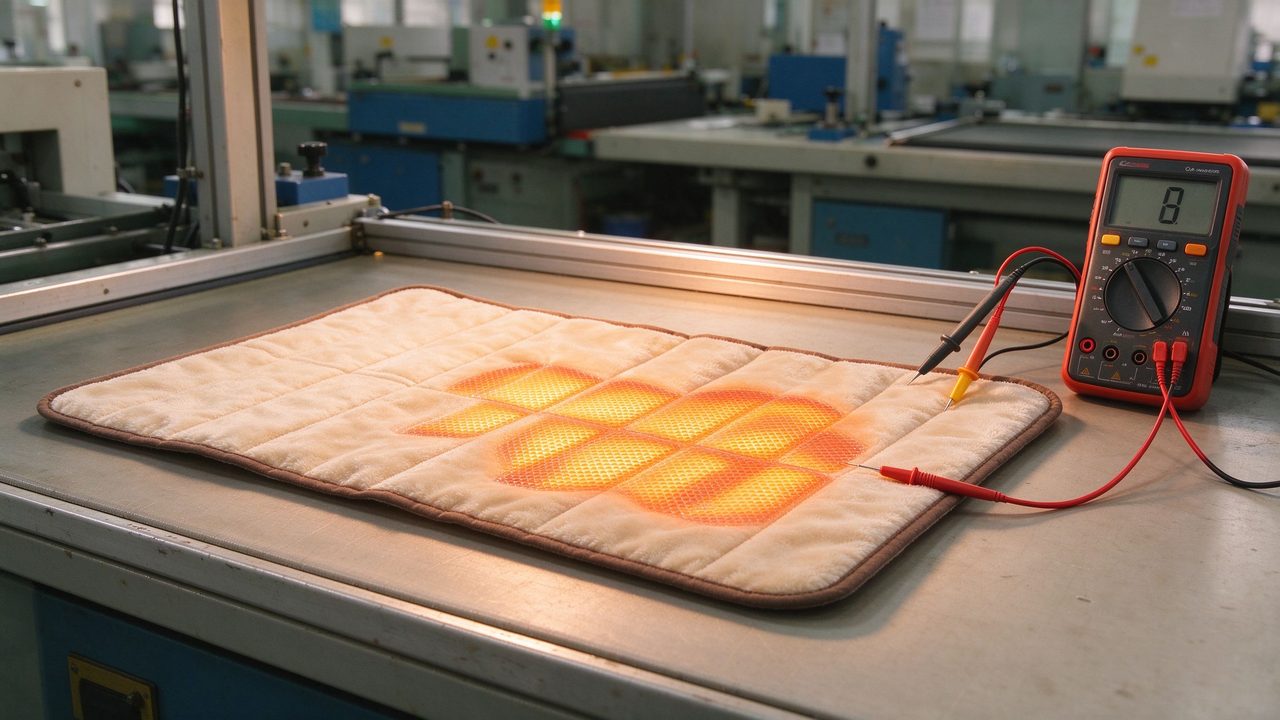
A typical pet and plant heating product is built in layers. The heating element — a laminated resistance structure — is bonded inside a moisture-resistant covering. The covering material is chosen for the application: a chew-resistant textile or PVC for kennel pads, a sealed mat for reptile enclosures where humidity is high, and a flexible film for seedling propagation. The electrical side terminates in a cold lead with strain relief, because the connection point is where most field failures occur. A thermostat or thermal cut-out limits the surface temperature, and the rating is printed on the label. For buyers comparing heating pad for pets factory options, the construction details — element type, covering material, lead strain relief, cut-out — are the specification points that separate a product that lasts from one that fails mid-season.
Testing Protocol: What We Verify Before Shipping
Every pet heating product passes the same six-gate protocol as our other heating elements (per SunAura factory records). Gate one is incoming material inspection, covering the element and covering materials. Gate two is resistance testing of the finished element against its rated value — a pad that measures outside tolerance is rejected before assembly. Gate three is insulation resistance, verifying that the live element is properly isolated. Gate four is the dielectric withstand test, which checks the product against the voltage stress it will see in service. Gate five is thermal imaging on sample units, confirming the surface temperature is uniform and within the safe band. Gate six is the final continuity check before packing, with the batch number recorded for traceability. A distributor receiving pet heating products can verify the batch record against the packing list on arrival; the test file is part of the order documentation.

Surface Temperature: The Safety Detail That Matters
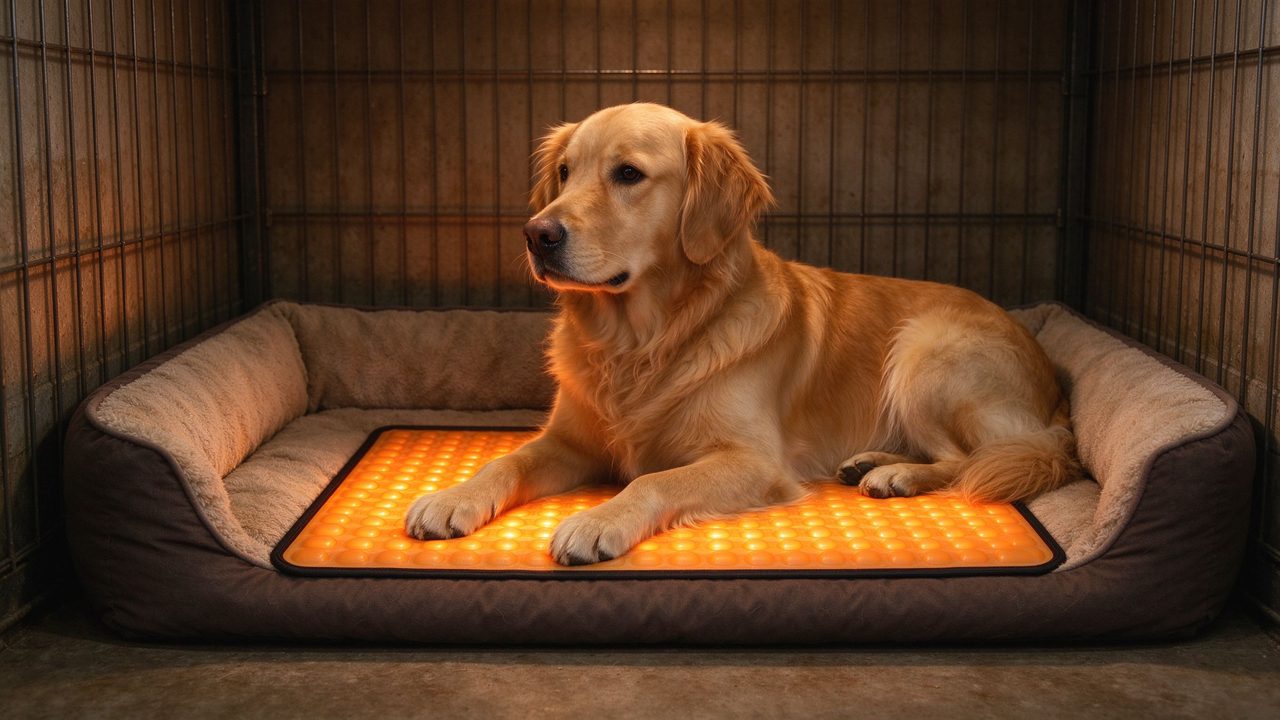
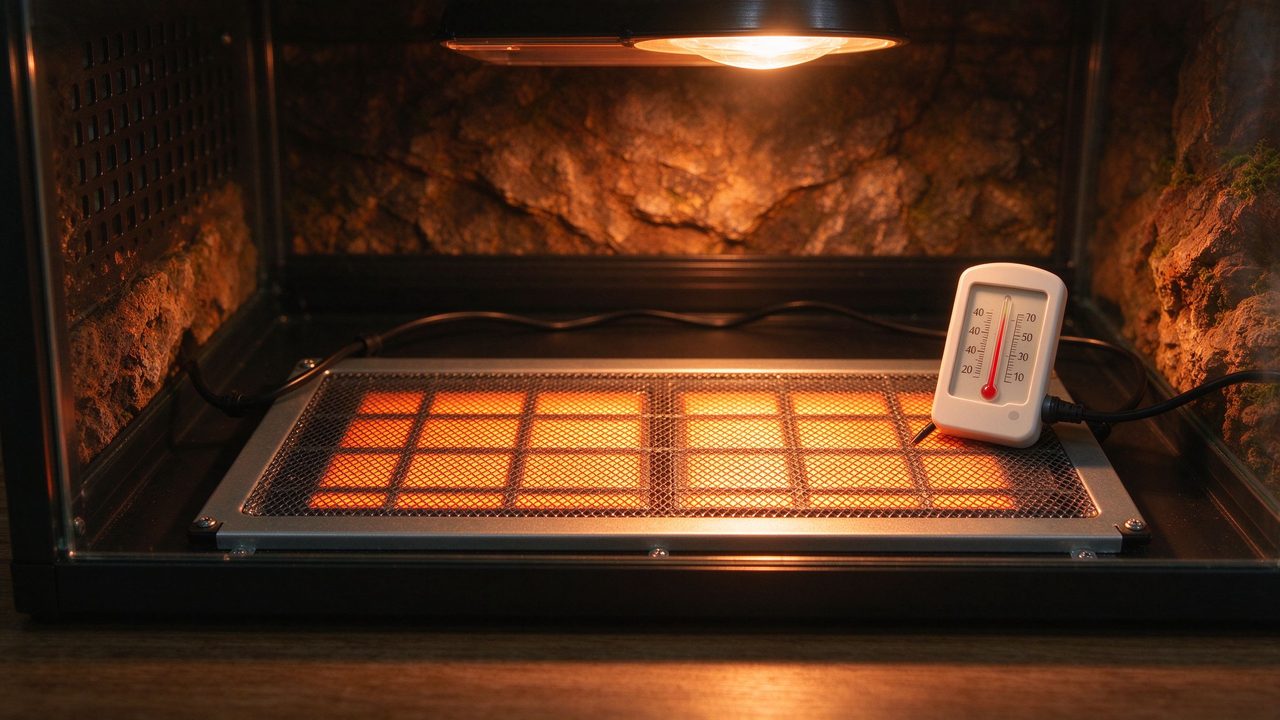
For pet heating, surface temperature is the safety specification. A kennel pad should hold a comfortable warmth — typically in the 20–35°C range for dog beds depending on the product and setting — not a surface that burns on contact. The thermostat and thermal cut-out are what enforce that band, and the wiring must remain intact under the compression of an animal lying on it. Reptile products work differently: they create a temperature gradient across the enclosure, with a warm spot controlled by a thermostat, so the animal can move between zones. The controller in the thermostats and controls range supports both modes, and the factory documentation states the intended temperature band for each product family. When you source pet heating, ask for the surface temperature spec and the cut-out rating in writing; those two numbers define the safety of the product.
The OEM Angle: Building Your Own Pet Heating Brand
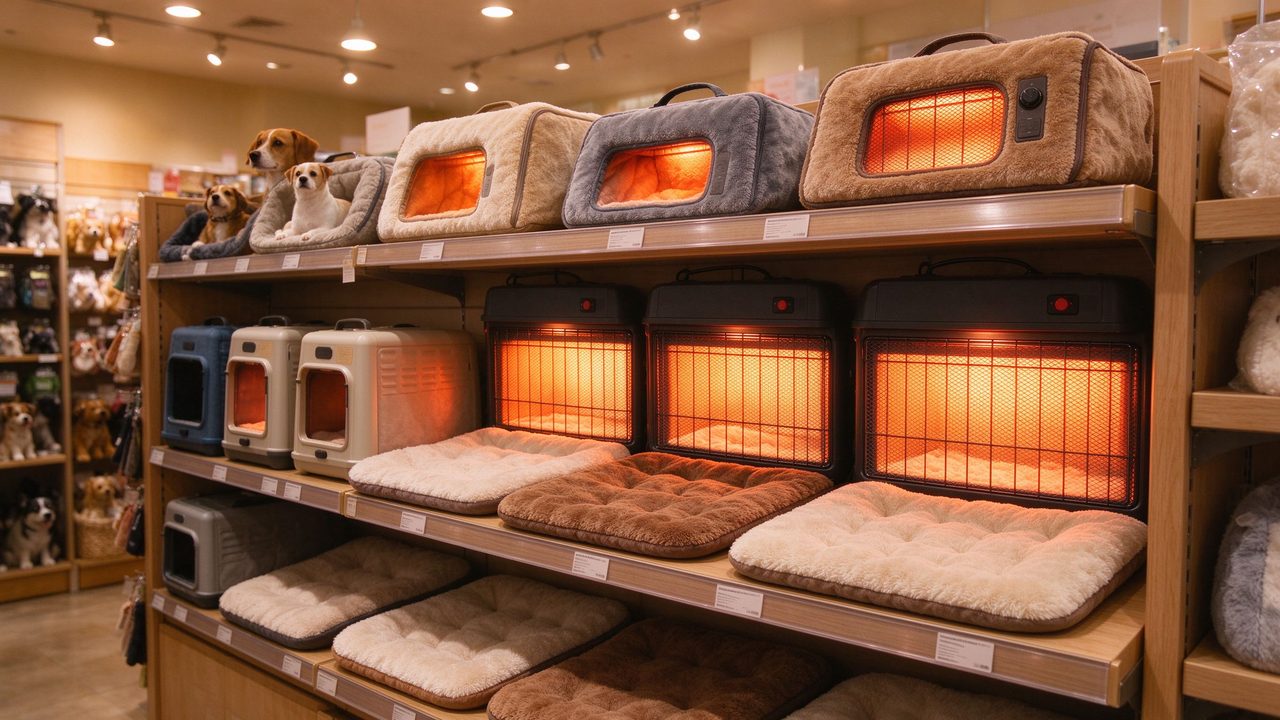
Pet heating is a strong private-label category: distributors build a brand, veterinarians supply clinics, and e-commerce sellers differentiate on safety and durability. SunAura Thermal’s OEM programme applies the identical test protocol to private-label products, so your brand sits on factory-verified quality rather than an assumption. OEM scope covers pad sizes, power ratings, covering materials, packaging and labelling, with MOQ and lead time confirmed in writing. For buyers sourcing dog kennel heating pad wholesale or building a reptile range, the OEM route gives the same traceability as our branded products — batch records available under NDA, certificates for the product family, and one factory accountable for the whole range. That is the difference between a supplier and a manufacturing partner.
Data and Evidence: Factory Facts Behind the Range
Every claim in this article maps to a documented fact. SunAura Thermal has produced electric heating products since 2008 — 17 years of continuous manufacturing at the Qingdao, Huangdao facility. The plant operates under ISO 9001 (quality management), ISO 14001 (environmental management) and ISO 45001 (occupational health and safety), and the product range carries CE and RoHS documentation with LVD and EMC compliance tested per market (per SunAura factory records). More than 50 export countries receive the range, and batch test records travel with every order. For a reptile heat mat supplier or kennel-pad buyer, these are not marketing claims — they are the documentation set that an incoming inspection can verify.
Why Quality Control Is the Sales Story for Pet Heating
In pet heating, the quality story sells. A pet owner comparing pads reads reviews about warmth and durability, and a distributor comparing suppliers reads test protocols. The factory that can document its testing wins both conversations. When a pad passes the dielectric test and the thermal image shows a uniform surface, the batch record becomes the answer to the two questions every buyer asks: is it safe, and will it last? That is why SunAura Thermal treats pet heating quality control as a commercial asset, not a cost — the test file is handed to the buyer with the order, and the same evidence supports a distributor’s own marketing claims about its private-label range. If you are sourcing pet heating, the question to ask is not only what the pad costs, but what the factory can prove about it.
Frequently Asked Questions
Is the pet heating range safe for continuous use? Yes, with the thermostat or controller in place. The thermal cut-out limits surface temperature, and the covering is selected for the application environment.
Can I source both kennel pads and reptile mats from one factory? Yes — both families come from the same production floor, with one test protocol and one set of certificates.
Do you support OEM for pet heating? Yes — private-label pads and mats with your packaging, under the same test protocol; OEM terms and MOQ are confirmed in writing per programme.
What is the typical lead time for pet heating orders? Standard products ship on a written schedule; volume and OEM programmes are planned against confirmed production slots.
Do you ship pet heating products worldwide? Yes — the range ships to more than 50 countries, with export documentation prepared per destination and lead times confirmed in writing before the order is booked.
Are the pet heating products tested to the same standard as the underfloor range? Yes — the same six-gate protocol, the same certificate set and the same batch-traceability requirement apply across the factory, so the documentation a buyer receives for a kennel pad matches the standard of the underfloor range.
How does the factory handle custom sizes for OEM? Custom dimensions, power ratings and packaging are cut from the standard element construction, so OEM batches keep the same test protocol and certificate coverage as the branded range; the artwork and label are produced to your specification.
Pet Heating Range at a Glance
| Family | Typical products | Key spec | Control |
|---|---|---|---|
| Kennel & bed pads | Dog kennel pads, cat bed pads | Comfort surface temp, chew-resistant covering | Thermostat / cut-out |
| Reptile heat mats | Enclosure mats, heat cables | Gradient control, moisture-resistant | Thermostat with probe |
| Plant & seedling | Propagation mats, seedling warmers | Continuous low-output operation | Timer / thermostat |
Each family is built for its environment: kennel pads for compression and claws, reptile mats for humidity and gradient control, seedling mats for weeks of continuous running. All three share the same factory test protocol and the same documentation set, which is what makes the range practical to source from one manufacturer. For distributors, that means one purchase order, one set of certificates and one accountable factory for the whole pet-heating shelf — the sourcing structure this article recommends.
Building a Pet Heating Category in Your Catalogue
Pet heating behaves differently from underfloor heating in distribution: it is a fast-moving, repeat-purchase category with strong e-commerce demand, and it does not need an installer. That makes it attractive to distributors who want margin without site risk. The category builds in four steps. First, define the range: kennel pads for the pet aisle, reptile mats for the specialty channel, seedling mats for the horticulture side. Second, standardise the specification — voltages, sizes, wattages — so the stock list is short and the cross-sell is natural. Third, put the safety story on the packaging: surface temperature, cut-out, chew-resistant covering and the certificate mark are the selling points a pet owner understands. Fourth, keep the batch documentation retrievable, because e-commerce returns and reviews are faster than any warranty process. A distributor who runs these four steps typically turns pet heating from a side line into a repeatable revenue stream, with the same factory supporting the whole range.
The OEM angle accelerates the category: your brand on the pad, our factory’s test protocol inside it. For a pet heating pad OEM programme, the MOQ is confirmed per product family, the packaging design is yours, and the batch records remain available under NDA. That is how new pet-heating brands enter the market without building a factory — they build a range, and the manufacturing partner supplies the quality evidence.
About the author: Ethan Sun, Founder & CEO, SunAura Thermal — 17 years of manufacturing electric heating film, mats and cables from our Qingdao factory (ISO 9001 / 14001 / 45001 certified, CE / RoHS compliant), now exporting to 50+ countries worldwide.
The Traceability Chain: From Batch Number to End User
Traceability is what turns a quality claim into an audit trail. Every pet heating product leaves the factory with a batch number, and that number connects the finished pad to the production day, the incoming material lots and the test records for that batch. If a distributor receives a delivery and wants to verify the product, the batch record answers three questions: what resistance was measured, what insulation and dielectric results were recorded, and which production line and date the batch came from. The same chain continues into the field — a customer who can read the batch number on the label can have the factory retrieve the record years later, which is a practical benefit for a category that lives longer than a warranty period.
For OEM brands, the traceability chain carries extra value: your private-label product inherits the same batch records, so your own quality claims rest on factory evidence rather than supplier assurances. The paperwork is part of the product, and it is the part that separates a professional pet-heating range from a commodity import. When buyers compare pet heating pad factory quality control approaches, the visible difference is usually not the pad itself but the file that ships with it.
Sourcing the Range for Your Market
If you are adding pet heating to your catalogue, the fastest path is a factory-direct conversation. Send your target market, voltage, product sizes and packaging needs, and SunAura Thermal returns the specification, test summary and volume pricing for pet heating pad bulk order and OEM programmes. The batch records, certificates and wiring guidance ship with every order, so your customers receive a product whose quality is documented from factory floor to final use. The same quality evidence that supports your catalogue also supports your customers’ trust in the brand — one documented batch at a time. A documented pet heating range is a category that sells twice: once to the distributor and once to the pet owner. The factory record and the product travel together, and that is the standard we hold for every batch shipped.
Related Products & OEM Inquiries
Looking for quality-controlled pet heating products or a factory-direct OEM/ODM partner? Explore our pet and reptile heating mats and our OEM/ODM manufacturing program, then request a quote for your project — we supply distributors, installers and brands in 50+ countries.