
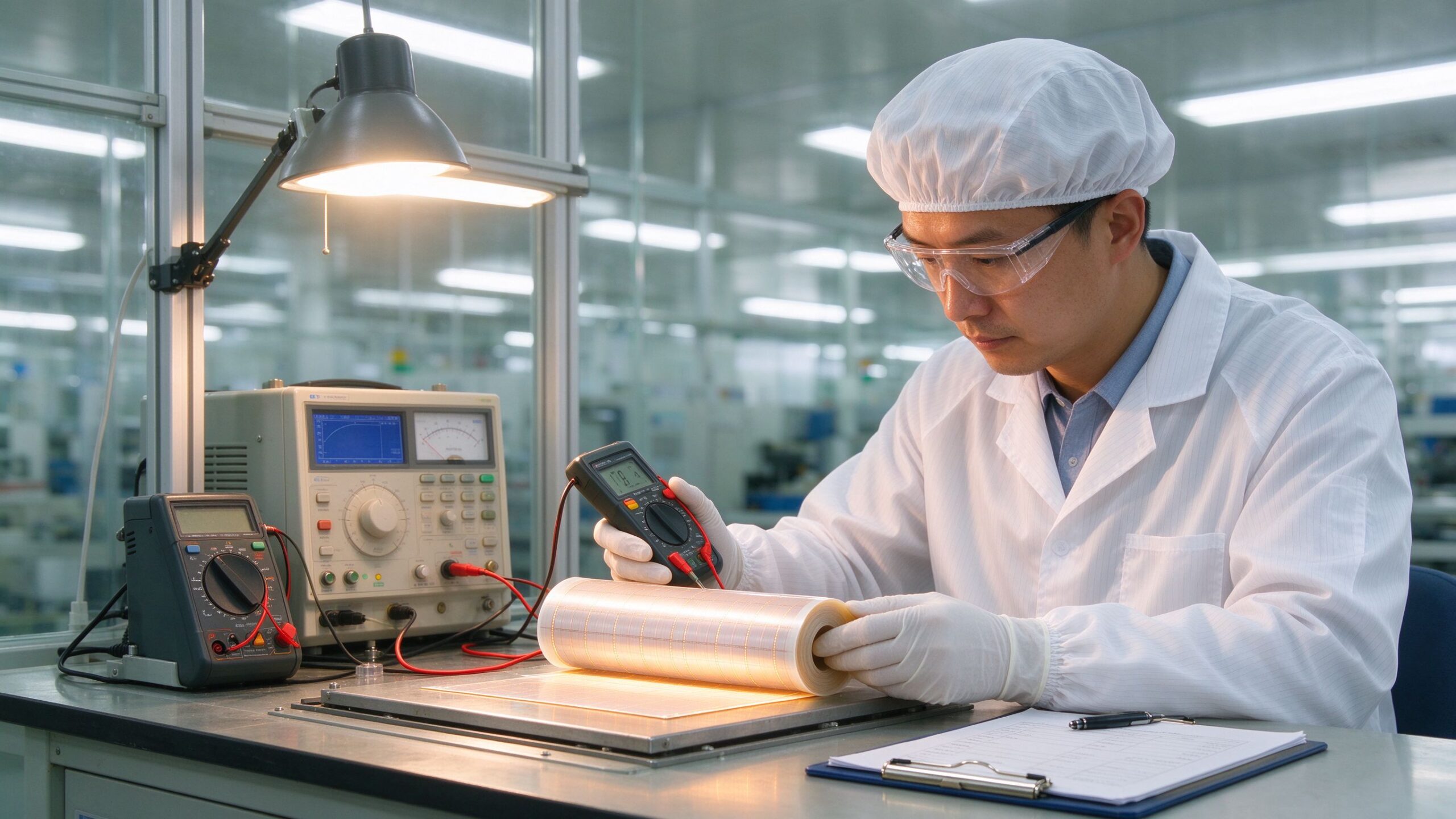
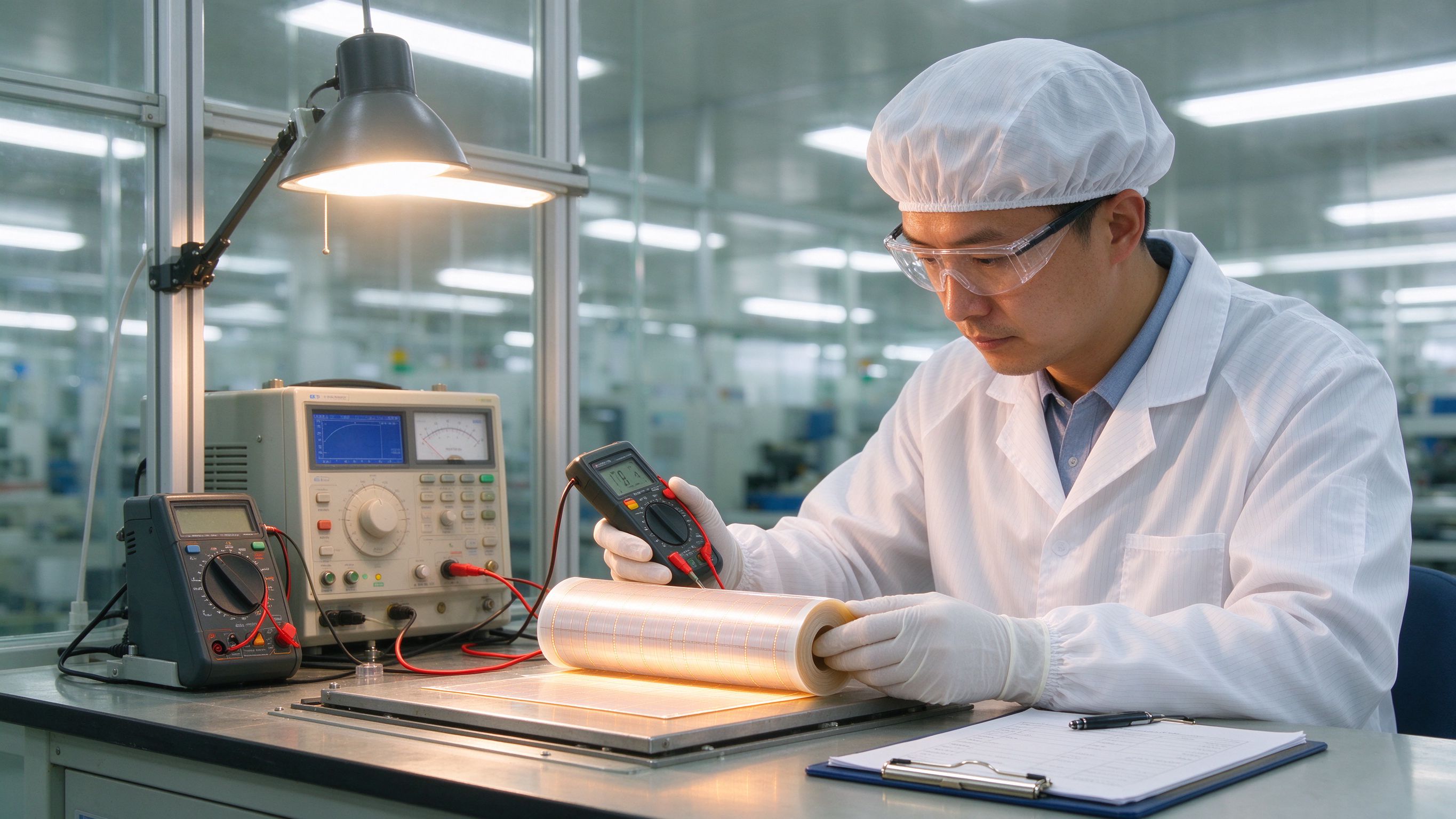
RoHS REACH compliance heating elements are now a standard request in European tenders, and the documentation behind them is where most suppliers fail. Buyers in the EU do not ask whether a product is compliant; they ask for the declaration, the test report and the batch traceability that proves it. This article explains how SunAura Thermal documents RoHS and REACH compliance across its heating film, mat, cable and thermostat range, what the documents actually contain, and what an importer should request before paying a deposit.
1. What RoHS and REACH Actually Require
RoHS (Restriction of Hazardous Substances, EU Directive 2011/65/EU) restricts ten substances in electrical and electronic equipment, including lead, mercury, cadmium, hexavalent chromium and specific phthalates. A heating element sold into the EU is in scope because it is an electrical product. REACH (Regulation EC 1907/2006) governs chemicals in articles, requiring that substances of very high concern (SVHCs) above 0.1% weight-by-weight are declared and tracked through the supply chain.
The two regimes operate differently in practice. RoHS is a substance restriction with a conformity declaration; REACH is a communication duty. A manufacturer meets RoHS with a Declaration of Conformity supported by test data, and meets REACH with a documented material declaration that shows no SVHC above the threshold, updated as the candidate list grows. For RoHS compliant heating film, that means the PET substrate, the conductive coating and the printed silver busbars all need material declarations, not just the finished product label. The same logic applies to a heating cable: the copper conductor, the XLPE insulation and the outer jacket are separate homogeneous materials, and each must be declared separately.
2. What a Complete Compliance File Looks Like
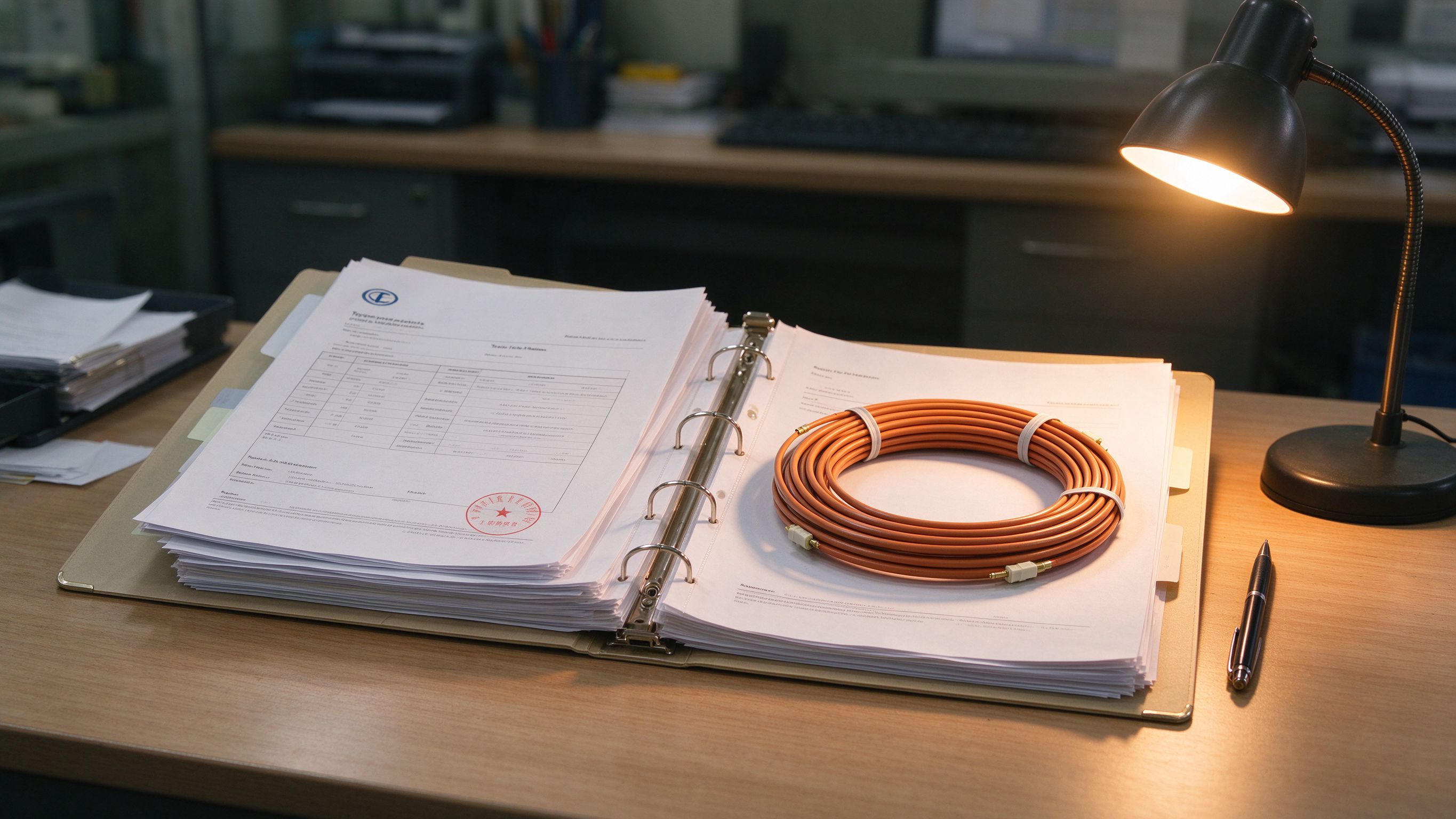
SunAura Thermal’s compliance file for each product family contains four documents. First, the EU Declaration of Conformity, signed by the factory and covering the applicable directives. Second, the RoHS test report from an accredited laboratory covering the restricted substances on the finished element. Third, the REACH SVHC declaration, confirming that no candidate-list substance is present above 0.1% in any homogeneous material. Fourth, the batch record, linking the report to the specific production batch by serial range.
For an importer, the batch record is the document that protects the business. A customs query or a downstream customer audit will ask for the link between the product on the shelf and the test report on file. If the supplier cannot trace the batch, the declaration is only paper. SunAura Thermal’s Qingdao Huangdao factory issues batch-linked records for every export order, which is what makes the compliance documentation for EU imports usable in practice rather than decorative.
3. How the Factory Produces the Evidence
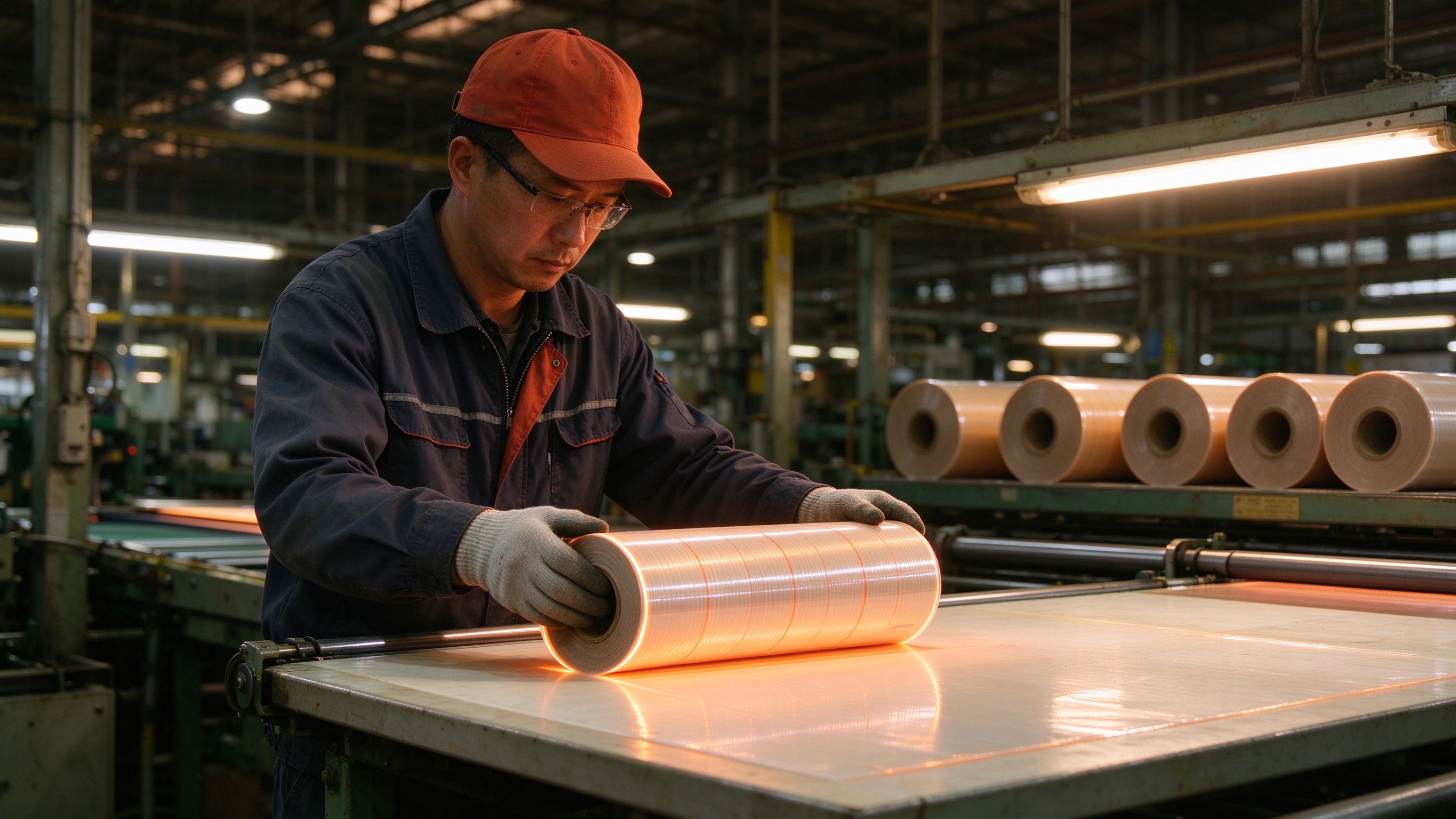
Compliance starts at material intake. The factory’s purchasing specification requires RoHS-compliant raw materials and a material declaration from each upstream supplier, and the incoming inspection verifies the certificates against the shipment. During production, elements from a defined batch share the same raw-material lot, so the batch record is meaningful: the finished product can be traced back to the specific drums of PET, silver paste or copper that went into it. Before shipment, the finished elements are tested and the report is filed with the batch number.
The ISO 9001 quality system provides the framework for this traceability; ISO 14001 covers the environmental management side and ISO 45001 the occupational health and safety side. The CE, RoHS, LVD and EMC marks on the product range sit on top of that system. None of these certificates is brand-new or product-specific decoration: the factory has manufactured heating elements since 2008, and the certification history is part of the export record to 50+ countries, per SunAura factory records. The point matters because a compliance file from a one-year-old trading company is worth less than one from a factory with a decade of audits behind it.
4. What Buyers Frequently Ask
The most common buyer question is whether the compliance documents are issued per batch or per product line. The correct answer is per batch, because that is the only traceable unit. The second question is whether RoHS coverage includes the thermostat and the cold tails, not just the heating element; the answer should be yes, with the thermostat covered under the same declaration. The third is whether REACH declarations are updated as the SVHC candidate list grows; the factory’s procedure is to review the candidate list quarterly and re-issue declarations when new substances appear.
A buyer should also ask who signs the Declaration of Conformity. It must be signed at factory level by a person with responsibility for the product’s conformity, which in SunAura Thermal’s case is documented in the quality manual. An unsigned template or a distributor-issued declaration has weaker evidentiary value in an audit. Finally, ask whether the test report covers the finished element or only the raw material: a raw-material report does not prove the finished product, because soldering, extrusion and lamination can introduce substances of their own.
5. Data and Evidence: Documentation in Practice
The practical test of a compliance file is a mock audit. SunAura Thermal runs one before every EU shipment: the quality team picks a batch at random, pulls the material declarations, the test report, the batch record and the signed DoC, and verifies that all four reference the same batch number. The mock audit results are logged per shipment, per SunAura factory records, and the pass rate is part of the factory’s monthly quality review under ISO 9001.
For a buyer, this means the file is not assembled at the last minute. It exists before the order, which is why SunAura can attach the four documents to a quotation rather than promising them after payment. The certificates themselves are the CE, RoHS, LVD and EMC marks that already appear across the certified product line.
6. FAQ: RoHS and REACH for Heating Elements
Is a heating film RoHS compliant? Yes, when the substrate, conductive layer and busbars are covered by material declarations and the finished product is tested. Ask for the test report, not just the logo.
Does REACH apply to the packaging? The packaging is an article in its own right under REACH; the factory’s packaging materials carry their own declarations.
Can I request a custom compliance document? Yes, within the EU legal framework. Custom branding on the DoC is normal; custom claims about substances are not, and the factory will not issue documents that exceed the test evidence.
How often are REACH declarations updated? The factory reviews the SVHC candidate list quarterly and re-issues declarations when the list changes.
One further question buyers should ask is about the laboratory behind the RoHS report. An accredited third-party laboratory with a scope statement covering the restricted substances carries more weight in an audit than an in-house test or a report from a laboratory without accreditation. The factory’s file names the laboratory and the test standard, so the importer can verify the scope before accepting the report. That detail is exactly the kind of evidence that separates a compliance-ready supplier from one whose file collapses under the first serious question.
Does RoHS apply to a 12 V product? Yes. RoHS applies by product category, not by voltage, so a low-voltage heating pad is as much in scope as a 230 V cable.
7. Beyond the EU: Why the Same File Helps in Other Markets
The documentation that satisfies an EU buyer is useful in most other markets, because the substance restrictions it proves are widely mirrored. UKCA retains the RoHS substance list for Great Britain; the US market, while not directly regulated by RoHS at federal level, sees major retailers and project specifiers request the same declaration; and the Middle East and ASEAN importers increasingly ask for REACH-style declarations as part of their vendor qualification. A single complete file, built once at the factory, answers all of these requests with no extra work. That is why SunAura attaches the four documents to quotations for every market, not only for Europe: the file is cheaper to produce once than to defend piecemeal in each new market.
There is a practical consequence for the buyer. If a supplier can produce a complete RoHS and REACH file for Europe, the same evidence supports sales documentation, retailer onboarding and even tender scoring in other regions. The file is a transferable asset, and the batch record is its spine. An importer who demands it at the first enquiry is not being bureaucratic; it is collecting the documents it will need for the next three years of sales.
8. What to Request in Your Next RFQ
When requesting a quotation for compliant heating element supplier services, list four attachments: the signed Declaration of Conformity, the RoHS test report, the REACH SVHC declaration and a sample batch record. Ask the supplier to state which production batch the quotation refers to. Then compare suppliers on the content of those documents, not on the speed of the quote. A factory-direct heating products EU enquiry to SunAura Thermal returns all four documents attached, because the evidence is generated by the production line, not by the sales team.
The wider point is that compliance documentation is a competitive advantage in the EU market. A buyer who has been burned by a customs hold or a customer audit will pay a small premium for a supplier whose file is complete before the order. The factory in Qingdao Huangdao has spent 17 years building that file, and it is happy to show it before the first order is placed.
9. Auditing Your Supplier: A Ten-Minute Check
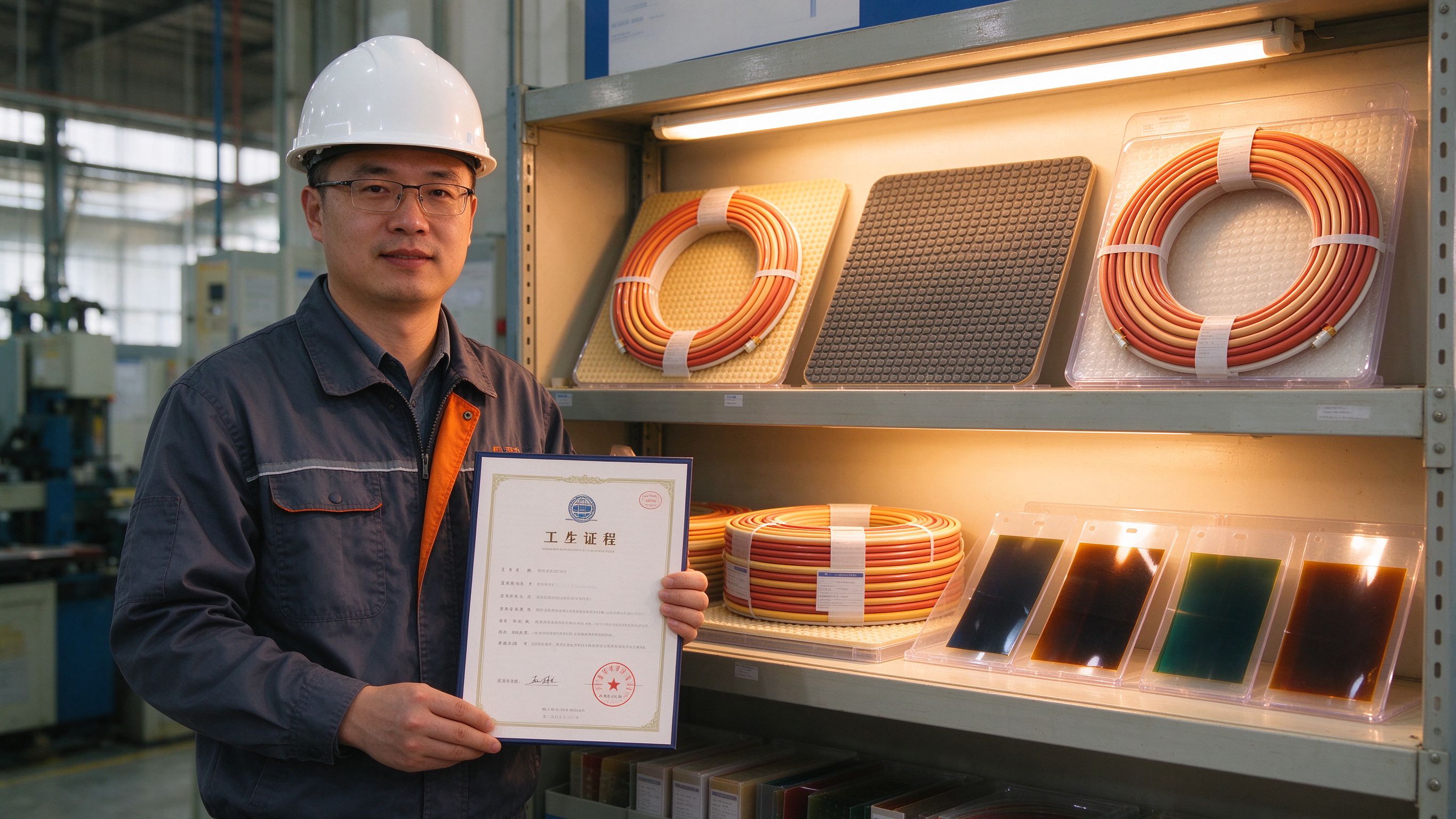
Before a deposit, run a ten-minute documentary check. Ask for the DoC and confirm the signatory and the date. Ask for the RoHS test report and check that the laboratory, the sample description and the batch reference match the product you are buying. Ask for the REACH SVHC declaration and check its issue date against the latest candidate list. Ask for one batch record and verify that the serial range covers the quantity in your order. If any document is missing, dated before the product’s introduction or unsigned, treat the compliance claim as unverified until the factory closes the gap. SunAura Thermal’s sales team attaches all four documents to the quotation package, so the check takes minutes rather than weeks.
10. The Business Case for a Compliance-Ready Supplier
Compliance documentation stops being a cost item the moment a customs query, a retailer onboarding or a tender evaluation asks for it. For an importer, the difference between a compliance-ready factory and a supplier who starts assembling the file after the order is the difference between a shipment that clears and a shipment that sits in a bonded warehouse. The cost of a held shipment — storage, delay penalties, the customer’s lost trading days — is many times the price of the documents. That is the business case for buying from a factory whose compliance file exists before the quotation.
The second part of the business case is repeatability. A compliance file built once per product family, with batch records added per order, costs almost nothing to maintain, so it does not push the price up. SunAura Thermal’s factory publishes the four-document package with the quotation, and the batch record is regenerated automatically for each shipment. An importer who standardises on that kind of supplier spends no time chasing documents, which is time that goes into selling the product instead.
Finally, there is the audit trail for the buyer’s own customers. A distributor that can show a complete file to its retail customers protects its own reputation and its own orders. In a market where end customers increasingly ask where a product comes from and what is in it, the supplier’s compliance file is the distributor’s sales argument.
In practice, the four documents are read together, not separately. The DoC says the product is compliant; the test report says what was measured; the SVHC declaration says what is declared; and the batch record says which products the statements refer to. A file with all four, cross-referenced to one batch, survives an audit. A file with three of the four leaves the buyer holding the risk. That is the standard to apply before the deposit.
Ethan Sun, Founder & CEO, SunAura Thermal
Related Products & OEM Inquiries
Looking for RoHS/REACH-compliant heating elements or a factory-direct OEM/ODM partner? Explore our our OEM/ODM manufacturing program and graphene far-infrared heating film range, then request a quote for your project — we supply distributors, installers and brands in 50+ countries.