
Why the Jacket Material Decides the Buying Decision
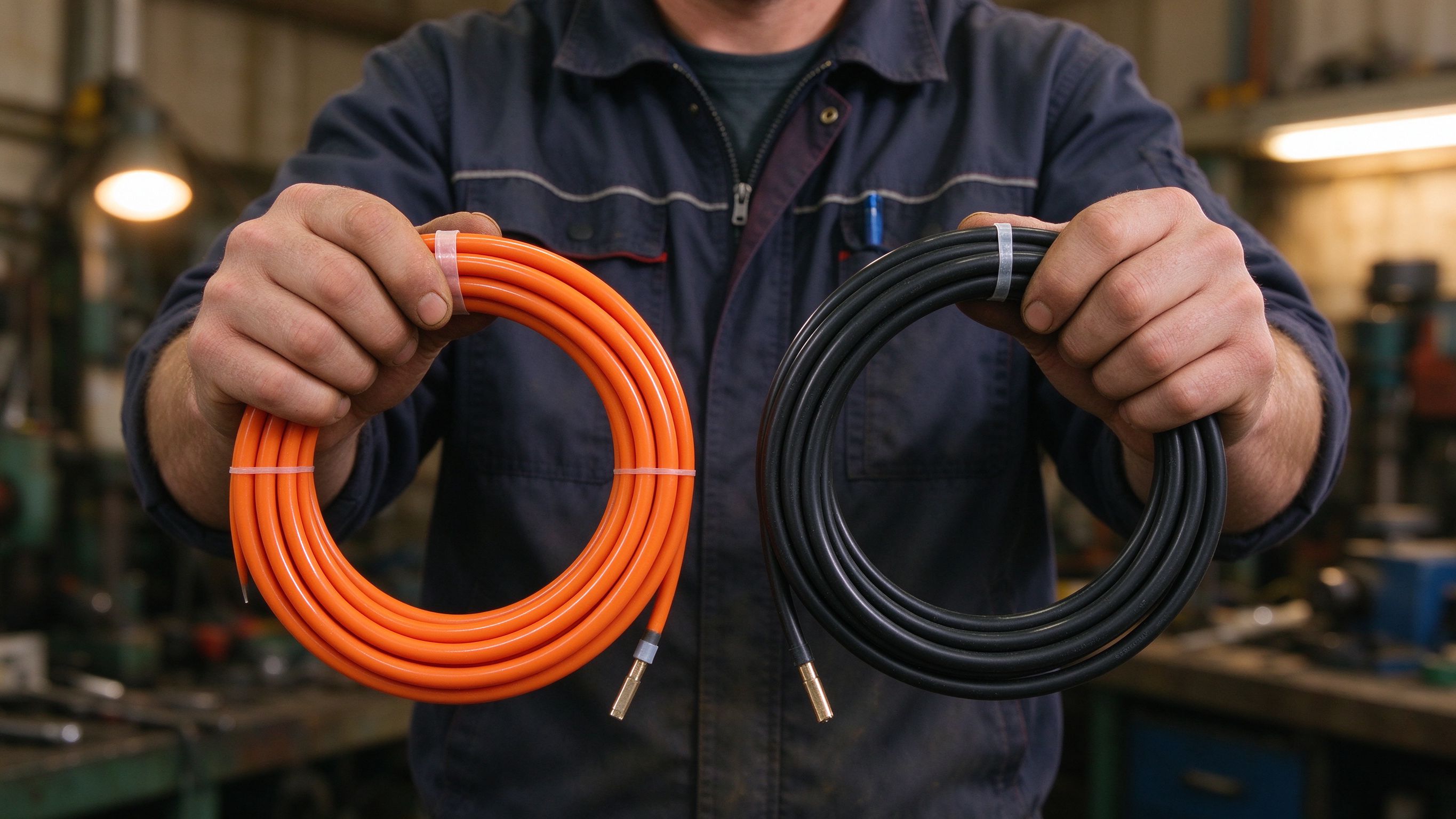
Every heating cable looks similar in a catalogue photo: a long spool, two copper conductors inside, a plastic cover outside. In practice, the difference that determines whether a cable survives ten winters in a wet utility room, a hot industrial line, or a screed pour is the material that wraps the conductors — the jacket. When procurement teams compare silicone vs PVC heating cable, they are really comparing two different cost structures, two different temperature ceilings, and two very different service lives. Get this decision wrong and the replacement cost, the downtime, and the installation labour are all wasted. Get it right and the cable becomes the most reliable component of the whole system.
This guide is written for buyers, project engineers, and distributors who need to specify heating cable in volume. We will compare silicone and PVC jackets on material behaviour, real applications, certification, and total cost of ownership, then close with a procurement checklist you can send to a supplier the same day. All factory data cited below is taken from SunAura Thermal production records in Qingdao, China, where the company has manufactured heating elements for 17 years.
Silicone vs PVC Heating Cable: What the Jackets Actually Do
A heating cable jacket is not decoration. It has four jobs: electrical insulation, mechanical protection, moisture and chemical resistance, and heat containment. Both silicone and PVC jackets perform these jobs, but they perform them at different temperatures and different price points.
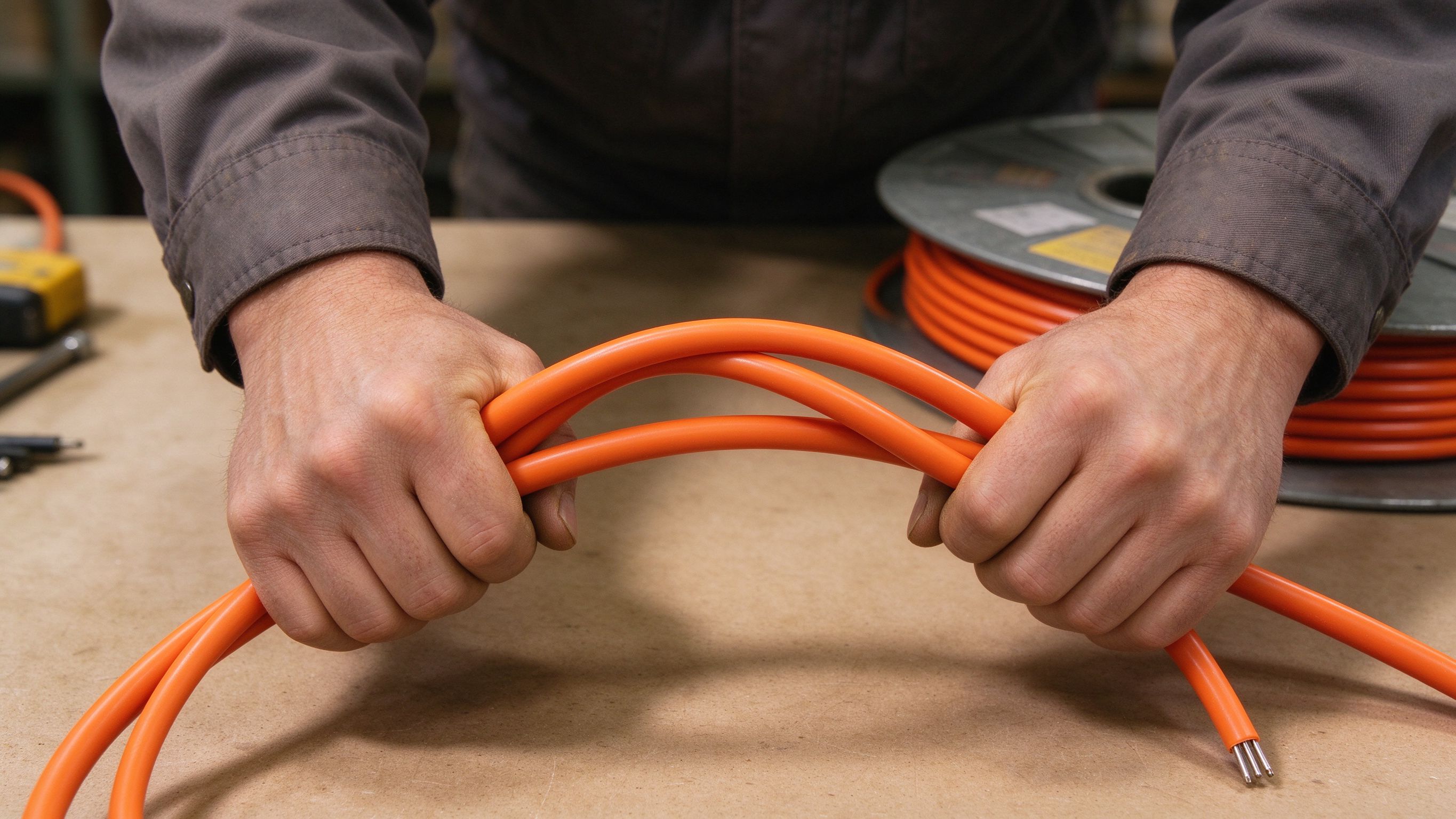
Silicone (SiR) is an elastomer — a rubber-like material built on a silicon-oxygen backbone. Its defining property is thermal endurance: silicone insulation is rated for continuous operation well above 150 °C in many constructions, stays flexible down to roughly −60 °C, and resists ozone, UV, and most chemicals. Because it remains elastic across that whole range, a silicone heating cable can be bent around tight radii, coiled in cold weather, and still flex after years of heat cycling. The trade-off is price: silicone costs noticeably more per metre than PVC.
PVC (polyvinyl chloride) is a thermoplastic. It is cheap, flame-retardant by formulation, and perfectly adequate for standard indoor use up to about 70 °C continuous (90 °C peak in many constructions). Below roughly −15 °C, PVC becomes stiff and can crack when flexed; above its rated ceiling it softens, and prolonged overheating makes the jacket brittle. For dry indoor screed or plaster applications, PVC is the classic workhorse and has been for decades.
So the honest summary is: PVC is the value option for standard indoor floor heating; silicone is the engineering option for heat, cold, moisture, and movement. The rest of this article quantifies that sentence so you can make a defensible buying decision.
Side-by-Side Comparison: Silicone vs PVC Heating Cable
| Dimension | Silicone (SiR) heating cable | PVC heating cable |
|---|---|---|
| Continuous temperature rating | 150 °C+ (construction-dependent) | ~70 °C (90 °C peak typical) |
| Low-temperature flexibility | Flexible to about −60 °C | Stiffens below about −15 °C |
| Typical applications | Pipe freeze protection, industrial tracing, food & beverage lines, outdoor, wet environments | Underfloor heating in screed, dry indoor tracing, cost-sensitive builds |
| Moisture & chemical resistance | Excellent; ozone, UV, many chemicals | Good indoors; limited UV and solvent tolerance |
| Flexibility over lifetime | Stays elastic through heat cycling | Can stiffen and micro-crack with age/heat |
| Relative cost per metre | Higher (typically 1.5–2.5× PVC) | Lower |
| Best procurement fit | OEM/industrial lines, harsh environments, warranty-critical exports | Volume residential projects, standard indoor screed |
The table above is a selection tool, not a verdict. A villa underfloor project in southern Europe may be perfectly served by PVC cable; a food-processing plant washing lines with steam nearby needs silicone. The correct answer is always application-dependent, which is why the next two sections matter more than the table itself.
Where Silicone Wins: Applications That Justify the Premium
Silicone earns its higher price in four families of application:
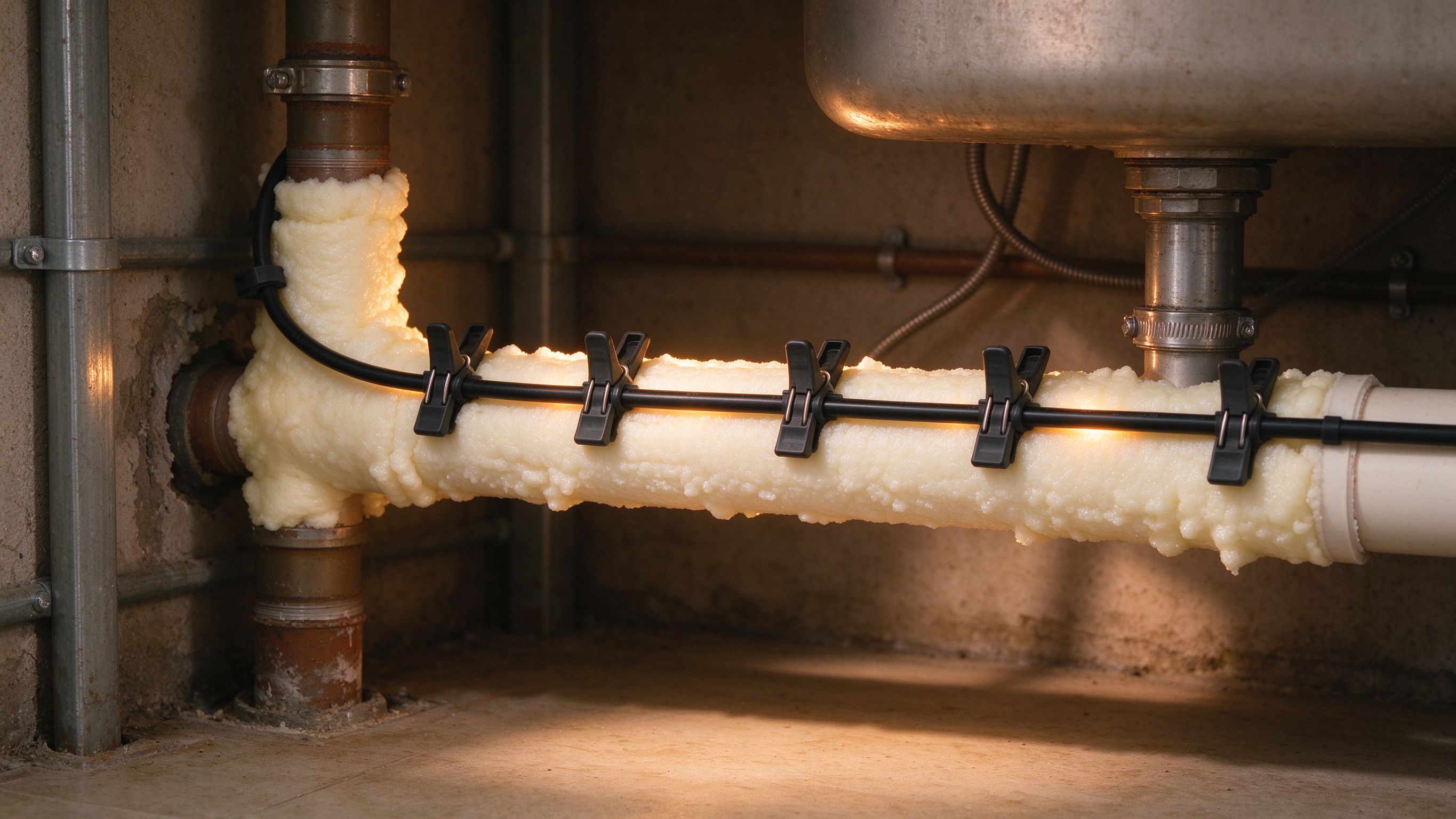
- Pipe freeze protection in exposed or wet locations — outdoor pipe runs, unheated basements, roof valleys, and pump houses see freezing, thawing, and condensation. A pipe freeze protection cable with a silicone jacket shrugs off moisture and stays flexible when the installer has to wrap it in near-freezing temperatures.
- Industrial process tracing — steam lines, hot-water recirculation, viscous-liquid pipelines and food-contact areas where the cable itself may be subjected to residual process heat. The higher continuous rating of silicone means the jacket will not degrade if the line is temporarily hotter than design.
- Outdoor and UV-exposed tracing — cable exposed to sunlight, rain and frost needs ozone and UV resistance; PVC degrades under long UV exposure unless specially formulated.
- Applications requiring repeated flexing — robotic arms, movable equipment, door seals, and similar duty cycles where a thermoplastic jacket would fatigue.
If your order falls into any of these categories, specify silicone from the start. Changing the jacket material after installation is effectively a full re-installation job.
Where PVC Remains the Workhorse: Cost-Sensitive Installations
For standard underfloor heating systems embedded in screed or self-levelling compound, PVC remains the most cost-effective choice for one simple reason: once the screed is poured, the cable never moves, never sees sunlight, and never exceeds the temperature the thermostat allows. In that environment PVC’s rated ceiling is never approached in normal operation, and its lower price directly improves project margins.
Typical PVC sweet spots:
- Residential and commercial electric underfloor heating in screed or tile adhesive
- Dry indoor frost protection on buried or enclosed pipework
- Floor warming in bathrooms, kitchens, and utility rooms where a thermostat plus floor sensor governs the maximum temperature
- Budget-priced prefabricated heating mats where the jacket is a minor cost component
The engineering rule we apply at SunAura Thermal is simple: if the environment is controlled, PVC; if the environment is uncontrolled, silicone. That rule has guided our 17 years of manufacturing and it has never produced a warranty problem.
Data & Evidence: What Factory Tests Show
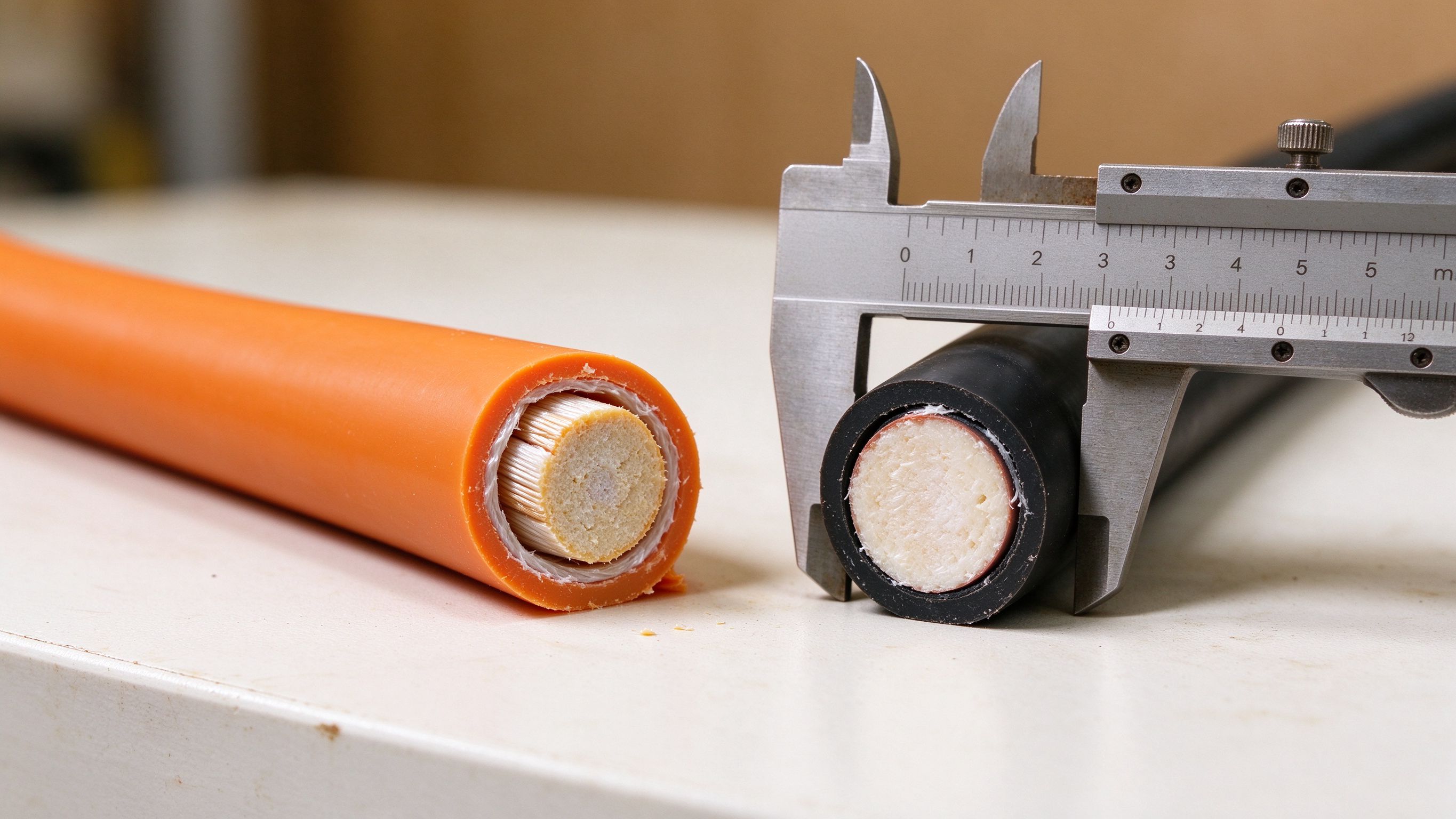
Material claims mean nothing without test data. At our Qingdao (Huangdao) plant we qualify every cable construction before it enters production, and the following values reflect the test regime applied to our heating cable range (per SunAura factory records):
- Dielectric strength — finished cables pass a high-voltage insulation test before termination; batch records retain every result.
- Insulation resistance — measured at ambient and after heat-ageing samples, with readings logged per batch.
- Cold bend test — silicone constructions are flexed at sub-zero temperature without jacket cracking; PVC constructions are verified down to their rated limit.
- Heat-ageing — jacket samples are oven-aged at their rated ceiling and re-tested for elongation and tensile retention.
- Compliance — the product range is manufactured under ISO 9001 quality management, with environmental and occupational safety systems aligned to ISO 14001 and ISO 45001; electrical products carry CE marking and are assessed for RoHS, LVD and EMC where applicable.
We do not publish certificate numbers in this article, and neither should a supplier you are evaluating. Always request the actual certificate copies and the batch test report for the exact construction you are buying.
Procurement Checklist: What to Send a Supplier
When you request a quote for silicone or PVC heating cable, a professional supplier can price your order accurately if you provide these seven points. Copy this list into your RFQ:
- Application and environment — indoor/outdoor, wet/dry, max ambient temperature, exposure to chemicals or UV.
- Voltage — 120V, 230V, 240V, or a custom low-voltage DC variant.
- Output per metre — target W/m (e.g. 10, 15, 20, 33 W/m) and total length or total wattage.
- Jacket material — silicone or PVC; if you are unsure, state the environment and let the factory recommend.
- Terminations — bare leads, pre-terminated cold leads, plug-and-play kits, or OEM labelling for your brand.
- Certifications required — CE, RoHS, and any destination-market marks; ask for copies, not claims.
- Quantity and lead time — MOQ, target delivery date, and whether you need a pre-production sample (we generally provide samples before mass production).
For a full product range with both jacket options, speak to our team about heating cable OEM supply — we manufacture twin-conductor, self-regulating PTC and silicone constructions under one roof, which makes mixed-basket procurement simpler than buying each type from a different factory.
Installing and Terminating: Where the Two Jackets Differ
Installation behaviour is a hidden cost that rarely appears in price comparisons, yet it changes the total installed cost more than the jacket material itself. Silicone and PVC cables differ in three installation-relevant ways: flexibility, termination technique, and resistance to mechanical damage during the pour or wrap.
Flexibility at the job site. A silicone-jacketed cable can be uncoiled and routed in cold weather without the jacket cracking, and it bends around small radii — a real advantage when tracing valves, flanges and irregular pipe clusters. PVC cable behaves well down to about its rated minimum temperature, but below that it stiffens, and forcing a bend can stress the jacket or the core. Installers working outdoors in winter should order silicone for that reason alone, or warm and uncoil PVC carefully before routing.
Termination practice. Both jacket families are terminated with cold leads — the flexible, unheated connecting section that runs from the heating zone to the junction box. The quality of the cold-lead moulding is where warranty risk hides. At our factory, cold ends are moulded rather than simply crimped, and every terminated assembly passes a dielectric test before shipment (per SunAura factory records). When you buy from a supplier, ask specifically how cold ends are sealed: a moulded transition with strain relief is the professional standard, while a simple taped splice is a warranty claim waiting to happen.
Mechanical toughness during installation. In screed pours, the cable must survive being stepped on, raked over, and buried. PVC jackets are hard-wearing and inexpensive, which is why they dominate floor heating. Silicone is softer to the touch but very tough against heat and moisture; both need the same basic care on site — keep foot traffic off the laid loops, use fixing clips or strips, and photograph the layout before covering.
Expansion planning. If you are a distributor who stocks both jackets, plan your stock carefully: silicone is the fast-moving line for freeze-protection seasons, while PVC sells steadily for floor heating year-round. Buying both from one factory simplifies logistics and lets you convert mixed demand into a single shipping consolidation — one container, one set of documents, one payment.
FAQ
Can PVC heating cable be used outdoors? Only with careful UV protection and for short exposure. For outdoor pipe tracing, silicone or a UV-stabilised specialty jacket is the safer specification.
Is silicone heating cable safe for drinking-water lines? For potable-contact tracing, confirm the specific food-grade / WQA-style approval of the finished product with the supplier; jacket material alone is not the full answer.
Does silicone cost more to install? No — installation labour is the same; the material price per metre is higher. The premium buys temperature headroom and longevity in harsh environments.
Which jacket lasts longer underfloor? Both last decades when kept within rating by a thermostat and floor sensor. Silicone’s advantage shows only when the cable is exposed to conditions beyond PVC’s rating.
Which jacket should I choose for heating cable used inside screed? PVC is the standard and most economical choice for screed-embedded floor heating, because the environment is controlled, the temperature is governed by a thermostat, and the cable never moves after the pour. Silicone adds cost without benefit in that application.
Can I order both silicone and PVC heating cable from the same supplier? Yes, and it is usually the smartest procurement path. A single factory that manufactures both constructions gives you one quality system, one set of test records, one shipping consolidation and one warranty channel. At SunAura Thermal, mixed-basket orders are routine for distributors and OEM customers.
Next Step: Send the Checklist, Get a Factory Quote
The silicone vs PVC decision is a specification decision, not a mystery. Define the environment, pick the jacket that fits, send the seven-point checklist above, and you will receive a comparable quote within a working day. SunAura Thermal has exported heating cable and other electric heating elements to more than 50 countries, and our engineers will confirm your application before production so the cable you receive is the cable your project needs.
Contact us for bulk pricing and samples at [email protected].
About the author: Ethan Sun, Founder & CEO, SunAura Thermal. SunAura has manufactured electric heating film, mat and cable in Qingdao, China, for 17 years, supplying CE/RoHS-compliant heating products to more than 50 countries.