


The gas boiler phase-out is the policy that is quietly reshaping how homes and buildings are heated. Across Europe, national timelines now set the date after which new gas boilers cannot be installed: the Netherlands and Norway lead with 2025-2026, the UK has committed to 2035 with incentives from 2025, Germany’s building energy law pushes new heating toward renewables from 2024-2028, and France restricts new gas boiler installations in stages through 2026-2030. For a homeowner facing a failed boiler or a developer planning a new building, that timeline is not abstract policy—it is the deadline that decides which heating system goes in the building.
This article explains what the phase-out means in practice, why electric underfloor heating fits the replacement decision better than the obvious alternatives, how the cost compares when the boiler dies, and what buyers should check before committing. The focus is practical: what changes in 2026, what a heat pump versus floor heating comparison really shows, and how a gas boiler phase-out affects the value of the property you own or build.
1. Where the Gas Boiler Phase-Out Stands in 2026
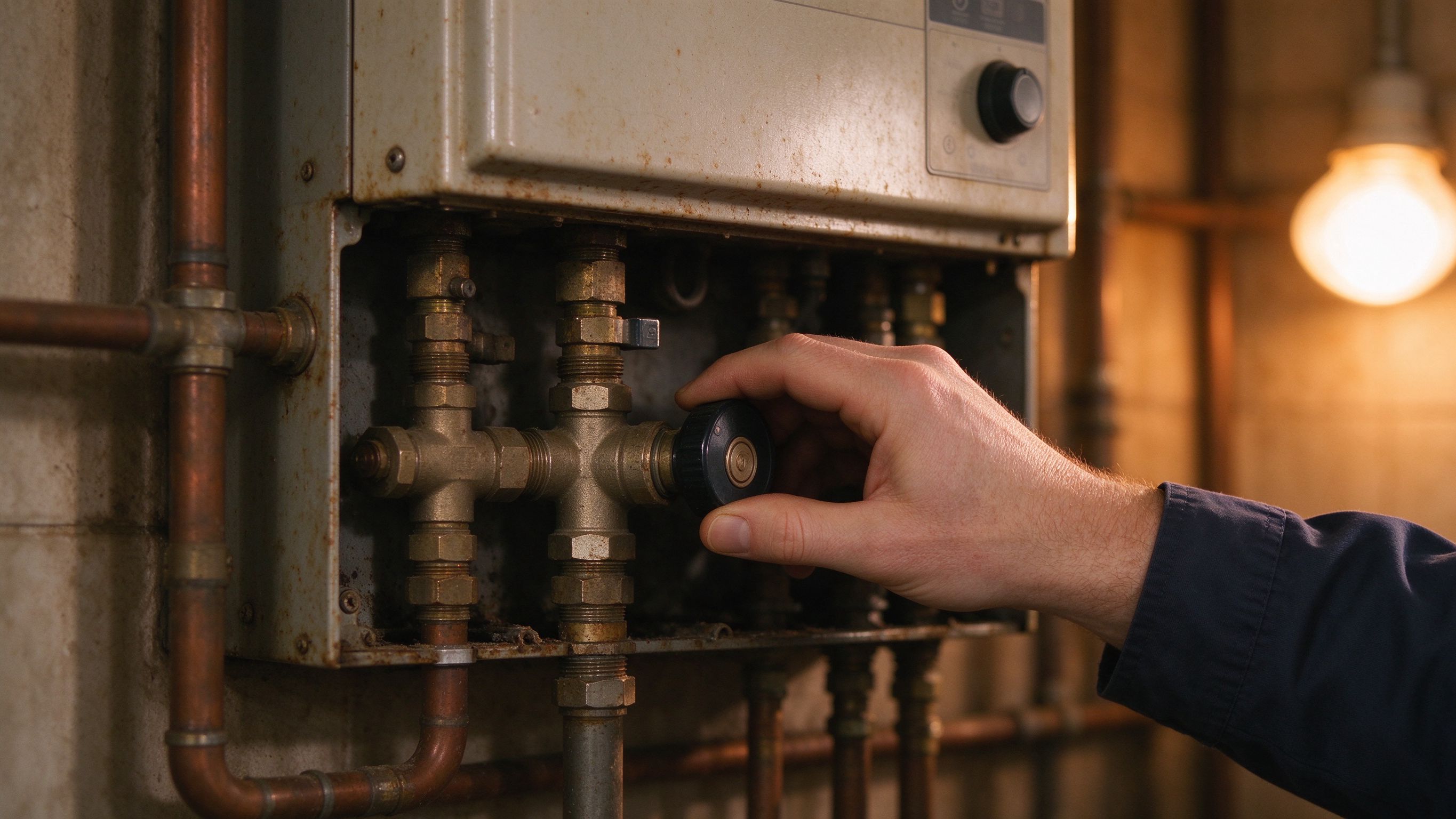
The policy has two shapes. Some countries ban new gas boilers outright in new buildings—the Netherlands, Denmark, Norway and, effectively, the UK under the Future Homes Standard. Others, like Germany, restrict what can be installed by requiring new heating systems to run on a rising share of renewables, which prices gas-only boilers out of compliance. Either way, the practical effect is the same: a gas boiler is no longer a safe default choice for a new building or a boiler replacement, and the decision that used to take an afternoon now has a policy timeline attached to it.
The 2026 checkpoint matters because the incentive structures shift this year. Several markets are phasing out boiler replacement grants and concentrating subsidies on heat pumps and electric heating, and some utilities are moving to tariffs that penalise gas connection fees for new builds. For a homeowner whose 20-year-old boiler fails in 2026, the question is not whether to electrify but which electric system to choose—and the floor is one of the two serious candidates.
2. The Two Electrification Paths: Heat Pump and Electric Floor
The realistic replacement paths for a gas boiler are a heat pump (air-source or ground-source) and an electric heating system. A heat pump is efficient—typically 300-400% seasonal efficiency—but it needs space for the outdoor unit, a buffer or hot water tank, and radiators or emitters designed for low water temperatures. The hidden constraint is the emitter side: a heat pump runs at 35-45 °C flow temperature, so the building needs large radiators or, better, an underfloor emitter with a large surface area. That is why the two paths are not rivals but partners—and why electric underfloor heating appears in both.
In a retrofit where a heat pump is impractical—no garden space for the outdoor unit, a leasehold flat where the landlord controls the plant, an old building with poor fabric and high heat loss—electric underfloor heating is the workable path. In a new build, many developers now install electric floor heating in the floors and leave the plant simple: no gas connection, no flue, no heat pump subsidy paperwork. The floor becomes the primary emitter, and the whole system is the definition of low-temperature heating that the policy is pushing buildings toward.

3. What the Policy Timeline Actually Changes for Homeowners
The first change is the end of the easy default. When a boiler fails, the traditional advice was “replace like for like”; in a phase-out market, the installers themselves now quote the alternatives first, because the gas connection, the flue and the compliance paperwork for a new boiler have become a moving target. The second change is the value question: a property with a new gas boiler installed in 2026 in a market heading to 2035 phase-out has an asset whose end date is visible, and valuers in several markets already discount it.
The third change is the grant landscape. In the UK, the Boiler Upgrade Scheme moved the subsidy toward heat pumps; in Germany, the KfW funding programmes require the renewable share; in France, MaPrimeRénov’ for heat pumps is capped by income. Electric floor heating, being a building-fabric investment rather than a boiler-box swap, sits in a different funding category in several programmes—insulation-style grants apply to it in some regions. The practical advice for a homeowner is to check the local scheme before choosing, because the grant can change the cost comparison by a meaningful margin.
4. The Cost Comparison When the Boiler Dies
The honest comparison starts with the failed boiler. A boiler replacement with installation runs roughly EUR 3,500-6,500 in most European markets; an air-source heat pump with radiators or floor work runs EUR 10,000-18,000 before grants; an electric underfloor system in a typical home—film or mat in the living floors and bathrooms—runs EUR 6,000-12,000 depending on area and finish. The electric floor is cheaper than the heat pump route at install, has no moving parts and no outdoor unit, and its running cost depends on the building fabric and the tariff rather than on gas prices.
Running cost is where the comparison needs honesty. In a well-insulated home with a modern electricity tariff, an electric floor as a background emitter costs more per kWh than a heat pump, because the floor uses electricity directly while the pump converts it. But the gap narrows fast in three situations: off-peak tariffs that make night electricity cheaper than gas per useful kWh, homes where the floor is the only comfortable emitter anyway, and buildings where the heat-pump installation cost would never pay back. The decision rule for most homeowners: if the fabric is good and the tariff is smart, the electric floor is the simple, robust choice; if the building is large and poorly insulated, the heat pump route deserves the higher investment.
The market evidence for the shift is visible in what installers now quote. In the UK, boiler-replacement quotes increasingly include an electric floor option as standard, because the 2035 commitment has made the gas route a question rather than a default. In Germany, the building energy law’s renewable-share requirement means a new gas boiler must be paired with solar thermal or another renewable source, which makes the all-electric floor simpler on paper and simpler on site. In the Netherlands, new-build gas connections are effectively gone, and the floor heating specification is decided in the same meeting as the heat pump or electric system, not after it. The pattern across these markets is that the floor emitter—the part of the building that lasts 50 years—is now chosen first, and the heat source is chosen to fit it, reversing the old order.
For existing buildings, the phase-out also changes the economics of fabric upgrades. A home that improves insulation and then electrifies the heating saves on both sides: less heat loss and a lower-cost electric system. Governments increasingly fund the insulation side, because every kWh not lost is a kWh not generated. The buyer’s sequence that fits the policy is therefore: insulate, then electrify the floor, then control it with a smart schedule. Following that order converts the phase-out from a threat into a cost reduction.
5. Data and Evidence: What the Factory Records and Standards Show
Per SunAura factory records, electric underfloor heating products supplied to European markets carry CE, RoHS and LVD compliance, with EMC for the thermostats, and the factory’s ISO 9001, ISO 14001 and ISO 45001 certifications cover the production system. SunAura Thermal has manufactured heating elements since 2008—17 years—at its Qingdao Huangdao factory, and exports to more than 50 countries, with the compliance file prepared per shipment for EU-bound orders. The technical reference point for the emitter side is the same one heat-pump installers use: low-temperature emitters with a large surface, which is exactly what a floor is.
The measurement that matters to a buyer comparing systems is the floor surface temperature and the installed wattage, both stated per product family: film at around 120-200 W/m², mat at 100-200 W/m², cable by spacing table. These are the numbers that translate a policy decision—“electrify the heating”—into a build decision—“what goes in the floor”. A supplier that states them with the batch record is a supplier whose products can be specified with confidence in a phase-out market.
6. Buyers’ Checklist for the Phase-Out Decision
Homeowners facing a boiler failure should ask five questions before choosing: Is the gas phase-out timeline confirmed in my market, and does a new boiler installed today lose value at sale? Is there an off-peak or heat-pump-style electricity tariff available for electric heating? What is the floor finish—does it suit film, mat or cable? What grants apply to floor insulation and electric heating in my region? And does the electric floor supplier provide the compliance file and batch record with the quotation? The answers convert a policy headline into a personal decision.
Developers planning new buildings should add two more: What is the cost of omitting the gas connection entirely, and does the marketing value of “all-electric, net-zero ready” exceed the saving of a cheaper but dying system? In several European markets, all-electric buildings are now marketed as a feature, and the floor heating specification is the visible part of that story.
7. FAQ: Gas Boiler Phase-Out and Electric Underfloor Heating
Can I keep my gas boiler after the phase-out date? In most markets, existing boilers may stay in service until their natural end of life; the phase-out applies to new installations and replacements.
Is electric underfloor heating more expensive to run than a heat pump? Per kWh, yes; per year, it depends on the tariff, the fabric and the usage pattern. With off-peak electricity and good insulation, the gap is small.
Does electric floor heating work with a heat pump later? No—they are alternative emitters. If you may install a heat pump later, keep the floor and add a wet layer designed for it, or choose the electric floor now and accept it as the final system.
Will a new boiler in 2026 hurt resale? In markets with confirmed phase-out dates, valuers are already discounting gas boiler assets; the discount grows as the deadline approaches.
8. Conclusion: The Timeline Is the Buyer’s Friend
The gas boiler phase-out removes the uncertainty that used to freeze buyers into doing nothing. A failed boiler in 2026 is not a crisis; it is the moment when electrification becomes the obvious answer, and electric underfloor heating is the most practical way to deliver it in a large share of homes. The policy timeline gives the decision a deadline, the tariff structure gives it an economics, and the floor gives it a comfortable result. If you are replacing a boiler this year or planning a new build, check the phase-out date in your market, compare the floor-first path against the heat pump route with real local prices, and specify electric underfloor heating from a supplier that shows the test data and the compliance file before you sign.
There is also a practical detail that homeowners discover only after the boiler dies: the electricity connection and the floor work are both jobs that can be sequenced around daily life, whereas a boiler replacement is a same-week emergency. An electric floor can be installed room by room—the bathroom this month, the living floor next month—while the temporary heating covers the gap. That flexibility matters in a phase-out market because it removes the panic purchase. The homeowner who plans the electrification in stages gets the grant paperwork done calmly and the floor installed by a chosen specialist, instead of accepting whatever the emergency plumber offers on a cold morning.
Finally, the data point that most buyers underestimate is the lifetime cost. A gas boiler lasts 12-15 years and is replaced, again and again; an electric underfloor element has no moving parts, no flue to corrode, no annual service contract, and is designed to outlast the floor finish it sits under. Over a 30-year building horizon, the electric floor’s lifetime cost—installation plus electricity at a smart tariff—is competitive with the gas route before policy even enters the calculation. The phase-out simply removes the last argument for the old default.
Ethan Sun, Founder & CEO, SunAura Thermal
Related Products & OEM Inquiries
Looking for an electric underfloor heating alternative as gas boilers phase out or a factory-direct OEM/ODM partner? Explore our complete electric underfloor heating systems, electric underfloor heating mats, and smart thermostats and floor-sensing controls, then request a quote for your project — we supply distributors, installers and brands in 50+ countries.