
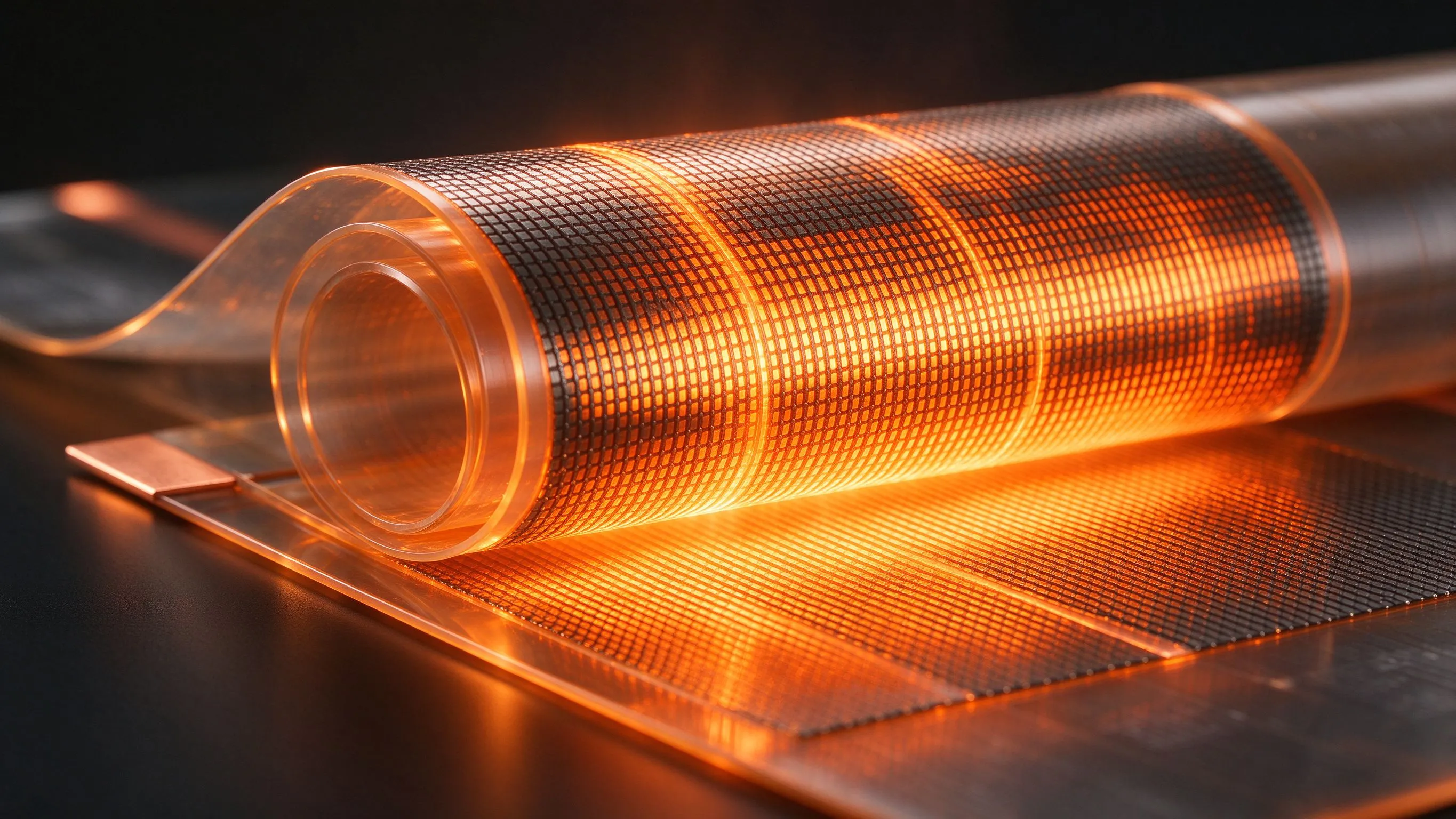
The heating industry has witnessed numerous technological advancements over the past decades, but few have generated as much excitement as graphene heating film. This revolutionary material is transforming the way we think about underfloor heating systems, offering unprecedented efficiency, safety, and comfort. In this comprehensive guide, we explore the science, applications, and benefits of graphene heating film technology.
Article by Ethan Sun, Founder & CEO, SunAura Thermal — written from 17 years of electric heating element manufacturing experience in Qingdao, China.
What Is Graphene Heating Film?
Graphene heating film is a thin, flexible heating element made from graphene-infused carbon materials. Graphene, a single layer of carbon atoms arranged in a two-dimensional honeycomb lattice, was first isolated in 2004 by researchers at the University of Manchester. Its discoverers, Andre Geim and Konstantin Novoselov, were awarded the Nobel Prize in Physics in 2010 for this groundbreaking work. Since then, graphene has found applications across numerous industries, from electronics to biomedical engineering.
In the context of underfloor heating, graphene heating film consists of multiple layers: a protective outer film, a graphene-infused carbon heating element, copper bus bars for electrical conduction, and an insulating backing layer. When an electric current passes through the graphene carbon layer, the material generates heat through a process called Joule heating, where electrical energy is converted into thermal energy with remarkable efficiency.
The Science Behind Graphene Heating
What sets graphene apart from traditional heating elements is its unique molecular structure. The carbon atoms in graphene are bonded in a hexagonal pattern, creating a material that is approximately 200 times stronger than steel while being incredibly lightweight. This structure also provides exceptional electrical and thermal conductivity, making graphene one of the most efficient conductive materials known to science.
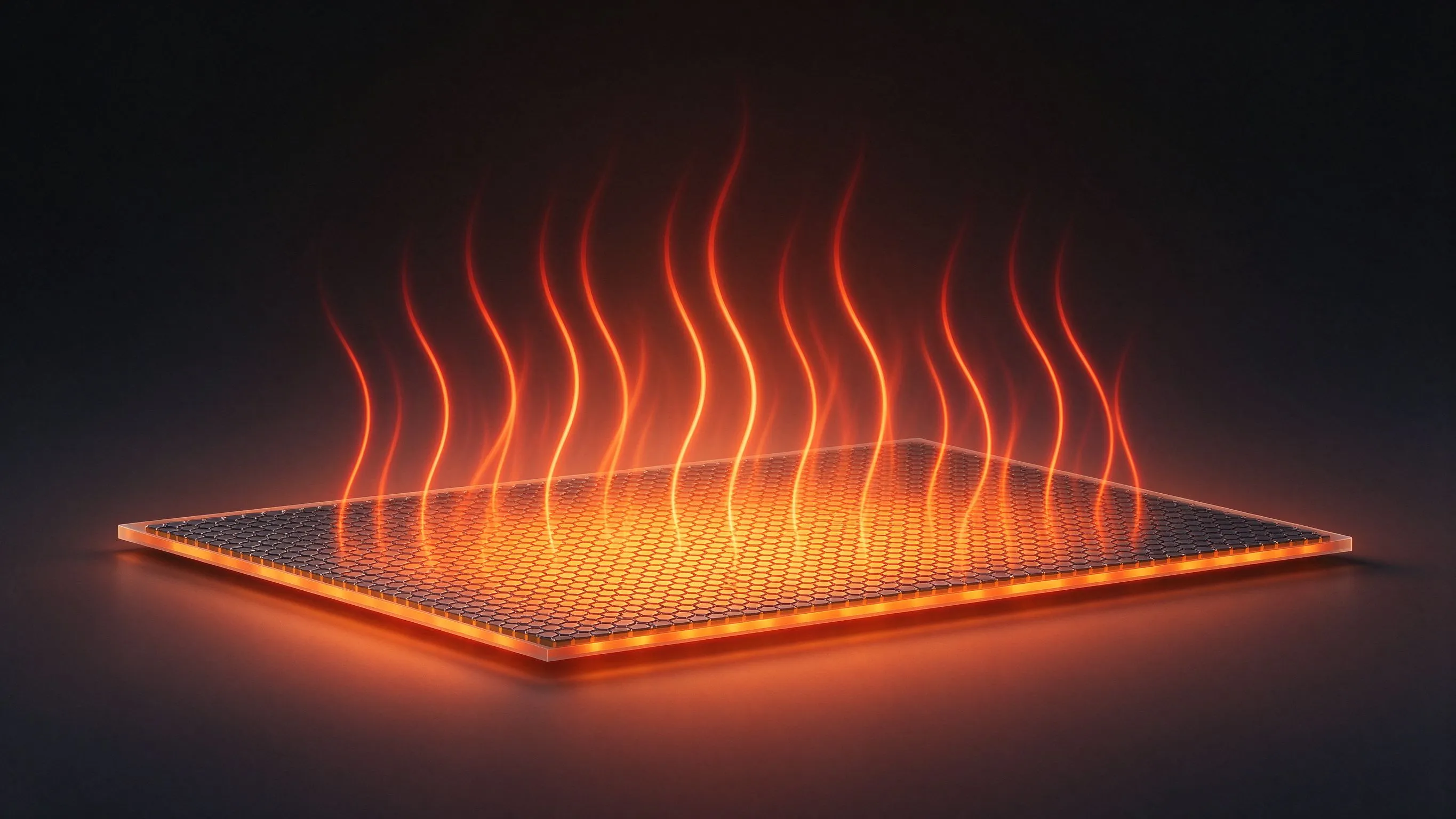
When used in heating film applications, graphene offers several distinct physical advantages. The material achieves a thermal conversion efficiency of over 99%, meaning nearly all electrical energy is converted into heat. This is significantly higher than traditional resistance wire heating systems, which typically achieve 85-90% efficiency. The difference may seem small, but over the lifetime of a heating system, this efficiency gap translates into substantial energy savings.
Furthermore, graphene heating film produces far-infrared radiation in the wavelength range of 4 to 16 micrometers. This is significant because the human body naturally emits far-infrared radiation in a similar range (approximately 6 to 14 micrometers). When the body absorbs this compatible radiation, it creates a gentle, deep-penetrating warmth that feels more natural and comfortable than the convective heat produced by traditional heating systems. This phenomenon is often described as experiencing warmth similar to sunlight, without the harsh, dry feeling associated with forced-air or radiator heating.
Key Advantages Over Traditional Heating Systems
1. Rapid Heat-Up Time
Traditional water-based underfloor heating systems can take 1 to 3 hours to reach the desired temperature, as the water must be heated in a boiler, circulated through pipes embedded in a concrete screed, and then gradually warm the floor surface. Graphene heating film, by contrast, can reach operating temperature in as little as 3 to 5 minutes. The ultra-thin profile of the film (typically 0.4mm to 1mm thick) means there is minimal thermal mass to heat, allowing for near-instantaneous warmth.
2. Ultra-Low Energy Consumption
Energy efficiency is one of the most compelling reasons to choose graphene heating film. Independent laboratory tests have shown that graphene-based systems can reduce energy consumption by 20% to 30% compared to traditional electric underfloor heating cables, and up to 50% compared to water-based systems that require boilers, pumps, and heat exchangers. The precise power consumption depends on installation parameters, but a typical graphene heating film installation consumes between 80 to 220 watts per square meter, depending on the desired floor temperature and insulation quality.
3. Zero Electromagnetic Radiation
One of the most significant health-related advantages of graphene heating film is its negligible electromagnetic field (EMF) emission. Traditional electric heating systems, particularly those using AC-powered resistance wires, can generate measurable electromagnetic fields. Graphene heating film, due to its uniform carbon layer and low operating voltage (typically 220V but with very low current density), produces EMF levels that are virtually undetectable and well below international safety standards established by the International Commission on Non-Ionizing Radiation Protection (ICNIRP).
4. IP67 Waterproof Rating
Quality graphene heating film products, such as those manufactured by SunAura Thermal, carry an IP67 waterproof rating. This means the film is completely dust-tight and can withstand immersion in water up to 1 meter deep for 30 minutes. This level of waterproofing makes graphene heating film suitable for installation in bathrooms, kitchens, swimming pool surrounds, and even outdoor applications such as snow melting on driveways and walkways.
Installation Applications and Use Cases
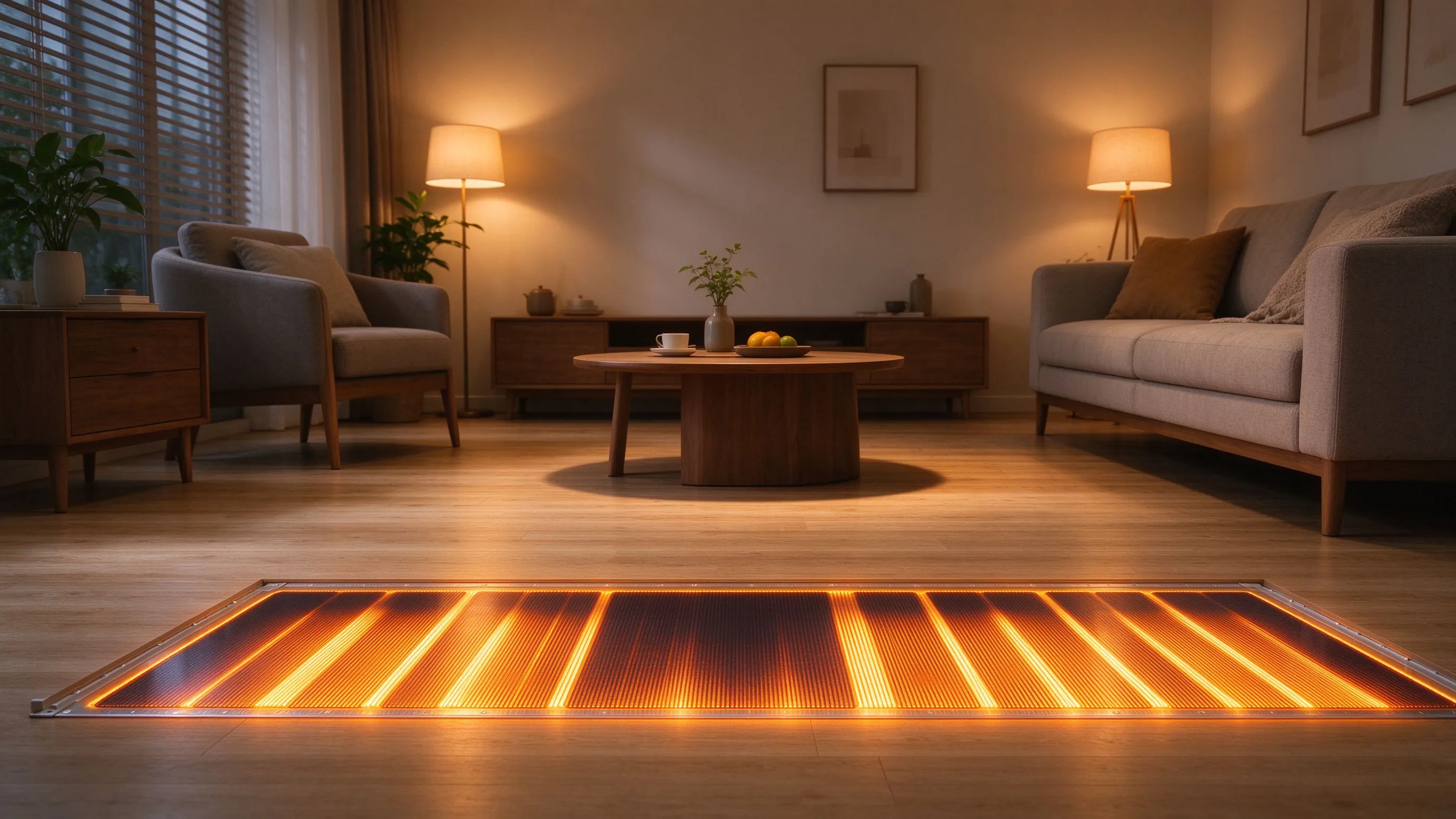
Graphene heating film is remarkably versatile and can be installed in a wide variety of settings. In residential applications, it is commonly used under laminate flooring, engineered wood, luxury vinyl tile (LVT), and even under ceramic or porcelain tile when combined with a thin layer of self-leveling compound. The film can be installed directly on existing concrete subfloors or over insulation boards to improve efficiency.
In commercial settings, graphene heating film has been successfully deployed in office buildings, hotels, hospitals, and retail spaces. Its rapid heat-up time is particularly advantageous in spaces with intermittent use, such as meeting rooms or hotel guest rooms, where heating can be activated on demand rather than running continuously. The thin profile also means minimal floor height increase, which is critical in renovation projects where ceiling height is already limited.
For specialized applications, graphene heating film has found use in greenhouse heating, where its far-infrared radiation promotes plant growth; in reptile and pet enclosures, where it provides a naturalistic heat source; and in industrial applications such as pipe trace heating and process temperature maintenance. The film can also be used for snow and ice melting on outdoor surfaces, providing a safe and energy-efficient alternative to embedded electric cables.
Quality Standards and Certifications
When selecting a graphene heating film product, it is essential to verify that the manufacturer adheres to international quality and safety standards. SunAura Thermal graphene heating film products carry CE certification, complying with European Union safety directives including the Low Voltage Directive (LVD) and Electromagnetic Compatibility (EMC) Directive. Products are also ISO 9001 certified, ensuring consistent manufacturing quality.
Additionally, the products undergo rigorous testing for flame retardancy (achieving UL94 V-0 rating), aging resistance (tested for over 100,000 hours of continuous operation), and mechanical durability. The film is designed to withstand foot traffic, furniture placement, and the thermal cycling that occurs with daily use over decades.
Graphene Heating Film vs Cable, Mat and Water Underfloor Heating
For buyers comparing modern underfloor heating options, the most useful question is not which technology is newest, but which one matches your floor build-up, heat-loss profile and lifestyle. A graphene heating film is a low-mass dry-lay element, whereas electric heating cables and pre-spaced mats rely on resistance wires embedded in a thin-bed mortar or self-levelling compound. Water-based systems loop PEX pipes through a thick screed and depend on a boiler or heat pump plus a mixing station. Each route has its place, but they differ sharply in heat-up speed, floor height, running cost and retrofit friendliness.
Electric resistance cables, discussed in our guide on how electric underfloor heating works, are robust and cheap per square metre, but they require wet trades and a heavier floor build-up of 20 mm or more. Heating mats pre-space the cable on mesh, which cuts install time but still need tile adhesive or screed coverage. Graphene film, by contrast, lays directly on a 6 mm XPS insulation board beneath laminate, engineered wood, LVT or carpet underlay, adding only about 8 mm in total. That dry build-up is decisive in renovation projects where raising the floor would jam doors or reduce ceiling height.
Water underfloor heating is energy-efficient at low flow temperatures and pairs well with heat pumps, but its heavy thermal mass means it takes 1–3 hours to respond. In rooms that are used intermittently — bedrooms by day, home offices, guest rooms — that slow response wastes energy. A flexible heating film wholesale roll reaches comfort temperature in 3–5 minutes, which makes it viable to heat only when the room is occupied. For buyers comparing the two routes, our article on underfloor heating with heat pump low-temperature compatibility explains when water systems win and when electric film wins.
| Parameter | Graphene film | Electric cable / mat | Water UFH |
|---|---|---|---|
| Heat-up time | 3–5 minutes | 20–40 minutes | 1–3 hours |
| Floor build-up | 8–12 mm dry | 20–40 mm wet | 65–100 mm wet |
| Typical power density | 150–220 W/m² | 100–220 W/m² | Low-temperature water |
| Retrofit friendly | Excellent | Moderate | Poor |
| Best floor covering | Laminate, wood, LVT | Tile, stone | Tile, stone, screed |
Factory Evidence: Manufacturing, Testing and Certifications
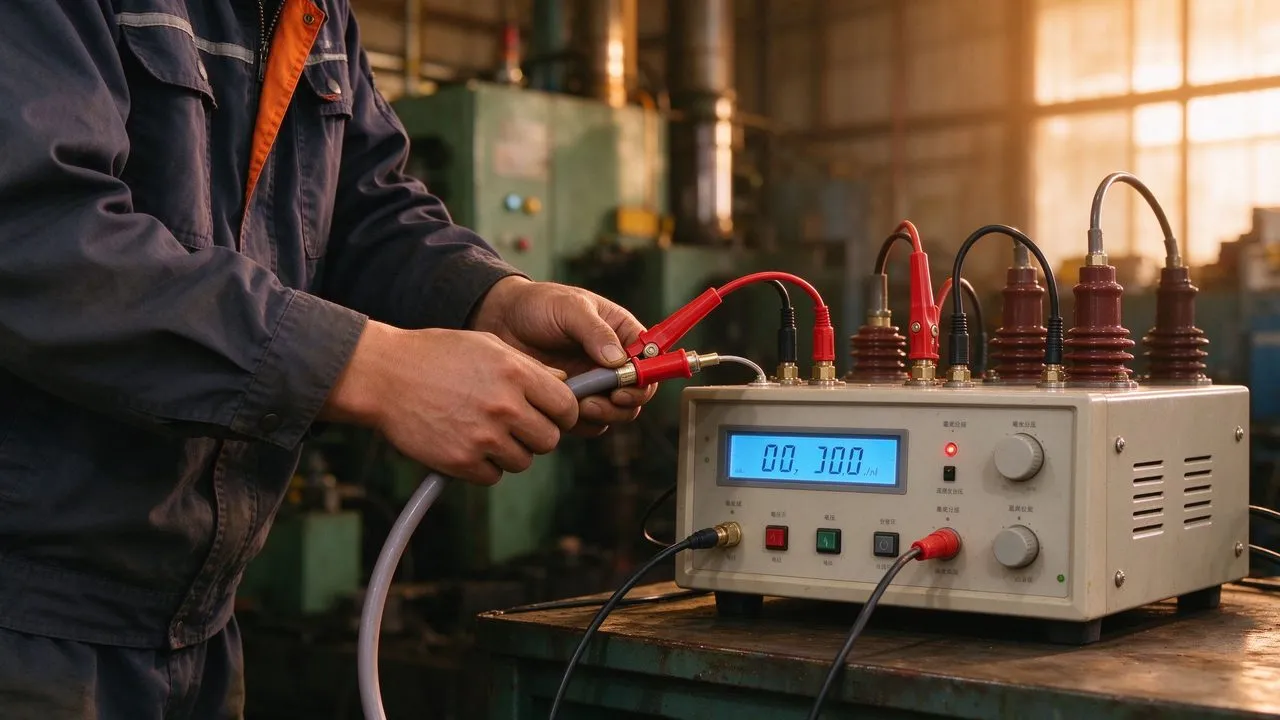
Performance claims for heating film are only meaningful when they trace back to a repeatable factory process. SunAura Thermal has manufactured electric heating elements at our Qingdao Huangdao facility since 2008 — more than 17 years of production experience — and operates under ISO 9001 (quality), ISO 14001 (environmental) and ISO 45001 (occupational health and safety) management systems. Our far-infrared heating film for underfloor ranges are CE-marked under the Low Voltage Directive (LVD) and Electromagnetic Compatibility (EMC) Directive, and comply with RoHS restrictions on hazardous substances, per SunAura factory records.
Every roll that leaves the line undergoes 100% continuity testing, insulation-resistance testing at elevated voltage, uniform heat-distribution checks under thermal imaging, and ageing cycles that simulate years of thermal cycling. This QC regime is described in detail in our article on heating element factory testing and quality control. Today our elements are exported to more than 50 countries across Europe, North America, the Middle East and East Asia, which means our films are specified to meet regional installation norms from the EU Ecodesign framework to North American residential voltage requirements. Buyers asking for a graphene heating film factory price typically receive samples, test reports and circuit-layout support before volume orders.
Independent bodies reinforce what factory testing can only show internally. The International Energy Agency buildings energy page documents how electrically efficient, zoned heating reduces final energy use in residential buildings, while the EU Energy Performance of Buildings Directive (EPBD) requires member states to ensure new and renovated buildings meet strict minimum energy performance levels — the regulatory tailwind behind low-mass, controllable electric heating film.
Frequently Asked Questions
Is graphene heating film safe to install under laminate flooring?Yes. Quality film is IP67-rated, grounded and fitted with a floor-sensor thermostat that caps surface temperature at 27 °C for wood-based coverings, well below the 28 °C limit laminate manufacturers typically specify. As long as the film is not cut across the bus bars and no nails or screws penetrate the heated area, the system is safe for residential use.
Does graphene heating film really save energy compared with cable-based underfloor heating?Typically 20–30% in real installations, because the film’s low thermal mass heats on demand rather than maintaining a heavy screed overnight. Pairing it with a programmable thermostat and proper XPS insulation below the film is what closes the gap; uninsulated film loses much of its advantage to the concrete subfloor below.
Can graphene film be the main heating system, or only supplementary heating?It can be primary heating in well-insulated modern homes, where 150–220 W/m² film covering 80–90% of the free floor area offsets design heat loss of 60–80 W/m². In older, poorly insulated houses or cold climates with single-glazed windows, film is best used as a high-comfort supplementary layer alongside a primary heat source.
How long does graphene heating film last, and is it repairable?Quality film is rated for 100,000+ hours of continuous operation — roughly 30+ years at typical winter use — and carries 15–20 year warranties from reputable manufacturers. A damaged section can be isolated electrically; because the film is modular between bus bars, a single strip can often be replaced without lifting the entire floor finish.
What is the running cost of a graphene heating film system?For a typical 20 m² living room at 180 W/m² operating 6 hours a day in winter, consumption is roughly 21.6 kWh/day. At electricity prices of €0.25/kWh that is about €5.40/day during the coldest months; energy-monitoring thermostats typically cut runtime by a further 15–25% through scheduling and learning.
Conclusion: Why Graphene Is the Future
As global energy costs continue to rise and environmental regulations become increasingly stringent, the demand for efficient, clean heating technologies will only grow. Graphene heating film represents a paradigm shift in how we heat our indoor spaces, offering a combination of rapid response, energy efficiency, health benefits, and installation versatility that no other heating technology can match.
With over 17 years of experience in heating system manufacturing, SunAura Thermal has been at the forefront of graphene heating film development. Our products are exported to over 50 countries worldwide, serving residential, commercial, and industrial clients who demand the best in heating technology. As research continues to unlock new applications for graphene, we remain committed to pushing the boundaries of what is possible in underfloor heating.
Related Products & OEM Inquiries
Looking for graphene heating film as the next underfloor heating platform or a factory-direct OEM/ODM partner? Explore our graphene far-infrared heating film range, then request a quote for your project — we supply distributors, installers and brands in 50+ countries.