
A heating cable looks like one simple product until you open the box and find either one cold tail or two. That single detail changes the electromagnetic field, the layout, the starting point and the way the room is wired. Buyers who treat single and twin conductor cable as interchangeable end up with a return path they did not plan, or pay extra for a feature they never use. This guide compares the two constructions on the points that matter, using the builds and figures from the SunAura heating cable product page, and states plainly which one to specify for each room.
What single and twin conductor actually mean
The names describe the internal conductors, not the number of cold tails, though the two are linked. A single-conductor cable has one resistive heating element. Current enters at one end and must leave at the other, so both ends terminate at the power supply and the cable carries two cold tails. A twin-conductor cable, also called double conductor, contains two conductors running side by side inside the same jacket. One carries the current out and the other returns it, joined at the far end, so the circuit starts and finishes at the same point and needs only one cold-tail connection.
The SunAura range is built around the double-conductor design: the product page lists a double conductor with a single cold tail, an alloy-resistance core selectable from 10 to 30 W/m, and a double-insulated, shielded construction rated IPX8. A fixed-resistance version is standard, with a PTC self-regulating option. Understanding that the catalogue’s main cable is a twin-conductor, single-cold-tail build matters when you compare it against an older single-conductor loop, because the two do not install the same way even though they produce the same heat.
Electromagnetic field: the difference buyers ask about
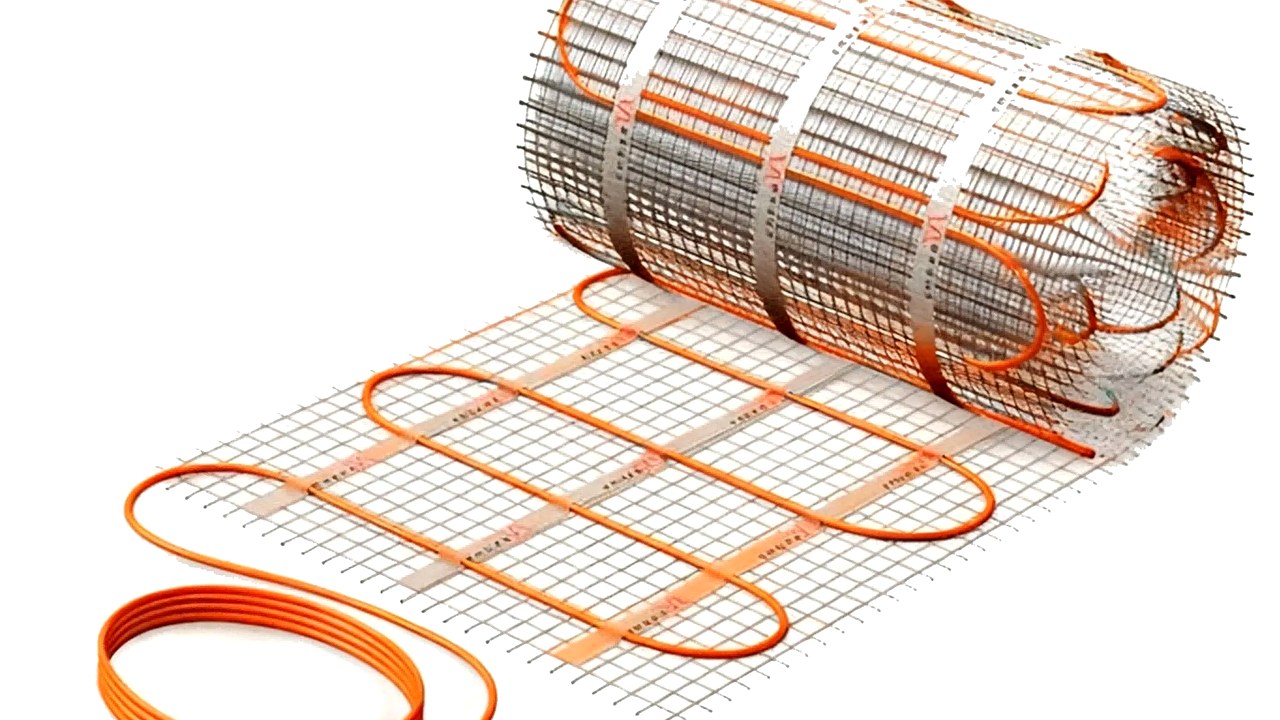
Every current-carrying conductor produces a magnetic field, and the field strength falls with distance. The difference between the two designs is how those fields add or cancel. In a single-conductor cable, the outward and return currents travel in two separate cold tails that sit apart, so their opposing fields do not perfectly overlap and a measurable net field remains around the element. In a twin-conductor cable, the two conductors lie close together inside one jacket and carry equal current in opposite directions, so their magnetic fields cancel each other almost completely along the run.
Add the full-length metallic shield that the SunAura build carries and the field at floor level is reduced further, which is why the product describes a shielded construction. The practical result is that twin-conductor cable is the preferred choice in bedrooms and living areas where people spend long hours close to the floor, and where a project sets a low-field requirement. A single-conductor loop is not unsafe when installed to code with the correct spacing and shielding, but it does not cancel its field as neatly and it leaves more to the installer’s layout.
The shield only works as intended when it is properly earthed at the supply, so the termination has to bond the metallic layer to the protective earth rather than leave it floating. A field measurement is taken with a low-frequency gauss meter held at the floor surface and at the standing height, with the loop running at full output. The reading on a correctly earthed twin build is lower than on a single run because the cancellation and the shield act together. If a project sets a written field limit, take the measurement on site and record it rather than relying on a catalogue figure, since the installed value also depends on the depth of the screed and the distance from the cold-tail box.
Keep the claim in proportion. Low-field design is about minimising exposure to low-frequency fields, not about a medical benefit, and no health claim should be attached. The honest engineering statement is the one on the build: twin conductors cancel, a shield contains, and the measured field at the surface is lower. That is a verifiable fact rather than a promise about health outcomes.
Cold tails and the starting point: the layout difference
This is where the choice has its biggest effect on labour. A single-conductor cable is a straight electrical path, so after the loop reaches the far wall the second cold tail has to come back to the thermostat. The installer plans a route that returns the tail without crossing the heating element, often in a conduit, and the room layout has to accommodate that return. The starting point and the ending point are physically different places that both need to reach the same box.
A twin-conductor cable removes that problem. Because the return conductor is built in, the cable begins and ends at the same cold-tail position. The installer runs the loop out across the floor and brings only the one connection back to the thermostat. There is no return path to plan, no second tail to route, and the layout can turn and fill irregular shapes without worrying how the far end gets home. The product page makes the point directly: the double-conductor cable needs only one cold-tail connection.
Circuit length, resistance and why a breaker sees a loop differently
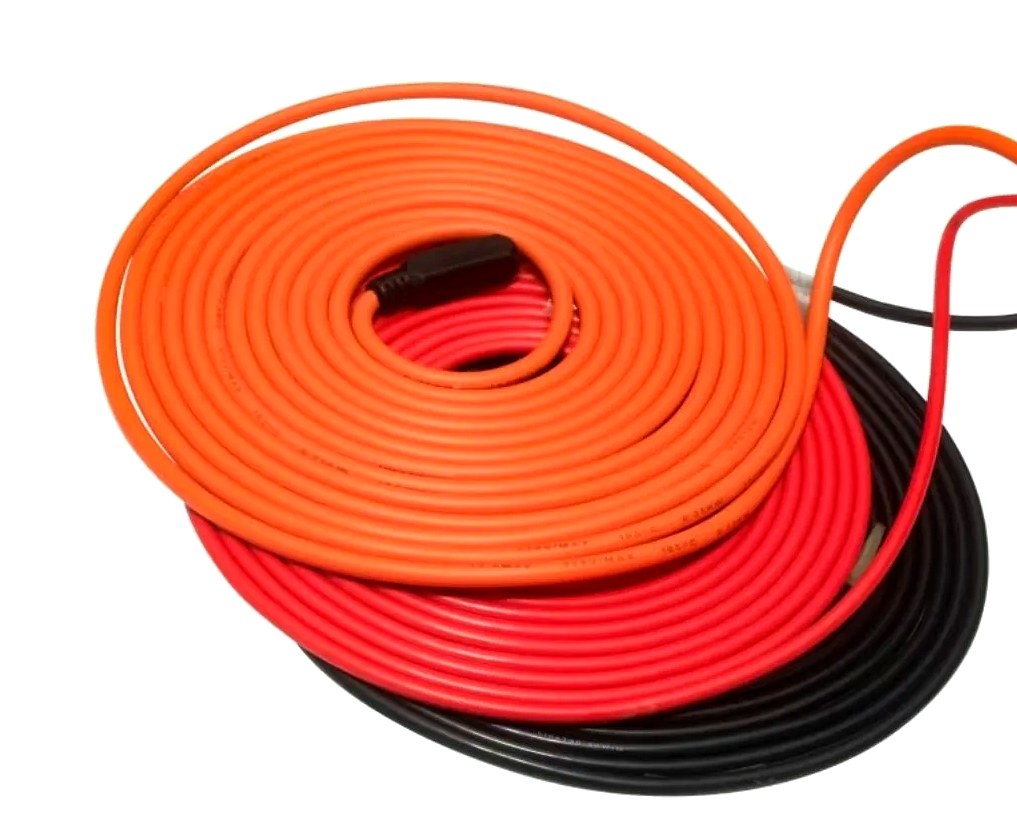
A heating cable is sold by length because the total resistance is the sum of the resistive metres in the loop. A fixed-resistance element is a series circuit: cut it shorter and the resistance falls, the current rises, and the watts per metre climb above design. That is why a fixed cable cannot be shortened in the field, and why the correct length is selected against the heated area rather than trimmed to fit. The twin-conductor build keeps the same rule, but hides the return inside the jacket so the installer handles one physical piece instead of two tails.
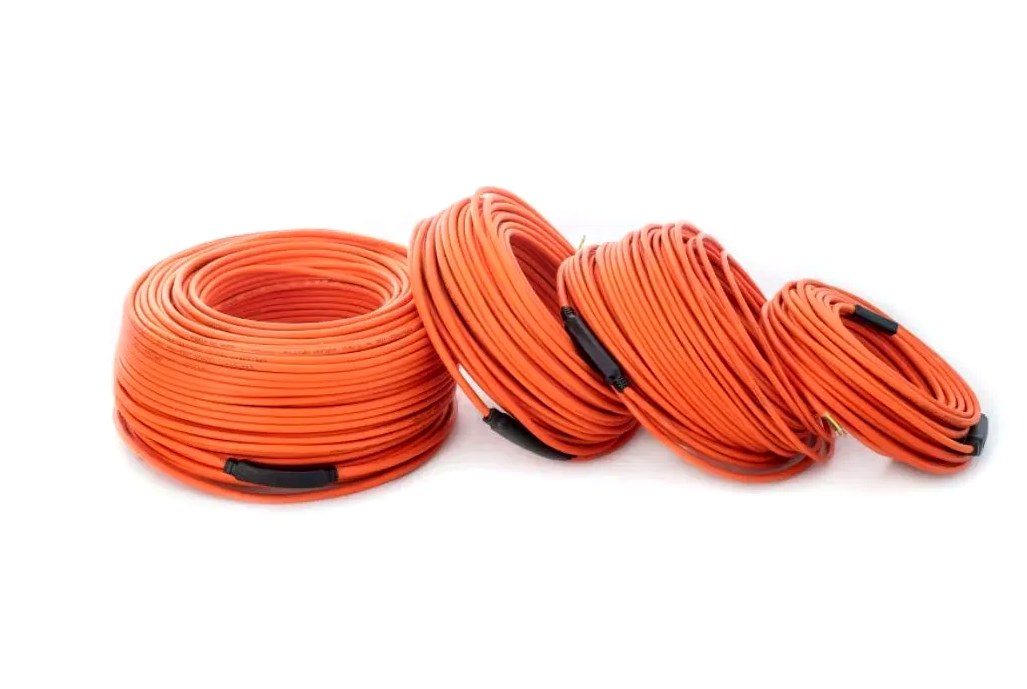
The maximum length of a single circuit is set by two limits: the resistance of the run and the capacity of the breaker and thermostat. A loop that is too long pulls too many steady amps for the protective device or for a direct-switching thermostat, so a large floor is split into several circuits, each with its own cold tail and each sized to the breaker. On a twin build this means several one-cold-tail loops meeting at the control box. On a single build it means several pairs of tails, with every return routed back, which is the practical reason the single design gets harder to manage as the number of circuits grows.
When you size the breaker, use the steady current of the full loop and add the margin the local code requires, then put the circuit on an RCD or GFCI as the product’s wet and outdoor duty demands. The breaker does not care how the conductors are arranged inside the jacket; it sees the total loop current. The conductor choice changes how that current is physically returned and how much field it produces, not the basic over-current calculation. Getting the circuit count and length right up front prevents a floor that cannot be controlled by the thermostats that were ordered.
Side-by-side comparison
The table below sets the two constructions against the points that change a project. The SunAura catalogue build is the twin-conductor column; the single-conductor column describes the conventional design used on older and some large-area loops.
| Point | Single conductor | Twin conductor (SunAura build) |
|---|---|---|
| Heating element | One resistive conductor | Two conductors, one heating and one return |
| Cold tails | Two, both ends return to the supply | One, single cold-tail connection |
| Start and end | Different points, return path needed | Same point, no return to route |
| EMF | Net field remains, fields cancel weakly | Opposing fields cancel, plus full-length shield |
| Output | 10–30 W/m class, fixed resistance | 10–30 W/m selectable, PTC option |
| Voltage | 110 V / 220–240 V builds | 110 V / 220–230 V (220–240 build) |
| Protection | Insulated, shielded to spec | IPX8, double-insulated, shielded |
| Layout | Best on large, regular runs | Flexible, suits irregular and smaller rooms |
| Install labour | More planning for the return | Quicker, one connection point |
| Service life | 15–25 years when correctly fitted | 15–25 years, maintenance-free |
Read the table as a trade, not a verdict that one is always better. The twin build wins on field cancellation and installation ease, which is why it is the catalogue standard. The single build still has a place on long, straight, regular runs where the return is easy to plan and the lower per-metre cost of a simpler element counts across a large area.
Scene-by-scene: which to specify
Bedrooms and living rooms. Specify the twin-conductor shielded cable. Long occupancy close to the floor puts the field-cancellation advantage to work, and the single cold tail makes the layout easy around furniture and built-in units.
Bathrooms and wet rooms. The IPX8 twin build on an RCD-protected circuit is the correct choice. The double insulation and shield matter in a wet environment, and the one-cold-tail design simplifies routing in a small room crowded with fixtures.
Large, regular floors and warehouses. A long straight run across a regular slab is the one place a single-conductor loop remains competitive, because the return path is easy to plan and the simpler element can cost less over many metres. Have the return route and conduit agreed before the cable is ordered.
Irregular rooms and renovations. The twin build is the practical answer. Where the floor turns around sanitary ware, columns and doorways, a cable that starts and ends at the same point fills the shape without a return path being threaded back through the obstacles.
Pipe freeze and outdoor snow duty. The same twin-conductor IPX8 element is used for pipe antifreeze and roof or driveway snow melting, switched by a frost or snow sensor. The shield and waterproof rating carry the outdoor duty; the single cold tail keeps the junction box simple above grade.
Spacing, bend radius and the cold-lead joint
Whichever conductor type is chosen, the on-site controls that protect the output are the same. The cable is fixed at a spacing that delivers the target watts per square metre, using clips or strapping; the heating element quality control guide covers how tight a turn the element will accept without damaging the core. A bend pulled inside its minimum radius can crack a conductor and create the kind of local fault that looks like a weak spot later.
The cold-lead joint is the hand-made point in the system. On the twin build it is the only connection, so it must be clean, sealed and rated for the environment; the load capacity and contactor guide sets out the detail. A joint that creeps up in resistance over thermal cycles is the most common real cause of a section running cool, which is why it is tested rather than assumed.
Before the screed or tile goes down, run the insulation test and record the conductor resistance. The underfloor heating lifespan guide works through the readings; a high insulation value confirms a dry, intact element and gives the baseline used for every later comparison. Do not close a floor without these numbers, especially on a single-conductor loop where two cold tails and a longer run give more points to check.
Installation time and cost: where the money actually moves
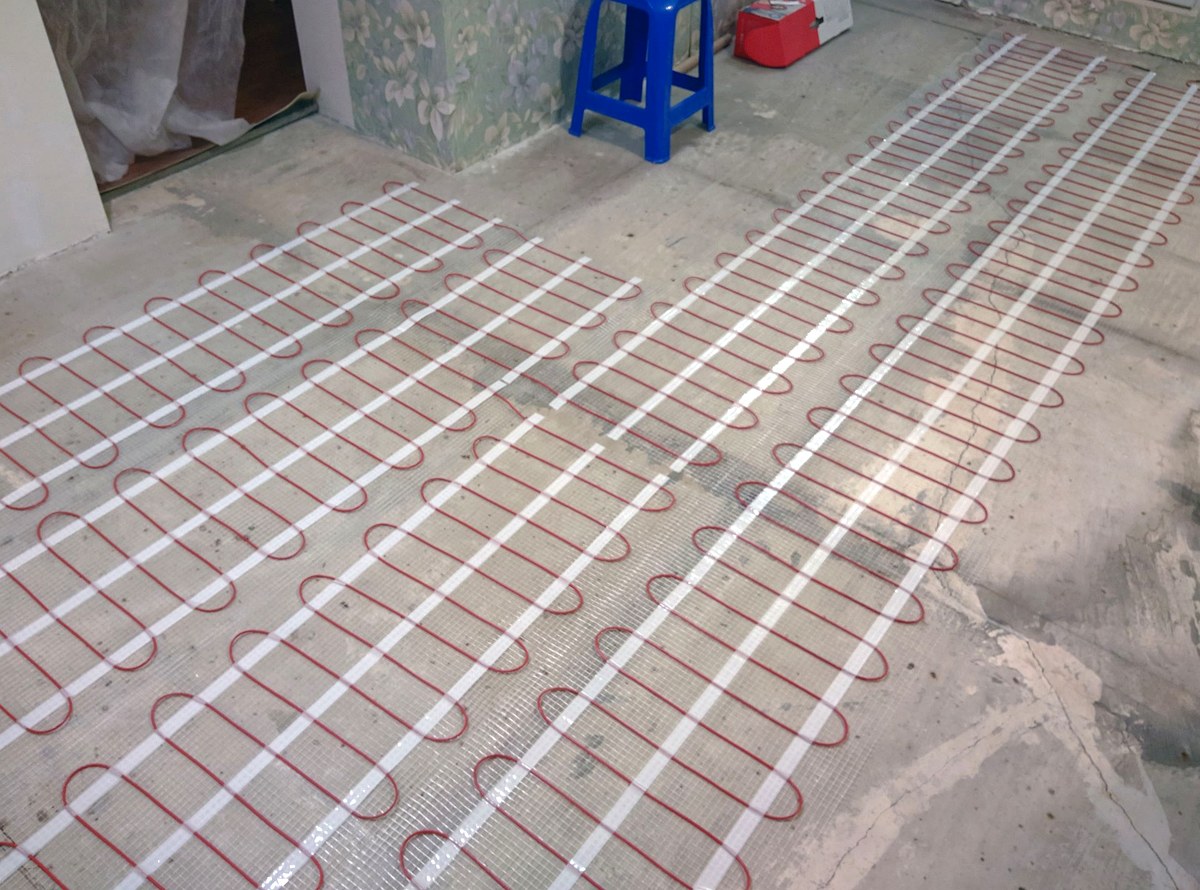
The element itself is only part of the installed cost. The conductor choice changes labour more than materials, and buyers who compare only the per-metre price miss that. On a twin-conductor run, the installer fixes the cable, brings the one cold tail to the box and terminates it. There is no return conduit, no second tail to dress and no need to work out how the far end reaches the supply. On a single-conductor run, every circuit adds a return path: the tail is protected in conduit, dressed back across or around the floor, and terminated at the same box as the first tail. Across many circuits that extra routing is real hours, not a minor detail.
There is a counterweight. The single-conductor element is a simpler build and can carry a lower per-metre price, so on a big, regular slab where the return runs straight and short, the material saving can outweigh the extra labour. The break-even point depends on room shape and circuit count, which is why the honest answer is not “twin always wins” but “twin wins as the floor gets smaller, wetter or more irregular, and single stays viable on long regular runs”. Ask the supplier to price both the element and the connection work rather than the cable alone, so the comparison reflects installed cost.
Count the junction and termination points too. A single-conductor project with several circuits presents twice as many cold-tail terminations at the box, each a potential future contact fault, while the twin build presents one per circuit. Fewer hand-made joints mean fewer long-term failure points and fewer tests at commissioning. That reliability-of-installation argument is often worth more than the small difference in the price of the wire.
Fault finding on a closed floor
When a cable develops a cool section after the floor is finished, the conductor type shapes how the fault is traced. On either build the first move is a resistance reading at the cold-tail terminals compared with the commissioning baseline. A reading that has climbed points to a high-resistance joint or a damaged core; a reading that has fallen suggests a short, usually tripping the RCD first. A thermal image across the warm floor then maps the affected band, and on a twin build the single connection point is the first joint to inspect because every circuit’s hand-made work sits there.
On a single-conductor loop there are two tails and a return path, so the fault can sit at either end or along the return conduit, which gives more points to isolate. The built-in return of the twin build removes that class of return-path fault entirely, which is part of its appeal for installers who service systems years later. In both cases the value of the original commissioning records is the same: without the baseline resistance and insulation figures, a fault is found by guessing, and with them it is found by comparing two numbers.
Pre-inquiry parameter checklist
- Heated area in square metres and the room shape, including fixed fixtures.
- Target power density and the cable output in W/m, from the 10–30 W/m range.
- Supply voltage: 110–120 V or 220–240 V.
- Whether a low-field, shielded build is required.
- For a single-conductor loop, the planned return route and conduit for the second cold tail.
- The protection level needed, including IPX8 for wet or outdoor duty.
- Thermostat and sensor type, and the RCD protection on the circuit.
- Whether a fixed-resistance or PTC self-regulating element fits the room.
Common selection mistakes
Ordering single conductor for a small irregular room. The return path becomes a puzzle around fixtures and the labour saving on the element is lost in extra wiring. Small, awkward rooms take the twin build.
Assuming two cold tails means a faulty cable. On a single-conductor element two tails are correct. Rejecting it as a defect just shows the construction was not understood at order time.
Ignoring the shield on living-area installs. Where a low-field result matters, the shield plus twin cancellation is the feature that delivers it, not an optional extra.
Pulling bends too tight. A cracked core from a tight turn fails later as a cool patch. Respect the minimum bend radius even when the layout pushes for a sharp corner.
Skipping the pre-cover test on a twin build. One cold tail does not make the joint immune. Test and record the single connection like any other.
Mixing the two types on one circuit. Single and twin builds have different tail arrangements and termination needs. Keep each circuit to one construction and one clear wiring plan, rather than splicing types together and creating a return path nobody can follow at the next service.
Data and evidence
The comparison rests on standard electrical physics and the way embedded heating is regulated. The magnetic-field cancellation of opposing close conductors follows basic electromagnetic principles, and low-frequency field exposure is covered by the limits published by public health and standards bodies, which set distance-based guidance rather than health claims. Embedded radiant heating in Europe is designed and tested under the EN 1264 series, while national electrical codes and the IEC 60898 range govern the breakers, RCDs and waterproof ratings that protect the circuits. Polymer-jacketed cable technical literature from established manufacturers documents IPX8 immersion testing, double-insulation construction and thermal-cycle resistance over long service lives. The factory evidence is limited to what SunAura can show: manufacturing since 2008, ISO 9001/14001/45001 management, CE/RoHS/LVD/EMC documentation, a Qingdao Huangdao plant with six automated lines and an in-house laboratory, and exports to more than 50 countries. No certificate numbers, field figures or client names are invented, and no hazardous-area or medical claim is attached.
Conclusion: what to choose
For most rooms the answer is the twin-conductor, single-cold-tail, shielded cable that the product page is built around. Its opposing conductors cancel the field, the full-length shield reduces it further, and the one connection point makes the layout quicker and more forgiving in wet, small or irregular rooms. The single-conductor design keeps a narrower role: long, regular, large-area runs where the second cold tail is easy to route and the simpler element saves money across many metres. Get the construction matched to the room, respect the bend radius and cold-lead joint, and run the insulation test before the floor closes. The full range of outputs and the applications they suit are collected on the heating cable applications hub, where each duty can be matched to the correct build before you place the order.