
01Standard indoor mat
The 160 W/m² self-adhesive mat at 3.6 mm is the default for tile rooms, going directly into tile adhesive with minimal floor build-up and no spacing calculation on site.
How self-adhesive heating mats are selected — fixed wattage, thin profile, voltage variants and the builds for bathroom, aluminum and outdoor use.
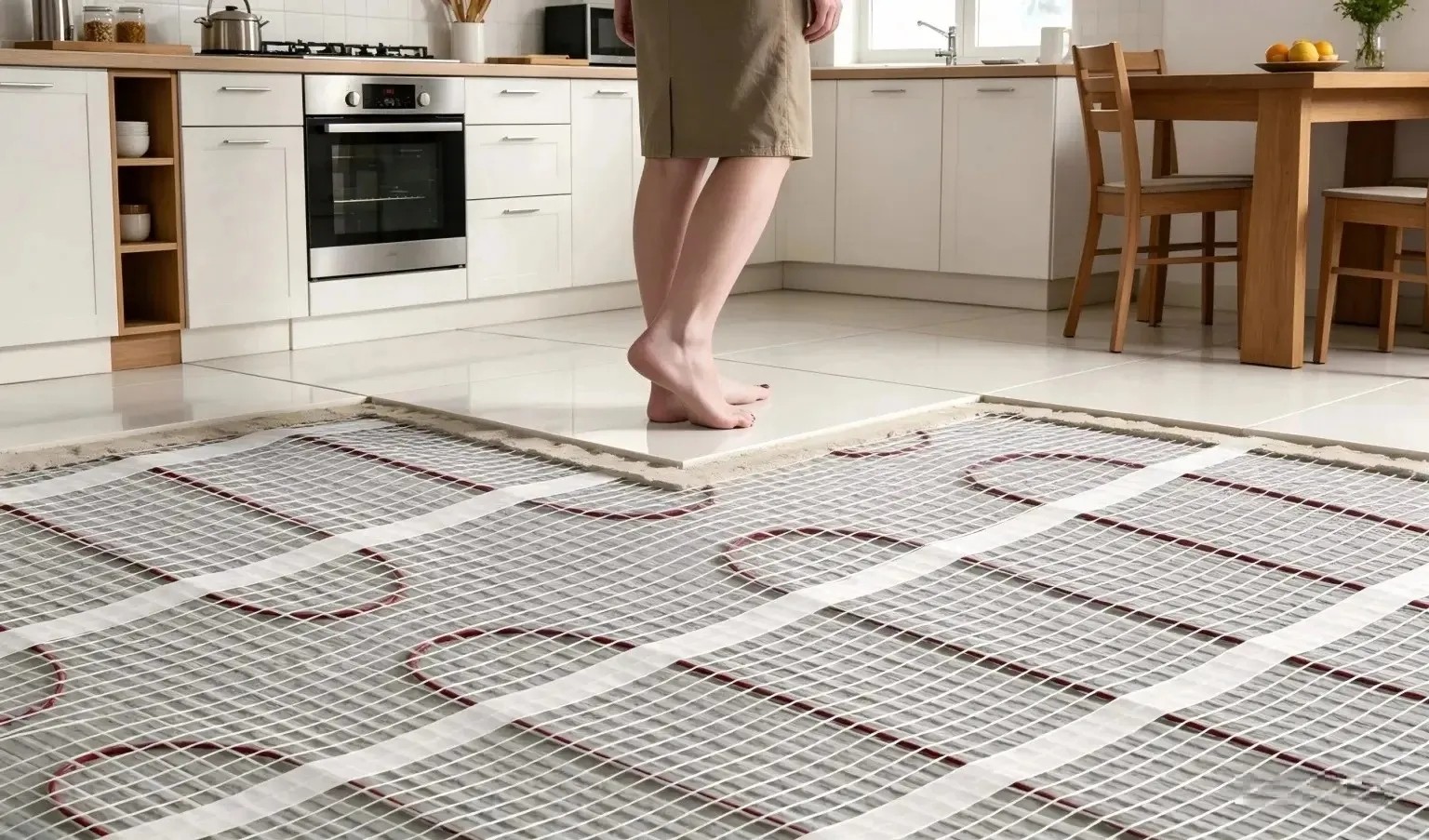
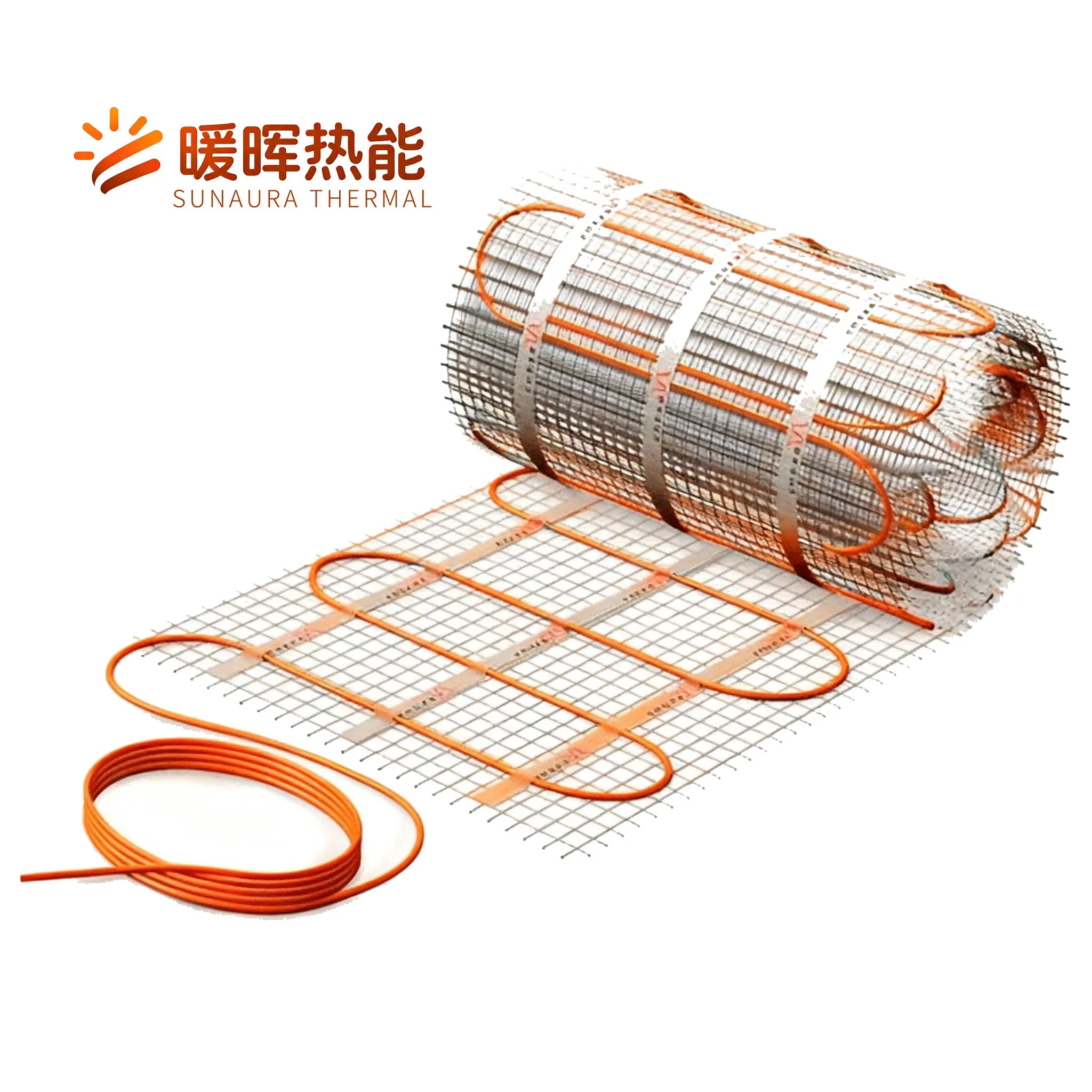
A heating mat is a pre-spaced cable fixed to a self-adhesive mesh, so it lays flat without on-site spacing work. The guaranteed output is 160 W/m² — 150 under carpet and wood, 200 in wet or outdoor areas — at just 3.6 mm thick and a standard 0.5 m width. Builds cover 100 V (Japan), 110–120 V (North America) and 220–240 V (Europe, Asia, Middle East), and are double-insulated, fully shielded and EMF-free with a 25-year warranty. Variants include bathroom IPX7, aluminum-film, hotel kits, seedling mats and step snow-melting mats. The factory has run since 2008 across six lines at 500,000 m² per month.
Mat Sizing
Heated area, layout and cut rules for a self-adhesive roll.
Read the guide →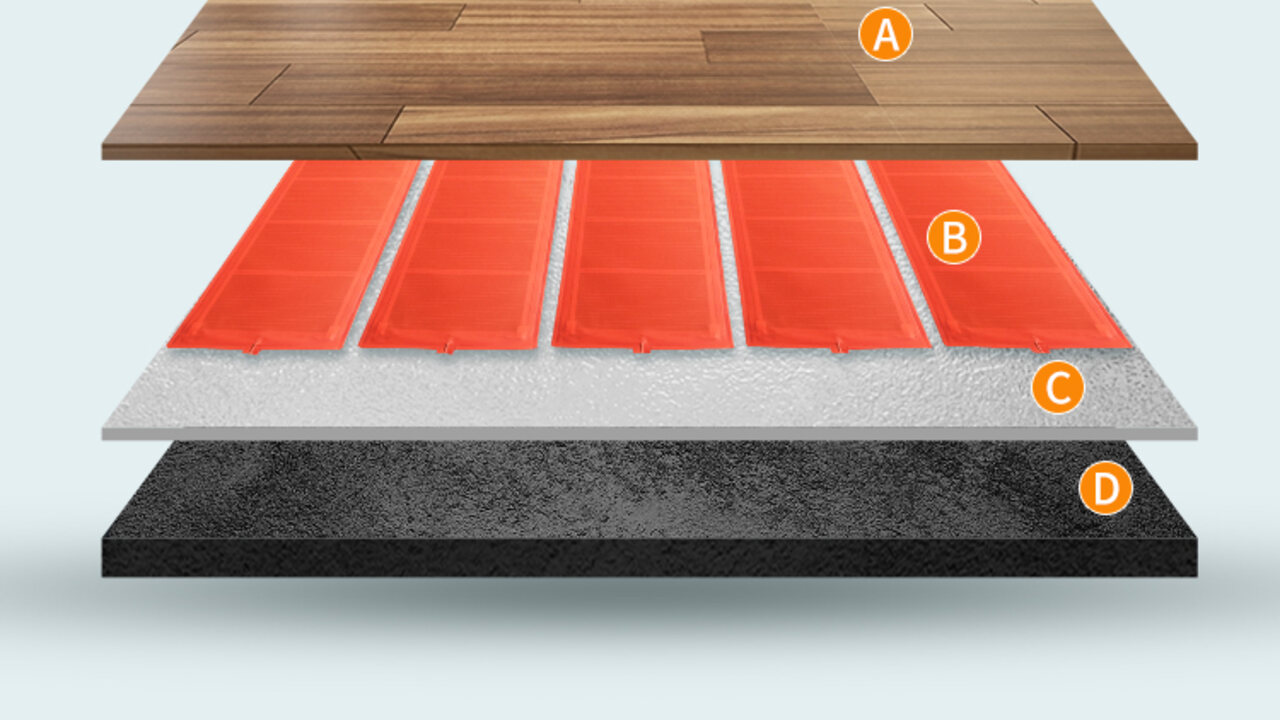
Tile Adhesive vs Self-Levelling
Build-up, cost and failure modes.
Read the guide →
IP Ratings Explained
What IP67 versus IP65 actually protects.
Read the guide →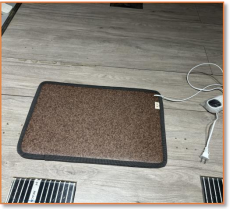
Wattage Tolerance
Batch consistency across a production run.
Read the guide →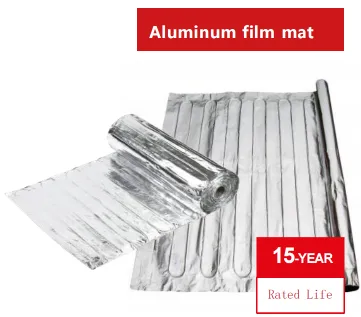
RCD Protection
10 mA versus 30 mA and what each protects.
Read the guide →
What Is a Heating Mat
Definitions, types and how to choose.
Read the guide →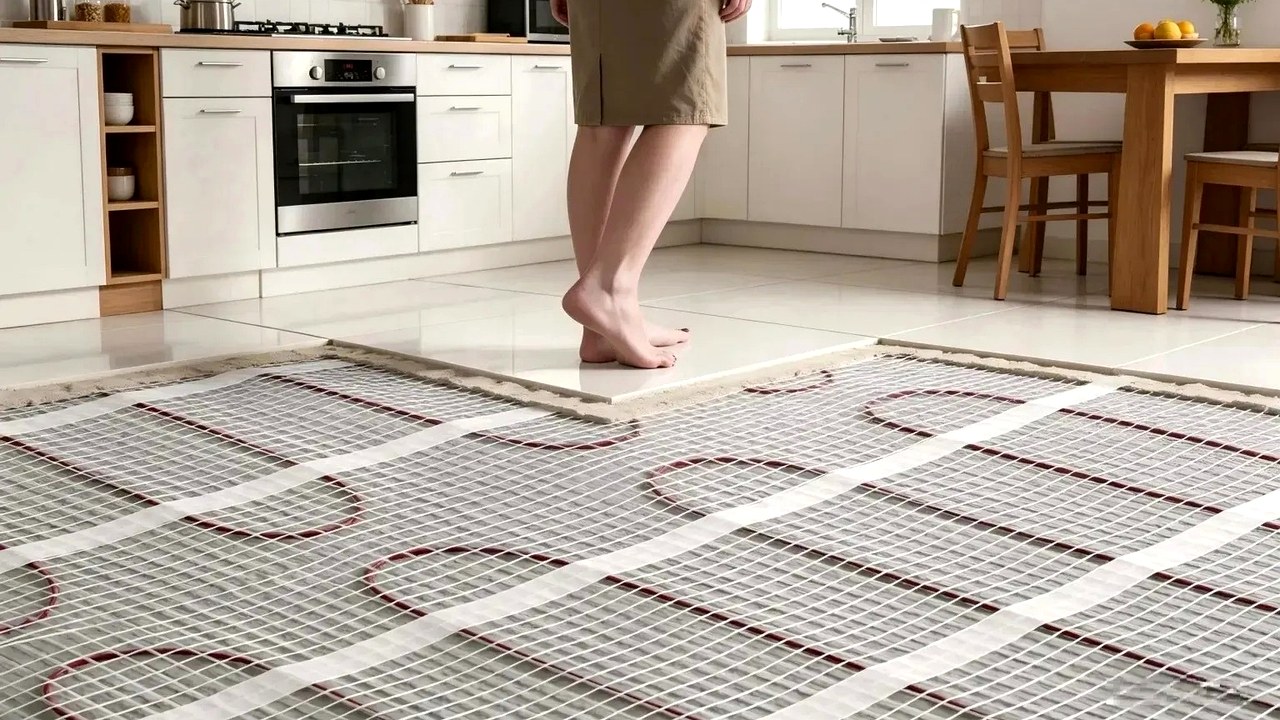
Mat vs Loose Cable
Install time, cost and odd-shaped rooms.
Read the guide →
Heating Mat Kit Size: How to Select Mat Area and Wattage for Your Room
Choosing a mat kit by heated area, room shape, output density and circuit capacity.
Read the guide →The 160 W/m² self-adhesive mat at 3.6 mm is the default for tile rooms, going directly into tile adhesive with minimal floor build-up and no spacing calculation on site.
Bathroom mats use an IPX7, FEP 200 °C build at 200 W/m², while the 0.5 mm aluminum-film variant runs 90–220 W/m² for very low-profile floors.
Hotel room kits, seedling mats and step snow-melting mats share the same shielded construction, with the outdoor builds rated for moisture and temperature cycling.
| Parameter | Standard range | What it means on site |
|---|---|---|
| Guaranteed output | 160 W/m² | 150 carpet/wood, 200 wet/outdoor |
| Thickness | 3.6 mm | Fits in tile adhesive |
| Width | 0.5 m standard | Custom widths available |
| Voltage | 100 / 110–120 / 220–240 V | Region-specific build |
| Safety | Double-insulated, shielded, EMF-free | RCD protected |
| Bathroom | IPX7, FEP 200 °C | Wet-area build |
| Warranty | 25 years | Longest in the range |
| Certification | CE, RoHS, ISO 9001 | 50+ export countries |
Measure heated area. Size to the area actually covered, excluding fixed units, and pick the closest standard mat length.
Pick the output. 160 W/m² standard, 150 under wood/carpet, 200 in wet or outdoor areas.
Confirm voltage. Select 100, 110–120 or 220–240 V build for the region.
Choose the variant. Standard, IPX7 bathroom, aluminum-film or a special kit according to the floor.
Lay and test. Roll onto the adhesive, test continuity before and after tiling, and connect through an RCD.
A mat is pre-sized and cannot be shortened like loose cable, so an irregular room with many cuts is better served by heating cable. The mesh is also the wrong choice where the floor cannot accept even 3.6 mm of build-up, in which case the aluminum-film variant is used.
Send the room dimensions, floor finish and voltage. We return the mat length, layout and circuit load. For irregular layouts use loose heating cable; outdoor step and ramp mats are covered on the snow melting hub.