
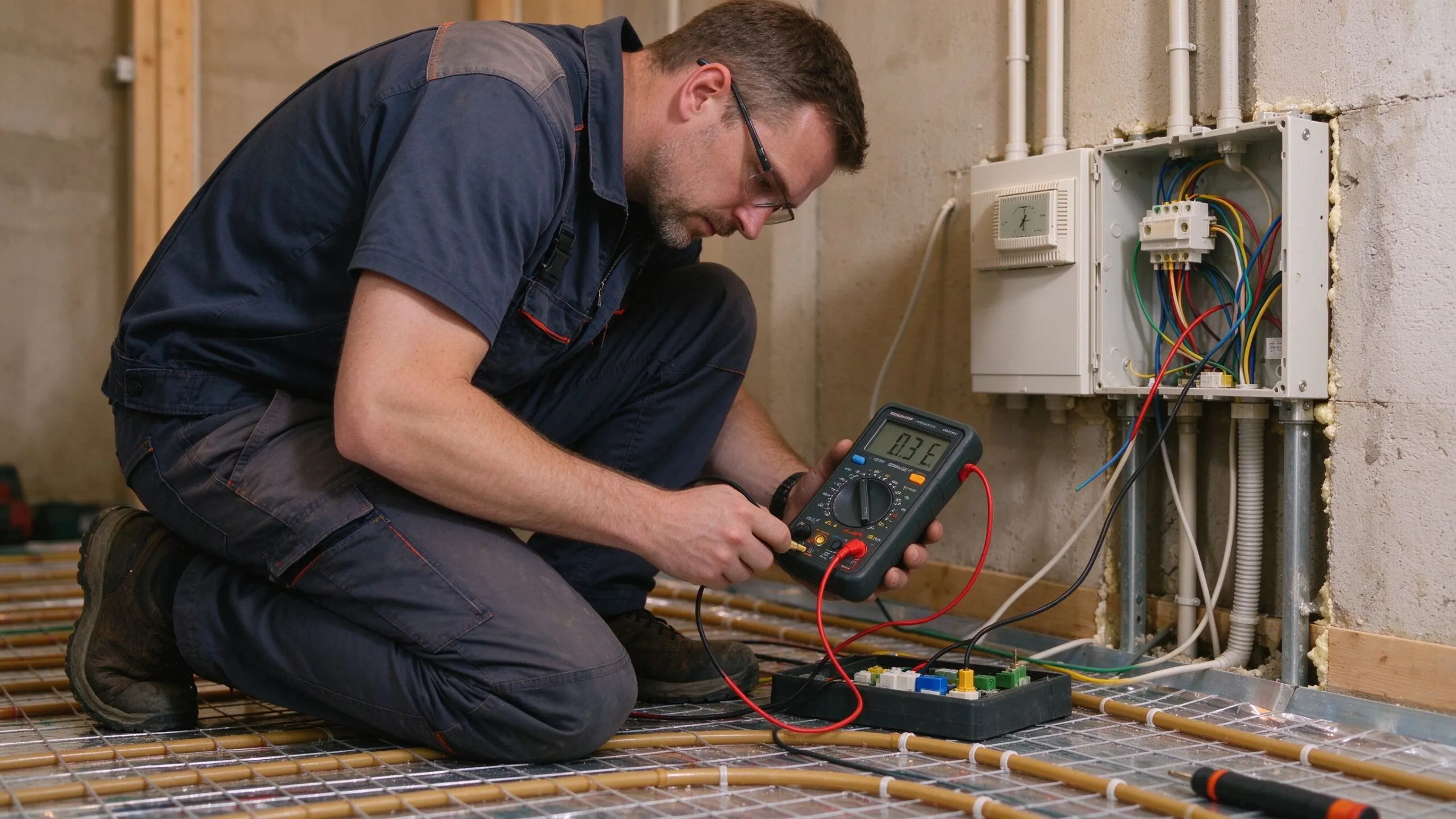
Commissioning is the critical final step in any underfloor heating installation. It is the process of testing, balancing, and verifying that the system performs according to design specifications before handing it over to the end user. Proper commissioning ensures optimal performance, energy efficiency, and longevity of the system. This guide covers the complete commissioning process for both electric and water-based underfloor heating systems.
Written by Ethan Sun, Founder & CEO, SunAura Thermal. SunAura has manufactured electric underfloor heating elements at its Qingdao Huangdao factory since 2008, holding ISO 9001, ISO 14001 and ISO 45001 certifications, with CE, RoHS, LVD and EMC approvals on product lines exported to more than 50 countries.
Pre-Commissioning Checks
Before beginning the commissioning process, verify that all components are correctly installed. For electric systems, check that all heating mats or films are properly connected, the cold leads are routed to the thermostat location, and the floor sensor is installed in conduit. For water-based systems, verify that all pipe circuits are correctly connected to the manifold, the pressure test has been completed, and the screed has fully cured (typically 28 days for cement-based screed). Ensure all electrical connections are made by a qualified electrician and the circuit is protected by an RCD.
Electrical Testing for Electric Systems
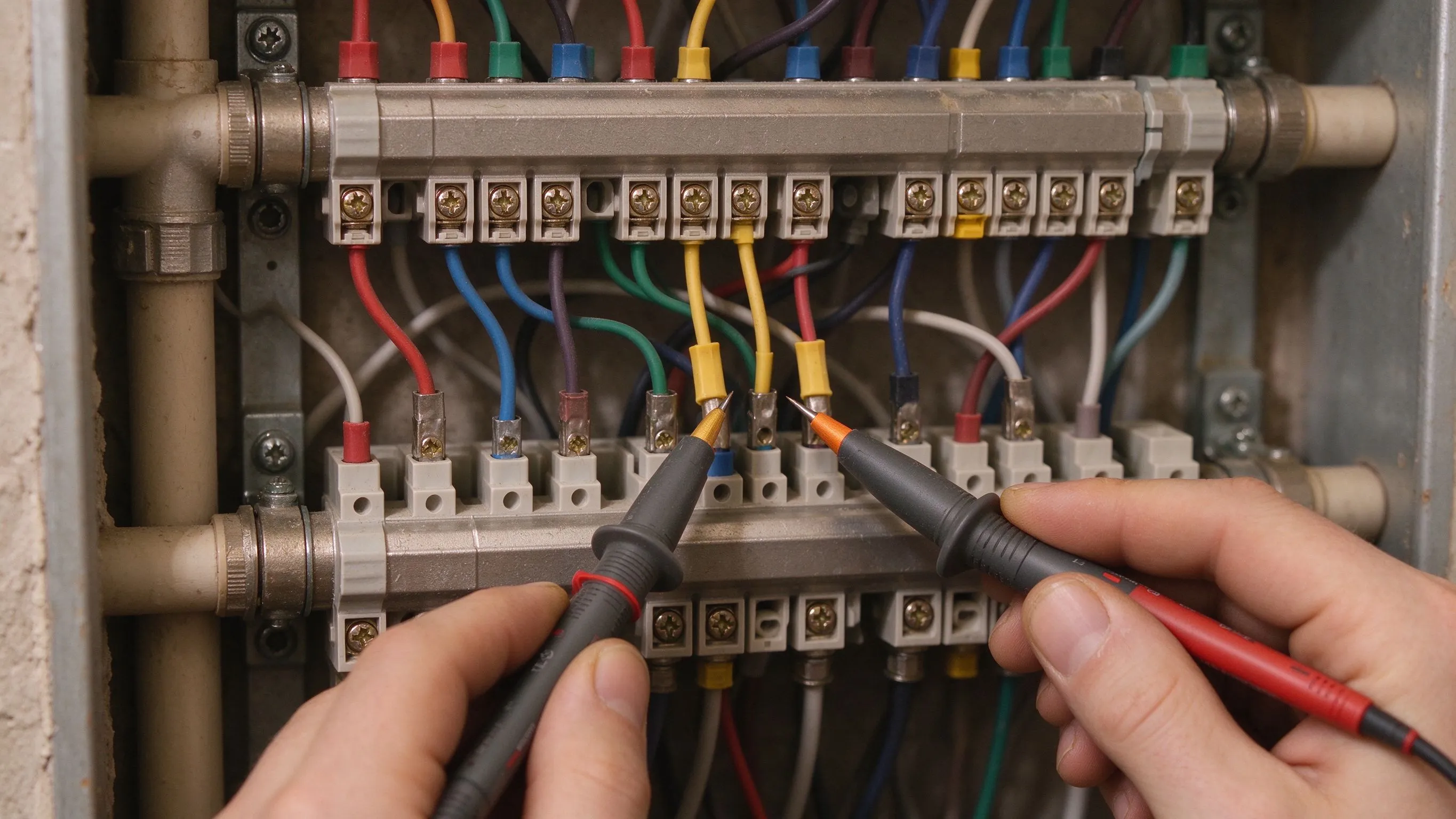
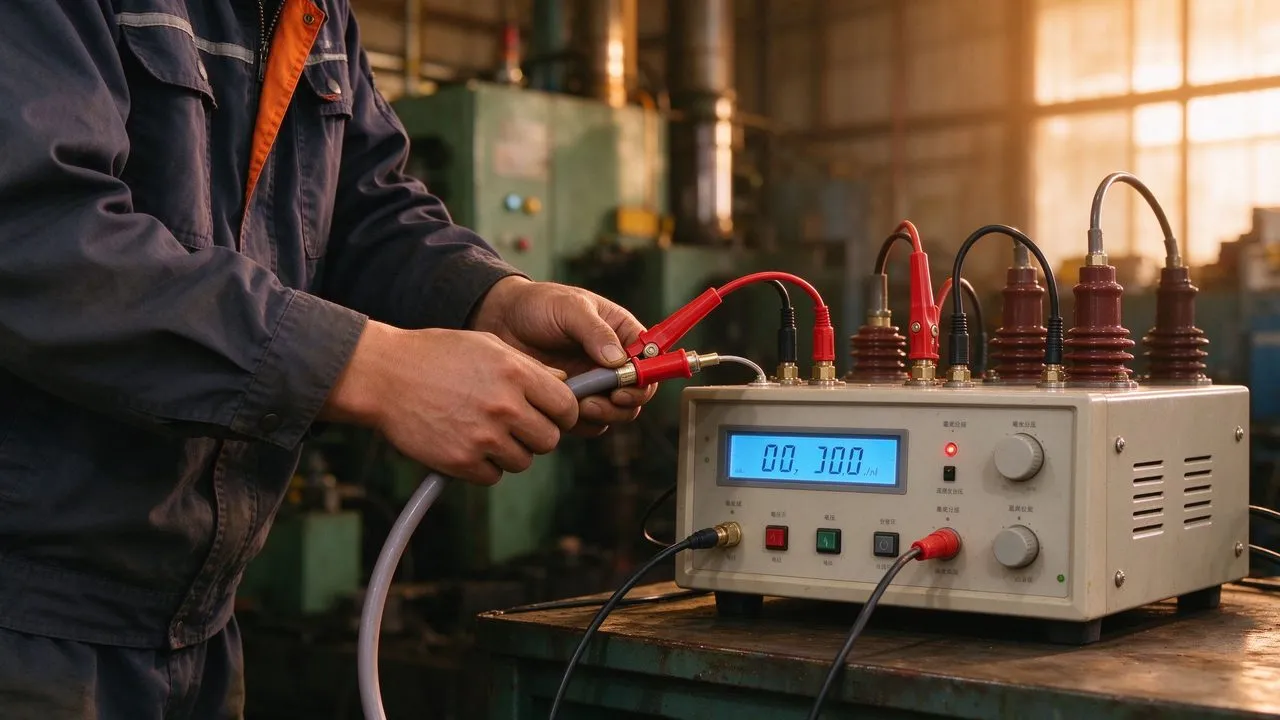
Electrical testing is the first step in commissioning an electric underfloor heating system. Measure and record the resistance of each heating circuit using a multimeter. Compare the measured values to the manufacturer specifications. Any deviation greater than 10% from the specified value indicates a potential problem that must be investigated. Next, measure the insulation resistance between each conductor and the earth screen, which should exceed 1 megohm. Record all measurements on the commissioning certificate for future reference.
Flow Balancing for Water-Based Systems
Flow balancing is essential for water-based underfloor heating systems to ensure even heat distribution across all circuits. Begin by setting all flow meters to their calculated flow rates, typically 2-5 liters per minute per circuit depending on circuit length and heat output. Start the circulation pump and allow the system to reach operating temperature. Check the supply and return temperatures on the manifold thermometers. The temperature difference (delta-T) should be 5-10 degrees Celsius. If the delta-T is too high, increase the flow rate. If too low, decrease the flow rate. Adjust each circuit individually until all circuits show similar delta-T values.
Thermal Performance Verification
After electrical testing or flow balancing, verify the thermal performance of the system. Set the thermostat to 25 degrees Celsius and allow the system to operate for at least 2 hours. Use an infrared thermometer to measure the floor surface temperature at multiple points across the heated area. The temperature should be uniform, with no more than 2 degrees variation between the warmest and coolest points. Any cold spots indicate a problem with the installation that should be investigated and rectified.
Thermostat Configuration
Configure the thermostat according to the floor covering type and user preferences. Set the floor temperature limit appropriate for the covering: 27 degrees for laminate and wood, 29 degrees for tile and stone. Set the initial comfort temperature to 21-22 degrees. Program a basic schedule with morning, daytime, evening, and overnight periods. For WiFi thermostats, connect to the home network, create a user account, and configure remote access. Test the smart features including geofencing, weather integration, and energy monitoring.
Gradual Warm-Up Protocol
For newly installed systems, especially those with fresh screed or mortar, a gradual warm-up protocol is essential to prevent thermal shock that could cause cracking. Start the system at 15-18 degrees Celsius and increase by 2 degrees per day until the target temperature is reached. For cement-based screeds, this process should take at least 7 days. For anhydrite screeds, allow 14 days. Once the target temperature is reached, maintain it for 24 hours before allowing the system to cycle normally.
Documentation and Handover
Complete the commissioning documentation, including: system layout drawings showing the location of all heating elements and sensors, electrical test results, flow balancing records (for water-based systems), thermostat configuration details, and operating instructions. Provide the end user with a comprehensive handover pack that includes warranty information, maintenance instructions, emergency shutdown procedures, and contact details for technical support. SunAura Thermal provides commissioning templates and technical support to ensure every installation meets the highest standards.
Testing Equipment Every Installer Should Carry
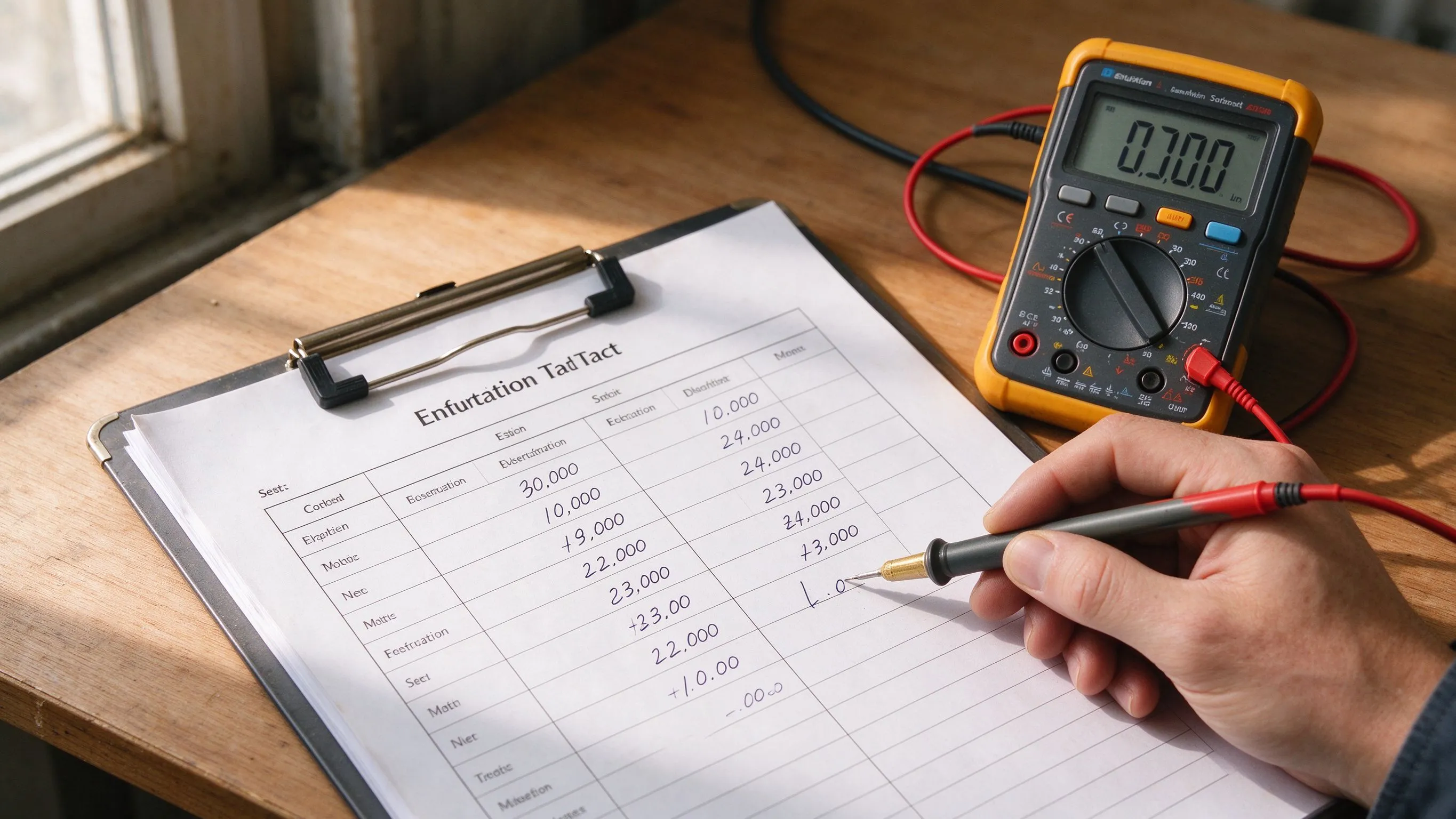
Consistent commissioning starts with the right tools. A digital multimeter capable of measuring resistance to 0.1 ohm and insulation resistance to at least 200 megohm is the minimum requirement for electric circuits. A non-contact infrared thermometer with a laser pointer is needed for the floor-surface temperature sweep; a contact probe with a thermocouple gives a more accurate reading on reflective tile. A manifold pressure gauge and a pump pressure tester are required for water-based loops, and a spirit level plus damp-proof membrane gauge help confirm the subfloor meets the manufacturer’s installation requirements.
Beyond hardware, installers should bring the manufacturer’s commissioning checklist, the circuit layout drawing, and a laminated copy of the floor-covering temperature limits. Many callbacks originate from a missing record rather than a failed component: when a homeowner reports cold spots two winters after installation, the commissioning sheet is the fastest way to diagnose whether the issue is a failed element, a drifting sensor or an overwritten schedule. Our underfloor heating installation kit ships with the connectors, sensors and labels installers need on site, and is priced for contractors ordering multiple projects. For larger programmes, we can pre-bundle kits per room type so installers carry exactly the right connectors on each trip.
Common Commissioning Pitfalls and How to Avoid Them
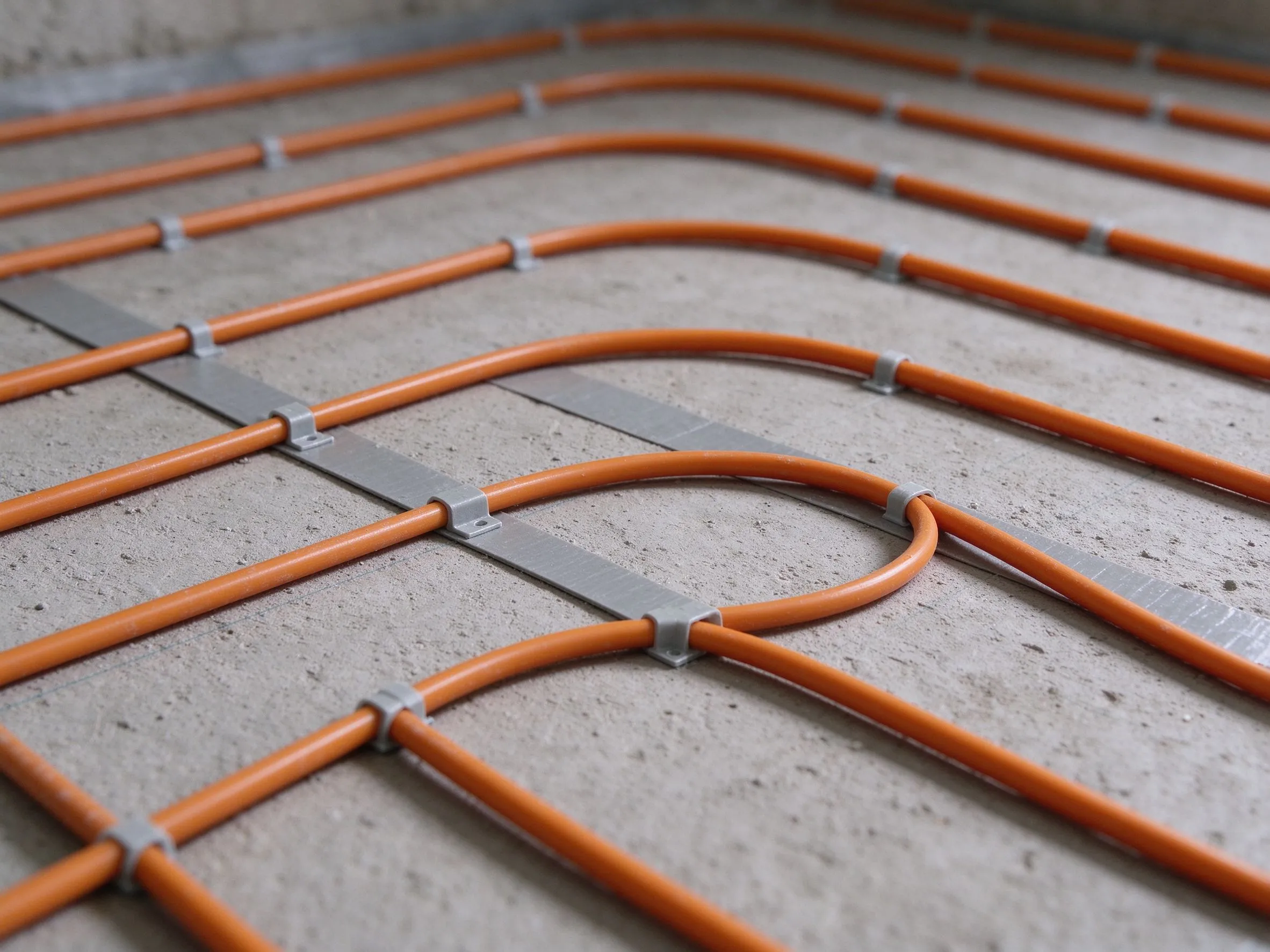
Even experienced installers run into predictable commissioning issues. The first is skipping the resistance re-test after tiling or screeding. Laying tile adhesive over a heating mat can damage the element if a trowel catches a conductor, and the only way to detect this before the floor covering is installed is to measure resistance again immediately after the wet trades. The second is over-balancing a water-based system to an artificial delta-T target. Real buildings rarely hold a 5-degree delta-T across every circuit, especially on sunny days; balance to even heat distribution rather than to a number on a gauge.
The third pitfall is firing up a newly screeded system too early. Running the heating before the screed has cured draws moisture out too quickly and causes surface cracking, a failure that is almost impossible to repair without lifting the floor. The fourth pitfall is wiring the floor sensor in parallel with the air sensor rather than as the primary control. Underfloor heating is floor-temperature limited by design, and using the air probe as the main input can overheat wood or laminate. A fifth pitfall is commissioning only the main living space and leaving the bathroom or dressing room on a default schedule, which almost always leads to either cold rooms or wasted energy. Walk the whole dwelling and confirm every zone reaches a measured comfort temperature before signing off. If a system has already been commissioned and is showing symptoms such as random cold rooms or repeated RCD trips, our article on electric underfloor heating troubleshooting walks through the diagnostic steps installers can take before a site visit.
Data and Evidence: Factory Testing Behind Every Element
Commissioning on site is the final gate in a much longer quality process. At SunAura Thermal, every heating mat, film and cable produced at the Qingdao Huangdao factory undergoes a 100% resistance and insulation test before packing. Per SunAura factory records, production-line rejection rates have held below 0.3% over the last three years, and each reel or mat ships with a test label quoting the measured cold resistance and insulation value. These figures are the baseline installers compare against during on-site commissioning: a circuit that reads within 10% of the label value is confirmed undamaged after installation.
Our products also carry CE, RoHS, LVD and EMC approvals, and the factory maintains ISO 9001, ISO 14001 and ISO 45001 management certifications. Independent guidance on commissioning best practice for low-temperature heating systems is published by ASHRAE, and the US Department of Energy Building Technologies Office maintains a public library of guidance on envelope and controls commissioning that installers can share with clients. For buyers sourcing mats or films for multiple projects, we offer volume discounts on electric underfloor heating systems and can supply the matching floor heating mats at factory-direct lead times.
Commissioning Documentation: What the Handover Pack Must Contain
A commissioning job is not finished when the floor reaches temperature. The handover pack is the document that protects the installer, the contractor and the homeowner for the life of the system. At minimum it should include a marked-up layout drawing showing the position of every heating element, cold lead junction and floor sensor; a table of measured cold resistances and insulation values for each circuit; the balancing record for water-based manifolds, including supply and return temperatures; the thermostat configuration, including the floor-sensor limit set for the actual covering; and a one-page operating guide covering how to set the schedule, how to switch to holiday mode, and how to identify an emergency shutdown.
Best practice is to hand over both a printed copy and a digital copy by email or through the project portal. Digital copies survive flooded building cupboards and handover boxes, and they make warranty claims much faster to process. SunAura supplies editable commissioning templates to its distributor network specifically to remove this paperwork gap, and our technical support team can review a draft pack before the homeowner signs acceptance. Projects that skip the paper trail tend to generate the most avoidable warranty disputes, because neither side can prove whether a fault originated at installation or later. For commercial projects such as hotels, apartment blocks and community buildings, the pack should also list the circuit-to-room schedule, the scheduled annual maintenance intervals, and the contact details of the commissioning engineer, so facilities managers have a single reference document for the life of the building.
Frequently Asked Questions
How long does commissioning take on a typical domestic project? For an electric system, allow half a day after the floor covering is installed: electrical tests, thermostat configuration and a short thermal sweep. For a water-based system, plan on a full day, plus the separate 7-14 day gradual warm-up period that runs in the background. Scheduling the commissioning visit after all decoration and furniture moves are complete avoids having to lift protection or re-route sensors at the last minute.
What insulation resistance reading should I expect on a new heating mat? A correctly installed electric underfloor heating circuit should read above 100 megohm on the insulation test. Readings below 1 megohm indicate water ingress or conductor damage, and the element must be investigated before tiling.
Can I commission the system myself, or do I need a qualified installer? The electrical connection and RCD-protected circuit must be completed by a qualified electrician. The thermal balancing, thermostat programming and documentation can be carried out by a competent heating installer following the manufacturer’s checklist.
What temperature difference should I see between supply and return on a balanced manifold? A balanced water-based loop typically holds a supply-to-return delta-T of 5 to 10 degrees Celsius. Larger deltas suggest an under-flowing circuit; smaller deltas suggest over-flow or an oversized pump. On warm sunny days, expect the delta-T to narrow because the solar gains contribute a portion of the room heat; this is normal and not a sign of an incorrect balance.
Do I need to re-commission the system after installing new flooring? Yes, whenever a new floor covering is laid, re-check the floor-sensor limit to match the new material and re-run a short thermal sweep. Wood, tile and carpet all have different maximum floor temperatures, and the limit should be adjusted before the system is returned to normal operation. This is also the right moment to confirm the circuit resistance has not drifted during the re-flooring work, because a trowel or nail catching a buried element is a common cause of post-handover faults.
Conclusion
Proper commissioning is the difference between a heating system that performs flawlessly for decades and one that causes ongoing problems. By following a systematic process of testing, balancing, verification, and documentation, installers can ensure that every SunAura Thermal underfloor heating system delivers optimal comfort, efficiency, and reliability from day one. If you are specifying a project and need commissioning templates, training, or factory-direct pricing on mats, films, cables and thermostats, our engineering team supports installers, distributors and OEM buyers across more than 50 export markets, and can quote on both single-room retrofits and multi-building commercial programmes.
Related Products & OEM Inquiries
Commissioning a new underfloor heating system? Proper testing and balancing ensures long-term efficiency. Our complete underfloor heating kits include high-quality heating cables and calibrated thermostats designed for reliable commissioning. Ask for commissioning support — factory-direct supply and engineering guidance for installers in 50+ countries.